
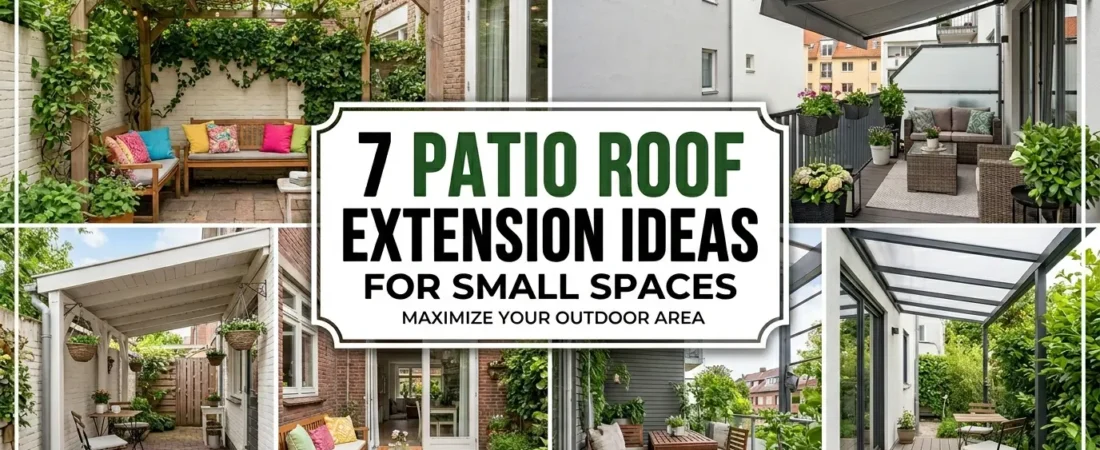
Patio roof extension ideas for small spaces solve the problem most compact backyards have but nobody talks about directly — the space exists but nobody uses it because it is either too hot, too sunny, or wet the moment it rains.
I have seen a 10 by 12 foot patio go from completely unused to the most-used space in the house after a single weekend pergola build. The furniture did not change. The plants did not change. Just an overhead structure that made the space feel sheltered and intentional.
These seven ideas cover every budget and every patio size, with honest notes on what each option actually costs, how permanent it needs to be, and which one I would choose at each budget level.
Table of Contents
The right roof extension adds shade, privacy, rain protection, and visual structure without making the patio feel dark or cramped. Done correctly, even a tiny covered patio starts feeling like a true outdoor room connected naturally to the home.
These patio roof extension ideas for small spaces focus on designs that maximize comfort without overwhelming compact backyards, narrow patios, or townhouse outdoor areas. From budget DIY covers to modern pergola-inspired layouts, these ideas prove small patios can still feel elevated, cozy, and expensive.
Your Guide Includes
☀️ 7 patio roof extension ideas for small spaces
🏡 Shade solutions for compact patios and backyards
💰 Budget-friendly DIY and modern covered patio ideas
🌿 Cozy layouts that make small patios feel larger
🔗 Amazon products linked throughout
🏡 Patio Roof Extension Options Explained (Before You Choose)
Before looking at design ideas, it helps to understand the main types of patio roof extensions used in small spaces. Most designs fall into four categories:
1. Pergola-Style Roof Extensions
Open-frame structures with beams or slats that provide partial shade while keeping airflow. Best for decorative outdoor spaces.
2. Solid Roof Extensions
Fully covered roofs using metal, tile, or composite materials. Best for full rain protection and permanent outdoor rooms.
3. Transparent Roof Extensions
Polycarbonate or glass roofing that protects from rain while maintaining natural light. Ideal for small patios where brightness matters.
4. Shade Sail & Fabric Roof Extensions
Flexible, low-cost shading systems that can be adjusted or removed. Best for renters or budget builds.
👉 Most small patios combine 2 types for best results (example: pergola + shade sail, or solid roof + skylights).
Patio Roof Extension Types Comparison
| Type | Cost | Shade Level | Rain Protection | Best For |
|---|---|---|---|---|
| Pergola Roof | Low–Mid | Medium | Low | Stylish outdoor seating |
| Solid Roof | High | High | High | Permanent outdoor rooms |
| Polycarbonate Roof | Mid | Medium | High | Small bright patios |
| Shade Sail | Low | Medium | Low | Budget flexible shade |
1. Pergola Roof Extension for Small Patios (Best All-Round Option)
✦ Pergola-Inspired Design
Ideal patio size: small to medium patios, narrow backyards, L-shaped spaces
Best materials: pressure-treated wood, cedar, or powder-coated aluminum
Cost range: $150–$600 depending on DIY vs prefab kits
What it solves: harsh sun, undefined space, lack of structure
Best for: dining zones, lounge seating, small backyard zoning
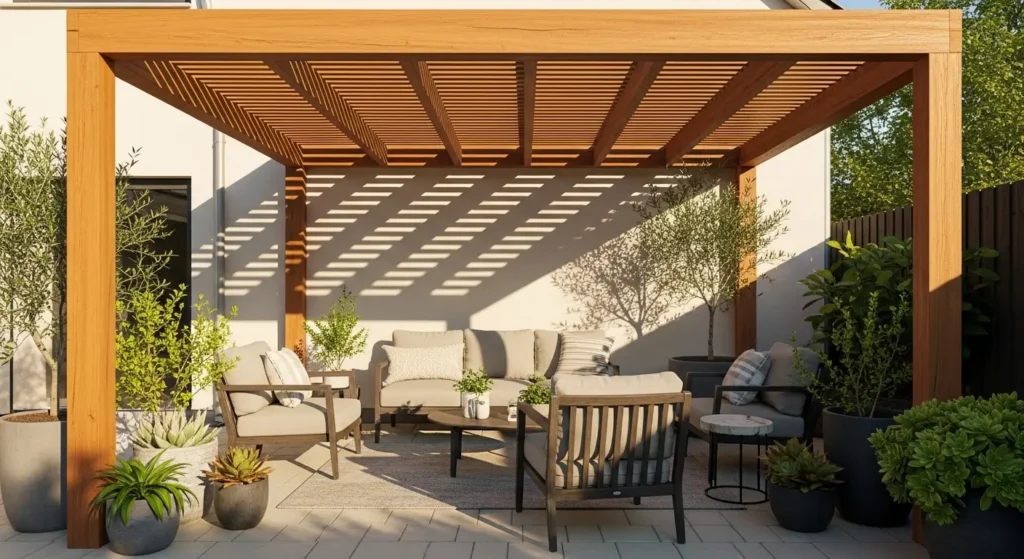
The pergola is the patio roof extension I recommend most for small spaces because it adds structure and definition without the closed-in feeling that a solid roof creates. The open slats keep airflow and light while still giving the space an overhead anchor.
Unlike fully solid roofs, pergolas allow filtered sunlight to pass through while still creating visual shade and definition. That balance is especially important in compact outdoor spaces where too much roofing can make the patio feel boxed in.
Natural wood pergolas create warmth immediately. Black metal pergolas feel more modern and architectural. Both work beautifully when scaled properly to the size of the patio.
String lights woven through the beams instantly transform the space at night. For more on how to lay out furniture under a covered patio see our patio layout ideas rectangle guide which covers the spacing and zone principles that make a small, covered area feel genuinely comfortable. The addlon solar string lights create one of the easiest small patio upgrades possible and make compact patios feel significantly more inviting after sunset. Find them linked on Amazon.
Pergola roof extensions work especially well in small patios where full roofing would feel too heavy. The open beam structure allows sunlight to filter through while still defining a clear outdoor “room.” In compact spaces, keeping the pergola height slightly taller helps prevent the patio from feeling enclosed.
Styling tip: Add warm string lighting or climbing plants like jasmine or wisteria to soften the structure and make the space feel established over time.
2. Clear Polycarbonate Roof Extension for Natural Light Protection
✦ Rain & Sun Protection
Ideal patio size: narrow patios, townhouse backyards
Best materials: polycarbonate panels + aluminum framing
Cost range: $200–$800
Solves: rain protection + natural light loss issues
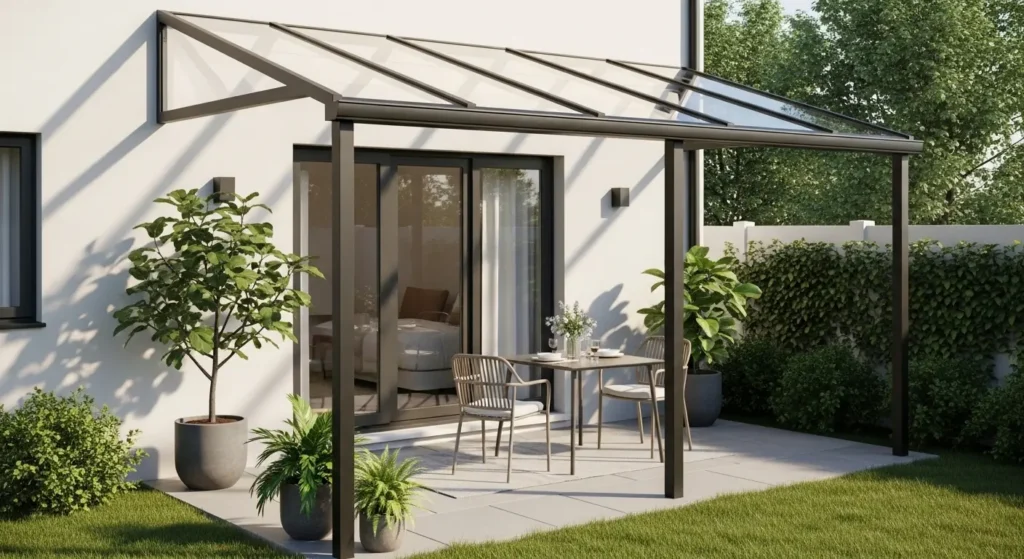
Clear polycarbonate is the solution I point people toward when rain protection is the priority but the patio is already dark or north-facing. You get full weather cover without losing the natural light that makes a small space feel livable.
Traditional solid roofs sometimes darken small patios too much, especially when attached directly to the house. Transparent roofing panels solve that problem by maintaining brightness while still creating shelter overhead.
This style works especially well for narrow townhouse patios, side yards, and compact outdoor dining spaces where preserving light matters.
Modern black aluminum framing paired with clear roofing panels creates a clean contemporary aesthetic that feels expensive without requiring a massive renovation budget.
Clear roofing is ideal when you want full weather protection without darkening a small patio. Unlike solid roofing, polycarbonate panels allow sunlight through while still shielding the space from rain and UV exposure.
Styling tip: Pair black framing with neutral furniture for a modern architectural look.
3. Shade Sail Roof Extension for Budget-Friendly Coverage
✦ Budget-Friendly Cover Ideas
Ideal patio size: all small patios, irregular layouts
Best materials: UV-rated shade cloth, steel anchor points
Cost range: $30–$150
Solves: sun exposure + low-budget coverage
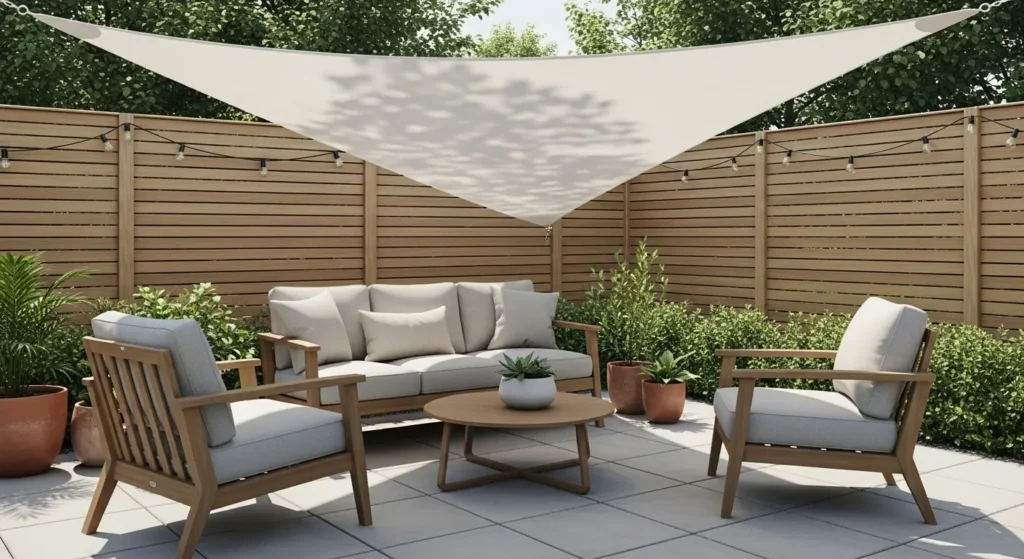
I recommend shade sails to renters and anyone who wants to test a covered patio concept before committing to a permanent build. For under $100 you can dramatically change how a small patio feels on a hot afternoon.
The tensioned fabric creates overhead coverage while still keeping the patio visually lightweight and open. Unlike permanent roofs, shade sails feel airy and flexible — ideal for small patios that already have limited visual space.
Triangular sails work best in compact layouts because they create dynamic angles and modern lines without overwhelming the backyard.
Neutral beige, sand, or soft grey fabrics usually look more expensive than bright colors. Pair them with black hardware and minimal furniture for a clean modern outdoor setup.
Most shade sail installations can be completed in a single afternoon and dramatically improve patio comfort during hot summer months.
If you are also considering how to roof a larger or more permanent patio structure our patio roofing ideas guide covers every material from corrugated metal to louvered pergola systems with full cost comparisons.
Styling tip: Use neutral tones like sand or beige to avoid visual clutter in small spaces.
4. Covered Dining Corner Patio Roof Extension
✦ Covered Dining Corner
Ideal patio size: small square patios
Best materials: wood beams, light roofing, or pergola hybrid
Cost range: $100–$500
Solves: unusable dining areas + weather exposure
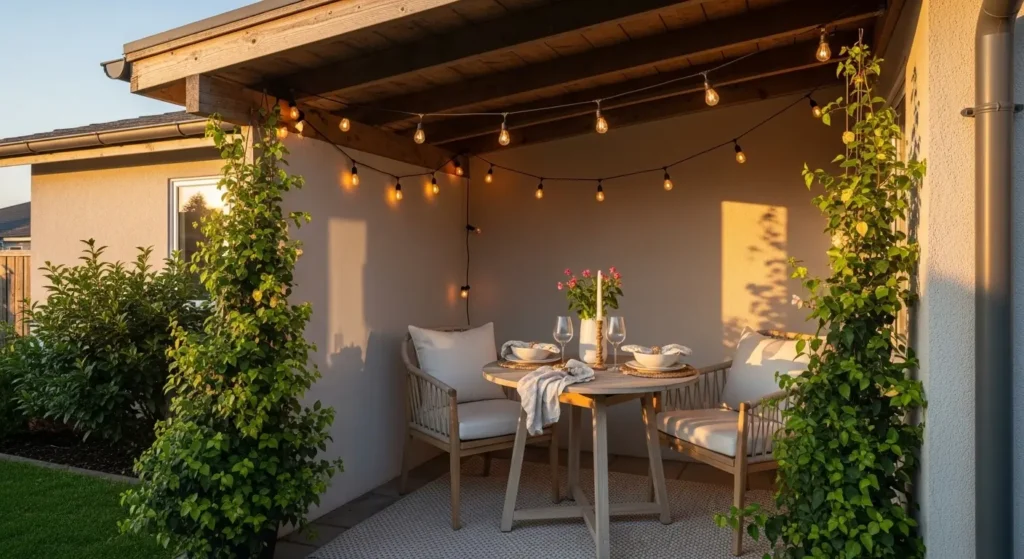
One of the smartest uses for a small patio roof extension is covering an outdoor dining area.
Even a tiny covered dining corner feels dramatically more functional because meals become possible regardless of strong sun or light rain. The roof overhead also creates psychological comfort — people naturally gather longer in spaces that feel sheltered.
A simple lean-to roof attached to the home works beautifully for compact dining patios. Keep the structure light visually with slim beams and open sides.
Warm lighting underneath the roof extension makes the dining area feel especially inviting after dark. Lanterns, pendant lights, or soft string lighting all work well in covered small patios.
The contrast between overhead shelter and open backyard surroundings creates the cozy outdoor-room feeling that makes small patios feel intentionally designed.
Even a small roof extension over a dining corner dramatically increases how often the space gets used. Covering just the dining zone creates a defined “outdoor room” without needing to roof the entire patio.
5. Natural Wood Beam Patio Roof Extension (Warm Organic Style)
✦ Natural Wood Aesthetic
Ideal patio size: garden-style patios, cottage homes
Best materials: cedar, redwood, or stained pine
Cost range: $200–$700
Solves: cold/unfinished patio appearance
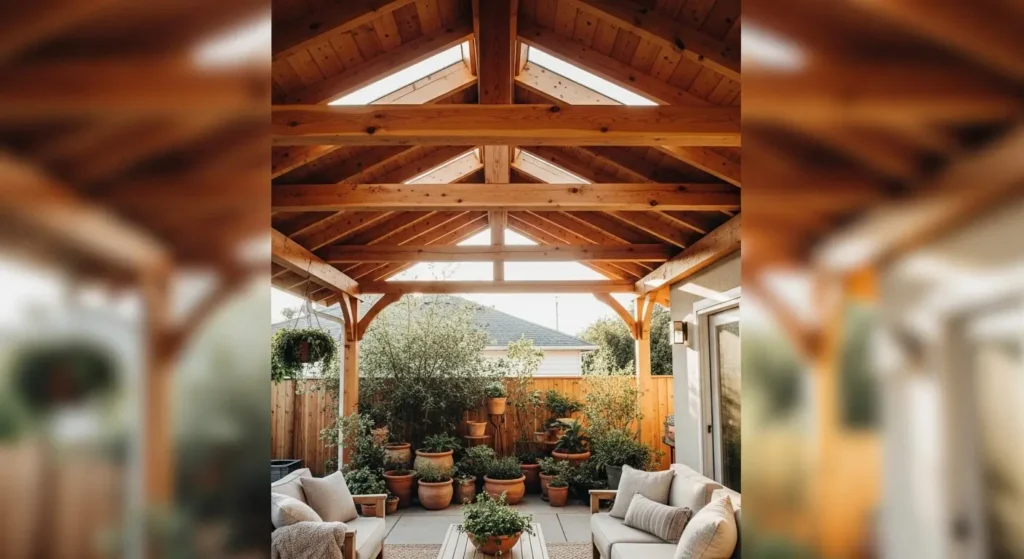
Natural wood beam extensions are my favorite option aesthetically. The cedar or redwood structure becomes part of the design rather than just a functional roof and looks better every year as the timber weathers.
Cedar and redwood are especially popular choices because they weather beautifully outdoors and resist moisture naturally. Their warm tones pair perfectly with greenery, stone, gravel, and neutral outdoor furniture.
The beauty of exposed beam patio roofs is that the structure itself becomes part of the visual design. You do not need elaborate decorations because the natural material already creates texture and character.
This style works especially well for cozy cottage patios, rustic backyards, boho outdoor spaces, and relaxed California-inspired outdoor design.
For ideas on what to put on a patio slab beneath a wood beam extension our patio slab ideas guide covers the materials that pair best with natural timber overhead structures.
PRO TIP: Keep wood tones consistent between your patio roof, furniture, and planters so the entire space feels cohesive instead of visually busy.
Styling tip: Keep wood tones consistent across furniture and planters for a cohesive look.
6. Minimal Modern Patio Roof Extension with Clean Lines
✦ Modern Minimal Patio Roof
Ideal patio size: modern homes, townhouses
Best materials: aluminum, steel, flat roof panels
Cost range: $300–$1,000
Solves: cluttered visual layout
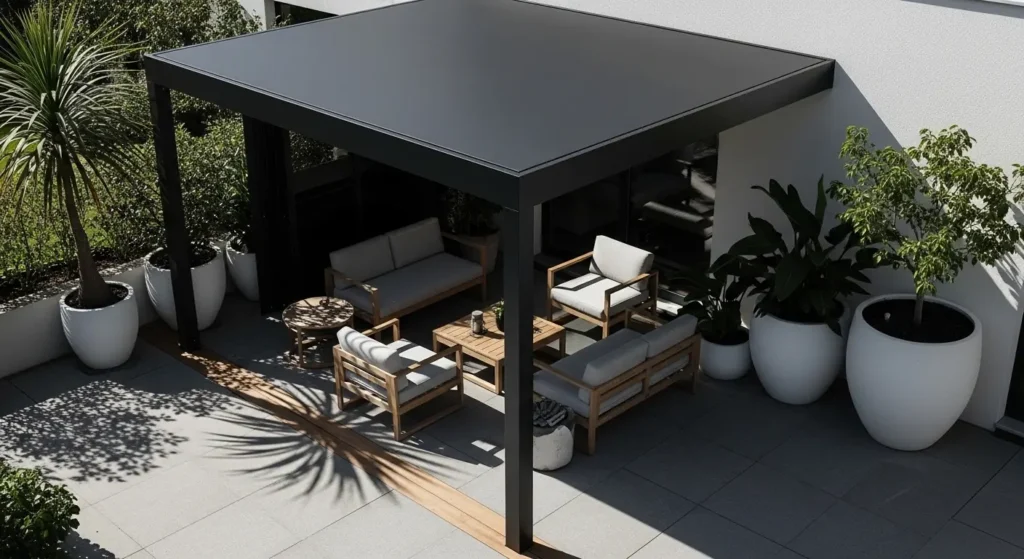
Modern patio roof extensions work best in small spaces because they reduce visual noise. Clean horizontal lines make compact patios feel larger and more architectural.
Flat roof extensions with slim black framing create strong architectural definition while still feeling lightweight and open. The simplicity actually makes compact patios appear larger and more intentional.
Avoid overdecorating modern patio roofs. A few oversized planters, clean furniture silhouettes, and simple lighting create a much more expensive look than crowded décor.
Modern roof extensions also blend beautifully with newer homes and townhouses where traditional pergolas may feel visually disconnected from the architecture.
The key is consistency — repeating black framing, neutral colors, and minimal textures throughout the patio creates the calm upscale aesthetic modern outdoor spaces are known for.
7. Seamless Indoor-Outdoor Patio Roof Extension Design
✦ Indoor-Outdoor Blend
Ideal patio size: attached patios, sliding door areas
Best materials: matching house roofing, wood/aluminum blends
Cost range: $500–$2,000
Solves: disconnected indoor/outdoor flow
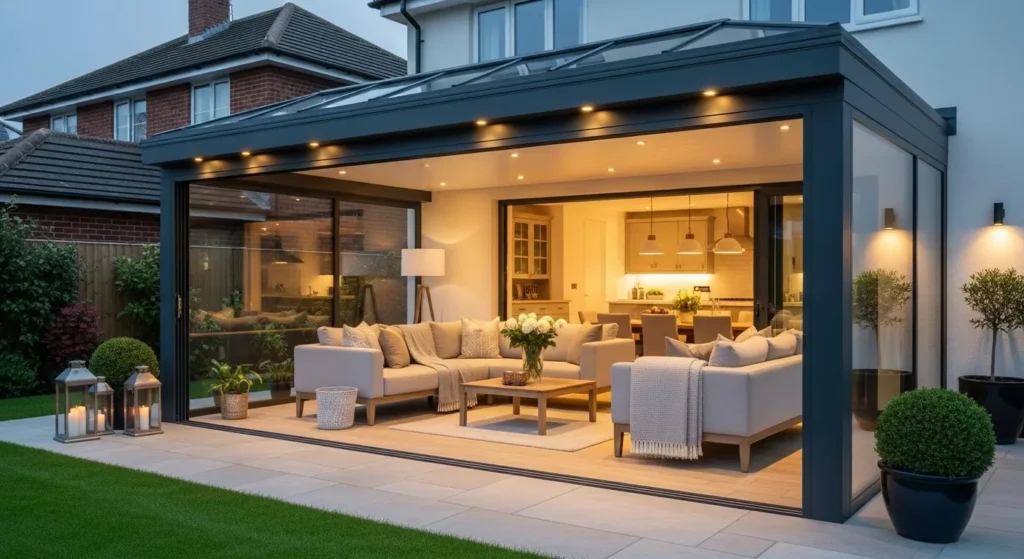
A seamless roof extension visually connects the interior of the home with the patio. This creates the illusion of a larger living space and improves usability year-round.
Matching flooring materials, similar furniture tones, and aligned rooflines visually connect the patio to the interior living space. That continuity tricks the eye into perceiving both areas as larger.
Sliding glass doors or large windows amplify this effect even more by visually removing barriers between indoors and outdoors.
This style is especially effective for townhomes and compact homes where every square foot matters. A covered patio extension essentially functions like an additional room during good weather.
The result feels elevated, luxurious, and highly functional without requiring a massive backyard footprint.
The VOOKRY Solar Watering Can Light placed near the patio edge creates a beautiful transition between the structured covered patio and softer surrounding planting. Find it linked on Amazon.
The Small Patio Design Tricks That Make Roof Extensions Work
Professional outdoor designers use these principles constantly:
1. Keep the roof visually lightweight
Thin framing, open sides, and lighter roofing materials prevent small patios from feeling closed in.
2. Match the roof style to the house
Modern homes need cleaner rooflines. Cottage homes work better with warmer wood textures and softer shapes.
3. Use lighting underneath the roof
Covered patios feel dramatically more inviting when layered lighting is added overhead and around seating zones.
4. Scale furniture correctly
Oversized sectionals overwhelm compact covered patios. Choose slimmer furniture that leaves breathing room around walkways.
5. Blend planting into the edges
Plants soften the transition between the patio roof structure and the surrounding backyard.
5 Small Patio Roof Mistakes That Make Spaces Feel Smaller
Mistake 1 — Building the roof too low
Low rooflines create a cramped heavy feeling. Slightly higher roof heights keep small patios feeling open and breathable.
Mistake 2 — Using bulky supports
Thick oversized columns visually crowd compact patios. Slim supports usually look more elegant.
Mistake 3 — Blocking too much natural light
Solid dark roofs can make attached patios feel gloomy. Balance coverage with brightness.
Mistake 4 — Overcrowding the covered area
Leave open space around furniture so movement feels comfortable and relaxed.
Mistake 5 — Ignoring airflow
Covered patios still need ventilation and airflow during hot weather. Open-sided designs usually perform best in small spaces.
What Actually Works Best for Small Patio Roof Extensions
Not all roof extensions work well in compact spaces. The best-performing designs share three traits:
1. They allow light in
Polycarbonate roofs or pergolas prevent the space from feeling dark or closed.
2. They keep structure lightweight
Slim beams, open sides, and minimal framing visually expand the space.
3. They define zones without enclosing them
The goal is to create an outdoor room, not a boxed structure.
👉 In most small patios, pergola + shade sail combinations perform better than fully solid roofs.
🧩 “How to Choose the Right Patio Roof Extension”
Add:
- If your patio is very small → shade sail or pergola
- If you need weather protection → polycarbonate roof
- If you want aesthetics → wood beam pergola
- If you want luxury feel → seamless roof extension
Frequently Asked Questions
What is the cheapest patio roof extension option?
Shade sails and simple pergola kits are usually the most affordable patio roof extensions for small spaces. Both create shade and visual structure without requiring expensive construction.
Does a patio roof make a small backyard feel smaller?
Not when designed correctly. Lightweight patio roofs with open sides often make outdoor spaces feel more intentional and usable rather than smaller.
What roofing material works best for small patios?
Clear polycarbonate panels, pergola slats, and lightweight metal roofing are all excellent choices because they provide protection without making the space feel too dark or enclosed.
Do covered patios add home value?
Yes — according to the National Association of Realtors, outdoor living improvements consistently rank among the most desirable home upgrades for buyers.
Why are patio roof extensions important in landscape design?
According to the American Society of Landscape Architects, covered outdoor spaces improve both comfort and functionality while helping create stronger connections between architecture and landscape design.
Can I extend a patio roof myself?
Yes, simple patio roof extensions like pergolas, shade sails, and lean-to covers can be built as DIY projects. However, structural roof extensions attached to a house may require permits depending on your location.
What is the cheapest way to extend a patio roof?
Shade sails and basic pergola kits are usually the cheapest options, starting from around $50–$200 depending on materials.
What is best roofing for small patios?
Polycarbonate roofing and pergola-style structures are most effective because they balance shade and natural light without making the space feel enclosed.
Small Patios Feel Bigger When They Feel Intentional
The difference between a patio that gets used daily and one that gets used twice a summer is almost always overhead cover. Not furniture. Not plants. Not lighting. Cover first, then everything else follows.
Start with the budget option that fits your situation right now. A shade sail this weekend costs $80 and immediately changes how the space feels. The pergola or polycarbonate roof can come later when the budget allows. The worst outcome is continuing to have a patio you avoid using.
More Patio and Backyard Ideas
→ 8 Budget Pea Gravel Patio Ideas
→ 12 Must-See Backyard Hardscape Ideas
→ 13 Cozy Backyard Shed Ideas For Summer
→ 12 Tiny Front Garden Ideas on a Budget 🌿
→ 25 Stunning Back Porch Patio Ideas
Why Patio Roof Extensions Matter in Small Backyard Design
Most top-ranking patio design guides focus on more than aesthetics. They emphasize how roof extensions change how a space is used.
A well-designed patio roof extension:
- increases usable time outdoors
- protects furniture from weather
- defines outdoor living zones
- increases property appeal
- makes small spaces feel like additional rooms
This is why patio roof extensions are consistently featured in architectural and landscaping design guides such as Houzz-style collections and professional outdoor planning resources.

Sheikh Hassaan is a digital architect for small businesses and the founder of The Glow Up System. He writes about home decor, garden design, and outdoor living for real American homes – practical ideas that work in actual spaces without oversized budgets.