

Outdoor kitchen patio design trends have shifted significantly in the past two years. The temporary setup — portable grill, folding table, extension cord — is being replaced by permanent or semi-permanent installations that treat outdoor cooking as a design category rather than an afterthought. These 10 trends represent where outdoor kitchen design is heading and what the most pinned and most copied outdoor kitchen patios have in common right now.
Each trend here identifies a specific design direction with a specific visual result. Some require construction. Some are achievable with products alone. All of them are worth understanding before making any outdoor kitchen investment.
Table of Contents
1. The Death of the Rustic BBQ: Minimal Modern Outdoor Kitchens Are Taking Over
✦ Minimal Modern Outdoor Kitchen
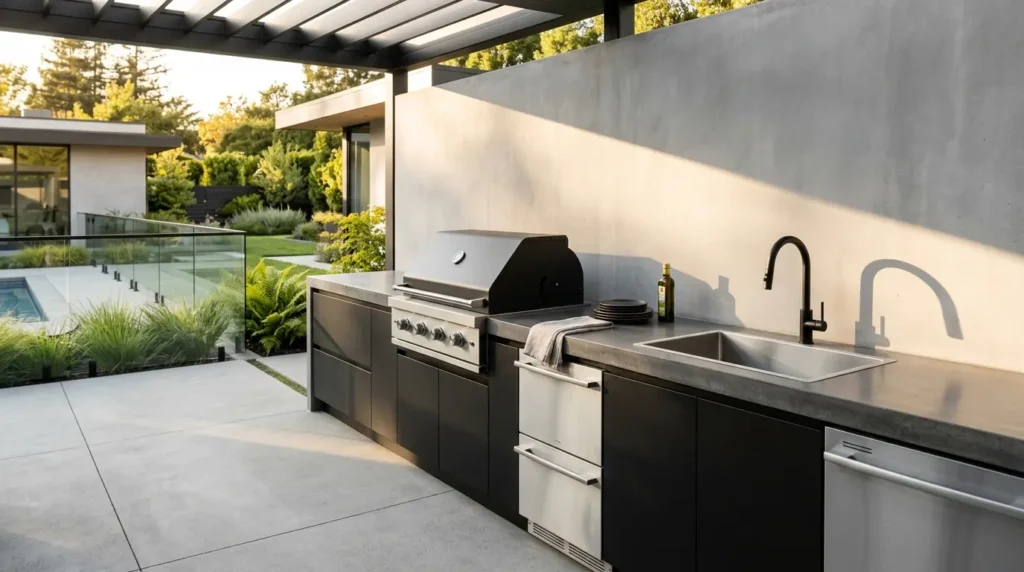
The dominant outdoor kitchen aesthetic of the previous decade was rustic — brick, timber, terracotta tile, wrought iron. The trend that has replaced it is minimal modern: concrete countertops, matte black or dark grey cabinetry, stainless steel appliances, and clean undecorated surfaces. The shift reflects the same movement from rustic to modern that has transformed interior design and it has arrived in outdoor kitchens with significant momentum.
Minimal modern outdoor kitchens read as expensive regardless of the actual investment level because the aesthetic prioritizes restraint and material quality over decorative complexity. A concrete countertop on a simple rendered cabinet base with an integrated stainless steel grill costs less to build than a complex brick and tile installation but photographs more expensively and ages more gracefully.
The material palette that defines minimal modern outdoor kitchens: concrete or reconstituted stone countertops in grey or warm cream. Matte black or dark charcoal cabinet fronts in weatherproof materials. Integrated stainless steel appliances that sit flush with the cabinet line. No visible tile grout, no brick coursing, no decorative corbels or archways.
PRO TIP: In a minimal modern outdoor kitchen choose matte black fixtures and fittings over chrome or brushed steel. Matte black reads as architectural and intentional in an outdoor context. Chrome and brushed steel read as appliance-store selections. The finish choice elevates a basic stainless steel grill installation to a designed outdoor kitchen.
2. Natural Stone Finishes: The Material That Makes Outdoor Kitchens Look Permanently Built
✦ Stone Finish Cooking Station
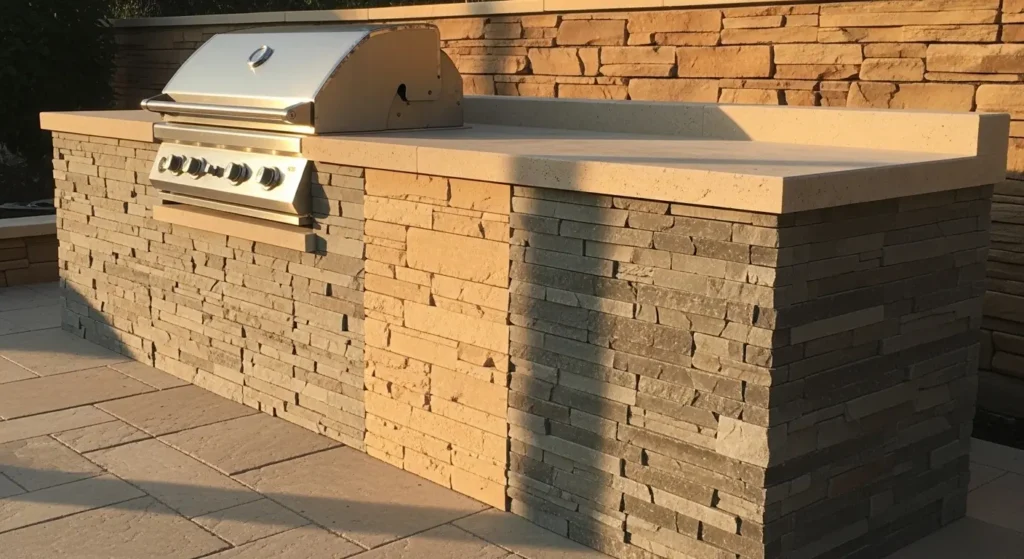
Natural stone and large-format porcelain stone-effect cladding is the finish trend that most effectively creates the impression of a permanently installed outdoor kitchen rather than a modular assembly. When the base unit, the side panels, and the countertop are all in continuous stone or stone-effect material the outdoor kitchen reads as architecture — something that belongs in the garden rather than something placed in it.
The practical advantage of large-format porcelain stone-effect cladding over natural stone is significant. Natural stone requires sealing, is susceptible to staining from cooking oils and food acids, and adds considerable weight to outdoor kitchen structures. Large-format porcelain tiles in stone finishes are impervious to staining, frost-resistant, UV stable, and produce indistinguishable visual results from natural stone at conversational distance.
The stone finish trend is being driven by the same large-format porcelain tile movement that has transformed interior floor and wall design. Tiles of 24 by 48 inches and larger create the seamless stone-look surface with minimal grout lines that reads as luxurious in a way that smaller tiled surfaces cannot achieve regardless of the tile quality.
3. The Covered Kitchen: Pergola-Integrated Outdoor Kitchens That Work Year-Round
✦ Covered Pergola Kitchen Setup
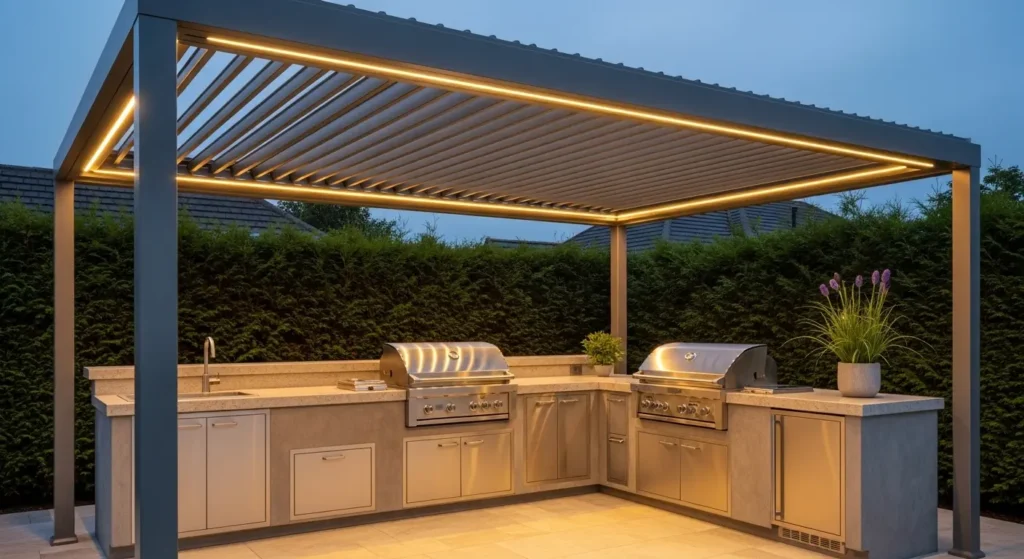
The fastest growing outdoor kitchen installation trend is the pergola-integrated kitchen — a complete outdoor cooking setup built under a purpose-designed pergola structure that provides year-round weather protection without creating an enclosed space. The louvered pergola roof, which can open and close on a track, is the specific product innovation that has enabled this trend.
A louvered pergola over an outdoor kitchen solves the three limitations of uncovered outdoor kitchens simultaneously: rain protection allows cooking through light to moderate rain. Shade control allows comfortable afternoon cooking in summer heat. The open roof position provides adequate ventilation for gas cooking appliances. The same structure that protects from rain opens fully for ventilation, closing and opening on a track system within seconds.
For the complete covered outdoor kitchen structure approach including costs and ventilation requirements see our BBQ area ideas guide which covers the pergola BBQ setup in detail.
PRO TIP: Install undercabinet LED strip lighting on the underside of pergola beams directly above the kitchen countertop. The undercabinet position illuminates the work surface evenly for evening cooking without the overhead glare that ceiling-height lighting creates. This is the same lighting technique used in interior kitchens applied to the outdoor cooking context.
4. The Pizza Oven as the Statement Feature That Defines the Entire Kitchen
✦ Pizza Oven Feature Focus
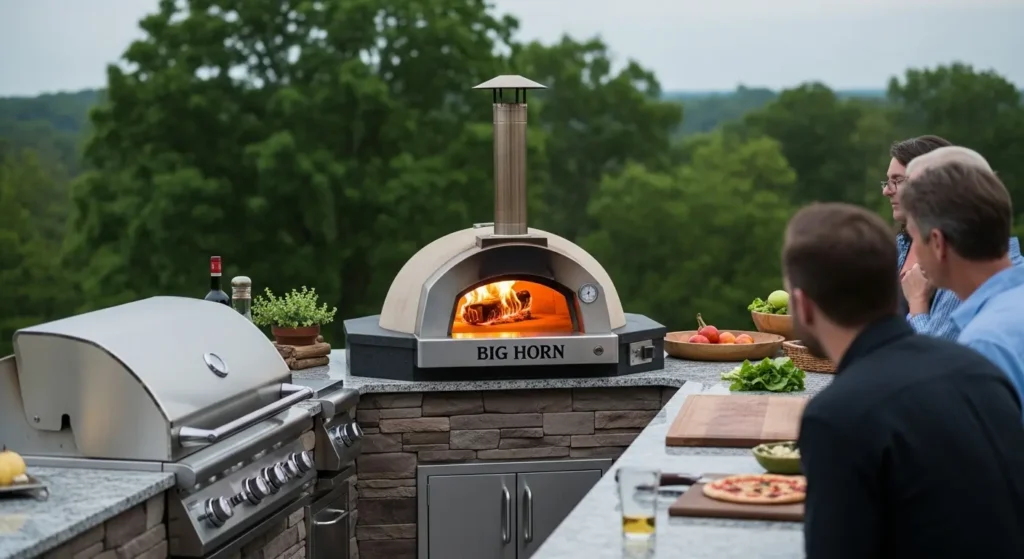
The pizza oven has replaced the grill as the statement appliance in aspirational outdoor kitchen design. This shift is visible in both Pinterest save data and in the product market — standalone pizza ovens that reach 700 to 900 degrees Fahrenheit have become the outdoor kitchen purchase that most changes what outdoor cooking can produce and the one that guests respond to most enthusiastically.
The design implication of this trend is significant. Where outdoor kitchens were previously designed around the grill as the central appliance the current trend positions the pizza oven at the visual center and builds the rest of the kitchen around it. The grill becomes a supporting appliance. The prep and serving surfaces are organized to serve the pizza oven workflow.
The BIG HORN Pizza Oven reaches 700 degrees in 15 minutes, produces restaurant-quality pizza in under three minutes, and handles other high-heat cooking — flatbreads, roasted vegetables, seared steaks — that conventional grills cannot replicate. Its compact footprint makes it practical on any patio size. The Leteuke Grill Cart positioned beside it creates the prep and staging surface that the pizza oven workflow requires. Find both linked on Amazon.
PRO TIP: Position the pizza oven so guests can see the fire through the oven opening from the seating area. The visual of fire inside a cooking vessel is one of the most compelling ambient features any outdoor space can have. An outdoor kitchen with a visible pizza oven fire creates a dining atmosphere that no lighting scheme alone achieves.
5. Bar-Kitchen Integration: The Trend That Keeps the Cook in the Conversation
✦ Outdoor Bar Integration
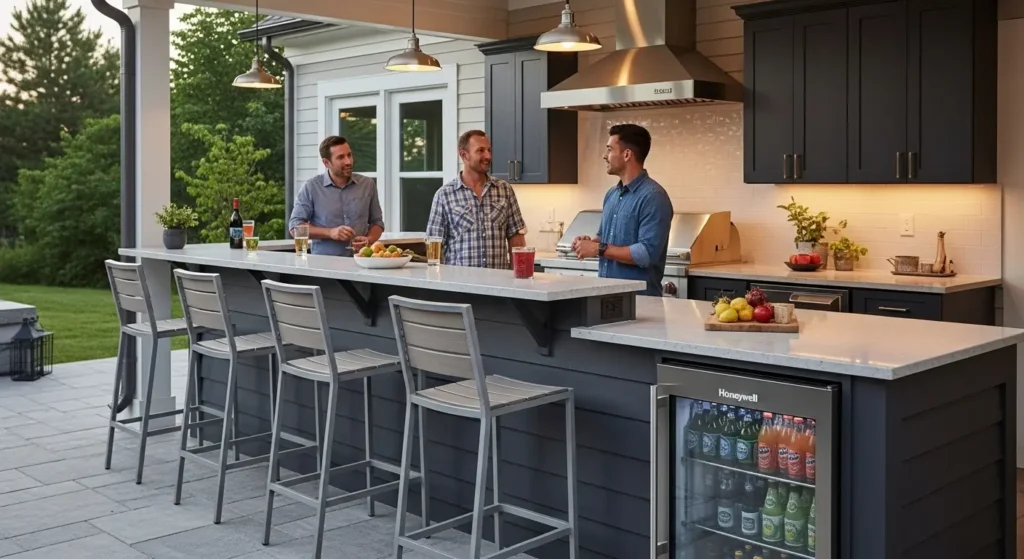
Bar-kitchen integration is the outdoor kitchen patio design trend I find most immediately changes the social experience of outdoor cooking. The cook-separated-from-guests problem is the most consistent complaint about outdoor cooking setups regardless of their quality. This trend eliminates it structurally.
A counter with a 12-inch overhang on the guest-facing side and bar stools at that counter means the cook and the guests occupy the same surface simultaneously. The cook on the working side. Guests on the bar side facing in. The outdoor kitchen becomes the social center of the gathering rather than the service area adjacent to it.
6. The Compact Outdoor Kitchen: Full Functionality in a 6-Foot Footprint
✦ Compact Small Space Design
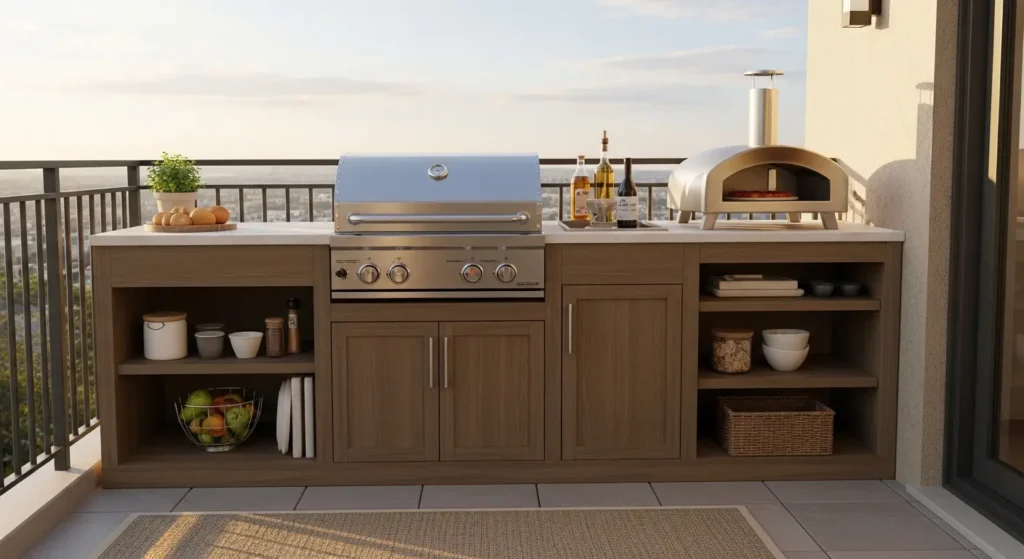
The compact outdoor kitchen trend is being driven by the reality that most residential patios are 10 feet wide or less. Full-scale outdoor kitchen installations that work well on generous 20-foot patios are impractical and unwanted on standard urban patio dimensions. The compact kitchen trend produces complete functionality in a 6-foot linear footprint.
A 6-foot compact outdoor kitchen typically includes: a 24-inch integrated grill or a standalone pizza oven as the primary cooking appliance. A 12 to 18 inch prep surface to one side. An under-counter storage cabinet with door for fuel, tools, and protected storage. Possibly a small under-counter beverage fridge if the budget allows. Total footprint: 6 feet of wall space, 24 to 30 inches of depth.
The design principle that makes compact outdoor kitchens work is vertical thinking. Wall-mounted magnetic tool strips, overhead hooks for utensils, and wall-mounted shelves above the counter all add functional storage without adding horizontal footprint. A compact outdoor kitchen that uses vertical storage effectively delivers the same functional capability as a much larger installation.
PRO TIP: Design a compact outdoor kitchen as a single continuous unit rather than separate appliances with gaps between them. Continuous countertop material connecting all elements makes the compact kitchen read as a designed installation. Gaps between appliances make it look like individual items placed in a row.
7. Iroko, Teak, and Ipe: The Return of Premium Hardwood in Outdoor Kitchen Cabinetry
✦ Natural Wood Cabinet Trend
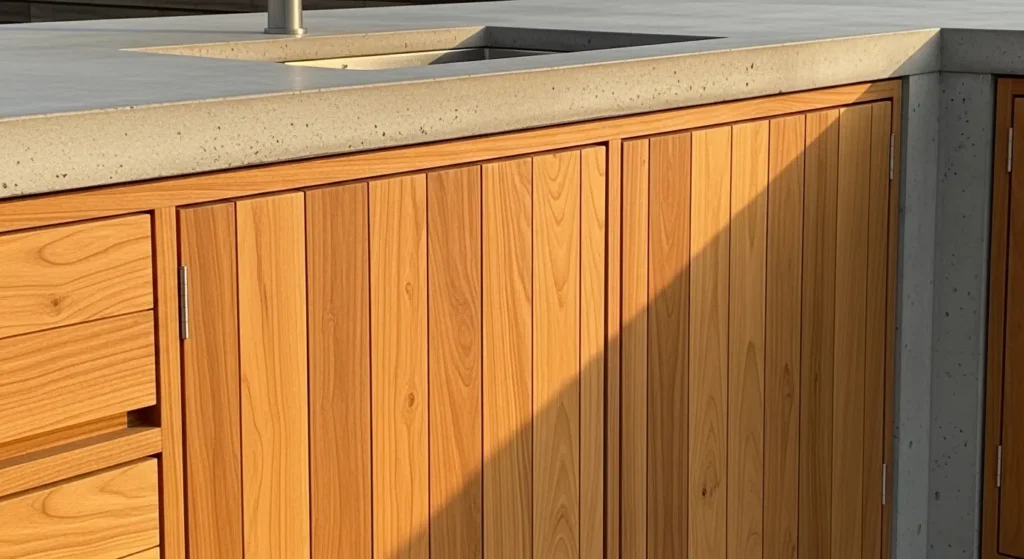
After a period dominated by stainless steel and powder-coated metal cabinetry natural hardwood is returning to outdoor kitchen design as the premium material choice. The specific species driving this trend — iroko, teak, ipe, and accoya — are all naturally weather-resistant without treatment, develop a beautiful silver-grey patina with age if left uncoated, and create a material warmth in outdoor kitchen design that metal cabinetry cannot achieve.
The hardwood outdoor cabinet trend pairs specifically with concrete or stone countertops for the material contrast that defines current luxury outdoor kitchen design. Warm brown wood grain against cool grey concrete is the outdoor kitchen material pairing that appears most frequently in architectural and design publications and is the combination that saves most consistently on Pinterest among outdoor kitchen content.
For the home market the hardwood trend is achievable through hardwood-faced cabinet doors on weatherproof carcass structures. The cabinet box can be constructed from cement board or weatherproof plywood while only the door faces are solid hardwood — reducing cost while maintaining the visual result. Teak oil applied annually maintains the warm honey tone and prevents the natural silver-grey weathering that occurs on untreated surfaces.
PRO TIP: Apply teak oil to hardwood outdoor kitchen cabinet doors at the start of each season before the first hot weather arrives. Oil applied to warm dry timber penetrates more deeply and creates better protection than oil applied to cold or damp timber in spring. The single annual oiling treatment is the complete maintenance requirement for teak and iroko outdoor cabinetry.
8. The 270-Degree Kitchen: Outdoor Cooking Setups That Serve Multiple Seating Zones
✦ Open-Air Entertaining Layout
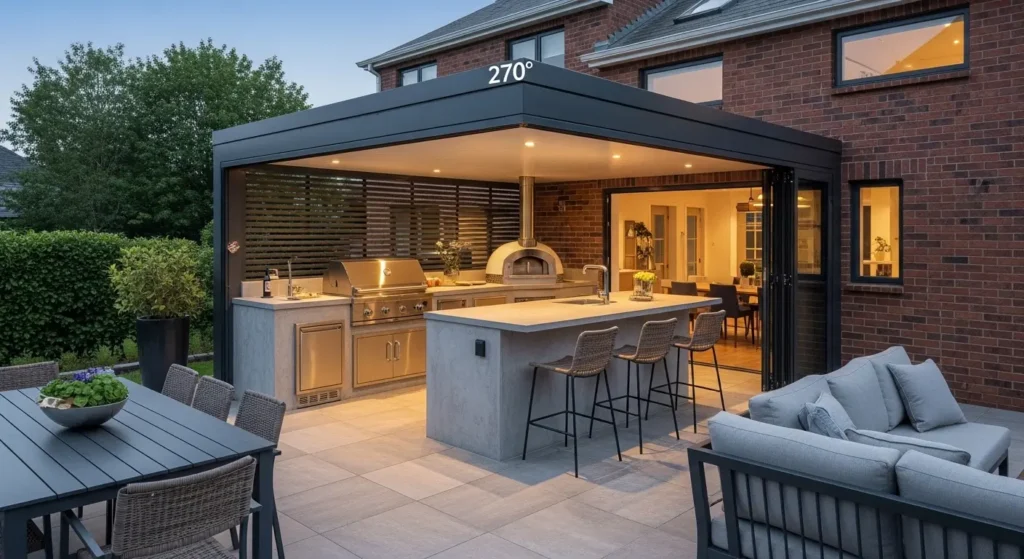
The open-air entertaining layout trend moves outdoor kitchens away from the wall-mounted linear installation toward island or peninsular configurations that are accessible from multiple sides. A kitchen that faces one direction serves one group. A kitchen designed as a three-sided peninsular serves the dining table behind it, the bar seating in front of it, and allows the cook to work from either side depending on the stage of cooking.
This trend is most visible in larger outdoor spaces where the kitchen can genuinely function as the central island of the outdoor room. A peninsular outdoor kitchen with bar seating on the guest side, a grill and pizza oven on the cook’s face, and a prep and serving surface on the third face creates a complete outdoor entertaining hub that a wall-mounted linear kitchen cannot replicate regardless of length.
For standard residential patios the peninsular approach requires careful space planning. A minimum clear circulation width of 42 inches should be maintained around all sides of a peninsular kitchen unit. On a 10 by 12-foot patio a peninsular kitchen of more than 36 inches wide in either dimension will compromise circulation uncomfortably. The trend applies fully to patios of 15 feet or wider in both dimensions.
9. Storage-First Design: The Trend That Separates Functional Outdoor Kitchens From Beautiful Ones
✦ Smart Storage Solutions
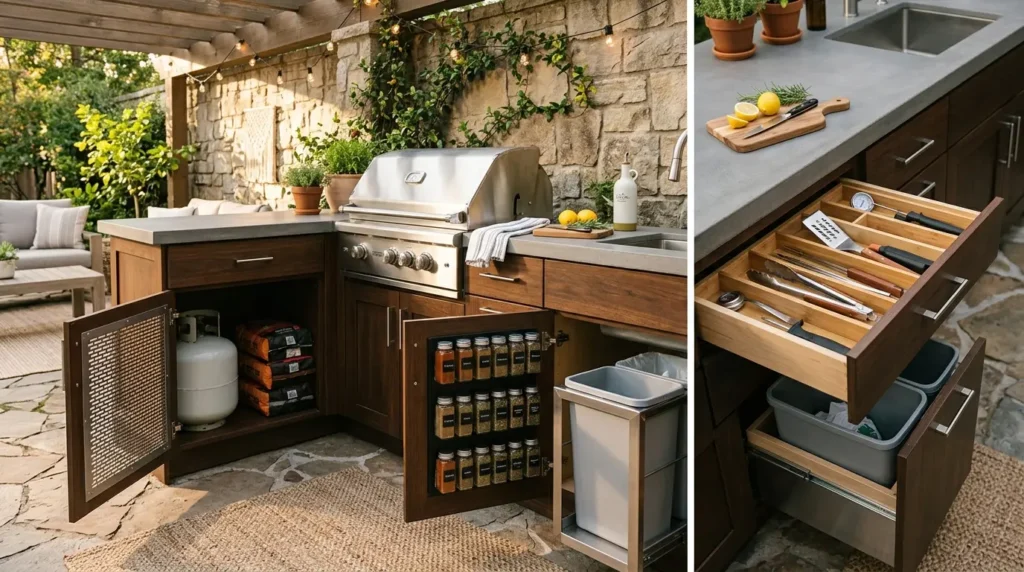
Storage-first design is the outdoor kitchen patio design trend I find most separates functional outdoor kitchens from beautiful ones that do not work. The most common failure mode — including in expensive installations — is a beautiful surface that accumulates clutter within the first season because no designated place was designed for fuel, tools, condiments, and waste.
A counter full of misplaced items makes even a well-built outdoor kitchen look uncared for. Storage designed into the build from the start keeps the counter clear and the kitchen looking designed every time it is used.
10. The Resort Kitchen: When Outdoor Cooking Becomes an Experience, Not a Task
✦ Luxury Resort Style Kitchen
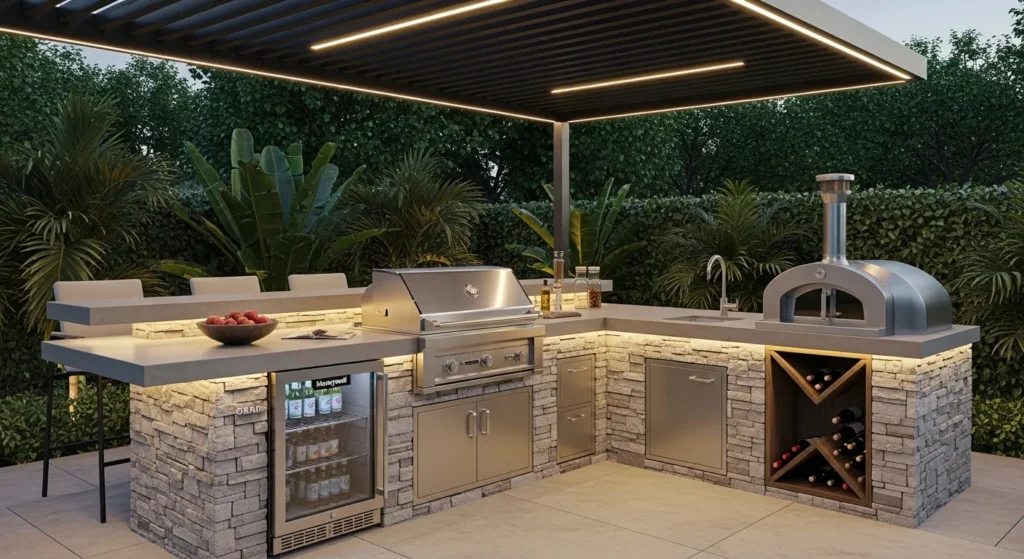
The resort outdoor kitchen is the outdoor kitchen patio design trend I find hardest to define because it is less about specific materials or appliances and more about a design intention. The question being answered is not what is the minimum needed for outdoor cooking but what creates the experience that makes guests feel genuinely hosted rather than efficiently fed.
Privacy enclosure. Beverage storage at the counter. Lighting that transitions from cooking to evening. A seating arrangement that makes the kitchen the social center. These are experience design decisions, not functional ones. Together they create the resort quality.
PRO TIP: The single detail that most effectively communicates resort quality in an outdoor kitchen is a pre-chilled beverage waiting at the bar counter when guests arrive. The Honeywell Beverage Fridge set to 38 degrees means every drink is perfectly cold before the first guest sits down. This hospitality detail costs nothing beyond the initial appliance investment and communicates care more effectively than any design element.
How to Apply These Trends at Any Budget
Not every outdoor kitchen trend requires a full construction project. Here is how each trend maps to different investment levels:
Under $300:
Apply the minimal modern aesthetic through black powder-coated accessories and a concrete-effect contact paper on an existing cabinet or worktop surface. Add the pizza oven as the statement appliance. Apply storage-first thinking through a magnetic tool strip and dedicated under-counter storage.
Under $800:
Add the beverage fridge for bar integration. Install a compact continuous-countertop kitchen unit. Apply large-format porcelain cladding to an existing rendered base. Add a slatted timber pergola for covered kitchen presence.
Over $2,000:
Built concrete countertop with stone-finish cladding base. Hardwood cabinet doors. Louvered pergola cover. Full peninsular layout. Complete resort experience design with privacy screening.
📌 More outdoor kitchen and entertaining ideas → 11 Outdoor Kitchen Ideas That Impress Guests
Frequently Asked Questions
What is trending in outdoor kitchens right now?
The dominant outdoor kitchen design trends currently are the minimal modern aesthetic replacing rustic finishes, pizza ovens replacing grills as the statement appliance, bar counter integration keeping cooks social during cooking, compact 6-foot kitchen designs for standard residential patios, and storage-first design that prioritizes functional organization over purely aesthetic decisions. According to the American Institute of Architects outdoor living spaces including kitchens are among the top five most requested residential design features and outdoor kitchen installations have grown by over 30% in residential projects in the past three years.
How much does an outdoor kitchen cost?
A functional mid-range outdoor kitchen with a quality grill, pizza oven, beverage fridge, and continuous countertop can be achieved for $1,500 to $3,000 using modular components and DIY-built base structures. Full built-in permanent installations with premium materials range from $5,000 to $15,000 or more depending on materials, appliances, and coverage structure.
What appliances do I need for an outdoor kitchen?
The minimum is a grill and a prep surface — everything else expands the cooking range and the social function. The most impactful additions in order of return are a pizza oven for expanded cooking capability, a beverage fridge for social functionality, and a side burner for temperature-controlled sauces and sides that grills cannot manage.
More Outdoor Kitchen and Entertaining Ideas
→ 7 BBQ Area Ideas For Your Patio
→ How To Build A Backyard Garden Bar At Home
→ 25 Chic Outdoor Living Patio Ideas You’ll Want To Copy
→ 21 Beautiful Patio Decorating Ideas For Summer
Every outdoor kitchen patio design trend in this guide reflects the same underlying shift — outdoor cooking is being held to the same design standards as interior cooking. Not adapted for outdoor conditions and left at that. Actually designed the way a kitchen designer would design it.
The outdoor kitchens that will look dated in five years are the ones that treated outdoor as a separate and lesser category. The ones still being saved are the ones that brought interior design thinking outside and applied it completely.
Choose the trend from this list that applies to your current patio and your current budget. Apply it this weekend. One good decision made with the right thinking is where every well-designed outdoor kitchen started.

Sheikh Hassaan is a digital architect for small businesses and the founder of The Glow Up System. He writes about home decor, garden design, and outdoor living for real American homes – practical ideas that work in actual spaces without oversized budgets.