
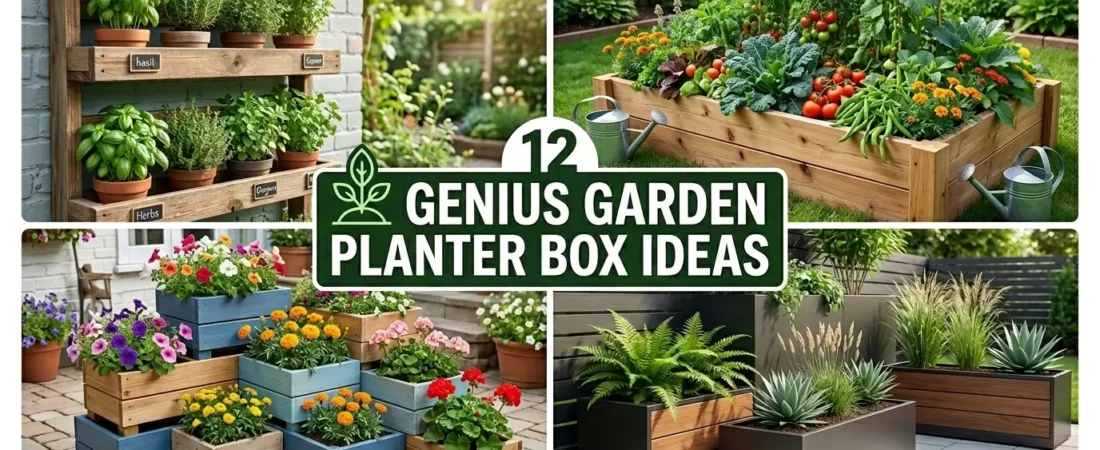
Garden planter box ideas are where the gap between a good-looking container and a genuinely high-performing growing system becomes most visible. A beautiful planter box that is built at the wrong depth, filled with the wrong growing medium, or positioned without considering drainage produces disappointing plants regardless of how well it photographs. These 12 ideas focus on the decisions that determine whether a planter box works as well as it looks.
Each idea here addresses a specific design or build challenge that standard planter box guides skip over. The result is a set of planter box approaches that are genuinely useful rather than purely inspirational.
Table of Contents
1. The Vegetable Planter Box: Depth Is the Variable That Determines Everything
✦ Raised Vegetable Planter Box
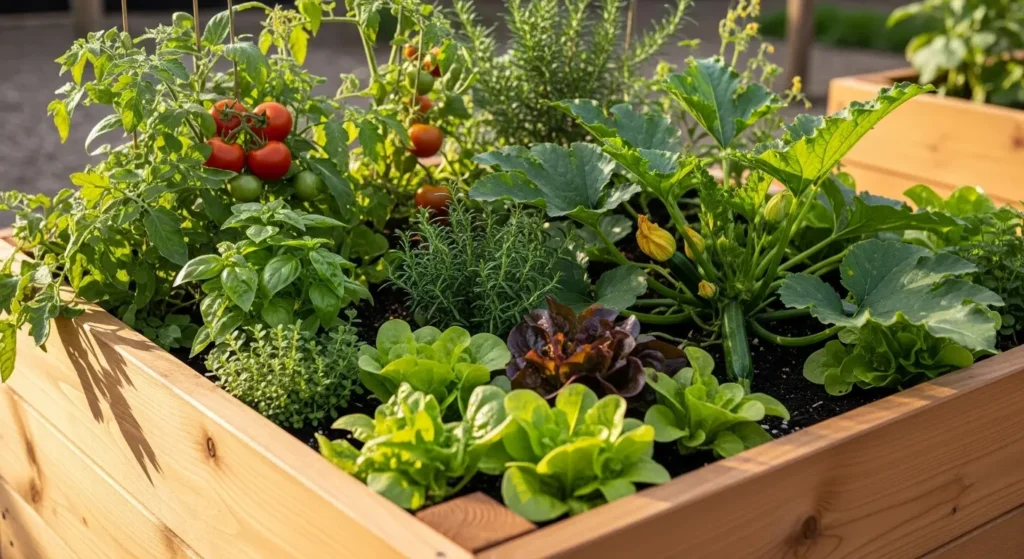
Most vegetable planter boxes fail because of one variable: insufficient depth. A 6-inch deep planter box looks generous at the garden center and produces disappointing vegetables because the root systems of productive plants require significantly more vertical space than a shallow box provides.
The depth requirements that actually matter: salad leaves and herbs need 6 to 8 inches minimum. Bush tomatoes, peppers, and courgettes need 12 inches. Climbing tomatoes, deep-rooted brassicas, and carrots need 18 inches. Building to the minimum required depth for your intended crop determines whether the planter box becomes a productive kitchen garden feature or an attractive container with mediocre yields.
The Domi Raised Garden Bed at 8 by 4 feet builds to a depth that supports all but the most deep-rooted root vegetables. The 342-gallon soil volume means nutrients do not deplete within weeks the way they do in shallow boxes. Find it linked on Amazon.
PRO TIP: Fill the bottom 4 inches of any deep vegetable planter box with a mixture of coarse wood chip and compost rather than pure compost. The wood chip layer at the base retains moisture, improves drainage, and adds structural stability to the growing medium above it without adding the weight of pure compost throughout.
2. A Three-Tier Growing Station Produces More Food Per Square Foot Than Any Flat Bed
✦ Tiered Growing Station
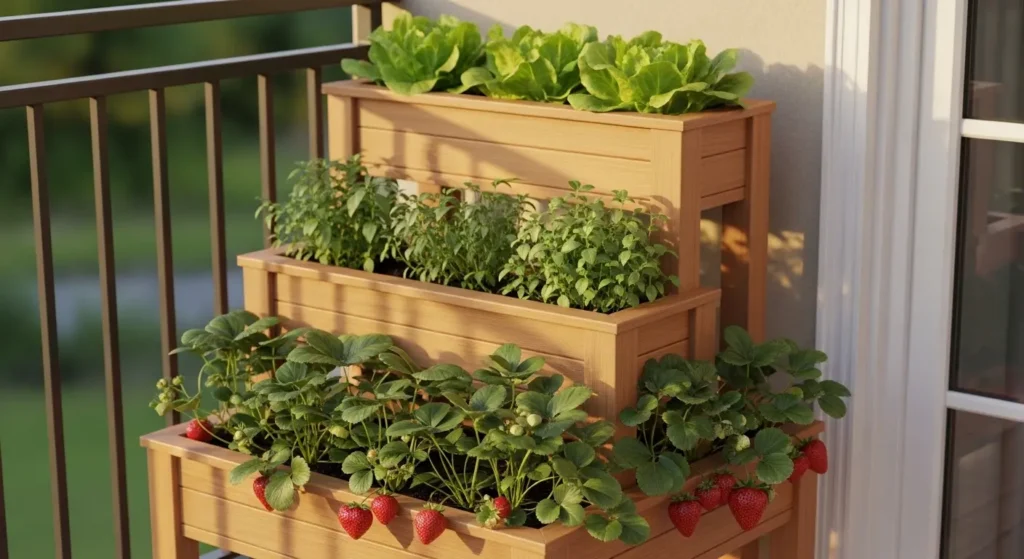
A three-tier growing station multiplies the productive output per floor footprint by stacking growing surfaces vertically rather than expanding horizontally. The same 2-square-foot patio footprint that supports one single-level planter supports three growing surfaces when stacked — three times the growing area in the same floor space.
The tier assignment that produces best results: top tier for crops that need the most sun and the least water — herbs and salad leaves that tolerate drying between waterings. Middle tier for medium-demand crops — compact flowering vegetables and trailing strawberries. Bottom tier for moisture-loving crops and ornamentals that benefit from the shade the upper tiers provide in hot afternoon sun.
The light gradient from top to bottom tier is not a problem — it is an opportunity for crop selection that makes each tier more productive by matching the plant to the available light at that height.
3. A Corner Planter Box Uses the Least Useful Outdoor Space Most Productively
✦ Corner Space Planter
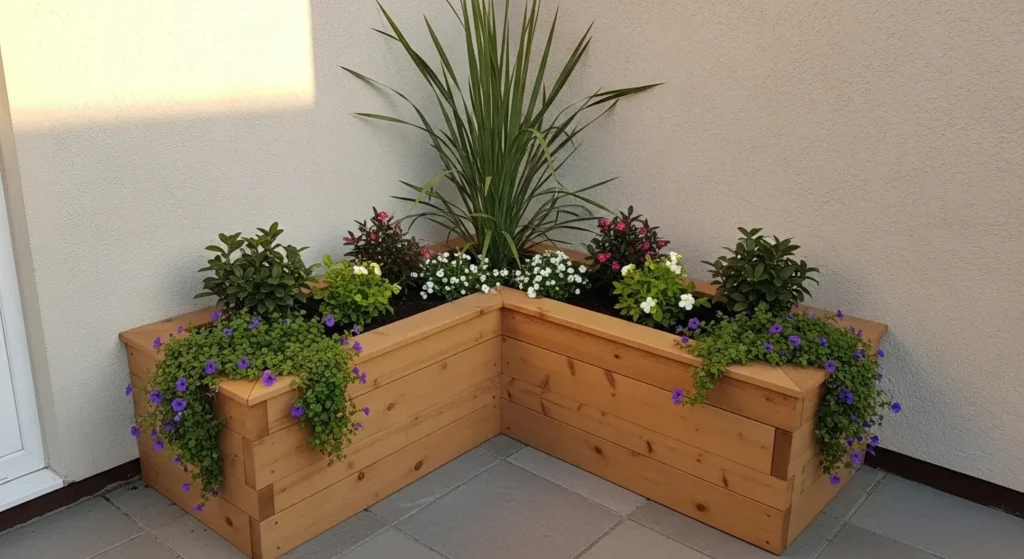
Patio corners are the most consistently wasted outdoor spaces. Two fence boundaries meet at a 90-degree angle creating a zone that standard rectangular planter boxes do not fit cleanly. A custom-built corner planter box designed to sit flush against both fence boundaries makes this zone the most planted and most visually impactful position on the patio.
An L-shaped or triangular corner planter box built from timber is a straightforward DIY project — two or three sides rather than the four of a standard rectangular box, the back two sides fixed directly to the fence panels with screws. The fence boundaries become the back walls of the planter, reducing the timber requirement and making the corner planter feel permanently integrated into the patio structure.
Planting a corner box uses the same back-to-front height principle as any planter: tallest at the back corner where both fence walls meet, progressively shorter toward the two open front edges. The height gradient from corner to edge creates a composition that reads from the main seating position as a designed garden feature rather than a corner filled with plants.
PRO TIP: Line the fence walls at the back of a corner planter box with pond liner before filling with compost. The liner protects the fence timber from prolonged moisture contact which causes rot over three to four seasons without protection. The liner costs under $5 and extends the life of both the planter and the fence significantly.
4. A Rolling Planter Box Follows the Sun and Never Produces Shade-Starved Plants
✦ Rolling Garden Planter
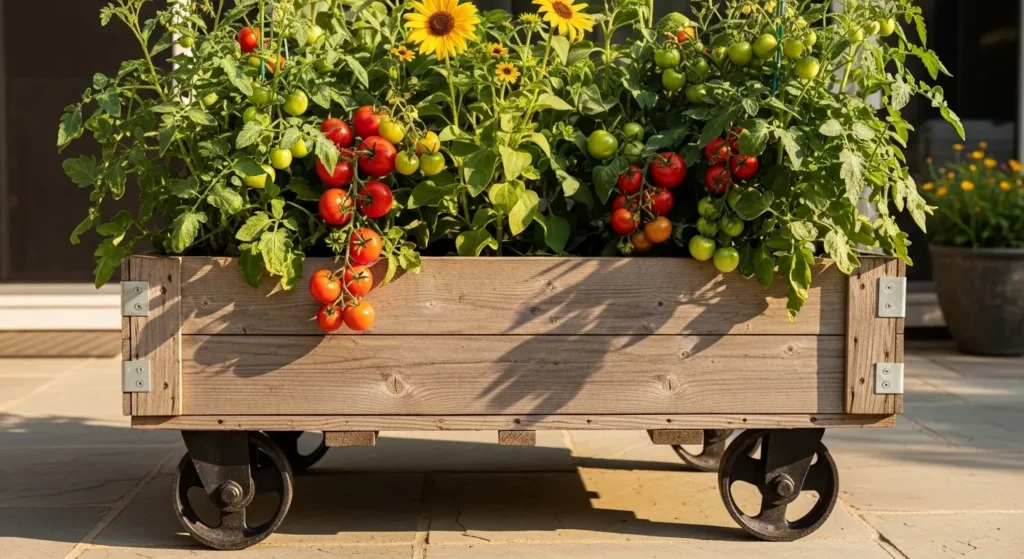
A rolling planter box solves a problem that fixed planter boxes cannot: sun patterns change throughout the season. A position that receives 8 hours of direct sun in June may receive only 4 hours in September as the sun angle drops. A rolling planter can follow the optimal sun position throughout the growing season, maximizing productive light exposure for sun-demanding crops like tomatoes, peppers, and aubergines.
The practical requirement for a genuinely functional rolling planter: heavy-duty lockable castors rated for the total weight of the planter fully loaded with wet compost and mature plants. A large planter at 12-inch depth with wet compost weighs 80 to 120 pounds. Standard furniture castors fail under this load within weeks. Industrial-rated castors with a minimum 100-pound rating per wheel are the correct specification.
The FOLLOOK Planter Box with Trellis and Lockable Wheels is designed specifically for this mobile growing application — the wheel specification handles loaded weight correctly and the locking mechanism prevents movement once the planter is positioned. Find it linked on Amazon.
PRO TIP: Move rolling planters in the morning before plants have been watered rather than after. A freshly watered planter is significantly heavier than a dry one. Moving when dry also allows any water pooled in the base tray to be emptied before repositioning — preventing the waterlogging that occurs when a saucer full of water travels with the movement.
5. A Self-Watering Planter Box Eliminates the Most Common Cause of Container Plant Failure
✦ Self-Watering Planter Box
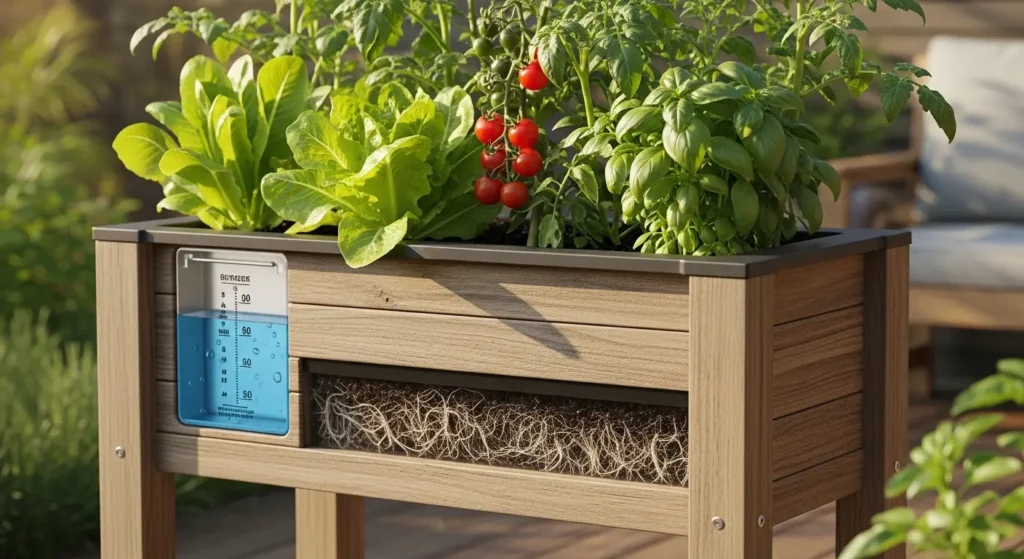
Inconsistent watering is the most common cause of container plant failure and the self-watering planter box directly addresses it. Plants in conventional planters experience the feast-and-famine moisture cycle: waterlogged immediately after watering, bone dry 48 hours later in hot weather. This cycle stresses root systems, causes blossom drop in fruiting plants, and produces the wilting and recovery pattern that weakens plants over an entire season.
A self-watering planter box maintains consistent root-zone moisture through a sub-irrigation system — water is drawn upward from a base reservoir by capillary action as the growing medium dries. The root zone stays at consistent moisture throughout. Plants grow more vigorously, produce more flowers and fruit, and require significantly less intervention than conventionally watered containers.
The LINEX Self-Watering Raised Garden Bed combines the self-watering reservoir system with a 41-inch trellis for climbing plants — the most complete self-watering planter box available for both ornamental and productive use. The reservoir capacity typically extends the watering interval to three to four days in summer conditions compared to daily watering in conventional containers. Find it linked on Amazon.
PRO TIP: Never let a self-watering planter reservoir run completely dry during the active growing season. The capillary wicking material between the reservoir and the growing medium takes 24 to 48 hours to re-establish moisture flow after complete drying. Refill the reservoir when the indicator shows one quarter remaining rather than waiting for empty.
6. A Bench-Planter Combination Does Two Jobs From One Structure in Limited Space
✦ Built-In Bench Planter Box
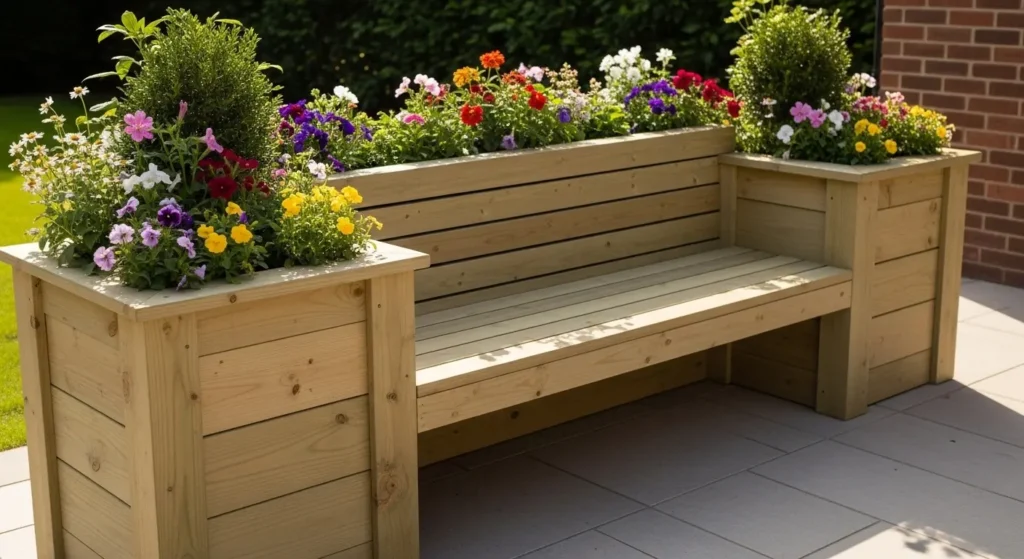
A built-in bench with integrated planter boxes at each end provides seating and planting from a single structure whose combined footprint is smaller than a separate bench and separate planters would require. The planter boxes define the ends of the bench, eliminating the need for arm rests while providing living plant displays at exactly the height and position where bench-end planting has maximum visual impact.
The construction approach that produces the most durable result: build the bench frame from pressure-treated timber as the structural base. Construct the planter box ends as separate lined vessels that bolt onto the bench frame rather than being integral to it. This approach allows the planter boxes to be removed for replanting or replacement without affecting the bench structure.
The planting position at bench height — approximately 18 inches from the ground — is one of the best positions for fragrant plants. Lavender, rosemary, and sweet peas at bench height mean the fragrance is exactly at face level when seated — creating a sensory garden experience that ground-level planting cannot achieve.
PRO TIP: Plant bench-end planter boxes with one trailing variety that cascades down the sides of the planter box toward the ground. The trailing plants connect the elevated bench-height planting to the ground level and prevent the planter boxes from looking like elevated pots rather than integrated features of the bench design.
7. The Herb Box That Changes How You Cook Needs Three Specific Design Features
✦ Compact Herb Garden Box
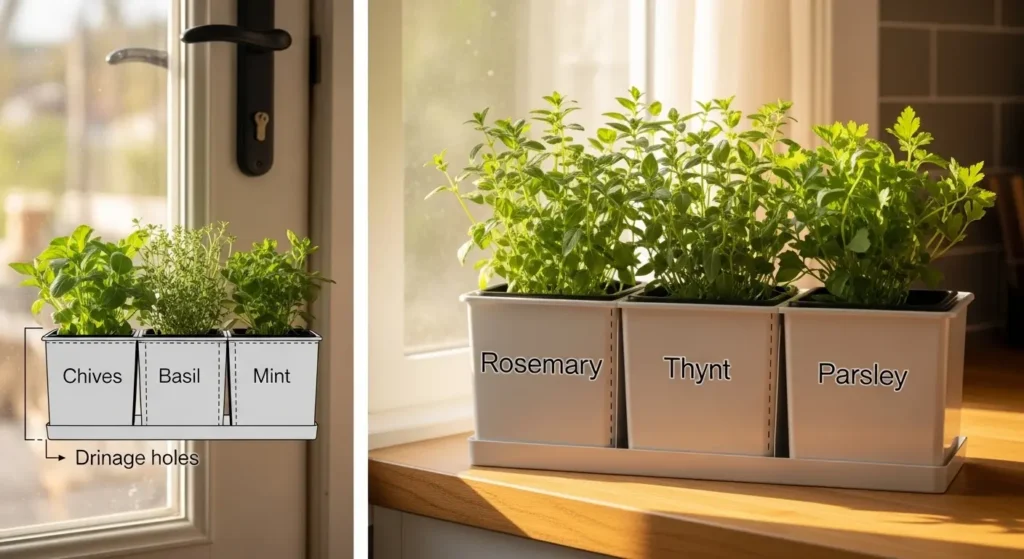
A herb planter box that genuinely changes cooking behavior requires three specific design features that most herb planters omit. Without these features the herb box looks attractive but does not function as a kitchen resource.
Feature one: individual divided sections rather than one open growing space. Mint is invasive and will colonize any undivided planter within six weeks. A divided box with sections of 6 to 8 inches per herb keeps each variety contained and at harvestable density throughout the season.
Feature two: positioning within 20 steps of the kitchen door. A herb planter that requires putting on shoes to access gets used occasionally. A herb planter visible from the kitchen window and accessible in ten seconds gets used in every meal. The position decision determines usage frequency more than any other variable.
Feature three: adequate drainage. Herb roots in standing water rot within days. A minimum of four 10mm drainage holes per 12-inch section is the baseline. Mediterranean herbs — rosemary, thyme, sage — require even faster drainage and benefit from a layer of grit mixed into the compost at a ratio of one part grit to three parts compost. The 5-Pack Heirloom Herb Seeds covers the full culinary selection for planting directly into a divided herb box. Find them linked on Amazon.
PRO TIP: Harvest herb plants regularly even when you do not need the herbs for cooking. Regular harvesting of the stem tips prevents woody growth, encourages bushy branching, and keeps the plant at the productive leafy stage rather than allowing it to run to flower and then seed. A harvested herb plant is a more productive and more beautiful herb plant.
8. A Vertical Planter Box Column Produces Spectacular Results From One Square Foot of Base
✦ Vertical Planter Box Design
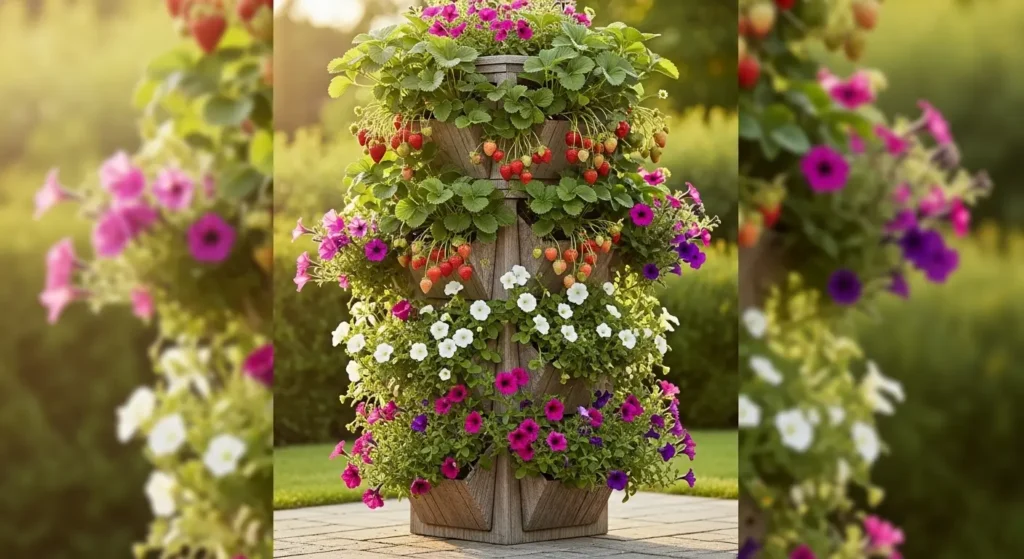
A vertical planter box column extends growing capacity upward rather than outward — the most space-efficient growing structure available for patios and balconies with minimal floor space. A column 60 inches tall with growing pockets at 6-inch intervals provides ten planting positions from a single 12-inch square base footprint.
Strawberries are the most productive crop for vertical column planters because their shallow root systems suit small pocket volumes, their runners provide natural trailing coverage between pockets, and their horizontal fruiting habit means the fruit hangs outward from the column face where it is easy to harvest and visually prominent.
The construction of a vertical planter column from timber requires pressure-treated stock for longevity, a central drainage tube that directs water from the top pocket down through each level rather than relying on overflow between levels, and a stable base that prevents toppling in wind. The central drainage tube is the critical engineering detail — without it the top pockets dry quickly while the bottom pockets waterlog.
9. The Modern Planter Box: Why Material Choice Matters More Than Anything Else
✦ Modern Minimal Garden Box
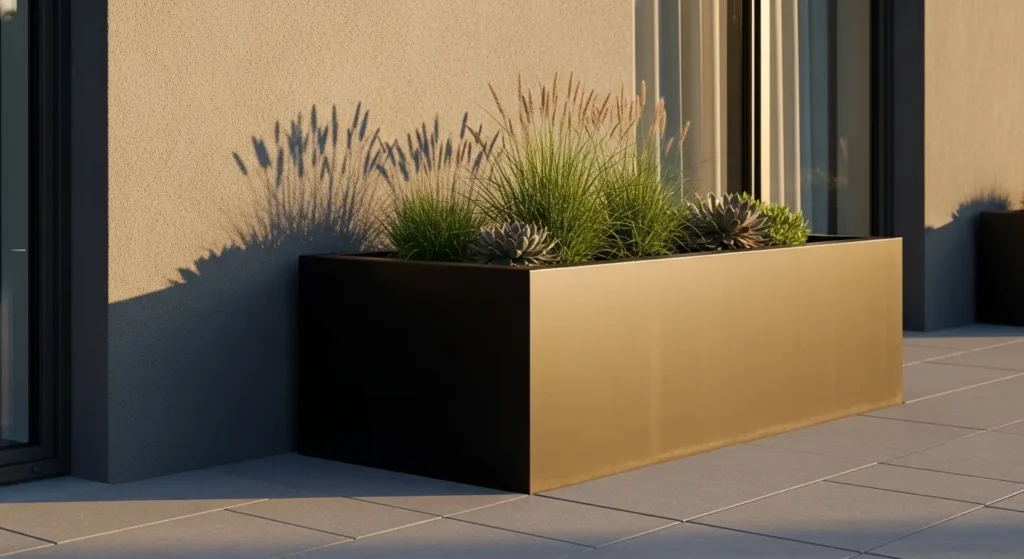
Modern minimal planter boxes succeed or fail based almost entirely on material choice. The clean rectangular form that defines modern planter box design reads as architectural when built from the right material and as flat-pack furniture when built from the wrong one.
The materials that produce genuinely modern planter box results: Corten weathering steel which develops its own protective rust patina and looks increasingly architectural as it ages. Powder-coated steel in matte dark finishes — black, dark charcoal, or dark grey — which holds its color through UV exposure without the chalking that lesser powder coats develop. Concrete or concrete-effect fibreglass which provides the weight and texture of architectural material at a fraction of genuine concrete’s handling challenges.
The materials that undermine modern planter box aesthetics regardless of form: painted timber that peels and weathers within two seasons. Untreated pine that greys unevenly. Standard plastic that becomes chalky and brittle in UV. The material choice is the design decision that cannot be corrected after installation.
PRO TIP: Apply a single coat of linseed oil to the inside surfaces of any metal planter box before planting. The oil slows the oxidation of the metal interior surface which, in uncoated steel planter boxes, can release compounds that affect soil pH over time. The exterior can weather and patina naturally while the interior maintains a neutral growing environment.
10. The Small Patio Planter Box Setup: Three Boxes That Cover Every Function
✦ Small Patio Planter Setup
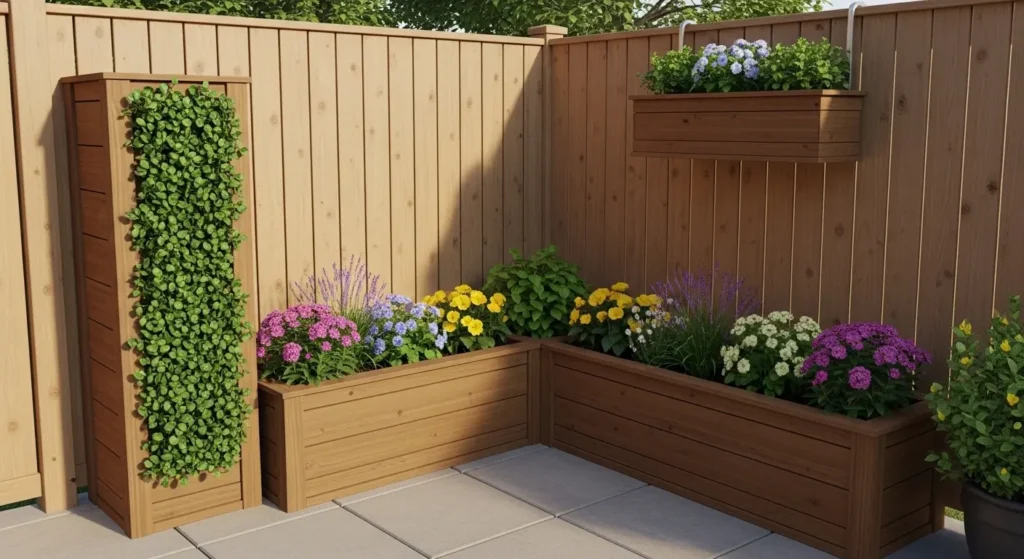
A small patio planter box setup that covers every garden function requires three specific boxes positioned to serve different roles rather than multiple identical boxes positioned randomly around the perimeter.
Box one — the height box. A tall narrow planter box against the fence with a climbing plant or tall structural plant that adds vertical presence above the fence line. This box creates the backdrop that makes the rest of the patio planting read as a foreground display.
Box two — the color box. A wide shallow planter box along the longest accessible edge of the patio with dense seasonal flowering plants that provide the primary color display. This box is viewed horizontally and benefits from the most planting density of the three.
Box three — the green box. A wall-mounted or hanging planter on the fence with trailing foliage plants that add greenery without floor footprint. This box provides the living wall quality that softens the hard fence boundary.
Three boxes serving three distinct functions creates a more complete garden presence than six identical boxes all serving the same decorative role.
PRO TIP: Space the three planter boxes so they are in your field of vision simultaneously from the main seating position. A garden planting that can be seen as a whole composition from the primary seating creates more impact than the same plants distributed where they are each seen individually from different positions.
11. Rustic Timber Planter Boxes: The Build Details That Determine Whether They Last Two Years or Twenty
✦ Rustic Wooden Planter Box
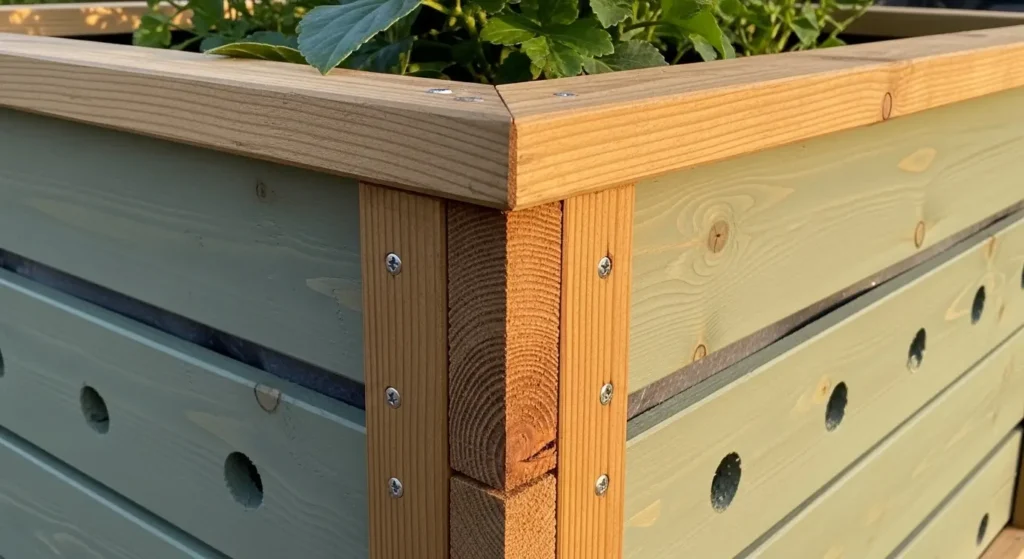
The difference between a rustic timber planter box that lasts two seasons and one that lasts twenty comes down to four construction decisions that most build guides omit.
Decision one: timber species. Pressure-treated pine handles outdoor exposure for 15 to 20 years. Standard untreated pine deteriorates within two to three seasons even with paint or oil treatment. Cedar and redwood are naturally decay-resistant and suitable untreated. Oak is durable but heavy. The timber choice at the start of the project determines the planter’s lifespan more than any subsequent treatment.
Decision two: drainage provision. A minimum of four 15mm drainage holes per square foot of base area. Not two holes. Not one. Four per square foot is the drainage specification that prevents waterlogging in all weather conditions.
Decision three: liner installation. A landscape fabric liner stapled inside the box retains compost while allowing water to drain. Without a liner fine compost particles wash through drainage holes within weeks, creating air pockets in the root zone and progressively depleting the growing medium.
Decision four: leg elevation. Raise the planter box on four small timber feet of 20 to 30mm height. The air gap beneath the base prevents moisture wicking into the bottom timber face — the most common rot initiation point in ground-contact planter boxes.
PRO TIP: Paint all interior surfaces of a timber planter box with two coats of exterior wood preservative before adding the landscape fabric liner. Even with good drainage, compost moisture in contact with unprotected timber accelerates decay. The preservative treatment takes one hour to apply and adds years to the planter box lifespan.
12. The Flower Display Box: How to Plant for Maximum Color That Lasts the Whole Season
✦ Colorful Flower Display Box
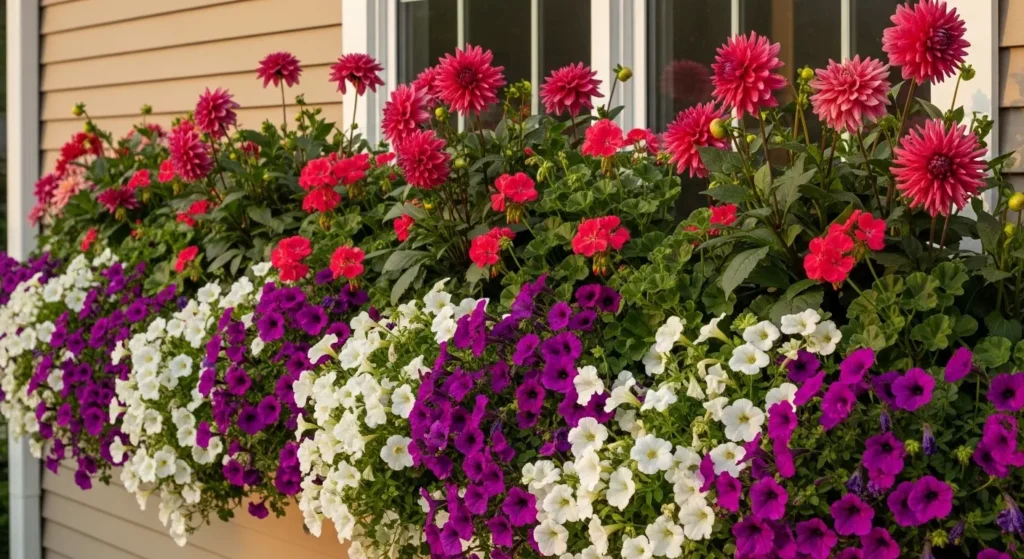
A flower display box that maintains peak color from June through September requires a specific planting approach that most gardeners do not use because it feels counterintuitive at installation: plant for how the box will look in August, not how it looks in June.
June planting that looks full immediately will be overgrown and declining by August. June planting that looks slightly sparse — plants at 60% of their mature spread — will be at perfect density in August when the growing season has reached its peak. The September display is the planting target, not the June installation photograph.
The planting combination that delivers consistent season-long color: trailing petunias or calibrachoa at the front edge for continuous non-stop flowering from June to frost. Mid-height geraniums as the color anchor — reliable, abundant, and disease-resistant through summer heat. One structural plant per 12 inches of box length at the back — a compact dahlia, a tall annual grass, or a single spike plant — for height and late-season drama.
Feed every week with high-potassium liquid fertilizer from the first flowers through to first frost. This single practice is responsible for more of the professional-quality display result than any other variable including initial plant quality.
PRO TIP: Replace one third of the flower display box planting in late July with fresh young plants in bud. The late July refresh extends the display into September and October with new vigorous growth as the original planting begins to decline. The two-phase planting approach — original June planting plus late July refresh — produces a display that maintains professional quality through the entire outdoor season.
The One Decision That Determines Every Planter Box Outcome
Every planter box idea in this guide succeeds or fails based on one decision made before planting begins: growing medium quality. The most beautiful planter box built to perfect specifications produces disappointing plants if filled with poor-quality compost.
For ornamental planters use quality multipurpose compost with added perlite at a ratio of 4 parts compost to 1 part perlite. The perlite improves drainage and prevents compaction over the season. For vegetable planters use a dedicated vegetable compost or a mix of topsoil, compost, and perlite in equal thirds. For Mediterranean herbs use a gritty compost mix with one part horticultural grit to three parts compost.
Never reuse compost from a previous season in a planter box without mixing it with at least 50% fresh material and adding slow-release fertilizer granules. Old compost is depleted, potentially disease-harboring, and compacted to a density that limits root development. The compost investment is the one variable that most directly determines plant performance in every planter box idea on this list.
📌 More garden planter ideas → 16 Garden Planter Ideas That Transform Outdoor Spaces
Frequently Asked Questions
What wood is best for planter boxes?
The best woods for outdoor planter boxes in order of durability are: cedar and redwood which are naturally decay-resistant and require no treatment. Pressure-treated pine which handles ground-contact outdoor exposure for 15 to 20 years. Teak and oak which are durable but significantly heavier and more expensive. Avoid standard untreated pine, MDF, and plywood which deteriorate rapidly in outdoor conditions regardless of paint or varnish treatment. According to the University of Minnesota Extension Service cedar is the most recommended timber for raised garden bed construction due to its combination of natural rot resistance, workability, and relatively low weight compared to other durable species.
How deep should a planter box be for vegetables?
Vegetable planter box depth requirements vary by crop: salad leaves, radishes, and herbs need a minimum 6 to 8 inches. Bush tomatoes, peppers, courgettes, and most flowering vegetables need 12 inches. Climbing indeterminate tomatoes, deep-rooted brassicas, and root vegetables like carrots and parsnips need 18 inches minimum. Building a single 18-inch deep planter box covers all crop types and is the most versatile investment for a vegetable planting project.
Do planter boxes need drainage holes?
Yes — drainage holes are non-negotiable in any planter box. Without adequate drainage the growing medium becomes waterlogged after rain or watering, root systems suffocate from oxygen deprivation, and plants die from root rot within days to weeks depending on the severity. The minimum drainage specification is four 10 to 15mm holes per square foot of planter base area. Larger drainage holes are better than smaller ones. More holes are better than fewer. The one exception is self-watering planter boxes which use a reservoir system — these are designed without base drainage holes because water management is handled by the internal wicking system.
Build It Right Once and It Performs for Years
The difference between a garden planter box idea that becomes a permanent productive feature and one that needs replacing every two seasons is in the build decisions made before the first plant goes in. Timber species, drainage provision, liner installation, compost quality, and positioning relative to sun and prevailing wind all determine outcomes that no amount of good planting can correct after the fact.
Choose the planter box idea from this guide that solves your specific garden challenge. Build it to the specifications outlined. Fill it with quality growing medium. Plant it appropriately for its depth and light conditions. A planter box built correctly this season will still be performing well five summers from now.
All the products mentioned in this article are linked on Amazon. Every recommendation is something we genuinely believe in.
More Garden Planter Ideas
→ 12 Best Trellis Planters for a Beautiful Patio and Garden
→7 Full Sun Planter Ideas For Hot Summer
→ 10 Mini Dish Garden Ideas You’ll Love
→ 12 Perennials That Bloom From Spring To Fall
A planter box built correctly this season will still be performing well five summers from now. Build it right once and it performs for years.

Sheikh Hassaan is a digital architect for small businesses and the founder of The Glow Up System. He writes about home decor, garden design, and outdoor living for real American homes – practical ideas that work in actual spaces without oversized budgets.