
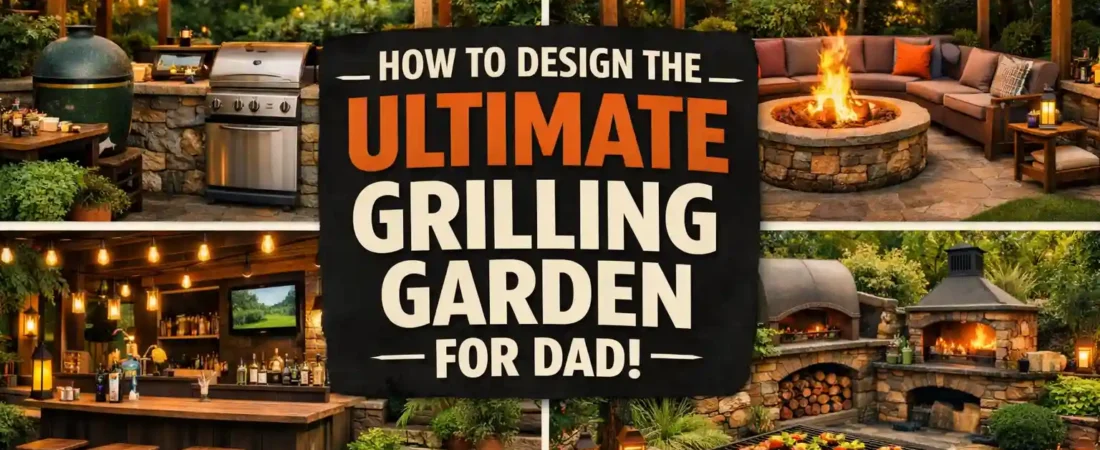
The best bbq garden ideas treat the grilling area as a complete outdoor kitchen zone rather than a single appliance placed somewhere convenient. A genuinely well-designed grilling garden gives dad a dedicated cooking station with prep space, storage, seating for an audience, and the herb garden within arm’s reach that turns ordinary grilling into something approaching a proper outdoor kitchen experience.
This guide covers how to design the ultimate grilling garden — from layout and zoning through surface materials, the companion herb garden every griller wants within reach, lighting for evening cooking, and the storage solutions that keep tools and supplies organized at the cooking station rather than scattered across the garden.
Table of Contents
Layout and Zoning the Grilling Garden
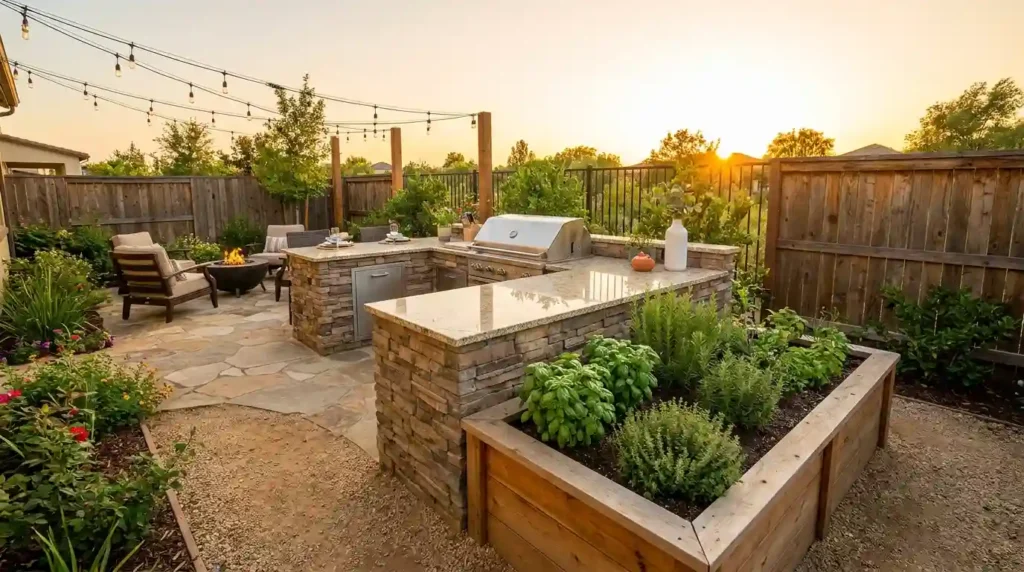
A well-designed grilling garden has three distinct zones working together: the cooking zone where the grill and prep surface are positioned, the gathering zone where people sit and socialize while the dad cooks, and the supply zone where herbs, tools, and supplies are stored within reach but out of the direct cooking heat.
The cooking zone:
Position the grill with its back to a solid wall or fence rather than in an open exposed position — this provides wind protection that improves cooking consistency and creates a defined boundary for the cooking zone. Allow 90cm of clear space on at least one side of the grill for prep and tool access.
The gathering zone:
Position seating 2 to 3 meters from the grill — close enough for conversation but far enough that smoke and heat do not affect guests directly. This distance also keeps people out of the dad’s working space while he cooks, which most grilling dads genuinely prefer.
The supply zone:
Position herb plantings, tool storage, and condiment storage immediately adjacent to the cooking zone — within one step of the grill rather than requiring a walk back to the kitchen. This is the zone that most grilling areas get wrong, forcing the cook to abandon the grill repeatedly during cooking to fetch forgotten items.
Surface Materials for the Cooking Zone
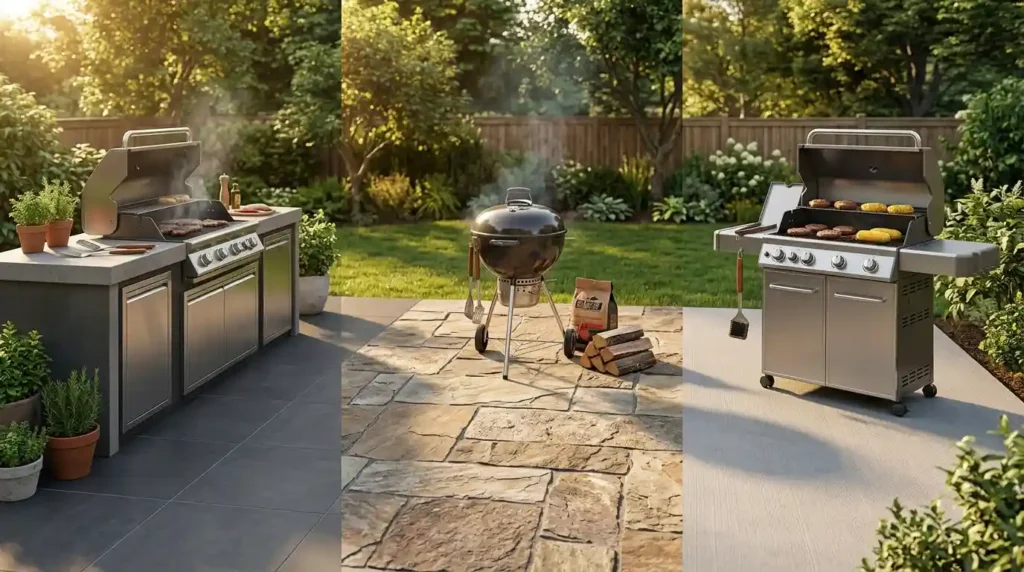
The flooring beneath and immediately around the grill needs to handle heat, grease, and heavy foot traffic better than standard garden paving. Three materials consistently perform best in this application: large format porcelain paving, which is non-porous and resists grease staining completely — wipes clean with standard outdoor cleaner and never needs sealing. Natural stone paving, which provides the most attractive traditional appearance but requires periodic sealing to resist grease staining over time. Poured concrete, which is the most economical option and can be finished smooth, textured, or stained to suit any garden style.
Avoid timber decking directly beneath the grill — grease drips and occasional embers create both a staining and fire safety concern that hard paving materials do not share. If the rest of the patio is decking, install a hard paved section specifically beneath and around the grill position.
Companion Herb Gardens for the Ultimate Backyard Cookout Station
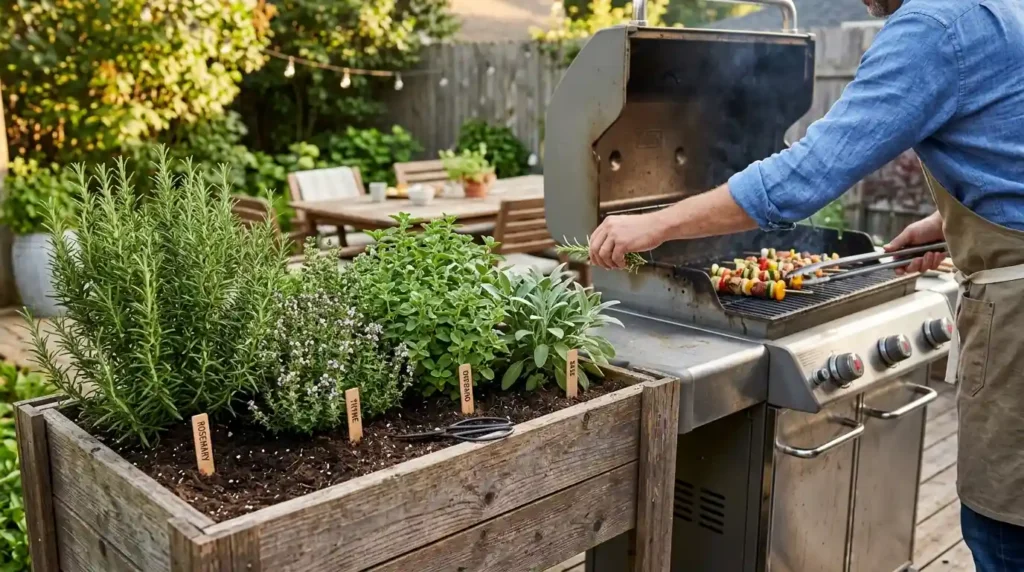
A companion herb garden positioned within arm’s reach of the grill transforms grilling from a process that requires kitchen trips into a self-contained cooking experience. The herbs most useful for grilling — rosemary, thyme, oregano, and sage — are also among the most drought-tolerant and heat-tolerant herbs available, making them perfectly suited to growing immediately beside a hot grill in full sun.
Rosemary:
The single most useful grilling herb — woody rosemary stems can be used as natural skewers or thrown directly onto coals to add aromatic smoke to grilled meat. Plant as a small shrub that develops woody stems within two seasons.
Thyme:
Low-growing and extremely drought tolerant, thyme suits the edge of a herb bed or growing between paving stones near the grill. Fresh thyme sprigs added to marinades and rubs are far more aromatic than dried thyme.
Oregano:
Vigorous and spreading, oregano provides abundant fresh leaves throughout the grilling season for marinades, rubs, and finishing oils. Plant in a contained position or large pot to prevent it spreading beyond the herb bed.
Sage:
Particularly suited to grilled pork and poultry, sage has a strong silvery foliage that adds visual texture to the herb bed alongside its culinary use. Sage tolerates the same hot dry conditions as rosemary and thyme.
Plant the herb bed in a raised position 30 to 40cm from the grill — close enough for easy reaching but far enough to avoid direct heat stress on the plants. A simple raised bed using the same material as the grill surround creates visual continuity between the cooking station and its herb garden.
Storage Solutions at the Grilling Station
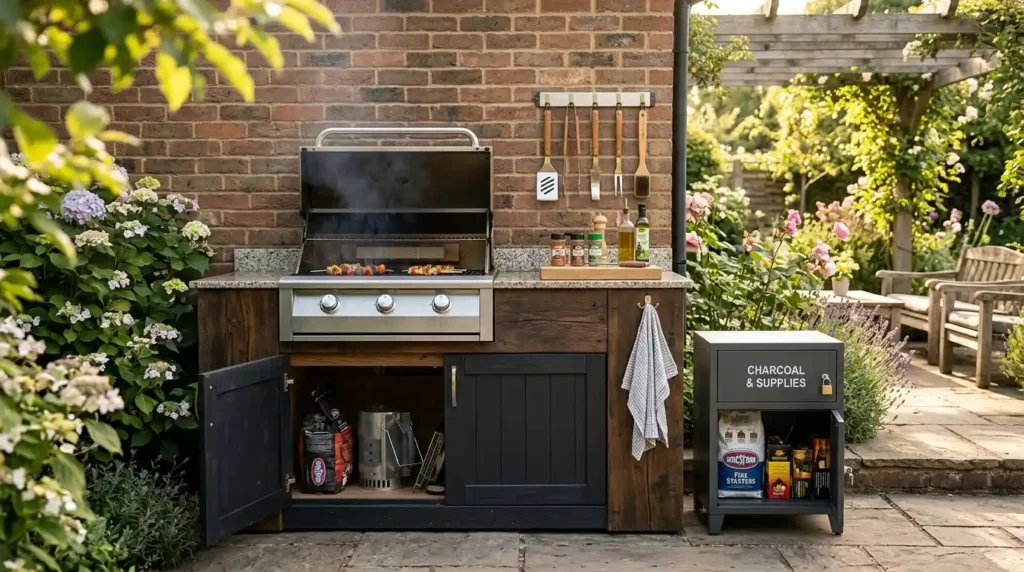
Tool storage at the grilling station should keep frequently used items within one step of the cooking position while keeping fuel, charcoal, and less frequently used items in weatherproof enclosed storage nearby. A built-in cabinet beneath a prep counter provides the most integrated storage solution — sized to hold a propane tank, charcoal supply, and grilling tools out of sight when not in use.
A wall-mounted magnetic strip or hook rail positioned beside the grill keeps tongs, spatulas, and brushes immediately accessible during cooking without cluttering the prep surface. This single addition eliminates the most common grilling frustration — searching for the right tool mid-cook with hands full and heat rising.
Lighting the Grilling Garden for Evening Cooking
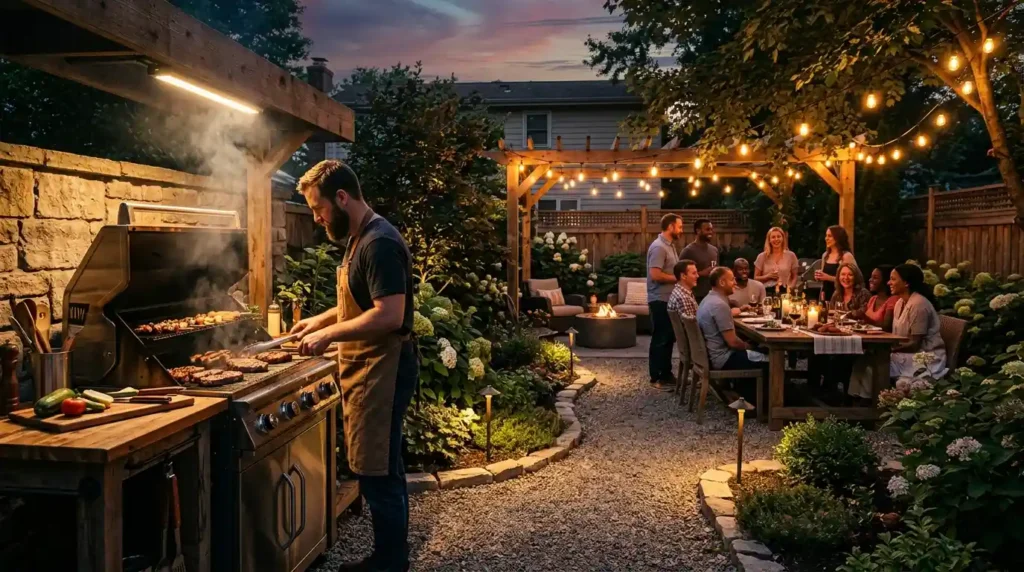
A grilling garden needs two distinct lighting types working together: a focused bright task light directly over the grill surface for accurate cooking visibility, and softer ambient lighting across the gathering and dining areas for atmosphere. Combining only one type leaves either the cooking unsafe in low light or the gathering area harshly lit.
A weatherproof LED task light mounted on an adjustable arm directly above the grill provides the bright, accurate light needed to judge cooking doneness after dusk. Position it to illuminate the grill surface without creating glare in the cook’s eyes.
Warm white string lights across the gathering zone and low-level path lights marking the route between the house and the grilling station complete the evening atmosphere. All lighting at 2700K warm white temperature maintains the relaxed outdoor evening quality rather than a harsh utility feel.
📌 More garden and outdoor living ideas: 7 BBQ Area Ideas For Your Patio
Frequently Asked Questions
How do you design a backyard BBQ area?
Designing a backyard BBQ area requires three zones working together — a cooking zone with the grill backed against a wall or fence with 90cm of clear prep space, a gathering zone for seating positioned 2 to 3 meters away from direct heat and smoke, and a supply zone with herbs and tools within one step of the grill. Use non-porous hard paving such as porcelain or natural stone beneath the grill rather than timber decking, which stains and presents a fire risk from grease and embers. According to the National Fire Protection Association maintaining clear space around any outdoor cooking appliance significantly reduces backyard fire incidents.
What herbs should you grow next to a BBQ?
The best herbs to grow next to a BBQ are rosemary, thyme, oregano, and sage — all four tolerate the hot dry conditions near a grill and are among the most useful culinary herbs for grilled food. Rosemary’s woody stems double as natural skewers. Thyme suits low-growing edges of the bed. Oregano provides abundant leaves throughout the season. Sage particularly suits grilled pork and poultry. Plant the herb bed 30 to 40cm from the grill for easy reach without direct heat stress on the plants.
What surface is best under a BBQ grill?
Large format porcelain paving is the best surface beneath a BBQ grill because it is completely non-porous and resists grease staining without ever requiring sealing — it wipes clean with standard outdoor cleaner. Natural stone paving is the second-best option with an attractive traditional appearance but requires periodic sealing to resist grease staining over time. Poured concrete is the most economical choice and performs well in any finish. Timber decking should be avoided directly beneath a grill due to grease staining and fire safety concerns from dripping fat and occasional embers.
How far should seating be from a BBQ grill?
Seating for guests should be positioned 2 to 3 meters from a BBQ grill — close enough to maintain conversation with the person cooking but far enough to avoid direct smoke exposure and radiant heat, particularly in warm weather. This distance also respects the cooking zone as the dad’s working space, preventing guests from inadvertently crowding the area where he needs to move freely with hot food and tools.
More Garden and Outdoor Living Ideas
→ 11 Outdoor Kitchen Ideas That Impress Guests
→ How To Build a Cozy Dad’s Retreat Patio Corner
→ 10 Father’s Day Gifts for Gardeners He Will Actually Love
Start with the herb bed beside the grill. It is the single addition that turns ordinary grilling into something he will genuinely look forward to every weekend.

Sheikh Hassaan is a digital architect for small businesses and the founder of The Glow Up System. He writes about home decor, garden design, and outdoor living for real American homes – practical ideas that work in actual spaces without oversized budgets.