
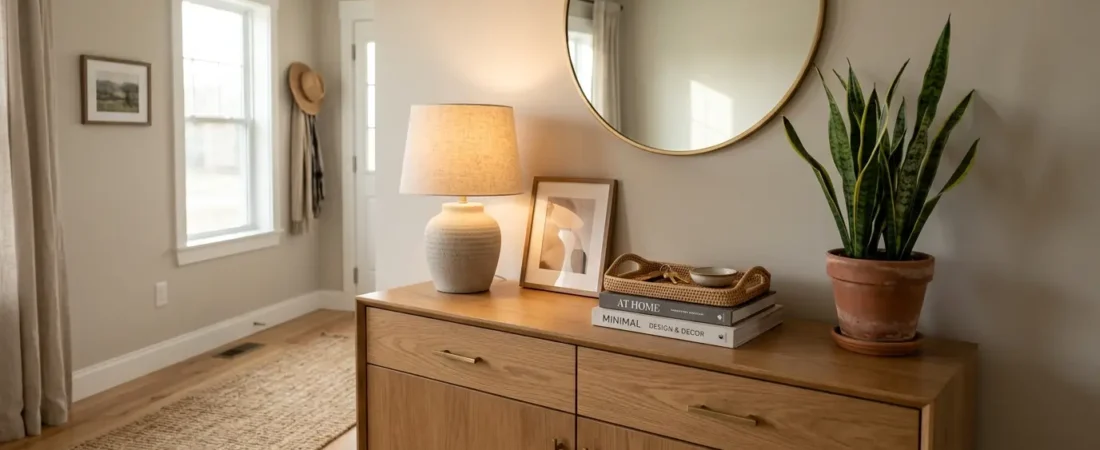
The entryway is the first thing people see when they walk into your home. It is also where everything lands. Keys, mail, bags, shoes, jackets. It piles up fast. And before you know it, the space that should feel welcoming looks like a disaster zone. That is where a well-chosen entryway cabinet changes everything. It gives you a place to hide the chaos while adding real style to your entrance.
That is what makes entryway cabinet ideas so essential for American homes, turning a cluttered drop zone into a beautifully organized space that works for your family every single day.
This article covers seven practical entryway cabinet ideas that work for real American homes, from narrow apartment hallways to spacious suburban foyers. Every suggestion includes specific dimensions, actual paint colors, and real product references you can use. No vague advice. No impossible layouts. Just smart, stylish cabinets that make your entryway work as hard as you do.
Table of Contents
Why an Entryway Cabinet Changes Everything
The entryway is the hardest working space in your home. It handles the transition between outside and inside, between public and private. It takes the brunt of daily chaos. Without proper storage, that chaos spills into the rest of your house. Coats end up on dining chairs. Shoes end up in the middle of the living room. Mail ends up on the kitchen counter.
An entryway cabinet solves all of that by giving every item a designated home. Keys go in a drawer. Mail goes in a basket. Shoes go behind closed doors. Coats go on hooks above. Everything has a place. And when everything has a place, clutter disappears.
The right cabinet also adds significant visual impact. It is the first piece of furniture people see when they walk in. It sets the tone for the rest of your home. A beautiful entryway cabinet signals that you care about your space. It makes guests feel welcome before they even take off their coats.
The key is choosing a cabinet that fits your actual needs. How many pairs of shoes come through your door every day? How much mail do you need to sort? Do you need hanging space for coats or just storage for smaller items? The best entryway cabinet ideas are built around real routines, not generic advice.
1. The Slim Console Cabinet for Narrow Hallways
✦ Best for: Apartments and homes with limited entryway floor space
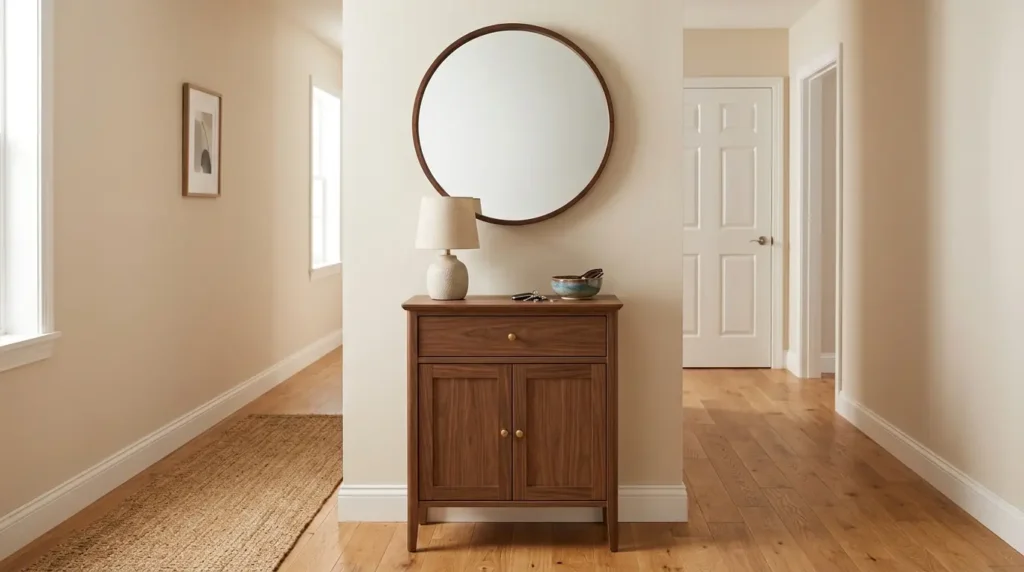
A slim console cabinet is one of the most practical entryway cabinet ideas for tight spaces. It gives you storage without taking up valuable floor space. The key is the depth. Look for cabinets that are 12 to 14 inches deep. That is deep enough for storage but shallow enough to fit in most narrow hallways.
For a hallway that is 36 inches wide, a 12-inch deep cabinet leaves enough room to walk past comfortably. For tighter spaces, consider an 8-inch deep wall-mounted console. It provides a surface for keys and mail without any floor footprint at all.
The cabinet should have at least one drawer for small items like keys and mail. A drawer keeps these items accessible but out of sight. Below the drawer, add a small cabinet for shoes or bags. One or two shelves inside the cabinet provide organization for different types of items.
Choose a finish that works with your existing trim and flooring. Walnut adds warmth and richness. White adds brightness and a modern feel. Black adds drama and sophistication. The finish should complement your home without competing with it.
The design principle here is proportional fit. The cabinet should match the scale of your hallway. Too large and it overwhelms the space. Too small and it looks like an afterthought. The right proportions make a narrow hallway feel intentional rather than cramped.
2. The Bench Cabinet That Combines Seating and Storage
✦ Best for: Families who need a place to sit while putting on and taking off shoes
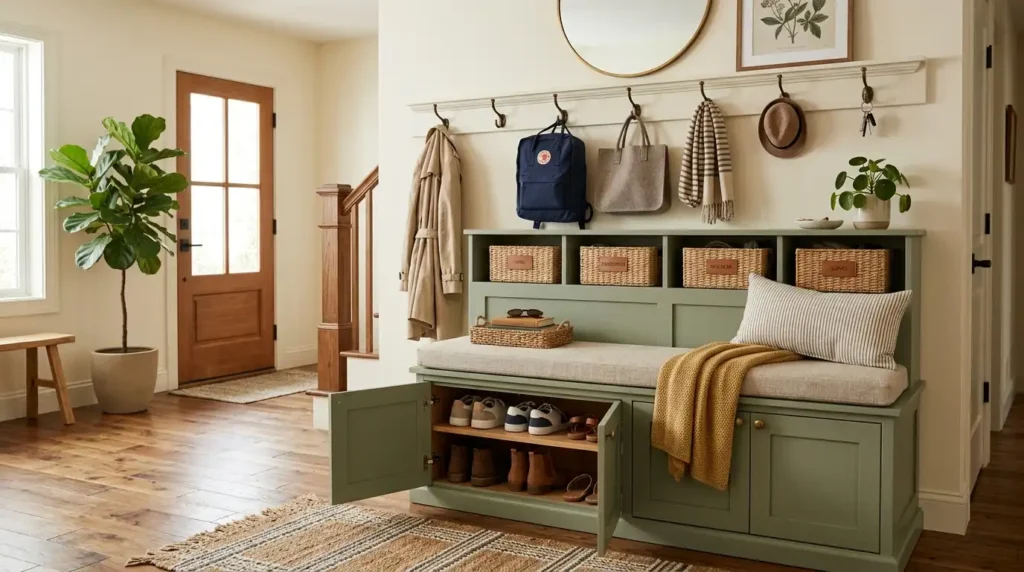
A bench cabinet is one of the most functional entryway cabinet ideas because it does two things at once. It gives you a place to sit and a place to store. That combination makes it ideal for families who deal with shoes multiple times a day.
The bench should be 18 to 20 inches high, the same as a standard chair. The depth should be 16 to 18 inches for comfortable seating. The width depends on your space, but 36 inches is a good minimum. That seats one adult comfortably or two small children.
For storage, add cabinets or cubbies under the seat. Each cubby should hold at least one pair of adult shoes. Add a door or a curtain to hide the contents. Woven baskets on open shelving add texture and are easy to grab and go.
Above the bench, add a shelf and hooks. The shelf holds decorative items or mail baskets. The hooks hold coats and bags. A mirror above the bench adds light and makes the space feel larger.
The design principle is dual function. Every element of this cabinet serves more than one purpose. The seat is for sitting and storing. The shelf is for display and mail. The hooks are for coats and bags. That efficiency is what makes bench cabinets so successful.
3. The Tall Cabinet for Maximum Vertical Storage
✦ Best for: Entryways where floor space is limited but wall height is available
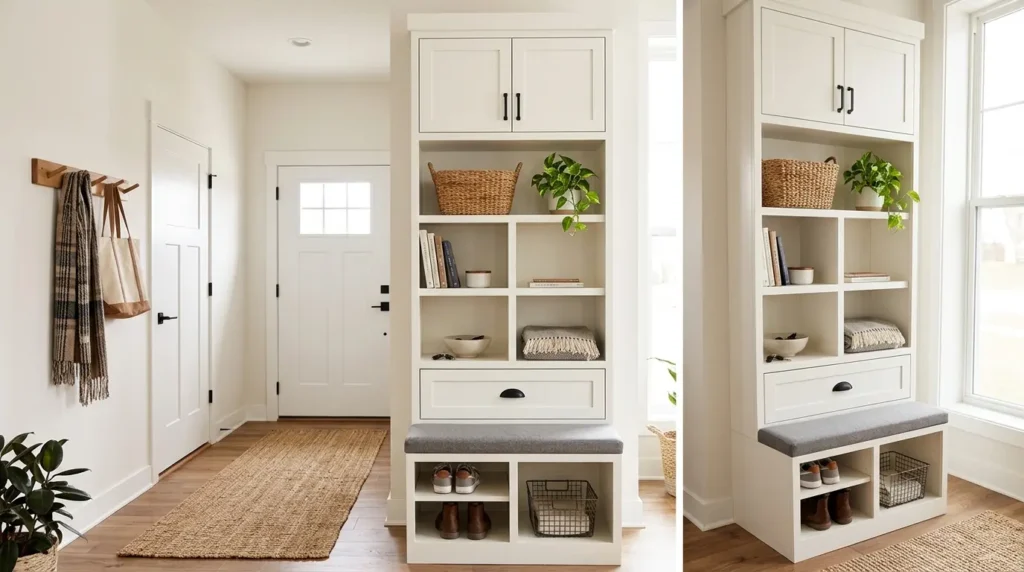
A tall cabinet makes the most of vertical space. It stores more in less floor space than any other type of entryway cabinet. That makes it ideal for American homes where entryways are often narrow but have high ceilings.
For a tall cabinet, aim for a height of at least 72 inches. Ceiling height cabinets are even better. They maximize storage and draw the eye upward, making the space feel larger. The depth should be 14 to 16 inches. The width depends on your space, but 24 to 30 inches is typical.
Include a mix of storage types. A drawer at the top for keys and mail. Open shelving in the middle for decorative items or baskets. Closed cabinets at the bottom for shoes and bags. This variety keeps the cabinet interesting while maximizing functionality.
Paint the cabinet the same color as the wall for a built-in look. This makes the cabinet recede visually and keeps the entryway from feeling cramped. Use hardware in a contrasting finish for visual interest. Brass, black, or chrome all work depending on your style.
The design principle is upward expansion. Tall cabinets use space that would otherwise sit empty. That makes them one of the most efficient entryway cabinet ideas for any home.
4. The Hall Tree Cabinet With Hooks and Shelves
✦ Best for: Homes with an active lifestyle where coats, bags, and accessories need daily access
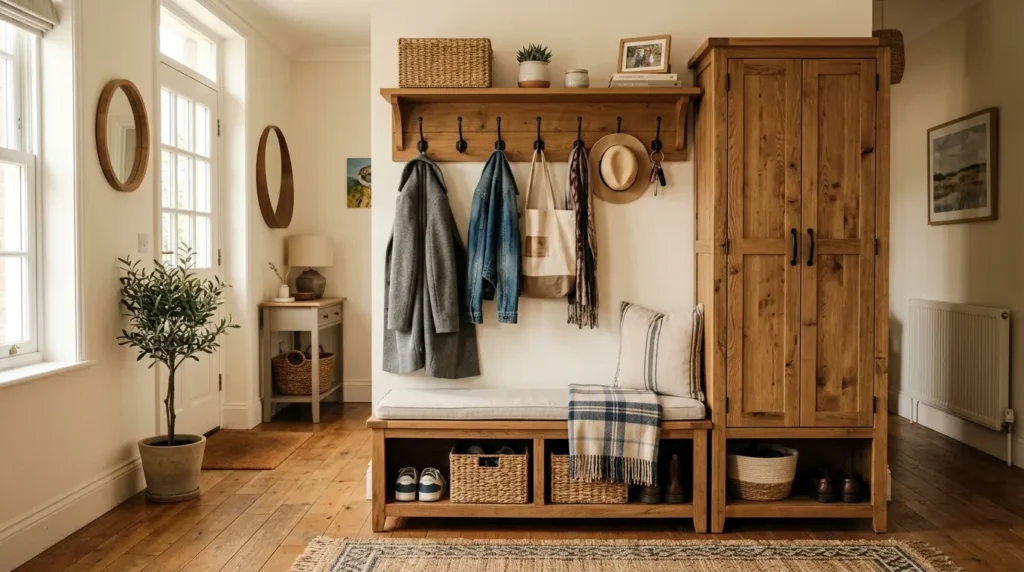
A hall tree cabinet combines seating, hanging, and storage in one piece. It is one of the most versatile entryway cabinet ideas because it addresses multiple entryway needs simultaneously.
The design is simple. A bench at the bottom for sitting and shoe storage. A tall cabinet section on one side for hanging coats and storing bags. Hooks along the top for additional hanging space. A shelf above the hooks for hats, bags, or decorative items.
The bench should be 18 to 20 inches high and 16 inches deep. Add a cushion for comfort. The cabinet section should be at least 60 inches tall. That gives you enough hanging space for full-length coats. Add adjustable shelving inside the cabinet for maximum flexibility.
Choose hooks that match your hardware. Black metal hooks work with modern and industrial styles. Brass hooks add warmth and pair well with wood. Antique bronze hooks work with traditional styles. Make sure the hooks are spaced at least 6 inches apart for comfortable hanging.
The design principle is all-in-one functionality. A hall tree cabinet eliminates the need for separate benches, coat racks, and storage cabinets. It does everything in one compact piece.
5. The Cabinet With Drawers for Everyday Items
✦ Best for: Homes where keys, mail, and small items are the biggest clutter problem

Drawers are the most overlooked storage feature in entryway cabinets. They are perfect for small items that need to be accessible but out of sight. Keys, mail, sunglasses, and pet leashes all live in drawers and never create visual clutter.
For an entryway cabinet, look for at least two drawers. One for keys and small items. One for mail and papers. Add a third drawer for seasonal items like gloves and scarves. Each drawer should be at least 4 inches deep and 12 inches wide.
Use drawer dividers to keep items organized. A simple wooden divider separates keys from mail. Small trays or boxes inside the drawer keep small items contained. The goal is to open the drawer and find everything easily without digging.
Below the drawers, add a cabinet for shoes or bags. One or two shelves inside keep items organized. This combination of drawers and cabinets gives you storage for everything that lands in your entryway.
The design principle is accessibility. Drawers put everyday items within easy reach. That means you are more likely to use them, which means your entryway stays organized.
6. The Open Shelf Cabinet for Display and Easy Access
✦ Best for: Entryways where you want to display decorative items while keeping daily essentials accessible
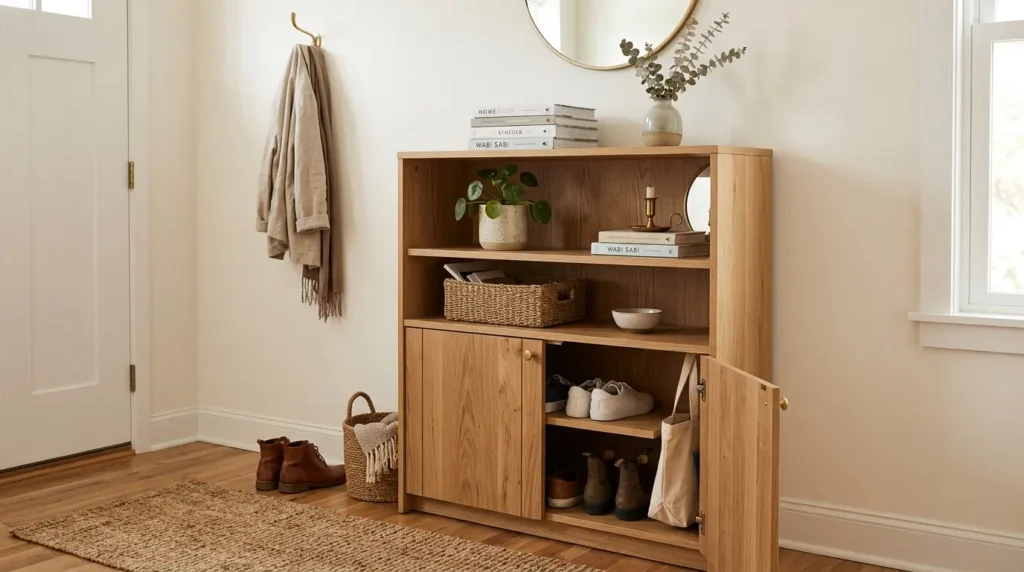
Open shelving adds personality to your entryway while keeping everyday items within reach. It is one of the most visually interesting entryway cabinet ideas because it lets you show your style while still providing storage.
The layout is simple. Closed cabinets below for shoes, bags, and items you want to hide. Open shelves above for display. The shelves should be at least 8 inches deep to hold books, plants, and decorative items.
Use the shelves to tell your story. A few favorite books. A small plant. A vase with dried flowers. A framed photo. Keep the display curated. Too many items look cluttered. Too few look sparse. Three to five items per shelf is a good rule.
Paint the cabinet in a color that adds personality. Navy blue makes a statement. Sage green adds warmth. Charcoal gray adds sophistication. Use the cabinet as an accent piece in your entryway.
The design principle is balance. The closed storage hides the mess while the open display shows your style. That balance is what makes open shelf cabinets so successful.
7. The Cabinet With Shoe Storage and Tray
✦ Best for: Homes where muddy shoes and wet boots are the biggest entryway issue
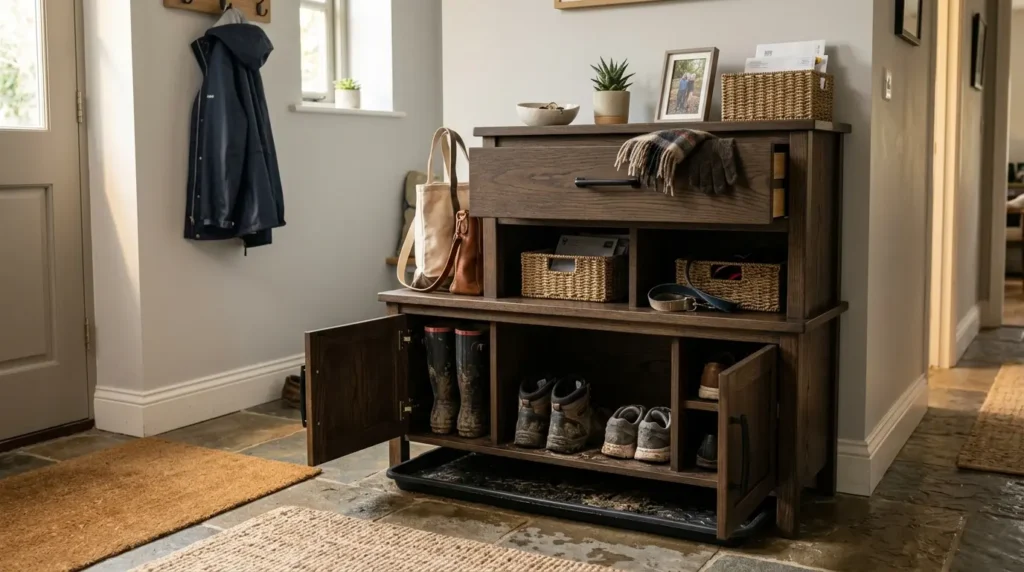
Shoes are the dirtiest item in your entryway. They track in mud, water, and debris. A cabinet with dedicated shoe storage and a waterproof tray solves that problem by containing the mess before it spreads through your home.
The shoe storage should be at the bottom of the cabinet. Open cubbies or slanted shelves work best. They allow shoes to dry naturally while keeping them organized. Each cubby should be at least 6 inches wide, 12 inches deep, and 6 inches tall.
Add a waterproof tray at the base of the cabinet. This catches mud and water from wet boots. Rubber or plastic trays are easy to clean. For a more polished look, use a stone or ceramic tray. Just make sure it is sealed and waterproof.
Above the shoe storage, add a drawer for small items. Keys, mail, and pet supplies live here. A shelf above the drawer holds a decorative item or a mail basket.
The design principle is containment. The cabinet contains the mess before it spreads. That keeps the rest of your home cleaner and your entryway more organized.
Frequently Asked Questions About Entryway Cabinet Ideas
What is the best depth for an entryway cabinet?
The best depth for an entryway cabinet is 14 to 16 inches. This gives you enough storage space without taking up too much floor area. For narrow hallways, look for cabinets that are 12 inches deep or less. Wall-mounted consoles can be as shallow as 8 inches and still provide a surface for keys and mail.
What should I store in my entryway cabinet?
Store items you use daily or weekly. Keys, mail, sunglasses, and pet supplies are top priorities. Shoes and bags that you use frequently are also good candidates. Avoid storing seasonal items or items you rarely use. They take up valuable space that should be reserved for daily essentials.
How do I choose the right size entryway cabinet?
Measure your entryway space carefully. The cabinet should fit comfortably without blocking doorways or walkways. Leave at least 36 inches of walking space in front of or beside the cabinet. The height should be proportionate to your ceiling. A cabinet that is too tall overwhelms a small space. A cabinet that is too short looks like an afterthought.
What are the most important features in an entryway cabinet?
According to Real Simple, the most important features in an entryway cabinet are storage flexibility, durability, and style. Look for adjustable shelving so you can customize the interior. Choose materials that hold up to daily use, like solid wood or high-quality MDF. And make sure the style fits your home. A cabinet that does not match your decor will always feel out of place.
Related Articles
Rustic Wedding Decor Ideas That Feel Warm and Genuine
Wedding Decor Ideas That Transform Any Venue Into Something Special
Home Decorating Ideas for Small Houses
Mudroom Bench Ideas That Combine Storage and Style
A great entryway cabinet does more than store your stuff. It transforms your entrance into a welcoming space that makes coming home feel like a relief and leaving feel effortless.

Sheikh Hassaan is a digital architect for small businesses and the founder of The Glow Up System. He writes about home decor, garden design, and outdoor living for real American homes – practical ideas that work in actual spaces without oversized budgets.