
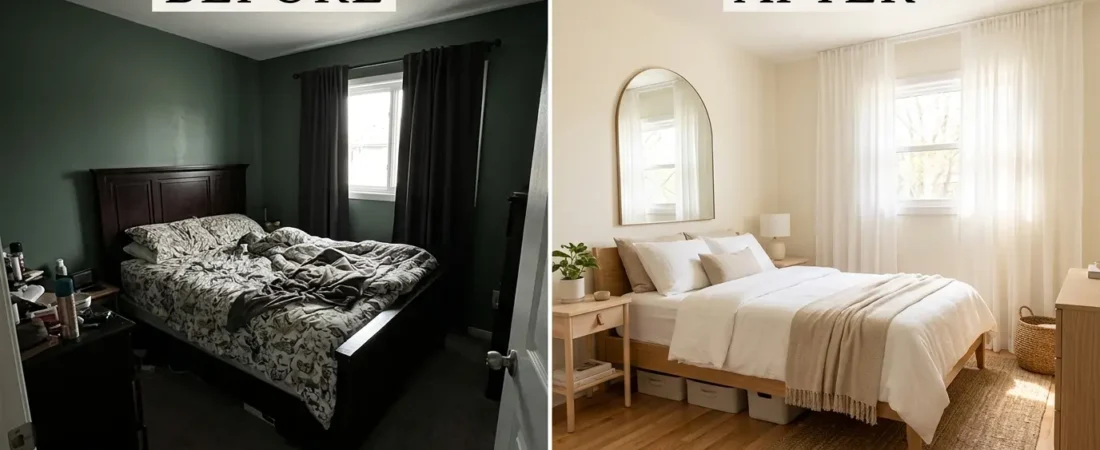
There is a moment when you walk into a room and it just feels small. The walls press in. The furniture seems too large. The whole space feels cramped and closed off. And you assume the only solution is knocking down walls or adding square footage. But that is not true at all. Some of the most spacious-feeling rooms are actually quite small. The difference is not the size of the room. It is how the room is designed.
That is what makes learning how to make a small room look bigger so valuable, transforming a cramped, claustrophobic space into a room that feels open, airy, and welcoming without changing a single wall.
This article covers seven proven strategies for making small rooms feel larger. Every suggestion includes specific paint colors, furniture dimensions, and practical techniques you can use in any room of your house. No vague advice. No unrealistic expectations. Just real strategies that actually work in real American homes.
Why Small Rooms Feel Small and How to Change That
The size of a room is fixed. The square footage is what it is. But the perceived size of a room is entirely flexible. It is determined by how your brain interprets the visual information in the space. And that information can be manipulated with simple design choices.
The biggest factor in how large a room feels is the amount of visible floor space. When you can see the floor, the room feels open. When furniture blocks the floor, the room feels cluttered and small. That is why choosing furniture with legs is one of the most powerful small room tricks.
The second factor is light. Dark rooms feel smaller than light rooms. And not just paint color. Reflected light from mirrors, natural light through windows, and layered artificial light all contribute to the perception of space.
The third factor is visual continuity. When walls, floors, and furniture all compete for attention, the room feels busy and chaotic. When the eye can move smoothly across the space without interruption, the room feels calm and open.
The goal of how to make a small room look bigger is to maximize visible floor space, maximize light, and minimize visual interruptions. Every trick in this article serves one of those three goals.
Table of Contents
1. Paint Walls and Ceiling the Same Light Color
✦ Best for: Any small room where you want an immediate increase in perceived space
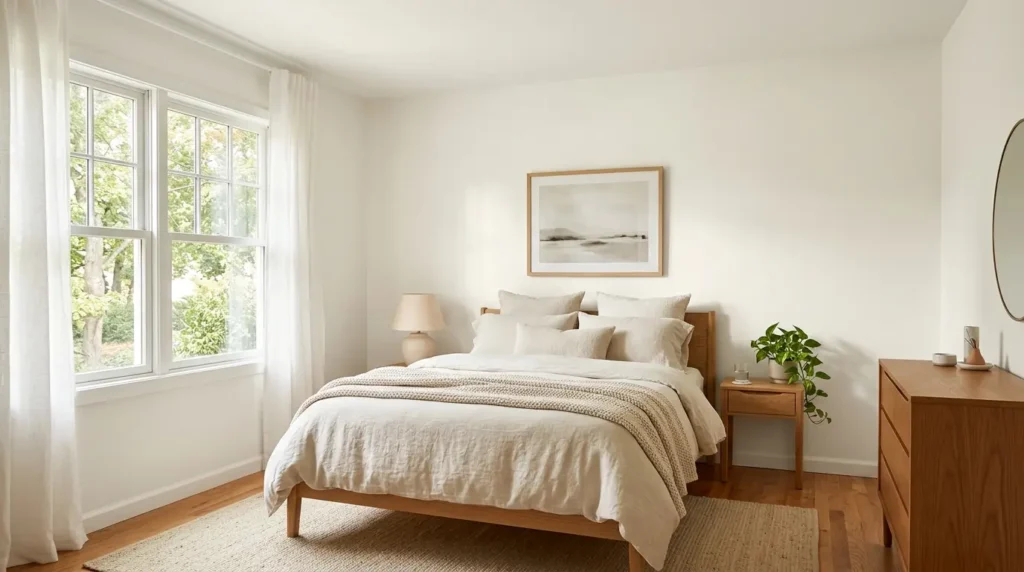
Paint color is the single most effective tool for making a room feel larger. And the most important rule is this: paint the walls and ceiling the same color. When walls and ceiling match, the eye does not stop at the transition point. The room feels taller. The boundaries feel softer. The space feels larger.
The best colors for how to make a small room look bigger are warm light neutrals. Sherwin-Williams Greek Villa is a classic. It has a warm undertone that feels inviting without reading as yellow. Benjamin Moore White Dove is another excellent choice. It is clean and bright without being stark.
Paint the trim the same color as the walls and ceiling. This removes the visual interruption where wall meets trim and creates an even more seamless appearance. The less contrast, the more open the room feels.
If you want to add an accent color, do it through furniture or accessories, not through the walls. A colorful rug, bright throw pillows, or a piece of art on the wall adds personality without breaking the visual continuity of the walls.
2. Choose Furniture With Exposed Legs
✦ Best for: Rooms where floor space is at a premium and you need furniture to feel lighter
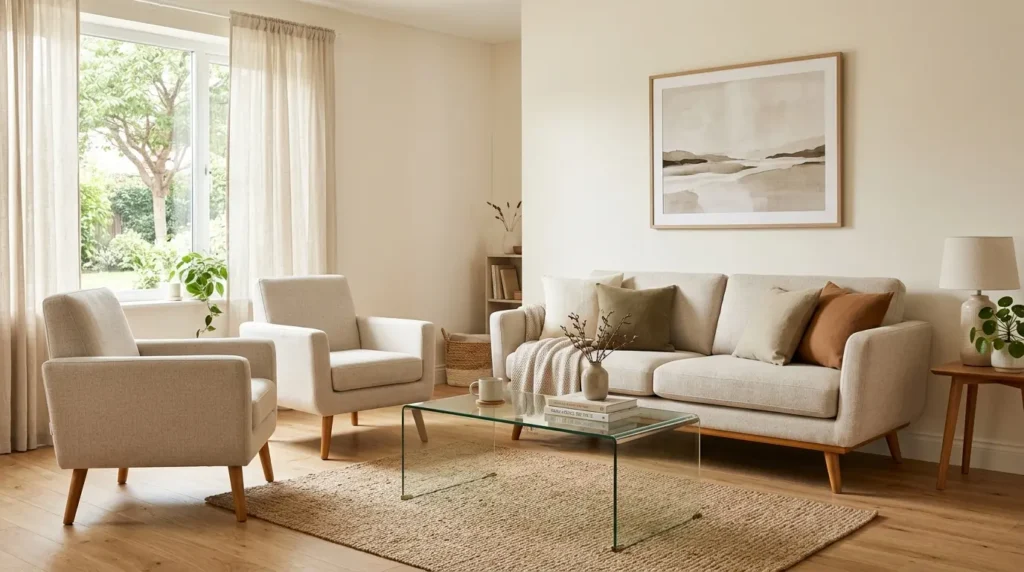
Furniture with legs is one of the most important strategies for how to make a small room look bigger. When you can see the floor beneath furniture, the room feels open and spacious. When furniture sits directly on the floor, the room feels heavy and cluttered.
Look for sofas and chairs with legs that raise the base 6 to 8 inches off the floor. Tapered legs in wood or metal are ideal. They add visual lightness and allow light to flow under the furniture.
The same rule applies to other furniture pieces. Choose a bed with legs instead of a box spring on the floor. Choose a desk with legs instead of a solid pedestal. Choose open shelving instead of closed cabinets. Every piece of furniture should reveal floor space whenever possible.
The goal is to maximize visible floor area. Every inch of floor you can see is an inch that makes the room feel larger.
3. Hang Curtains High and Wide
✦ Best for: Rooms with windows where you want to make the ceiling feel higher and the window feel larger
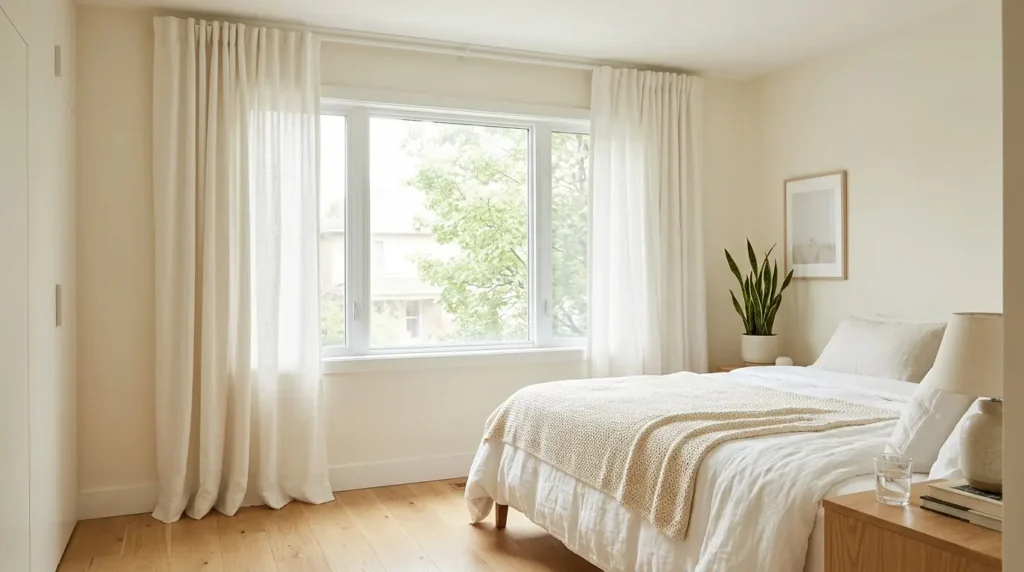
How you hang curtains dramatically affects how large a room feels. Most people hang their curtain rod directly above the window frame. That makes the window feel like the top of the room. Instead, hang the rod as close to the ceiling as possible. This draws the eye upward and makes the ceiling feel higher.
Extend the rod at least 6 inches past the window frame on each side. This makes the window feel wider and allows the curtains to stack back off the window, letting in maximum natural light.
Choose curtains in a light, neutral fabric that matches your walls. Heavy dark curtains absorb light and make the room feel smaller. Light, airy curtains in linen or cotton let light filter through while adding texture.
The goal is to make the window feel as large and open as possible. Natural light is the most effective small room trick. Let in as much as you can.
4. Add a Large Mirror to Reflect Light and Space
✦ Best for: Rooms with limited natural light or rooms that feel closed off
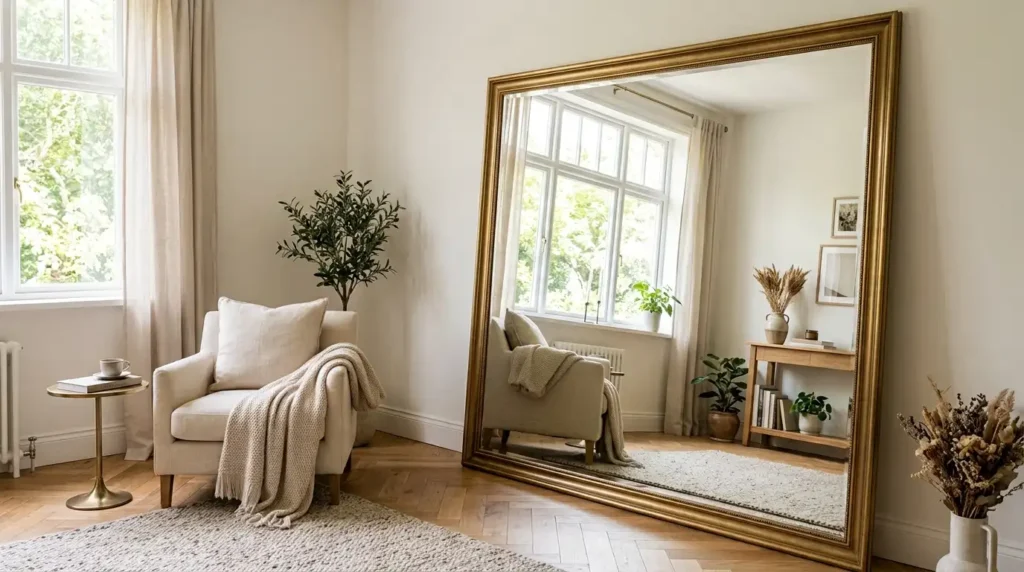
A large mirror is one of the most powerful tools for how to make a small room look bigger. It reflects light, creates depth, and visually expands the space. A well-placed mirror can make a room feel twice as large.
Place the mirror opposite a window to reflect natural light back into the room. This brightens the entire space and makes it feel more open. If you do not have a window opposite, place the mirror where it reflects a light-colored wall or a piece of furniture. The effect is similar.
The size of the mirror matters. A mirror that is too small looks like a decoration. A mirror that is large enough to reflect the whole room creates the illusion of more space. For most rooms, a mirror that is at least 3 feet wide is ideal.
The frame should match your room’s style but avoid anything too ornate. Simple frames in brass, wood, or black allow the mirror to do its job without competing for attention. An arched mirror adds elegance while providing the same light-reflecting benefit.
5. Use Vertical Space With Tall Shelving
✦ Best for: Rooms with limited floor space where storage needs to go up instead of out
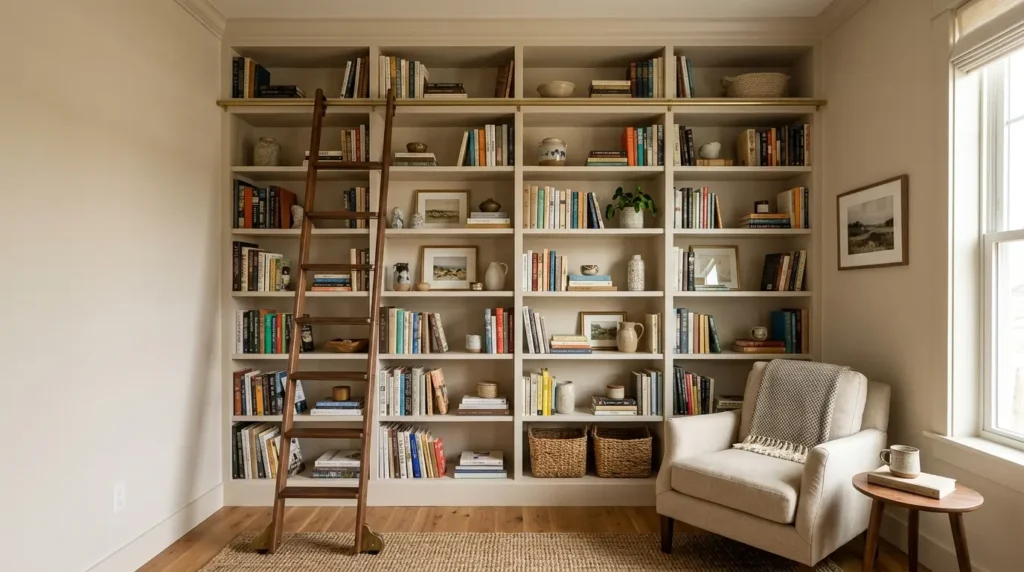
When floor space is limited, the walls are your best storage option. Floor-to-ceiling shelving draws the eye upward, making the ceiling feel higher and the room feel larger. It also provides storage without taking up any floor space.
Paint the shelving the same color as the wall. This makes the shelves recede visually and keeps the room from feeling overwhelmed. If you want contrast, add it through the objects on the shelves rather than the shelves themselves.
Use the shelves for a mix of storage and display. Books, baskets, and decorative objects all work. Keep the shelves organized with at least 40 percent empty space to avoid a cluttered appearance.
The goal is to create visual continuity while maximizing storage. Tall shelving is one of the most effective small room tricks because it solves two problems at once: storage and vertical expansion.
6. Choose Furniture That Fits the Scale of the Room
✦ Best for: Rooms where oversized furniture is making the space feel cramped and tight
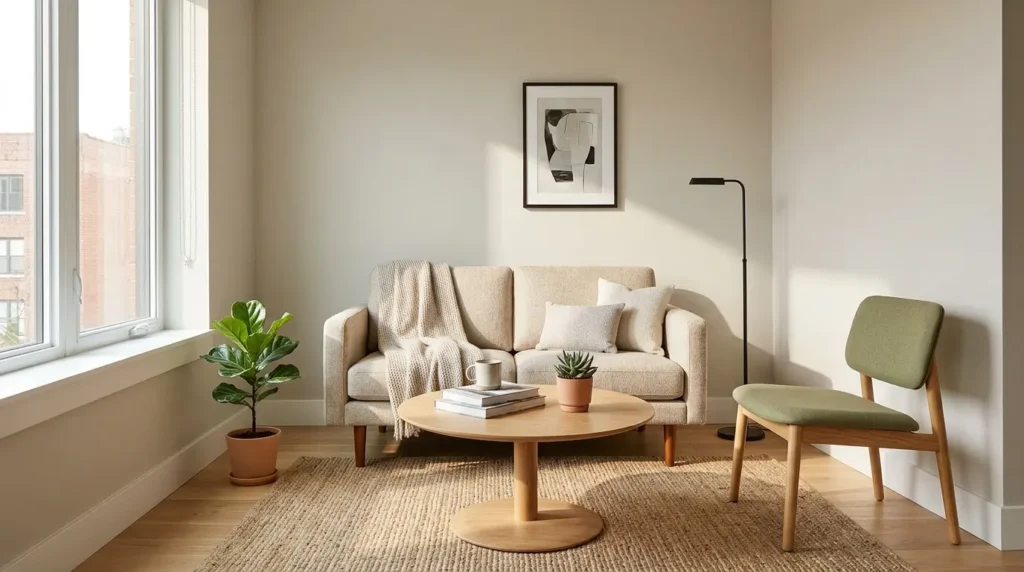
Oversized furniture is the enemy of small rooms. A big sofa, a large coffee table, or a massive bed will overwhelm the space and make it feel cramped. The solution is choosing furniture that fits the scale of the room.
In a small room, choose a loveseat instead of a full sofa. It provides seating without taking up the whole room. Choose a round coffee table instead of a rectangular one. Round tables take up less visual space and are easier to navigate around.
In a bedroom, choose a full bed instead of a queen if space is limited. A full bed is 54 inches wide compared to 60 inches for a queen. That 6 inches can make a noticeable difference in a small room.
The goal is to leave at least 30 inches of walking space between furniture pieces. Anything less than that feels cramped and tight.
7. Add Plants to Create Depth and Life
✦ Best for: Rooms that feel flat or sterile and need visual interest and depth
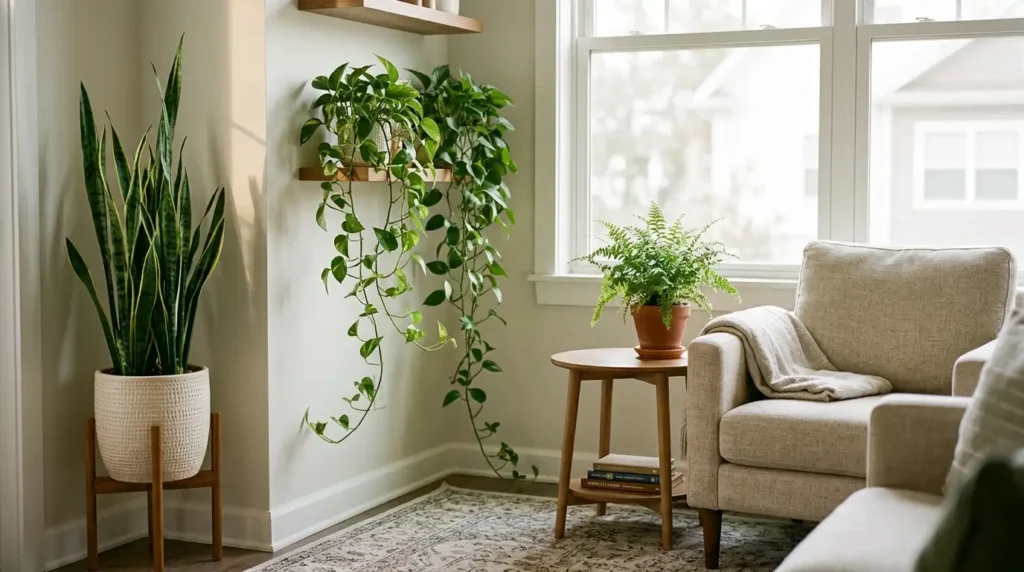
Plants are not just decorative. They create depth and dimension in a room, making it feel larger and more alive. A tall plant in a corner draws the eye upward. A trailing plant on a shelf adds movement and visual interest. A small plant on a side table adds texture and warmth.
Choose plants that fit the scale of your room. A tall plant like a fiddle leaf fig or snake plant is perfect for a small room because it takes up very little floor space while providing height. A trailing plant like a pothos or string of pearls adds interest without taking up any floor space at all.
Group plants in threes for the most visual impact. A tall plant, a medium plant, and a small plant create a layered look that adds depth to the room.
The goal is to add life and dimension. Plants make a room feel more welcoming and can make it feel more spacious by adding layers of visual interest.
Frequently Asked Questions About How to Make a Small Room Look Bigger
What is the best paint color for a small room?
The best paint colors for how to make a small room look bigger are warm, light neutrals. Sherwin-Williams Greek Villa and Benjamin Moore White Dove are excellent choices. These colors reflect natural light and create a seamless look that makes the room feel more open. Avoid dark colors, which absorb light and make the room feel smaller.
What furniture makes a small room look bigger?
Furniture with exposed legs makes a small room look bigger because you can see the floor beneath it. Low-profile furniture, like a platform bed or a low sofa, also helps because it keeps sightlines open. Mirrored furniture reflects light and makes the space feel larger. Avoid bulky, oversized pieces that overwhelm the space.
What are the most common mistakes in small rooms?
The most common mistakes include using dark paint colors, choosing oversized furniture, blocking windows with furniture, hanging curtains too low, and using too many contrasting colors. All of these mistakes break visual continuity and make the room feel smaller and more cluttered than it actually is.
What is the easiest way to make a room look bigger instantly?
According to Architectural Digest, the easiest way to make a room look bigger is by hanging a large mirror opposite a window. This instantly reflects light and creates the illusion of more space. Adding a large mirror is a simple change that can transform how a room feels.
Related Articles
Summer Decor Ideas That Bring the Season Inside
Home Decorating Ideas for Small Houses
Entryway Cabinet Ideas That Add Style and Storage
Making a small room look bigger is not about adding space. It is about removing the visual clutter that makes the room feel small. Lighten, lift, and let the room breathe.

Sheikh Hassaan is a digital architect for small businesses and the founder of The Glow Up System. He writes about home decor, garden design, and outdoor living for real American homes – practical ideas that work in actual spaces without oversized budgets.