
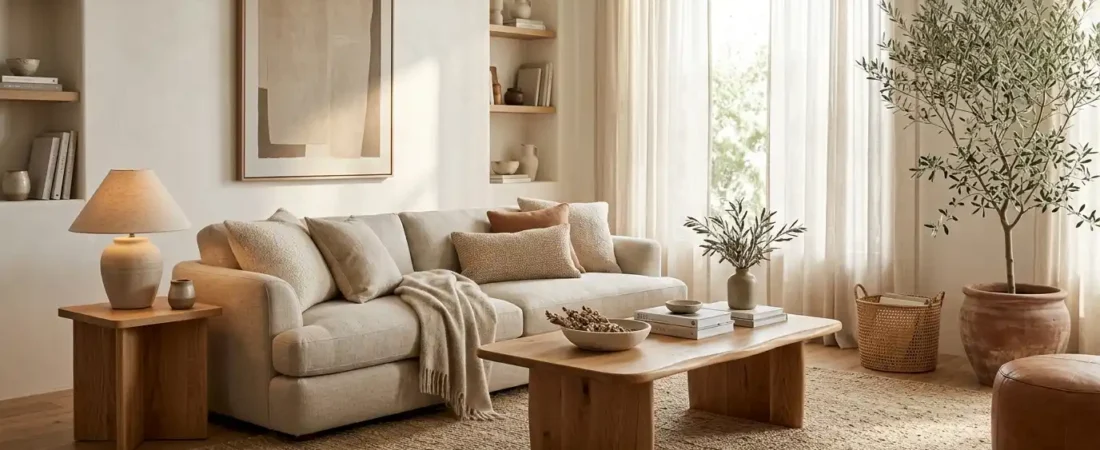
There is a moment when you walk into a living room and it just feels right. Not too cold, not too cluttered. The furniture is clean-lined but comfortable. The colors are neutral but warm. The textures make you want to reach out and touch everything. That is the pull of organic modern style. It is the marriage of contemporary simplicity with the warmth and soul of nature, creating a space that is both elegant and deeply inviting.
That is what makes organic modern living room ideas so appealing for American homes, turning your main gathering space into a serene sanctuary that feels both sophisticated and comfortably lived-in.
This article covers seven practical organic modern living room ideas that work for real American homes, from cozy apartments to spacious family rooms. Every suggestion includes specific materials, actual paint colors, and practical advice you can use. No vague recommendations. No unrealistic expectations. Just smart, stylish ideas that bring nature indoors.
Table of Contents
Why Organic Modern Living Rooms Are the Perfect Balance
Organic modern living rooms have become one of the most sought-after interior design trends for good reason. The style combines the best of two worlds: the clean lines and simplicity of modern design with the warmth and comfort of natural elements . While modern design evokes a sense of sophistication, it often leaves behind the warmth and comfort a home craves. Add in organic touches with rich natural textures and warming hues, and suddenly spaces soften and reveal a warmer, inviting atmosphere brimming with character and soul while keeping their elegance intact .
This style gained significant popularity as people sought to connect more deeply with nature in their homes . According to interior designers, organic modern design is about an effortless blend of minimalism, nature, and comfort. Elevated yet cozy, sophisticated yet warm, there are some defining design elements that help to create organic modern interiors .
The organic modern style dates back to the early 20th century when the concept of the organic building came to the fore, influenced by designers like Frank Lloyd Wright and the Brazilian Modern movement of the mid-20th century . Today, the focus on sustainability and the negative perception of mass consumerism has given rise to this naturalistic trend again .
The key elements of organic modern design are simple :
- A subdued, neutral palette of warm tonal hues
- Natural materials like wood, stone, jute, linen, and rattan
- Simple silhouettes with organic shapes and soft curved lines
- Layered textures that create depth and tactile richness
- Greenery and natural elements that bring the outdoors in
1. Start With a Neutral Earthy Color Palette
✦ Best for: Creating a calm, serene foundation that feels both modern and connected to nature
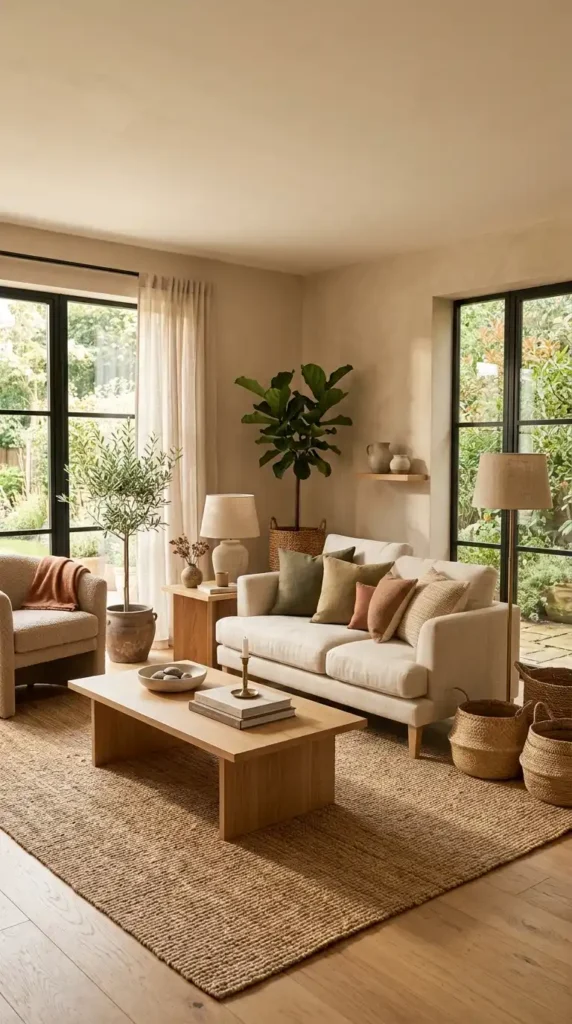
Color is the foundation of any organic modern living room. A subdued, neutral palette is key for creating an organic oasis . Think calming warm tonal hues all mixing together to bring in warmth and comfort . Designers often bring in multiple tones to inject depth but keep them all in the same palette to ensure visual flow .
For the walls, choose warm neutrals like Benjamin Moore’s Pale Oak, Farrow & Ball’s School House White, or Little Greene’s Portland Stone Pale . These colors reflect natural light and create a seamless look that makes the room feel calm and open. If you are craving color, opt for pops of terracotta or olive green to stay in the earth-tones family .
When layering neutrals, bring in stronger hues for contrast. Consider deep earthy accents like Benjamin Moore’s Black Bean Soup, El Cajon Clay, or Dark Olive for pillows, throws, or artwork . The key is to keep all the colors in the same warm family to ensure visual flow and prevent the room from feeling flat .
2. Choose Furniture With Clean Lines and Soft Curves
✦ Best for: Creating visual flow and softening the modern aesthetic with organic shapes
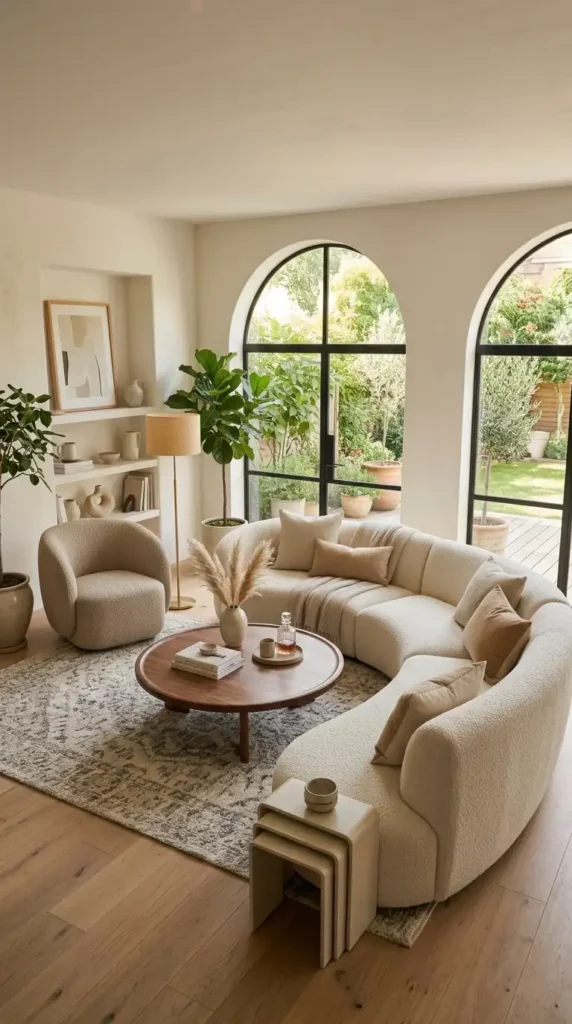
Organic modern design is about less is more. At its root, the style focuses on a minimalist approach with simple silhouettes and pared-down furnishings for visual flow . Once that groundwork has been laid, organic shapes with soft curved lines warm things up and add visual interest .
The most successful organic modern living rooms balance modern and organic shapes . A clean-lined sofa paired with a round or oval coffee table creates the perfect tension. A low-profile sectional with soft curves anchors the space while keeping sightlines open .
A curved sofa in a recent project softened the room’s straight architectural lines, making it feel more welcoming . Consider boucle or linen upholstery for a soft, tactile finish . These flowing contours complement natural themes and make spaces feel less rigid.
For coffee tables, choose organic shapes like round or oval forms in oak, stone, or plaster . An artistic inviting coffee table with warm layered rattan contrasted against sleek lines strikes the perfect modern organic balance . Armchairs should combine structure with softness, such as a low-profile chair with a plush cushion seat .
3. Layer Natural Textures Through Fabrics and Materials
✦ Best for: Adding depth, warmth, and tactile comfort to your living room
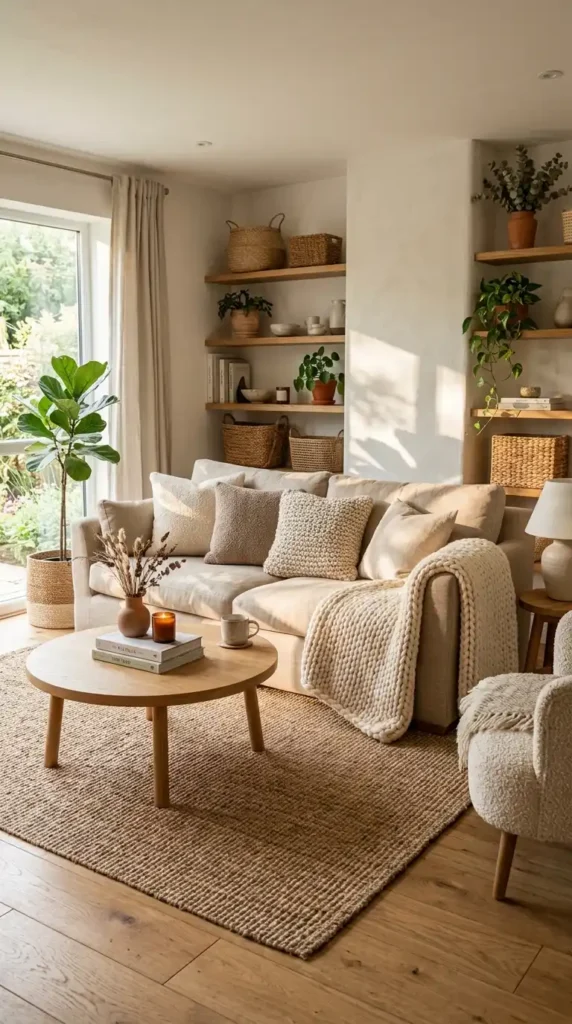
Texture is what separates organic modern from other styles. It is the element that makes a space feel tactile and inviting rather than flat and decorative . When varied materials come together, textures will inevitably start to harmoniously meet and mingle .
Key textures to include: wood, stone, and rattan for structure; linen, wool, and boucle for softness; jute and seagrass for natural warmth . Pair soft linens against raw, porous stone and smooth marble against supple leather and watch your space fill with depth and character .
Layer your textiles across scales. A large wool rug anchors the room, a woven stool adds organic charm, and a ceramic lamp introduces subtle pattern . Textured throws, cushions, and rugs in natural fibers like jute, linen, and wool create a tactile experience that invites touch and adds dimension .
Consider concrete sculptures and plaster decor pieces to add tactile warmth alongside contemporary silhouettes . Ceramic vases and hand-thrown bowls bring artisanal character . The goal is to create a space that is both visually interesting and physically comfortable.
4. Add Greenery and Natural Elements
✦ Best for: Bringing life, freshness, and a connection to nature into your living room
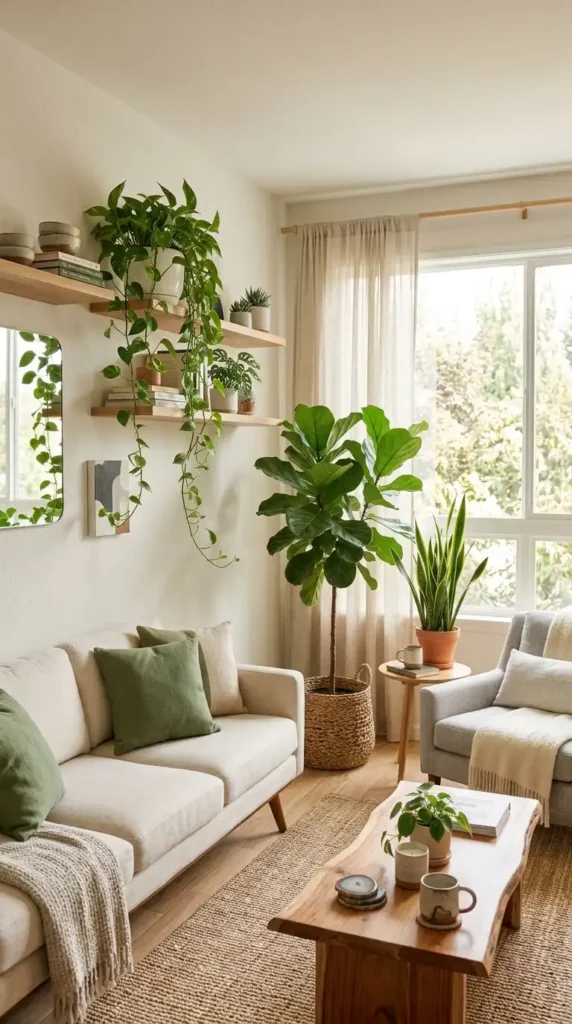
Greenery not only enlivens a space but is the fundamental element in organic modernism . Bringing in the green instantly adds a bit of soul to modern design and has been scientifically proven to improve air quality and even reduce stress .
Look to foliage for the final touch and bring the outdoors indoors . Hang houseplants overhead, display trees in focal points of the room, and style oversized branches in clear dramatic vases . Sprawling plants like Monstera will make your space feel a bit more wild and free, while bamboo and succulents create a Zen-like aesthetic .
A large potted olive tree or fiddle leaf fig in a woven basket creates a dramatic focal point in the corner of your living room . Plants aren’t the only way to infuse nature into your living room. Simply maximizing the connection between inside and outside will make all the difference . Integrate elements of nature such as natural light and where possible, views of the outdoors to enhance the organic feel of the room .
Consider resilient plants like rubber trees or snake plants if you travel often . The goal is to add life and dimension. Plants make a living room feel more welcoming and can make it feel more spacious by adding layers of visual interest .
5. Choose a Natural Fiber Rug to Anchor the Space
✦ Best for: Defining seating areas and adding warmth and texture underfoot
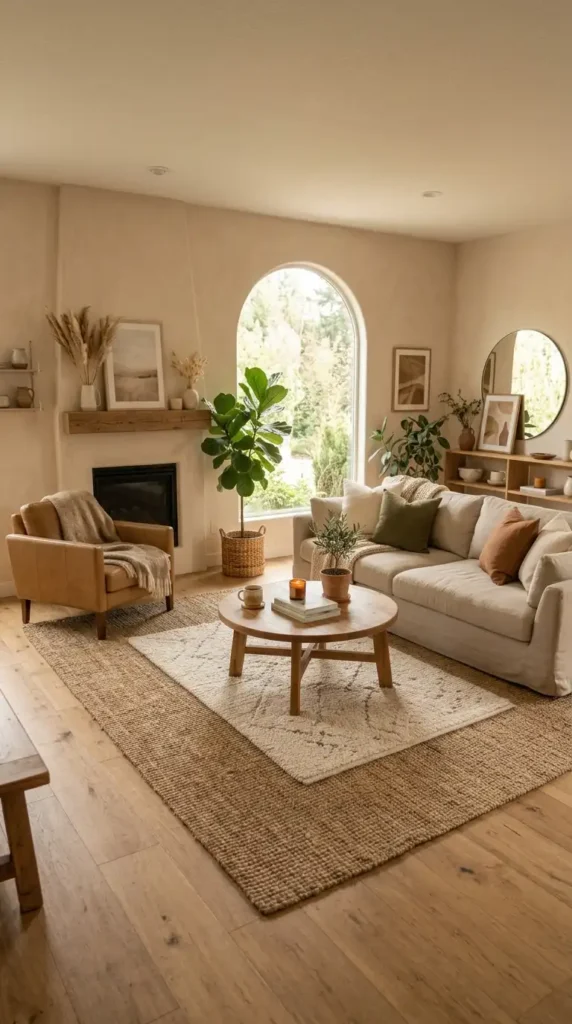
A natural fiber rug is one of the most important pieces in an organic modern living room. It anchors the seating area, adds warmth and texture, and creates visual boundaries in open-plan layouts . A sandy-toned jute rug instantly grounds an open-plan living room without clashing with other elements .
Natural fiber rugs like jute, sisal, and seagrass are excellent choices for organic modern spaces. They introduce a natural element and a textural layer that complements a variety of flooring materials, from hardwood to stone . A thick wool rug in neutral tones defines the seating area and makes the space feel grounded .
Layer different rugs for even more texture. A jute rug underneath with a smaller wool or cotton rug on top adds comfort and visual interest . Keep colors in the same neutral family to maintain the calm, cohesive feel of the organic modern aesthetic .
Natural fiber rugs can be scratchy underfoot, so consider a wool blend for high-traffic areas . The goal is to add warmth and definition while maintaining the natural, grounded aesthetic of organic modern design.
6. Incorporate Woven and Artisanal Accents
✦ Best for: Adding warmth, texture, and handcrafted character to your living room
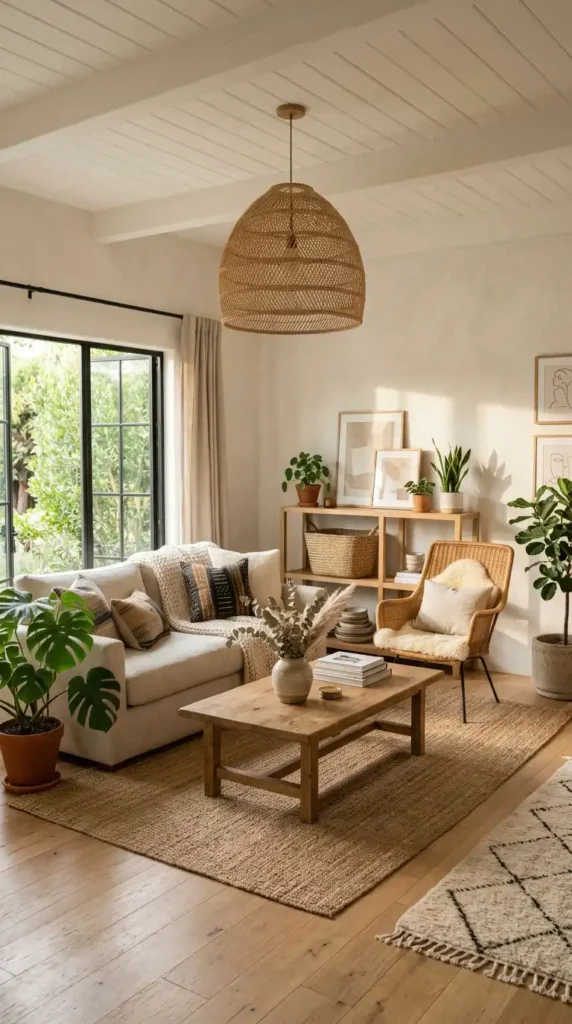
Woven and natural fiber accents are essential for achieving an organic modern look. They add warmth, texture, and a handcrafted feel to the space . Rattan, jute, seagrass, and water hyacinth are all excellent choices.
A rattan pendant light or woven shade adds a natural focal point to the ceiling . Woven baskets provide stylish storage for blankets and accessories while adding texture to shelves and floors . A wicker or rattan chair in the corner creates a cozy reading nook .
Handmade ceramics and artisanal decor pieces are what make an organic modern living room feel personal and lived-in . A hand-thrown ceramic vase, a weathered wooden stool, or a piece of abstract art adds character and a sense of craftsmanship . These pieces bring authenticity and a connection to nature that is central to organic modern design.
Mix old and new. A vintage wooden stool next to a modern travertine coffee table adds soul and authenticity . Avoid mass-produced items whenever possible. The goal is to create a space that feels curated, intentional, and full of character.
7. Layer Warm Lighting for Atmosphere
✦ Best for: Creating ambiance and highlighting textures and materials
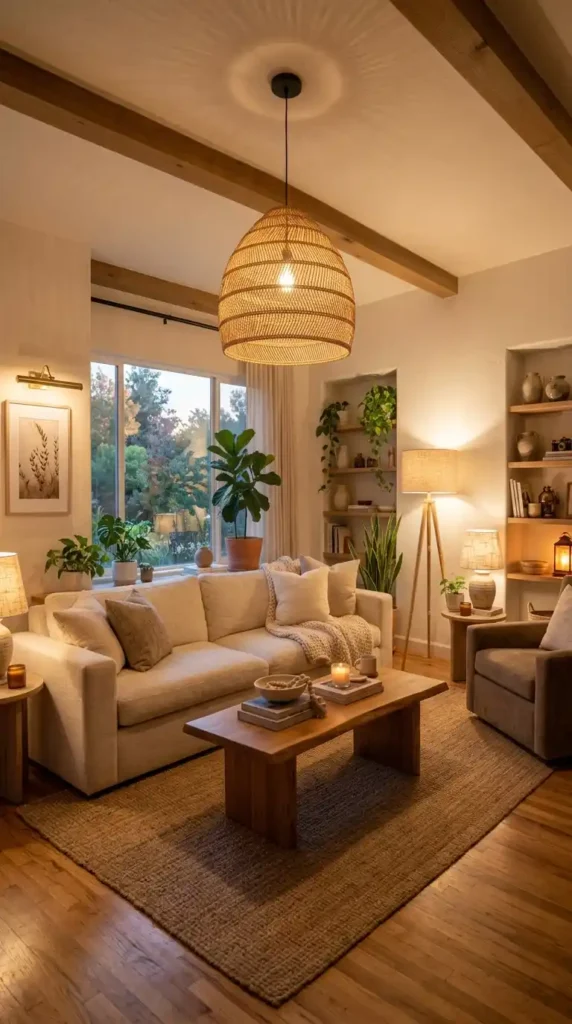
Lighting plays a crucial role in setting the mood and highlighting texture in an organic modern living room. Layer your lighting across three levels: ambient, task, and accent .
For ambient lighting, choose warm ceiling lights or recessed downlights at 2,700K for a soft, warm tone . A woven or rattan pendant light adds natural texture while providing overall illumination . Floor lamps or table lamps with fabric or paper shades provide task lighting for reading and diffuse the light beautifully .
Accent lighting, such as wall sconces or picture lights, casts shadows and adds depth to the space . Natural light is just as important. Sheer linen curtains allow sunlight to filter softly, creating that warm, diffused glow characteristic of organic spaces .
Avoid overly bright or cold LED lighting. Use dimmable bulbs and warm tones to enhance the soft earthy hues in the room . The goal is to create a space that feels warm and inviting at any time of day.
Frequently Asked Questions About Organic Modern Living Room Ideas
What is an organic modern living room?
An organic modern living room is a design style that blends the clean lines and simplicity of modern design with the warmth and comfort of natural elements . It combines natural materials, neutral color palettes, and organic shapes with minimal, functional furniture . The result is a space that feels both sophisticated and deeply inviting .
What colors work best in an organic modern living room?
The best colors for organic modern living rooms are warm neutrals and earthy tones. Start with base colors like warm white, beige, taupe, and cream . Layer in accents of olive green, terracotta, clay, and soft brown for depth and warmth . Avoid cool grays and stark whites, which can feel cold . Stick to a palette of 3 to 4 core colors repeated throughout the room .
What materials are used in organic modern living rooms?
Natural materials are at the heart of organic modern design. Wood (oak, walnut, reclaimed timber), stone (limestone, travertine, marble), and natural fibers (linen, wool, jute, rattan, cotton) are essential . These materials bring warmth, texture, and authenticity to the space . Concrete and plaster are also used for their tactile, organic qualities .
How do I make my living room look organic modern on a budget?
Start with the elements that make the biggest impact. Paint your walls a warm neutral color like beige or cream . Add a jute or wool rug to anchor the space . Bring in plants for life and freshness . Swap synthetic pillows for linen or cotton covers . Look for second-hand wooden furniture and add woven baskets for storage . Small changes can make a significant difference without a major renovation.
Is organic modern suitable for small living rooms?
Yes, organic modern design works beautifully in small spaces. Neutral colors and light palettes make rooms feel larger and more open . Low-profile furniture keeps sightlines clear and enhances perceived ceiling height . Multifunctional furniture, open shelving, and integrated storage maximize space without sacrificing style . According to the American Society of Interior Designers, biophilic design principles, including organic modern elements, improve both mental and physical well-being regardless of room size .
Related Articles
Organic Modern Bedroom Ideas That Feel Calm and Cozy
Home Decorating Ideas for Small Houses
10 Entryway Ideas That Make a Great First Impression
TV Wall Ideas That Look Like a Designer Made Them
An organic modern living room is not just a space for entertaining. It is a sanctuary that restores your spirit, calms your mind, and connects you to the natural world. Embrace the warmth, and let your space breathe.

Sheikh Hassaan is a digital architect for small businesses and the founder of The Glow Up System. He writes about home decor, garden design, and outdoor living for real American homes – practical ideas that work in actual spaces without oversized budgets.