

The modern office can be a stressful place. Deadlines loom, screens strain our eyes, and the hum of fluorescent lights can drain our energy. But there is a simple, natural solution that can transform your workspace: houseplants. Studies show that incorporating plants into office environments can reduce stress, improve concentration, and boost productivity by up to 15%. The best plants for office spaces are not only beautiful but also hardy enough to thrive under artificial light and occasional neglect.
This guide covers seven of the best office plants, chosen for their ability to purify the air, thrive in low-light conditions, and provide a calming presence in any workspace.
Table of Contents
Why Office Plants Matter
Bringing plants into the office is not just about aesthetics. It is about creating a healthier, more productive environment. Research has shown that office plants offer a range of benefits.
First, plants act as natural air purifiers. They absorb harmful volatile organic compounds (VOCs) released by office furniture, paint, and electronics. They also increase humidity, which can reduce dry skin, sore throats, and respiratory issues.
Second, plants reduce stress. Studies have found that simply having a plant in your line of sight can lower anxiety and blood pressure. They create a calming presence that helps you stay focused and feel more at ease.
Finally, plants boost creativity and productivity. Workspaces with greenery are associated with higher levels of concentration and creative thinking. Employees also tend to take fewer sick days in offices with plants.
1. Snake Plant: The Air-Purifying Powerhouse
✦ Best for: Improving air quality and oxygen levels in any office environment

The snake plant is the ultimate office plant. It is a striking plant with tall, rigid, sword-like leaves that add a bold architectural element to any workspace. What makes it truly special is its ability to convert carbon dioxide into oxygen at night, making it a continuous air purifier.
Snake plants are incredibly low-maintenance. They tolerate low light, infrequent watering, and the dry air common in office environments. They can survive on artificial light alone, making them perfect for cubicles and windowless offices.
Care Tips: Water sparingly, allowing the soil to dry out completely between waterings. This could be every two to three weeks in an office environment. Dust the leaves occasionally to keep them glossy and photosynthesizing effectively.
2. ZZ Plant: The Low-Light Champion
✦ Best for: Windowless offices and corners with minimal natural light
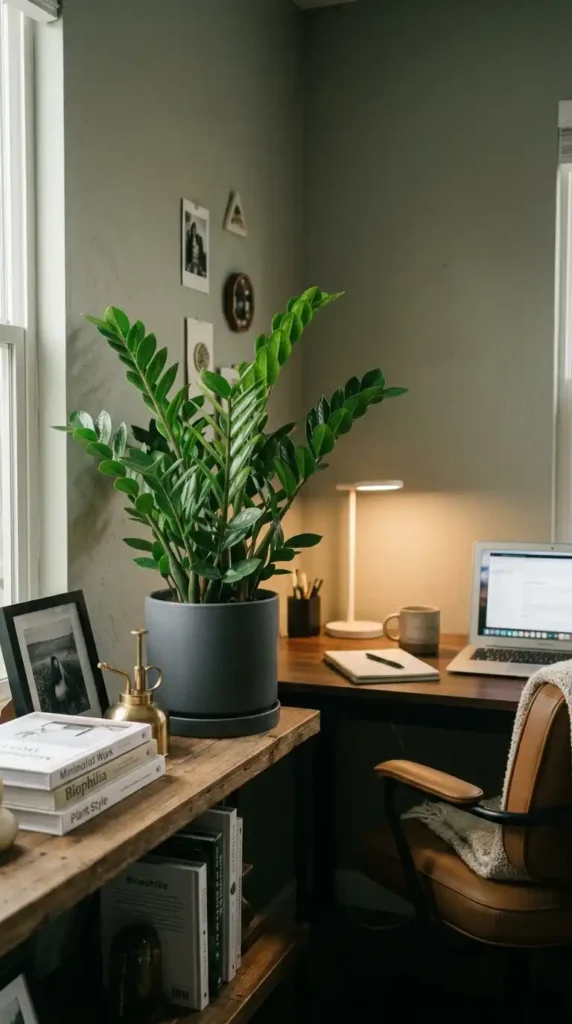
The ZZ plant is a sophisticated choice for any office. Its glossy, dark green leaves are arranged in a feather-like pattern along sturdy stems, giving it a polished, architectural look. It is one of the most drought-tolerant plants available, thanks to its water-storing rhizomes.
The ZZ plant thrives in low light and can survive on fluorescent lighting alone. It is perfect for windowless offices or corners far from natural light. It is also incredibly forgiving if you forget to water it.
Care Tips: Water every few weeks, allowing the soil to dry completely between waterings. Avoid direct sunlight, as it can scorch the leaves. Dust the leaves periodically to keep them shiny and healthy.
3. Pothos (Devil’s Ivy): The Versatile Trailing Vine
✦ Best for: Adding greenery to shelves, filing cabinets, and hanging baskets
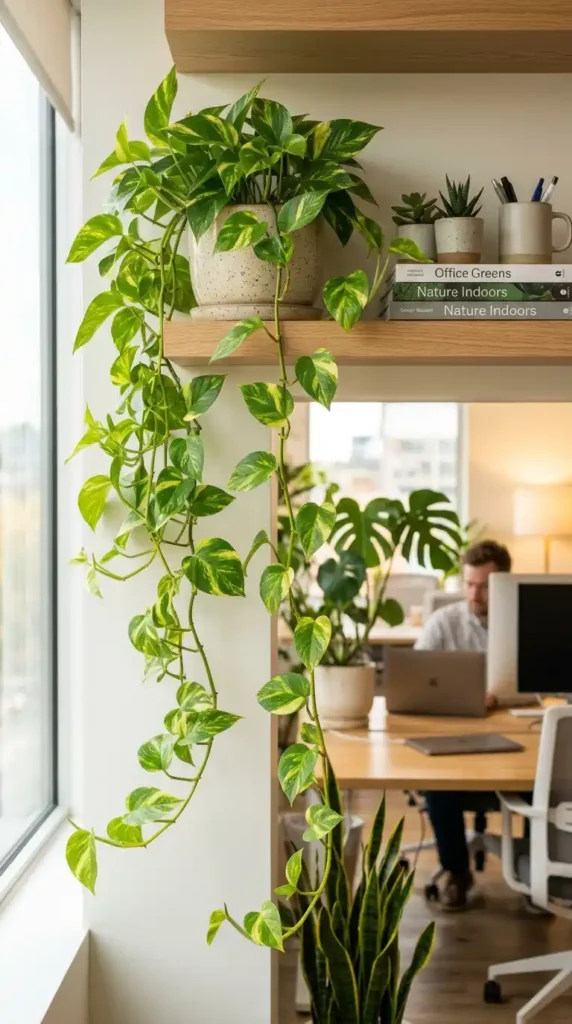
Pothos is one of the most popular and easiest office plants to grow. It is a fast-growing trailing vine with heart-shaped leaves that come in various shades of green, yellow, and white. It can be trained to cascade from hanging baskets, climb up trellises, or sprawl across shelves.
Pothos is highly adaptable and thrives in low to bright indirect light. It is also an effective air purifier, removing toxins like formaldehyde, carbon monoxide, and benzene from the air.
Care Tips: Water when the top inch of soil feels dry. Pothos tolerates any light level from low to high, but variegated varieties may lose some of their coloring in very low light. Trim the vines occasionally to keep them looking full and healthy.
4. Peace Lily: The Elegant Bloomer
✦ Best for: Adding elegance and purifying air in low-light office spaces
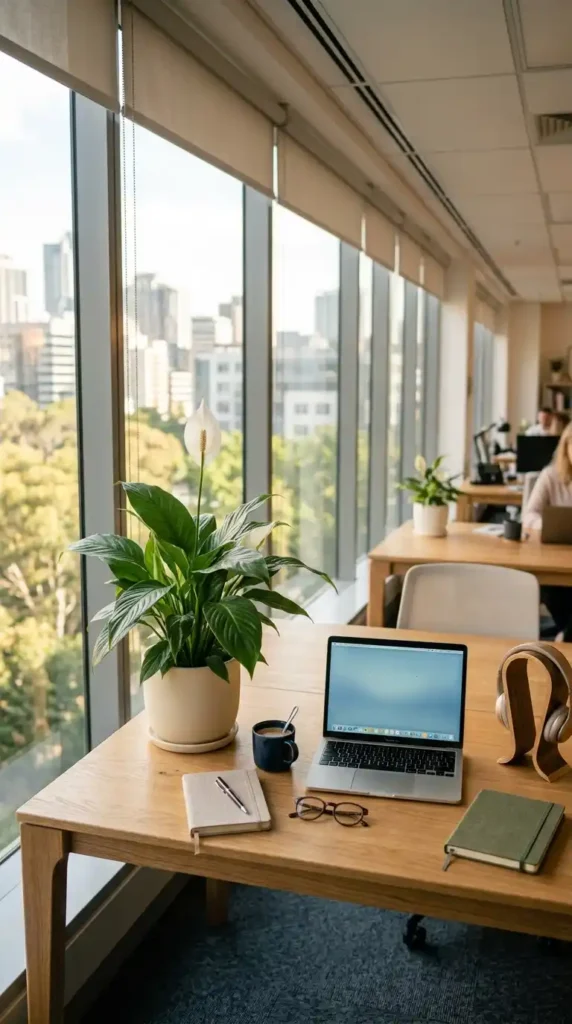
The peace lily is a sophisticated choice for an office desk or filing cabinet. Its glossy dark green leaves and distinctive white hood-like flowers add a touch of elegance to any workspace. It is a champion at removing toxins like benzene, formaldehyde, and ammonia from the air.
Peace lilies are easy to care for and thrive in low to medium indirect light. They also give a clear signal when they need water—the leaves dramatically droop when thirsty, making them an excellent plant for beginners.
Care Tips: Keep the soil consistently moist but not waterlogged. Water when the top inch of soil feels dry. Keep them in bright but indirect light, as they are sensitive to direct sunlight.
5. Spider Plant: The Pet-Safe Purifier
✦ Best for: Pet-friendly offices and hanging displays
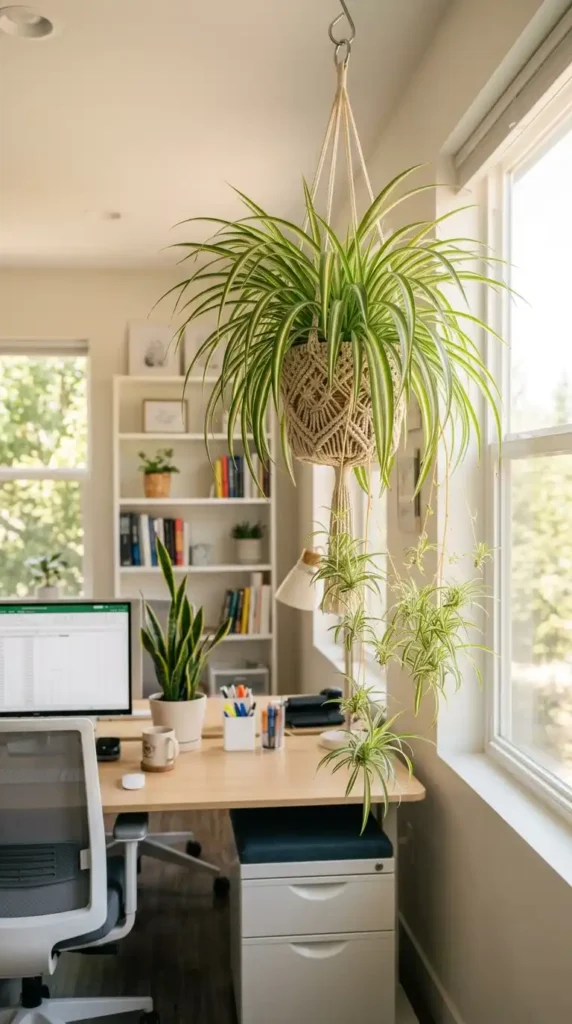
The spider plant is a classic, fast-growing favorite that is effective at fighting pollutants like benzene, formaldehyde, carbon monoxide, and xylene. It is also non-toxic to pets, making it a worry-free choice for offices where animals may visit.
The spider plant’s arching variegated leaves cascade beautifully from hanging baskets, and it constantly produces “babies” or plantlets that dangle from the parent plant, adding extra visual interest.
Care Tips: Spider plants thrive in bright to moderate indirect sunlight but can tolerate low light. Water when the top inch or two of soil feels dry. Trim off baby plantlets and root them in water to create new plants.
6. Philodendron: The Heart-Shaped Favorite
✦ Best for: Adding greenery to desks, shelves, and hanging baskets
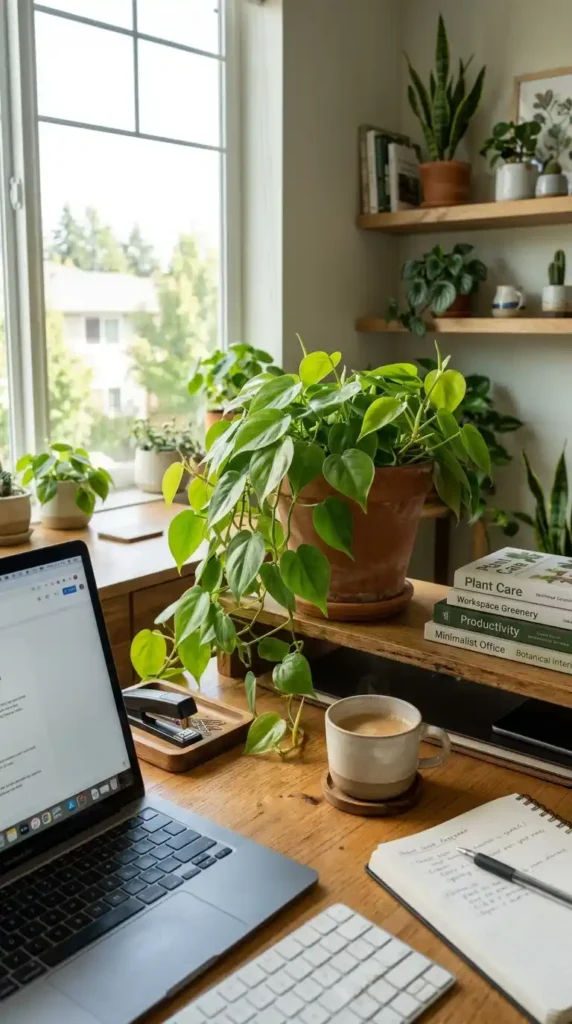
The heartleaf philodendron is a classic trailing plant with heart-shaped leaves that add a touch of softness to any workspace. It tolerates low light well and grows reasonably quickly even in shade. The leaves become darker green in low light as the plant increases chlorophyll density to capture more of the available light.
Philodendrons are easy and versatile, with a trailing growth habit that makes them ideal for hanging baskets, shelves, or desks. They are also effective at removing toxins like formaldehyde from the air.
Care Tips: Water when the top inch of soil feels dry. Philodendrons are easy to propagate from stem cuttings. If stems grow too long, simply snip them back to the length you want.
7. Fiddle Leaf Fig: The Statement Plant
✦ Best for: Making a bold statement in spacious offices with good natural light
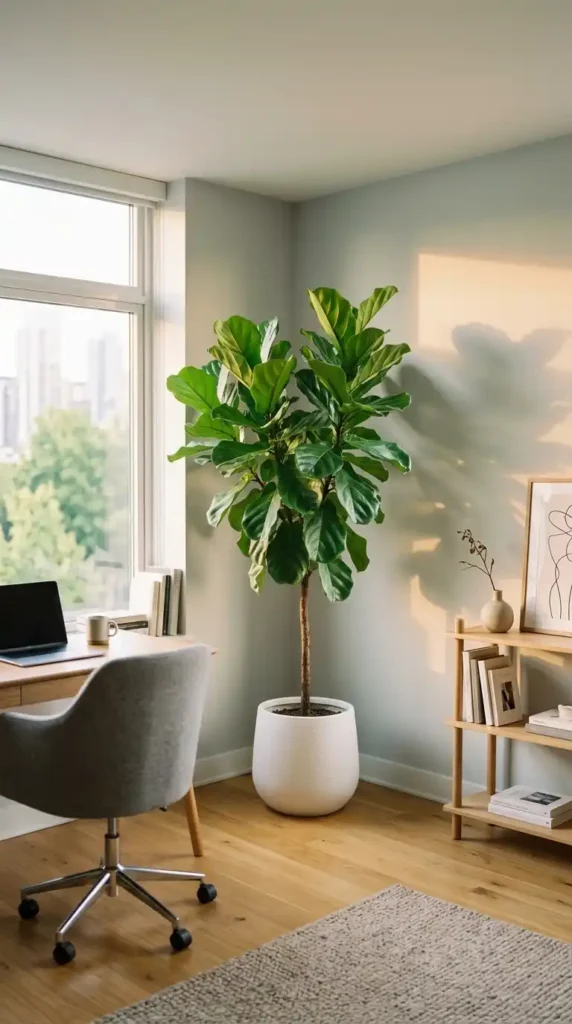
The fiddle leaf fig is a showstopper. Its large, glossy, fiddle-shaped leaves make a dramatic statement in any office space. While it requires more attention than other plants on this list, its visual impact is unmatched.
The fiddle leaf fig prefers bright, indirect light and consistent moisture. It is not as forgiving as snake plants or ZZ plants, but with proper care, it can thrive for years and become a focal point in your office.
Care Tips: Place the fiddle leaf fig in bright, indirect light, ideally near a window with filtered light. Water when the top inch of soil feels dry. Rotate the plant periodically to ensure even growth. Dust the leaves regularly to keep them glossy and healthy.
Frequently Asked Questions About the Best Plants for Office
1. What are the best plants for an office with no windows?
Snake plants, ZZ plants, pothos, and peace lilies are the best choices for windowless offices. These plants thrive on fluorescent lighting and tolerate low light conditions.
2. Can office plants survive under fluorescent lights?
Yes, many plants can thrive under fluorescent lights. Snake plants, ZZ plants, pothos, and spider plants are particularly well-suited for artificial lighting.
3. How often should I water office plants?
The watering frequency depends on the plant, but most office plants prefer to dry out between waterings. Water when the top inch of soil feels dry. Overwatering is the most common mistake.
4. Do office plants really improve productivity?
Yes, studies have shown that office plants can reduce stress, improve concentration, and boost productivity by up to 15%. They create a calmer, more pleasant work environment.
5. Which office plants are safe for pets?
Spider plants, Boston ferns, and parlor palms are non-toxic to pets. Snake plants, ZZ plants, pothos, and peace lilies are toxic and should be kept out of reach.
Related Articles
Best Indoor Plants for Air Quality: 10 NASA-Approved Picks
Best Garden Hose: 7 Top Picks for Every Yard
The Best Low Light Indoor Plants for a Greener Home
Indoor Koi Pond Ideas: 7 Stunning Designs for Your Home
The right office plant does more than just decorate your desk. It works quietly to purify the air, reduce stress, and boost your productivity, creating a healthier, happier workspace.

Sheikh Hassaan is a digital architect for small businesses and the founder of The Glow Up System. He writes about home decor, garden design, and outdoor living for real American homes – practical ideas that work in actual spaces without oversized budgets.