

The bedroom should be your sanctuary, a place to unwind, relax, and enjoy deep, restorative sleep. While soft bedding, calming colors, and comfortable lighting play essential roles, there is another natural element that can quietly transform your space: plants.
Not only do indoor plants bring life and a touch of elegance to your bedroom, but many also purify the air, reduce stress, and even support better sleep. Whether you are an experienced plant parent or a complete beginner, there are varieties that thrive in bedrooms with minimal effort. Here are seven of the best plants for bedroom spaces, chosen for their low-maintenance beauty and calming benefits.
1. Snake Plant: The Nighttime Oxygen Booster
✦ Best for: Improving air quality and oxygen levels while you sleep
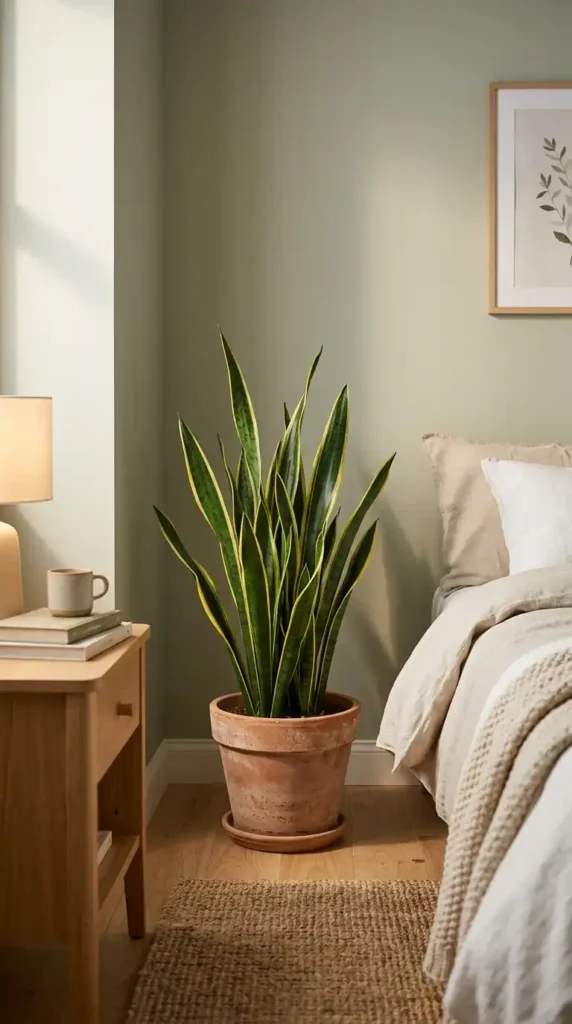
The snake plant is arguably the best plant for a bedroom. It is a striking architectural plant with tall, rigid, sword-like leaves featuring distinctive patterns of green and yellow variegation. What makes it truly special is its unique ability to convert carbon dioxide into oxygen at night, something most houseplants only do during the day. This makes it the perfect bedroom companion for improving air quality while you sleep.
Snake plants are also incredibly low-maintenance. They tolerate low light and infrequent watering, making them practically indestructible and perfect for beginners or anyone who tends to forget about their plants.
Care Tips: Allow the soil to dry out completely between waterings, which could be every one to two weeks in spring and summer or even every two to three weeks in fall and winter. Snake plants are very versatile and suitable for a wide range of lighting, including low, indirect light to afternoon direct sun. Dust the leaves periodically with a damp cloth to keep them glossy and photosynthesizing effectively.
2. Peace Lily: The Elegant Air Purifier
✦ Best for: Purifying air and adding elegant white blooms to your bedroom

The peace lily is a sophisticated choice for bedroom decor, featuring glossy dark green leaves and distinctive white hood-like flowers that rise elegantly above the foliage. It is a champion at removing toxins like benzene, formaldehyde, trichloroethylene, and ammonia from the air. It can also increase indoor humidity, which can ease dry noses and throats at night and support better breathing.
Peace lilies are easy to care for and thrive in low to medium indirect light. They also give a clear signal when they need water, the leaves dramatically droop when thirsty, making them an excellent plant for beginners.
Care Tips: Keep the soil consistently moist but not waterlogged, and water when the top inch of soil feels dry. Keep them in bright but indirect light, as they are sensitive to direct sunlight. Peace lilies are toxic to pets and humans when ingested, so keep them out of reach of children and animals.
3. Lavender: Nature’s Sleep Aid
✦ Best for: Promoting relaxation and better sleep with its soothing fragrance

Lavender is not just for essential oils. A live lavender plant brings its calming, soothing fragrance straight to your bedside. Studies have shown that lavender’s scent can lower anxiety, reduce heart rate, and promote deeper, more restorative sleep.
The distinctive silvery-green foliage and delicate purple flower spikes bring both visual charm and therapeutic benefits to any bedroom space. However, lavender is one of the few plants on this list that requires ample sunlight. It needs bright, direct light and well-drained soil, making it perfect for a sunny windowsill.
Care Tips: Lavender prefers 6 to 8 hours of direct sunlight daily, so a south-facing window is ideal. Water moderately, allowing the soil to dry between waterings. Plant it in well-drained soil, and avoid misting it, as lavender tolerates low humidity. Trim spent flower stalks back to the leafy portion to encourage continuous blooming.
4. Aloe Vera: The Healing Succulent
✦ Best for: Releasing oxygen at night and providing medicinal benefits
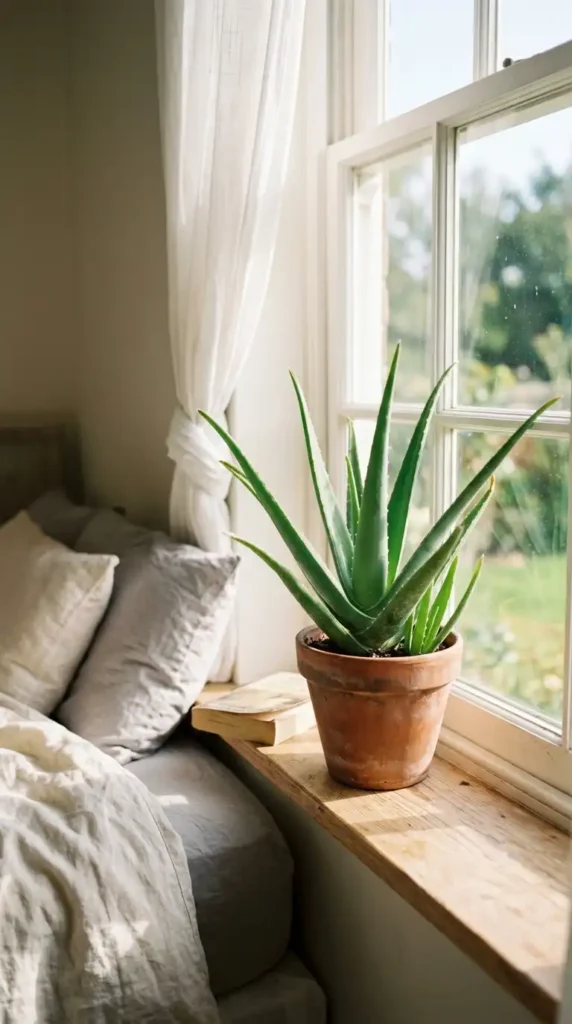
Aloe vera is a versatile succulent renowned for its healing gel, but it also offers fantastic sleep benefits. Like the snake plant, aloe vera releases oxygen at night, contributing to a healthier bedroom environment while you sleep. It also helps purify the air by removing toxins like formaldehyde and benzene.
Aloe vera is incredibly low-maintenance and can tolerate neglect, meaning you can go weeks without watering it and it will be perfectly fine. Its clean, sculptural leaves bring calming energy to any space.
Care Tips: Aloe vera thrives in bright, indirect light or even a sunny windowsill with direct morning sun. Water deeply but infrequently, allowing the soil to dry out completely between waterings. Overwatering is the most common issue, leading to soft, mushy leaves. The juice from its leaves can be used topically for scrapes and burns.
5. Golden Pothos: The Unkillable Air Cleaner
✦ Best for: Easy-care trailing vines that purify air in any bedroom corner
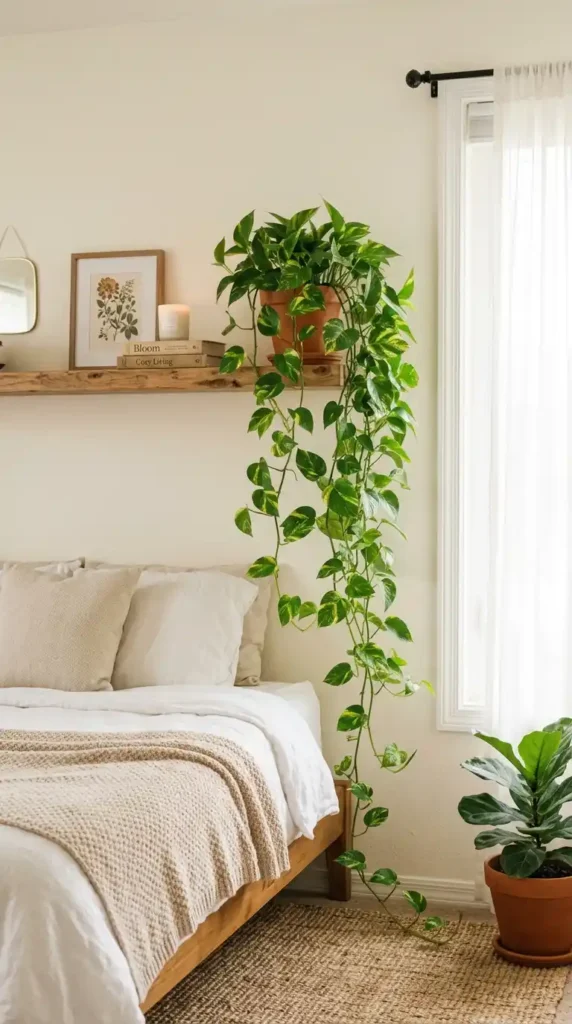
Golden pothos, also known as devil’s ivy, is a versatile trailing vine with heart-shaped leaves that come in various patterns. It is practically unkillable and adapts to almost any light condition, making it a perfect choice for bedrooms with low light. It is also an effective air purifier, removing toxins like formaldehyde, carbon monoxide, and benzene from the air and eliminating odors.
Pothos is one of the easiest plants to grow and can be trained to cascade from hanging baskets, climb up trellises, or sprawl across shelves. It is often listed as ‘unkillable’ and can grow in water as well as soil.
Care Tips: Water when the top inch of soil feels dry. Pothos tolerates any light level from low to high, but variegated varieties may lose some of their coloring in very low light. Dust the leaves periodically to keep them glossy and photosynthesizing effectively. Pothos is toxic to pets if ingested.
6. Spider Plant: The Pet-Safe Purifier
✦ Best for: Pet-friendly air purification with cascading, variegated leaves
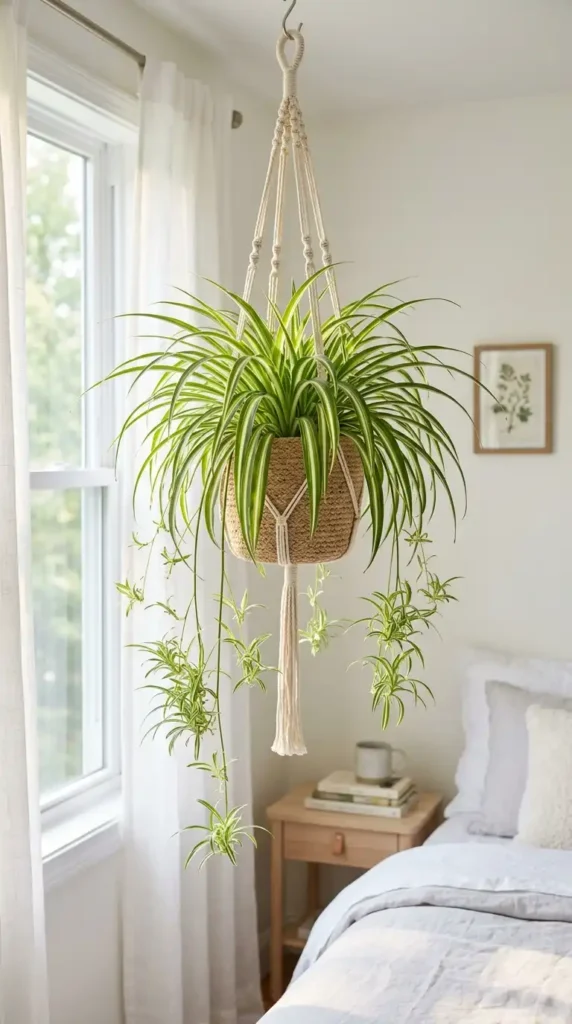
The spider plant is a classic, fast-growing favorite that releases oxygen at night, making it an ideal bedroom companion. It is also effective at fighting pollutants like benzene, formaldehyde, carbon monoxide, and xylene.
A major bonus is that spider plants are non-toxic to pets, making them a worry-free choice for households with cats and dogs. Their arching variegated leaves cascade beautifully from hanging baskets, and they constantly produce “babies” or plantlets that dangle from the parent plant, adding extra visual interest.
Care Tips: Spider plants thrive in bright to moderate indirect sunlight but can tolerate low light. Water when the top inch or two of soil feels dry. They produce baby plantlets that can be snipped off and rooted in water to create new plants.
7. ZZ Plant: The Low-Light Champion
✦ Best for: Low-light bedrooms where you need a stylish, drought-tolerant plant
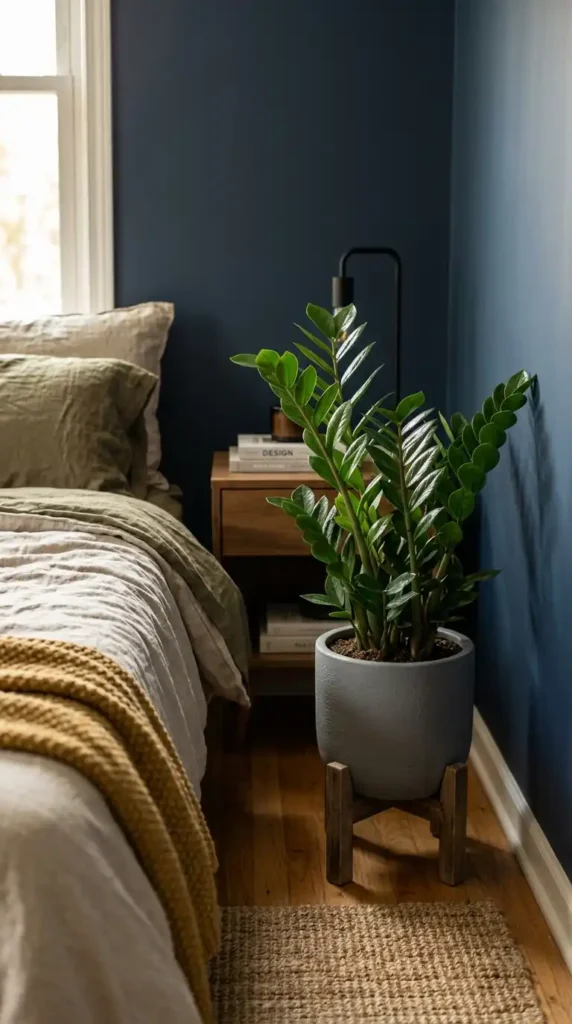
The ZZ plant is a sophisticated addition to any bedroom, with glossy, dark green leaves arranged in a feather-like pattern along sturdy stems. It is extremely low-maintenance and can tolerate low light and infrequent watering, making it perfect for beginners or anyone who forgets to water their plants. It is also drought-tolerant due to its water-storing rhizomes, so you can go weeks without watering it.
The ZZ plant has an architectural presence and is great for brightening up dim corners, shelves, or dressers. It also has air-purifying qualities, making it a perfect choice for the bedroom.
Care Tips: Water every few weeks, allowing the soil to dry completely between waterings. Avoid direct sunlight, as it can scorch the leaves, but it adapts well to very low light. All parts of the plant are toxic, so keep it out of reach of children and pets.
Frequently Asked Questions About the Best Plants for Bedroom
1. What is the best plant to keep in your bedroom?
The best plant for your bedroom depends on your needs. If you want improved air quality and oxygen at night, the snake plant is the top choice. For a calming fragrance, lavender is ideal. For low-light conditions, the ZZ plant or peace lily are excellent options. All seven plants listed in this guide are excellent choices, so consider what benefits and care requirements suit your lifestyle best.
2. Why are snake plants good for the bedroom?
Snake plants are ideal for bedrooms because they are among the few houseplants that convert carbon dioxide into oxygen at night. They also remove toxins like formaldehyde and benzene from the air and are incredibly low-maintenance, tolerating low light and infrequent watering.
3. Do plants really help you sleep better?
Yes, certain plants can help you sleep better by improving air quality, increasing humidity, and reducing stress. Plants like snake plants and aloe vera release oxygen at night, while lavender and jasmine have calming scents that promote relaxation. Peace lilies increase humidity, which can ease breathing and reduce nighttime coughing.
4. Which plants are safe for pets in the bedroom?
Spider plants are a great non-toxic choice for pet owners. Boston ferns and parlor palms are also considered safe for cats and dogs. However, many popular bedroom plants, including snake plants, peace lilies, pothos, and ZZ plants, are toxic to pets and should be kept out of reach.
5. How do I care for low-light bedroom plants?
Low-light plants like snake plants, ZZ plants, and pothos are very forgiving. Water them sparingly, allowing the soil to dry out completely between waterings. Overwatering is the most common mistake, as they photosynthesize slowly in low light and therefore dry out slowly. Dust their leaves periodically to help them photosynthesize efficiently.
6. How many plants should I put in my bedroom?
There is no strict rule, but even a few plants can make a difference. A medium-sized plant on a nightstand or dresser and a taller plant in a corner can create a calming atmosphere. The plants listed in this guide are well-suited for bedroom environments and will thrive with minimal care.
Related Articles
Best Plants for Office Spaces That Boost Productivity and Reduce Stress
Best Indoor Plants for Air Quality: 10 NASA-Approved Picks
Best Garden Hose: 7 Top Picks for Every Yard
The Best Low Light Indoor Plants for a Greener Home
The right bedroom plant does more than just look good. It works quietly to purify the air, boost oxygen, and create a calming atmosphere that helps you fall asleep faster and wake up feeling refreshed.

Sheikh Hassaan is a digital architect for small businesses and the founder of The Glow Up System. He writes about home decor, garden design, and outdoor living for real American homes – practical ideas that work in actual spaces without oversized budgets.