

Fresh rosemary adds incredible flavor to roasted chicken, potatoes, and soups. But buying fresh herbs at the store gets expensive, and outdoor plants die off in winter. The good news is that you can grow a rosemary plant indoors and enjoy its fragrant, woody aroma all year long.
This guide covers everything you need to know about growing rosemary indoors, from choosing the right pot and soil to watering, lighting, and troubleshooting common problems. With the right care, your indoor rosemary plant can thrive for years.
Table of Contents
Can Rosemary Grow Indoors?
Yes, rosemary grows well indoors with the right conditions. This Mediterranean herb is a perennial evergreen shrub that can reach up to 6 feet outdoors, but it adapts nicely to container growing inside. It is cold hardy only in USDA zones 8 through 11, so in colder climates, bringing it indoors for winter is essential.
The biggest challenge with growing rosemary indoors is providing enough light. Rosemary is a sun-loving plant that needs bright, direct sunlight to thrive. Without enough light, it will become leggy and weak.
Choosing the Right Pot and Soil
Pot Selection
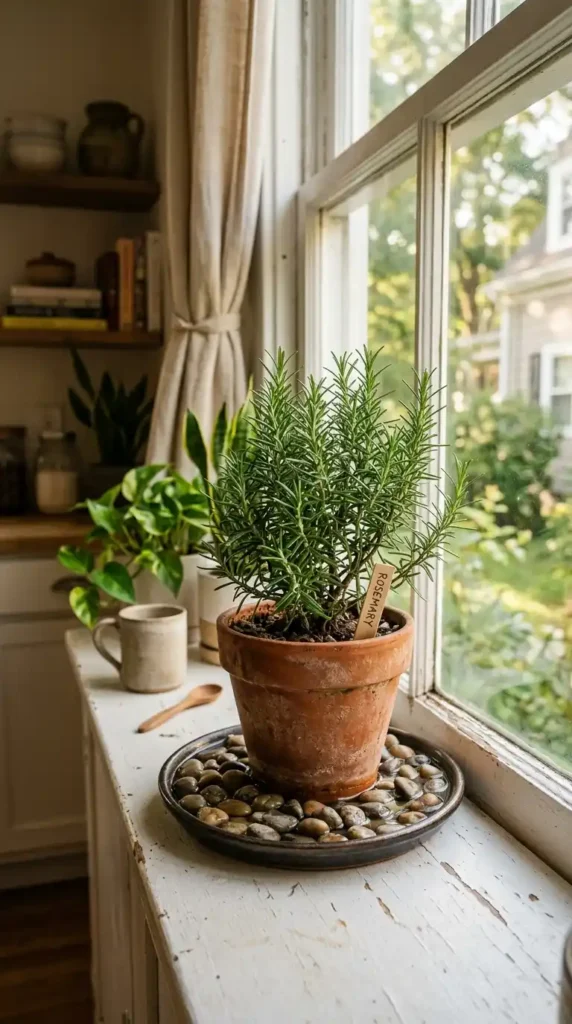
The right pot makes a big difference. Choose a terracotta or clay pot because these materials are porous and allow excess moisture to evaporate quickly, reducing the risk of overwatering. Ensure the pot has several drainage holes at the bottom. An 8-inch pot is a good starting size. Repot into a container one size up when the plant doubles in size or roots become visible through the drainage holes.
Soil
Rosemary needs well-draining, sandy or loamy soil. Heavy soil retains too much moisture and leads to root rot. Use a cactus or succulent potting mix, or amend regular potting soil with coarse sand or perlite to improve drainage. The ideal soil pH is slightly acidic to neutral, around 6.5 to 7.0.

Light Requirements
Rosemary is a sun worshipper. It needs at least six hours of direct sunlight daily to stay healthy. Place your plant in a south-facing window for the best light exposure. East- or west-facing windows can also work, but they may not provide enough light in winter.
If you do not have a sunny window, use a full-spectrum grow light. Position the light 6 to 12 inches above the plant and keep it on for 12 to 14 hours a day.
Watering
Overwatering is the number one mistake with rosemary indoors. This plant prefers slightly dry conditions and does not like soggy soil.
The Finger Test: Water only when the top 1 to 2 inches of soil feel dry to the touch. Insert your finger into the soil. If it feels dry, water thoroughly until water drains from the bottom of the pot. Empty the saucer afterward to prevent standing water.
In winter, when growth slows, reduce watering frequency. Rosemary is drought-tolerant and will survive occasional neglect better than overwatering.
Temperature and Humidity
Rosemary prefers daytime temperatures between 60 and 75 degrees Fahrenheit, with nighttime temperatures about 10 degrees cooler. Keep the plant away from drafts, heat vents, and air conditioning units, which can dry it out or stress it.
Indoor air, especially in winter, can be dry. While rosemary tolerates low humidity better than many houseplants, it appreciates some moisture in the air. Place the pot on a shallow tray filled with pebbles and water. As the water evaporates, it increases humidity around the plant. Avoid misting the foliage heavily, as rosemary dislikes wet leaves.
Fertilizing
Rosemary does not need much fertilizer. Feed it once a month during the growing season (spring and summer) with a balanced, water-soluble fertilizer diluted to half strength. Skip fertilizing in fall and winter when growth slows.
For organic options, use compost or a balanced organic fertilizer. Over-fertilizing can lead to weak, leggy growth, so less is more.
Pruning and Harvesting
Regular pruning keeps your rosemary plant healthy, compact, and bushy. It also encourages new growth, which is where the best flavor comes from.
Harvest stems by cutting 3 to 4 inches from the tip of a healthy stem, just above a leaf node. This encourages the plant to branch out. Do not harvest more than one-third of the plant at a time to avoid stressing it.
Prune any dead or woody stems and trim back leggy growth to maintain the plant’s shape. The best time for heavier pruning is after the plant flowers in spring or summer.
Common Problems and Solutions
Yellowing leaves: Usually a sign of overwatering. Let the soil dry out more between waterings.
Brown, crispy leaves: Often caused by underwatering or low humidity. Water more consistently and increase humidity with a pebble tray.
Leggy, weak growth: Not enough light. Move the plant to a sunnier window or add a grow light.
Powdery mildew: White or gray powder on leaves. Improve air circulation with a small fan and avoid wetting the foliage.
Pests (aphids, spider mites): Treat with insecticidal soap or neem oil.
Frequently Asked Questions About Rosemary Plants Indoors
1. How much light does a rosemary plant indoors need?
Rosemary needs at least six hours of direct sunlight daily. Place it in a south-facing window or use a grow light.
2. How often should I water my indoor rosemary plant?
Water only when the top 1 to 2 inches of soil feel dry. Overwatering is the most common mistake, so err on the side of underwatering.
3. Why is my indoor rosemary plant dying?
The most common reasons are lack of sunlight, overwatering, or poor drainage. Ensure your plant gets enough light, water only when the soil is dry, and use a well-draining pot and soil.
4. Can I grow rosemary indoors year-round?
Yes, with proper care, rosemary can thrive indoors year-round. It is an excellent way to have fresh herbs even in winter.
5. What is the best pot for an indoor rosemary plant?
A terracotta or clay pot with drainage holes is ideal. These materials allow excess moisture to evaporate, preventing root rot.
6. Is rosemary safe for pets?
Yes, rosemary is non-toxic to cats and dogs, making it a pet-friendly houseplant.
Related Articles
Easy Indoor Plants: 10 Foolproof Picks for Beginners
Best Plants for Bedroom Spaces to Help You Sleep Better
Best Indoor Plants for Air Quality: 10 NASA-Approved Picks
Best Indoor Plants for Low Light That Thrive in Dim Rooms
Growing rosemary indoors is easier than you think. Give it plenty of light, water sparingly, and use well-draining soil. With these simple steps, you will enjoy fresh rosemary year-round.

Sheikh Hassaan is a digital architect for small businesses and the founder of The Glow Up System. He writes about home decor, garden design, and outdoor living for real American homes – practical ideas that work in actual spaces without oversized budgets.