
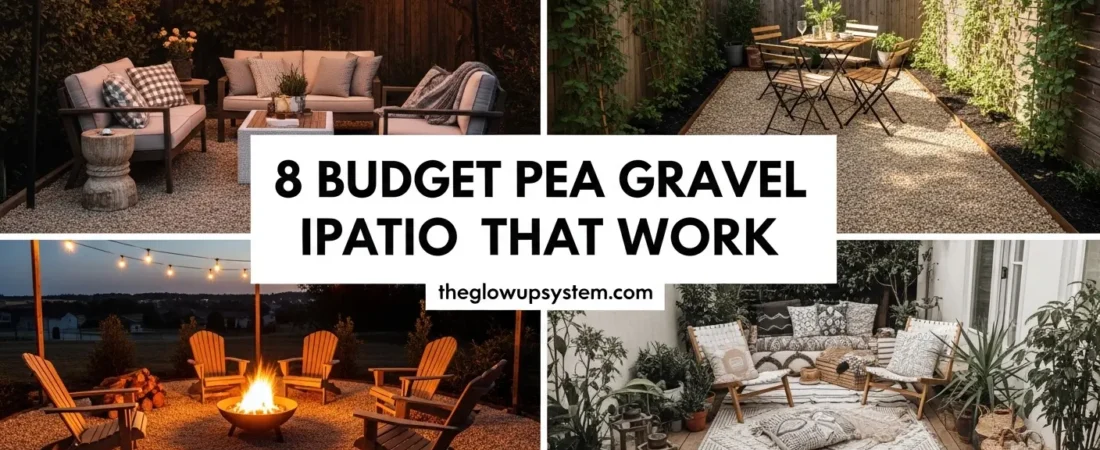
Gravel gets underestimated constantly.
People associate it with driveways and drainage ditches. Not with a backyard that looks genuinely designed. That is a mistake.
A pea gravel patio with proper edging, the right furniture, and some overhead lighting costs $80 to $300 and looks better than a concrete slab that cost ten times as much. I have seen it happen repeatedly.
The difference between gravel that looks cheap and gravel that looks intentional is almost entirely the edging. Define the border clearly and the whole thing reads as a design decision rather than a shortcut.
Table of Contents
1. Create a Cozy Gravel Seating Area With String Lights
✦ Budget-Friendly Cozy Setup
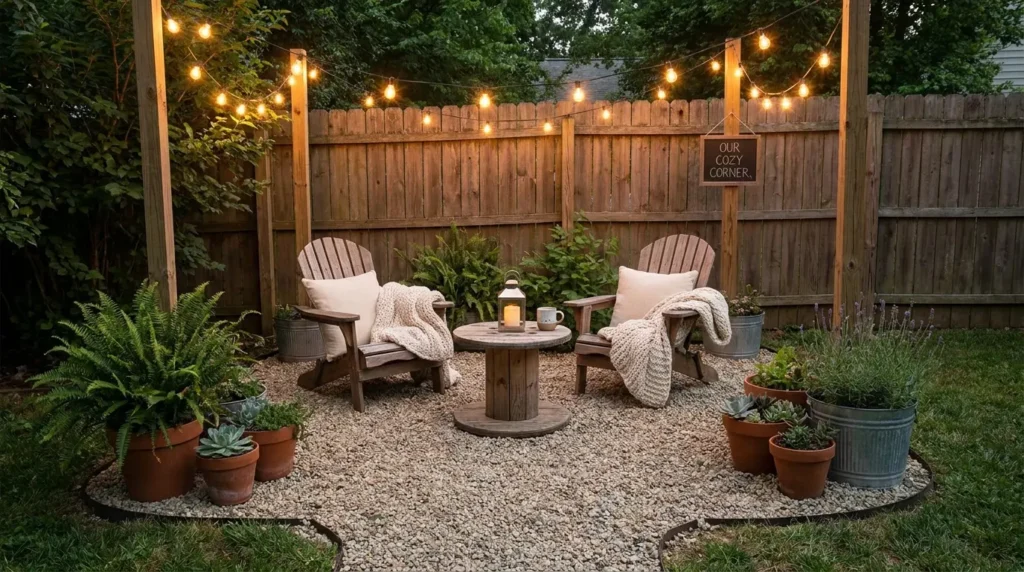
A simple gravel seating area is one of the fastest ways to make a backyard feel usable and intentional. Even a tiny section of defined gravel changes the psychology of the space — it creates a destination instead of random furniture sitting on grass.
Start by outlining a square or circular area using inexpensive metal landscape edging. Lay down landscape fabric to reduce weeds, then spread pea gravel evenly across the surface. Add two outdoor lounge chairs, a small table, and warm overhead string lights.
The gravel itself becomes the visual foundation that makes everything else feel styled. Neutral gravel colors work best because they reflect sunlight beautifully during the day and glow warmly under lighting at night.
I think a defined gravel seating area is the single fastest transformation available in a bare backyard. The edging goes in, the gravel goes down, and the space immediately has a reason to exist.
A basic 10 by 10 foot pea gravel seating patio can usually be completed for under $150 depending on your furniture and edging choices. Add the addlon solar string lights overhead and the entire space suddenly feels like an outdoor café. Find them linked on Amazon.
2. Build a Tiny Gravel Patio for a Small Backyard
✦ Small Space Gravel Patio
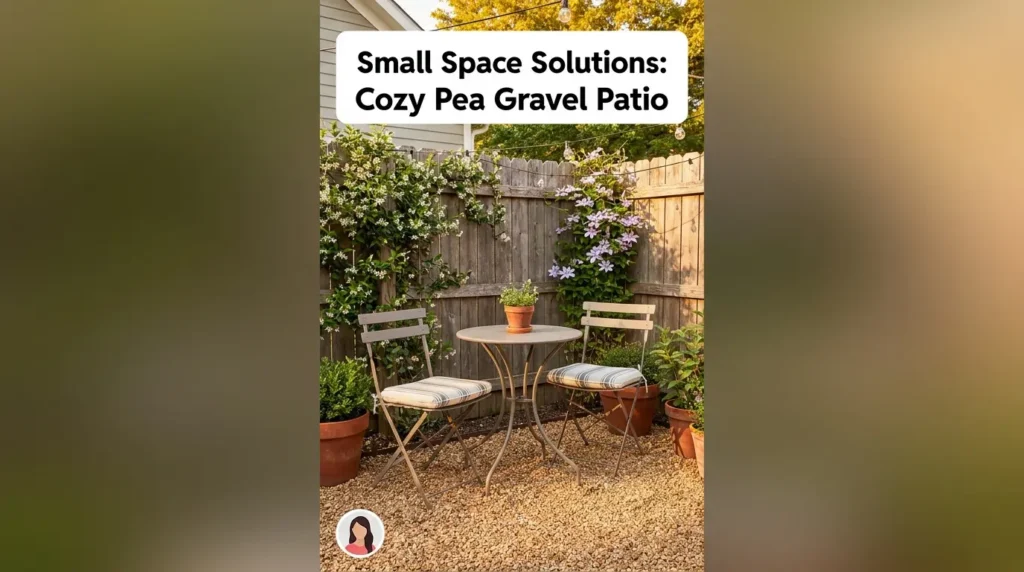
Small backyards benefit from gravel patios even more than large yards do because they create structure without making the space feel crowded or overbuilt.
A tiny pea gravel patio tucked into one corner instantly creates zoning — one side becomes the seating area while the rest of the yard stays open and breathable. Unlike large paver patios, gravel feels lightweight visually, which helps small yards feel larger instead of boxed in.
Choose compact furniture scaled to the size of the patio. Bistro tables, folding chairs, or slim outdoor benches work better than oversized sectionals in small gravel setups.
One of the biggest advantages of gravel in small spaces is flexibility. If your layout changes later you can easily reshape or expand the patio without demolition work. That flexibility makes pea gravel ideal for renters, starter homes, and evolving backyard layouts.
For more on designing a small outdoor space that feels generous rather than cramped see our 12 townhome backyard ideas guide which covers the specific approaches that work best in tight spaces.
Gravel is the material I recommend most for small backyards specifically because it reads as lightweight. Pavers in a small space can feel like you tiled the floor. Gravel feels like you made a choice.
PRO TIP: In very small backyards use lighter gravel colors instead of dark grey stone. Lighter surfaces reflect more light and visually expand the space.
3. Turn a Bare Backyard Into a Weekend Gravel Makeover
✦ DIY Weekend Makeover
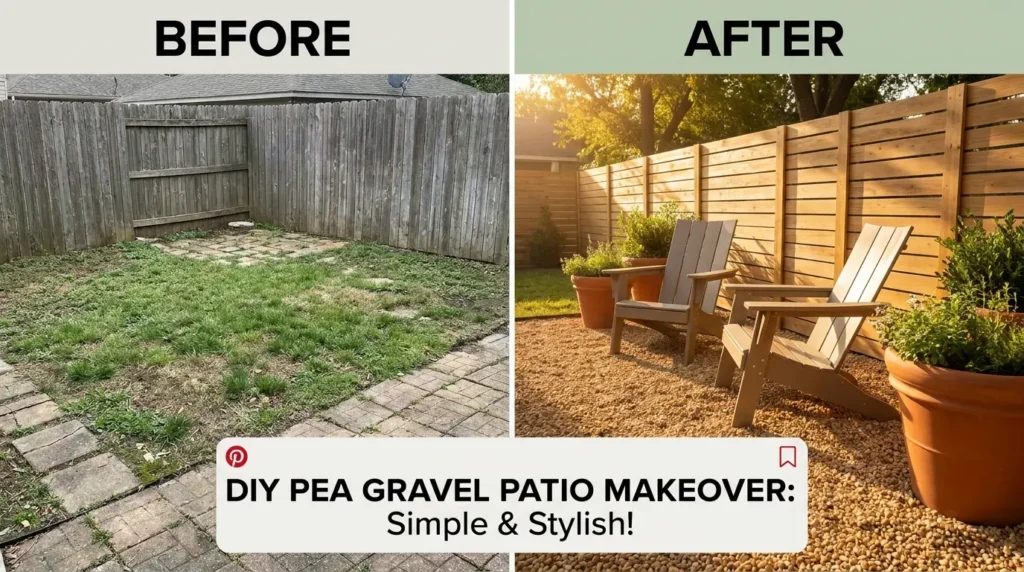
Pea gravel patios are popular because they deliver one of the highest visual transformations for the least amount of money and labor.
The process is simple enough for almost any beginner DIYer:
- Mark your patio shape
- Remove grass or topsoil
- Lay landscape fabric
- Install edging
- Pour and spread gravel
- Compact lightly with a rake and tamper
That is it.
Unlike pavers or concrete, gravel does not require precision leveling or complicated installation techniques. Imperfections actually make it look more natural and relaxed.
A weekend gravel makeover works especially well for neglected backyard corners, dead lawn areas, muddy spots, or empty spaces beside a fence. Even adding one defined gravel patio zone can completely shift how your backyard feels.
I have watched this project get completed in a single Saturday by people who had never done any landscaping before. The steps are genuinely simple and the result looks nothing like a first attempt.
A typical DIY gravel patio costs approximately $80 to $300 depending on size and edging materials — dramatically cheaper than most hardscape projects.
4. Design a Minimal Modern Gravel Patio
✦ Minimal Modern Layout
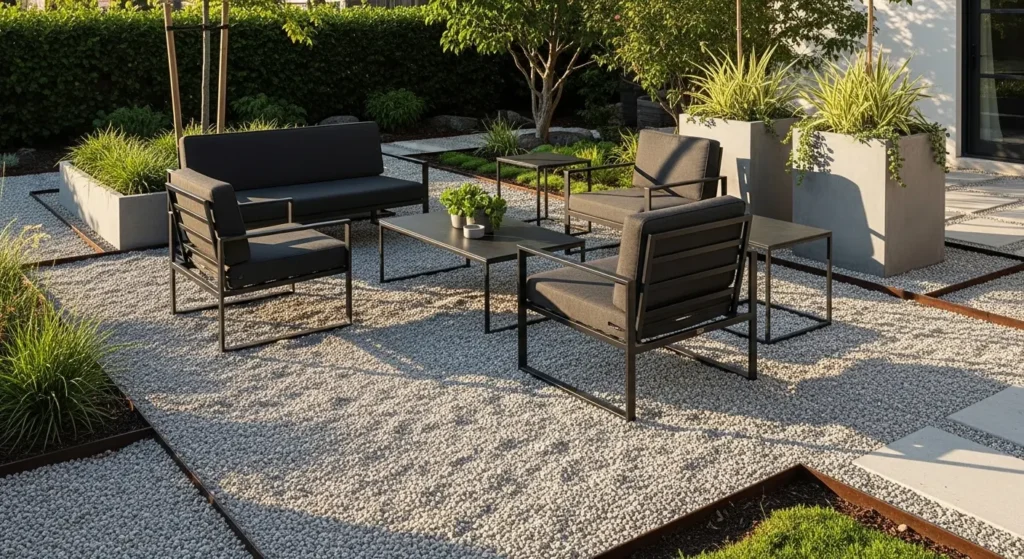
Pea gravel in a modern backyard looks wrong when there is too much happening. Right when there is almost nothing.
Fine grey gravel. Black steel edging. Two or three pieces of low-profile furniture. One large planter with an ornamental grass or olive tree. That is genuinely the complete setup for a modern gravel patio that looks considered.
Use simple geometric shapes, clean edging, minimal furniture, and limited plant palettes. Fine grey gravel paired with black steel edging immediately creates a modern architectural feel.
Minimal modern gravel patios work especially well alongside contemporary homes because the texture of the gravel softens the harder lines of concrete, steel, and modern architecture.
Keep the furniture low-profile and avoid clutter. A few oversized planters with ornamental grasses or olive trees create a high-end designer look without needing much else.
The contrast between soft gravel texture and sharp modern lines is what makes this style work so well visually.
The minimal modern gravel patio is the version I find most impressive in person. The contrast between the soft organic texture of the gravel and the clean lines of steel edging creates something that looks like it cost significant money.
PRO TIP: Steel landscape edging installed flush with the gravel creates the clean invisible border modern gravel patios need. Thick plastic edging ruins the minimalist effect.
5. Build a Budget-Friendly Fire Pit Gravel Zone
✦ Fire Pit Gravel Area
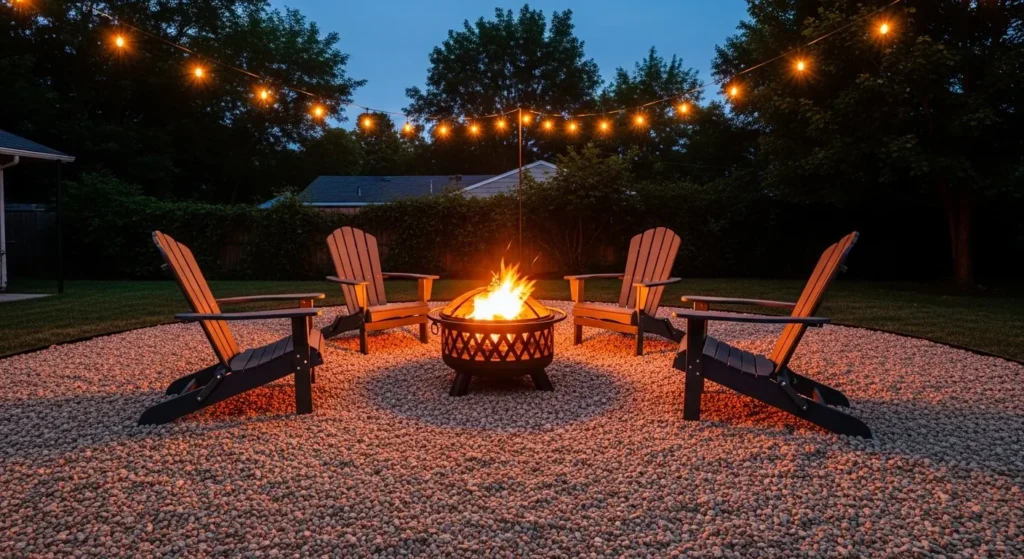
Fire pits and gravel patios work perfectly together because gravel is naturally fire-resistant, affordable, and visually relaxed.
A circular gravel fire pit zone instantly becomes the social center of the backyard. The gravel defines the area clearly while also helping prevent muddy foot traffic around the seating.
Start with a circular layout at least 10 feet wide. Install edging first, then fill the area with pea gravel or crushed stone. Position your fire pit in the center and arrange chairs around it evenly.
The layered textures — gravel underfoot, warm firelight, outdoor chairs, string lights overhead — create a backyard setup that feels expensive despite being one of the most affordable outdoor upgrades possible.
Fire pits and gravel belong together. I find it almost impossible to recommend putting a fire pit on grass or bare soil — gravel gives it a proper base, defines the zone, and handles the foot traffic without turning into mud.
Solar pathway lights around the perimeter make gravel fire pit areas look incredible after dark. The LANSOW solar spotlights work especially well for highlighting the texture of the gravel at night. Find them linked on Amazon.
6. Add a Gravel Dining Corner for Outdoor Meals
✦ Simple Dining Corner
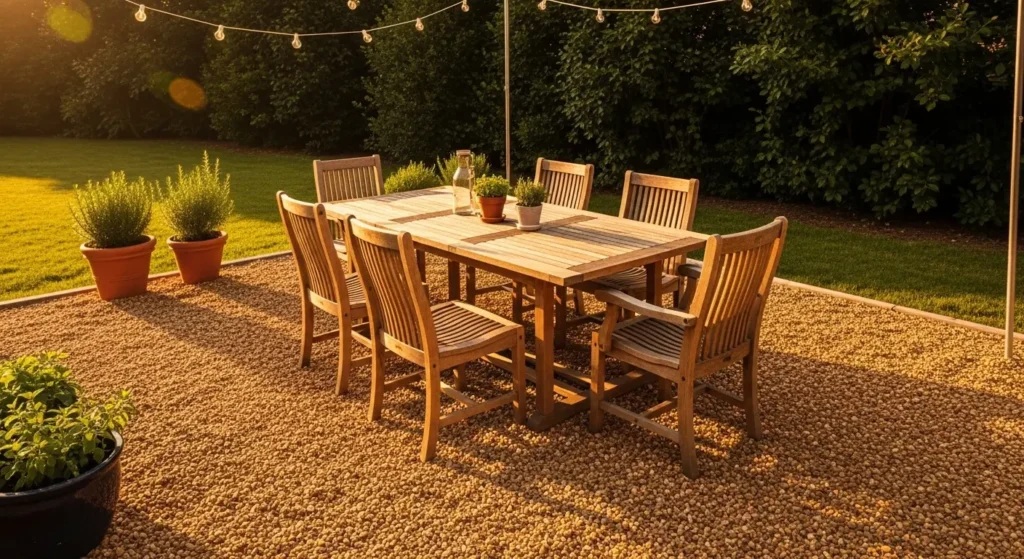
One of the easiest ways to make a backyard feel more luxurious is creating a dedicated outdoor dining zone.
A pea gravel dining patio creates enough structure to feel intentional without requiring expensive construction. Even a small table and four chairs suddenly feel elevated when placed on a defined gravel surface.
Position the patio close to your back door for easier access during meals. Add potted herbs nearby for softness and functionality — rosemary, basil, thyme, and lavender all look beautiful around gravel patios.
String lights overhead instantly complete the atmosphere. The warm light reflecting off light-colored gravel creates one of the coziest backyard lighting effects possible.
A dining patio does not need to be large. Even an 8 by 8 foot gravel area can comfortably hold a compact dining setup while making your backyard feel significantly more usable.
7. Lean Into Rustic Texture With Natural Materials
✦ Rustic Natural Style
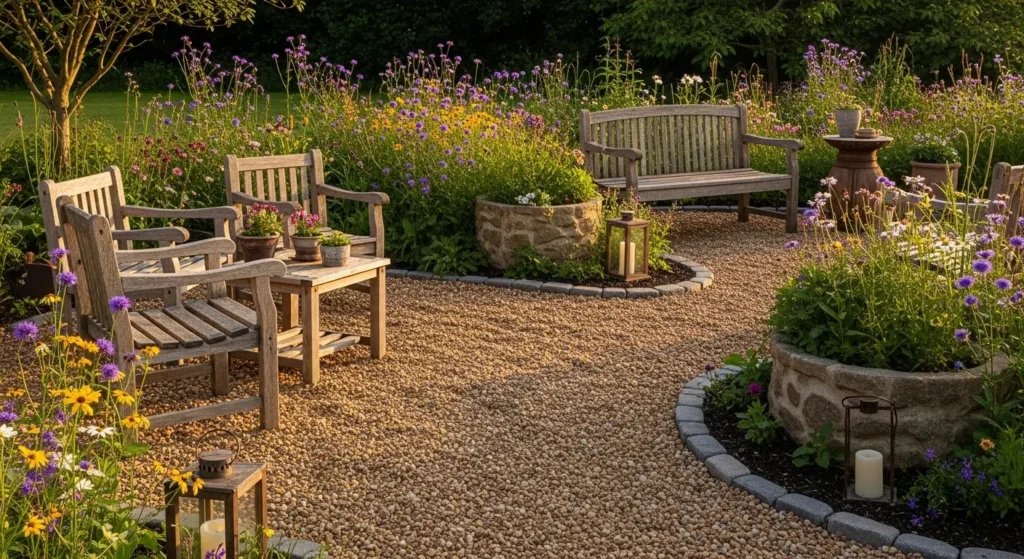
Pea gravel naturally complements rustic backyard design because it already feels weathered, organic, and relaxed.
Instead of crisp geometric lines, rustic gravel patios look best with softer curves and natural transitions into surrounding planting beds. Let grasses and flowers spill slightly into the edges instead of keeping everything sharply contained.
Weathered wood furniture, galvanized planters, terracotta pots, and natural stone details all pair beautifully with gravel surfaces.
One of the biggest reasons rustic gravel patios feel so inviting is because they never look overly perfect. Small irregularities, scattered leaves, and natural texture actually improve the atmosphere rather than ruining it.
This style also ages beautifully over time. Gravel settles naturally into the landscape and begins looking like it has always belonged there.
8. Mix Boho Decor With Gravel for an Expensive Look on a Budget
✦ Boho Gravel Vibe
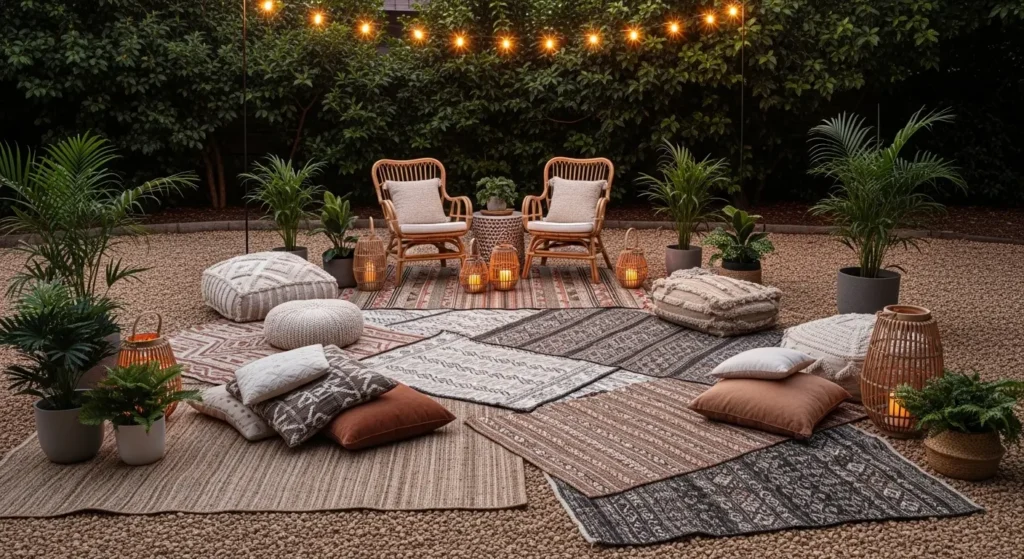
Boho styling and pea gravel are a perfect match because both rely heavily on texture, layering, and relaxed imperfection.
The gravel creates a neutral earthy base that allows textiles, lanterns, rugs, and plants to stand out visually. Unlike concrete patios that can sometimes feel cold, gravel already has warmth and softness built into the design.
Layer outdoor rugs directly over portions of the gravel to define seating zones. Add floor cushions, poufs, woven lanterns, and mixed terracotta planters for a relaxed collected-over-time feel.
The key to making a budget boho patio look expensive is sticking to a consistent color palette — warm neutrals, creams, terracotta, olive green, black accents, and natural wood tones all work beautifully together.
For the complete boho outdoor palette and accessory approach see our boho garden ideas guide which covers how to layer textures and materials in a gravel setting.
The VOOKRY Solar Watering Can Light looks especially good in boho gravel patios because the warm decorative glow complements the relaxed layered aesthetic perfectly. Find it linked on Amazon.
5 Pea Gravel Patio Mistakes That Ruin the Look
Mistake 1 — Skipping landscape fabric
Without weed barrier fabric weeds eventually grow through the gravel and create constant maintenance problems.
Mistake 2 — No edging
Gravel spreads over time. Without edging the patio slowly loses its shape and starts looking messy.
Mistake 3 — Using gravel that is too deep
Too much gravel makes furniture unstable and difficult to walk on comfortably. Around 2 to 3 inches deep is ideal.
Mistake 4 — Choosing the wrong furniture
Thin chair legs sink into loose gravel. Wider furniture feet or outdoor rugs underneath help stabilize seating.
Mistake 5 — Forgetting drainage
Even gravel patios need slight grading away from the house to prevent pooling water after rain.
Frequently Asked Questions
What is a pea gravel patio?
A pea gravel patio is an outdoor seating or dining area made using small smooth rounded gravel stones. According to the American Society of Landscape Architects, defined hardscape surfaces help create structure and improve the usability of outdoor spaces while blending naturally with planting and landscaping.
Is pea gravel good for patios?
Yes — pea gravel is one of the most affordable and beginner-friendly patio materials available. It provides drainage, flexibility, and a relaxed natural appearance while costing significantly less than pavers or poured concrete.
How much does a pea gravel patio cost?
Most DIY pea gravel patios cost between $80 and $500 depending on size, edging materials, and gravel depth. Smaller seating patios are often completed for under $150.
Does pea gravel require maintenance?
Pea gravel patios are relatively low maintenance. Occasional raking, topping up gravel every few years, and removing weeds around the edges are the main upkeep tasks.
What do you put under a pea gravel patio?
Most gravel patios use compacted soil, landscape fabric, and sometimes a crushed stone base underneath the pea gravel layer. Landscape fabric helps suppress weeds and stabilize the patio surface.
Is pea gravel cheaper than pavers?
Yes — pea gravel is dramatically cheaper than pavers. Gravel patios typically cost a fraction of professionally installed stone or concrete patios while still delivering a polished finished look.
More Backyard and Patio Ideas
→ 12 Must-See Backyard Hardscape Ideas
→ 13 Cozy Backyard Shed Ideas For Summer
→ 12 Townhome Backyard Ideas For Summer
→ 25 Stunning Back Porch Patio Ideas
The backyard that sits unused is almost always the one with no defined surface to sit on.
Grass under a chair feels temporary. Gravel under a chair feels like a patio. That psychological shift is real and it costs $150.
Buy the edging first. The gravel second. Everything else follows from having a surface that says this is where we sit.

Sheikh Hassaan is a digital architect for small businesses and the founder of The Glow Up System. He writes about home decor, garden design, and outdoor living for real American homes – practical ideas that work in actual spaces without oversized budgets.