
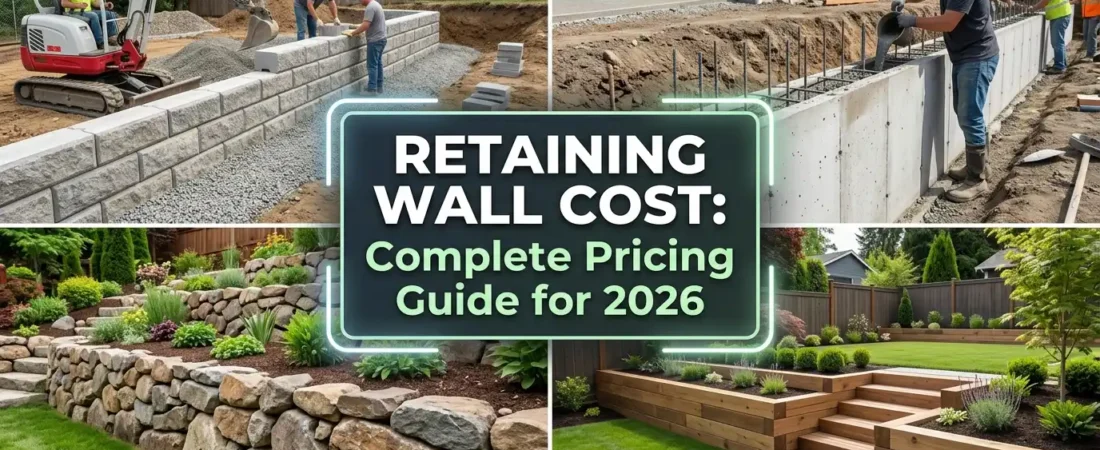
A retaining wall is more than a landscape feature. It prevents erosion, adds usable space to sloped yards, and can boost curb appeal. But the cost varies widely based on materials, size, and site conditions. This guide breaks down retaining wall costs so you can plan your project with confidence.
Table of Contents
Average Retaining Wall Cost
The average cost to build a retaining wall in 2026 is $5,200 to $7,100, depending on the source and location. Most homeowners spend between $3,600 and $9,000 for a typical residential project.
Key pricing figures:
- Average cost per square foot: $20 to $60
- Typical total project cost: $3,600 to $9,000
- Labor costs: $40 to $100 per hour
- Smaller walls (2×20 ft): $800 to $2,400
- Larger walls (8×100 ft): $16,000 to $48,000
Cost Factors
Wall Size
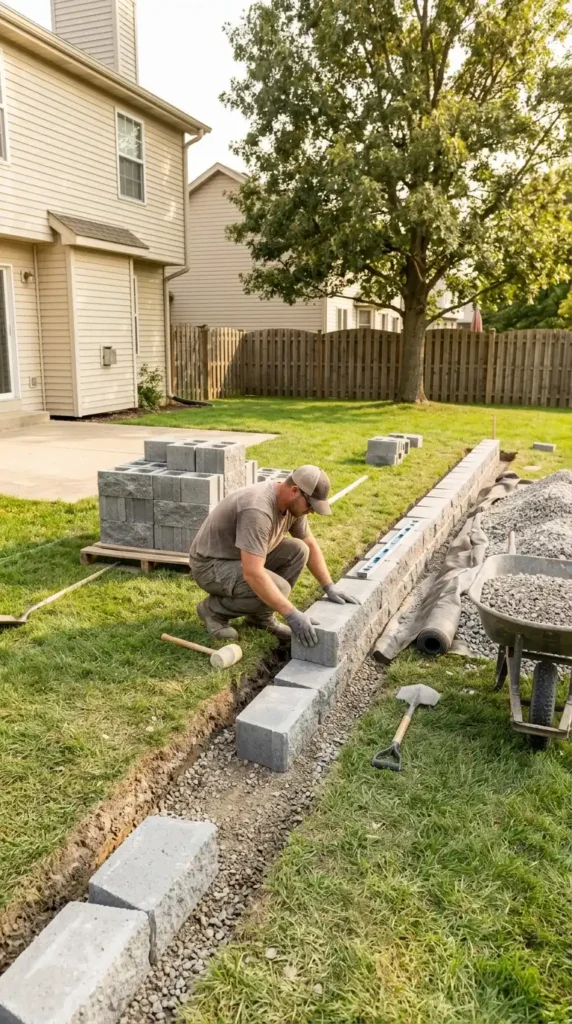
The size of your retaining wall is the single biggest cost factor. Both height and length directly affect material quantities and labor hours.
| Height x Length | Sq. Footage | Average Cost | Typical Range |
|---|---|---|---|
| 2×20 ft | 40 sq ft | $1,600 | $800–$2,400 |
| 4×40 ft | 160 sq ft | $6,400 | $3,200–$9,600 |
| 6×60 ft | 360 sq ft | $14,400 | $7,200–$21,600 |
| 8×100 ft | 800 sq ft | $32,000 | $16,000–$48,000 |
Material Choice
Your choice of material significantly impacts the total cost, both upfront and long-term.
| Material | Cost per Sq. Ft. | Pros | Cons |
|---|---|---|---|
| Gabion/stone | $10–$100 | Affordable options, natural look | Varies by stone type |
| Wood/timber | $15–$30 | Natural appearance, budget-friendly | Shorter lifespan, rot risk |
| Brick | $10–$45 | Classic look, durable | Labor-intensive |
| Vinyl | $10–$15 | Affordable, low-maintenance | Less structural strength |
| Concrete | $20–$50 | Durable, versatile, strong | Higher cost |
| Steel/I-beam | $40–$150 | Extremely strong | Rust risk, high cost |
Labor Costs
Labor represents roughly 50% of the total project cost. Most retaining wall contractors charge:
- Hourly rate: $40 to $100 per hour
- Per square foot: $10 to $50 per sq ft
- Complex or tall walls cost more due to engineering requirements
When to hire a professional:
Additional Costs
Permits and Engineering
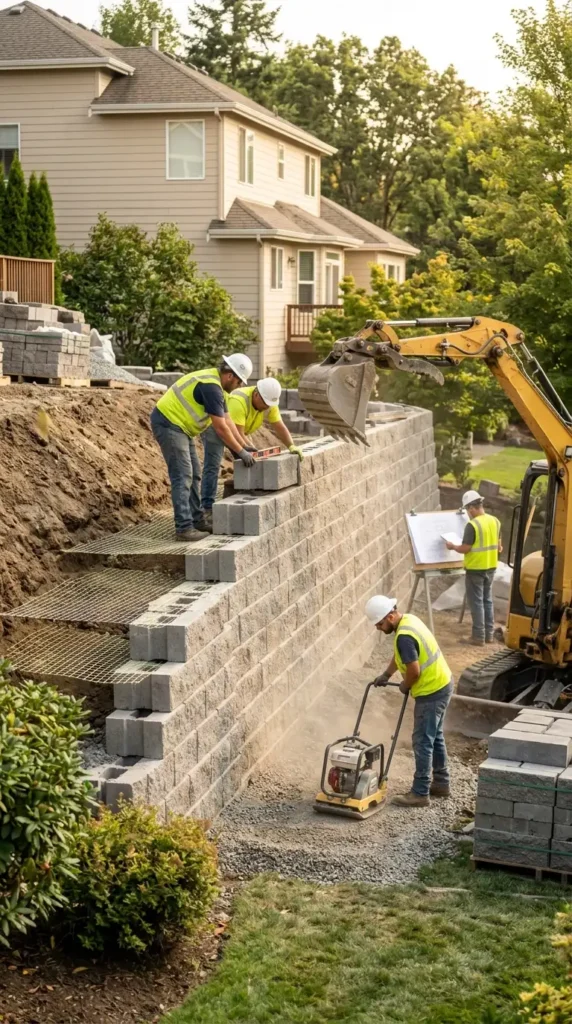
Most municipalities require permits for walls over 3 to 4 feet tall.
- Permit fees: $25 to $450
- Structural engineer: $120 to $150 per hour
- Engineering drawings: $350 to $750
Site Preparation
- Land clearing: $100 to $250 per hour
- Land grading: $900 to $3,000
- Tree removal: $200 to $2,000
- Excavation: $100 to $220 per cubic yard
Drainage and Reinforcement
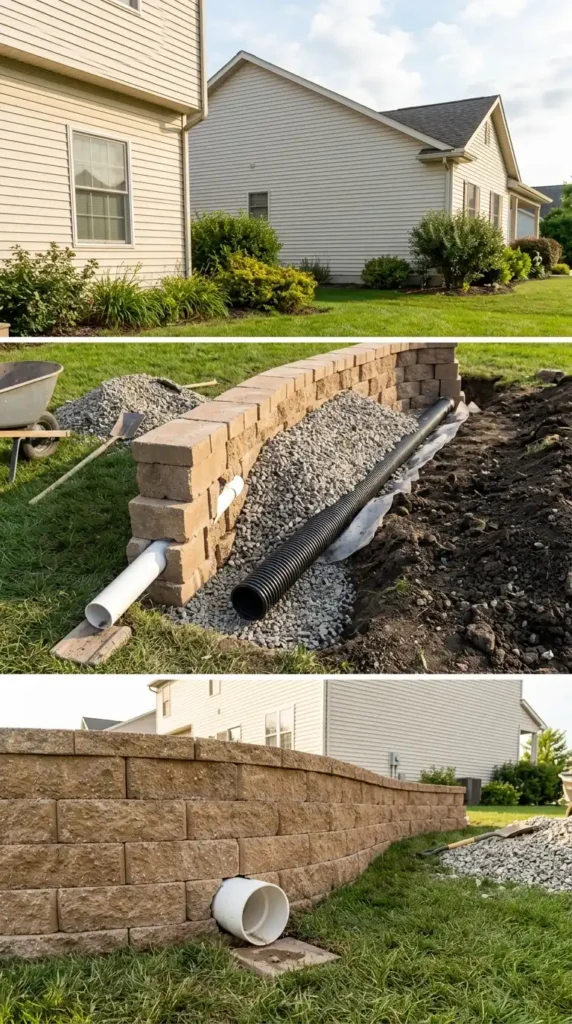
Proper drainage is critical to prevent wall failure.
- Drainage systems: $10 to $80 per linear foot
- Rebar reinforcement: $0.80 to $1.60 per sq ft
- Waterproofing: $2 to $10 per sq ft
- Demolition of old wall: $20 to $30 per linear foot
Enhancements and Add-Ons
- Integrated stairs: $5,000 to $15,000
- Outdoor lighting: $2,000 to $6,000
- Patio above wall: $1,050 to $8,100
Regional Cost Considerations
Retaining wall costs vary significantly by region:
- Urban vs. rural: Labor rates are higher in urban areas
- Climate: Harsh winters require deeper footings below the frost line, adding cost
- Soil type: Clay soils need extra reinforcement, increasing costs
- Hard-to-access sites: Add 50% or more to labor costs
For example, in Minneapolis, Minnesota, the average retaining wall cost is $7,131, higher than the national average due to harsh winters and clay soil conditions that require specialized construction methods.
Cost by Wall Height
| Wall Height | Cost per Linear Foot | Notes |
|---|---|---|
| 2 ft | $40–$200 | Simple garden walls, no permits usually needed |
| 3 ft | $60–$300 | Typical residential wall |
| 4 ft | $80–$400 | May require permits and engineering |
| 6 ft | $360–$500+ | Requires permits, engineering, and reinforcement |
Cost Saving Tips
Choose modular block systems: Interlocking blocks are DIY-friendly and cost-effective.
Limit wall height: Walls under 4 feet generally do not require permits or engineering, saving thousands.
Get multiple quotes: Compare at least 3 quotes from local contractors.
Combine with other projects: Install drainage and landscaping simultaneously to reduce costs.
Consider gabion walls: Wire cages filled with stone are affordable and provide a natural look.
Do site prep yourself: Clearing the area yourself can reduce labor costs.
Frequently Asked Questions About Retaining Wall Costs
1. How much does it cost to build a retaining wall per square foot?
Expect to pay $20 to $60 per square foot for materials and installation, depending on material choice and wall height.
2. What is the cheapest retaining wall material?
Gabion walls ($10–$40 per sq ft) and vinyl ($10–$15 per sq ft) are among the most affordable options. Timber ($15–$30 per sq ft) is also budget-friendly.
3. How much does a 100-foot retaining wall cost?
A 100-foot retaining wall typically costs $4,000 to $36,000, depending on height. A 3-foot wall costs approximately $9,000–$13,500, while a 6-foot wall costs $18,000–$36,000.
4. Do I need a permit for a retaining wall?
Most areas require permits for walls over 3 to 4 feet tall. Check your local building department before starting.
5. How long does a retaining wall last?
Timber walls: 5–20 years; Concrete walls: 50+ years; Stone walls: 100+ years.
6. Should I hire a professional or DIY?
Hire a professional for walls over 4 feet tall, walls with drainage needs, and sites with complex soil or slope conditions. DIY may be suitable for short garden walls under 3 feet.
Related Articles
10 DIY Garden Ideas: Transform Your Outdoor Space on a Budget
Outdoor Pendant Lighting: 7 Stylish Ideas for Alfresco Evenings
Front Yard Rock Garden Ideas: 10 Low-Maintenance Designs for Curb Appeal
15 DIY Garden Markers: Creative & Budget-Friendly Plant Labels
A retaining wall is an investment in your property’s stability and curb appeal. With proper planning, material selection, and professional installation, your wall will stand strong for decades.

Sheikh Hassaan is a digital architect for small businesses and the founder of The Glow Up System. He writes about home decor, garden design, and outdoor living for real American homes – practical ideas that work in actual spaces without oversized budgets.