
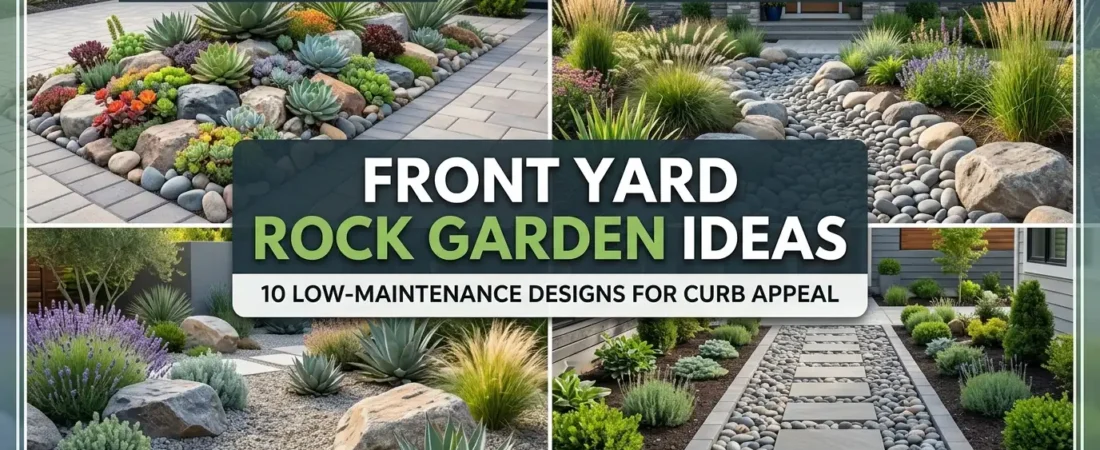
A well-designed front yard rock garden adds structure, contrast, and lasting beauty to your home’s exterior while significantly cutting down on watering and weeding. Whether you prefer a modern minimalist look or a rustic natural retreat, rocks and drought-tolerant plants create a landscape that stands out in every season.
Here are 10 front yard rock garden ideas that work for real American homes, from small entryways to sloped lots.
Table of Contents
1. Dry Creek Bed with River Rocks
✦ Best for: Managing rainwater runoff while adding a natural, flowing element to your yard
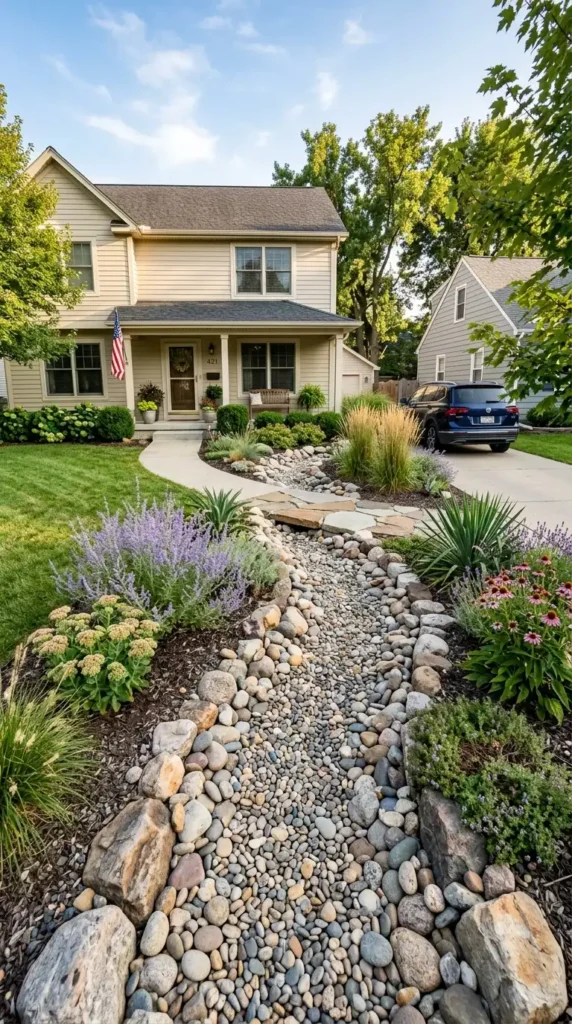
A dry creek bed creates a captivating visual path through your front yard while serving a practical purpose. Use smooth river rocks in various sizes, placing larger stones along the edges and smaller pebbles in the center to mimic a natural water flow. This design is especially effective for sloped yards where rainwater runoff is a concern.
How to do it: Mark a meandering path, remove the sod, and line with landscape fabric. Place larger border stones first, then fill the center with smaller pebbles. Add drought-tolerant plants like ornamental grasses along the banks for a seamless blend with nature.
2. Succulent and Rock Garden
✦ Best for: Sunny front yards where you want vibrant, water-wise color with minimal maintenance
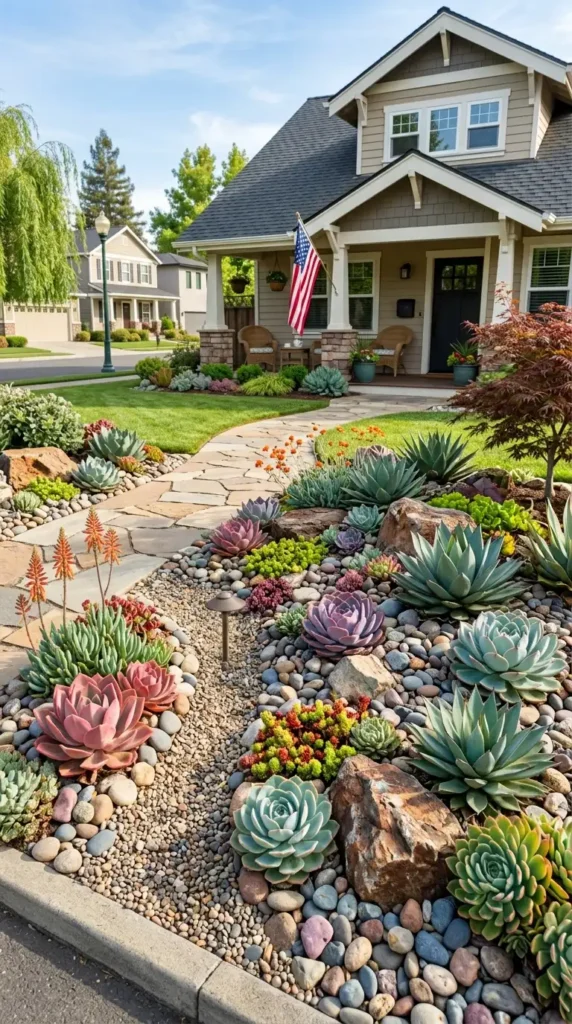
Succulents thrive in rocky landscapes, making them a perfect match for front yard rock gardens. Arrange decorative rocks around varieties like aloe, agave, and echeveria, using contrasting textures and colors for visual interest. This setup works particularly well in modern and desert-inspired front yards.
How to do it: Choose a sunny spot and prepare well-draining soil. Place larger anchor rocks first, then plant succulents in pockets between the stones. Top with crushed granite or pea gravel for a polished finish.
3. Zen Garden with White Pebbles
✦ Best for: Creating a serene, minimalist entrance that requires almost no maintenance
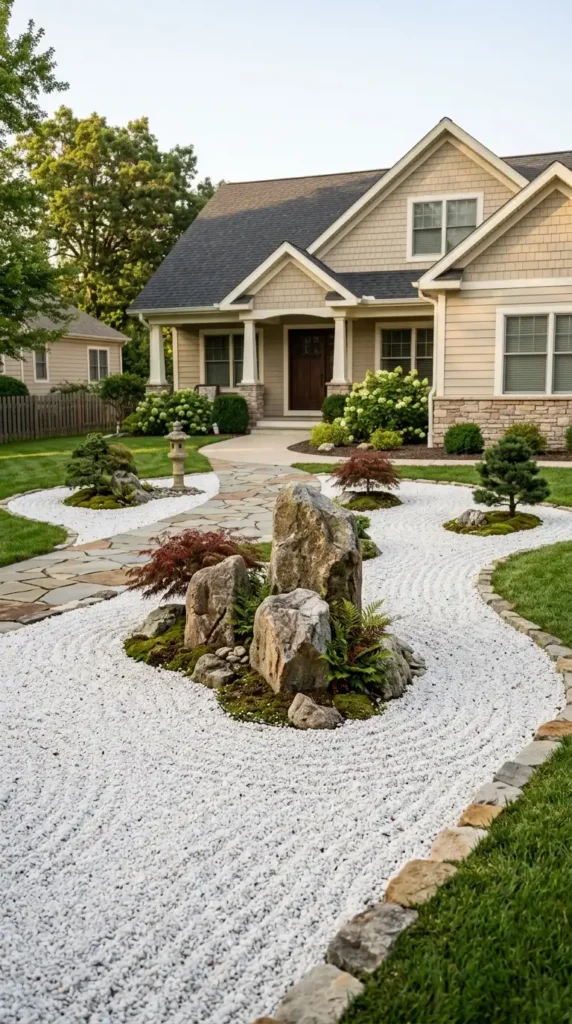
A minimalist Zen-inspired yard features fine white gravel or sand, raked into calming patterns that represent flowing water. Add a few large rocks as focal points and complement the scene with sculpted shrubs or a simple stone lantern.
How to do it: Lay landscape fabric and cover with a thick layer of white gravel. Place boulders in odd-numbered groupings and rake the gravel in swirling patterns. Keep plantings minimal, perhaps a single Japanese maple or low-growing fern.
4. Flagstone Walkway with Gravel Accents
✦ Best for: Guiding visitors to your front door while adding charm and function
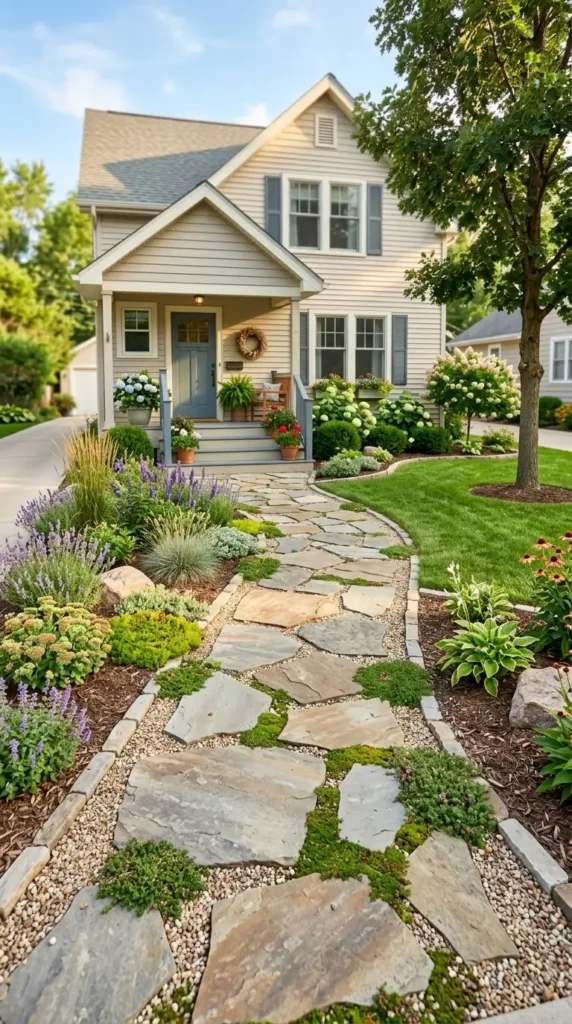
A flagstone pathway brings charm and function to a front yard. Fill the gaps between stones with pea gravel or crushed granite for a clean and polished look. Add low-growing groundcover plants like creeping thyme along the edges for softness.
How to do it: Lay irregularly shaped flagstones, leaving gaps for gravel. Fill with pea gravel and plant low-growing groundcovers between the stones. The plants will soften the hardscape and release fragrance when walked on.
5. Boulder Borders for Flower Beds
✦ Best for: Defining garden beds with natural, rugged edges
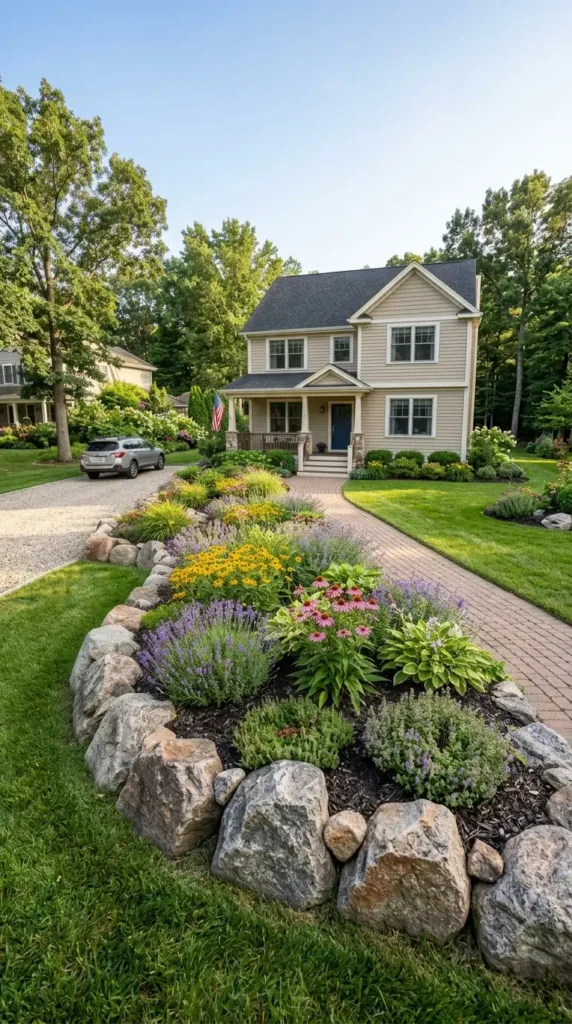
Define your garden beds with strategically placed boulders. The natural, rugged edges contrast beautifully with colorful flowers and greenery. Use different sizes to create depth and interest.
How to do it: Choose boulders in varying sizes, burying them about one-third of their depth to look natural. Place larger ones first as anchors, then fill in with medium and smaller stones. Leave space between rocks for plants.
6. Rock Mulch Instead of Grass
✦ Best for: Reducing water usage and eliminating mowing in dry climates
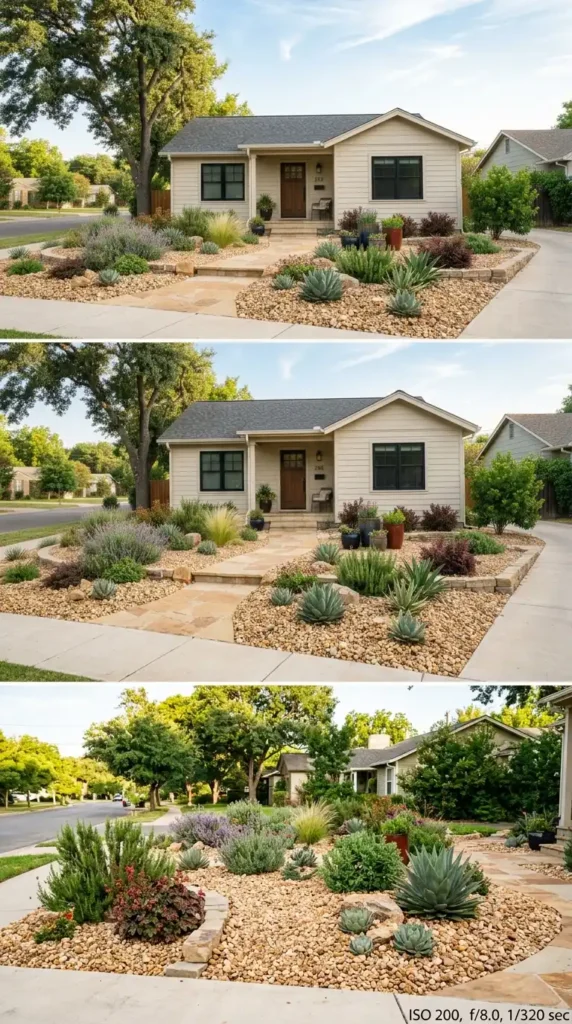
Replace traditional grass with decorative gravel or crushed stone for a low-maintenance lawn alternative. It prevents weeds and reduces water usage while maintaining a sleek, modern look. Use a rock color that complements your home’s exterior.
How to do it: Remove sod and lay landscape fabric. Cover with 2-3 inches of decorative gravel. Add potted plants or shrubs for variety and to break up the space.
7. Stacked Stone Retaining Walls
✦ Best for: Sloped front yards where you need erosion control and added planting space
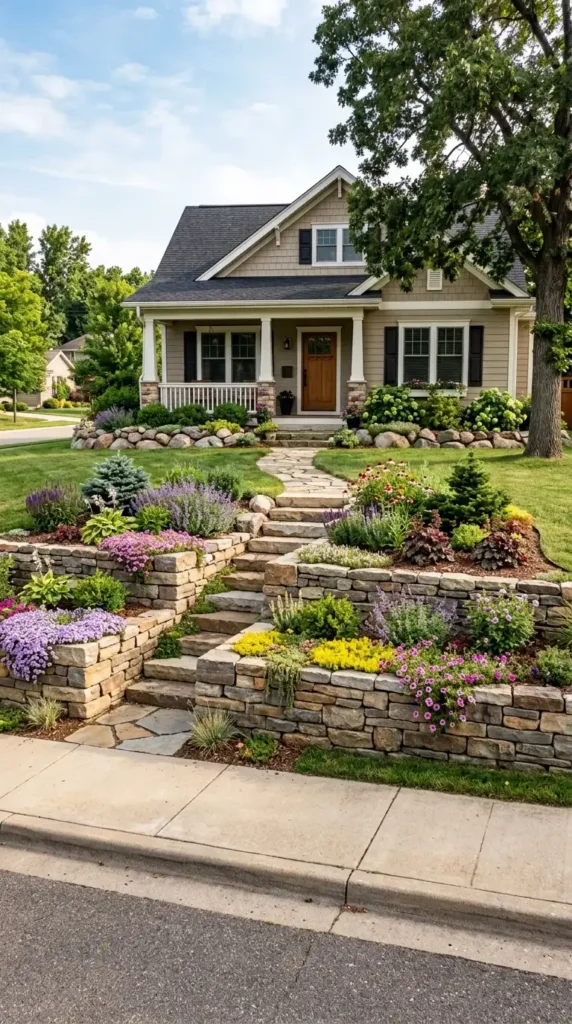
If your front yard has slopes, a stacked stone retaining wall adds both function and beauty. It prevents soil erosion while creating levels for planting flowers or shrubs. A dry-stack stone wall gives a more rustic look.
How to do it: Create tiers with natural stone, leaving planting pockets between the stones. Plant cascading flowers like creeping phlox or low-growing shrubs to soften the structure.
8. Black Lava Rocks with Greenery
✦ Best for: Creating dramatic contrast and a modern, moody aesthetic
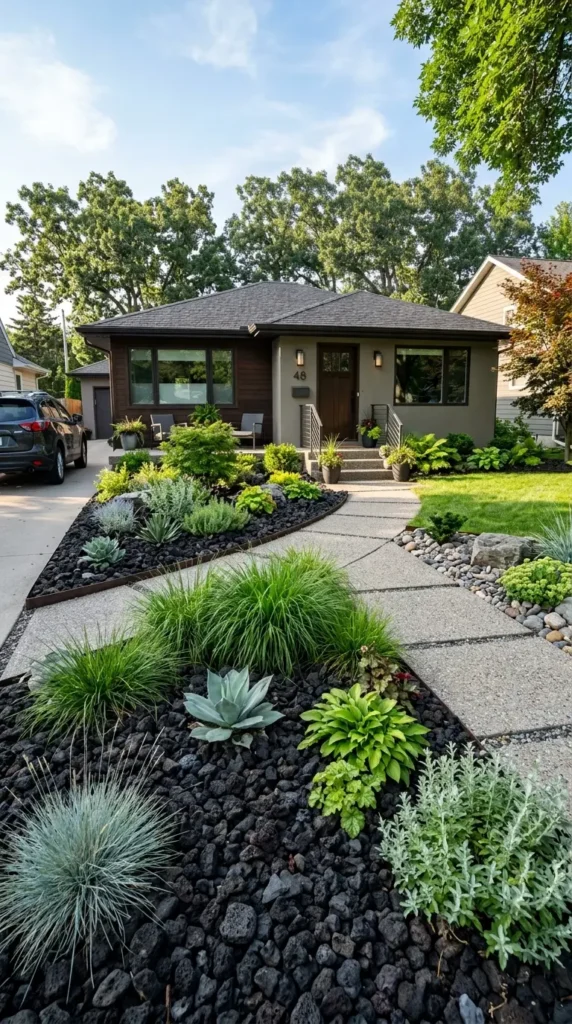
Black lava rocks create a striking contrast against lush green plants. Use them to highlight pathways, garden borders, or planters. The porous texture also helps with drainage and soil insulation.
How to do it: Use black lava rock as ground cover around drought-tolerant plants with silver or light green leaves. Pair with succulents, ornamental grasses, or agave for a dramatic effect.
9. Desert-Inspired Rockscape
✦ Best for: Hot, dry climates where you want to embrace a water-wise aesthetic
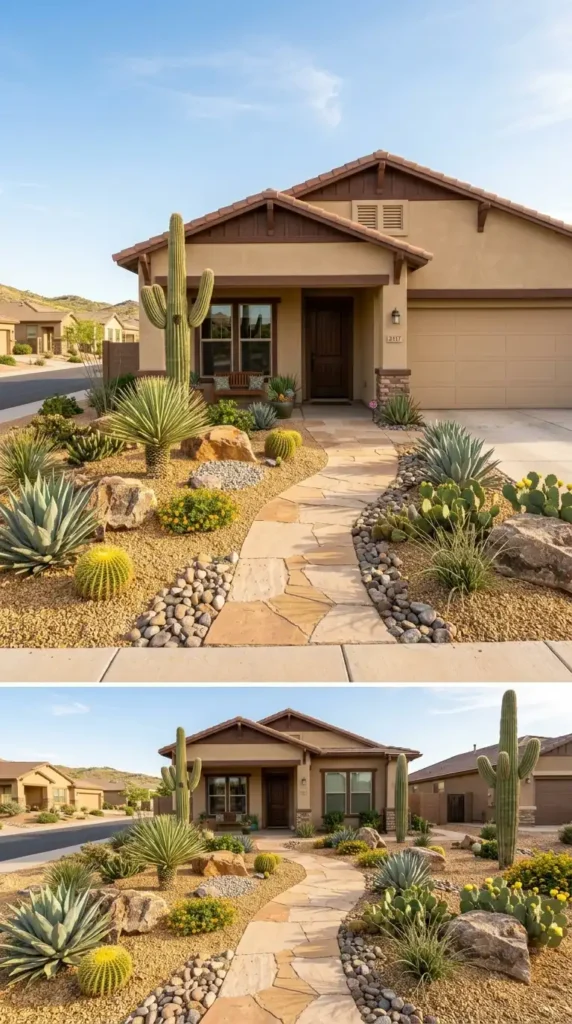
A desert rock garden features a mix of large stones, gravel, and drought-resistant plants like cacti, yucca, and agave. Arrange rocks in a flowing pattern for a natural effect.
How to do it: Use warm-toned decomposed granite or sand-colored gravel as a base. Place large boulders as focal points and plant drought-tolerant species in groupings.
10. Spilled Pot Rock Design
✦ Best for: Adding a playful, whimsical touch to a small front yard
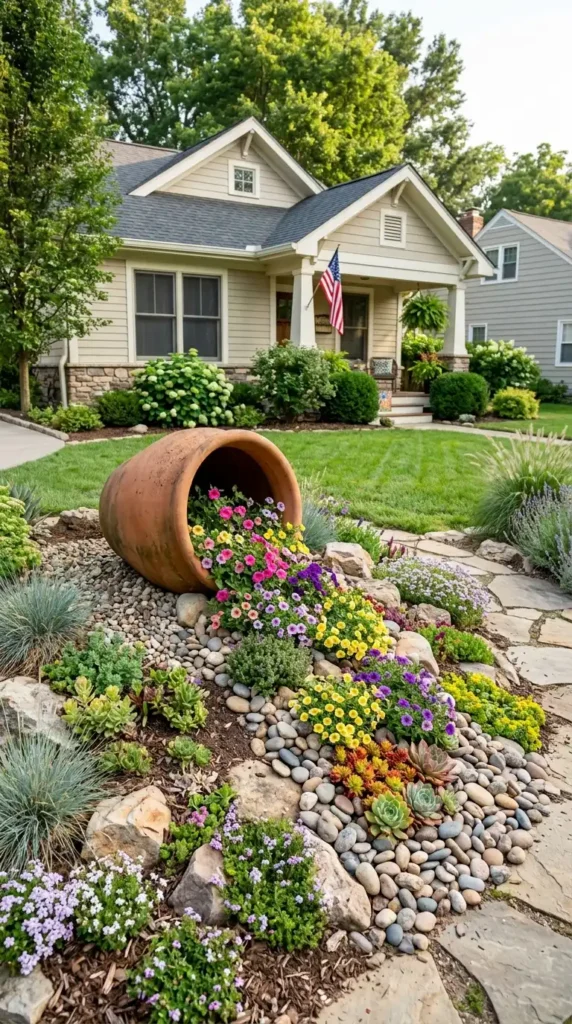
Try arranging a large, tipped pot so it looks as if flowers and rocks have spilled naturally onto your garden bed. Using bright petunias, alyssum, or marigolds creates a playful effect that is sure to attract attention.
How to do it: Choose a large terracotta pot and lay it on its side. Arrange spilled rocks and drought-tolerant plants trailing out of the pot opening.
Frequently Asked Questions About Front Yard Rock Gardens
1. Are front yard rock gardens low maintenance?
Yes, rock gardens are generally low-maintenance. They reduce weeding and watering significantly. However, you will still need occasional debris removal and weed control between stones.
2. What rocks work best for small front yards?
Pea gravel, river rock, and crushed granite are popular choices because they are visually light and easy to install. Use larger boulders only as focal pieces.
3. How do I prevent weeds in rock beds?
Install a woven landscape fabric under the rock layer and add a 2-3 inch layer of gravel on top. Spot-treat any persistent weeds that appear.
4. Will rocks make my yard hotter?
Lighter-colored rocks reflect heat and are less likely to raise temperatures. Pairing rocks with plants and shade features also helps mitigate heat buildup.
5. How do I choose plants for rock gardens?
Pick low-water, shallow-rooted species like sedums, lavender, and ornamental grasses. Local native plant lists are a great guide for choosing appropriate plants for your region.
Related Articles
20 Creative Garden Rock Art Ideas
15 DIY Garden Markers: Creative & Budget-Friendly Plant Labels
7 DIY Garden Signs: Easy Projects to Add Personality to Your Yard
A well-designed front yard rock garden is an investment in curb appeal that keeps on giving. With minimal maintenance and year-round structure, it transforms your home’s entrance into a welcoming, stylish space.

Sheikh Hassaan is a digital architect for small businesses and the founder of The Glow Up System. He writes about home decor, garden design, and outdoor living for real American homes – practical ideas that work in actual spaces without oversized budgets.