
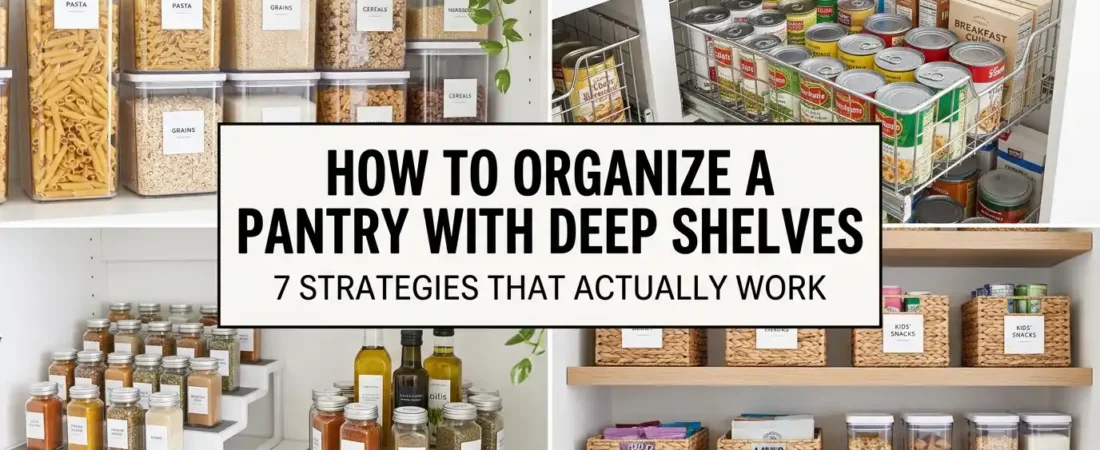
Deep pantry shelves are a blessing and a curse. They hold a lot of food, which is great. But items get pushed to the back and forgotten. Cans expire. Boxes get crushed. You buy duplicates of things you already have because you cannot see what is hiding behind the first row.
The good news is that deep shelves can be organized effectively with the right tools and strategies. You do not need to tear out your cabinets or start from scratch. This guide covers seven practical strategies for how to organize a pantry with deep shelves, so you can finally see everything you own.
Table of Contents
1. Use Turntables for Small Items
Turntables, also called Lazy Susans, are one of the best tools for deep pantry shelves. They bring items from the back to the front with a simple spin. You can see everything you have without digging.
Why It Works: Turntables make the back of the shelf accessible. They are perfect for jars, bottles, cans, and spice containers.
How to Do It: Place a turntable on a deep shelf. Group similar items together, like canned vegetables, pasta sauces, or cooking oils. Spin the turntable to find what you need. Choose turntables with raised edges to keep items from falling off.
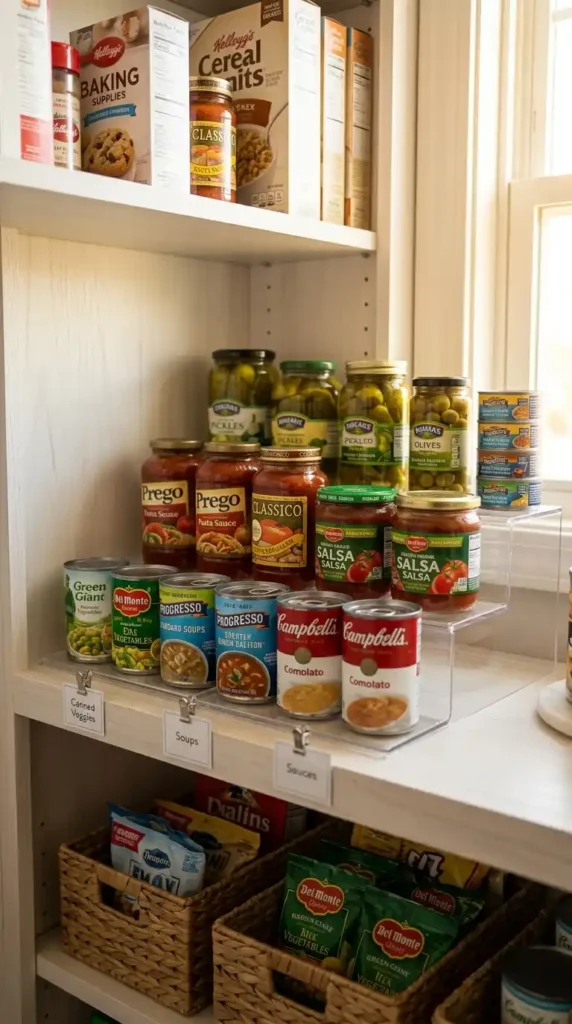
2. Use Tiered Shelf Risers
Tiered shelf risers create steps inside your pantry. They let you see items in the back by raising them up. This is especially useful for cans, jars, and boxes.
Why It Works: Tiered risers provide visibility and easy access. They make use of vertical space within the shelf.
How to Do It: Place a tiered riser on a deep shelf. Arrange items so the shortest items are in front and the tallest are in the back. Use them for canned goods, spice jars, or snack boxes. Look for adjustable risers that fit different shelf heights.
3. Use Clear Bins and Baskets
Clear bins and baskets are essential for deep pantry shelves. They group similar items together and make it easy to pull out a whole category of food at once. You can also label the bins so everyone knows where things belong.
Why It Works: Bins keep items contained and prevent them from sliding to the back of the shelf. Clear bins let you see what is inside without opening them.
How to Do It: Group items by category, such as breakfast foods, baking supplies, snacks, and canned goods. Place each category in a separate clear bin. Label each bin for easy identification. Slide the bins in and out like drawers.
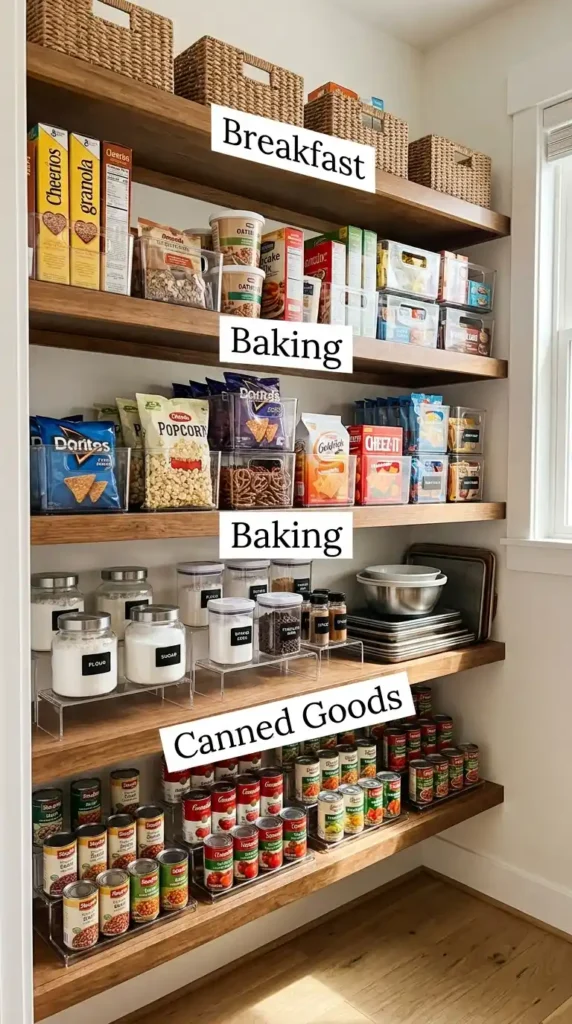
4. Create Zones
Creating zones is one of the most important steps in how to organize a pantry with deep shelves. Divide your pantry into zones based on how you use items. For example, a baking zone, a breakfast zone, a canned goods zone, and a snack zone.
Why It Works: Zones make it easy to find what you need. They also make grocery shopping easier because you can see what is running low.
How to Do It: Group similar items together in designated areas. Place frequently used items at eye level. Place less-used items on higher or lower shelves. Use bins or labels to mark each zone.
5. Use Can Organizers for Canned Goods
Canned goods are one of the biggest challenges in a deep pantry. They roll around and get pushed to the back. A can organizer keeps them in neat rows and makes it easy to see what you have.
Why It Works: Can organizers keep cans from rolling and make them easy to grab. They also help you rotate your stock, so older cans get used first.
How to Do It: Use a tiered can rack that holds cans in rows. Place it on a deep shelf. Arrange cans so the oldest are in front and the newest are in back. Some can organizers are stackable for even more storage.
6. Use Wall-Mounted Storage for Extra Space
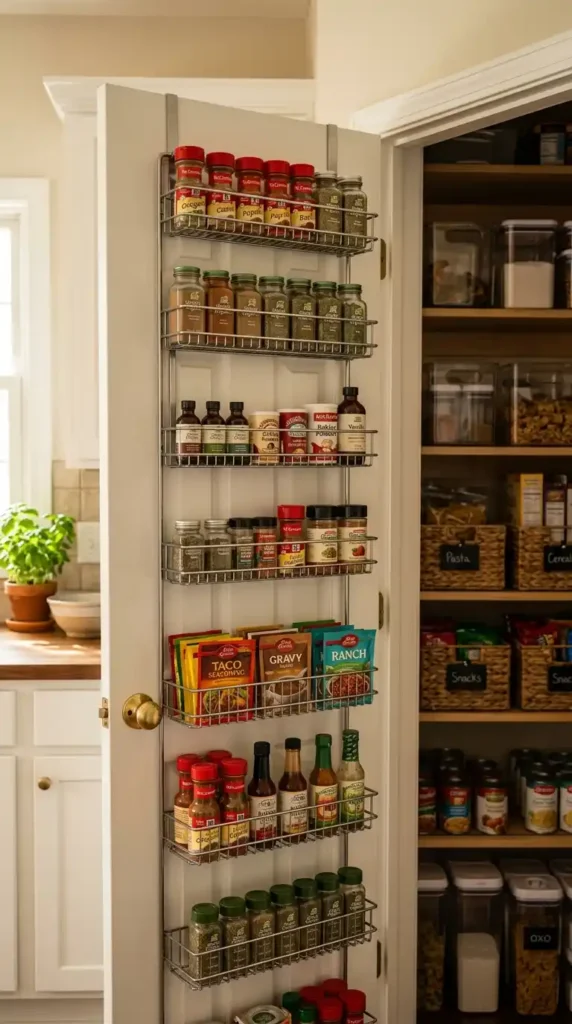
If your pantry shelves are very deep, consider adding wall-mounted storage to the inside of the pantry door. This is a great place for spices, small jars, or packets.
Why It Works: Wall-mounted storage uses vertical space and keeps small items off the shelves, freeing up room for larger items.
How to Do It: Install an over-the-door organizer or a wall-mounted rack. Use it for spices, seasoning packets, or small jars. Choose clear pockets so you can see what you have.
7. Label Everything
Labels are the finishing touch for any organized pantry. They help everyone in the household know where things belong. Labels also make it easy to see what is running low.
Why It Works: Labels create a system that is easy to maintain. They prevent confusion and help keep the pantry organized long-term.
How to Do It: Use a label maker or handwritten labels. Label bins, baskets, jars, and shelves. Include the name of the item or the category.
Bonus: How to Maintain Your Organized Pantry
- Do a quick check before grocery shopping: See what is running low and make a list.
- Put new items in the back: This keeps older items in front and reduces waste.
- Do a seasonal deep clean: Empty shelves every few months. Wipe them down and reorganize.
- Avoid overbuying: Only buy what you will use within a reasonable time.
Frequently Asked Questions
1. How do you organize a very deep pantry?
Use turntables, tiered risers, and clear bins to make items accessible. Group items into zones. Use the back of the shelf for items you rarely use and the front for everyday items. Install over-the-door organizers for small items.
2. What is the best way to organize canned goods in a deep pantry?
Use a tiered can rack or a stackable can organizer. Arrange cans so the oldest are in front and the newest are in back. Keep similar cans together, like vegetables, soups, and fruits.
3. How do you organize deep shelves without spending a lot?
Use items you already have. Shoeboxes, baskets, and jars can work as bins. Label them with tape and a marker. Use cardboard boxes to create makeshift risers. Start small and add tools over time.
4. How do you keep items from getting lost in deep shelves?
Use bins that slide out like drawers. Place frequently used items in the front and reserve the back for less-used items. Use risers to raise items in the back. Label everything so you know where it belongs.
Related Articles
Organizing a Coat Closet — 7 Smart Solutions for a Clutter-Free Entryway
How to Organize a Laundry Closet Like a Pro
Bamboo Kitchen Drawer Organizer Complete Guide
Upgrade Your Home with These 7 Black Pendant Lights
Deep pantry shelves do not have to be a source of frustration. With the right tools and strategies, you can turn them into a well-organized space that saves you time, money, and stress.

Sheikh Hassaan is a digital architect for small businesses and the founder of The Glow Up System. He writes about home decor, garden design, and outdoor living for real American homes – practical ideas that work in actual spaces without oversized budgets.