
I killed every plant I bought for the first two years of having my own place. Not from neglect — from overwatering. The moment a leaf looked slightly off I would water it again and make everything worse.
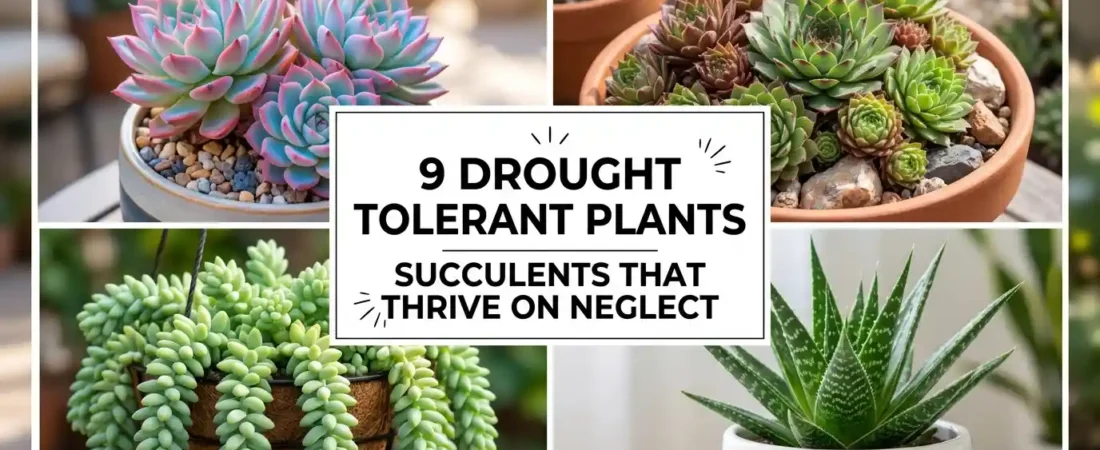
Drought tolerant plants succulents fixed that completely. They are genuinely the plant category that rewards the way most busy people actually treat plants — irregular attention, occasional forgetfulness, and a tendency to do too much rather than too little.
Table of Contents
Why Drought Tolerant Plants Succulents Are the Most Forgiving You Can Own
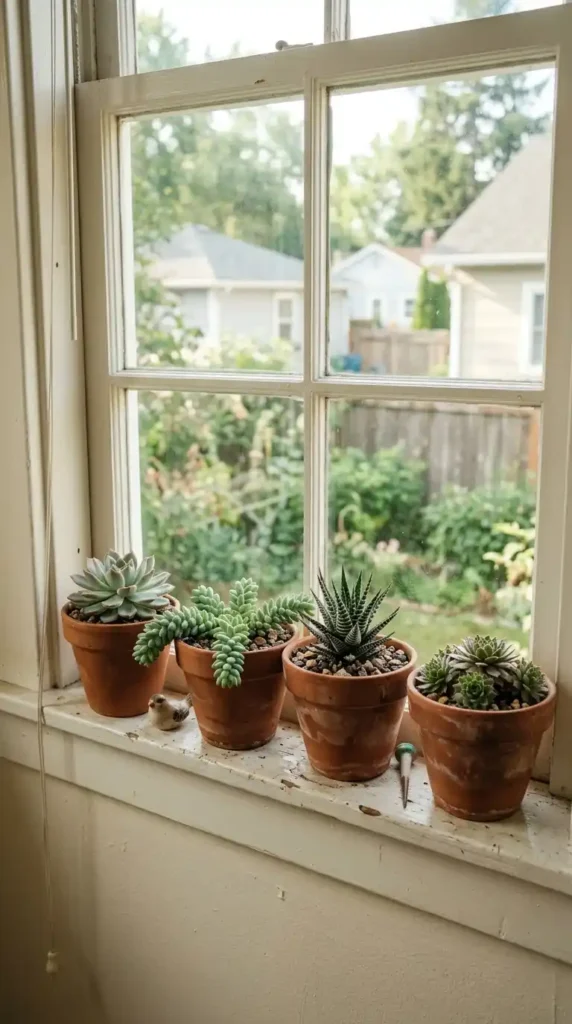
Succulents store water in their leaves, stems, and roots. That storage is what makes them drought tolerant — they draw on internal reserves when external water is unavailable rather than immediately showing stress the way thin-leaved plants do.
The irony is that most succulents die from too much water rather than too little. Soggy soil rots the roots faster than drought damages the leaves. If you are going to make a mistake with succulents, make the mistake of watering too infrequently. They handle that far better.
Two things matter more than watering frequency: drainage and light. A succulent in a pot without drainage holes will rot regardless of how carefully you water it. A succulent in a dark corner will survive but stretch toward light and lose its compact shape. Get those two things right and the watering almost takes care of itself. If you are just starting out with plants, our guide to best plants for beginners covers which succulents make the best first plants alongside other forgiving options.
1. Echeveria for the Most Beautiful Rosette Form
✦ Best for: sunny windowsills and outdoor containers where the rosette form creates the most visual impact
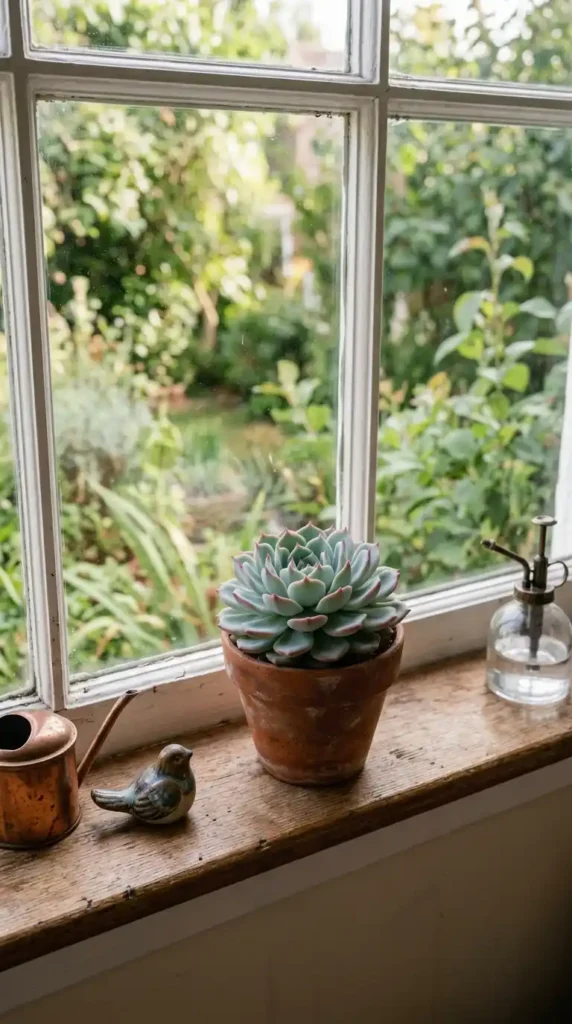
Echeveria is the succulent I put on every beginner list without hesitation. The perfect rosette shape looks architectural and intentional even sitting on a plain windowsill in a basic pot. No styling required.
The leaves range from blue-gray to deep purple to coral pink depending on the variety and the stress levels the plant experiences. More sun and less water generally intensifies the color — a phenomenon called sun-stressing that makes the plant more beautiful the more you ignore it.
Water once every two to three weeks indoors in summer. Once a month in winter. Never let it sit in water. If the leaves start to wrinkle slightly that is the plant telling you it needs water. That visible signal makes it one of the easiest succulents to read.
2. Aloe Vera for Function and Near-Indestructible Toughness
✦ Best for: sunny indoor spots where a useful plant that tolerates real neglect is wanted
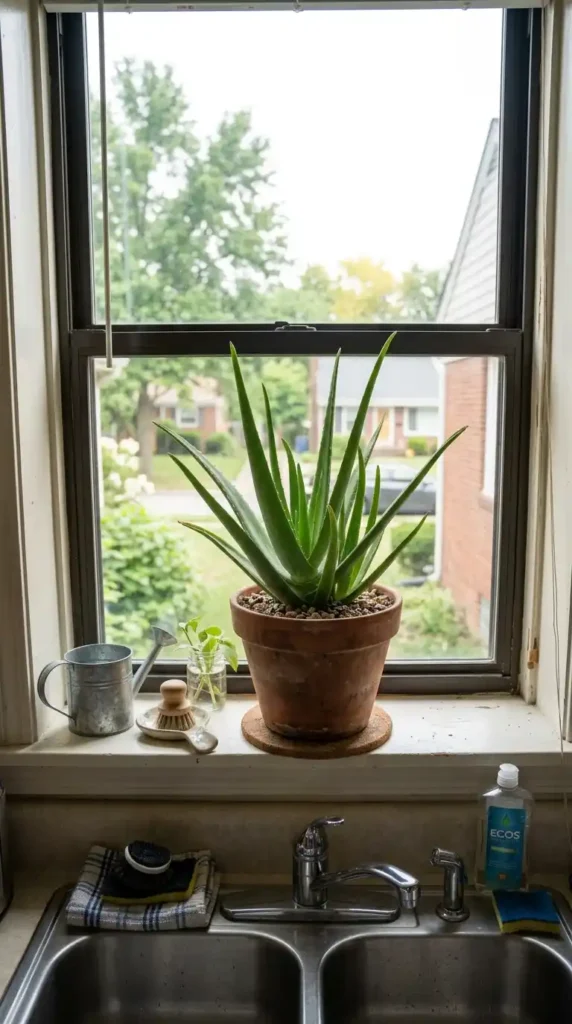
Aloe vera is probably in more American homes than any other succulent and for good reason. It is genuinely hard to kill, grows steadily without demanding attention, and has the practical bonus of providing a burn gel that actually works when you snap off a leaf.
I keep one on my kitchen windowsill specifically for that purpose. It has been in the same pot for three years, received water approximately when I remember, and is currently producing four offset pups around its base that I will pot separately.
The only way to reliably kill aloe vera is to overwater it in a pot without drainage holes. Brown mushy leaves at the base indicate root rot, which is almost always fatal. Thin dry leaf tips indicate underwatering, which is almost always recoverable with a good soaking.
3. Sedum for Outdoor Drought Tolerance in Any Climate
✦ Best for: outdoor containers and garden beds in any US climate zone where drought tolerance and low maintenance are both required
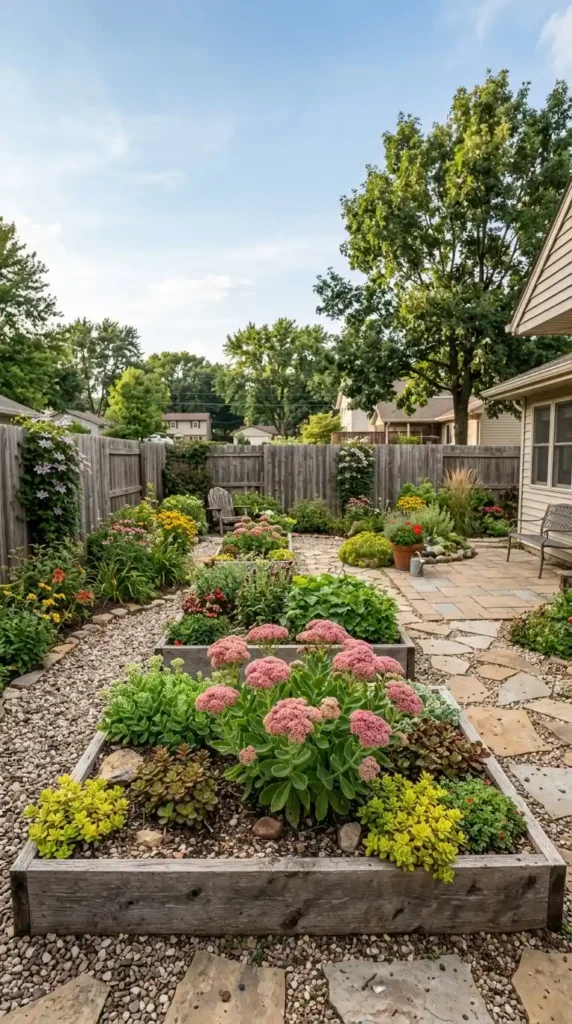
Sedum is the drought tolerant succulent that works hardest outdoors. Unlike many succulents that need protection from frost, cold-hardy sedum varieties survive winters down to zone 3 without any protection. That makes it genuinely useful in climates where most succulents cannot live year-round outside.
The most useful outdoor sedums for American gardens: Sedum spectabile (Autumn Joy) for upright growth to 18 inches with pink flower heads that turn rust in autumn and stand through winter. Sedum rupestre (Angelina) for low spreading ground cover in vivid chartreuse that turns orange in cold weather. Sedum spurium for dense mat-forming coverage between stepping stones and at garden borders.
Plant sedum in full sun and well-drained soil. Once established in the ground it requires no irrigation even in the driest American summers. I have had Autumn Joy in a sunny border for four years without a single supplemental watering after the establishment period.
4. Haworthia for Low Light Drought Tolerance Indoors
✦ Best for: offices, bathrooms, and darker rooms where most succulents would struggle without bright light
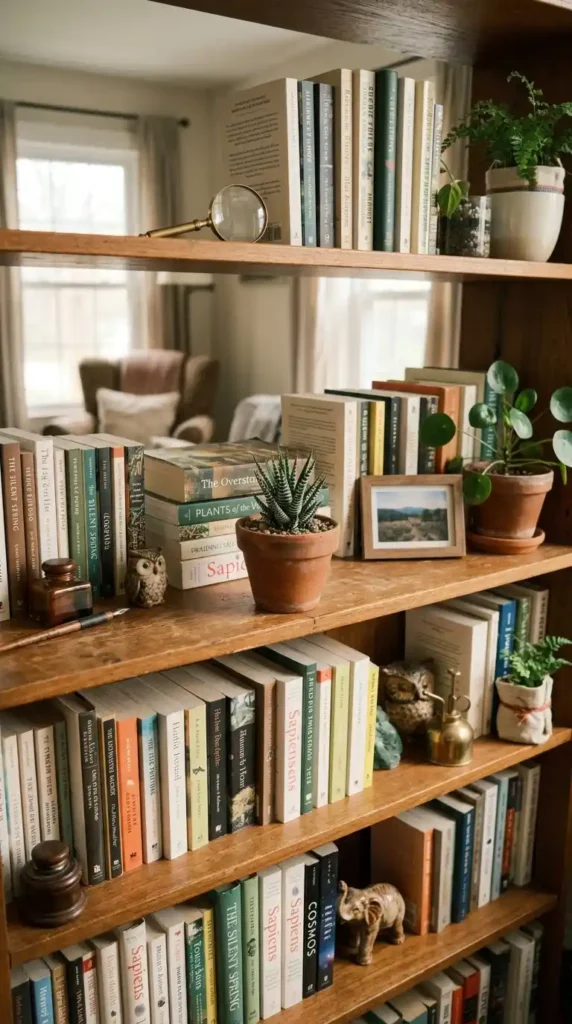
Most succulents need bright light to stay compact and healthy. Haworthia is the exception that makes it genuinely useful in darker spaces. It tolerates indirect light and even artificial office lighting in a way that echeveria and most cacti simply cannot.
The distinctive striped or windowed leaves of haworthia are interesting at close range in a way that makes it ideal for desk plants and bathroom shelves where you are close to it frequently. Haworthia fasciata with its bold white stripes is the most widely available and one of the most striking.
Water every three to four weeks indoors and reduce to every six weeks in winter. It is one of the slowest-growing succulents which means it stays small and compact indefinitely — perfect for spaces where you do not want a plant that outgrows its spot.
5. Agave for Dramatic Outdoor Impact in Hot Dry Climates
✦ Best for: hot dry climates in the Southwest and South where a bold architectural plant survives on almost no water
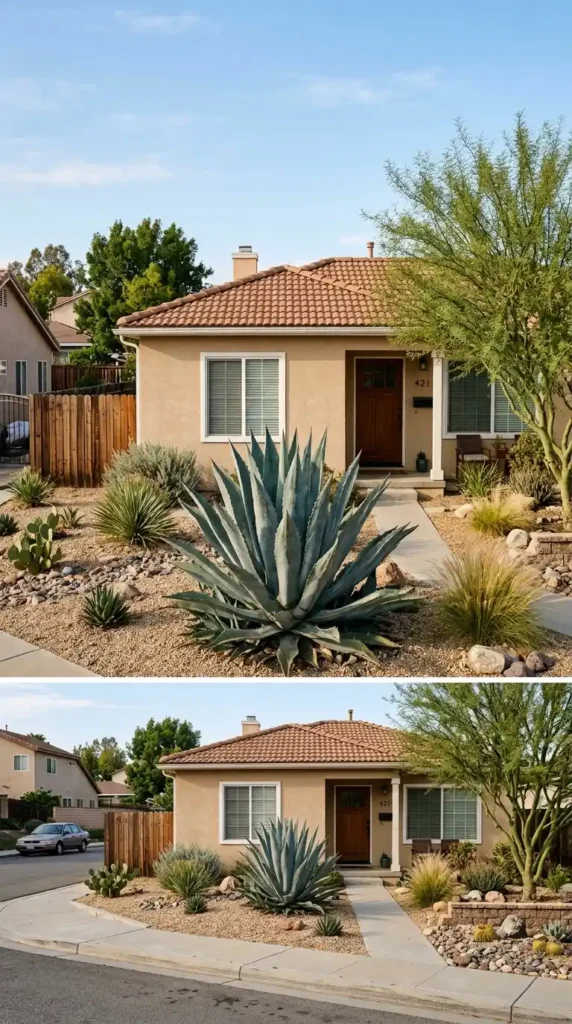
Agave is the drought tolerant succulent that makes the most dramatic statement in a dry garden. A mature agave in full sun with no supplemental irrigation is one of the most impressive plants in American residential landscaping and requires essentially nothing from the homeowner once established.
I would be cautious about where you plant it. Agave leaves end in sharp terminal spines that cause genuine injury. Do not plant it beside a path, near a children’s play area, or anywhere that requires someone to reach past it regularly. It is a plant that needs space and a considered position.
Best climate zones: 8 through 11 for most agave varieties. Agave parryi is cold-hardy to zone 5 and one of the few agaves that survives genuine winter frost. In colder states that is the variety worth researching first.
6. Sempervivum for Year-Round Outdoor Drought Tolerance
✦ Best for: outdoor containers and rock gardens in any climate including cold northern states
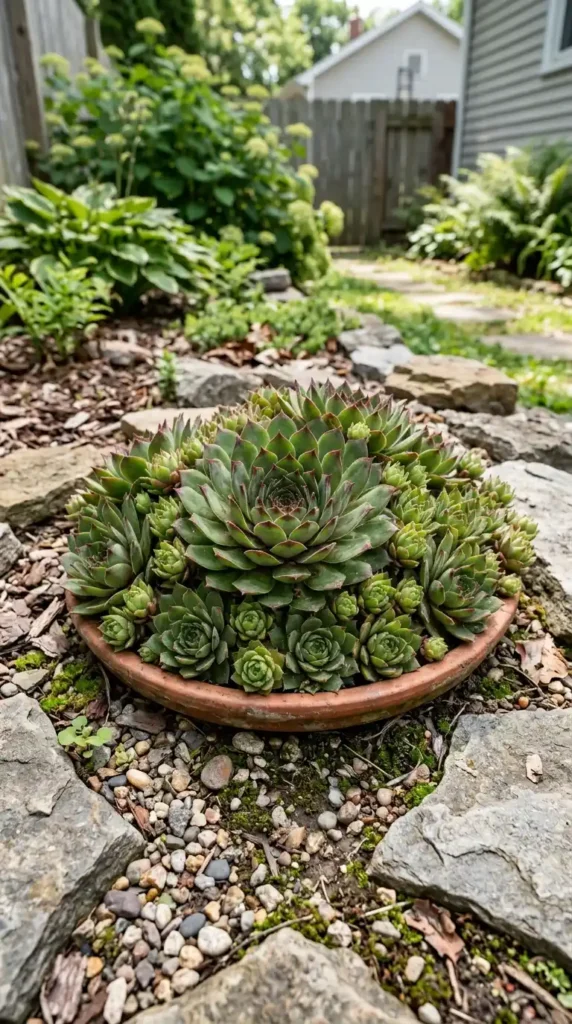
Sempervivum, commonly called hens and chicks, is the most cold-hardy succulent available for American gardens. It survives zone 3 winters buried under snow and comes back perfectly formed in spring. That combination of drought tolerance and cold hardiness makes it uniquely useful across the entire continental US. If you are building an outdoor container garden, see our container garden plants for shade for shade-side planting ideas that pair well with sunny sedum borders.
The hens and chicks name comes from the growth habit — a central mother rosette produces a ring of small offset rosettes around its base. When the mother eventually flowers and dies the offsets take over and produce their own offsets. A single plant purchased for $4 fills a container completely within two seasons.
Grow in shallow containers, between paving stones, or in rock garden crevices. The shallower the soil the better sempervivum performs — it is adapted to thin rocky soils and actually struggles in deep rich compost that retains too much moisture.
7. Snake Plant as a Drought Tolerant Indoor Succulent
✦ Best for: any indoor space where a structural plant that genuinely survives weeks without water is needed
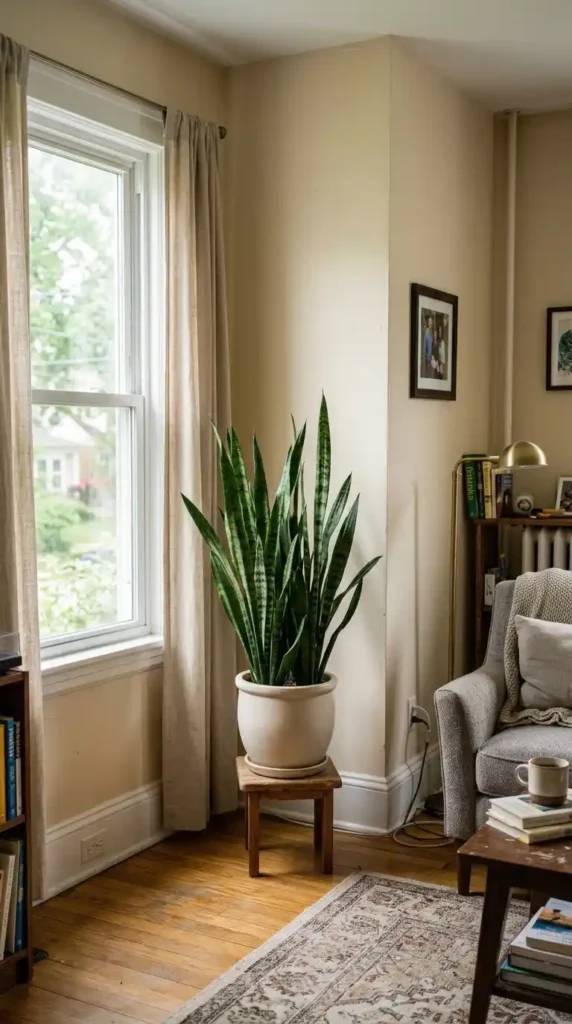
Technically a succulent in its water-storage characteristics, the snake plant earns its place on this list because it is the drought tolerant indoor plant that survives the widest range of conditions. Low light, bright light, cool rooms, warm rooms, two weeks without water. It handles all of it.
I have one in a north-facing bedroom that gets no direct sun at any point in the year. It has been there for three years, receives water when I remember which averages about once every three weeks, and looks completely healthy. That is a genuinely impressive performance.
The upright architectural form suits modern and minimalist interiors in a way that rosette succulents do not. A single large snake plant in a good pot looks like a deliberate design decision. A collection of small ones on a shelf looks like a hobby.
8. Crassula Ovata (Jade Plant) for Indoor Drought Tolerance
✦ Best for: bright indoor spots where a long-lived structural succulent that develops genuine character with age is wanted
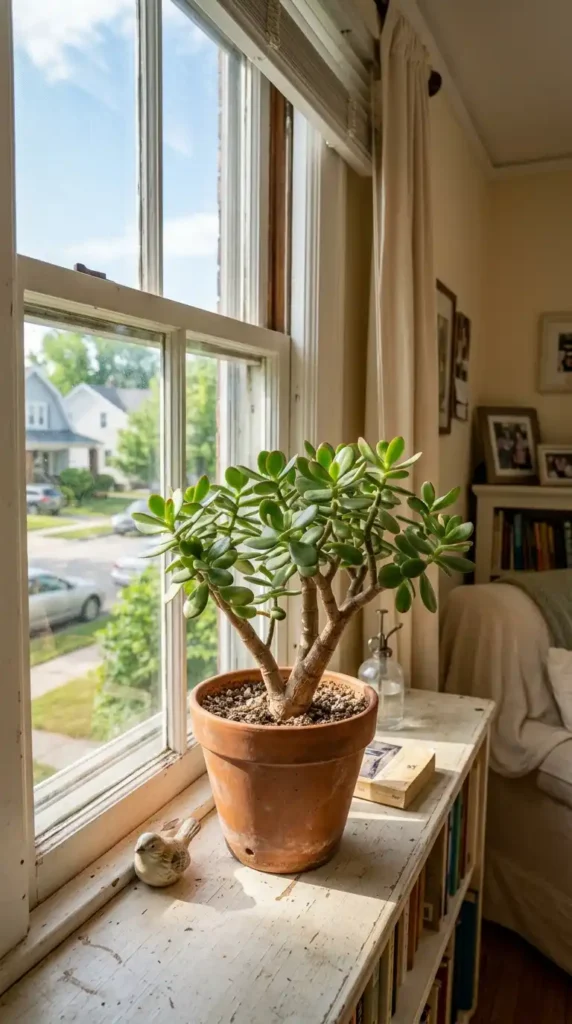
Jade plants are one of the longest-lived houseplants available. They develop thick woody stems and a tree-like structure over years that makes a mature plant look like a miniature bonsai. I have seen jade plants passed down through families like heirlooms.
They need bright light to stay compact and avoid stretching. A south or west-facing windowsill is ideal. In lower light they survive but grow leggy and lose the compact form that makes them attractive.
Water thoroughly every two to three weeks and let the soil dry completely between waterings. The plump oval leaves wrinkle slightly when the plant is thirsty — that visible signal makes it easy to judge watering timing without any guesswork.
9. Prickly Pear Cactus for Outdoor Drought Tolerance in Full Sun
✦ Best for: full sun gardens in zones 4 through 11 where maximum drought tolerance and minimal maintenance are both required
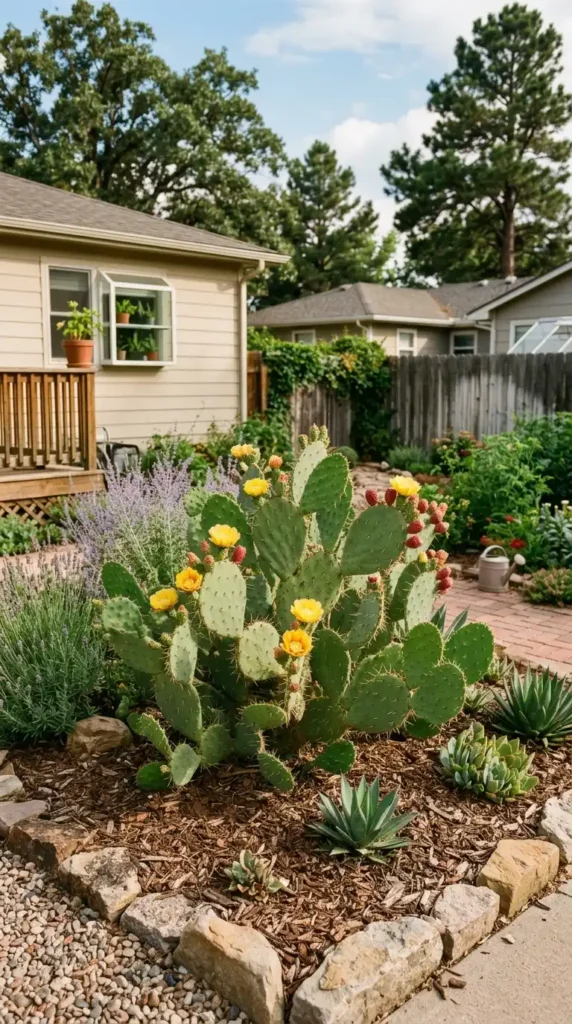
Opuntia, the prickly pear cactus, is arguably the most drought tolerant plant available for American gardens. It survives on natural rainfall alone in climates that receive as little as 8 inches of rain per year and requires zero supplemental irrigation once established in well-drained soil.
The flowers are genuinely beautiful — large tissue-paper yellow, orange, or pink blooms that appear in late spring and are completely unexpected on such a utilitarian-looking plant. The red or purple fruit that follows is edible and sweet.
Handle with heavy leather gloves at all times. The obvious large spines are manageable. The tiny hairlike glochids that cover the pads are the real hazard — they detach easily, penetrate skin deeply, and are extremely difficult to remove. Plant prickly pear where it will not require regular handling.
Frequently Asked Questions
What are the most drought tolerant succulents?
Agave, prickly pear, and sedum are the best drought tolerant plants succulents for outdoor gardens. For indoors, aloe vera, snake plant, and haworthia handle irregular watering better than almost any other houseplant. According to the US Department of Agriculture, succulents and cacti are among the most water-efficient plants available for residential landscapes in drought-prone regions.
How often should you water drought tolerant succulents?
Indoors: every two to three weeks in summer and every four to six weeks in winter. Outdoors in ground: established plants rarely need supplemental watering in most US climates. The rule is always to let the soil dry completely before watering again. When in doubt, wait another week.
Can succulents survive without water for a month?
Most established succulents handle four weeks without water without permanent damage, especially in cooler months. Agave and prickly pear handle significantly longer periods outdoors. Echeveria and jade plant will show slight leaf wrinkling at four weeks but recover fully with a thorough watering.
What soil do drought tolerant succulents need?
Fast-draining soil is non-negotiable. Standard potting mix retains too much moisture for most succulents. Use a dedicated cactus and succulent mix or add 50 percent perlite to regular potting soil. For outdoor gardens, amend heavy clay soil with coarse grit before planting.
Which Succulent Should You Start With?
For indoors with a sunny window: echeveria gives you the most beauty for the least effort and provides visible feedback when it needs water.
For indoors in a darker room: haworthia or snake plant. Both tolerate the indirect light that would cause most other succulents to stretch and weaken.
For outdoor gardens in cold climates: sempervivum survives zone 3 winters and a single plant fills a container within two seasons for practically nothing.
Start with one. Get the drainage and the light right. Once it is thriving the next one follows easily. The biggest mistake with succulents is not underwatering — it is buying ten at once before you know what works in your specific conditions.
More Plant and Garden Ideas
→ Best Plants for Beginners That Are Almost Impossible to Kill
→ Plant Screening for Privacy: 7 Ideas That Actually Block the View
→ Balcony Garden Ideas for Small Spaces That Actually Work
→ Container Garden Plants for Shade That Thrive in Pots
Get the drainage right before you worry about anything else. A succulent in fast-draining soil with occasional water outlasts a succulent in regular potting mix that gets perfect care.

Sheikh Hassaan is a digital architect for small businesses and the founder of The Glow Up System. He writes about home decor, garden design, and outdoor living for real American homes – practical ideas that work in actual spaces without oversized budgets.