
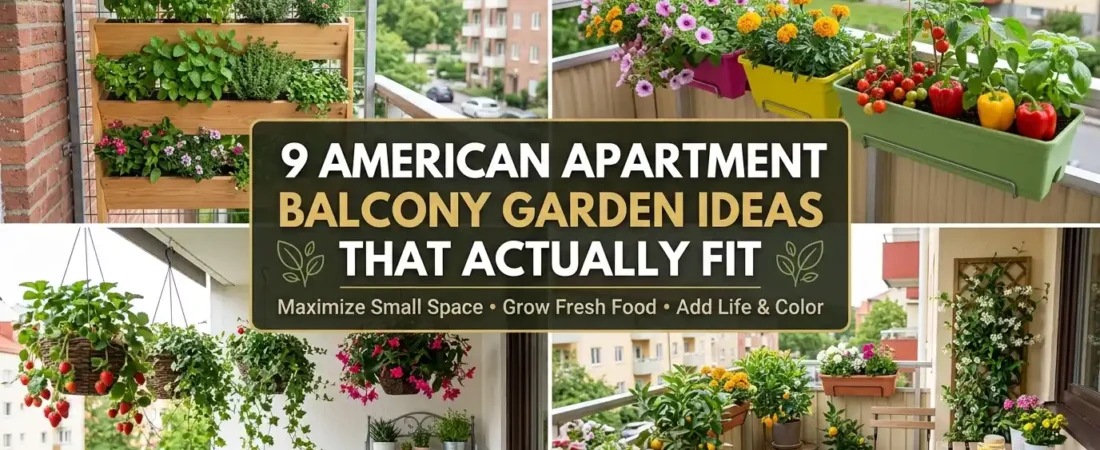
The average American apartment balcony garden starts the same way — a plastic chair, maybe a dead plant from last year, and a concrete floor that gets used about three times a summer. I know because mine looked exactly like that for two years before I did anything about it.
An American apartment balcony garden does not need much space to work. Most apartment balconies in the US are between 30 and 60 square feet. That is enough for railing planters, a vertical herb wall, one comfortable chair, string lights, and a tomato plant that actually produces fruit. This guide covers how to use every inch of it.
Table of Contents
What Makes an American Apartment Balcony Garden Different
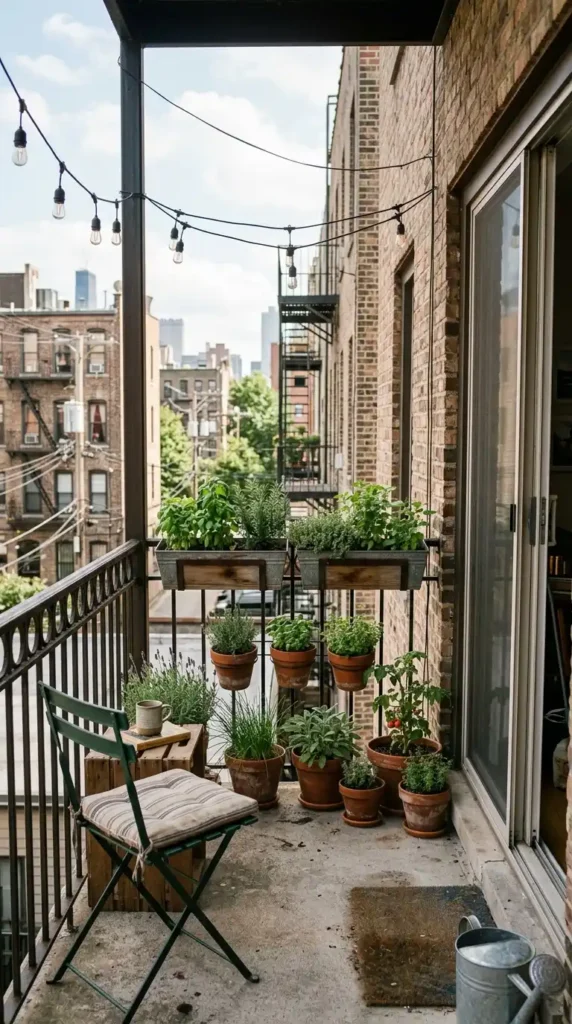
I think the biggest frustration with balcony garden advice online is that most of it assumes you have 200 square feet of decking, a wall you can drill into, and no landlord to answer to. American apartment balconies are nothing like that.
Most US apartment leases prohibit drilling into walls, placing heavy items near the edge, and making permanent changes to the structure. Any American apartment balcony garden plan has to work within those rules or it creates problems when you move out.
Weight limits are the other constraint most guides skip. A typical US apartment balcony is rated for 40 to 60 pounds per square foot. A 14-inch ceramic pot with moist soil can weigh 30 pounds. Before filling a balcony with large containers check the building’s structural specifications in your lease.
The solutions that work best in American apartments are lightweight, renter-friendly, and sized for the 30 to 60 square foot reality rather than the showroom balconies in garden design magazines.
1. Railing Planters That Use Zero Floor Space
✦ Best for: adding plants to any American apartment balcony without taking a single inch of floor area
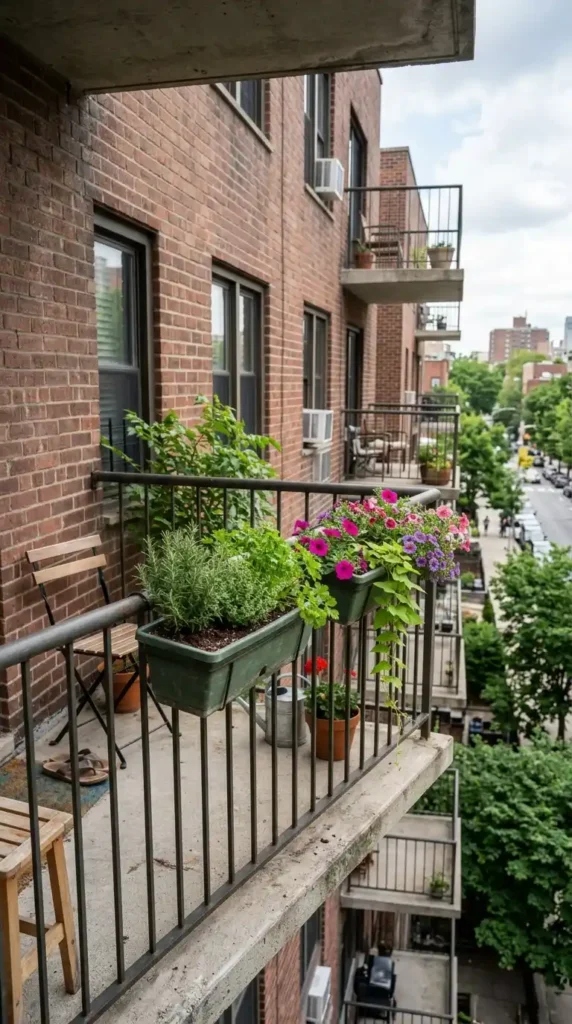
I recommend railing planters to every apartment renter who asks me about balcony gardening first because they solve the space problem completely. They attach to the railing with brackets or over-the-rail hooks that require no drilling and no permanent modification.
A standard 8-foot balcony railing holds three to four 24-inch window boxes. That gives you 6 to 8 linear feet of growing space at eye level where the plants are visible from the balcony and from inside the apartment.
Check that your railing planter sits inside the railing rather than hanging over the outside edge. Most US apartment leases specifically prohibit items hanging over the exterior railing. An inside-mounted planter avoids that issue entirely. For shade-facing balconies our container garden plants for shade guide covers which herbs tolerate lower-light east and north-facing positions.
2. Vertical Pocket Planter for Maximum Plants in Minimum Space
✦ Best for: growing a large number of plants in a 2 square foot wall footprint
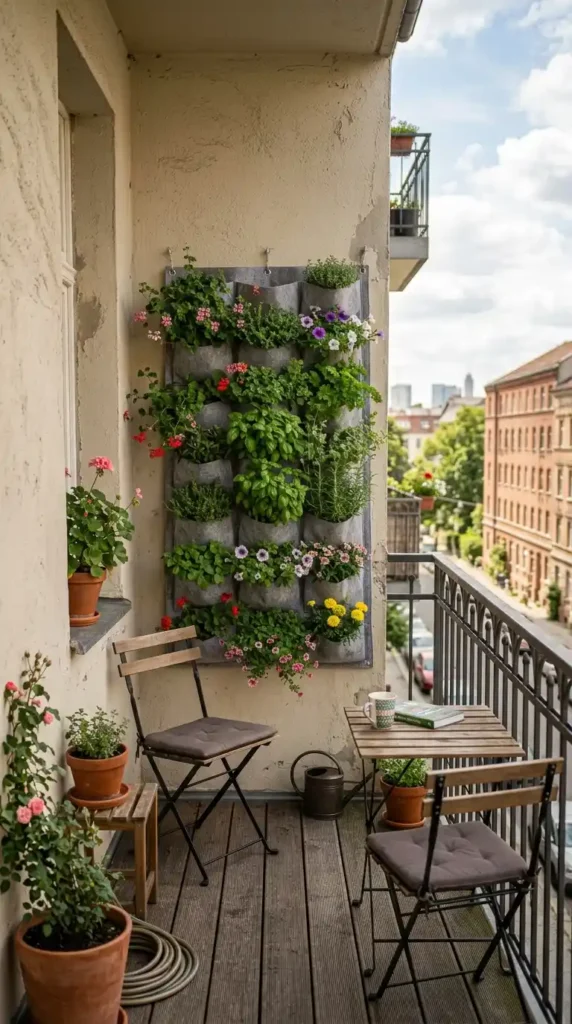
I use strawberries in vertical pocket planters specifically because the fruit hangs attractively from the front pockets and the yield from a single pocket planter genuinely surprises people. A fabric pocket system turns 2 square feet of wall into growing room for 12 to 20 individual plants.
Before attaching anything to the balcony wall check your lease. Drilling is typically prohibited. Command hooks rated for outdoor use hold lighter fabric pocket planters without any permanent damage. A freestanding vertical tower planter avoids the wall attachment issue entirely and can be moved inside when you leave.
Herbs work best at the top of the planter where light is strongest. Lettuce and salad greens suit the lower pockets where the drainage from upper pockets keeps the soil consistently moist. That natural moisture gradient means you are accidentally growing each plant in its preferred conditions.
3. Container Herb Garden That Earns Its Floor Space
✦ Best for: apartment residents who cook regularly and want fresh herbs a step from the kitchen
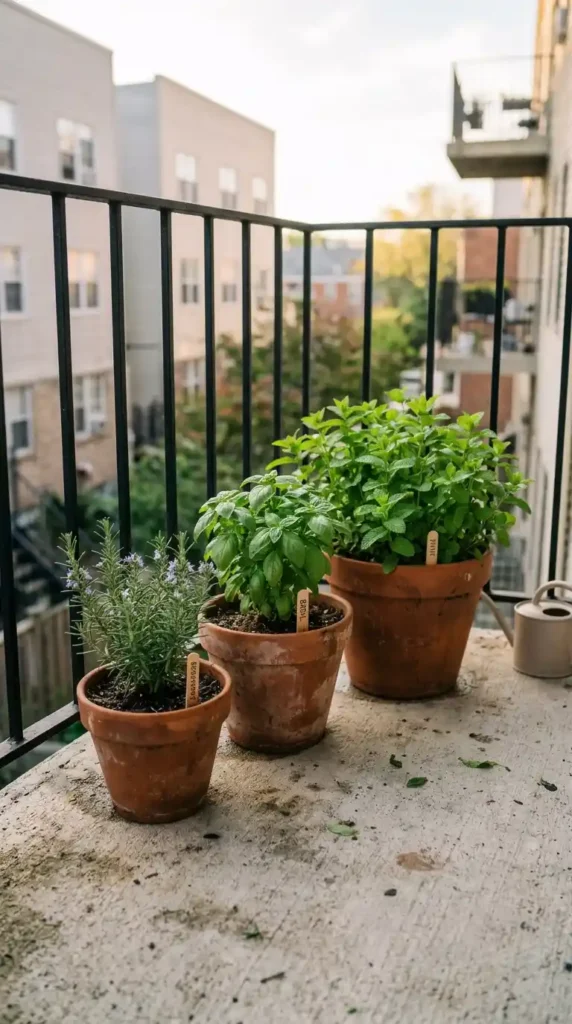
I keep a herb pot on my balcony specifically because fresh herbs from a grocery store cost $3 a bunch and die in the refrigerator within four days. Three terracotta pots of basil, rosemary, and thyme on a sunny balcony corner cost $15 once and produce herbs all season.
Mediterranean herbs share the same growing requirements and work well grouped together. Basil, thyme, rosemary, and oregano all want full sun and well-drained soil. Mint needs its own pot. It spreads aggressively through roots and will crowd out anything sharing its container within one growing season.
Terracotta is the best container material for herbs on an American apartment balcony because the porous clay pulls excess moisture from the soil. Drainage holes are non-negotiable. Herbs die from overwatering far more often than from drought, and that is the mistake I see most often with first-time balcony herb growers.
4. One Container Tomato Plant Done the Right Way
✦ Best for: south or west-facing balconies that get at least 6 hours of direct sun
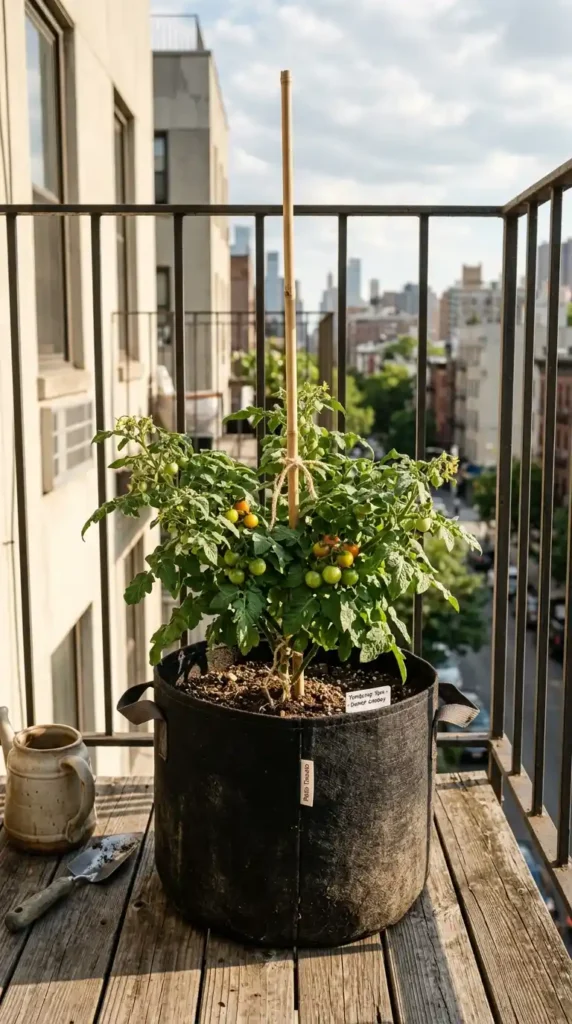
I want to be honest about tomatoes on apartment balconies because I have seen people buy full-size indeterminate varieties, watch them fail, and conclude that balcony food growing does not work. It does work. The variety choice is everything.
Tumbling Tom, Tiny Tim, and Patio are the varieties that actually perform on apartment balconies. All three stay under 24 inches tall without staking, produce cherry tomatoes continuously from June through first frost, and perform well in 3 to 5 gallon containers.
A self-watering container with a bottom reservoir is the single best investment for a balcony tomato. A standard pot needs watering every day in peak summer heat, sometimes twice. A self-watering container extends that to every two or three days and the difference in plant health is immediately visible.
5. Trailing Plants That Fill Vertical Space Without Floor Pots
✦ Best for: creating lush green abundance on a small American apartment balcony from a single floor container
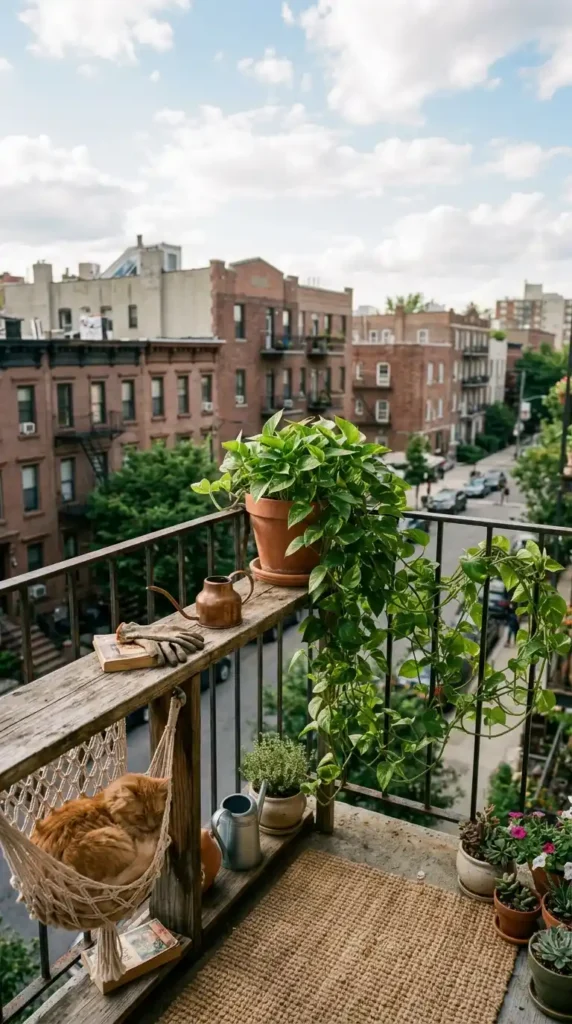
Sweet potato vine in chartreuse or purple is my favorite balcony trailing plant because the leaf size is almost tropical at full growth. One 3-gallon pot produces 4 to 6 feet of trailing growth in a single season and looks significantly more intentional than it costs.
The balcony railing is the support structure — no trellis needed. A morning glory or climbing nasturtium planted in a floor container beside the railing weaves through the bars naturally and covers 4 to 6 linear feet with foliage and flowers by midsummer.
A packet of morning glory seeds costs under $3 and transforms a balcony railing by July. I find it one of the most satisfying balcony garden investments available — the ratio of impact to cost is genuinely hard to beat with any other plant.
6. Low Maintenance Setup for Busy American Apartment Life
✦ Best for: apartment residents who want a beautiful balcony garden that survives inconsistent attention
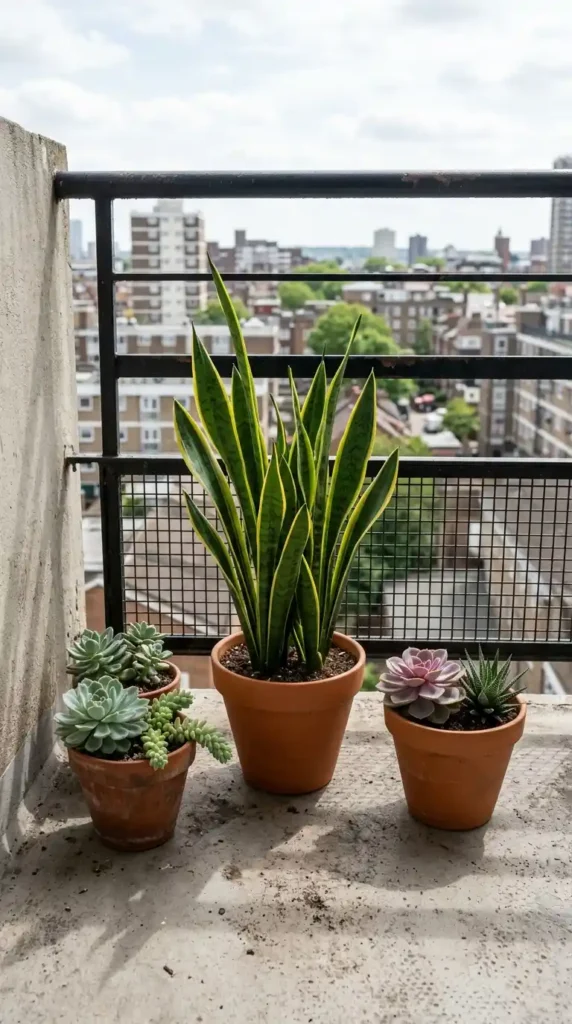
I point busy people toward this setup specifically because the most common reason American apartment balcony gardens fail is not lack of interest. It is daily watering that does not fit a real schedule. Building the garden around genuinely drought-tolerant plants eliminates that problem before it starts.
Sedums and succulents in a sunny south-facing spot tolerate two to three weeks without watering once established. Snake plant moved outside for summer handles outdoor conditions in most US climates and requires essentially no attention beyond an occasional soak.
A battery-powered drip timer attached to an outdoor faucet costs $30 to $60 and eliminates the watering requirement entirely. This is the upgrade I recommend most to anyone who travels regularly. The balcony garden waters itself on schedule regardless of whether you are home.
For the specific plant varieties that handle neglect best our drought tolerant plants succulents guide covers nine options that suit a low-maintenance balcony setup perfectly.
7. Shade-Tolerant Garden for North and East-Facing Balconies
✦ Best for: north or east-facing apartment balconies that receive 2 to 4 hours of indirect light daily
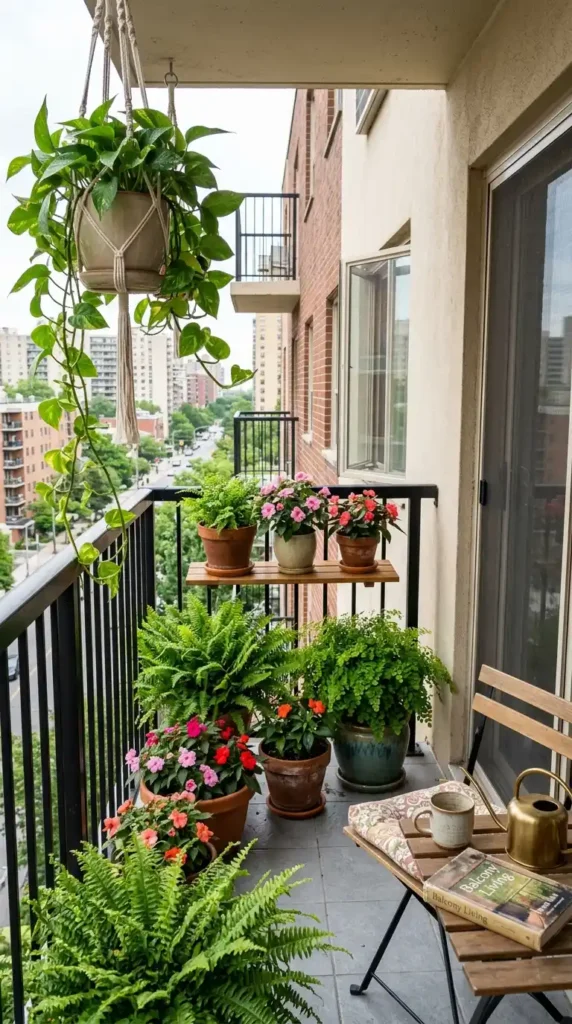
I find north and east-facing balconies are the ones people give up on most quickly because the sun-loving plant advice they read online fails and they assume nothing will work. The plants that work in shade are genuinely beautiful. The problem is a matching problem, not a gardening problem.
Ferns thrive in the humid partial shade of a north-facing urban balcony. Impatiens produce continuous color from spring through frost in shade conditions where most flowering annuals stop blooming. Coleus with its vivid patterned foliage brings the most color impact of any shade plant available.
For food production on a shaded balcony: lettuce, spinach, and kale actually prefer cooler partial shade in hot US summers. A north-facing balcony in July is often better for salad greens than a south-facing one where heat bolts them within days. That surprised me the first time I experienced it.
8. String Lights and One Chair That Turn a Balcony Into a Room
✦ Best for: finishing the balcony garden so it functions as a genuine outdoor room rather than a place where plants happen to be
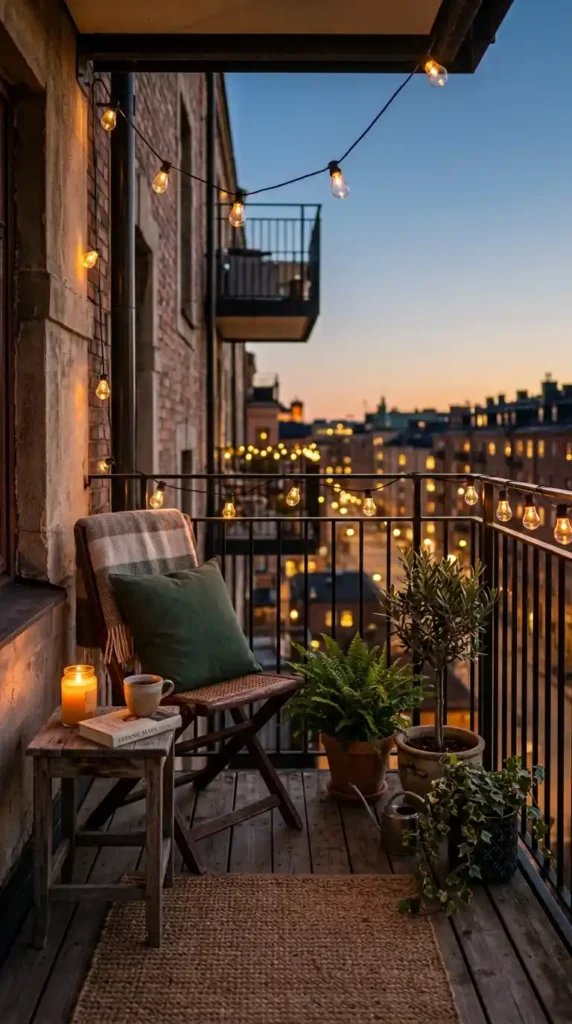
I always say the measure of whether a balcony garden is working is how often you actually go out there. Plants alone make a balcony a garden. Plants with one good chair and a strand of warm white string lights make it a room you choose to sit in.
One chair fits on almost any American apartment balcony and gets used more than two chairs that leave no room to move. A folding sling chair takes up 18 by 24 inches of floor space and leaves enough room for plants and passage on a 4-foot-deep balcony.
Warm white string lights only. Cool white makes plants look flat, and the space feel clinical rather than cozy. A single strand battery-operated costs $10 to $20 and is the highest-return investment on any balcony. If you want to extend this trailing approach to a full small space garden setup our balcony garden ideas for small spaces guide covers the complete room-making approach from floor to railing.
9. Seasonal Container Rotation That Keeps the Balcony Current
✦ Best for: apartment residents who want a balcony that looks intentional and fresh through every season
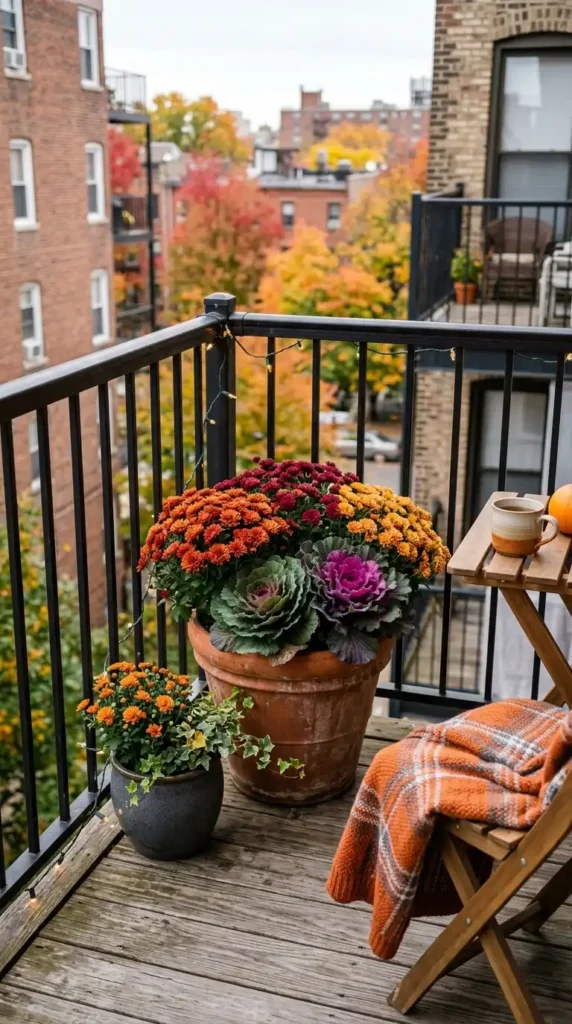
I think seasonal rotation is the most underused strategy in apartment balcony gardening. Most people either plant once in spring and watch it decline by August or replant everything seasonally which gets expensive. The better approach is a permanent structure with two or three rotating seasonal containers.
The seasonal rotation that works best:
Spring: tulip or daffodil bulbs planted in fall that bloom in April. One pot of pansies for early color. The herbs go back outside.
Summer: the tomato goes in. Sweet potato vine fills the gaps. Basil joins the herb pots.
Fall: chrysanthemums for the richest color available in October. Ornamental kale for architectural interest through November.
Winter: a small evergreen in a decorative pot stays through winter. One pot of hellebores blooms from December through March in most US climate zones. The railing planters come inside until spring.
Frequently Asked Questions
What can I grow on an American apartment balcony?
A sunny balcony handles herbs, cherry tomatoes, peppers, salad greens, and most flowering annuals. A shaded balcony suits ferns, impatiens, coleus, mint, and lettuce. According to the American Community Gardening Association, herbs and cherry tomatoes are the most productive crops for US apartment container gardening.
How do I garden on a balcony without drilling?
Over-the-rail railing planters, freestanding vertical tower planters, and Command hook-mounted fabric pocket planters all work without drilling. These three options cover railing, wall, and floor space without any permanent modification.
How heavy is too heavy for an apartment balcony?
Most US apartment balconies are rated for 40 to 60 pounds per square foot. Use lightweight plastic or resin containers with peat-free potting mix to stay comfortably within safe weight limits.
How do I water a balcony garden when I travel?
Self-watering containers handle 3 to 7 days between refills. A battery-powered drip timer connected to a water reservoir handles longer absences automatically for $30 to $60.
Start With the Railing
Every American apartment balcony has a railing and most of them are doing nothing. That is where I always tell people to start. One railing planter with three herb seedlings costs under $25, takes 20 minutes to set up, and immediately makes the balcony look like someone lives there intentionally.
Once the herbs are established and you are using them in the kitchen the next element follows naturally. A chair. A pot of tomatoes. String lights. The balcony builds itself from that first railing planter outward.
The apartments with the best balcony gardens are almost never the ones with the biggest balconies. They are the ones where someone started with one plant and kept going.
More Apartment and Garden Ideas
→ Balcony Garden Ideas for Small Spaces That Actually Work
→ Container Garden Plants for Shade That Thrive in Pots
→ 9 Deer Resistant Drought Tolerant Plants Neighbors Will Ask About
→ Small Apartment Ideas That Make Every Square Foot Count
Every American apartment balcony has a railing and most of them are doing nothing. That is where I always tell people to start. One railing planter with three herb seedlings costs under $25, takes 20 minutes to set up, and immediately makes the balcony look like someone lives there intentionally.
Once the herbs are established and you are using them in the kitchen the next element follows naturally. A chair. A pot of tomatoes. String lights. The balcony builds itself from that first railing planter outward.
The apartments with the best balcony gardens are almost never the ones with the biggest balconies. They are the ones where someone started with one plant and kept going.

Sheikh Hassaan is a digital architect for small businesses and the founder of The Glow Up System. He writes about home decor, garden design, and outdoor living for real American homes – practical ideas that work in actual spaces without oversized budgets.