
The first sleeper garden I built took one afternoon and cost $60. It was a raised bed. Three courses of stacked oak sleepers, a layer of landscape fabric, 200 litres of compost. It is still in the garden twelve years later and looks better now than it did when I built it.
That is what sleepers do. They age well. The warm honey tone of new oak weathers over two seasons to the most beautiful silver-grey — the kind of patina that costs thousands when you buy it in a furniture showroom and happens on its own in a garden.
Table of Contents
One note before you start: new untreated hardwood only for vegetable beds. Old railway sleepers were often treated with creosote which leaches into soil. For structural and decorative projects reclaimed sleepers are fine and often cheaper. For edible growing use new oak or hardwood specifically sold for garden use.
1. Build Raised Planter Beds From Stacked Sleepers
✦ Raised Planter Beds
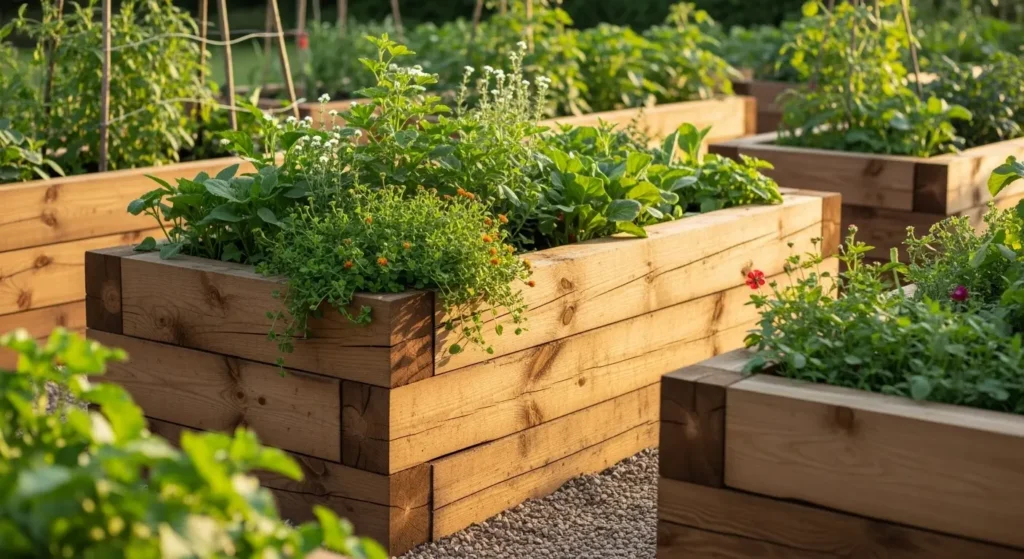
Raised planter beds built from stacked sleepers are the most popular sleeper garden project for good reason. The deep growing space, the natural wood aesthetic, and the clean defined edges combine to create a garden feature that looks both productive and beautiful. Stacked two or three sleepers high gives you 8 to 12 inches of growing depth — enough for most vegetables, herbs, and flowering perennials.
Stack sleepers in a rectangular formation, securing them at the corners with long timber screws or metal rebar driven through pre-drilled holes. Line the interior with landscape fabric before filling with quality growing compost. Two sleepers high creates a comfortable working height that eliminates the need to kneel for maintenance. A typical 6 by 3 foot sleeper raised bed costs approximately $60 to $120 in sleepers depending on whether you use new or reclaimed timber. The LANSOW solar spotlights positioned at the base of your raised beds illuminate them beautifully after dark. Find them linked on Amazon.
Sleeper raised beds are the first thing I recommend to anyone starting a vegetable garden because the deep growing space and defined edges create better conditions for growing than any equivalent container or ground-level bed at the same cost.
For the vegetables and herbs that perform best in deep raised bed growing conditions see our container garden plants for shade guide which covers the compact food-growing varieties that suit raised sleeper bed dimensions.
PRO TIP: Use new untreated oak or hardwood sleepers for raised vegetable beds rather than reclaimed railway sleepers. Old railway sleepers were often treated with creosote which can leach into soil and is not suitable for edible growing. New untreated hardwood is safe and still very affordable.
2. Create a Sleeper Retaining Wall to Manage Sloped Ground
✦ DIY Retaining Walls
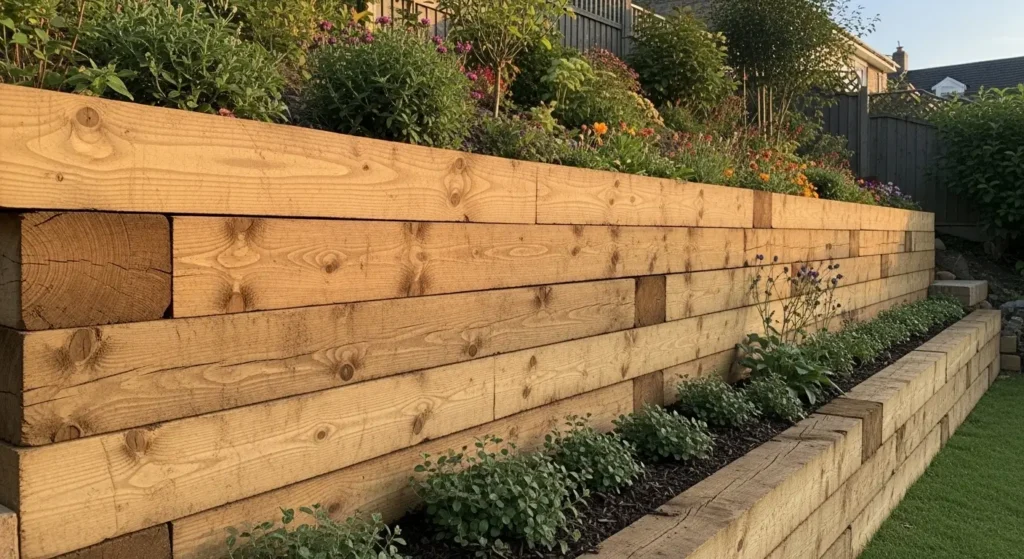
A sloped garden that erodes every time it rains and cannot be planted properly is one of the most frustrating garden problems available. A sleeper retaining wall fixes it permanently in one weekend.
The flat usable terrace you create above the wall becomes the most productive area in the garden. The planted border below becomes a feature. The eroding bank disappears entirely.
Lay sleepers horizontally against the slope with the front face exposed and secure them with vertical timber stakes driven into the ground behind. For walls over two courses high consult a structural guide to ensure adequate anchoring. A single-course sleeper retaining wall holding a shallow bank costs approximately $40 to $80 in sleepers and creates a permanent landscaping feature that adds significant structure to any sloped garden.
I think the retaining wall is the sleeper project that delivers the biggest transformation relative to the skill required. The wall goes in on a Saturday and the garden looks like a different place on Sunday morning.
3. Use Sleepers as Pathway Edging for Clean Garden Lines
✦ Simple Pathway Edging
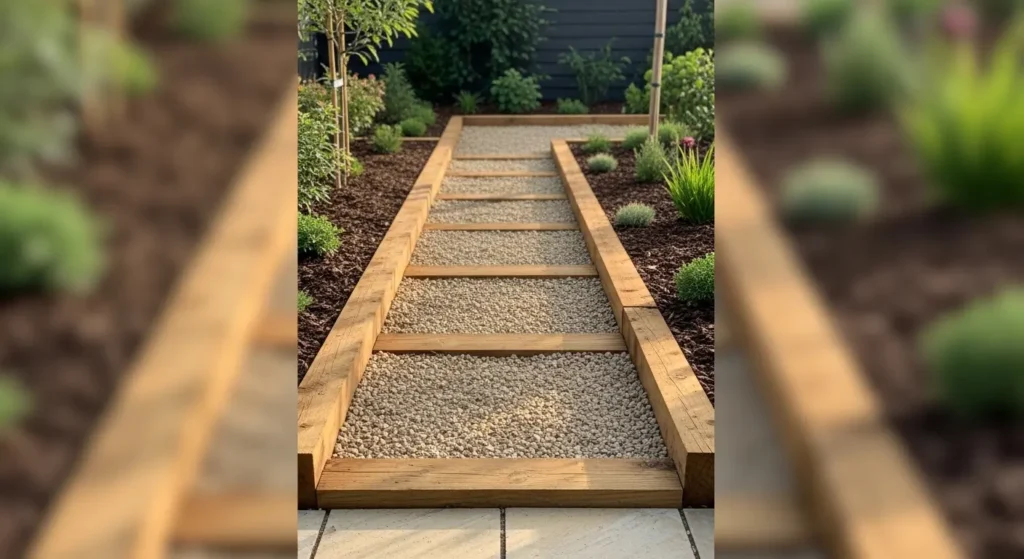
Sleeper pathway edging is the simplest and most affordable sleeper garden project. Laying sleepers flat on their sides along both edges of a garden path creates an instant clean defined border that separates the path surface from the planting beds beside it. The visual effect is immediate and the project can be completed in an afternoon.
Set sleepers into a shallow trench so their top surface sits level with or slightly above the path surface. Secure in position with timber stakes behind each sleeper. The flat top surface of horizontal pathway sleepers also functions as an occasional seating surface, a plant display ledge, and a boundary marker that makes mowing and path maintenance significantly easier. Total cost for edging a typical garden path is $30 to $60.
Pathway edging is the sleeper project I recommend first to anyone who wants to try sleepers before committing to a larger build. One afternoon. Under $60. The before and after is immediate and dramatic.
PRO TIP: Slightly offset the joint positions between adjacent sleepers rather than aligning all joints at the same point. Alternating joints like brickwork creates a stronger edging structure that resists movement from foot traffic and ground frost.
4. Build a Tiered Garden Using Sleeper Steps and Terraces
✦ Tiered Garden Levels
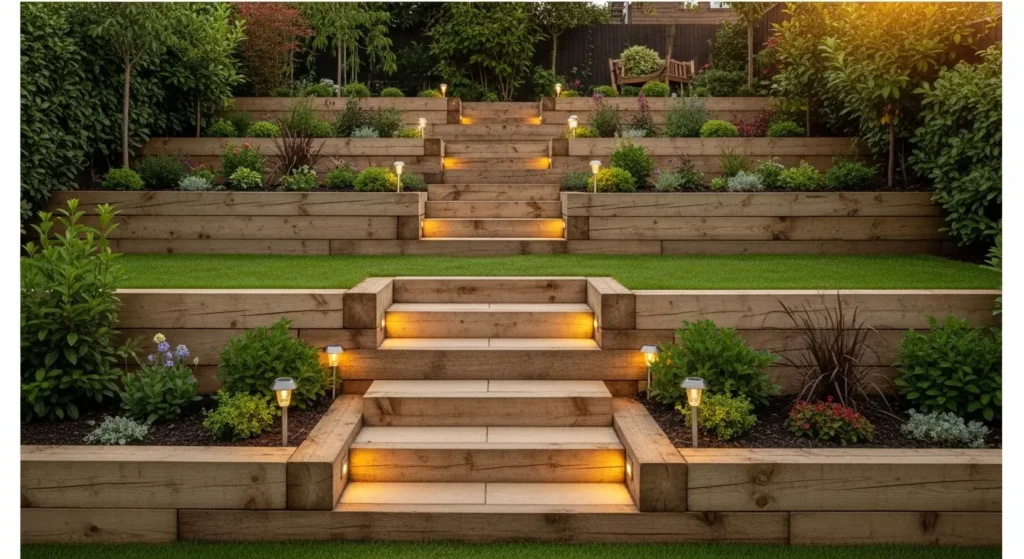
A tiered sleeper garden is the project I find people most intimidated by before they start and most satisfied by when it is finished. The sloped garden that seemed like the worst feature of the property becomes the most dramatic one.
Each terrace has its own level floor, its own purpose, its own planting. Connected by solid sleeper steps. The slope that was a problem becomes the structure.
Build each terrace using sleeper retaining walls at the back and sides, filling the retained space with growing medium. Create sleeper steps between levels by setting individual sleepers into the slope at regular intervals with risers of approximately 6 inches. The VOOKRY Solar Watering Can Light placed on one of the upper terraces creates a beautiful focal point that can be seen from every level of the garden. Find it linked on Amazon.
5. Build a Simple Sleeper Bench for Instant Garden Seating
✦ Rustic Seating Bench
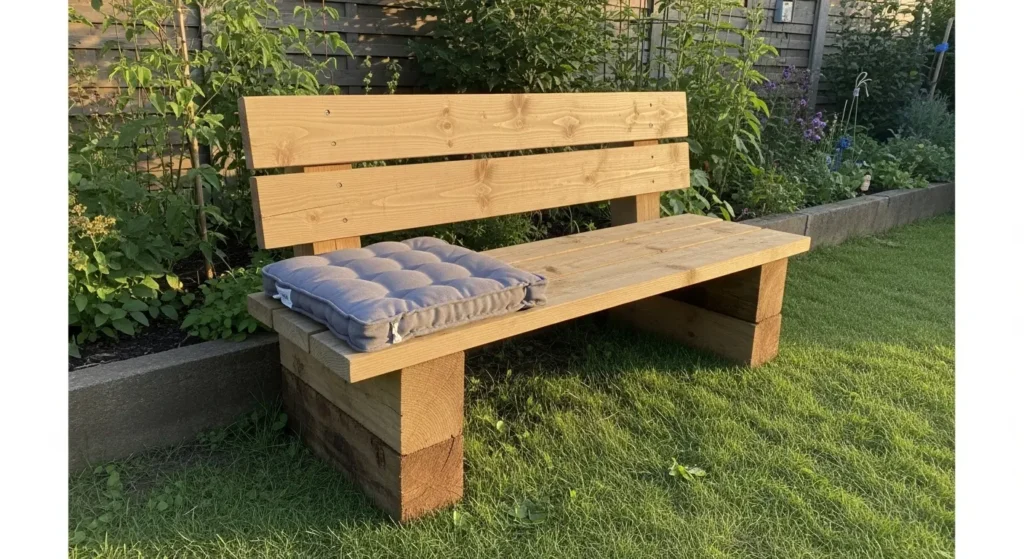
A sleeper bench is one of the most satisfying afternoon DIY projects in any garden. Two upright sleeper sections as legs with one horizontal sleeper as the seat — three pieces of timber and a handful of screws create a bench that looks completely at home in any garden style from contemporary to cottage.
Cut two sleeper sections to approximately 18 inches high for the bench legs. Position them 36 to 48 inches apart and secure a full-length horizontal sleeper across the top as the seat surface. Sand the seat surface smooth and seal with exterior wood oil for a comfortable seating surface. Add an outdoor cushion for extended sitting comfort. Total material cost is typically $30 to $50 for a full garden bench that will last many years.
The sleeper bench is the afternoon project I find most satisfying because the result looks so much better than the simplicity of the build suggests it should. Three pieces of timber and a handful of screws and you have garden seating that will outlast most other furniture in the garden by twenty years.
For how to position a garden bench within a complete outdoor seating area see our patio layout ideas rectangle guide which covers the zone placement principles that make a seating area feel like a room.
PRO TIP: Position your sleeper bench so it faces your best garden view. A bench facing a beautiful planting border or a garden focal point like a solar light or water feature gets used far more than a bench that faces a fence or wall.
6. Frame Your Vegetable Garden With Sleeper Borders
✦ Vegetable Garden Frames
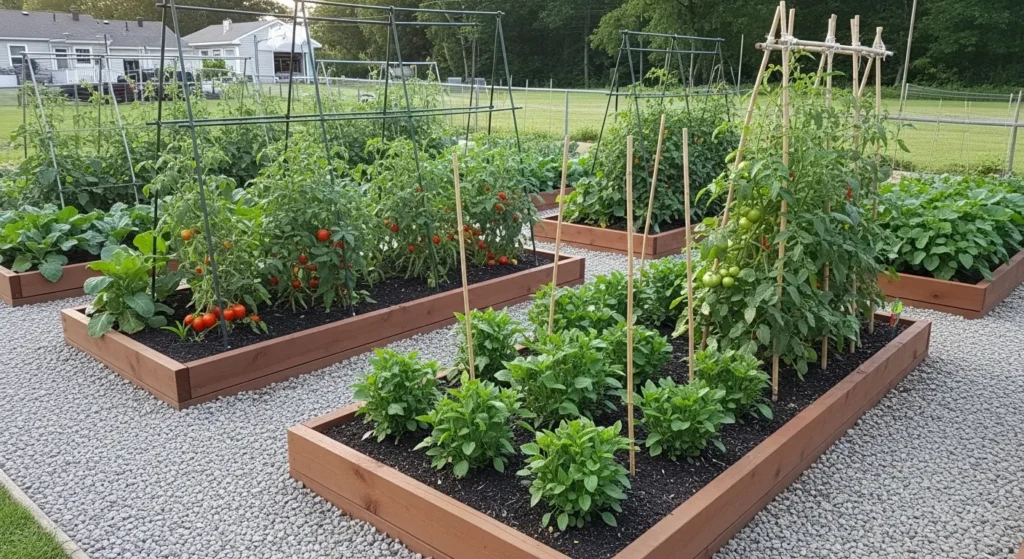
A vegetable garden framed with sleeper borders is both more productive and more beautiful than an unframed vegetable patch. The defined borders keep soil in place, prevent grass and weeds from encroaching into growing beds, create clear pathways between beds, and give the whole kitchen garden an organized structure that makes maintenance significantly easier.
Lay individual sleepers flat on the ground to define the perimeter of each growing bed. No digging or fixing required for a single-layer border — the weight of the sleeper is sufficient to hold it in position on flat ground. Create a simple grid of sleeper-framed beds with gravel or bark paths between them and the transformation from a random vegetable patch to a designed kitchen garden is immediate. The Quarut whiskey barrel planters work beautifully alongside sleeper frames for growing herbs and compact vegetables. Find them linked on Amazon.
I find framed vegetable gardens genuinely more productive than unframed ones — not because the frames change how the plants grow but because the defined borders change how consistently the gardener maintains them. A framed bed gets weeded. An unframed patch gets ignored.
7. Build a Sleeper Fire Pit Surround for a Defined Seating Area
✦ Fire Pit Surround Setup
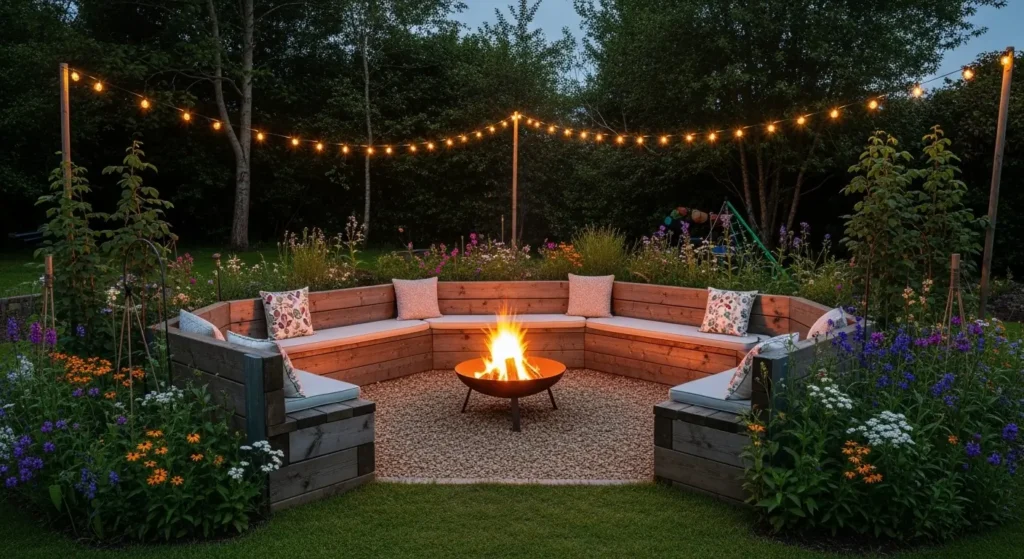
Repositioning chairs around a fire pit every time you use it is one of those small garden frustrations that adds up over a summer. Sleeper bench sections fixed in a circle around the pit solve it permanently.
The seating is always there. The circle is always defined. The fire pit area goes from being a feature you set up to being a room you walk into.
Position low sleeper bench sections in a circle or U-shape around your fire pit at a safe distance of at least 6 feet from the flames. Set each bench section into the ground slightly for stability. Add outdoor cushions on the seat surfaces. The addlon solar string lights strung between tree branches or posts above the seating area create a warm canopy overhead that complements the firelight beautifully. Find them linked on Amazon.
For the complete fire pit seating area approach including lighting and plant surrounds see our backyard garden bar guide which covers how to design an outdoor social space that functions properly when guests arrive.
PRO TIP: Create your sleeper fire pit seating at two heights — lower sections close to the fire for direct warmth on cool evenings, and one or two higher sections slightly further back for guests who prefer a less intense heat position.
8. Use Sleeper Sections to Create Defined Borders in a Small Garden
✦ Small Space Border Design
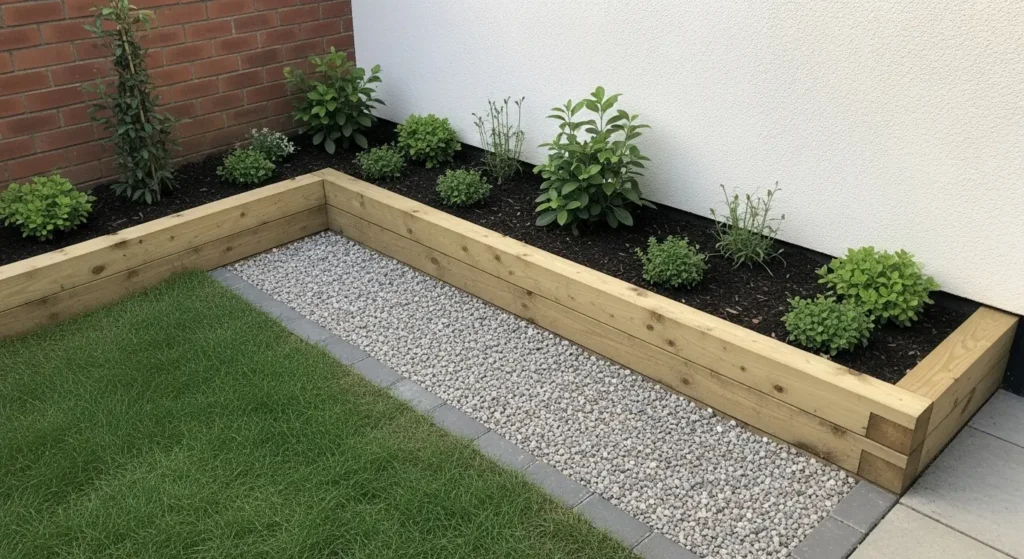
In a small garden sleeper border sections do more design work than almost any other single element. A clear defined border between a lawn or gravel surface and a planting bed immediately makes the whole garden look more intentional. The eye reads the defined edge as evidence of design thinking and the space feels more curated as a result.
Use short sleeper sections of 18 to 24 inches set into the ground at a slight angle to create a casual natural border edge. Alternatively lay full-length sleepers flat along the full border perimeter for the most clean and complete effect. Either approach costs under $40 for a typical small garden border and the improvement in how the garden looks and feels is immediate and significant.
The border definition project is the one I recommend to anyone who says their garden feels unfinished without being able to identify why. Defined edges between surfaces is almost always the answer. The garden does not change size. It starts to read as designed.
5 Sleeper Garden Mistakes Worth Avoiding
These mistakes come up consistently in sleeper garden projects:
Mistake 1 — Using creosote-treated sleepers near edibles
Old railway sleepers treated with creosote should never be used for raised vegetable beds or herb gardens. Creosote compounds can leach into growing medium and enter edible plants. Always use new untreated hardwood for any project involving food growing.
Mistake 2 — Inadequate anchoring for retaining walls
Sleeper retaining walls that are not properly anchored into the slope behind them will eventually be pushed forward by soil pressure especially after heavy rain. Always use vertical deadman anchors — timber sections driven horizontally back into the slope at regular intervals — for retaining walls over one course high.
Mistake 3 — No drainage consideration in raised beds
Sleeper raised beds without drainage at the base cause waterlogging that kills plant roots. Always lay a layer of coarse gravel or broken crockery at the base of any raised sleeper bed before adding growing medium. Line the inside of the sleepers with landscape fabric to prevent soil loss while maintaining drainage.
Mistake 4 — Buying too few sleepers
Sleeper projects almost always require more material than the initial estimate suggests. Always add 10 to 15 percent to your calculated quantity before ordering. The cost of a second delivery trip to collect additional sleepers is always more than the cost of having a few left over.
Mistake 5 — Cutting without measuring twice
A mis-cut sleeper is expensive and difficult to fix. Measure every cut twice and mark clearly with a square before cutting. A chainsaw or circular saw with a long blade is the most effective cutting tool for sleepers — a standard handsaw will work but requires significant effort.
📌 More garden ideas → 12 Must-See Backyard Hardscape Ideas
Frequently Asked Questions
How much do garden sleepers cost?
New hardwood garden sleepers typically cost between $15 and $35 per sleeper depending on wood species, length, and supplier. Oak sleepers are at the premium end while treated softwood sleepers are more affordable. Reclaimed railway sleepers are often available for $10 to $20 each from salvage yards and landscape suppliers. According to the National Gardening Association raised bed gardening using sleepers is one of the most cost-effective ways to create a productive and attractive kitchen garden.
How long do garden sleepers last?
Untreated oak hardwood sleepers typically last 15 to 25 years in outdoor conditions. Applying an annual coat of exterior wood oil extends the lifespan of any sleeper type by reducing moisture penetration and UV degradation.
Can I use old railway sleepers for a vegetable garden?
Older reclaimed railway sleepers were commonly treated with creosote which can leach into soil and enter edible plants — they should not be used for vegetable or herb gardens. The safest approach is always new untreated hardwood sleepers specifically sold for garden use.
Do garden sleepers need to be fixed to the ground?
For single-layer pathway edging and flat borders the weight of the sleeper is sufficient on flat ground without fixing. Any stacked or retaining application must be secured with timber screws and anchored with vertical rebar or timber stakes — retaining walls over one course high require proper structural anchoring to resist soil pressure.
More Garden and Backyard Ideas
→ 7 Dream Backyard Ideas For Small Spaces
→ 25 Stunning Back Porch Patio Ideas
→ 12 Boho Garden Ideas You’ll Love
→ How To Build A Backyard Garden Bar At Home
The sleepers you lay this weekend will still be in the garden when everything else has been replanted twice.
That permanence is what makes the investment worthwhile. Pick the project that fits your space and your Saturday. The most complicated one on this list takes two days. The simplest takes two hours. Both look like they have always been there.

Sheikh Hassaan is a digital architect for small businesses and the founder of The Glow Up System. He writes about home decor, garden design, and outdoor living for real American homes – practical ideas that work in actual spaces without oversized budgets.