
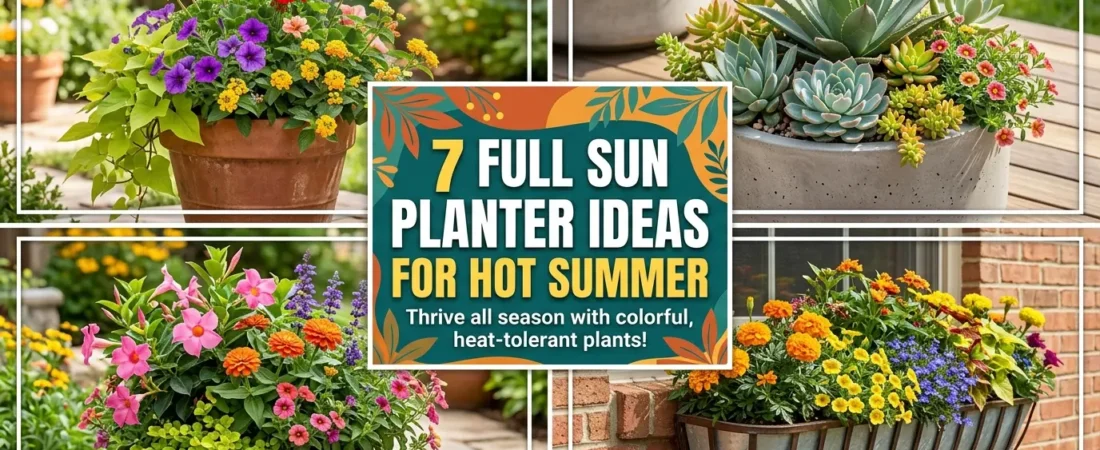
I have killed more plants in south-facing containers than in any other position in any garden I have worked with. Not from lack of attention. From choosing the wrong plants and learning about it in July when replacing them costs twice what they cost in May.
The full sun south-facing patio is the most unforgiving growing environment a container plant can face. Reflected heat from paving. No shade relief. Soil that goes from moist to bone dry in a day during a heatwave.
But the same position that kills the wrong plants grows the right ones spectacularly. Tropical flowers produce more blooms. Mediterranean herbs develop more oil and more fragrance. Succulents become more architectural. The 7 combinations below are the ones that work.
Table of Contents
1. Fill Large Planters With Tropical Flowers for Maximum Summer Color
✦ Bright Tropical Flowers
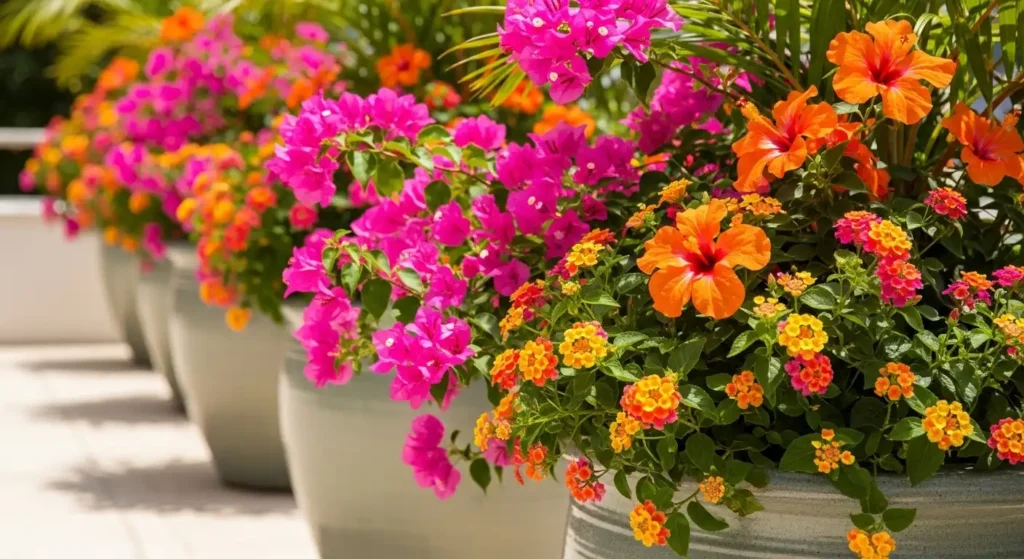
Tropical flowering plants are purpose-built for full sun and heat. Bougainvillea, Hibiscus, Lantana, and Mandevilla all thrive in the hottest most exposed positions and produce their most abundant flowering in response to intense summer sun. In a large container they create a display of color that no shade-loving plant can approach.
Plant one large tropical flowering specimen per substantial planter — a single Bougainvillea in a large terracotta pot or a Hibiscus in a wide ceramic container. Give each plant plenty of root space and water generously in peak summer heat. The Quarut large planter pots in gray provide the size and drainage quality that large tropical plants need for strong summer performance. Find them linked on Amazon.
Tropical flowering plants in full sun are the full sun planter combination I find consistently surprising. Most people assume these plants want dappled light. In reality a Hibiscus or Bougainvillea in a hot south-facing position flowers more prolifically than the same plant in a sheltered partially shaded spot.
PRO TIP: In full sun positions use light-colored or white planters rather than dark ones. Dark planters absorb heat and can raise soil temperatures high enough to damage roots on the hottest summer days. Light-colored planters reflect heat and keep root zones significantly cooler.
2. Create a Drought-Tolerant Planter That Looks After Itself
✦ Drought-Tolerant Plant Mix
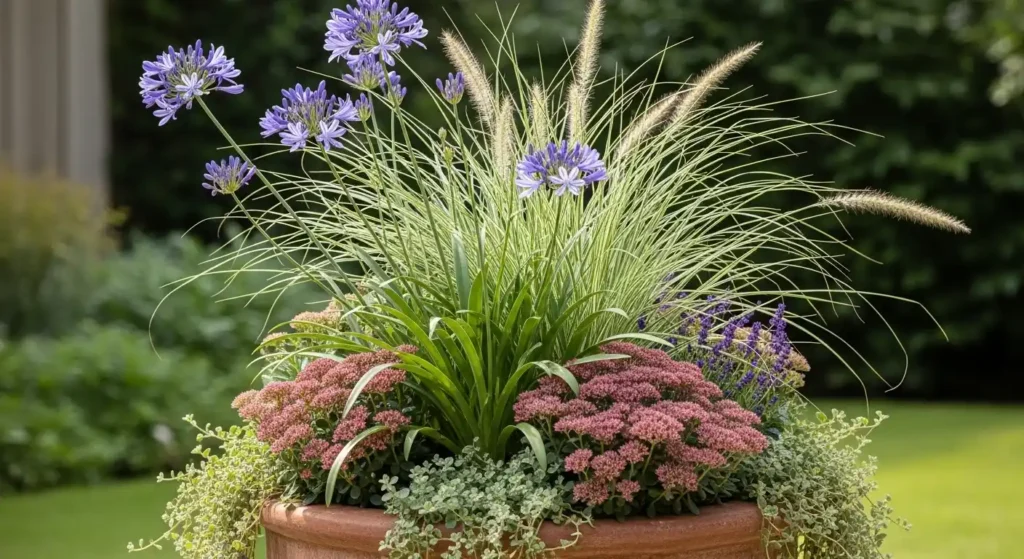
The drought-tolerant planter is the honest answer to full sun container growing for anyone who does not want to water every day in August.
Lavender, agapanthus, ornamental grasses, sedum, Russian sage. These plants are not just tolerant of dry hot conditions. They are built for them. They look better after a week without rain than most plants look after daily watering.
Combine plants from similar climatic origins for the most successful drought-tolerant planter. Mediterranean plants — lavender, rosemary, thyme, agapanthus — share similar drought tolerance and look beautiful together. South African plants — Agapanthus, Gazania, Osteospermum — tolerate both heat and occasional neglect. Add fine gravel mulch over the soil surface to reduce moisture loss and the display practically looks after itself through the hottest summer weeks.
For the specific drought-tolerant plant varieties that perform best in container growing see our deer resistant drought tolerant plants guide which covers the nine options that handle heat and neglect best.
3. Plant a Mediterranean Herb Planter That Is Beautiful and Edible
✦ Mediterranean Herb Planter
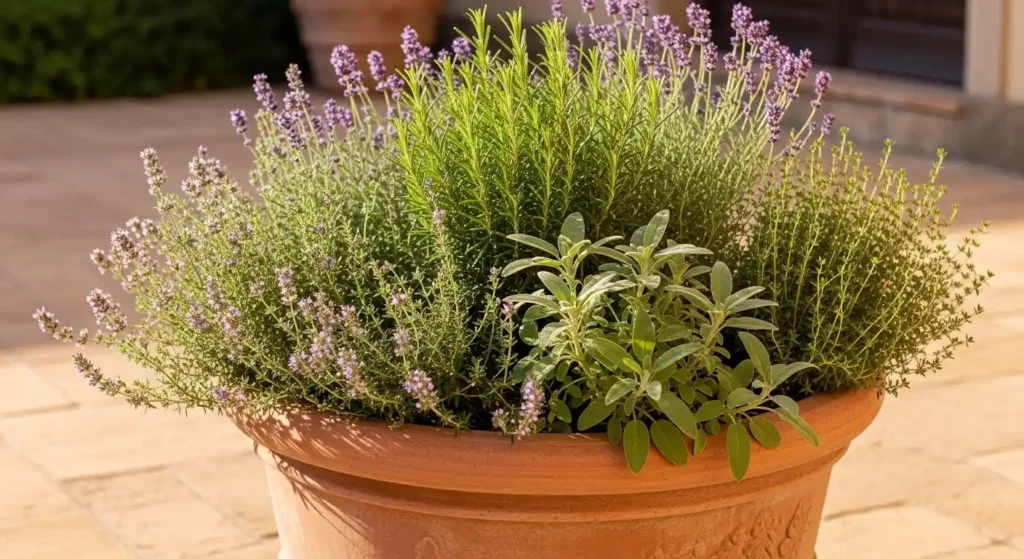
The Mediterranean herb planter is the full sun combination I recommend most because you get two things from one pot: a beautiful planting display and ingredients for cooking.
Rosemary, lavender, thyme, oregano, sage. They are adapted to the rocky dry hillsides of the Mediterranean where the sun is intense and the soil barely holds water. A south-facing patio in summer is as close to their native conditions as most British or American gardens can provide. They do not just survive it. They thrive in it.
Plant Mediterranean herbs together in a large terracotta pot — their similar cultural requirements make them ideal companions. Add ornamental varieties for visual interest — purple sage, variegated thyme, and French lavender all look as beautiful as they smell. Position the planter on your hottest sunniest patio spot and water only when the soil is completely dry. The Quarut whiskey barrel planters are an ideal container for a statement Mediterranean herb display. Find them linked on Amazon.
For a complete guide to growing Mediterranean herbs in containers including soil, watering, and harvesting see our container garden plants for shade guide which covers the companion planting principles that apply to herb containers of all types.
PRO TIP: Clip your Mediterranean herbs regularly throughout summer — harvesting for cooking, trimming for shape, removing flower heads after flowering. Regular cutting encourages fresh bushy growth and prevents the woody leggy appearance that unclipped Mediterranean herbs develop in their second season.
4. Create a Layered Height Arrangement for a Stunning Porch Display
✦ Colorful Porch Arrangement
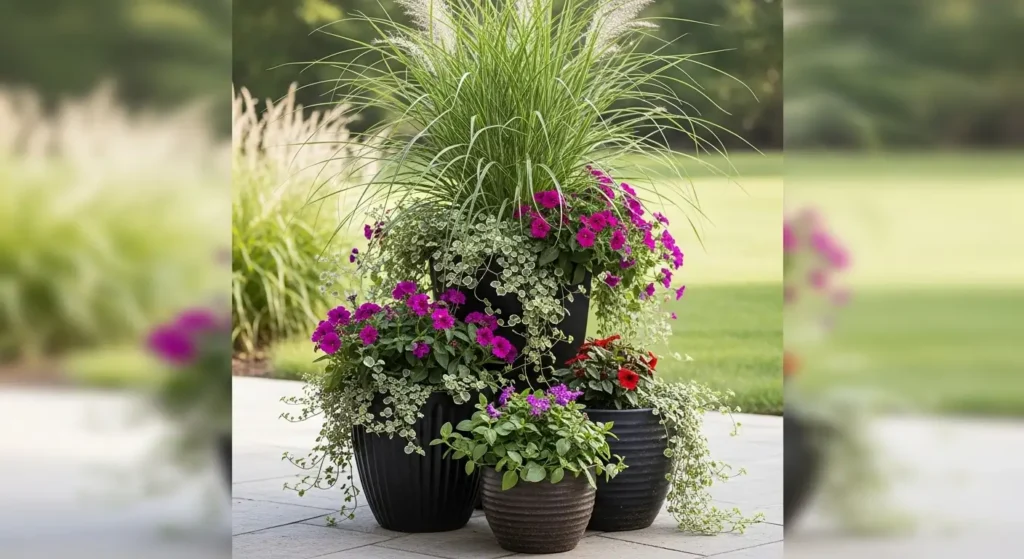
A layered height arrangement uses containers of different sizes and heights to create a planting display that has visual depth and structure — exactly what a front porch or patio entrance needs to look genuinely designed rather than just decorated with a few pots.
Use three planters of significantly different heights. Back position — a tall container with a vertical architectural plant like an ornamental grass or columnar succulent. Middle position — a medium container with a mounding flowering plant like Gaura, Salvia, or Osteospermum. Front position — a low wide container with trailing plants like Bacopa, Calibrachoa, or trailing Verbena that spill over the edges. The three-level arrangement creates a complete planting picture that looks intentional from any angle.
5. Build a Sculptural Succulent and Cactus Planter Display
✦ Succulent and Cactus Blend
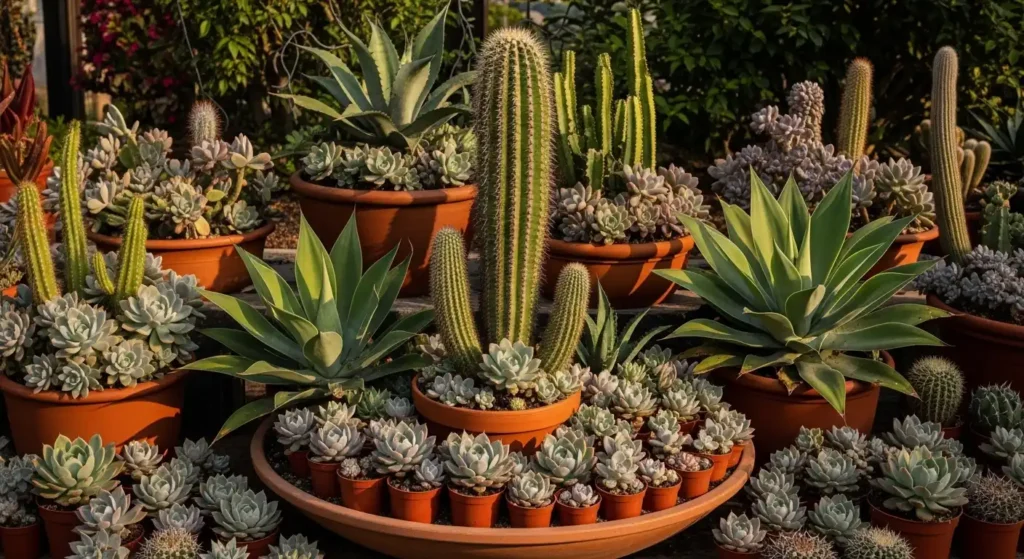
A sculptural succulent and cactus display is the most low-maintenance full sun planter approach available. Succulents and cacti are specifically adapted to intense sun, poor soil, and drought conditions — they require nothing from the gardener except occasional watering and they reward neglect with increasingly sculptural and beautiful forms.
Create a grouped display using containers of different sizes and heights. Anchor the arrangement with one or two large architectural specimens — a tall columnar cactus, a large agave, or a substantial Aloe — as focal points. Fill around them with smaller succulent varieties in rosette, mounding, and trailing forms. Use terracotta containers for the most natural aesthetic and the best drainage. The XXXFLOWER glass terrarium creates a beautiful enclosed succulent display for a single feature planter. Find it linked on Amazon.
The succulent and cactus display is the full sun arrangement I recommend to anyone who has failed with container plants before. These plants punish overwatering. They reward neglect. In full sun with gritty free-draining compost they need almost no intervention from May through September.
For the specific succulent varieties that create the most architectural container displays see our drought tolerant plants succulents guide which covers nine options that suit grouped container arrangements.
PRO TIP: When grouping succulents and cacti together as a display arrange them at odd numbers — three, five, or seven containers. Odd-numbered groupings look more naturally designed than even-numbered arrangements which tend to look symmetrical and formal.
6. Use Terracotta Pots for a Rustic Sun-Baked Mediterranean Look
✦ Rustic Terracotta Style
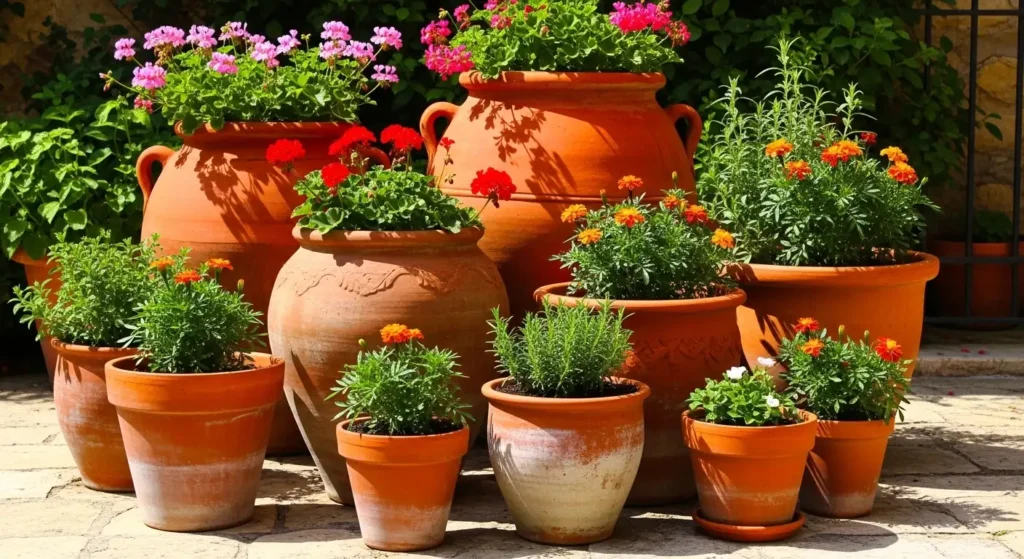
Terracotta pots in a full sun position create a specific aesthetic that no other container material can replicate — the warm orange-red of sun-baked clay, the beautiful algae and mineral staining that develops over time, and the way terracotta handles look completely natural against stone, gravel, and the plants that grow in them.
Group terracotta pots of different sizes and heights together rather than placing them individually. A collection of seven to ten pots clustered together creates significantly more impact than the same number of pots spaced around the patio. Fill them with classic sun-loving plants that suit the rustic Mediterranean aesthetic — scarlet geraniums, bright marigolds, trailing Bacopa, and fragrant Mediterranean herbs. The Quarut barrel planters in their warm brown tones complement terracotta beautifully in a grouped display. Find them linked on Amazon.
7. Plant Self-Watering Containers for a Low-Maintenance Full Sun Display
✦ Low-Maintenance Summer Pots
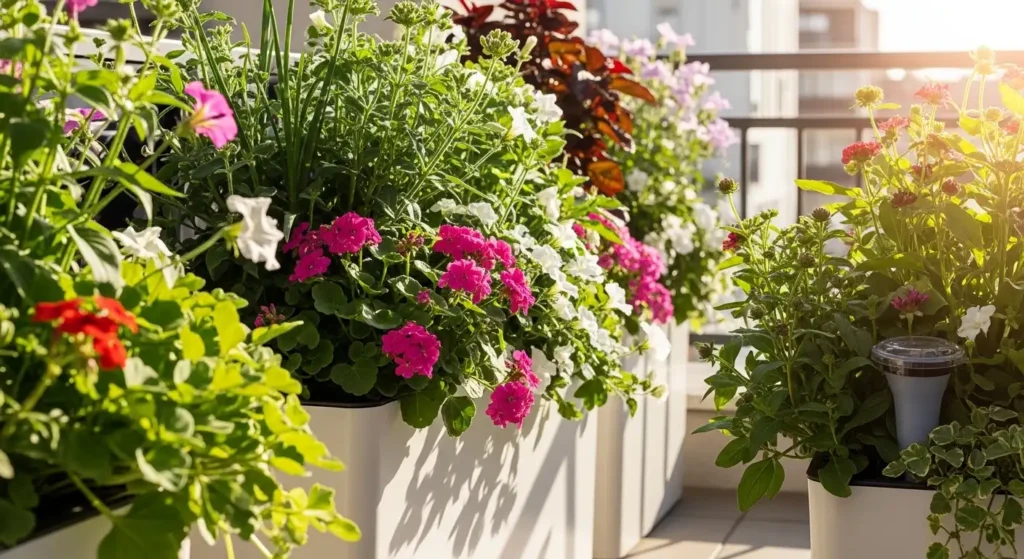
The self-watering container solved full sun growing for me. Not the plants. The container.
The reservoir delivers water from below directly to the roots — exactly where it is needed and with none lost to evaporation from the soil surface. In peak summer heat a reservoir that would last two days in a shaded position lasts three or four days in full sun. That difference is the difference between daily watering anxiety and a weekend away without worrying.
Self-watering planters are particularly valuable for balconies and south-facing patios where manual watering needs to happen daily in midsummer. Fill with reliable full-sun flowering plants — Calibrachoa, Petunia, Verbena, and Portulaca all perform exceptionally well in self-watering containers in full sun. The self-watering hanging planters with macrame rope hangers are perfect for adding trailing full-sun plants at height on a hot patio. Find them linked on Amazon.
PRO TIP: In full sun self-watering containers check the reservoir level every 2 to 3 days in peak summer heat rather than relying on a weekly schedule. Water consumption roughly doubles in full sun versus partial shade and a dry reservoir in midsummer can stress plants within 24 hours.
The Designer Secrets for Thriving Full Sun Planters
These five principles separate full sun planters that thrive all summer from ones that decline by August:
1. Choose light-colored containers
Dark pots in full sun can heat soil to temperatures that damage or kill roots. White, cream, terracotta, and light grey containers keep soil temperatures significantly cooler and plants significantly healthier through the hottest days.
2. Size up your containers
Larger containers hold more growing medium which holds more moisture and maintains more consistent temperature. A small pot in full sun dries out in hours on a hot day. A large container gives plants a buffer against heat stress and drought between waterings.
3. Mulch the soil surface
A layer of fine gravel, horticultural grit, or bark mulch over the soil surface in full sun containers dramatically reduces moisture evaporation. This single step can reduce watering frequency by 30 to 40 percent in peak summer heat.
4. Water in the morning not the evening
Morning watering gives plants the moisture they need before the heat of the day peaks. Evening watering in full sun positions leaves foliage wet overnight which encourages fungal disease on many sun-loving plants. Always water at the base of the plant not over the leaves.
5. Feed regularly in summer
Container plants lose nutrients faster than ground-planted ones because frequent watering washes nutrients from the growing medium. Full sun summer planters particularly benefit from a liquid feed every two weeks through June, July, and August to maintain the vigorous growth and abundant flowering that makes them so rewarding.
5 Full Sun Planter Mistakes That Kill Summer Displays
These mistakes are the most common causes of full sun planter failure:
Mistake 1 — Choosing shade plants for sun positions
Impatiens, Begonias, Fuchsia, and Hostas all need shade. Placing them in full sun causes immediate and irreversible leaf scorch. Always match your plant choice to your actual sun exposure before purchasing anything.
Mistake 2 — Containers with inadequate drainage
Even in full sun positions containers without adequate drainage holes cause root rot when watered generously. Always check for drainage holes and never let containers sit in standing water even in the hottest conditions.
Mistake 3 — Underwatering in peak heat
Even drought-tolerant plants in containers need more water during peak summer heat than in spring or autumn. Container plants cannot access groundwater the way planted specimens can. Check moisture daily during heatwaves and water whenever the top inch of soil is dry.
Mistake 4 — Stopping deadheading
Most flowering full sun plants flower continuously only when spent blooms are removed regularly. Once a plant sets seed it reduces flower production dramatically. Deadhead every week or two throughout summer and your planters will stay in continuous flower from June through September.
Mistake 5 — Small containers in extreme heat
A 6-inch pot in full summer sun on a reflective stone patio can reach soil temperatures high enough to cook roots within a few hours on a very hot day. Never use very small containers in extreme full sun positions. The minimum practical size for a full sun container in peak summer is 12 inches in diameter.
📌 More garden ideas → 12 Boho Garden Ideas You’ll Love
Frequently Asked Questions
What plants survive full sun in containers?
The best plants for full sun containers are ones adapted to hot dry conditions in their natural habitat. Top performers include lavender, rosemary, agapanthus, geranium, lantana, portulaca, gazania, osteospermum, calibrachoa, marigold, salvia, and all succulents and cacti. According to the American Horticultural Society heat-tolerant annuals including portulaca and vinca perform exceptionally well in full sun container positions that would stress or kill less adapted varieties.
How often should I water full sun planters in summer?
Most flowering annuals in full sun containers need watering every 1 to 2 days in peak heat — drought-tolerant plants like lavender and succulents every 3 to 5 days. Check soil moisture with a finger before watering rather than following a fixed schedule and water thoroughly until it runs from the drainage holes rather than giving frequent small amounts.
What size container is best for full sun?
A minimum diameter of 12 inches for most flowering plants and 16 to 20 inches for large tropical specimens or Mediterranean herbs. Larger containers maintain more consistent moisture and keep root temperatures more stable in intense heat — never use containers smaller than 10 inches in extreme full sun positions.
What is the best potting mix for full sun containers?
A quality multipurpose potting mix with added perlite at approximately 3 parts compost to 1 part perlite for most flowering plants. For succulents and cacti use a specific cactus and succulent mix — for Mediterranean herbs add fine gravel or horticultural grit to improve drainage further.
More Garden and Patio Ideas
→ 14 Coastal Patio Decor Ideas With Summer Vibes ☀️
→ 25 Stunning Back Porch Patio Ideas
→ 14 Relaxing Tropical Patio Ideas For Summer
→ 12 Townhome Backyard Ideas For Summer
The south-facing patio that killed every plant you put in it last summer was not failing because of the sun. It was failing because of the plant choices.
Geraniums where Hibiscus should have been. Impatiens where lavender should have been. The same hot position with the right plant does something completely different.
Pick one combination from this list that suits your watering reality — daily if you can manage it, drought-tolerant if you cannot. Plant it in a light-colored container with drainage holes. That is the whole intervention.

Sheikh Hassaan is a digital architect for small businesses and the founder of The Glow Up System. He writes about home decor, garden design, and outdoor living for real American homes – practical ideas that work in actual spaces without oversized budgets.