
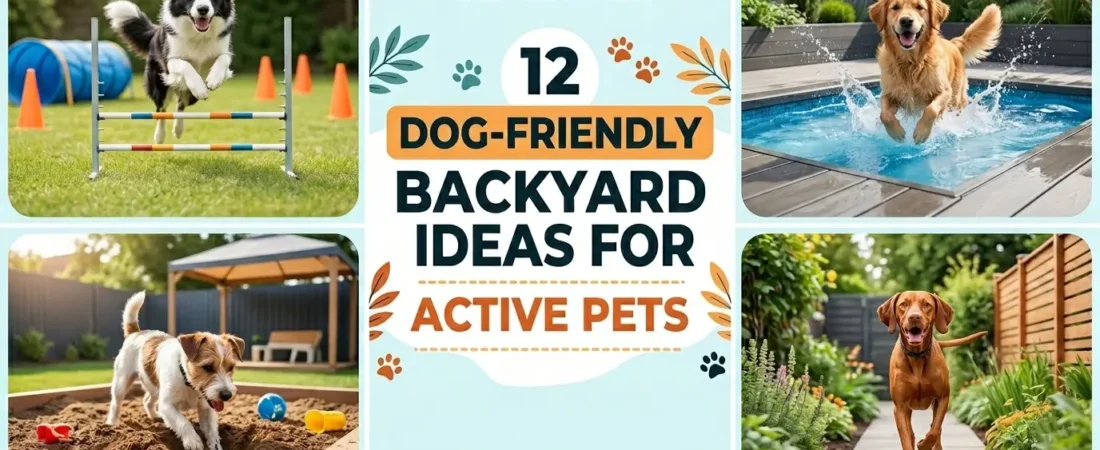
Most backyards are designed entirely for human use and then adapted for dogs as an afterthought. A dog bed in a corner. A corner of lawn designated as the bathroom area. Plants that may or may not be toxic to dogs. Fencing that a determined dog can find gaps in within a week.
A backyard designed with dogs genuinely in mind is a completely different space. It is safe, stimulating, easy to maintain, and beautiful enough that the humans who share it still want to spend time there. The best dog-friendly backyards work for both species simultaneously.
Table of Contents
These 12 dog-friendly backyard ideas cover everything from secure fencing and safe planting to water play stations, agility features, and shaded retreat areas — all the elements that make a backyard genuinely great for active dogs.
A Quick Overview
🐕 12 dog-friendly backyard ideas for active and playful dogs
🌿 Safe plants, secure fencing and easy-clean surfaces
💰 Budget-friendly and premium options throughout
🔗 Products linked on Amazon throughout
1. Create a Dedicated Secure Dog Play Zone
✦ Secure Play Zone
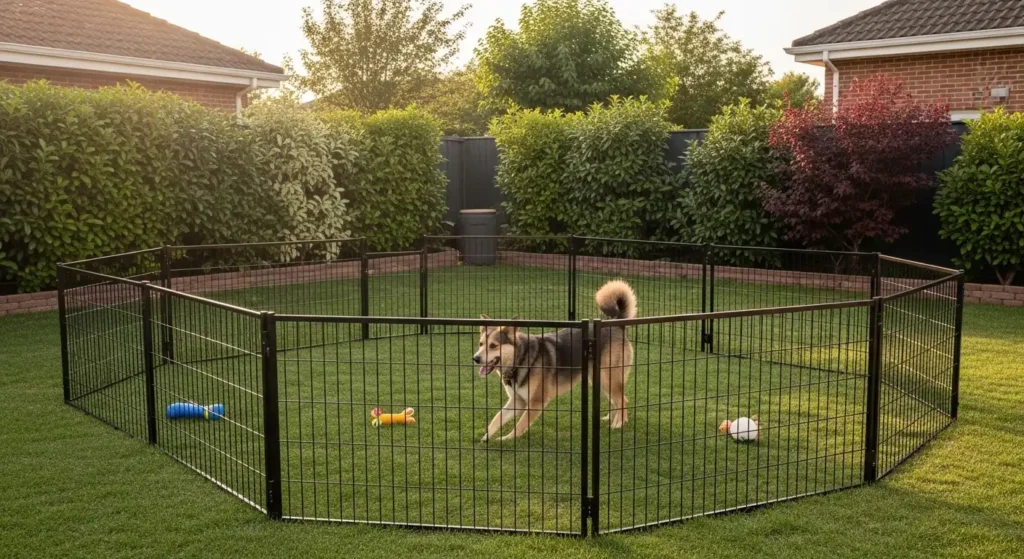
A dedicated dog play zone within the backyard gives your dog a defined space that is entirely theirs while preserving other areas of the garden for planting and human use. The zone creates a clear separation between the dog’s active play area and the garden beds and outdoor furniture you want to protect.
Define the play zone using low decorative garden fencing, raised planter borders, or a change in surface material — from lawn to pea gravel or bark mulch — that signals the boundary visually. Keep the zone generous enough for your dog’s size and energy level. A retriever needs significantly more space than a miniature dachshund. Add rotating toys within the zone to keep the space engaging and prevent boredom digging elsewhere in the garden.
PRO TIP: Place your dog’s play zone where you can see it from your main seating area or kitchen window. A play zone you cannot observe from the house defeats much of its purpose — you want to enjoy watching your dog use the space without having to physically be in the garden.
2. Build a Shaded Dog Retreat for Hot Summer Days
✦ Shaded Cooling Retreat
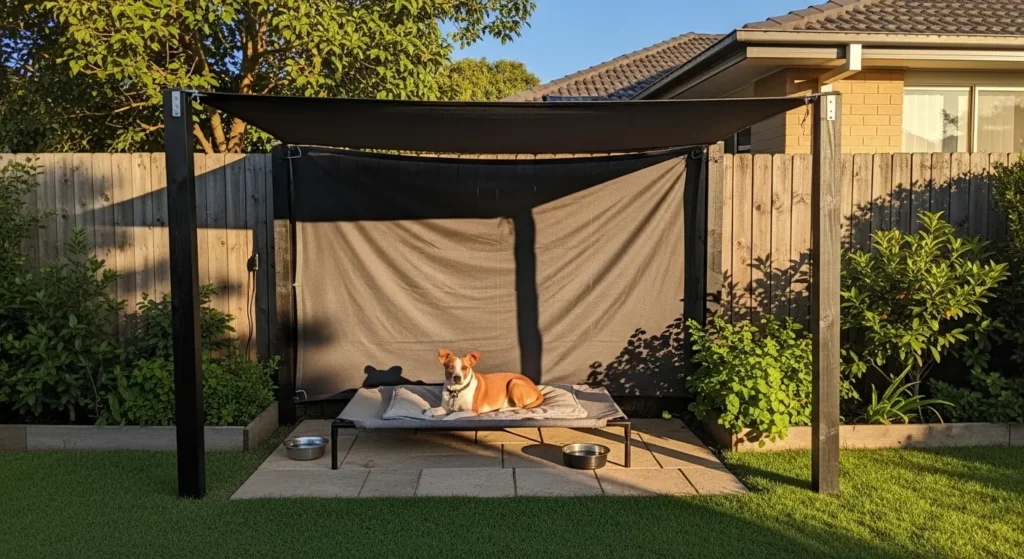
Dogs overheat significantly faster than humans in summer sun. A purpose-built shaded retreat gives your dog somewhere cool to rest during the hottest part of the day without needing to come inside. An outdoor dog retreat also reduces the stress dogs experience when left outside during summer heat.
Position a raised dog cot or outdoor dog bed under a pergola, shade sail, or dense tree canopy. Raised cots allow air circulation beneath the dog which significantly reduces body temperature compared to a ground-level bed. Add a large water bowl or automatic water dispenser beside the retreat. The shade sail or pergola covering protects both from direct sun and from light rain. A dog who has their own shaded outdoor retreat is a significantly calmer and happier dog on hot summer days.
3. Keep a Natural Grass Area for Dogs to Run and Sniff
✦ Natural Grass Adventure Area
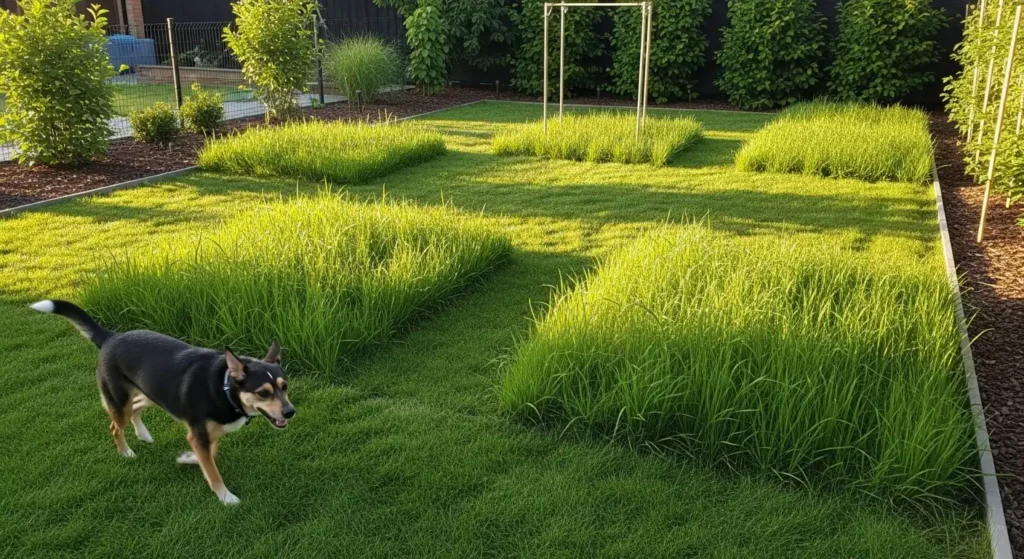
Natural grass is the best surface for active dogs — it cushions joints during running and play, provides natural cooling through evaporation, and gives dogs the sensory experience of natural ground that hard surfaces and artificial grass cannot replicate. Dogs who have access to natural grass for running and sniffing are consistently more mentally and physically healthy than those restricted to hard surfaces.
Maintain a dedicated grass area sized to your dog’s activity level. Use a hard-wearing grass variety appropriate for high traffic — perennial ryegrass and tall fescue both handle dog use better than fine ornamental lawn varieties. Aerate and overseed worn patches in autumn. A dog-friendly lawn does not need to be perfect — a few worn areas from regular use are the sign of a genuinely loved outdoor space.
PRO TIP: Allow a small section of your dog’s grass area to grow slightly longer than the rest — approximately 4 to 6 inches. Dogs instinctively seek out longer grass for sniffing and resting and a designated long-grass patch gives them a natural sniffing enrichment experience that reduces boredom and anxiety.
4. Create a Complete Dog-Friendly Backyard on a Tight Budget
✦ Budget-Friendly Dog Space
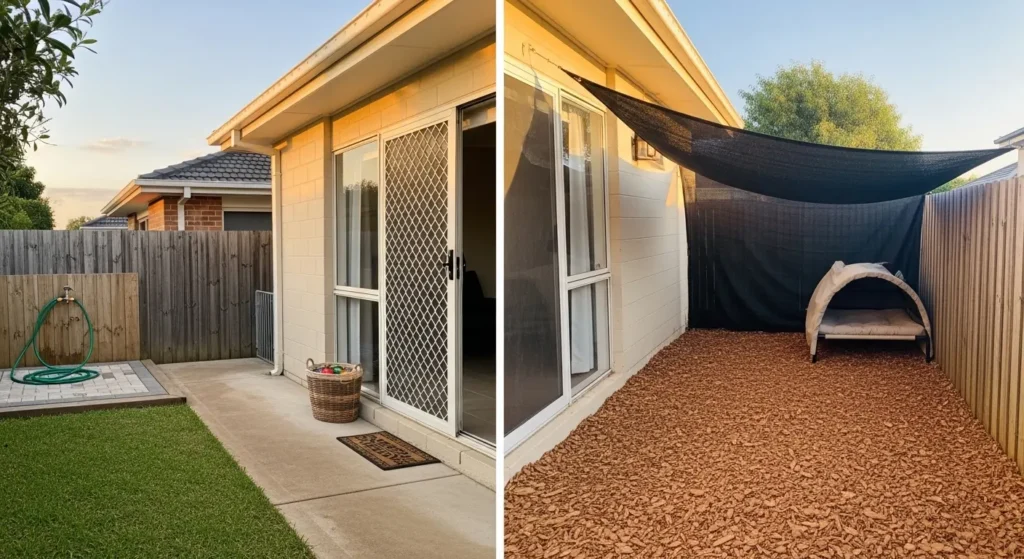
A dog-friendly backyard does not require expensive purpose-built dog furniture or specialist installations. The essentials — shade, water, a safe surface, and stimulation — can all be achieved on a minimal budget with everyday materials and a clear plan.
Budget dog-friendly backyard priority list: shade first — a $20 shade cloth attached to two fence posts creates adequate shade for a dog retreat. Water second — a large water bowl refilled daily costs nothing. Surface third — bark mulch at $15 to $25 per bag provides a comfortable and easy-clean alternative to worn lawn areas. Toys and enrichment last — rotating a selection of toys costs the same as buying many and is more stimulating for the dog.
5. Add Simple DIY Agility Features for Mental and Physical Stimulation
✦ Agility Course Fun
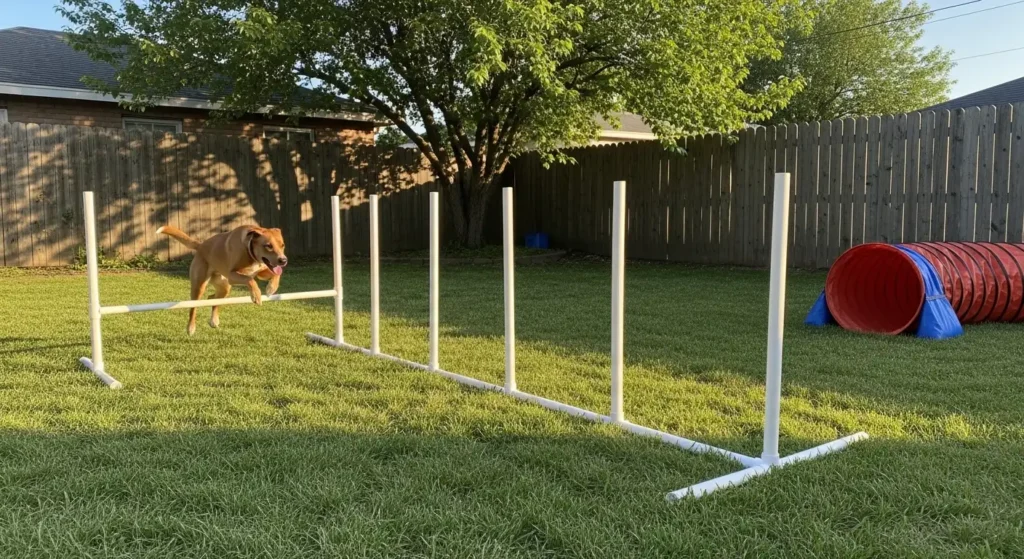
A simple backyard agility course provides dogs with the combination of physical exercise and mental engagement that regular walk-and-fetch play cannot achieve. Agility training requires dogs to focus, problem-solve, and respond to direction — all of which tire a dog more effectively than physical exercise alone and significantly reduce anxiety-driven behaviors like excessive barking and destructive chewing.
Build a basic agility course from inexpensive materials. A low jump bar from two PVC pipe uprights and a horizontal bar. A weave pole line from six bamboo stakes pushed into the lawn. A simple tunnel from a children’s play tunnel. A pause platform from a sturdy wooden box or step. Start with two or three elements and add more as your dog learns. Full beginner agility course sets are also available on Amazon for under $50.
PRO TIP: Rotate your agility course layout every two to four weeks. Dogs learn course patterns quickly and the challenge diminishes once they have memorized the sequence. Changing the layout keeps the mental engagement high and the training sessions genuinely stimulating.
6. Design a Beautiful Garden With Only Dog-Safe Plants
✦ Dog-Safe Garden Design
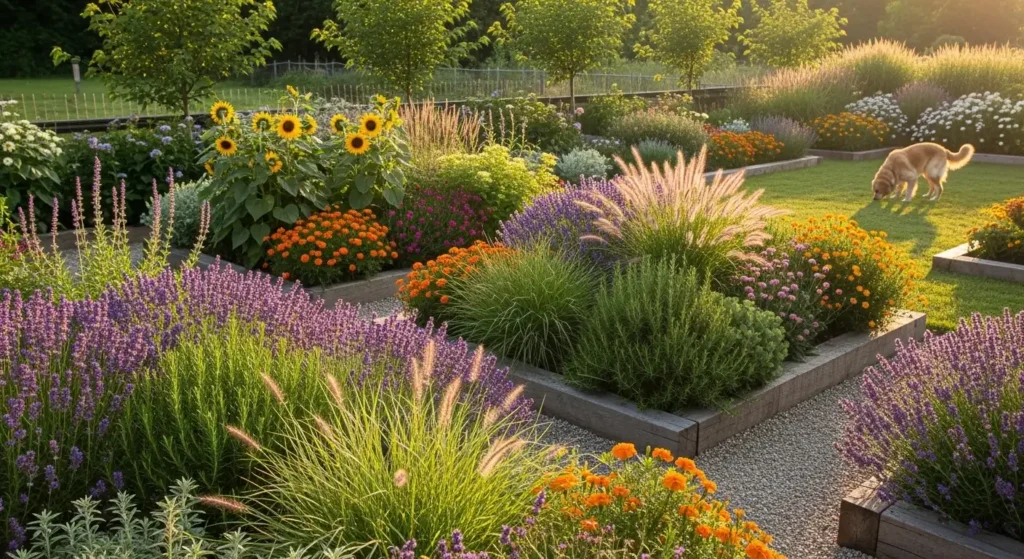
Many common garden plants are toxic to dogs — including foxgloves, delphiniums, rhododendrons, yew, and several types of lily. Designing a garden around dog-safe plant varieties eliminates the anxiety of monitoring what your dog sniffs and occasionally chews and creates a genuinely safe outdoor environment.
Dog-safe plants that are both beautiful and completely non-toxic include lavender, rosemary, sunflowers, marigolds, snapdragons, and most ornamental grasses. Replace any toxic plants in your current garden with safe alternatives and communicate the change to anyone who helps with your garden. Use raised planter beds at heights your dog cannot easily access for any decorative plants you are uncertain about.
7. Install Easy-Clean Surfaces in Your Dog’s Main Activity Areas
✦ Easy-Clean Surface Setup
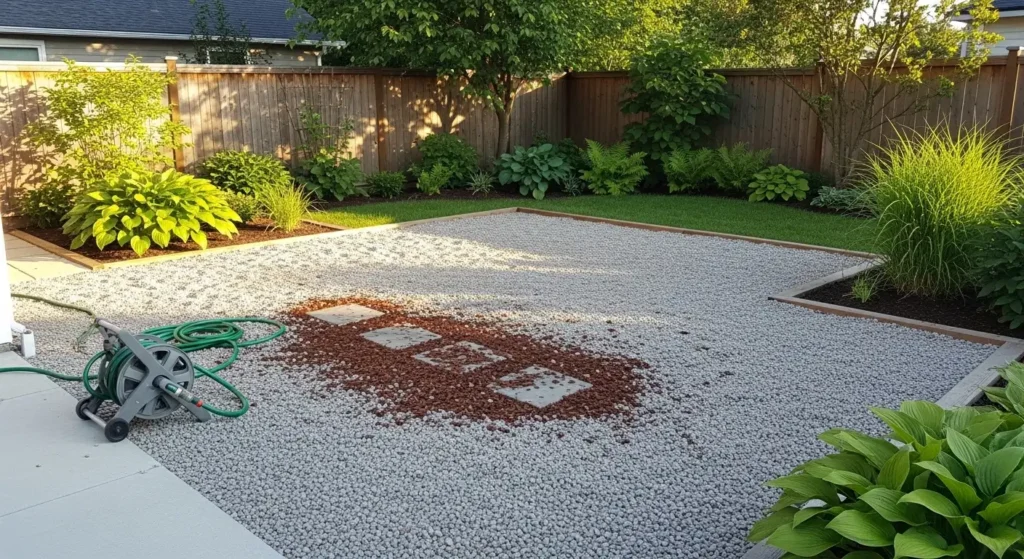
The surfaces in a dog-friendly backyard need to handle regular use, be easy to clean, and stay comfortable for paws year-round. Concrete and paving heat dangerously in summer sun and are hard on joints during extended play. Lawn compacts and wears in high-traffic dog areas. The right alternative surface makes dog ownership and garden maintenance significantly more manageable.
Pea gravel is the best easy-clean surface for dog areas — it drains freely, stays cool in summer, is comfortable for paws, and waste washes clean with a hose. Bark mulch is a softer alternative that composts naturally over time. Artificial grass handles dog use well and looks neat year-round but retains odors without regular cleaning with specialist products. Avoid sharp slate chippings and large decorative gravel which are uncomfortable for dog paws.
PRO TIP: Create a foot-washing station at your back door using a shallow tray of clean water and a towel hook beside the door. Training your dog to pause at the tray before entering the house eliminates most indoor muddy paw cleaning and takes less than a week to establish as a habit.
8. Make a Small Backyard Work Brilliantly for an Active Dog
✦ Small Backyard Solution
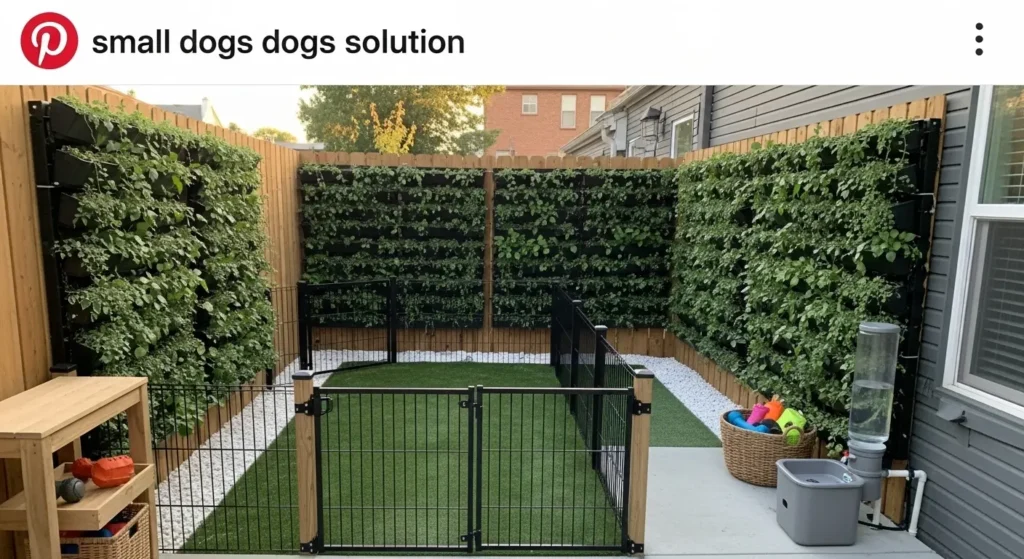
A small backyard with an active dog is one of the most challenging garden design problems. Every design decision must serve both species — the dog needs running room, safe surfaces, and stimulation while the human needs a space that looks attractive, is easy to maintain, and still functions as an outdoor living area.
In a small dog-friendly backyard keep the central area as clear as possible for movement — push all planting, furniture, and storage to the perimeter. Use raised planter beds along fence edges to protect both planting and fence from dog wear. Choose robust surface materials rather than lawn which compacts and wears rapidly in small high-traffic spaces. Vertical planters on fence panels add green without using floor space.
9. Add a Dog Splash Station for Summer Water Play
✦ Splash and Water Play Station
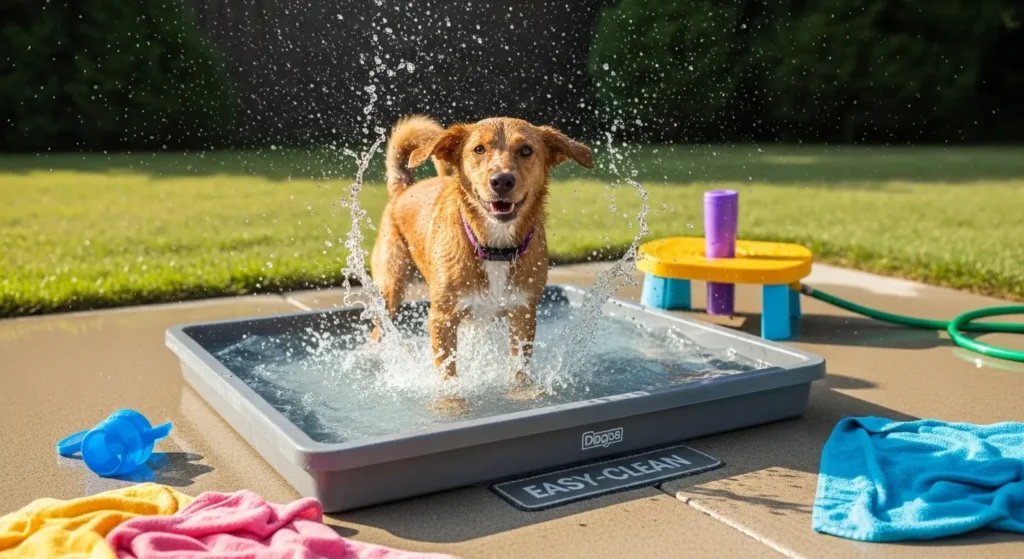
A water play station is the most effective and most loved summer enrichment upgrade for active dogs. Most dogs are natural water enthusiasts and a paddling pool or water play feature in the backyard provides cooling, physical activity, and mental stimulation simultaneously — three of the most important needs for a healthy active dog in summer heat.
A shallow dog paddling pool filled to 4 to 6 inches is sufficient for most dogs and provides hours of entertainment on hot days. Position it on a surface that drains easily — pea gravel or a slightly sloped paved area. Add floating toys or ice cubes to make the water play more interactive and mentally stimulating. Drain and refill the pool every two to three days to prevent bacterial growth.
PRO TIP: Freeze treats and toys inside large ice blocks and place them in or beside your dog’s paddling pool on hot days. The combination of the challenge of extracting the treats and the cooling effect of the ice provides exceptional enrichment that occupies even the most energetic dogs for extended periods.
10. Create a Covered Dog Relaxation Corner for All-Weather Comfort
✦ Covered Relaxation Corner
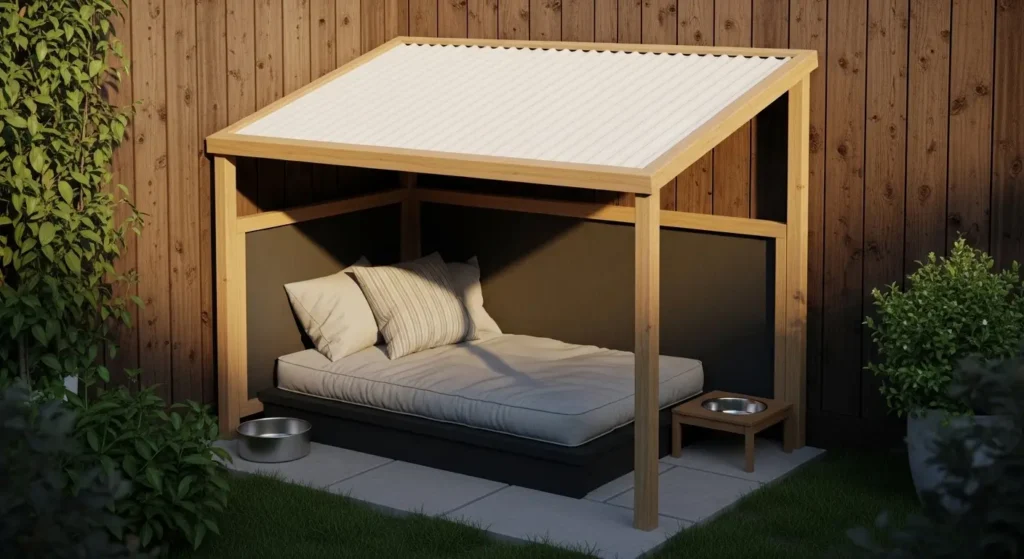
A covered outdoor dog retreat that protects from both sun and rain extends the amount of time your dog can comfortably spend outside regardless of the weather. A dog with access to a weatherproof outdoor retreat is able to self-regulate their indoor-outdoor balance rather than depending entirely on human decisions about when they go out.
Build a simple lean-to roof section from corrugated polycarbonate panels attached to a fence or wall at an angle. The clear polycarbonate allows light while deflecting rain. Position a weatherproof raised dog bed under the structure. Add a water bowl on one side. The whole structure costs under $100 in materials and significantly improves your dog’s outdoor experience through the less predictable weather months of spring and autumn.
11. Design an Activity Area That Works for Multiple Dogs
✦ Multi-Dog Activity Area
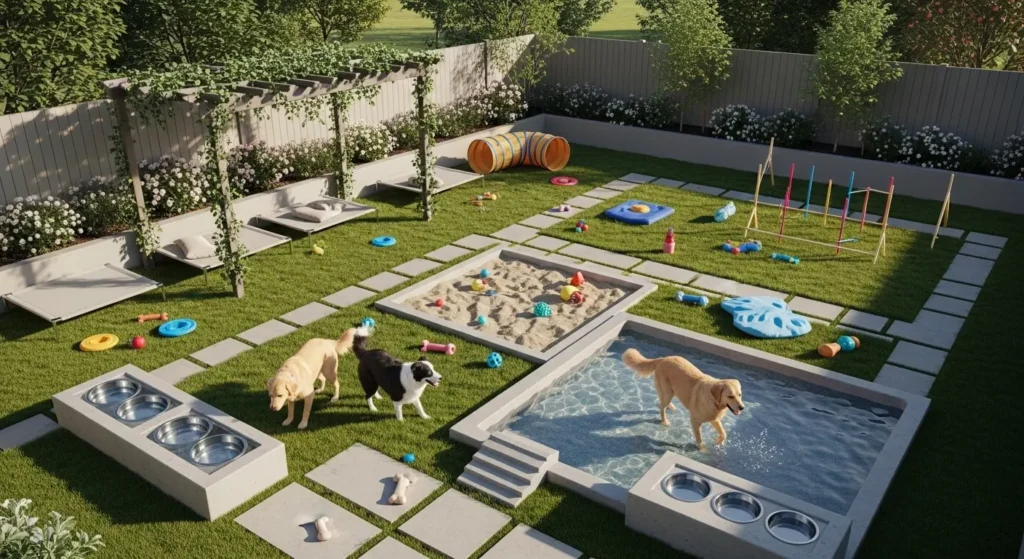
A backyard designed for multiple dogs needs more space, more resources, and more thoughtful layout than a single-dog garden. Resource competition — one water bowl, one shaded spot, one toy — is a significant source of conflict between dogs. Good multi-dog backyard design eliminates competition by providing multiples of every resource.
Provide at least two water stations at opposite ends of the activity area. Create two separate shaded retreat spots so each dog can rest without the other intruding on their space. Have a minimum of one toy per dog available at all times. Ensure the space is large enough for dogs to move away from each other when they need space — the minimum comfortable multi-dog backyard area is approximately 400 square feet for two medium-sized dogs.
PRO TIP: Feed multiple dogs in separate areas of the backyard rather than beside each other. Food is the highest-value resource and the most common trigger for conflict between otherwise compatible dogs. Separate feeding positions eliminate the most frequent source of garden-based dog disputes.
12. Transform a Side Yard Into a Dog Running Path
✦ Side Yard Running Path
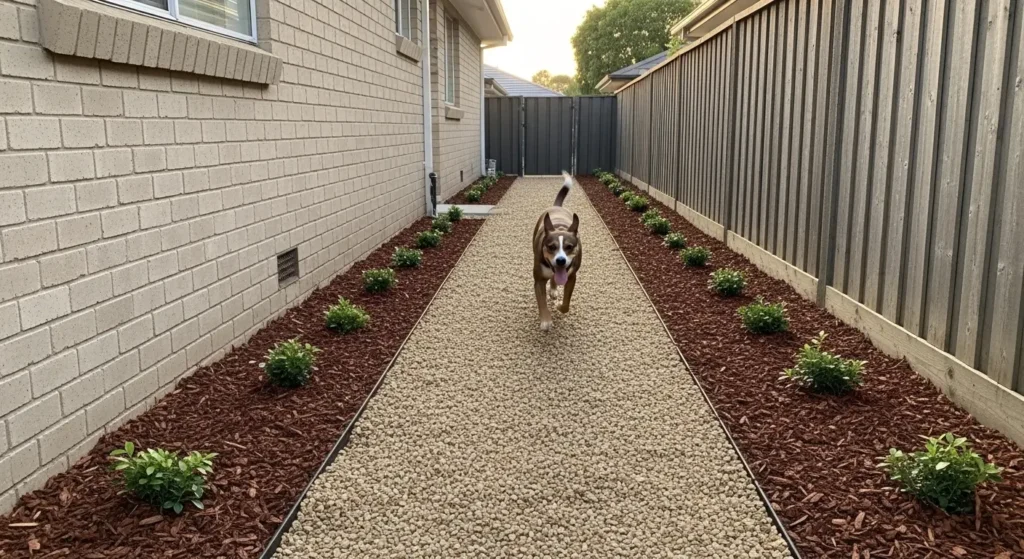
Most homes have a side yard — the narrow strip between the house and the boundary fence — that serves no human purpose and is typically neglected. For a dog this strip is perfect. The linear run space provides exactly the kind of purposeful movement that active dogs crave and the defined boundaries mean the dog runs in a controlled direction rather than around the main garden.
Lay a firm comfortable surface the full length of the side yard — bark mulch, pea gravel, or compacted gravel all work well. Clear any obstacles that could be hazardous at dog running speed. Add a gate at one end to control access. The side yard running path becomes one of the most used areas of your dog-friendly backyard and converts completely wasted space into genuine daily value for your pet.
Essential Dog-Friendly Backyard Checklist
Every dog-friendly backyard should cover these five essentials:
1. Secure perimeter fencing
The most critical element of any dog-friendly backyard is a fence your dog cannot escape over, under, or through. Check the full perimeter regularly for gaps, loose panels, and sections low enough for your dog to jump. The height requirement varies by breed — a Border Collie needs a 6-foot fence where a Basset Hound is contained by 4 feet.
2. Fresh water always available
A dog in a backyard without accessible fresh water is at risk of dehydration within hours on a hot day. Always provide at least one large water bowl in the shaded retreat area and one additional water source in the active play area. Check and refill water daily.
3. Shade at all times of day
The sun moves throughout the day and a shaded spot at 10am is fully exposed by 2pm. Ensure your dog has access to shade at every point of the day they might be outside. Multiple shade options in different parts of the backyard are significantly better than one shade spot that is only useful for part of the day.
4. No toxic plants
Audit your entire backyard for toxic plants before allowing your dog unsupervised access. Common toxic garden plants include foxgloves, rhododendrons, azaleas, yew, oleander, and several lily varieties. The ASPCA maintains a comprehensive online list of toxic and non-toxic plants for dogs that is worth checking against your current planting.
5. Mental stimulation
A backyard that provides only physical space but no mental engagement produces bored dogs who develop destructive behaviors. Rotate toys regularly, add enrichment features like sniff areas and agility elements, and ensure your dog has interesting things to investigate every time they go outside.
5 Dog-Friendly Backyard Mistakes Worth Avoiding
These mistakes are the most common in dog-friendly backyard setups:
Mistake 1 — Underestimating escape ability
Dogs are significantly more capable of escaping a backyard than most owners expect until it has happened. Check for gaps at ground level along the entire fence perimeter. Motivated dogs will find every weakness in a fence within days of being left alone in the backyard.
Mistake 2 — Using cocoa mulch near dogs
Cocoa shell mulch is popular for its attractive appearance and pleasant smell but it is toxic to dogs who ingest it. Never use cocoa mulch in any garden area accessible to dogs. Use bark mulch, wood chip, or pea gravel as safe alternatives.
Mistake 3 — Leaving tools and chemicals accessible
Garden fertilizers, pesticides, weedkillers, and even some natural pest deterrents are toxic to dogs. Store all garden chemicals in locked shed storage. Never apply any chemical treatment to areas your dog accesses without checking the label for pet safety and respecting the stated reentry period.
Mistake 4 — No shade or water in hot weather
Heatstroke in dogs can develop within 15 minutes in a hot exposed backyard with no water access. Never leave a dog in an exposed backyard without shade and water during summer heat. This is a welfare issue not a preference.
Mistake 5 — Designing only for aesthetics
A beautiful backyard that does not meet your dog’s basic needs — security, shade, water, stimulation, safe surfaces — fails as a dog-friendly space regardless of how good it looks. Always prioritize your dog’s welfare requirements before aesthetic considerations when making backyard decisions.
📌 More backyard ideas → 7 Dream Backyard Ideas For Small Spaces
Frequently Asked Questions
What is the best backyard surface for dogs?
The best backyard surfaces for dogs are pea gravel for drainage and easy cleaning, natural grass for cushioning and cooling, and bark mulch for softness and comfort. Avoid concrete and paving in hot climates as these surfaces heat dangerously in summer sun and cause paw pad burns. Artificial grass handles wear well but retains odors without regular cleaning. According to the American Kennel Club natural grass remains the most beneficial surface for dog paw health when maintained appropriately.
What plants are safe for a dog-friendly garden?
Dog-safe garden plants include lavender, rosemary, sunflowers, marigolds, snapdragons, asters, camellias, and most ornamental grasses. Avoid foxgloves, rhododendrons, azaleas, delphiniums, yew, oleander, autumn crocus, and all lily varieties which are toxic to dogs. The ASPCA Animal Poison Control Center maintains a comprehensive database of toxic and non-toxic plants that is the most reliable reference for planning a dog-safe garden.
How do I stop my dog from digging up the garden?
The most effective approaches for preventing dog digging are: providing a designated digging area where digging is permitted and rewarded, burying interesting items in the permitted dig area to make it more attractive than the rest of the garden, using raised planting beds that dogs cannot easily access, placing chicken wire just below the soil surface in areas where digging is problematic, and ensuring your dog has adequate physical and mental stimulation to reduce boredom-driven digging behavior.
How high does a fence need to be for a dog?
The required fence height depends entirely on your dog’s breed and individual jumping ability. As a general guideline: small breeds under 25 pounds need a minimum 4-foot fence, medium breeds need 5 feet, and large and athletic breeds including Border Collies, German Shepherds, and Labrador Retrievers need a minimum 6-foot fence. Some athletic breeds can clear 6 feet and require coyote rollers or fence extensions to prevent jumping. Always observe your dog’s actual jumping ability rather than relying solely on breed generalization.
A Backyard Your Dog Will Love as Much as You Do
The best dog-friendly backyards are not the ones designed entirely around the dog at the expense of human enjoyment. They are the ones where both species thrive simultaneously — where the human has a beautiful, functional outdoor space and the dog has everything they need to be safe, stimulated, and genuinely happy outdoors.
Pick the ideas from this list that suit your dog’s personality, your backyard’s size, and your budget. Start with the essentials — secure fencing, shade, water — and add enrichment features from there. A dog who loves their backyard is a calmer, healthier, and happier dog every single day.
All the products mentioned in this article are linked on Amazon. Every recommendation is something we genuinely believe in.
More Backyard Ideas You Will Love
→ 12 Townhome Backyard Ideas For Summer
→ 8 Budget Sleeper Garden Ideas For Summer
→ How To Make A Small Townhouse Backyard Feel Bigger
→ 7 Sloped Backyard Ideas That Look Amazing
These dog-friendly backyard ideas prove that a great outdoor space works for every member of the family. Start with the essentials this weekend and build from there.

Sheikh Hassaan is a digital architect for small businesses and the founder of The Glow Up System. He writes about home decor, garden design, and outdoor living for real American homes – practical ideas that work in actual spaces without oversized budgets.