
I added a container pond to a patio three summers ago. Half barrel, one miniature water lily, a small solar pump. Cost about $70 including the plants.
The first evening I sat beside it I realized I had been listening to traffic noise for two years and only noticed it had gone when the water started. That is what water in a garden does. It does not just add something — it changes the acoustic character of the whole space.
These 7 small backyard pond ideas go from that afternoon container pond to a full naturalistic rock-bordered feature. One practical note before you start: any garden pond is a drowning risk for young children. A raised container pond, a rigid steel mesh just below the water surface, or waiting until children are older are all worth considering seriously before digging anything.
Table of Contents
1. Build a Natural Rock-Bordered Pond for a Naturalistic Garden Feature
✦ Natural Rock Border Pond
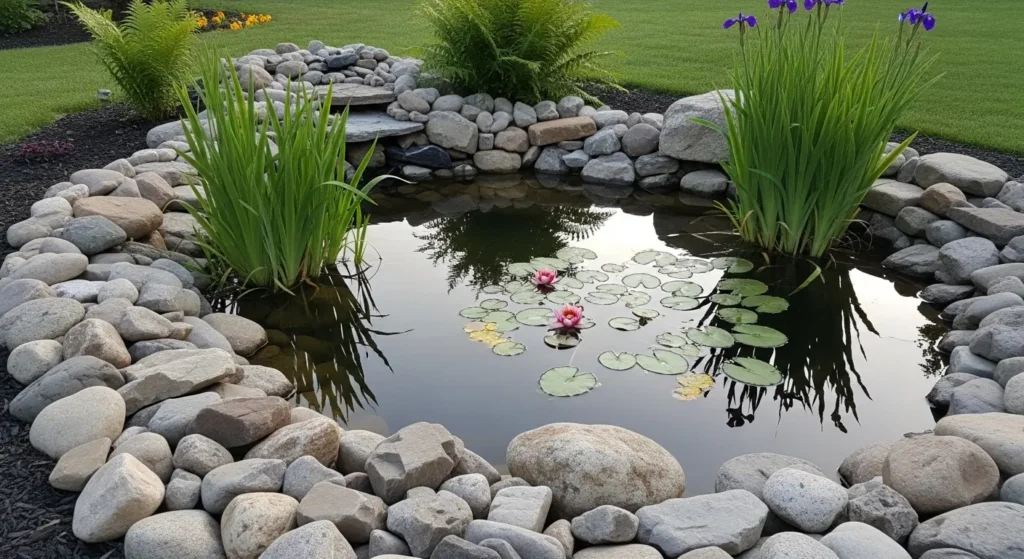
A natural rock-bordered pond creates the most convincing and most beautiful small garden water feature available. The irregular edges, the variation in rock sizes, and the moisture-loving plants growing between the stones create a pond that looks genuinely naturalistic — as though it emerged from the garden rather than being installed in it.
Excavate your pond shape following a natural irregular outline rather than a geometric one. Line with a quality butyl rubber pond liner. Position rocks of varying sizes around the perimeter — some overhanging the water edge slightly, some set back further. Plant moisture-loving marginals like iris, marsh marigold, and water mint at the shallow edges. Add a small solar-powered fountain pump to keep the water moving and oxygenated. The LANSOW solar spotlights positioned to uplight the rocks at the pond edge create a spectacular evening water feature. Find them linked on Amazon.
For the specific rock and hardscape materials that work best around water features see our backyard hardscape ideas guide which covers natural stone selection and placement principles.
PRO TIP: Position your largest rocks at the back of the pond and graduate to smaller stones at the front edge nearest your viewpoint. The size graduation creates natural perspective and makes the pond appear larger than it actually is — the same visual technique used in professional landscape design.
2. Create a Mini Zen Water Feature for Calm and Stillness
✦ Mini Zen Water Feature
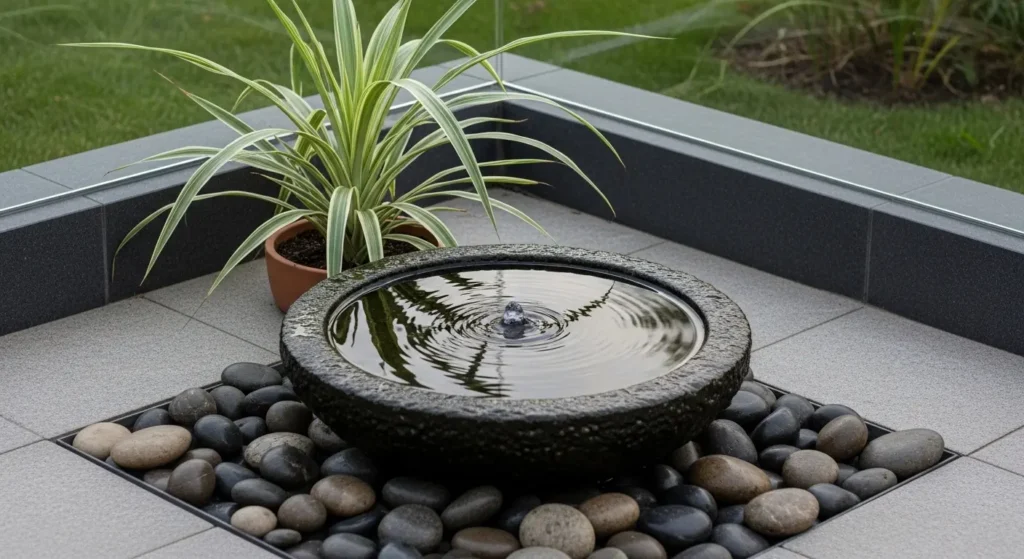
The zen water feature is the small backyard pond idea I recommend most to people who want the atmosphere of water without excavation, liner, or maintenance.
A wide shallow dark basin. Still water. The sky reflected in it. The surrounding plants reflected in it. The physical object is modest — a bowl on the ground with water in it. What it does to a garden corner is not modest at all.
3. Build a Container Pond on Your Patio in One Afternoon
✦ Container Pond Setup
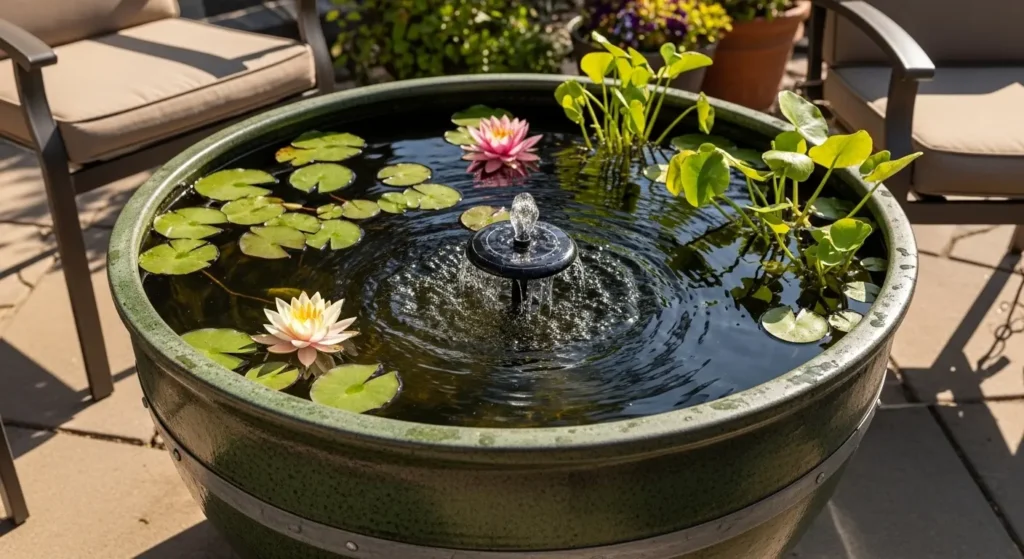
My first pond was a container pond and I underestimated it completely. I thought it would look like a compromise — a pot of water rather than a real pond.
Within two weeks the first frog arrived. By the end of the first summer there were three. A container pond with a miniature water lily and a small solar pump creates a complete small ecosystem in an afternoon for under $80.
For how a container pond works as part of a complete patio or balcony garden see our rooftop garden ideas guide which covers the container-only garden approach for elevated and paved outdoor spaces.
PRO TIP: Position your container pond where it receives at least 5 to 6 hours of sunlight daily. Water lilies and most aquatic plants need good light levels to flower and grow well. A container pond in shade grows algae and stays green without producing the beautiful plant displays that make container ponds so satisfying.
4. Dig and Line a Budget DIY Pond for Under $100
✦ Budget DIY Pond Idea
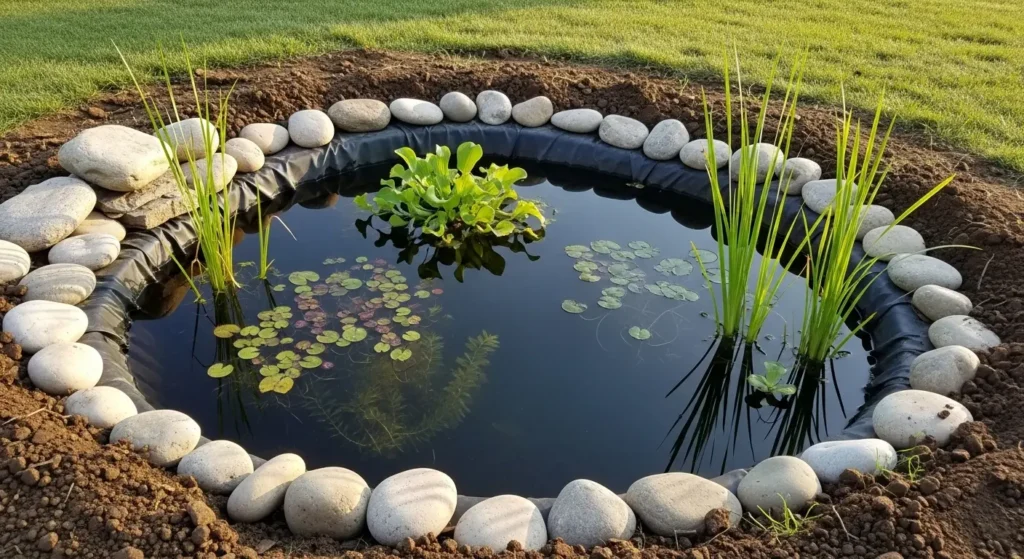
A hand-dug lined pond is the most affordable way to create a permanent in-ground water feature. With a weekend of digging, a quality butyl liner, and a few bags of sand the basic structure of a small garden pond is complete. Everything else — rocks, plants, and wildlife — arrives naturally over time.
Mark your pond shape with a garden hose laid on the ground and adjusted until the shape satisfies you. Dig to a minimum depth of 24 inches at the deepest point — this depth prevents complete freezing in winter and provides refuge for fish in hot summers. Line the excavation with a 2-inch sand layer to protect the liner from sharp stones. Lay a quality butyl rubber liner with at least 12 inches of overlap at all edges. Weigh the edges with rocks, fill with water, and your pond is complete. Total material cost for a 6 by 4 foot pond is approximately $60 to $90.
5. Install a Corner Pond With Water Lilies as a Garden Focal Point
✦ Water Lily Corner Pond
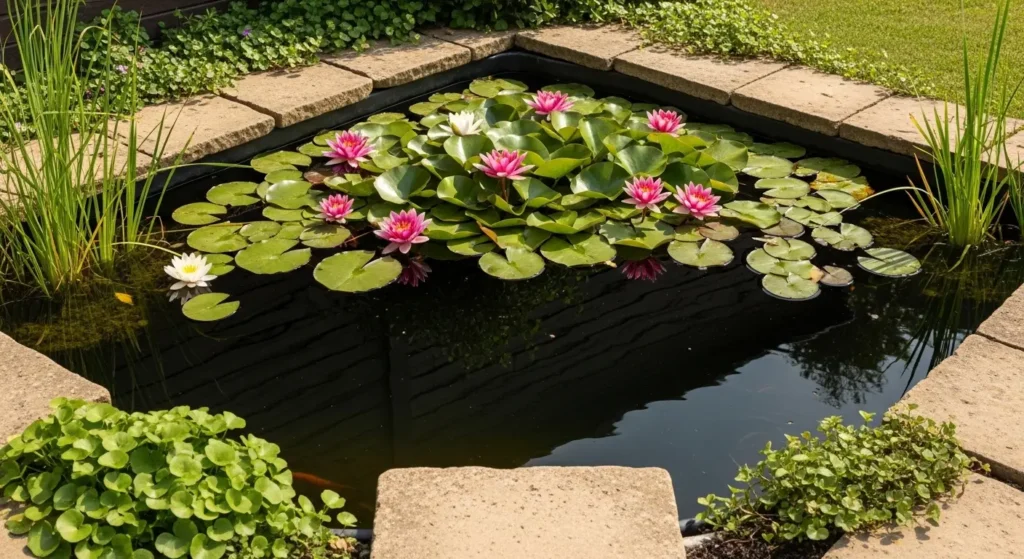
A corner pond uses the natural enclosure of two fence or wall boundaries to create a pond that feels more intimate and contained than a freestanding central pond. The corner position also means two sides of the pond are already defined — reducing the excavation area and the amount of border planting needed.
A corner pond can be geometric — straight edges following the fence lines — or naturalistic with curved edges that soften the hard corner geometry. Water lilies are the ideal planting for a corner pond because their floating leaves cover the water surface beautifully, suppressing algae growth and creating the classic pond aesthetic. Miniature water lily varieties like Nymphaea pygmaea are specifically suited to small ponds and container ponds. Plant on submerged platforms at the correct depth for the variety.
PRO TIP: Add a single stepping stone beside your corner pond positioned so you can stand and look directly down into the water. The downward view into a pond is completely different from the side view — you see the fish, the pond plants below the surface, and the full reflection of the sky. A pond without a close viewpoint loses half its experience.
6. Create a Shaded Pond as a Cool Retreat Within Your Garden
✦ Shaded Relaxation Pond
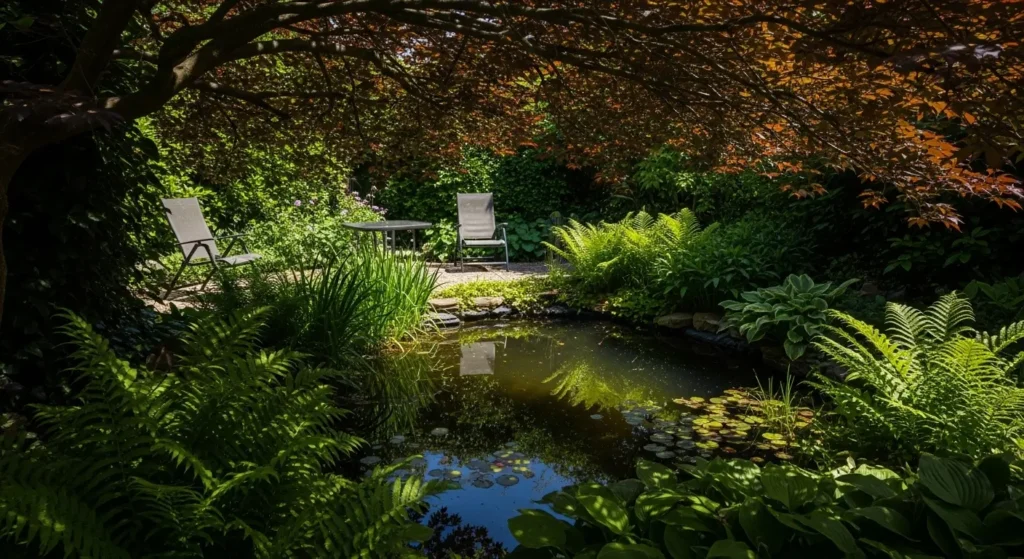
The shaded pond is the small backyard pond idea I find most underappreciated because the starting position — a north-facing corner that receives almost no sun — is usually the part of the garden people have given up on.
In dappled shade the water takes on a dark quality that sunny ponds never have. The surrounding moisture-loving plants become lush and dense. The whole corner feels cool. I find shaded garden corners suit ponds better than open sunny positions in many small backyards precisely because they have nothing else competing for attention.
7. Add Solar Lighting to Your Small Pond for Evening Magic
✦ Gravel Surround Pond
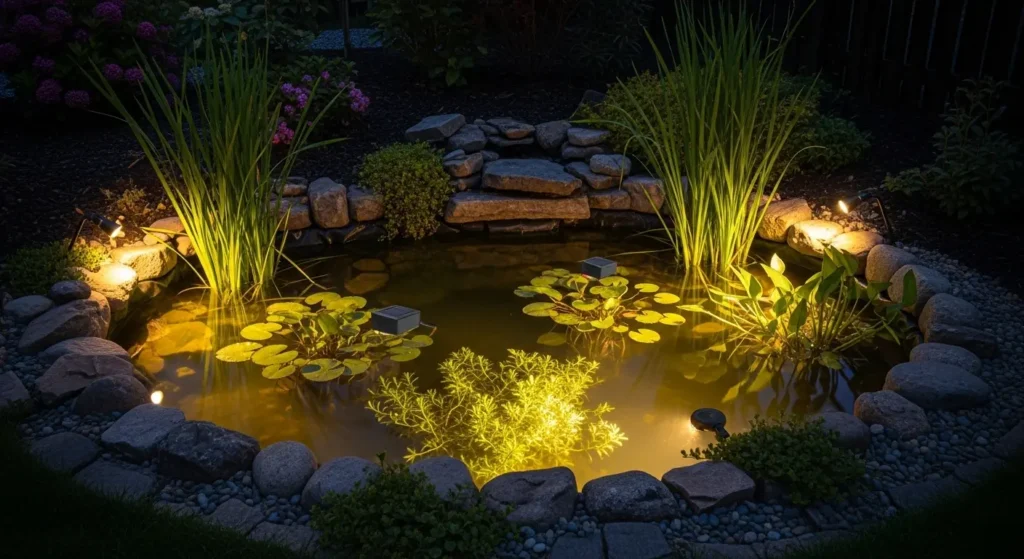
A garden pond without lighting is invisible after dark — the entire feature simply disappears when the sun sets. Solar lighting transforms a small garden pond into one of the most magical elements of any garden after dark. Underwater lights, uplighting on surrounding rocks and plants, and solar path lights leading to the pond edge all combine to create an evening water feature that is even more spectacular than the daytime version.
For the complete solar lighting approach that works best around water features see our garden lighting ideas guide which covers submersible and perimeter lighting for pond and water feature settings.
PRO TIP: For the most dramatic evening pond lighting position one spotlight to uplight a single specimen plant or rock feature on the far side of the pond from your main viewpoint. The light travels across the water surface creating reflections that multiply the visual impact of both the light source and the water feature simultaneously.
Essential Small Pond Planning Guide
Answer these five questions before starting any pond project:
1. In-ground or container?
Renters or those who want flexibility — container pond on the patio. Homeowners wanting a permanent feature — in-ground lined pond. Both can be equally beautiful. Container ponds are installed in an afternoon. In-ground ponds take a weekend.
2. Fish or no fish?
Fish require a minimum pond depth of 24 inches, a filtration system, and regular water quality monitoring. A wildlife pond without fish is lower maintenance, supports more biodiversity, and is just as visually beautiful. Make this decision before designing because it determines minimum depth requirements.
3. Sun or shade?
Water lilies and most flowering aquatic plants need 5 to 6 hours of sun. A shaded pond suits foliage-only planting and creates a different but equally beautiful atmosphere. Decide your planting vision before choosing location.
4. Moving or still water?
Moving water from a fountain or cascade adds sound and oxygenates naturally — better for fish and wildlife. Still water creates better reflections and suits zen and formal pond styles. Solar fountain pumps provide movement without electrical installation.
5. Safety considerations
Any garden pond is a drowning risk for young children and pets. If children use the garden regularly a raised container pond above toddler height, a covered pond with a rigid steel mesh just below the water surface, or postponing the pond until children are older are all worth considering seriously.
5 Small Pond Mistakes Worth Avoiding
These mistakes are the most common in small garden pond installations:
Mistake 1 — Making the pond too small
Very small ponds — under 6 square feet of surface area — overheat in summer, freeze completely in winter, and are difficult to maintain ecological balance in. The minimum practical pond size for a garden feature that stays healthy with minimal intervention is approximately 6 by 4 feet of surface area at 18 to 24 inches deep.
Mistake 2 — Positioning under trees
Deciduous trees directly over a pond deposit enormous quantities of leaves into the water in autumn. Decomposing leaf matter depletes oxygen and creates toxic conditions for fish. Position ponds away from trees or install a pond net cover in autumn to catch falling leaves.
Mistake 3 — Skimping on liner quality
A cheap thin liner leaks within one to three seasons. A quality butyl rubber liner with a minimum 0.75mm thickness lasts 20 to 25 years. The cost difference between a cheap liner and a quality one is typically $20 to $40 — far less than the cost of draining, repairing, and refilling a failed pond.
Mistake 4 — Overstocking with fish
Too many fish in a small pond depletes oxygen, clouds the water, and creates a maintenance burden that quickly becomes discouraging. The maximum fish stocking for a small pond is approximately 1 inch of fish per 10 gallons of water. A 500-gallon small pond should house no more than 50 inches of fish total.
Mistake 5 — No wildlife access
A pond with steep vertical sides and no gradual slope prevents wildlife from entering and exiting safely. Frogs, hedgehogs, and birds all benefit from at least one shallow sloping entry point. Position a flat stone ramp or a section of gradually shelving liner accessible from the garden edge.
📌 More garden ideas → 25 Simple But Stunning Garden Lighting Ideas
Frequently Asked Questions
How small can a backyard pond be?
A backyard pond can be as small as a half barrel container — approximately 2 feet in diameter — for a purely decorative water feature with floating plants. For a functional pond that supports wildlife and maintains good water quality without constant intervention the practical minimum is approximately 6 by 4 feet of surface area at 18 inches deep. For a fish pond the minimum recommended size is 8 by 6 feet at 24 inches deep. According to the Royal Horticultural Society even very small ponds of 1 square meter provide significant wildlife habitat value in urban gardens.
How much does a small garden pond cost?
A container pond using a half barrel costs $30 to $80 in vessel plus $20 to $40 in plants. A small DIY in-ground pond of 6 by 4 feet costs $60 to $90 in liner and edging materials plus $30 to $60 in plants and a solar pump.
What plants should I put in a small pond?
A combination of submerged oxygenators like hornwort, floating plants like miniature water lilies and frogbit, and marginal plants at the edges like marsh marigold and water iris creates the most balanced and visually complete small pond planting. The floating plants are the most important — covering 60 to 70 percent of the water surface limits algae naturally.
How do I keep a small pond clean?
Plant oxygenators that compete with algae for nutrients, cover 60 to 70 percent of the water surface with floating plants to limit sunlight, and use a solar fountain pump to keep water moving. Remove dead plant material before it decomposes and net the pond in autumn to prevent leaf fall accumulation
More Garden Ideas You Will Love
→ 12 Boho Garden Ideas You’ll Love
→ 14 Relaxing Tropical Patio Ideas For Summer
→ 8 Budget Sleeper Garden Ideas For Summer
→ 20 Creative Garden Rock Art Ideas
The traffic noise I had stopped noticing disappeared the evening I switched on the container pond pump for the first time. I did not register it had gone until the water sound replaced it.
That is the change a small backyard pond makes that no photograph conveys. Not the look of it. The sound of it. The way the garden feels different to sit in.
Container pond this weekend if you have a patio and no digging ability. Hand-dug liner pond next weekend if you have a garden and a free Saturday. The smallest of these small backyard pond ideas makes more difference to how your garden feels than almost any other single addition.

Sheikh Hassaan is a digital architect for small businesses and the founder of The Glow Up System. He writes about home decor, garden design, and outdoor living for real American homes – practical ideas that work in actual spaces without oversized budgets.