

A peaceful garden nook is a space within the garden that exists for one purpose: being in, not passing through. It requires enclosure, a single seat, and enough sensory detail — fragrance, sound, texture, light — to hold attention without demanding it. The garden nook is not about what you do in it. It is about what you stop doing when you sit down.
These 10 ideas each create a genuinely distinct type of garden nook — different in character, different in construction, and different in the specific quality of peace they produce. Every one of them is achievable in a weekend with modest materials.
Table of Contents
1. The Hedged Alcove: Grown, Not Built
✦ The Hedged Alcove
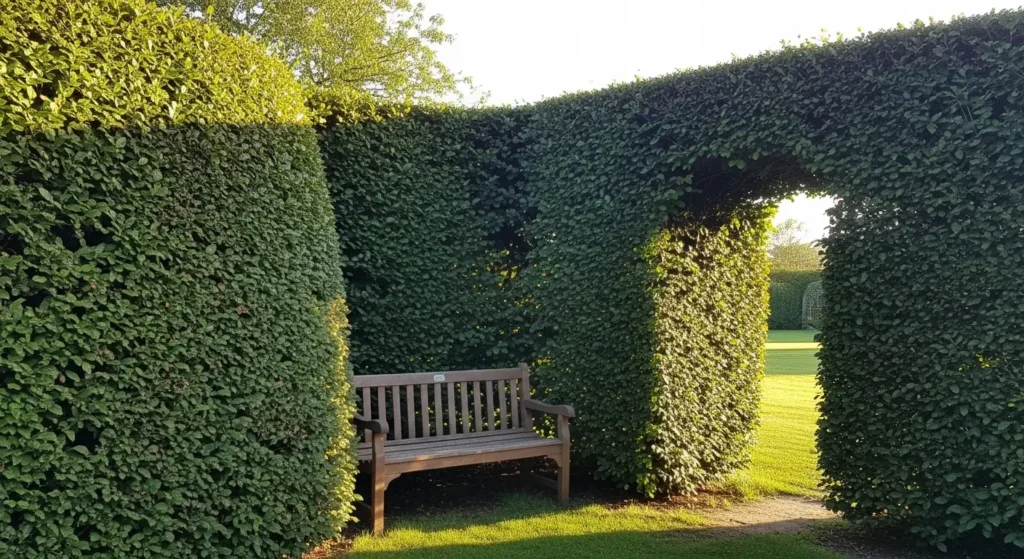
A hedged alcove is a garden nook that is grown rather than built — three sides of dense clipped hedging enclosing a single seat with the fourth side open to a garden view. The hedged alcove is one of the oldest garden nook forms and one of the most effective because the living walls of a hedge create a quality of enclosure that timber, stone, and fencing cannot replicate: they breathe, they absorb sound, and they release the specific vegetative smell of warm clipped green that is one of the most distinctly garden sensory experiences available.
The hedging species that create the best alcove walls: yew (Taxus baccata) for the darkest, densest, most soundproof living wall with the slowest growth requirement for maintenance. Hornbeam for a lighter more feathery texture that lets more sound and light through the wall. Beech for the additional quality of retaining its copper-brown dead leaves through winter — a beech alcove has a different sensory character in January than a bare deciduous alternative.
The alcove requires a minimum of 5 to 7 years to develop from planted hedging to an effective enclosing space. This timeline is the commitment that most people avoid and the reason that grown nooks are rarer and more valued than built ones. Plant the hedging now. The nook that emerges in 7 years is worth every season of anticipation.
PRO TIP: Position the open face of a hedged alcove seat to face the most distant view available in the garden rather than toward the house. A seat that faces the house makes you feel observed. A seat that faces outward across the garden gives you the sense of surveying the space — a fundamentally different psychological experience that makes the nook genuinely restorative rather than simply enclosed.
2. The Reading Lean-To: A Simple Timber Frame That Becomes a Garden Room
✦ The Reading Lean-To
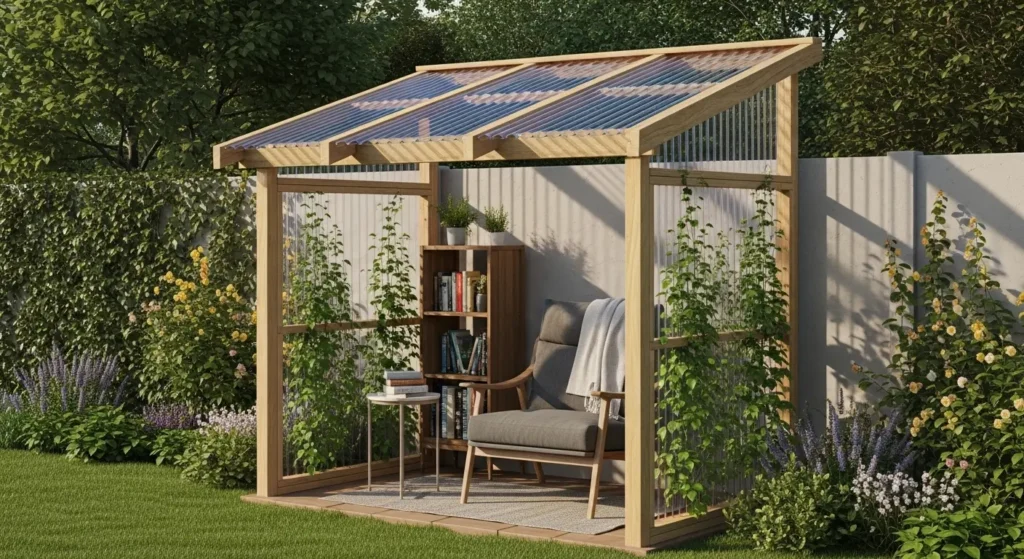
A reading lean-to is the garden nook that extends the usable season most significantly. A simple timber frame lean-to with a clear polycarbonate roof panel provides full weather protection from rain and wind while maintaining the light quality of an outdoor space. In light rain a lean-to reading nook is genuinely pleasant — the sound of rain on the polycarbonate roof creates the exactly right backdrop for reading.
The construction is straightforward: four upright posts, two side rails, one back rail at roof height, and a single polycarbonate or clear corrugated plastic roof panel at a 15-degree slope for rain run-off. The sides and back are left open to climbing plants trained up wire or timber battens. The front face is left completely open. Total material cost: $60 to $120 depending on timber quality and panel size.
The lean-to nook is the only garden structure that functions as both outdoor and indoor space simultaneously — inside it during rain you are sheltered but still hearing the garden, still smelling the wet soil and plants, still feeling the cool air. The psychological effect of this in-between quality is specifically restorative in a way that being completely inside or completely exposed cannot replicate.
PRO TIP: Install two or three narrow shelves on the back wall of a reading lean-to for books, a small plant, a candle, and a waterproof storage box for cushions. The shelves transform the lean-to from a chair under a roof into a complete outdoor room with its own domestic detail. The small scale of the shelving suits the intimate scale of the nook and creates the furnished quality that makes the space feel genuinely used.
3. The Living Willow Dome: A Garden Nook Built From Living Material That Grows Into Itself
✦ The Willow Dome
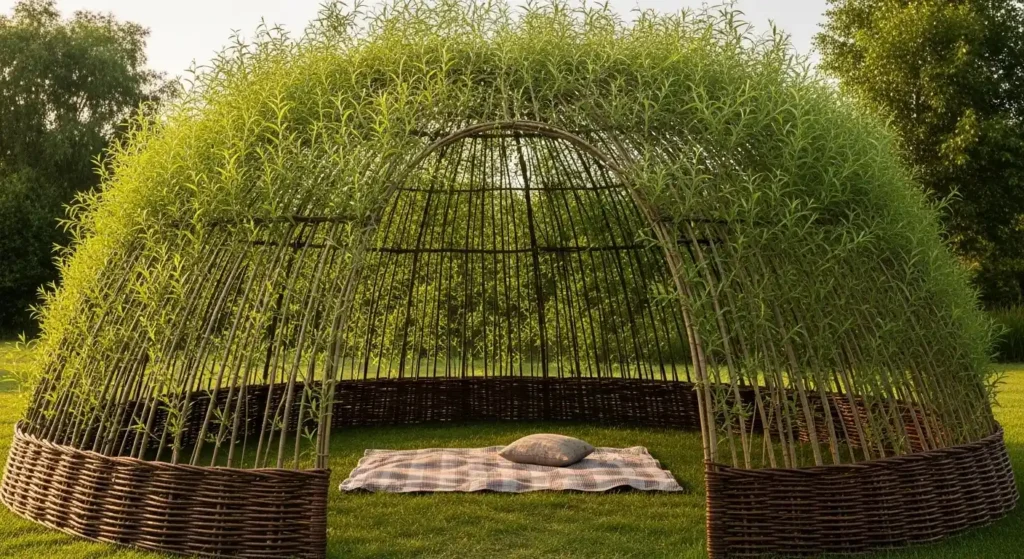
A living willow dome is a garden nook built from living material — willow rods planted in a circle and woven upward to form a complete dome overhead. Unlike any other garden nook structure the willow dome is never finished: it grows, leafs out each spring, requires annual weaving to maintain its form, and becomes more beautiful and more solid each successive season as the living rods fuse at their crossing points.
Construction: mark a circle of 6 to 8 feet diameter. Plant willow rods (whips) at 18-inch intervals around the perimeter in late winter while dormant. Lean alternating rods inward from opposite sides of the circle and weave them together overhead. The woven crossing points are bound with garden wire or flexible willow strips. Leave a gap of 24 to 30 inches as the entrance.
By the first summer the willow dome is leafed out and partially shaded inside. By the third summer it is a genuine enclosed living space with a thick woven wall and a green ceiling that filters afternoon light into the most restful and most magical quality available in a garden. Source willow rods from willow suppliers or online at $15 to $30 for a complete dome planting quantity.
PRO TIP: Weave the willow dome in late winter or early spring while the rods are still completely dormant and flexible. Willow in leaf is significantly less pliable and the overhead weaving is dramatically more difficult once the rods have leafed out. The dormant weaving window from January to March is the annual maintenance opportunity to reshape, reinforce, and extend the dome structure.
4. A Fragrance-First Nook Designed to Engage Smell Before Sight
✦ The Sensory Fragrance Corner
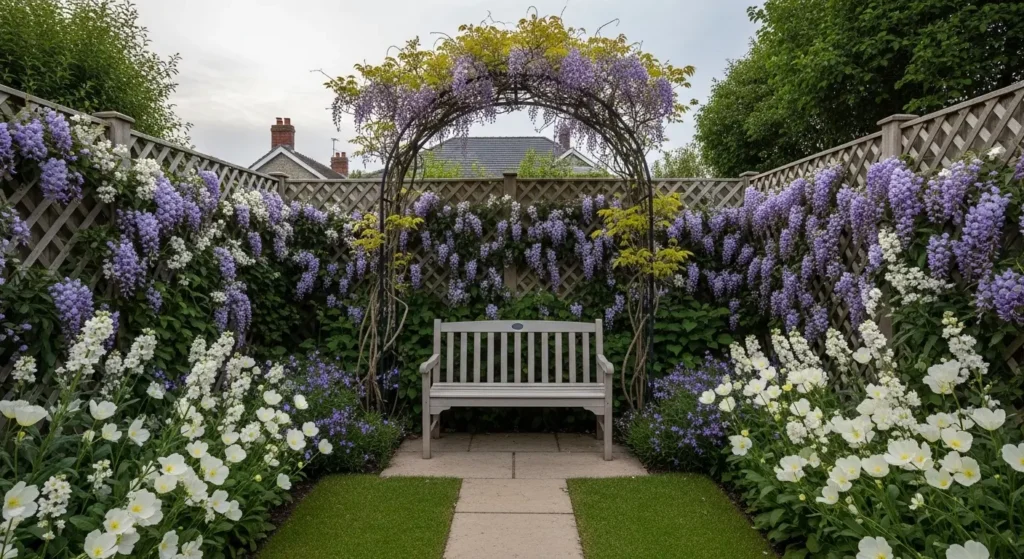
A fragrance-first garden nook reverses the usual design priority — instead of choosing a place that looks beautiful and adding plants, this nook is positioned specifically where the greatest number of fragrant plants can be concentrated within nose range of a single seat. The visual result is secondary. The olfactory experience is the point.
The fragrant plant selection that creates the most complete sensory sequence through the day: morning fragrance from honeysuckle and roses that release their scent in morning warmth. Afternoon fragrance from lavender and rosemary that intensify in midday heat. Evening fragrance from night-scented stocks, tobacco plants, and evening primrose that release only after sunset — specifically evolved to attract night-flying moths and creating the garden’s most intensely fragrant evening experience.
The VOOKRY Solar Watering Can Light positioned within the fragrance nook creates the visual focal point at dusk when the evening-fragrant plants release their most intense scent — the fairy light feature and the night fragrance together create a complete sensory experience that makes the nook genuinely unlike any other position in the garden after dark. Find it linked on Amazon.
PRO TIP: Plant night-fragrant plants in pots rather than in the ground around a fragrance nook. Potted night-scented stocks and tobacco plants can be moved into the nook for the weeks they are in peak fragrance and moved elsewhere when the season ends. This rotation approach concentrates fragrance at the seat during the best weeks of each plant’s season and removes them when they are no longer contributing at their peak.
5. A Low Garden Platform Between Two Trees Creates a Nook at Canopy Level
✦ The Treehouse Platform
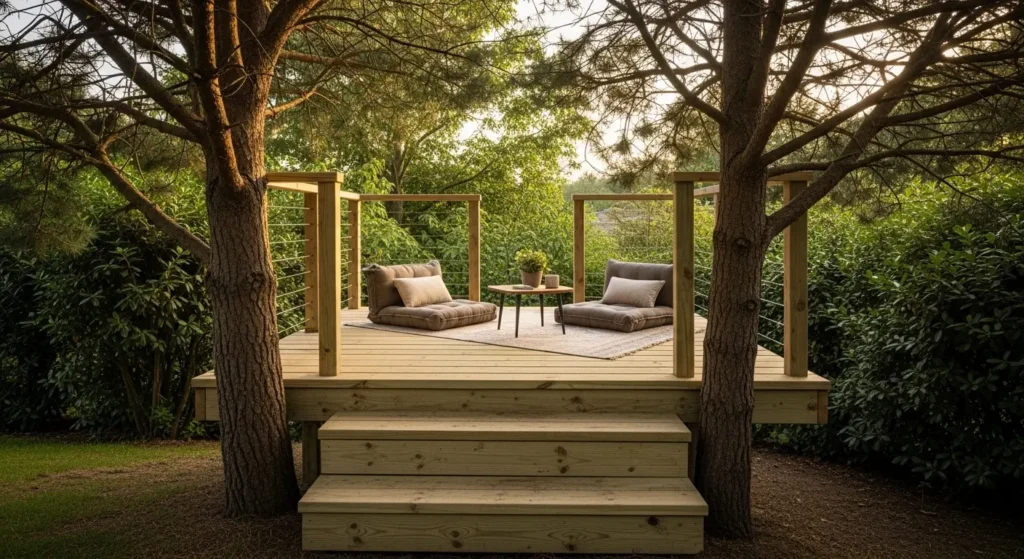
A low garden platform built between two trees creates a nook at a height that completely changes the relationship between sitter and garden. Four feet of elevation is enough to lift the sitter above the herbaceous border level, shift the garden sightline from looking across to looking down into planting, and create the gentle swaying sensation of elevated outdoor position that is specifically different from being on the ground.
The platform construction: two parallel beams fixed to each tree using specialist tree fixing bolts that allow for tree movement and growth without damaging the tree cambium layer. Decking boards across the beams. A simple low railing on two or three sides. Three broad shallow steps from the ground. The construction requires no specialist skills beyond basic carpentry and the correct tree fixing method — standard screws or bolts driven directly into tree timber cause long-term tree damage and should never be used.
A platform nook used with floor cushions rather than chairs creates a specific quality of restfulness that elevated seat furniture cannot achieve — the low centre of gravity and the physical closeness to the platform surface create a nest quality rather than a viewing platform quality. The same elevated position feels completely different when you are lying on it rather than sitting on it.
6. A Corner of the Greenhouse Turned Into a Winter Garden Nook
✦ The Greenhouse Corner Retreat
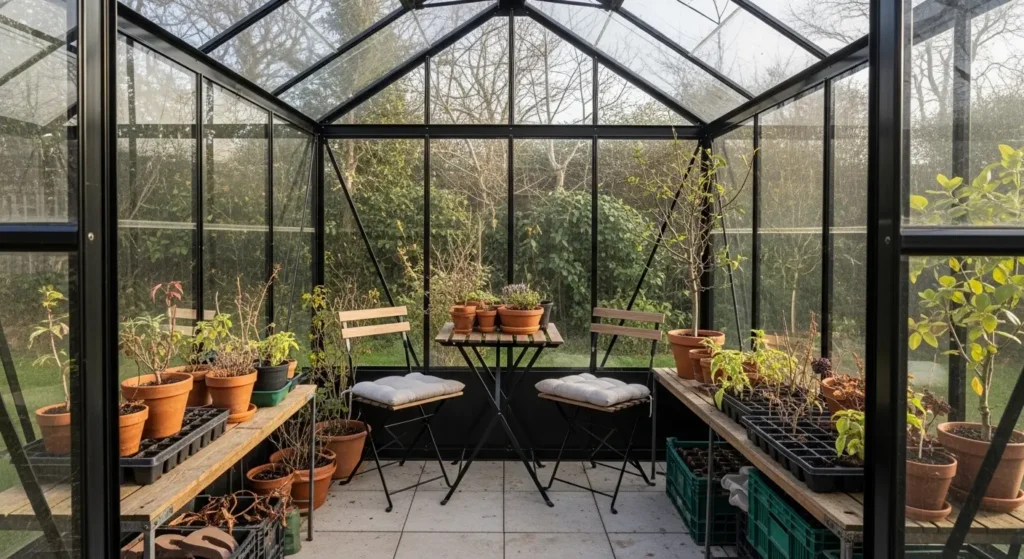
A corner of a garden greenhouse converted into a sitting area creates the one garden nook that is genuinely usable on cold winter days — a glass-enclosed warm space surrounded by overwintering plants that provides the garden sensory environment in February when every outdoor nook is too cold for comfortable use.
The greenhouse corner nook requires only a small bistro table and two folding chairs positioned among the overwintering plants and seedling trays. The warmth of a sunny winter morning in a glass greenhouse — the temperature rising 15 to 20 degrees above outside air temperature within an hour of sunrise — creates an environment that is simultaneously garden and shelter. The smell of warm compost, the visible growth of overwintering plants, and the sound of rain on glass create one of the most specifically garden sensory experiences available in winter.
The greenhouse nook is the garden space that most rewards the winter months when outdoor spaces are unused. A garden with a greenhouse sitting corner has a year-round destination rather than an outdoor space that closes in October and reopens in April.
PRO TIP: Position the greenhouse sitting corner on the south or southwest side of the greenhouse interior where it receives maximum morning and afternoon sun through the glass panels. The temperature differential between a sun-facing greenhouse corner and a north-facing corner on a January morning can be 8 to 10 degrees — the difference between a comfortable and an uncomfortable sitting environment.
7. A Sound-Designed Garden Nook Built Around Water, Wind, and Birdsong
✦ The Sound Garden Nook
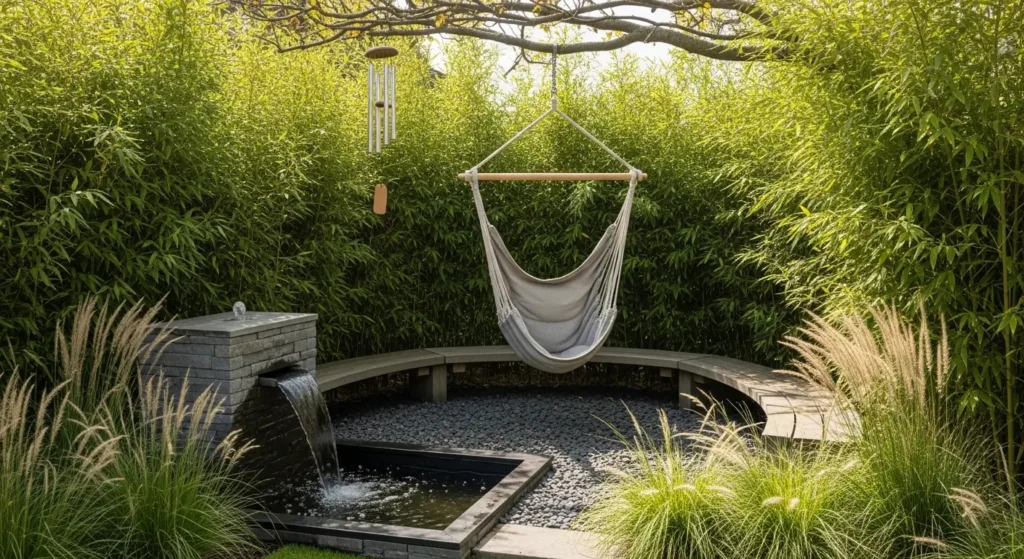
A sound-designed garden nook uses the specific acoustic quality of outdoor materials to create a space defined by what you hear as much as what you see. Most garden design ignores sound entirely — the sound-designed nook makes it the primary design intention.
The sound palette for a garden nook: water for the most consistent and most reliably calming sound layer — a small solar pump in a ceramic vessel creates gentle flowing water sound audible from 6 feet in any direction. Bamboo for the hollow percussive clacking that wind creates through culms — even a single bamboo clump in a container beside the nook provides this sound on any day with air movement. Ornamental grasses for the dry paper-soft rustling of wind through seed heads from midsummer onward. Wind chimes calibrated to a pentatonic scale for the harmonic tones that pentatonic tuning makes impossible to sound discordant.
The specific combination of water sound and bamboo movement creates the sensory environment most closely referenced by the Japanese garden tradition — the two sounds together create a layered acoustic environment that achieves the specific restorative quality that neuroscience researchers describe as involuntary attention restoration: the mind stops working and starts simply receiving.
PRO TIP: Position the water sound source closer to the seating than the wind sound sources. Water at 3 feet creates the primary foreground sound layer. Bamboo and grasses at 6 to 10 feet create the secondary mid-range layer. Distant birdsong in the wider garden creates the tertiary background layer. The depth of field created by these three sound distances creates an acoustic environment with the spatial richness that a single sound source cannot achieve.
8. An Espalier-Walled Nook Uses Trained Fruit Trees as Living Architecture
✦ The Espalier-Walled Alcove
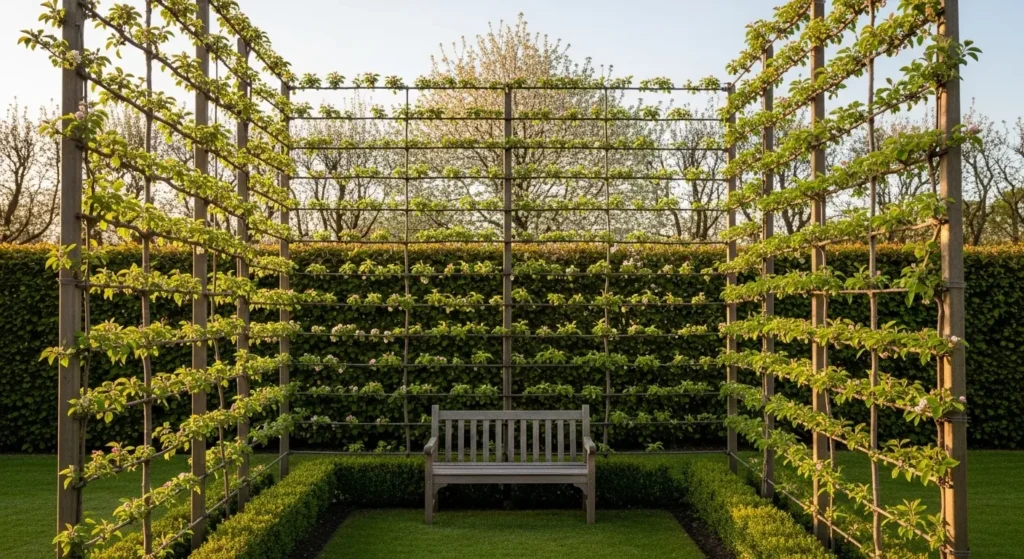
An espalier-walled nook uses trained fruit trees as the living architecture of an enclosed garden seat. Espalier — the technique of training tree branches in flat horizontal tiers on a wire frame — creates a living wall of extraordinary visual structure and seasonal change: bare geometric branch patterns in winter, white or pink blossom in spring, developing fruit through summer, harvest color in autumn.
The espalier frame construction: steel horizontal wires stretched between wooden or metal posts at 18-inch vertical intervals from 18 inches above ground to 6 feet. Young apple or pear trees planted at 6 to 8-foot intervals along the wire frame. The leading vertical shoot trained upward. Lateral shoots tied horizontally to each wire tier as they develop. Within 4 to 6 years the horizontal tiers fill the wire frame with a complete flat living wall.
The espalier nook produces food alongside beauty — each trained fruit tree produces full fruit yields despite its flat trained form. A three-sided espalier nook of three apple trees at 6-foot spacing produces 20 to 40 pounds of apples per season while providing the most structurally and seasonally interesting living enclosure available in a domestic garden.
PRO TIP: Choose self-fertile apple or pear varieties for an espalier nook to eliminate the requirement for a separate pollinator variety nearby. Self-fertile varieties including Braeburn, Cox’s Orange Pippin, and Conference pear all produce reliable yields without cross-pollination — simplifying the planting requirement for a three-sided espalier nook where space for additional pollinator trees may be limited.
9. A White-Planted Moonlight Nook That Comes Alive After Dark
✦ The Moonlight Garden Nook
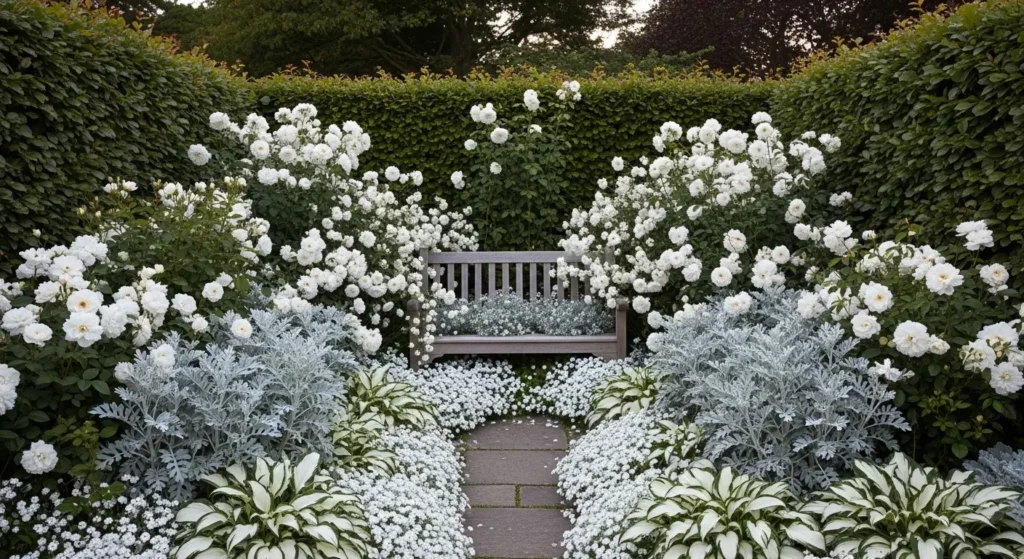
A moonlight garden nook uses white-flowering and silver-foliage plants to create a space that is unremarkable in daylight and genuinely magical after dark. White flowers and silver foliage reflect every available light source — moonlight, starlight, and low artificial light — creating a luminosity after sunset that colored plantings cannot produce.
The white and silver plant palette for a moonlight nook: white roses for height and fragrance. White nicotiana (tobacco plant) for evening fragrance and white trumpet flowers that glow in low light. Silver artemisia for the brightest foliage reflectance of any garden plant. White-variegated hostas for ground-level luminosity. White cosmos for airy movement at mid-height. The combination of different heights and different white tones — pure white, cream, and silver-white — creates depth within the restricted palette.
The Brightown Solar Mushroom Lights scattered at ground level within the moonlight nook add the low amber ground light that activates the white planting from below at dusk — the combination of warm amber ground light and white flower luminosity in low evening light creates the specific magical quality that moonlight gardens have been designed for since the Mughal garden tradition developed the concept centuries ago. Find them linked on Amazon.
PRO TIP: Include one strongly fragrant white plant in a moonlight nook specifically for the evening-enhanced scent experience. Nicotiana, white roses, and jasmine all release more fragrance in warm evening air than during the day. The combination of white luminosity and evening fragrance creates a complete night sensory experience that makes the moonlight nook a completely different space after 9pm than it is at noon.
10. A Borrowed Landscape Nook Uses What Is Beyond the Garden as the Primary Feature
✦ The Borrowed Landscape Nook
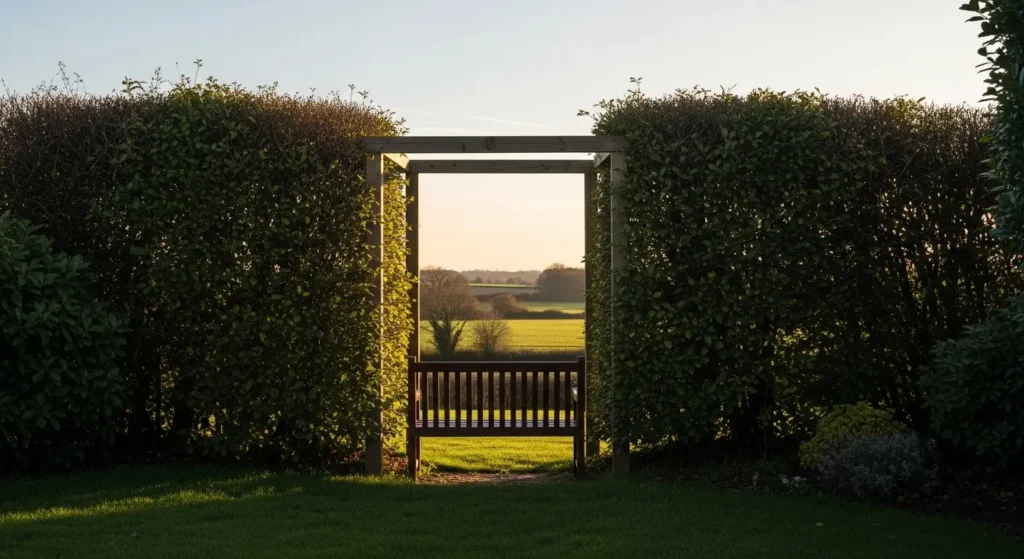
A borrowed landscape nook uses the Japanese garden design concept of shakkei — borrowed scenery — to create a garden nook whose primary feature is outside the garden entirely. Rather than enclosing the seat within the garden the borrowed landscape nook positions it at the garden boundary where a deliberate opening frames an external view: fields beyond the fence, a distant tree, a church spire, open sky above a low wall, or a neighbor’s mature tree canopy.
The design requires one specific action: identifying the most beautiful view available from any point on the garden boundary and then creating a seat position that frames and focuses that view deliberately. The garden planting around the seat is the supporting context for the borrowed view rather than the feature itself. Dense planting on three sides narrows the field of vision and concentrates attention on the framed opening and the view beyond it.
The borrowed landscape nook is the most spatially generous of all garden nook concepts because its primary feature is effectively infinite — the view extends as far as the landscape allows. A garden of any size can contain a borrowed landscape nook provided a worthwhile external view exists at some point on the boundary. The humblest garden with a gap in its hedge looking across open fields contains a potentially extraordinary borrowed landscape nook that no amount of internal garden features can match.
PRO TIP: Frame the borrowed view opening with two vertical plant elements on each side — a clipped yew column, a narrow fastigiate tree, or two substantial posts with climbing plants — that act as visual brackets for the external view. The framing elements direct the eye to the opening and give the borrowed view the quality of a composed picture rather than a gap in the boundary. The frame is what makes the external view feel deliberately chosen rather than accidentally visible.
The Psychology of Why Garden Nooks Work
Environmental psychology research on restorative environments identifies two consistent qualities in spaces that produce genuine mental restoration: being away — the sense of separation from ordinary demands — and fascination — mild effortless engagement that occupies attention without demanding it.
Garden nooks produce both simultaneously. The enclosure of a nook creates being away from the visible world of obligation. The gentle sensory detail of a garden — birdsong, plant movement, fragrance, water sound — creates the fascination that holds attention without requiring active thought. The combination is specifically restorative in a way that neither indoor rest nor open outdoor space produces with the same consistency.
Every garden nook idea in this guide creates these two conditions through different means. The borrowed landscape nook creates being away through framing. The sound nook creates fascination through acoustic layering. The fragrance nook creates fascination through olfactory engagement. The hedged alcove creates being away through living enclosure. Different routes to the same restorative destination.
📌 More outdoor and garden inspiration → 7 Outdoor Living Space Ideas For Summer
Frequently Asked Questions
What makes a good garden nook?
A good garden nook requires three qualities: enclosure on at least two sides to create the sense of being sheltered rather than exposed, a single focused seating position rather than multiple seats that create a social space rather than a retreat, and at least one sensory detail beyond the visual — fragrance, water sound, plant texture, or wind movement — that holds attention gently. According to research published in the Journal of Environmental Psychology enclosed garden spaces with natural sensory stimulation consistently produce the highest levels of stress reduction and attentional restoration of any domestic environment tested.
How do I create a cozy garden nook on a budget?
The most budget-effective garden nooks use existing garden features as the enclosure rather than building new structures. A corner between two fence boundaries needs only a single comfortable chair and a few pot plants to become a nook — the existing fences provide enclosure. A position beside a garden shed needs only a chair positioned facing away from the shed to use the shed wall as a nook back wall. The reading lean-to described in this guide costs $60 to $120 in materials and creates a fully weatherproof garden nook. The living willow dome costs under $30 in willow rods and creates a growing nook that improves every year.
What plants are best for a garden nook?
The best plants for a garden nook serve the specific sensory intention of the nook. For a fragrance nook: lavender, roses, jasmine, night-scented stocks, and honeysuckle. For a sound nook: bamboo, ornamental grasses, and water plants around a small feature. For a visual nook: plants with movement — ornamental grasses, tall perennials, and climbers that respond to air movement. For a wildlife nook: berry-bearing shrubs, seed-producing perennials, and insect-attracting flowers that create bird and butterfly activity as the nook’s living entertainment.
A Garden Nook Is the One Space That Belongs Entirely to You
Every other area of a garden has a function that serves someone or something else — the lawn for children, the vegetable garden for food, the borders for pollinators, the patio for gatherings. A garden nook serves one person for one purpose: restoration. It is the only deliberately purposeless space in the garden, which is precisely what makes it the most purposeful.
Choose the nook type that matches what your garden already has — an existing corner, a boundary view, two garden trees, a greenhouse corner — and build from what is already there. The best nooks are discoveries rather than installations.
All the products mentioned in this article are linked on Amazon. Every recommendation is something we genuinely believe in.
More Outdoor and Garden Ideas
→ 12 Cozy Boho Patio Ideas To Copy
→ 25 Stunning Back Porch Patio Ideas
→ 7 Small Backyard Pond Ideas You’ll Love
→ 12 Dog-Friendly Backyard Ideas For Active Pets
The best nooks are discoveries rather than installations. Choose the type that matches what your garden already has and build from there.

Sheikh Hassaan is a digital architect for small businesses and the founder of The Glow Up System. He writes about home decor, garden design, and outdoor living for real American homes – practical ideas that work in actual spaces without oversized budgets.