
The first time I sat in a properly styled boho patio I did not immediately identify why it felt different from every other patio I had sat in. It was not more spacious. It was not more expensive. It was warmer — texturally warmer, the rattan and the layered rugs and the terracotta pots all communicating the same earthy temperature.
Cozy boho patio ideas work because the materials do the atmosphere work before any styling decision is made. Rattan, macrame, floor cushions, layered rugs, warm lantern light, abundant plants. Every element serves a comfort function first. The visual beauty is what happens when those comfort functions combine.
These 12 ideas cover the full spectrum from a single layered rug to a complete tropical boho terrace. Each one adds a specific layer to the aesthetic. Start wherever you are and build from there.
Table of Contents
1. Layer Two Rugs With Contrasting Patterns for the Signature Boho Floor
✦ Layered Outdoor Rugs
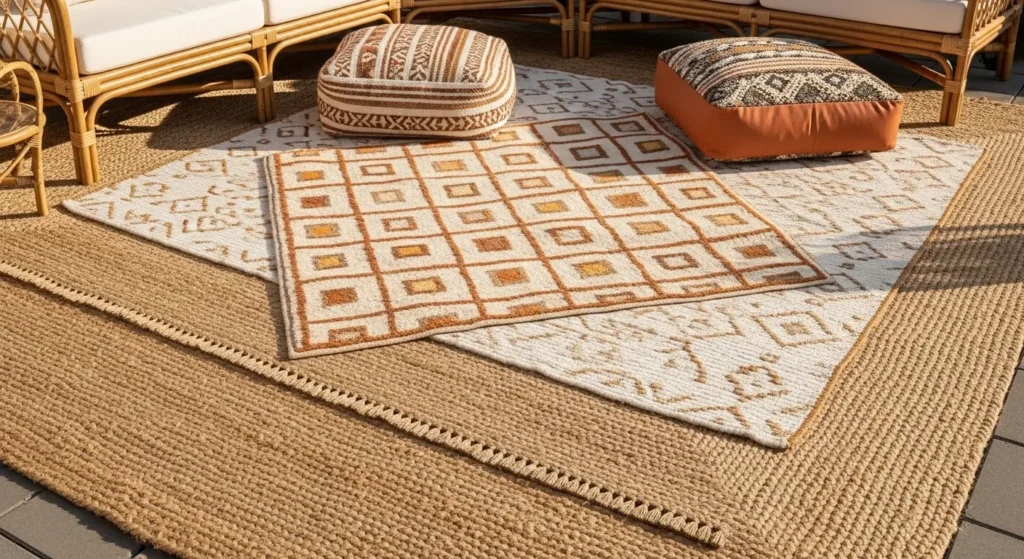
The layered rug is the single most recognizable boho design signature. It appears in virtually every boho patio that gets saved on Pinterest and the reason is that it does something no single rug can — it creates visual depth at floor level before any furniture is added, making the outdoor floor look like a designed surface rather than a functional one.
The formula that works consistently: a large natural fiber base rug in jute, sisal, or a flat-weave neutral as the foundation. On top a smaller Moroccan-style, geometric, or kilim-pattern rug in warm tones — terracotta, rust, sand, cream — positioned slightly off-center or at a gentle angle. The slight angle is important. A centered, perfectly aligned top rug looks placed. An angled top rug looks styled.
PRO TIP: The top rug should be roughly half the size of the base rug for the layering effect to read correctly. If the two rugs are too similar in size the layering disappears and they simply look like two rugs in the same space. The size contrast is what creates the intentional layered aesthetic.
2. Choose Rattan as the Primary Seating Material for Authentic Boho Structure
✦ Rattan Lounge Seating
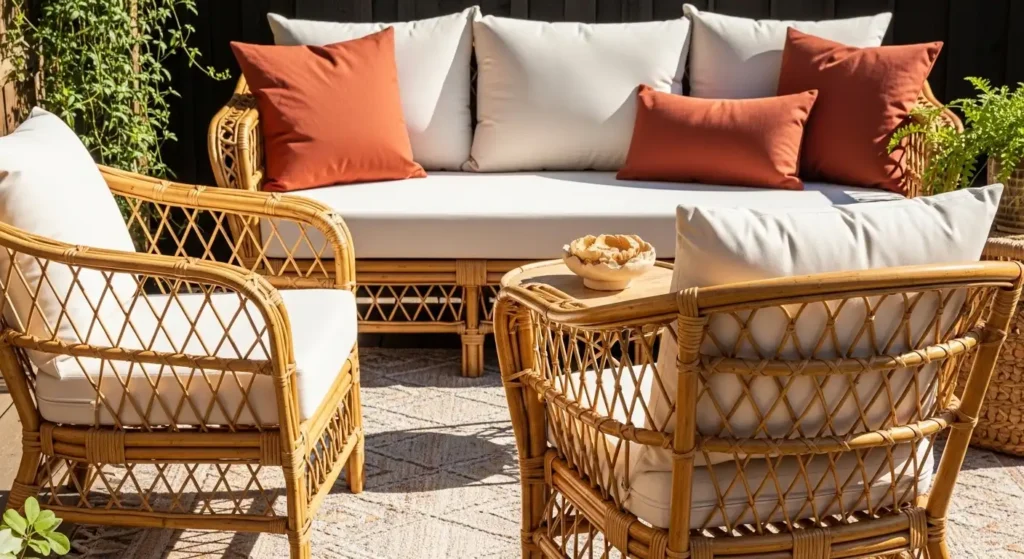
Rattan is the structural material that defines boho seating. Not just aesthetically — functionally. The woven construction creates a visual texture that cannot be replicated in metal, plastic, or wood. The organic variation in the weave means no two pieces are identical. The warm honey-brown tone of natural rattan works with every boho color palette from neutral cream to deep terracotta.
The distinction worth understanding: natural rattan and synthetic wicker rattan (polyethylene) look different at close range. Natural rattan has variation in color and texture across the surface. Synthetic wicker is uniform. For outdoor use synthetic wicker rattan is the practical choice — it handles weather, UV, and moisture without deteriorating. The best synthetic outdoor rattan is indistinguishable from natural rattan in photographs and at conversational distance.
Boho rattan lounge seating works best when cushions are thick — at least 4 inches — and in neutral tones. The rattan frame is the design statement. The cushions should support the frame rather than compete with it. Cream, warm white, natural linen, and soft terracotta all serve rattan well. Pattern is acceptable on accent cushions but the main seat and back cushions work better in solids.
3. Hang a Large Macrame Piece as the Patio’s Defining Boho Statement
✦ Macrame Wall Hanging
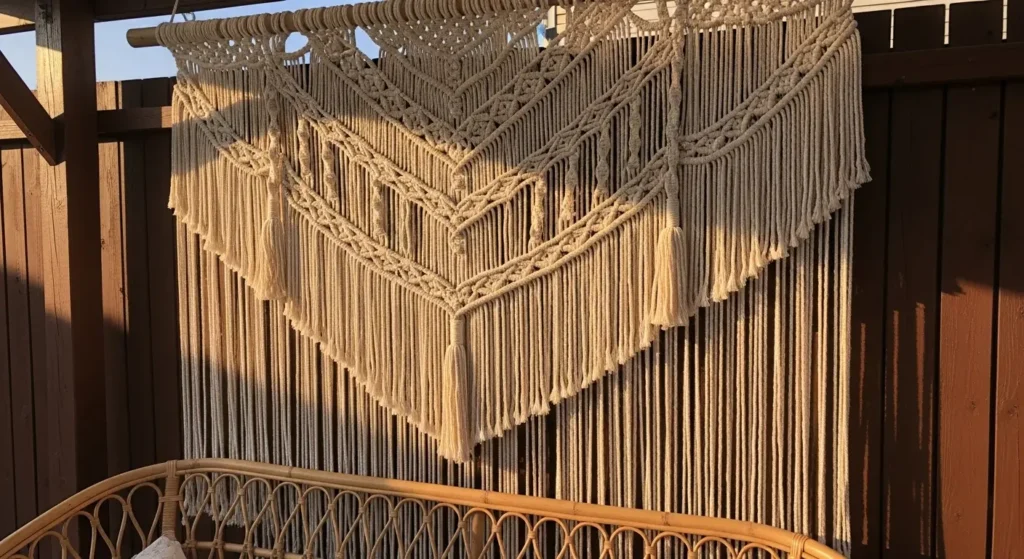
Macrame is the craft element that signals boho most clearly to any viewer. A large handmade macrame wall hanging on a fence or patio wall does what no other decorative piece achieves — it adds textile quality, handcraft presence, and significant visual scale to a vertical surface simultaneously.
The sizing principle for boho macrame: bigger is more effective than smaller. A small macrame piece on a large fence looks like an afterthought. A macrame piece that covers one third or more of the fence width reads as a deliberate statement. The visual weight of large macrame anchors the outdoor space in a way that smaller decorative objects cannot.
For outdoor placement choose macrame made from outdoor-rated or treated cotton cord. Natural untreated cotton deteriorates in damp and UV. Many outdoor macrame pieces use UV-resistant synthetic cord that matches the appearance of natural cotton while handling weather exposure correctly. Alternatively protect a natural macrame piece by positioning it under pergola cover where it receives no direct rain.
The macrame wall hanging works best positioned directly behind the primary seating so it frames the view from the approach to the patio. A guest arriving at the patio sees the macrame as the backdrop to the seating and the whole patio reads as designed from a single glance.
PRO TIP: Hang macrame on a visible wooden dowel or driftwood branch rather than hidden hooks. The hanging method is part of the display. A macrame piece hanging from a beautiful piece of driftwood adds another natural material layer and makes the installation look artisan rather than retail.
4. Build a Floor Cushion Corner That Invites People to Sit Lower and Stay Longer
✦ Floor Cushion Corner
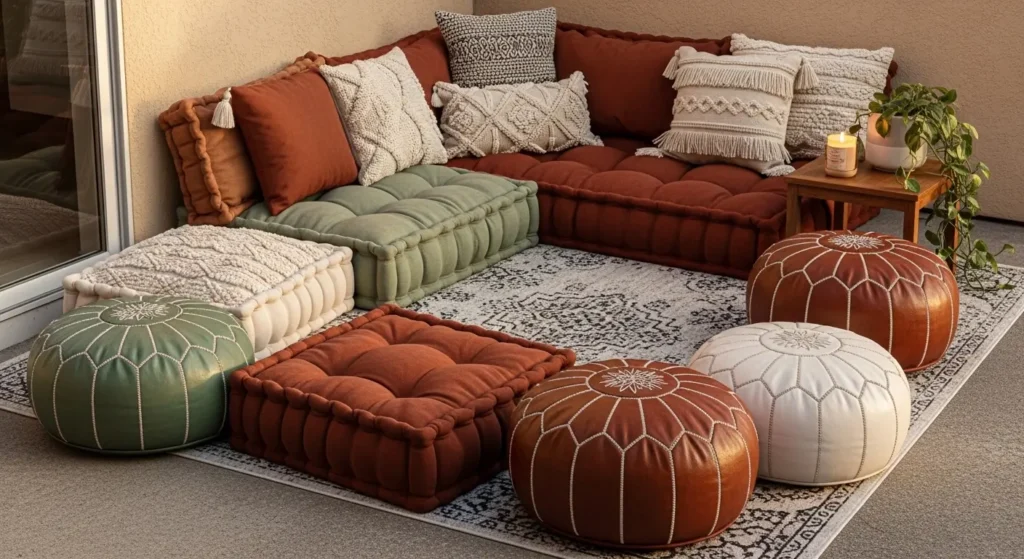
Floor seating is the boho gesture that changes the social dynamic of an outdoor space most fundamentally. When people sit at floor level they lean in rather than back, conversations become more intimate, and the threshold for staying longer drops significantly. There is a reason every relaxed gathering gravitates toward floor cushions when they are available.
A boho floor cushion corner requires three components. Large floor cushions or meditation cushions as the primary seating — at least 24 by 24 inches and 4 to 6 inches thick for genuine comfort. Poufs as the flexible secondary seating and footrests that can be repositioned freely. A low side table — no more than 12 inches high — for drinks and candles at the correct height for floor-level sitting.
The corner position provides the back and side support that makes floor sitting sustainable for more than twenty minutes. Without a corner behind them floor cushions in the middle of a patio feel exposed and people drift back to chairs. A corner behind the cushions creates the nest quality that makes floor seating genuinely comfortable rather than aspirationally comfortable.
PRO TIP: Add one large floor cushion in a distinctly different fabric from the others — a suzani embroidered cushion, a kilim-patterned floor cushion, or a Moroccan-style floor pillow. One distinctive piece makes the whole floor cushion collection look curated rather than purchased as a matching set. Boho interiors are defined by the sense of things gathered over time rather than selected simultaneously.
5. Install a Hanging Chair as the Boho Patio’s Most Coveted Seat
✦ Hanging Chair Nook
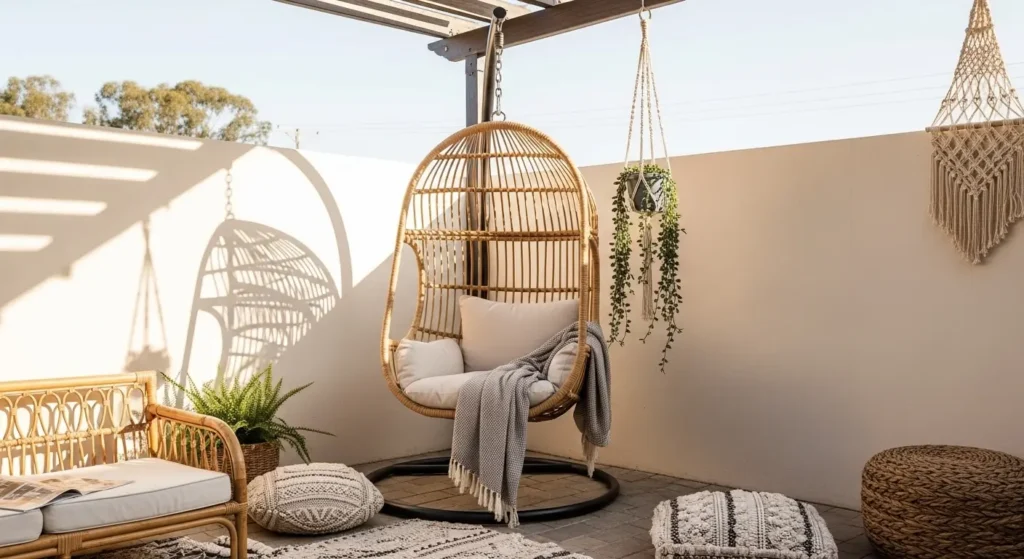
A hanging chair is the most desired seat in any boho patio and the one that creates the most social dynamic. In a patio with both standard seating and a hanging chair every new arrival gravitates toward the hanging chair. It becomes the focal point of the outdoor room not through design positioning but through the simple fact that swinging gently in a suspended rattan or macrame chair is a genuinely pleasurable experience.
The installation requirement is the key consideration: the hanging point must be rated for at least 300 pounds dynamic load — significantly more than a static 300-pound rating because a swinging load creates peak forces well above the sitter’s body weight. For a pergola beam installation this means confirming the beam dimensions and mounting hardware specifications before hanging. A dedicated freestanding hanging chair stand eliminates the structural question entirely and allows repositioning.
The styling around the hanging chair is as important as the chair itself. A small side table at the correct height for the seated position in the hanging chair. A trailing plant hanging nearby that the chair occupant can touch. A throw draped over one side for evenings when temperatures drop. These details communicate that the chair is genuinely used and cared for rather than positioned as a decorative statement.
6. Use Driftwood, Raw Timber, and Unfinished Wood as Deliberate Accents
✦ Natural Wood Accents
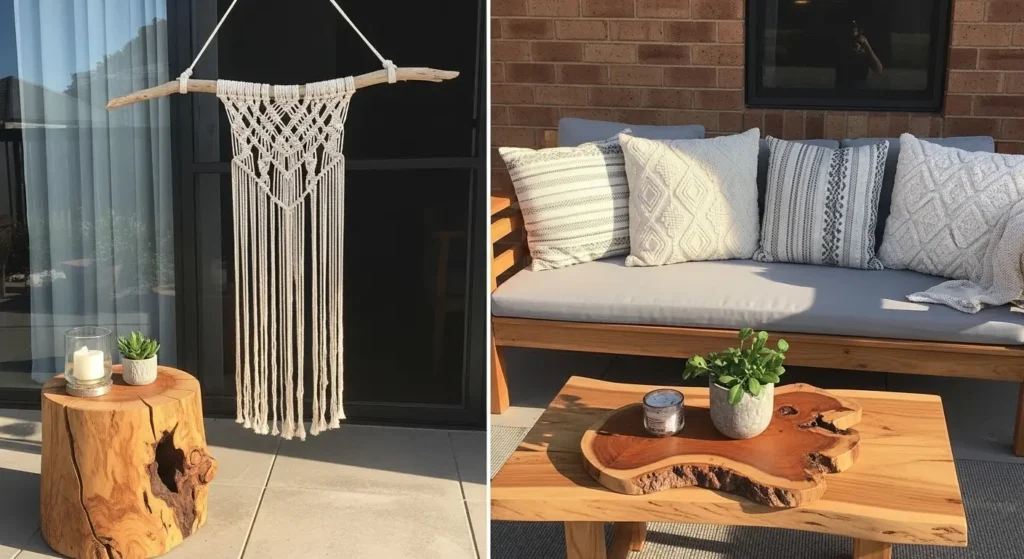
The wood accents in a boho patio are most effective when they are visibly natural — unfinished, lightly treated, or deliberately textured. Sanded and lacquered timber reads as furniture. Raw-edge timber, driftwood, and lightly oiled natural wood read as material — as elements of the natural world brought into the designed space rather than manufactured objects placed in it.
The three most impactful natural wood accent uses in a boho patio: a driftwood branch as the hanging rod for macrame or as a decorative sculptural element on a low table. A natural timber slice or live-edge board as a side table surface on a simple base. Small pieces of raw wood — offcuts, branches, pieces of bark — grouped on a tray as part of a styled table vignette alongside candles, stones, and small plants.
The distinction between wood as furniture and wood as accent is intentionality and scale. A full timber side table is furniture. A driftwood branch propped against a fence is an accent. The smaller, more raw, and more obviously natural the wood element the more effectively it reads as a boho accent rather than a functional object.
PRO TIP: Seal natural driftwood and raw timber accents with a clear exterior matte varnish before placing outdoors. The varnish protects against moisture and UV without changing the natural appearance. Raw unsealed wood left outdoors greys quickly and may split — sealed wood maintains its natural color and texture through multiple seasons.
7. Build a Boho Greenery Cluster With Plants That Have Natural, Unmanicured Forms
✦ Potted Greenery Cluster
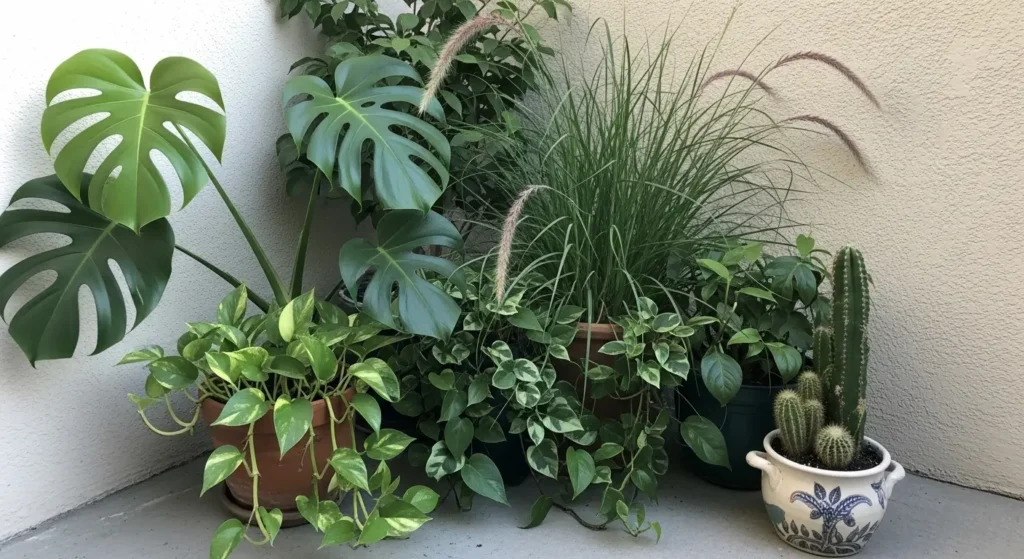
Boho plant selections differ from standard patio plant choices in one important way: boho plants should look like they are growing rather than being maintained. Neatly clipped box balls, formal standard plants, and tightly pruned topiary are the opposite of boho. Monstera with leaves extending in multiple directions, ornamental grasses that arch freely, trailing pothos that grows wherever it chooses, and cacti with their own structural confidence — these are the plant characters that make a boho greenery cluster feel genuinely alive.
The container choice reinforces this. Boho pots are handmade ceramics, aged terracotta, woven baskets, or rough-textured vessels. Smooth glazed commercial pots, plastic nursery containers, and uniform manufactured planters all undermine the handcrafted organic quality that boho planting should convey.
For the specific plant varieties and container combinations that create the most authentic boho planting display see our boho garden ideas guide which covers the full boho garden approach including plant selection and natural container pairing.
PRO TIP: Place one or two empty handmade ceramic pots within the plant cluster with no plant in them — just the pot. The negative space created by an empty beautiful pot makes the whole cluster look more deliberately styled and creates a visual breathing room that an entirely full cluster of plants cannot achieve.
8. Restrict the Color Palette to Earth Tones for Effortless Boho Cohesion
✦ Neutral Earth Tone Palette
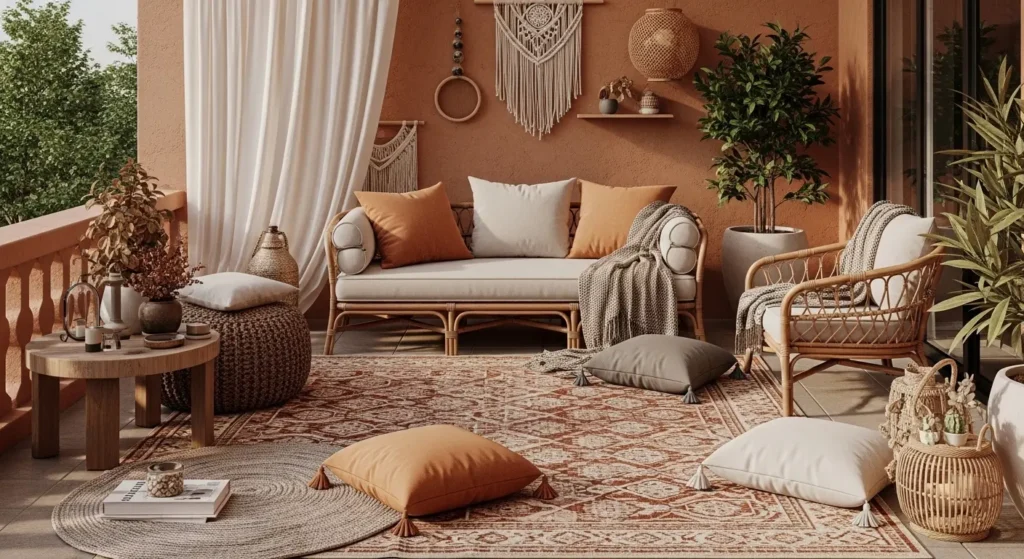
The boho patio aesthetic is defined more by its color palette than by any individual element. Rattan seating, macrame, and floor cushions all exist in non-boho contexts. The combination of those elements in an earth tone palette is what creates boho specifically.
The boho earth tone palette consists of: terracotta and rust as the warm orange-red anchor. Sand and cream as the neutral base. Warm grey and taupe as the cooler neutrals. Olive and sage as the green element. Warm brown and natural timber tones as the wood element. Every object on a boho patio should be selectable from this palette.
What the boho palette excludes is as important as what it includes. Bright primary colors break the palette entirely. Cool whites and stark bright whites create the wrong tone — off-white, cream, and warm white work. Cool blues and bright greens compete with the warmth. Navy works because it reads dark and deep rather than bright and cool in the context of warm earth tones around it.
The discipline of the palette is the work. Once the palette is committed to, individual purchasing decisions become easy — the question is not whether a piece is beautiful but whether it belongs in the palette.
9. Create a Boho Outdoor Dining Setup With Low Seating and Textured Linens
✦ Boho Dining Setup
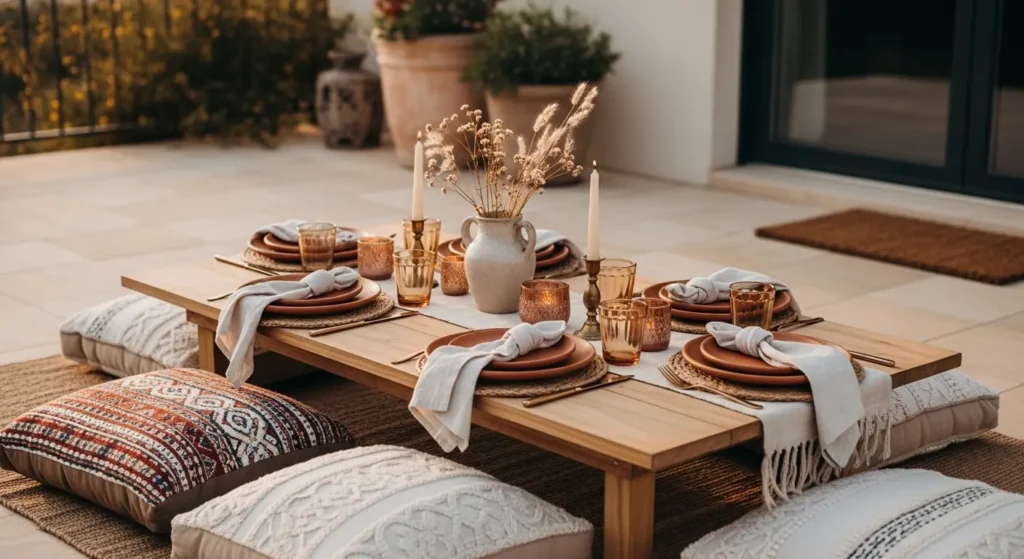
Boho outdoor dining differs from standard outdoor dining in one fundamental way: it sits lower. A low dining table with floor cushions or low cushioned chairs creates a dining experience that is more intimate, more relaxed, and more distinctly boho than any table-and-chair configuration regardless of how well styled.
The low dining format also solves the small patio dining problem elegantly. A low table with floor cushions takes less vertical visual space than a standard table with full-height chairs, makes the patio feel less formally furnished, and creates a dining experience that guests find more memorable than conventional outdoor dining.
The table styling for a boho outdoor dining setup: natural linen or cotton tablecloth in cream or warm white with visible texture. Terracotta or handmade ceramic plates rather than white porcelain. Mismatched candle holders of different heights and materials. One bunch of dried flowers or a small succulent in a handmade ceramic vessel as the centerpiece. The deliberate imperfection of the mixed elements — nothing matching exactly — is what makes boho table styling look genuinely personal rather than staged.
PRO TIP: Use dried flowers rather than fresh flowers as the boho dining centerpiece. Dried pampas grass, dried lavender, dried seed heads, and dried wildflowers are more authentically boho than fresh-cut flowers, last indefinitely without water changes, and create the desert-organic quality that defines the boho palette. A small ceramic jug of dried pampas grass costs under $5 to assemble and looks more designed than a $30 flower arrangement.
10. Use Moroccan-Style Lanterns for Evening Light With Genuine Boho Presence
✦ Cozy Lantern Lighting
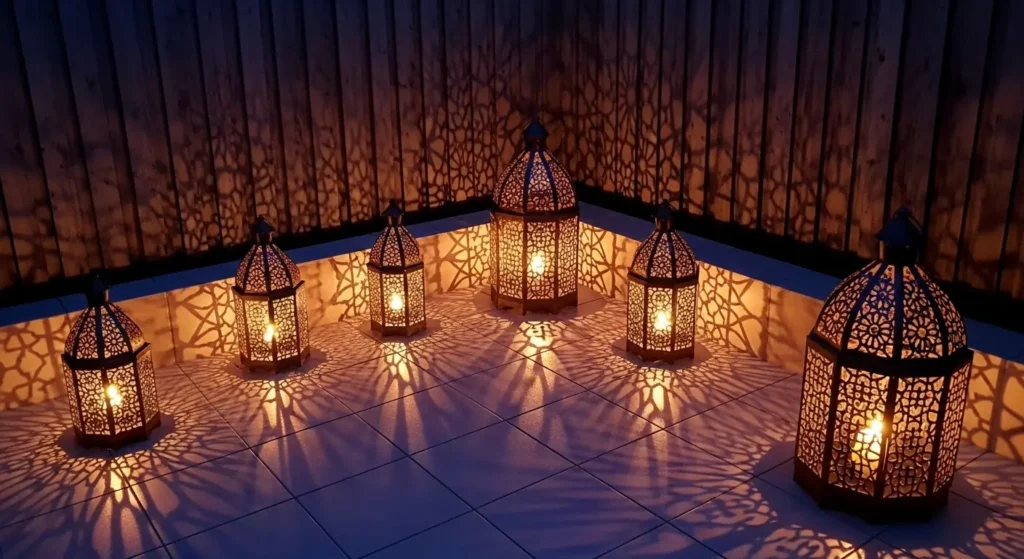
Standard garden lanterns and Moroccan-style lanterns produce completely different light effects. Standard lanterns diffuse light evenly in all directions. Moroccan-style lanterns with geometric cut-out patterns project those patterns onto surrounding surfaces — the wall, the floor, the fence — creating a light display that changes with any air movement that causes the candle flame inside to flicker.
This projected pattern quality is what makes Moroccan lantern lighting specifically boho rather than generically atmospheric. The geometric star and hexagon patterns that are traditional to Moroccan metalwork connect the light source to a specific artisan cultural tradition that gives boho design much of its visual vocabulary.
For outdoor boho patio use the GIGALUMI mason jar solar lanterns create warm ambient light at multiple heights with the same grouped display quality as Moroccan lanterns. For the authentic Moroccan cut-out pattern effect use metal lanterns with tea light candles or flameless LED tea lights on still evenings. Find the GIGALUMI lanterns linked on Amazon.
The grouping principle for boho lanterns: five is more effective than three which is more effective than two. Boho abundance applies to lighting as much as to plants and textiles. One or two lanterns looks sparse. Five creates a considered lighting installation.
11. Style a Desert Boho Patio Corner With Cacti, Warm Sand Tones, and Minimal Clutter
✦ Desert Inspired Styling
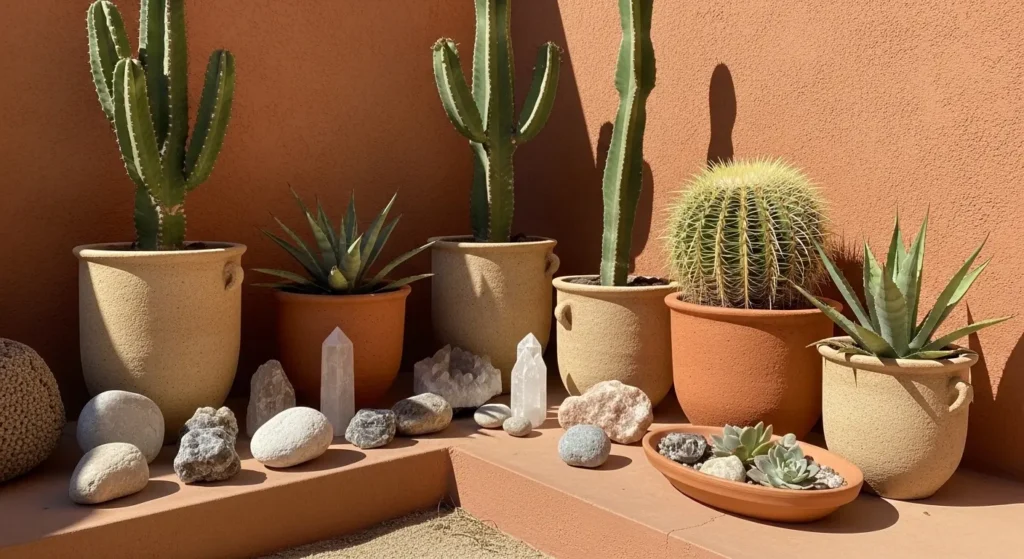
Desert boho is the cozy boho patio idea I find most misunderstood because it looks restrained and boho is generally associated with abundance. But the desert is not empty — it is selective. One perfect cactus in a rough terracotta pot on a clean sand-toned surface is as present as a full tropical corner. The difference is that every element has room around it to be seen completely.
Spare surfaces. Concentrated interest. Materials that feel elemental — rough clay, smooth river stones, bleached driftwood, natural crystals.
PRO TIP: In a desert boho display make shadows part of the styling. Position cacti and sculptural plants where afternoon sun creates long strong shadows on the wall or floor behind them. The shadow adds a second dimension to the plant and changes throughout the day as the sun moves — the patio display is never identical twice.
12. Mix Tropical Plants Into a Boho Patio for a Lush Maximalist Version of the Style
✦ Tropical Boho Vibe
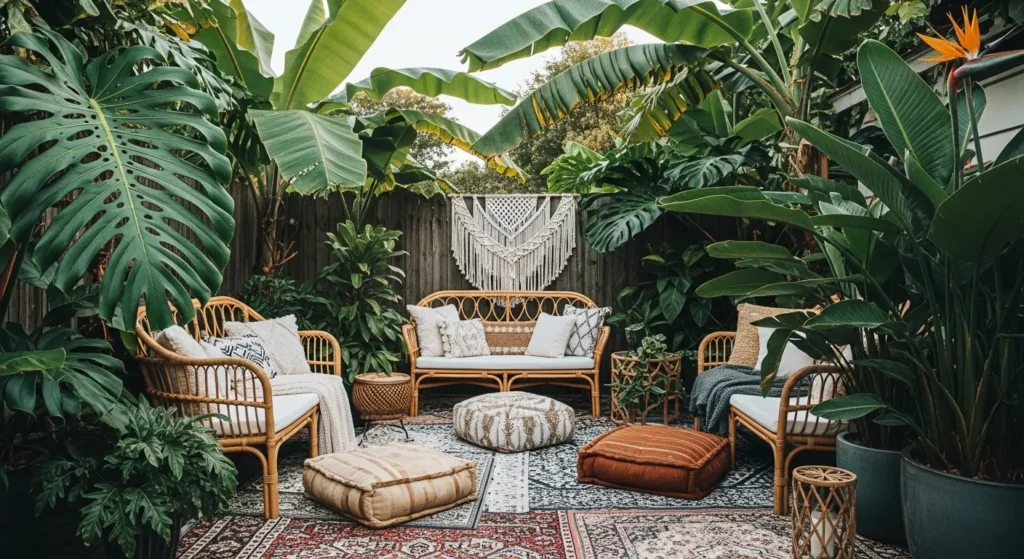
Tropical boho is the maximalist version of the style — the one where density and abundance are the point. Where desert boho edits to essence tropical boho layers until the space feels genuinely lush. Large-leaved tropical plants create the green canopy. Layered rugs and floor cushions create the ground level. Macrame and hanging plants create the vertical layers. The result is an outdoor space that feels like sitting inside a plant — surrounded on every side by living organic material.
The tropical boho formula uses scale to create the canopy effect. One or two genuinely large tropical specimen plants — banana, Monstera, Canna lily, or bird of paradise in large containers — establish the overhead and mid-height green presence that smaller plants cannot achieve regardless of quantity. These anchor plants create the sense of being within the garden rather than sitting beside it.
The color palette of tropical boho extends the standard boho earth tones with deeper greens and richer jewel tones — deep teal, forest green, and rich burgundy all work within the tropical boho frame where the standard boho palette reads as too pale. The richer tones of tropical boho reflect the deeper saturation of tropical plant environments.
For the container planting the Quarut barrel planters create the generous root volume that large tropical specimens need to establish quickly and grow to the scale that makes tropical boho actually feel tropical. Find them linked on Amazon.
PRO TIP: Introduce one element of tropical fragrance to a tropical boho patio. Jasmine on a trellis, gardenias in a pot, or even a citronella plant beside the seating adds the olfactory dimension that visual and tactile abundance alone cannot provide. A patio that smells tropical feels tropical in a way that only looking tropical never achieves.
Frequently Asked Questions
What is boho patio style?
Boho patio style is an outdoor aesthetic built on natural materials, handcraft elements, earth tone color discipline, and layered textures. It draws from Moroccan, desert southwest, and tropical design traditions and is characterized by rattan furniture, macrame, layered rugs, floor cushions, abundant plants in handmade ceramics, and warm lantern lighting. The defining quality of genuine boho style is that it looks personally curated over time rather than purchased as a coordinated set. According to Architectural Digest boho remains one of the most consistently searched and most saved interior and exterior design aesthetics globally.
How do I create a boho patio on a budget?
A large macrame wall hanging, two layered outdoor rugs, terracotta pots with plants, and five candles in varied lanterns creates an authentic boho patio for under $80 total. The mismatched collected quality of boho styling means inexpensive and imperfect pieces from charity shops and Facebook Marketplace often look more genuinely boho than premium coordinated alternatives.
What plants work best for a boho patio?
Monstera, trailing Pothos, ornamental grasses, bird of paradise, pampas grass, snake plants, and cacti all suit boho planting because they have natural unmanicured growing habits and interesting sculptural forms. Container choice is as important as plant choice — rough terracotta, handmade ceramics, and aged clay pots suit boho aesthetics significantly better than smooth glazed commercial pots.
More Patio and Outdoor Ideas
→ 25 Chic Outdoor Living Patio Ideas You’ll Want To Copy
→ 14 Relaxing Tropical Patio Ideas For Summer
→21 Beautiful Patio Decorating Ideas For Summer
→ 7 Outdoor Living Space Ideas For Summer
The warmth I felt sitting in that boho patio for the first time — the textural warmth before I had identified a single specific element — was the accumulated result of twelve layers building on each other.
Each layer in this guide adds to the previous one. The rug goes first. The rattan creates the structure. The macrame adds handcraft presence. The plants bring the living layer. The lanterns complete it in the evening.
Start with the layered rug and one macrame piece this weekend. The aesthetic builds from there one layer at a time.

Sheikh Hassaan is a digital architect for small businesses and the founder of The Glow Up System. He writes about home decor, garden design, and outdoor living for real American homes – practical ideas that work in actual spaces without oversized budgets.