
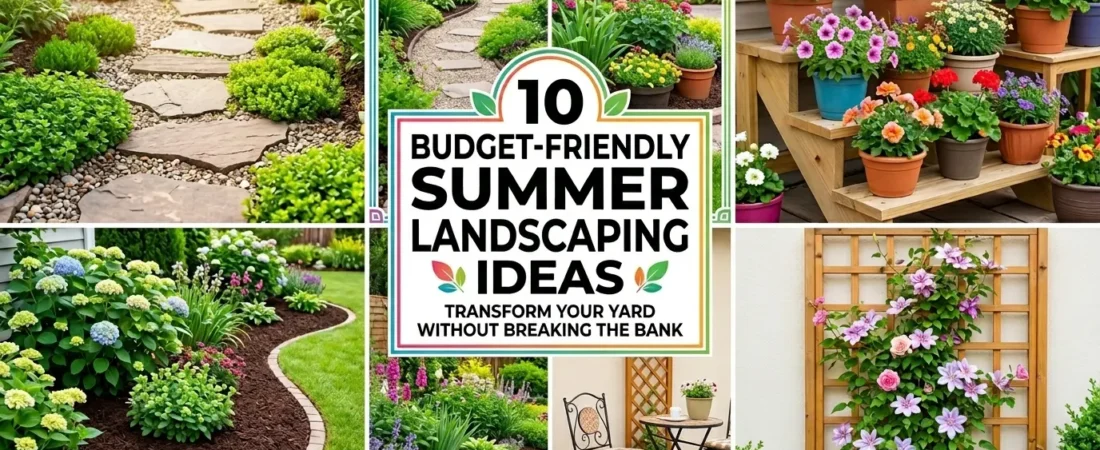
Budget-friendly summer landscaping ideas prove one thing consistently: the most impactful yard transformations are rarely the most expensive ones. A $15 bag of bark mulch refreshes a tired flower bed more dramatically than a $200 perennial purchase. A gravel pathway laid in an afternoon costs under $50 and creates more visual structure than most landscaping projects costing ten times that amount. These 10 ideas cover the full range of summer landscaping improvements with real costs, real materials, and realistic weekend timelines.
Every idea here includes an honest cost estimate, the materials needed, and the specific result it produces. None requires professional installation.
Table of Contents
1. A Fresh Mulch Layer: The $15 Landscaping Upgrade That Makes Every Bed Look Professionally Maintained
✦ Mulch Flower Bed Refresh
💰 Estimated cost: $10–$20
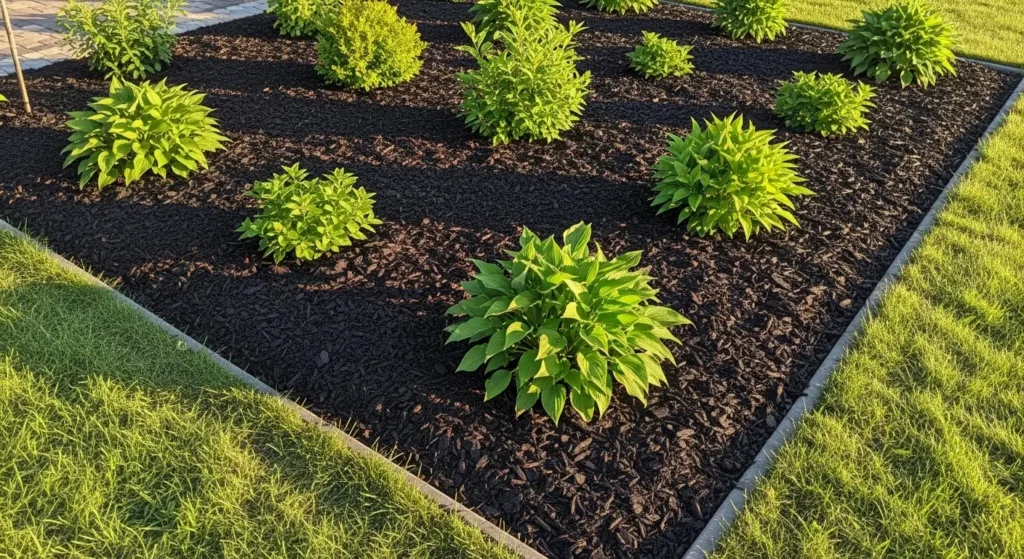
A 3-inch layer of fresh bark mulch applied to summer flower beds is the single landscaping action with the highest visual return per dollar. The dark mulch creates an instant contrast against green plants that makes borders look professionally maintained regardless of the quality of the plants themselves. It suppresses weeds for the entire summer season. It retains moisture reducing watering frequency by up to 30%. And it costs $10 to $20 per standard flower bed.
The mulch application technique that produces the best result: clear weeds first, then apply mulch to a consistent 3-inch depth across the entire bed. Keep mulch 2 inches away from plant stems and tree trunks — mulch piled against stems creates rot conditions. Edge the bed cleanly after mulching using a flat spade run along the lawn boundary. The clean edge is the detail that makes a mulched bed look landscaped rather than simply covered.
Mulch types by cost and appearance: bark chip at $8 to $15 per bag covers approximately 12 square feet at 3-inch depth and creates the darkest most professional appearance. Gravel mulch at $15 to $25 per bag suits drought-tolerant and Mediterranean plant beds. Compost mulch at $5 to $10 per bag feeds plants while suppressing weeds but requires annual replacement as it breaks down.
PRO TIP: Apply mulch immediately after a period of rain when the soil is thoroughly moist rather than in dry conditions. Mulch applied to wet soil locks the moisture in. Mulch applied to dry soil locks dryness in and creates a barrier that prevents subsequent rainfall from reaching plant roots effectively.
2. A Gravel Pathway: $40 of Material That Creates More Visual Structure Than Any Planting
✦ Gravel Garden Pathway
💰 Estimated cost: $30–$60
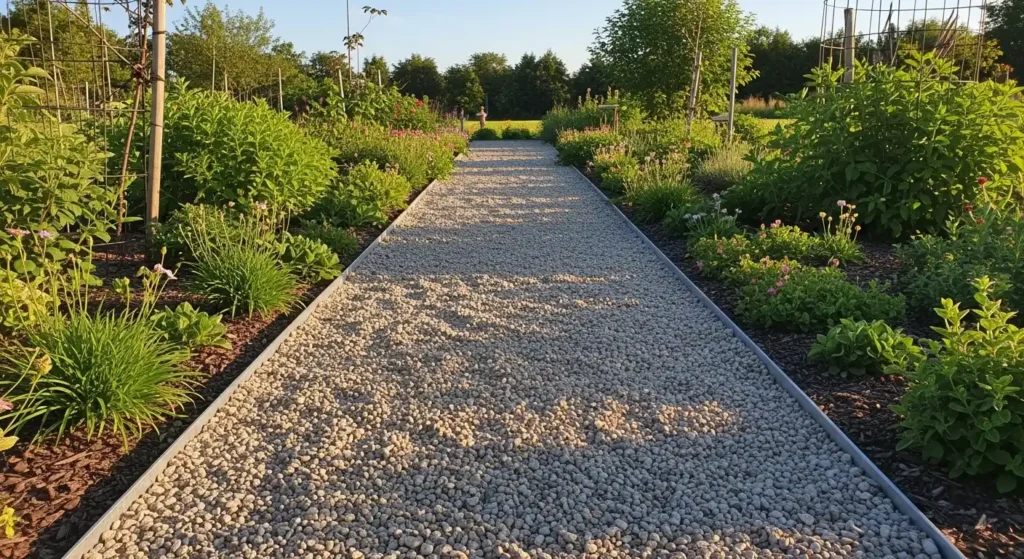
A gravel pathway creates more visual structure in a yard than almost any planting investment because paths define space — they tell visitors where to go, separate different garden areas, and create the designed quality that a yard without defined paths lacks regardless of planting quality.
The installation: mark the path line with garden hose before any digging. Excavate 3 inches of soil. Lay landscape fabric to suppress weeds. Install metal landscape edging on both sides to contain the gravel permanently. Fill with 2 to 3 inches of pea gravel or decorative stone. The total material cost for a 2-foot wide by 15-foot long path is $30 to $60. The installation takes one afternoon.
The edging quality determines how long a gravel path looks good. Flexible plastic edging bends out of line within one season. Metal landscape edging stays straight and sharp indefinitely. The $15 difference between plastic and metal edging determines whether the path looks designed for 5 years or needs replacing after 1.
PRO TIP: Compact gravel paths using a hand tamper or the back of a flat spade after initial laying. Loose uncompacted gravel shifts underfoot, scatters onto lawns and beds, and creates the crunching displacement that makes gravel paths feel unstable. Compacted gravel locks into a firmer surface that holds its position through foot traffic and rain.
3. Clean Border Edging: The Free Landscaping Detail That Changes Everything
✦ DIY Garden Border Edging
💰 Estimated cost: $0–$15
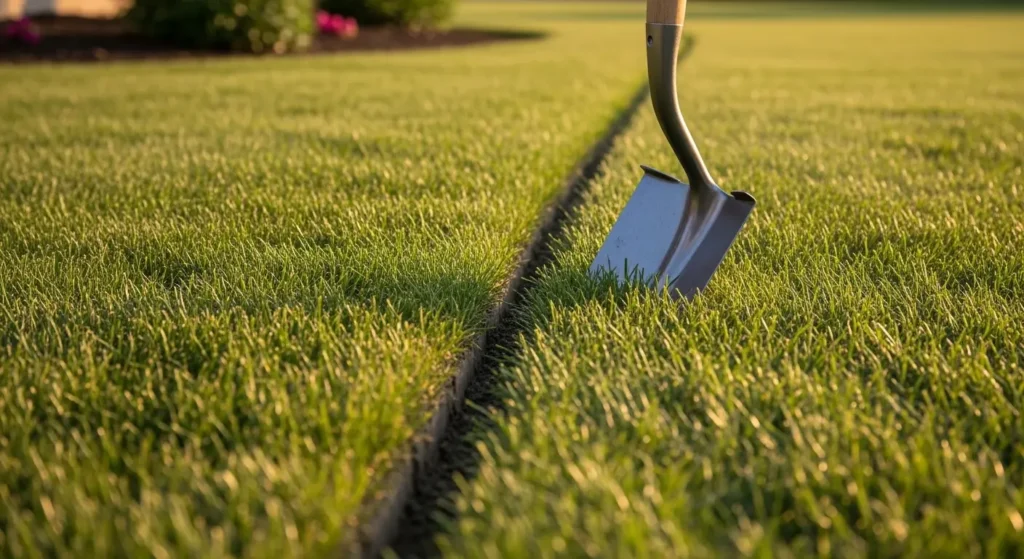
Clean border edges are the single most impactful free landscaping action available. The shadow line created by a sharp 3-inch deep cut between lawn and border makes a yard look professionally maintained regardless of what is planted in the border. The same plants in an un-edged border look neglected. The same plants in a cleanly edged border look designed.
The tool: a flat half-moon edging spade or a standard flat spade used with a straight board as a guide. Run the spade along the border edge at 90 degrees to the ground creating a clean vertical cut 3 inches deep. Remove the excavated turf. The entire process for a 20-foot border takes 20 minutes and requires no materials beyond the spade you already own.
Maintain the edge every 4 to 6 weeks through summer as grass grows back into the cut. Each maintenance edge takes 5 minutes and keeps the sharp line that makes the original edging effort worthwhile. Edge maintenance is the most consistently neglected lawn care task and the one that has the most visible effect on overall yard appearance.
4. Drought-Tolerant Landscaping: Plants That Look Better in Summer Heat While Costing Less to Maintain
✦ Drought-Tolerant Planting
💰 Estimated cost: $20–$60
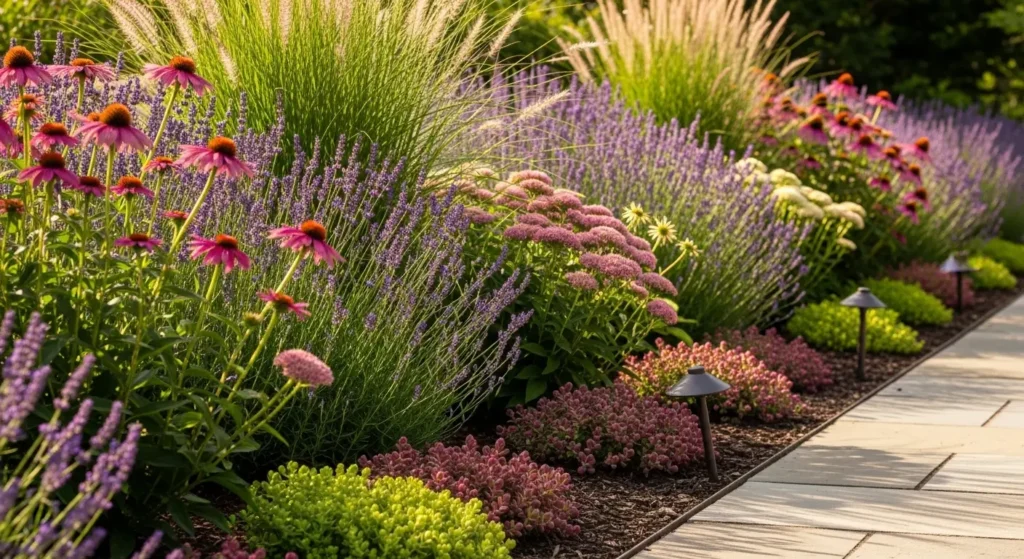
Drought-tolerant planting is the summer landscaping investment with the lowest ongoing cost because it eliminates or dramatically reduces irrigation requirements while producing plants that look better in summer heat than moisture-dependent alternatives. Lavender, ornamental grasses, sedum, echinacea, and rudbeckia all peak in the conditions that make traditional bedding plants struggle.
The drought-tolerant summer planting combination that produces the best visual result for the cost: lavender at $3 to $5 per plant for silver-blue fragrant structure. Ornamental grasses at $5 to $8 per plant for movement and late-season seed head interest. Echinacea at $4 to $6 per plant for summer-long daisy flowers in pink, orange, and white. Sedum Autumn Joy at $4 to $5 per plant for late-season pink flowers that turn copper-red and persist through winter.
A 10-square-foot drought-tolerant summer border using three of each species costs $48 to $76 in plants, requires no irrigation once established, needs no deadheading, and improves every year as the plants mature. The second-year investment is zero. The returns compound annually.
PRO TIP: Plant drought-tolerant plants in groups of three or five rather than as individual specimens. Odd-numbered groups create the natural clumping appearance of plants that have self-seeded and spread over time. Single specimens look recently planted regardless of their actual age. Groups look established from the first season.
5. Native Plants: The Landscaping Choice That Costs Less and Achieves More Ecology
✦ Native Plant Landscape Design
💰 Estimated cost: $15–$50

Native plants are the budget landscaping choice because they are adapted to local soil, climate, and rainfall conditions and therefore require no supplementary irrigation, no specialist soil preparation, and no pest management once established. A native plant border costs less to install than an equivalent non-native border, costs nothing to maintain in its second year, and supports local wildlife at a level that imported ornamental plants cannot match.
The approach to sourcing native plants at minimum cost: local native plant societies often run plant sales at significantly lower prices than garden centers. Native plant nurseries specialize in regional species and provide better quality at lower prices than general garden retailers. Seed sowing from native wildflower seed mixes at $5 to $15 per pack produces a complete native plant border from direct sowing in prepared soil with no individual plant purchase required.
The native plant border that produces the most summer visual impact: native grasses as the structural background layer providing movement and texture. Native daisy-type wildflowers — echinacea, rudbeckia, and helenium — as the mid-layer providing continuous summer color. Native low-growing wildflowers — wild thyme, self-heal, and bird’s foot trefoil — as the ground layer reducing bare soil and attracting ground-level insects.
6. A Rock Garden Feature: The Permanent Landscaping Investment That Never Needs Replanting
✦ Simple Rock Garden Feature
💰 Estimated cost: $20–$80
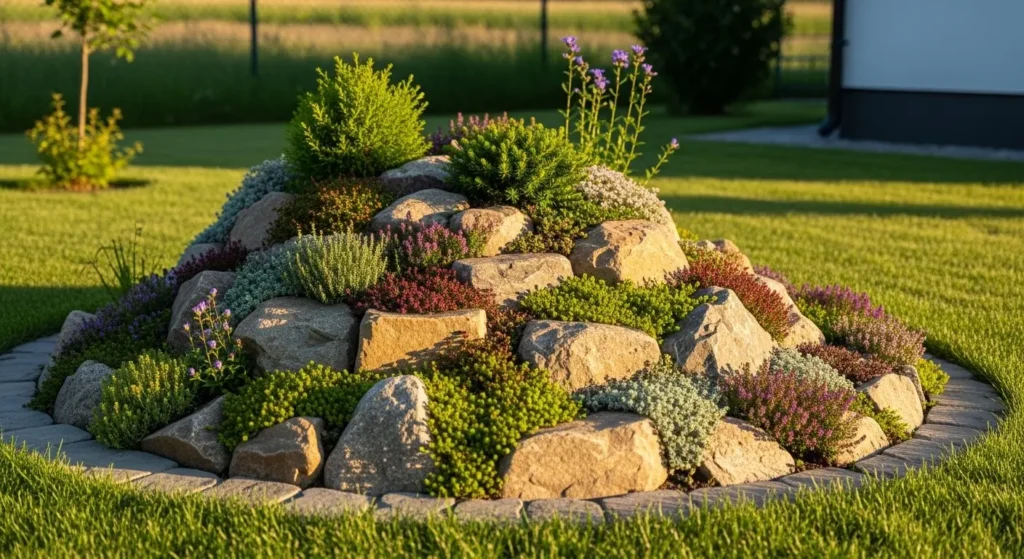
A rock garden is the landscape feature with the longest payback period of any summer garden investment. The rocks are permanent. The alpine and succulent plants established between them require almost no maintenance. The display improves every year as plants fill between the stones. The initial investment in rocks — which can be sourced free from construction sites, skips, and Facebook Marketplace free listings — produces decades of landscape feature value.
The rock placement principle that creates naturalistic rather than artificial rock gardens: bury at least one third of each rock below soil level. Rocks placed entirely on the surface look placed. Rocks buried to one third of their depth look like they emerged from the ground — which is what rocks in natural outcrops do. Tilt all rocks at a slight backward angle so rainfall runs toward plant roots rather than away from them.
Plant selection for a budget rock garden: Sempervivum (houseleeks) at $2 to $3 per plant in mixed varieties cover between rocks within two seasons through natural offsets at zero replacement cost. Sedum spurium ground cover at $3 to $4 per plant fills between stones with flat mat growth. Creeping thyme at $3 per plant provides fragrant coverage that releases scent when brushed. Total plant cost for a 6 by 4 foot rock garden: $20 to $40.
PRO TIP: Source rocks from your own garden first before purchasing. Rocks excavated during planting, path laying, or other garden work are ideal rock garden material. Larger rocks pulled from the soil have the soil patina and weathering that makes them look immediately natural in a rock garden. Purchased rocks take 2 to 3 seasons to lose their quarried appearance.
7. Ground Cover Plants: The Landscaping Solution That Eliminates Weeding Permanently
✦ Low-Maintenance Ground Cover
💰 Estimated cost: $15–$40
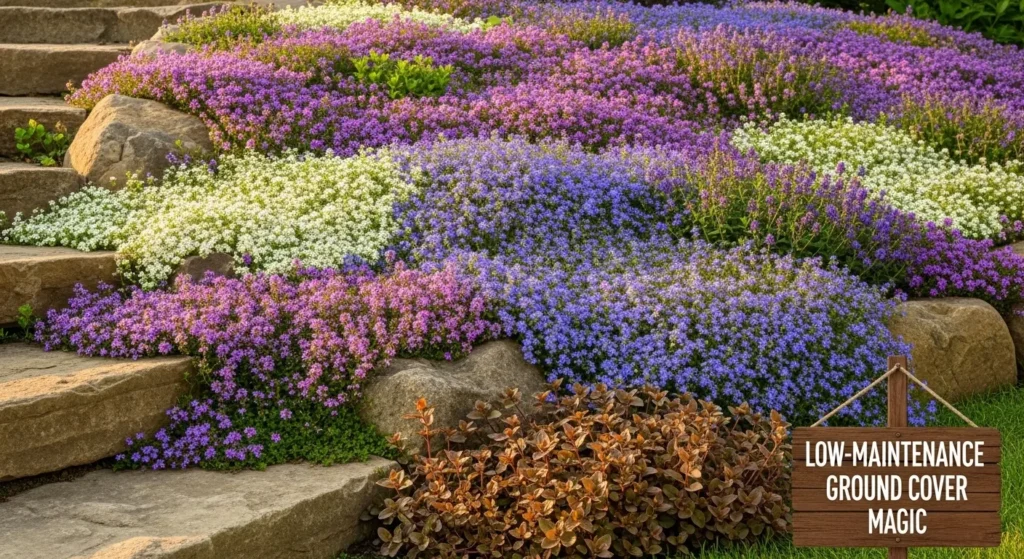
Ground cover planting is the landscaping investment that pays for itself in time saved. A slope, a difficult dry shade area, or a border strip that requires 30 minutes of weeding per week planted with dense ground cover requires 30 minutes of attention per year once established. The math over a 5-year period is significant.
The ground cover selection that works for specific problem areas: dry sunny slopes — Sedum spurium, creeping thyme, and Cerastium (snow-in-summer) all establish in poor dry soil and spread to cover. Moist shade — Vinca minor, Ajuga reptans, and Pachysandra all provide dense coverage in the shade conditions that most plants refuse. Full shade under trees — Epimedium and Liriope muscari are among the few plants that establish successfully in the dry shade under mature tree canopies.
Planting density determines how quickly ground cover suppresses weeds. Plant at 6-inch spacing for 1-season coverage. Plant at 12-inch spacing for 2-season coverage. Use bark mulch between plants during the establishment period to suppress weeds while the plants spread. Remove the mulch gradually as plants fill in.
PRO TIP: Calculate ground cover quantities by dividing the square footage of the area by the spacing squared. For 6-inch spacing divide by 0.25 to get the number of plants needed. Over-purchasing is the most common ground cover planting mistake — a 20-square-foot area at 6-inch spacing needs 80 plants which sounds excessive until the first season confirms the density is correct.
8. A Budget Outdoor Seating Area Built From Cinder Blocks and Timber in One Afternoon
✦ Budget-Friendly Seating Area
💰 Estimated cost: $40–$80
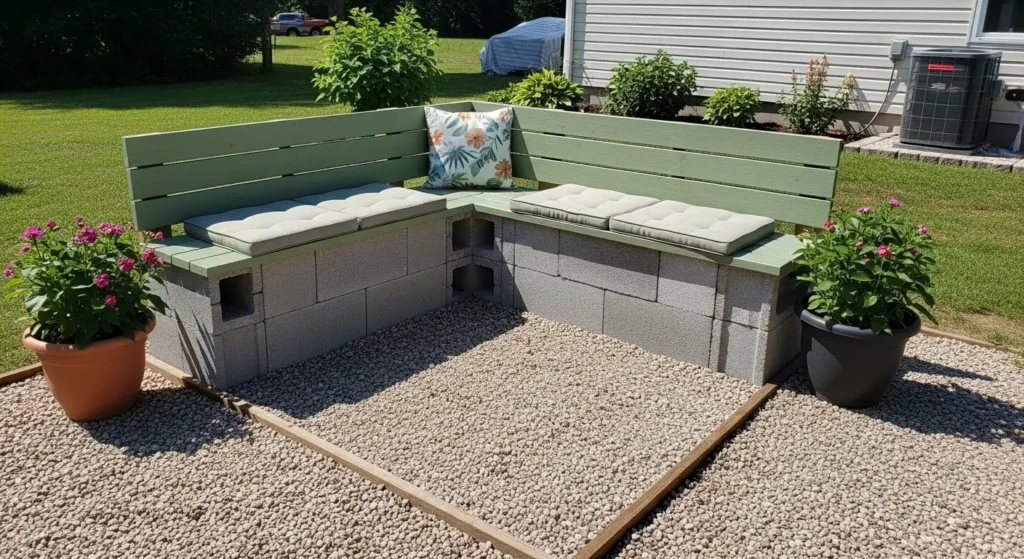
A budget outdoor seating area built from cinder blocks and pressure-treated timber costs $40 to $80 in materials and takes one afternoon to construct. The cinder block and timber method produces seating that is permanent, weather-resistant, and paint-able to any color — creating the designed aesthetic of built-in seating at a fraction of the cost.
Construction: stack cinder blocks two high in the seating configuration — straight bench or L-shape. Lay 2 by 6 inch pressure-treated timber boards across the top as the seat surface. Paint the cinder blocks with exterior masonry paint in your chosen color. Add outdoor cushions. Position on a defined surface — gravel, paving slabs, or a section of decking — rather than on lawn which creates maintenance problems beneath permanent seating.
The total cost breakdown: cinder blocks at $1.50 to $2 each (a straight 6-foot bench requires 12 blocks at two high — $18 to $24). Pressure-treated timber at $10 to $15 for the seat boards. Exterior masonry paint at $8 to $12 per tin. Outdoor cushions at $15 to $25. Total: $51 to $76 for a complete permanent bench.
PRO TIP: Paint cinder block seating with two coats of exterior masonry paint in a matte finish rather than a gloss. Gloss paint on cinder blocks looks commercial. Matte paint in a garden-appropriate tone — sage green, charcoal, or warm stone — makes the cinder block construction look designed rather than improvised.
9. Repurposed Objects as Garden Features: Zero-Cost Landscaping With Maximum Character
✦ Repurposed Garden Decor
💰 Estimated cost: $0
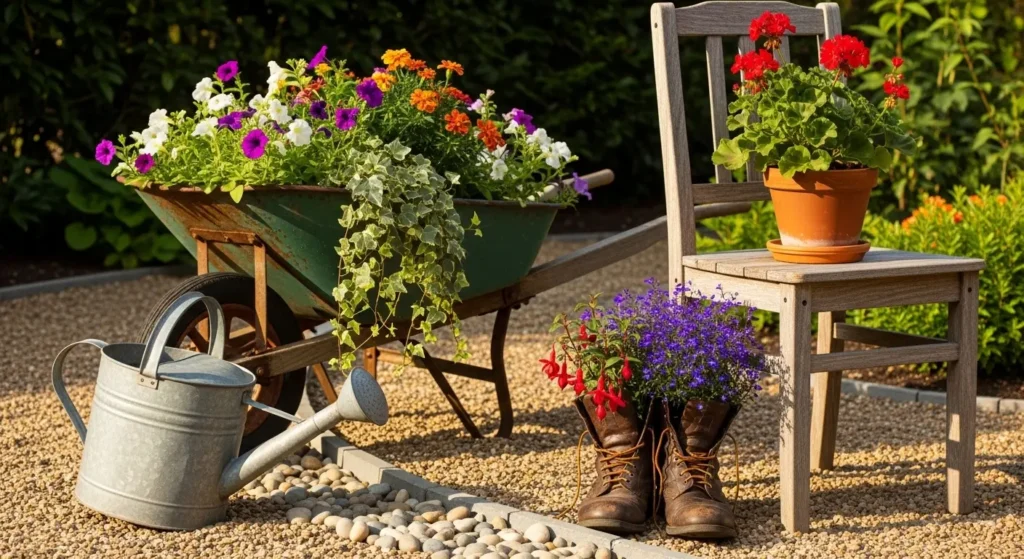
Repurposed objects as garden features are the zero-cost landscaping approach that consistently produces the most characterful and most personally distinctive yards. An old wheelbarrow planted with trailing flowers, a worn pair of boots with succulents, a vintage watering can as a pathway accent, a weathered ladder as a plant stand — these objects give a garden a story that no purchased landscaping feature provides.
The design principle that makes repurposed garden decor look intentional rather than junk: placement and planting. An old object in the middle of a lawn looks abandoned. The same object placed at a garden path junction with plants growing from it or around it looks designed. Position repurposed objects where they become focal points — at sightline terminations, at path junctions, in bed corners — and plant something in or around them.
The best sources for repurposed garden objects: your own shed and garage first — objects already weathered and familiar to the garden are the most convincing. Estate sales and house clearances for genuinely aged objects with patina. Facebook Marketplace free listings for objects people want removed rather than sold.
10. The Complete Budget Yard Makeover: Five Actions in One Weekend Under $100
✦ Easy Weekend Yard Makeover
💰 Estimated cost: $60–$100
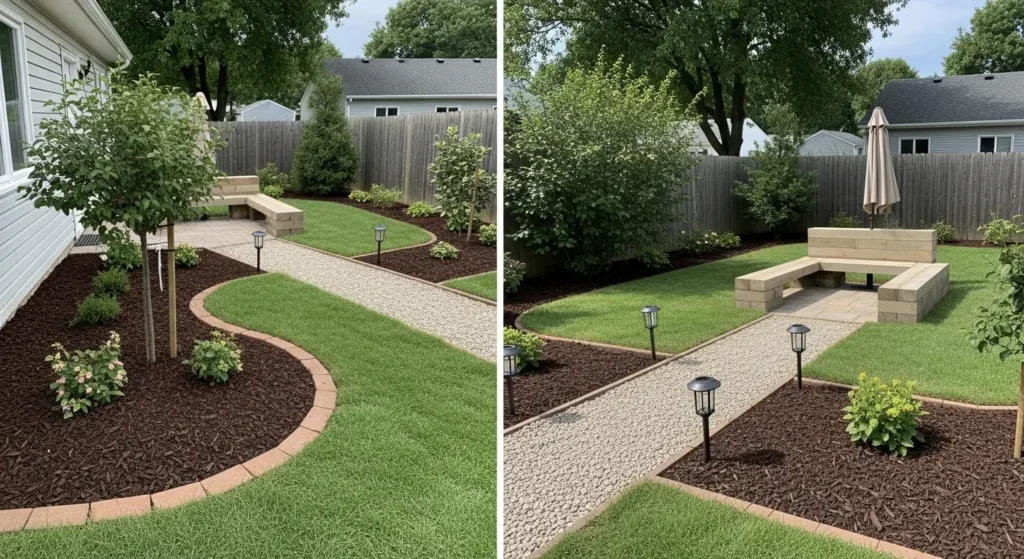
A complete budget yard makeover over one weekend produces more visible transformation than most expensive landscaping projects because it addresses the five details that have the highest visual impact per dollar spent.
Saturday morning — edge all lawn borders with a flat spade. Free. Creates immediate professional appearance across the entire yard.
Saturday afternoon — apply fresh bark mulch to all flower beds at 3-inch depth. $15 to $25 in materials. Creates clean contrast throughout all planted areas.
Sunday morning — lay a single gravel path connecting the two most-used areas of the yard. $30 to $50 in materials. Creates visual structure and practical function.
Sunday afternoon — install the LANSOW solar spotlights at path and border edges. $20 to $25. Creates evening atmosphere and defines the yard after dark.
Sunday evening — sit down and look at what a focused weekend of effort produces. The before-and-after contrast is consistently dramatic. Find the LANSOW solar spotlights linked on Amazon.
PRO TIP: Photograph the yard before starting the weekend makeover from three fixed positions — the back door, the main seating position, and the garden gate. Photograph from the same positions after completion. The before-and-after comparison from consistent viewpoints captures the transformation most accurately and provides the most useful evidence of what the weekend effort actually changed.
The Budget Landscaping Priority Order
If your total budget is $100 or less spend it in this sequence for maximum visible impact:
First — edge every lawn border. Free.
The highest-impact free action in any yard. Do this before spending a single dollar on anything else.
Second — mulch all beds. $15 to $25.
Transforms the appearance of every planted area immediately and suppresses weeds for the season.
Third — add solar path lighting. $20 to $25.
Doubles the usable hours of the yard and adds the evening atmosphere that no daytime landscaping change can provide.
Fourth — lay one gravel path. $30 to $50.
Adds the visual structure that makes a yard look designed rather than simply planted.
📌 More budget garden ideas → 25 Genius Back Patio Ideas on a Budget
Frequently Asked Questions
How can I landscape my yard cheaply?
The cheapest high-impact yard landscaping actions are: clean lawn border edging with a flat spade (free), fresh bark mulch on all flower beds ($15 to $25), and one defined gravel pathway ($30 to $50). These three actions together cost under $75 and produce more visible transformation than most landscaping projects costing hundreds of dollars because they address the details — clean edges, defined surfaces, and structured paths — that communicate maintenance and design intent from every viewing angle. According to Better Homes and Gardens clean lawn edging and fresh mulch are the two landscaping actions with the highest curb appeal return on investment of any yard maintenance task.
What are the cheapest landscaping plants?
The cheapest landscaping plants by cost-to-coverage ratio are ground cover plants, native wildflower seed mixes, and drought-tolerant perennials. Ground covers like Vinca minor, Ajuga, and creeping thyme cover significant areas at $3 to $5 per plant through natural spreading. Native wildflower seed mixes at $5 to $15 per pack produce a complete planted area from direct sowing. Drought-tolerant perennials like sedum, lavender, and ornamental grasses cost $4 to $8 per plant and return larger every year with zero replacement cost after the first season.
How can I improve my yard landscaping in one weekend?
A complete budget yard makeover in one weekend follows five steps: Saturday morning — edge all lawn borders with a flat spade. Saturday afternoon — apply bark mulch to all flower beds. Sunday morning — lay one gravel path between key areas. Sunday afternoon — install solar path lights at path and border edges. Sunday evening — add any repurposed objects as feature accents at path junctions and sightline terminations. Total cost $60 to $100. Total time 8 to 10 hours across two days. The visible transformation from this sequence consistently exceeds expectations because each action reinforces the others — the mulch looks better against clean edges, the path looks better with defined lighting, the repurposed accents look better positioned in the landscaped context.
The Best Summer Landscaping Starts With What You Already Have
Every yard has untapped landscaping potential that costs nothing to realize. Clean edges, fresh mulch, and a single defined path transform any yard from pleasant to designed without a single plant purchase. The ideas in this guide are a sequence rather than a menu — apply them in priority order and each one makes the next one more effective.
Start this weekend with the flat spade and the lawn edges. Everything else builds from there.
All the products mentioned in this article are linked on Amazon. Every recommendation is something we genuinely believe in.
More Budget Garden and Outdoor Ideas
→ 7 Rental-Friendly Backyard Ideas on a Budget
→ 8 Budget Sleeper Garden Ideas For Summer
→ How To Turn Old Junk Into Garden Decor
→ 20 Creative Garden Rock Art Ideas
Start this weekend with the flat spade and the lawn edges. Everything else builds from there.

Sheikh Hassaan is a digital architect for small businesses and the founder of The Glow Up System. He writes about home decor, garden design, and outdoor living for real American homes – practical ideas that work in actual spaces without oversized budgets.