
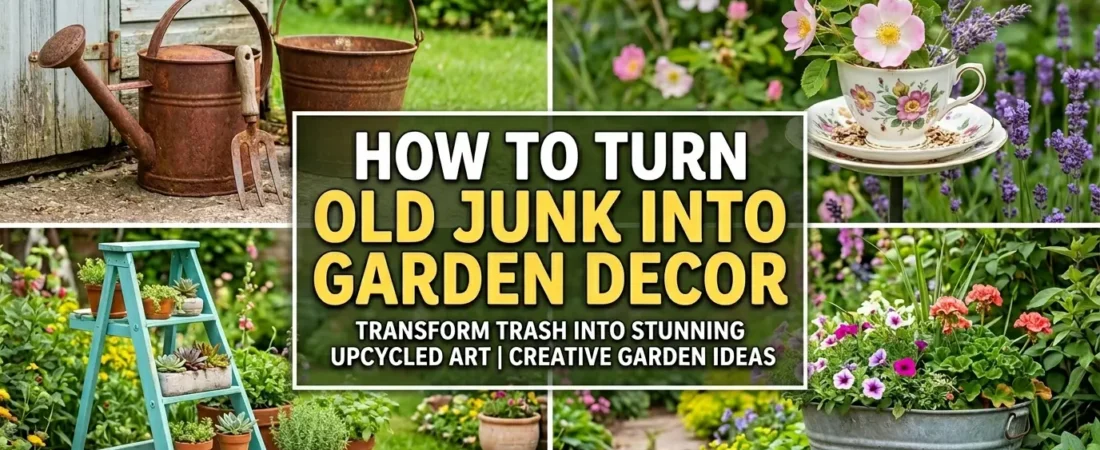
I kept a broken enamel colander for two years because I could not throw it away. Too cracked to use. Too interesting to skip. It became a planter for trailing nasturtiums on my back fence the summer I finally got around to drilling three drainage holes in the base.
That colander has been photographed more times than anything else in the garden. Not because it is beautiful in a conventional sense. Because it is clearly something’s second life and that story reads in the object itself.
Upcycled garden decor has a character that no purchased ornament can replicate. The patina, the imperfection, the original function still visible in the new one. These 12 ideas cover every type of object and every type of garden — from a cracked colander to a full furniture transformation.
Table of Contents
This guide takes you through every stage of turning old junk into beautiful garden decor — from finding the right raw materials to finishing and styling the final result.
Step 1: Find the Right Raw Materials
✦ Find Hidden Garden Treasures
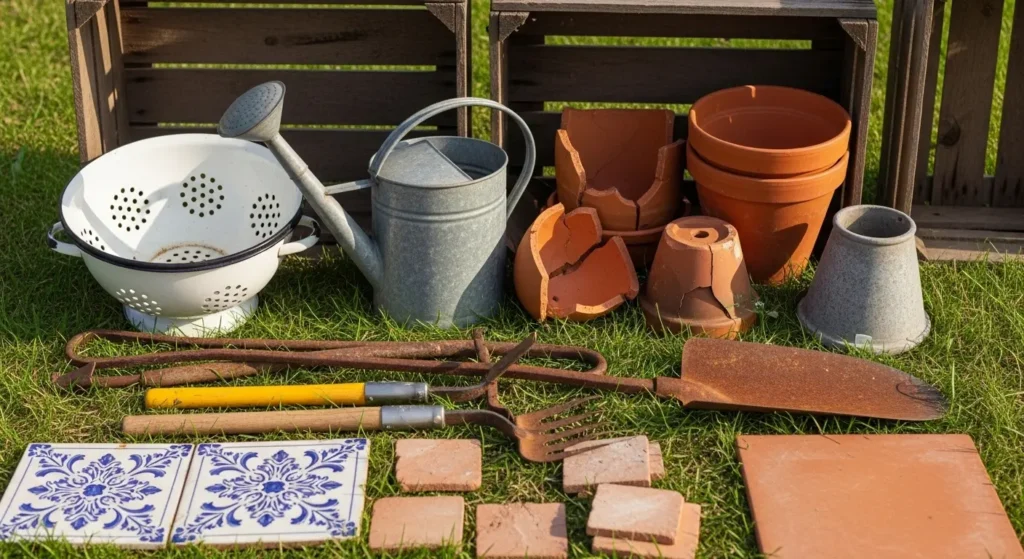
The first step in any upcycling garden project is knowing where to look and what to look for. The best garden upcycling materials have natural weather resistance, interesting texture or patina, and enough structural integrity to survive outdoors. Not everything old makes good garden decor — but the things that do are everywhere once you start looking.
The best sources for garden upcycling materials are your own home and shed — old kitchen items, tools, furniture, and containers you no longer use. Secondly charity shops, car boot sales, and estate sales where vintage and antique items can be found for pennies. Thirdly Facebook Marketplace and Freecycle where people regularly give away exactly the kind of worn, imperfect, interesting objects that make the best garden upcycling subjects. Look specifically for metal containers, wooden items, ceramic objects, and interesting structural pieces like old gates, ladders, or frames.
PRO TIP: The most valuable garden upcycling find is something with a strong silhouette. An object that reads clearly from a distance — a watering can, a bicycle wheel, a ladder — makes better garden decor than something whose shape is only interesting up close.
Step 2: Choose Pieces That Can Handle Outdoor Conditions
✦ Choose Weather-Resistant Pieces
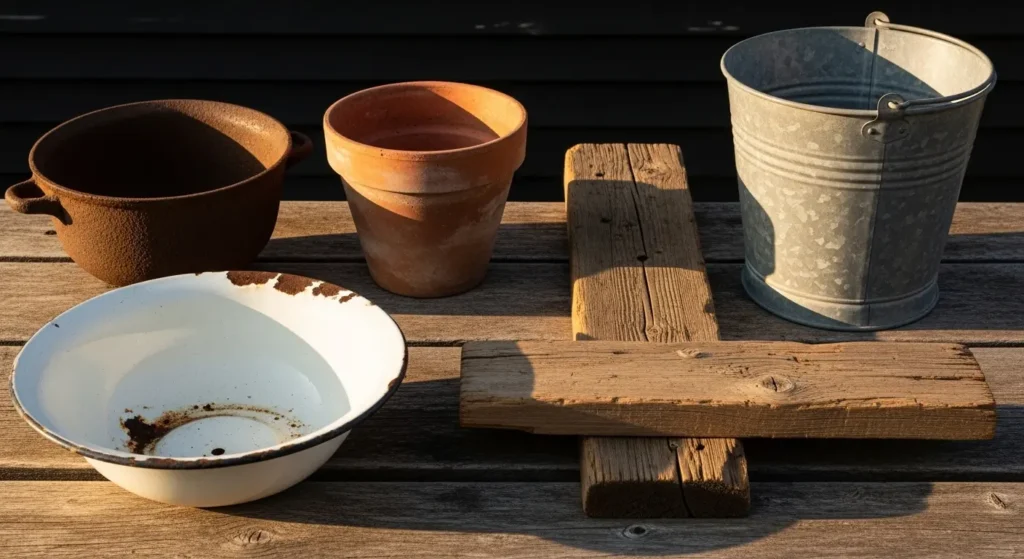
Not every old object survives outdoor conditions long enough to be worth the effort of a upcycling project. Understanding material durability before starting saves time and prevents disappointment when a project deteriorates within one season.
Materials that handle outdoors well without treatment: cast iron, galvanized metal, enamelware, hardwood like oak and teak, terracotta, and stone. Materials that need sealing or treatment: softwood, mild steel, copper, and untreated tin. Materials to avoid outdoors: MDF, chipboard, and untreated plywood which deteriorate rapidly. Most plastics become brittle and discolor in UV. When in doubt seal with exterior varnish or paint before placing outdoors.
Step 3: Turn Any Old Container Into a Planter
✦ Turn Old Containers Into Planters
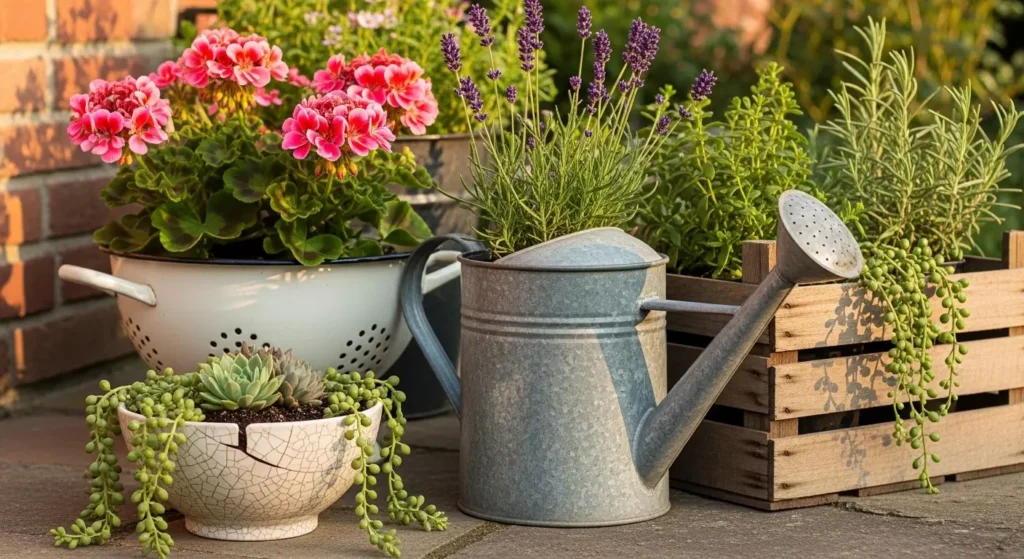
Almost any container can become a planter with two simple modifications — drainage holes and the right growing medium. The container’s original purpose becomes irrelevant. What matters is the shape, the texture, and the way it holds plants. Some of the most beautiful planting combinations on Pinterest are in the most unexpected containers.
For the trailing and drought-tolerant plants that perform best in unconventional container conditions see our drought tolerant plants succulents guide which covers the varieties that handle heat, shallow growing medium, and irregular watering.
PRO TIP: The best container planters have a size relationship with their plant that feels slightly generous — a plant that almost fills its container but still has visible rim around it. Too much container and the plant looks lost. Too little and it looks cramped. Aim for the plant filling approximately 70 percent of the visual container area.
Step 4: Repurpose Old Furniture as Functional Garden Features
✦ Repurpose Furniture For The Garden
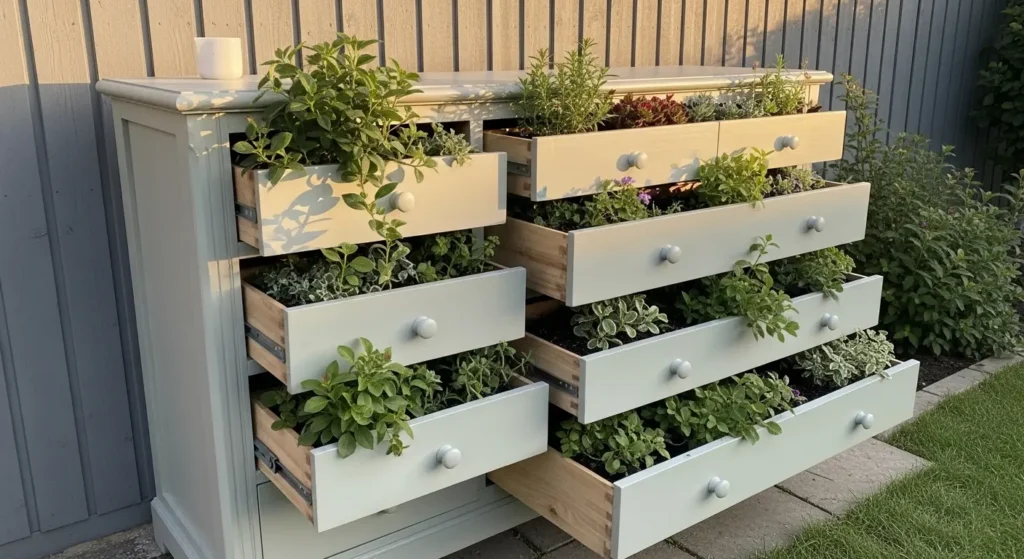
The chest of drawers with each drawer planted differently is the upcycled garden furniture idea I find most consistently stopped people mid-garden-tour.
Something about furniture used as a planter creates a double-take. The object is immediately recognizable as what it was. But it is clearly now something else. That tension between original function and new purpose is exactly what makes repurposed furniture garden decor so compelling.
Old wooden furniture destined for the skip is the best candidate for garden repurposing. Sand all surfaces, treat with an exterior wood preservative, and paint with exterior paint in a garden-appropriate color. Remove drawer bases or chair seats and line with coco liner before filling with compost. Position in a prominent garden location where the furniture’s original form is still recognizable — the recognition of what it used to be is part of what makes repurposed furniture garden decor so compelling.
Step 5: Create Rustic Garden Art From Metal and Wood
✦ Create Rustic Garden Art
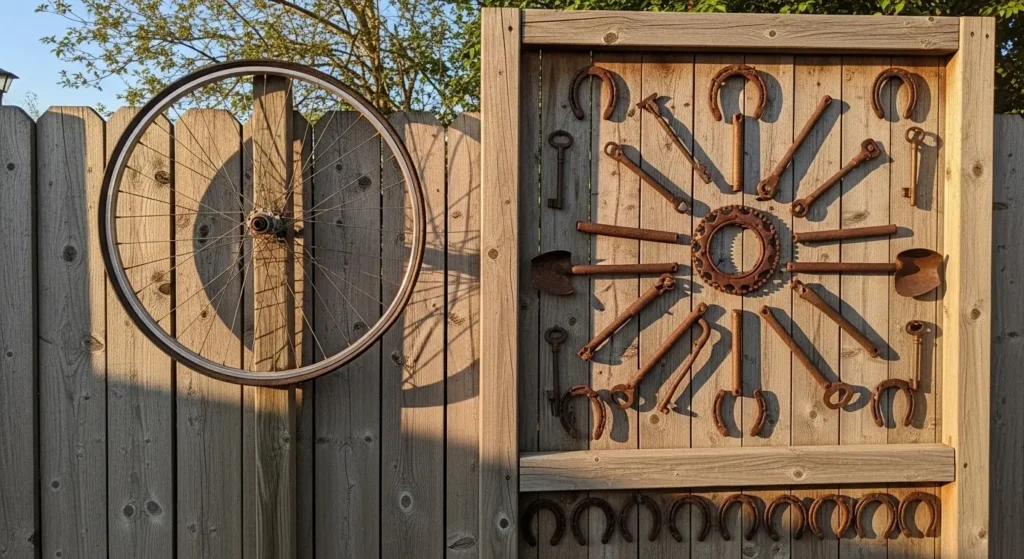
Garden art made from repurposed materials has a depth of character that purchased garden ornaments rarely achieve. The history embedded in an old tool, the patina of aged iron, the grain of weathered hardwood — these qualities make upcycled garden art feel genuinely made rather than manufactured.
Mount old garden tools — rakes, forks, spades — on a painted fence section as a decorative arrangement rather than functional storage. Wire vintage bicycle wheels to fence posts as circular garden sculptures. Arrange found objects — horseshoes, old keys, broken ceramics — in frames or patterns on garden walls. The DASTOLL stained glass sun catcher adds a modern artisan element that complements vintage metal finds beautifully. Find it linked on Amazon.
PRO TIP: When creating found-object garden art limit yourself to one primary material per display — all metal, or all wood, or all ceramic. Mixing materials in a single artwork creates visual noise. Restricting to one material creates cohesion and makes the individual pieces read as a collection rather than a pile.
Step 6: Build Unique Plant Displays From Unexpected Structures
✦ Build Unique Plant Displays
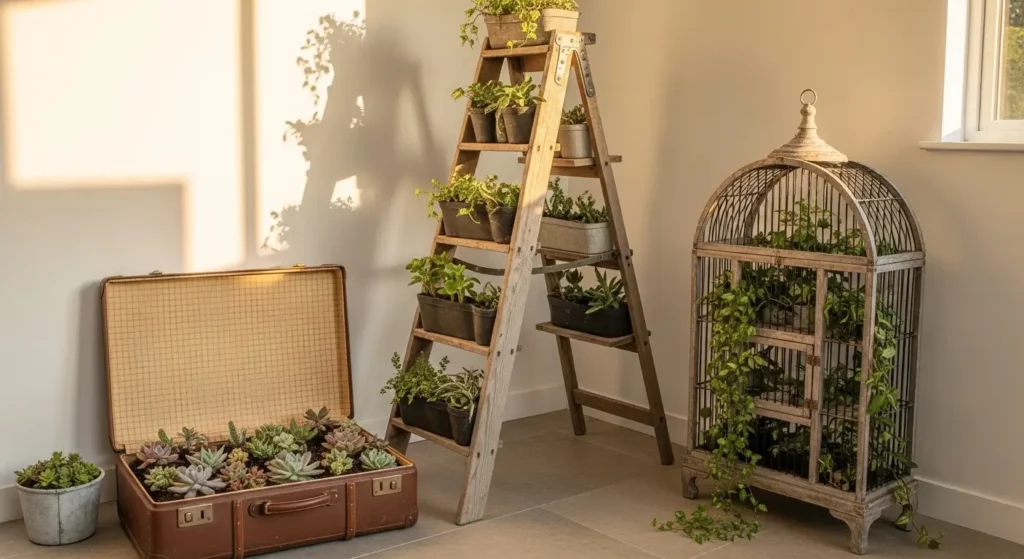
The most memorable garden plant displays use structures that nobody else would think to use as plant stands. An old wooden ladder becomes a five-level plant display. A vintage suitcase becomes a planted flower bed. A birdcage becomes a cascading vine display. The structural form of these objects creates a display architecture that a purpose-built plant stand simply cannot replicate.
For how the wooden ladder display works as part of a complete vertical garden approach see our pallet garden ideas guide which covers the full range of salvaged wood garden display structures.
Step 7: Transform Upcycled Pieces With Paint and Color
✦ Add Color With Paint and Finishes
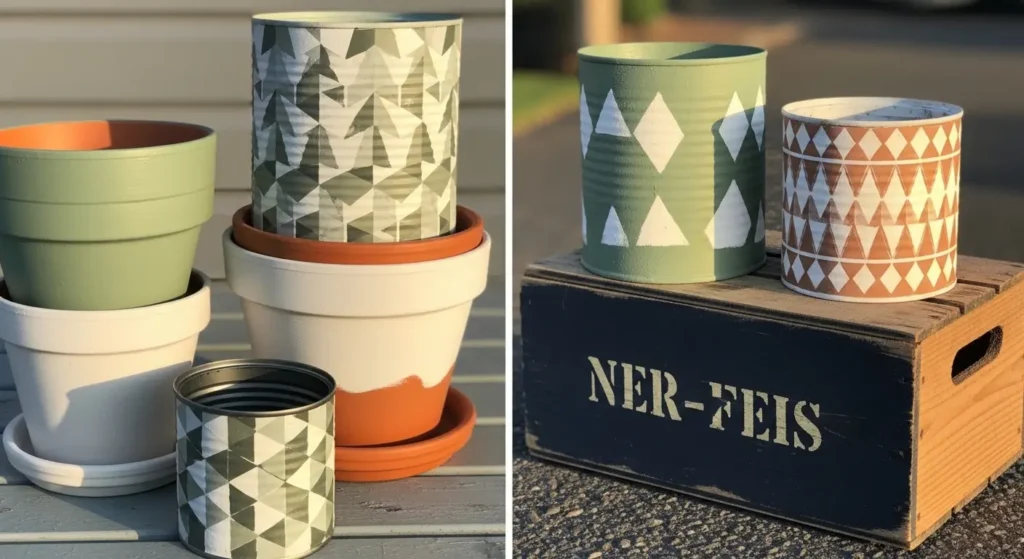
Paint is the most powerful single transformation tool in any upcycling project. An ugly broken item becomes a designed garden feature when given the right paint treatment. The key is choosing colors that work with the overall garden palette and applying paint that survives outdoor conditions.
Always use exterior paint for any upcycled garden item that will be exposed to weather. Chalk paint in outdoor formulations creates the most popular matte finish that suits vintage and rustic aesthetics perfectly. Choose a limited palette of two or three colors and apply consistently across multiple pieces in your garden — the color repetition creates the cohesion that makes a collection of upcycled pieces look designed rather than random.
PRO TIP: For the most authentic vintage look do not sand upcycled pieces smooth before painting. Leave existing rust, flaking paint, and surface texture in place and paint directly over them. The resulting imperfect finish has a depth and character that perfectly prepared surfaces never achieve.
Step 8: Transform Vintage Metal Finds Into Garden Statements
✦ Transform Vintage Metal Finds
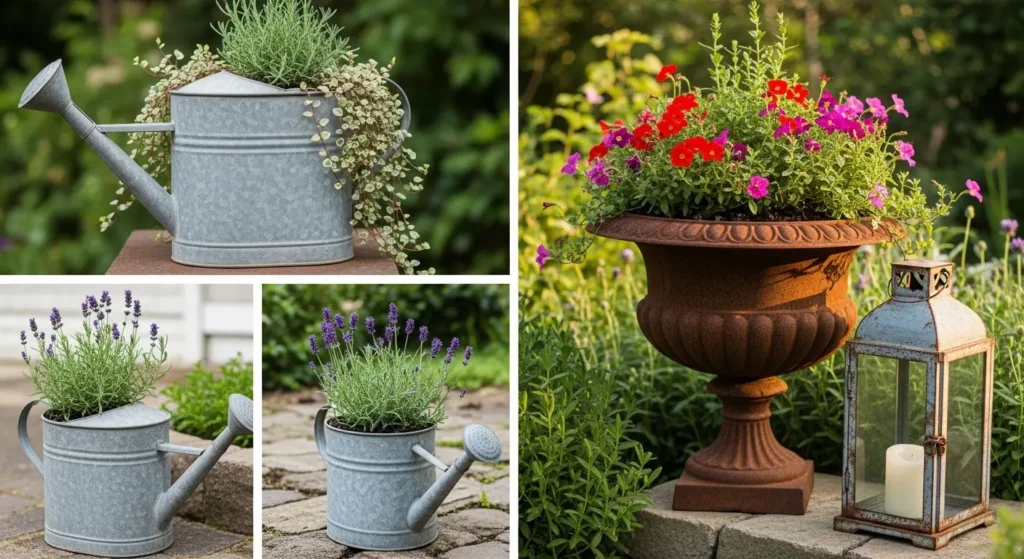
Rust is the finish most people try to remove from garden metal. I find it is the finish most worth keeping.
Aged iron against green plants creates a contrast that no new material achieves — worn industrial metal beside living organic growth. Seal the rust with rust converter and exterior varnish and it becomes a stable, beautiful finish that only improves with time.
Step 9: Upcycle Wooden Items for Warm Natural Garden Texture
✦ Upcycle Wooden Items Creatively
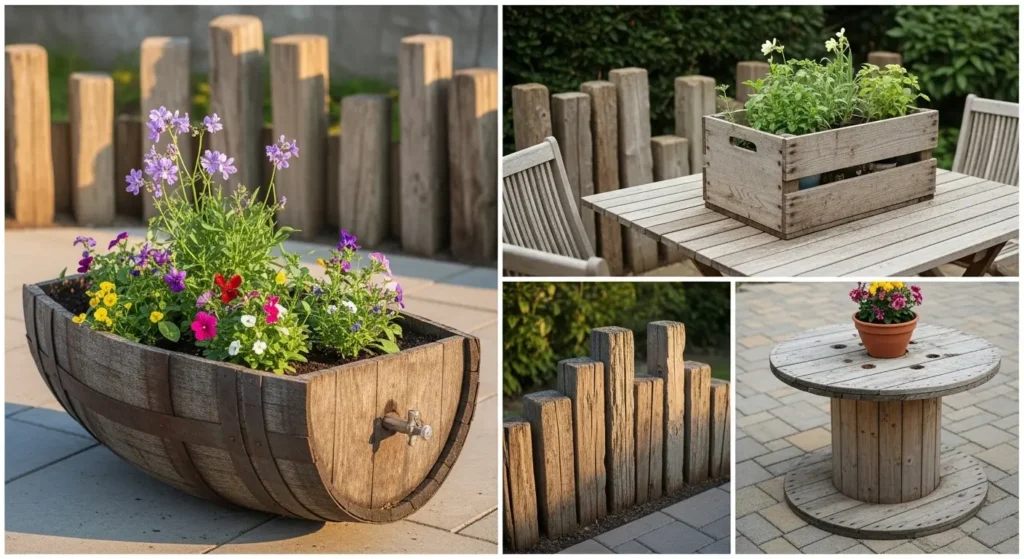
Aged and weathered wood adds a warmth to garden decor that no other material can replicate. The natural grain patterns, the silver-grey weathering of untreated timber, and the way aged wood interacts with soft afternoon light create a visual quality that newly purchased garden items simply do not have.
Old wine barrels cut in half make exceptional deep planters with excellent drainage and natural visual appeal. Weathered wooden crates become mobile herb gardens. Old fence posts become rustic garden edging. Wooden cable reels become garden tables. Treat any wooden garden upcycle with exterior wood oil to prevent decay — the oil soaks in without changing the weathered appearance significantly and extends the life of the piece by years.
PRO TIP: Cut lengths of old fence post or timber into sections of the same height and pack them tightly together in a frame to create a log-roll edge for planting borders. The cross-section ends face upward creating a beautiful honeycomb pattern that looks intentional and artisan.
Step 10: Use Upcycled Objects to Create Garden Focal Points
✦ Create Eye-Catching Focal Points
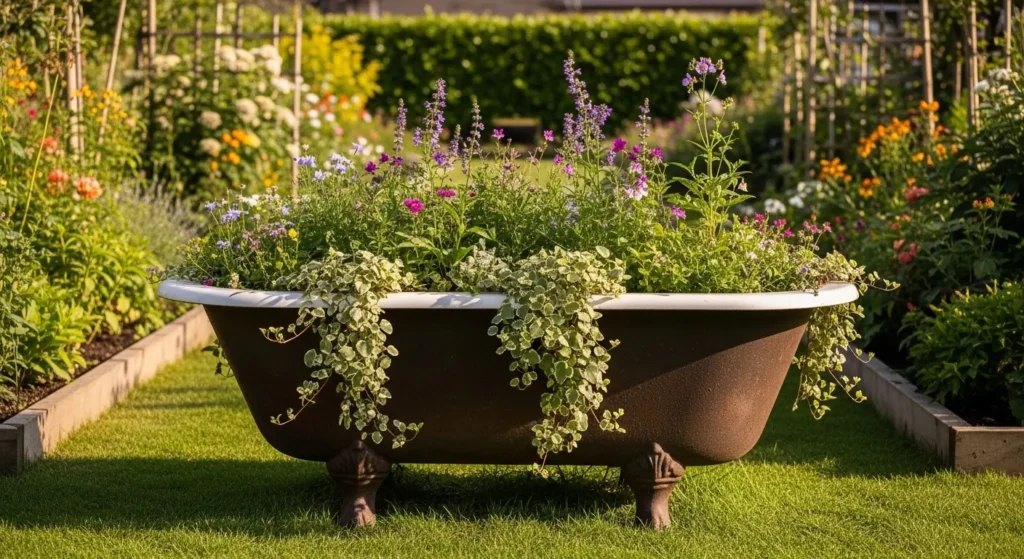
Every great garden has one element that stops visitors in their tracks — one object that prompts the question where did you get that. Upcycled objects make the best garden focal points because they are genuinely unique. Nobody else has the same cast iron bathtub planter, the same repurposed chimney pot, or the same vintage enamel sink water feature.
For how to position a garden focal point for maximum visual impact see our garden rock art ideas guide which covers the placement principles that make a single statement object anchor a whole garden space.
Step 11: Mix Upcycled Pieces With New Elements for a Balanced Look
✦ Mix Old and New Decor
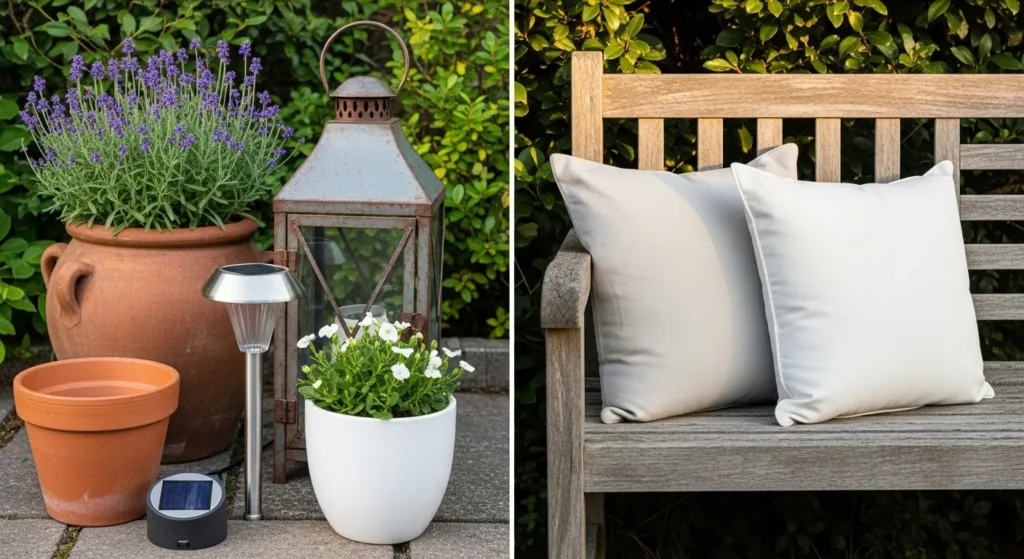
The most beautiful upcycled gardens are never entirely upcycled. They mix vintage and repurposed pieces with new elements in a way that makes both look better than they would alone. A new ceramic planter gains character from being positioned beside an aged terracotta one. A modern solar light gains warmth from being placed among vintage metal objects. The contrast between old and new creates visual interest that neither alone can achieve.
Use new plants and fresh seasonal planting to bring life to upcycled containers and structures. A beautiful new outdoor rug grounds a collection of mismatched upcycled furniture into a cohesive seating area. New outdoor cushions refresh an old wooden bench into a genuinely comfortable garden seat. The rule is to let the upcycled pieces provide character and personality while new elements provide freshness and comfort.
Step 12: Style Your Upcycled Garden Decor for a Cohesive Result
✦ Style For A Cohesive Look
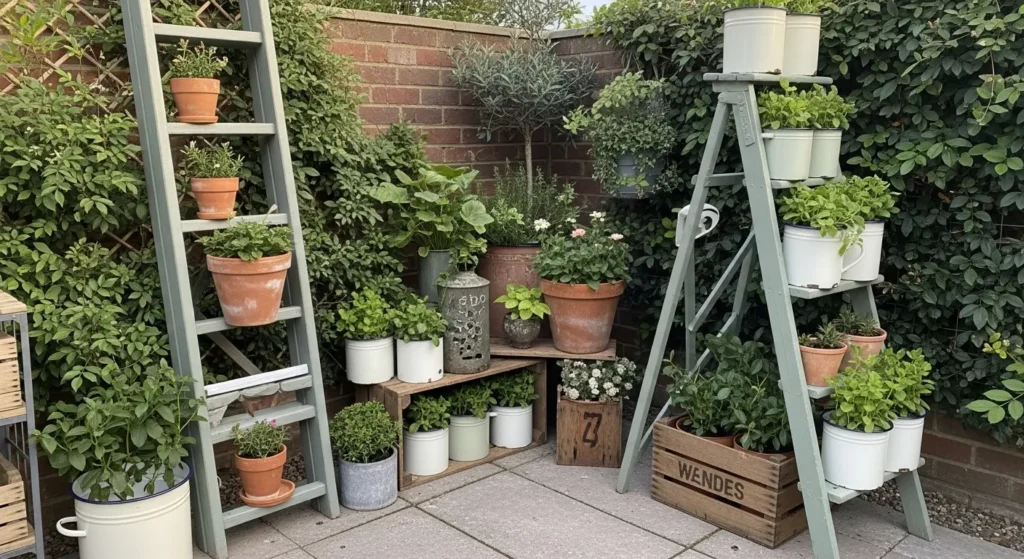
The difference between a beautiful upcycled garden and a cluttered one is cohesion. Individual upcycled pieces that are individually interesting but collectively chaotic create a garden that feels unresolved. The same pieces edited to a consistent palette and arranged with clear intention create a garden that looks genuinely designed.
Achieve cohesion in an upcycled garden through three tools: consistent color palette — paint several pieces in the same or complementary colors to tie them together visually. Consistent plant palette — using the same or complementary plants across different upcycled containers creates unity between disparate objects. Deliberate arrangement — grouping related objects together rather than scattering them creates defined vignettes rather than a spread of individual items.
PRO TIP: Step back from your styled upcycled garden display and take a phone photograph. The phone camera is more objective than your eye and often reveals immediately whether the arrangement reads as cohesive or cluttered. Edit based on what the photograph shows rather than what you remember assembling.
Common Upcycling Mistakes to Avoid
These mistakes are the most common in garden upcycling projects:
Mistake 1 — Using interior paint outdoors
Interior paint outdoors fades, peels, and flakes within one season. Always use exterior formulation paint for any outdoor upcycling project. The price difference between interior and exterior paint is minimal compared to the difference in longevity.
Mistake 2 — No drainage in container planters
Any container used as a planter without drainage holes will kill plants through root rot within weeks. Always drill or punch drainage holes in any upcycled container before adding growing medium and plants.
Mistake 3 — Too many upcycled items in one space
Upcycled garden decor works through carefully chosen individual pieces that earn attention. Too many upcycled items creates visual chaos rather than visual interest. Edit ruthlessly — three great upcycled pieces in a garden look designed while fifteen random ones look like a junk sale.
Mistake 4 — Ignoring scale
A large empty bathtub planter looks magnificent in a generous garden and out of proportion in a small one. A tiny vintage tin planter gets lost in a large garden but works perfectly on a balcony. Always consider the scale of your upcycled piece relative to the space it will occupy.
Mistake 5 — Mixing too many styles
Industrial metal, rustic farmhouse wood, cottage ceramic, and modern minimal pieces in the same garden space creates a visual identity crisis. Choose one or two complementary aesthetic directions for your upcycled garden decor and stay within them.
📌 More garden ideas → 8 Budget-Friendly Pallet Garden Ideas
Frequently Asked Questions
What can I upcycle for garden decor?
The best items to upcycle for garden decor are containers of any kind — colanders, buckets, watering cans, bathtubs, sinks, and tin cans all make beautiful planters. Old furniture including chairs, ladders, dressers, and crates become plant display structures. Metal objects including gates, bicycle wheels, old tools, and ironwork become garden art and wall features. Wooden objects including pallets, wine barrels, cable reels, and fence sections become raised beds, edging, and display platforms. According to Better Homes and Gardens repurposed container planters are consistently among the most saved garden ideas on Pinterest.
How do I make upcycled garden decor last longer?
Use exterior-grade paint and varnish on all wooden items and treat metal with rust converter followed by exterior varnish. Drill drainage holes in all container planters and raise items slightly off the ground to prevent moisture wicking into the base.
Where do I find items to upcycle for the garden?
Your own home — kitchen items, old furniture, and shed contents — is the first and best source. Facebook Marketplace free listings, Buy Nothing groups, charity shops, and estate sales provide a constant stream of exactly the worn, characterful objects that make the best garden upcycles.
How do I make a cohesive upcycled garden?
Consistent color — paint multiple upcycled pieces in the same or complementary tones — is the fastest cohesion tool. Consistent plant palette across different upcycled containers and choosing pieces from the same aesthetic direction complete the approach.
More Creative Garden Ideas
→ 12 Boho Garden Ideas You’ll Love
→ 20 Creative Garden Rock Art Ideas
→ 25 Stunning Back Porch Patio Ideas
→ 8 Budget Sleeper Garden Ideas For Summer
The enamel colander on my back fence has been there for four summers. The nasturtiums trail over the sides every July. The cracks in the enamel show underneath.
It cost nothing. It is the most commented-on thing in the garden. Neither of those facts is a coincidence.
Pick one object this weekend that you were going to throw away. Drill three drainage holes in the base. Plant something trailing in it. Put it on a fence. That is the beginning of an upcycled garden.

Sheikh Hassaan is a digital architect for small businesses and the founder of The Glow Up System. He writes about home decor, garden design, and outdoor living for real American homes – practical ideas that work in actual spaces without oversized budgets.