
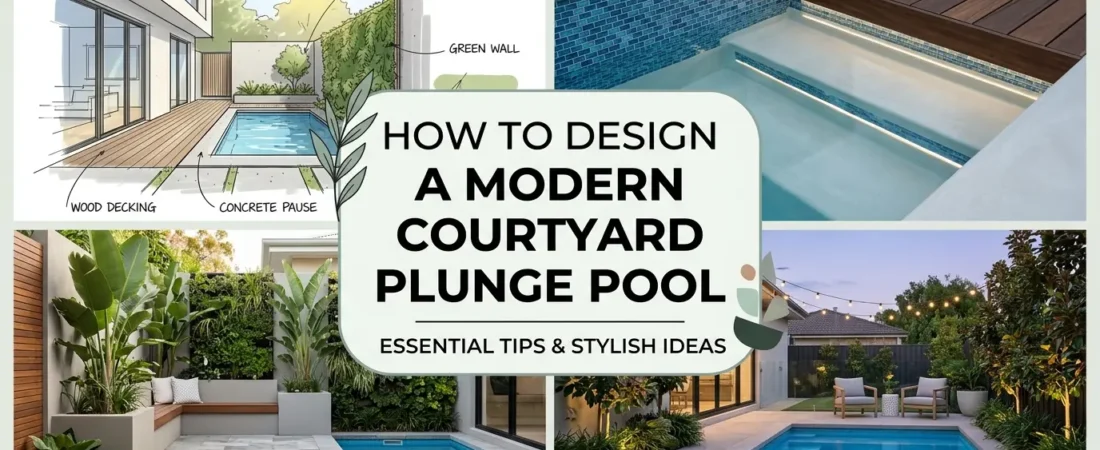
Designing a plunge pool for a courtyard space produces one of the most dramatic outdoor transformations available — a small enclosed outdoor space with a pool becomes a private resort that makes every other garden feature feel peripheral. A modern courtyard plunge pool combines the architectural precision of contemporary pool design with the intimacy and enclosure of a courtyard setting, creating a water feature that is genuinely immersive rather than decorative.
This guide covers every design decision in a modern courtyard plunge pool project — from size and depth specification through materials, coping, landscaping, lighting, and the surrounding design elements that complete the courtyard pool experience.
Table of Contents
What Makes a Plunge Pool Different From a Standard Pool
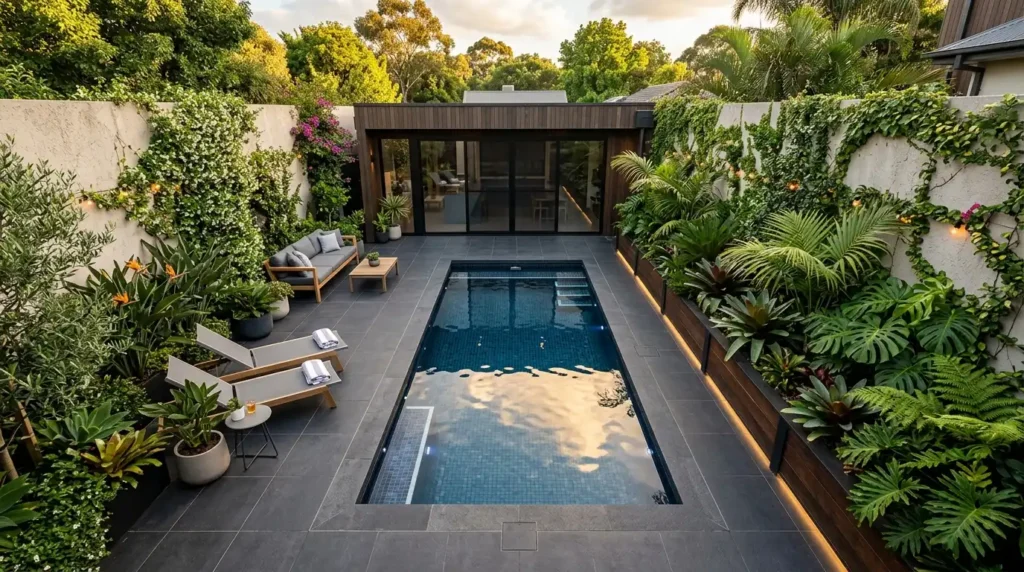
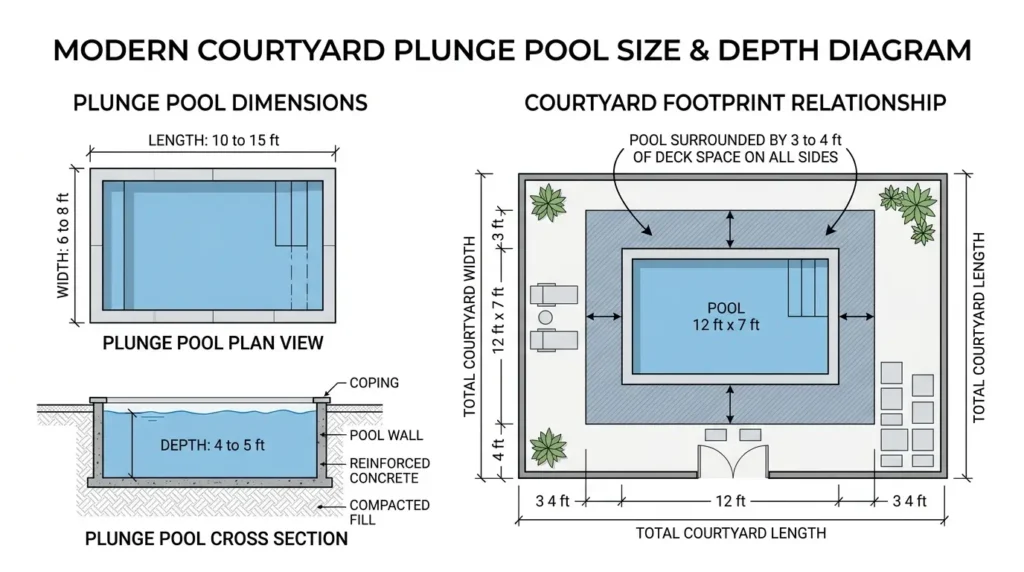
A plunge pool is defined by its purpose rather than its size — it is designed for cooling, relaxation, and hydrotherapy rather than lap swimming or family recreation. Standard swimming pools are typically 25 to 50 feet long and designed for physical activity. A plunge pool is typically 10 to 15 feet long, 6 to 8 feet wide, and 4 to 5 feet deep — sized for immersion rather than swimming.
The compact dimensions make a plunge pool the ideal courtyard water feature. A courtyard of 15 by 20 feet can accommodate a plunge pool of 10 by 6 feet with comfortable surrounding deck space on all sides. The same courtyard could not accommodate a standard swimming pool of any meaningful size.
The modern plunge pool specifically refers to the architectural approach — clean geometric forms, dark or neutral interior finishes, minimal coping, and the integration of the pool structure with surrounding hard landscaping as a designed whole rather than a pool installed in a garden.
Size and Depth Specification
Pool Dimensions
The minimum effective plunge pool dimensions for comfortable adult immersion: 8 feet length by 5 feet width by 4 feet depth. This is the absolute minimum — two adults can use this size simultaneously but it feels tight. The ideal plunge pool for a courtyard setting: 12 feet by 7 feet by 4.5 feet. This size provides comfortable use for two to three adults, allows gentle movement within the pool, and leaves sufficient courtyard floor space for deck furniture and planting.
For a courtyard plunge pool the clearance between the pool edge and the courtyard wall determines the quality of the surrounding space. A minimum of 3 feet on all sides is required for comfortable access and toweling space. 4 to 5 feet on the primary access sides allows a single lounger or bench seat beside the pool — transforming the surround into usable relaxation space rather than purely circulation.
Depth Specification
A uniform depth of 4 to 4.5 feet throughout the plunge pool provides standing depth for most adults with water at chest height — the correct depth for hydrotherapy use and comfortable stationary immersion. A shallow end of 3 feet with a deeper end of 5 feet suits households with children who need a safer shallow entry zone.
Avoid depths exceeding 5 feet in a plunge pool — greater depth adds significant construction cost, increases water volume and heating cost, and provides no practical benefit for a pool designed for immersion rather than swimming or diving.
Materials: Pool Interior, Coping, and Surround
Pool Interior Finish
Dark pebblecrete or exposed aggregate:
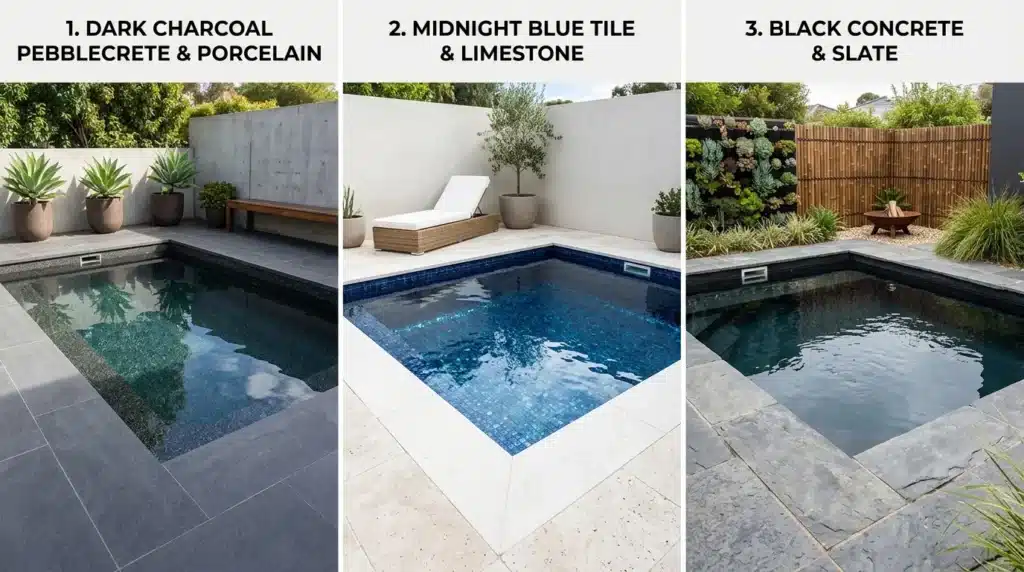
The most popular modern plunge pool interior finish. Dark charcoal or black aggregate creates a deep reflective water color that appears almost black or deep navy — the most visually dramatic modern pool aesthetic. Durable and slip-resistant. Cost-effective relative to tile finishes.
Glass tile in midnight blue or deep teal:
The premium interior finish that creates the most luminous water color. Glass tiles reflect sunlight through the water creating shifting light patterns on the pool floor. The installation and material cost is significantly higher than pebblecrete but the visual quality at all times of day is unsurpassed.
Black or dark grey concrete render:
The most architecturally pure interior finish — smooth rendered concrete in charcoal or black creates a pool that reads as a pure geometric form. Requires specialist sealing and more careful maintenance than aggregate or tile finishes but produces the most dramatic modern aesthetic.
Coping and Surround
The coping — the material that caps the pool edge — determines the visual relationship between pool and surround. Modern courtyard plunge pool design uses one of three coping approaches.
Flush coping:
The surround material continues to the pool edge with no visible coping step — the cleanest and most architectural approach that makes the pool appear as a void cut into the surround surface. Requires precise construction and waterproofing detail at the pool edge.
Cantilevered coping:
The coping stone overhangs the pool edge by 1 to 2 inches creating a shadow line that defines the pool perimeter crisply. Large format porcelain or natural stone in 600 by 600mm or larger tiles creates the cleanest cantilevered coping look.
Infinity or blade edge:
One or two pool edges finish flush with the water surface with no visible coping — water appears to extend to the horizon or flow over the edge. The most visually dramatic coping treatment suited to courtyards with a view or with a level change on one side.
Courtyard Planting and Landscaping Around the Pool
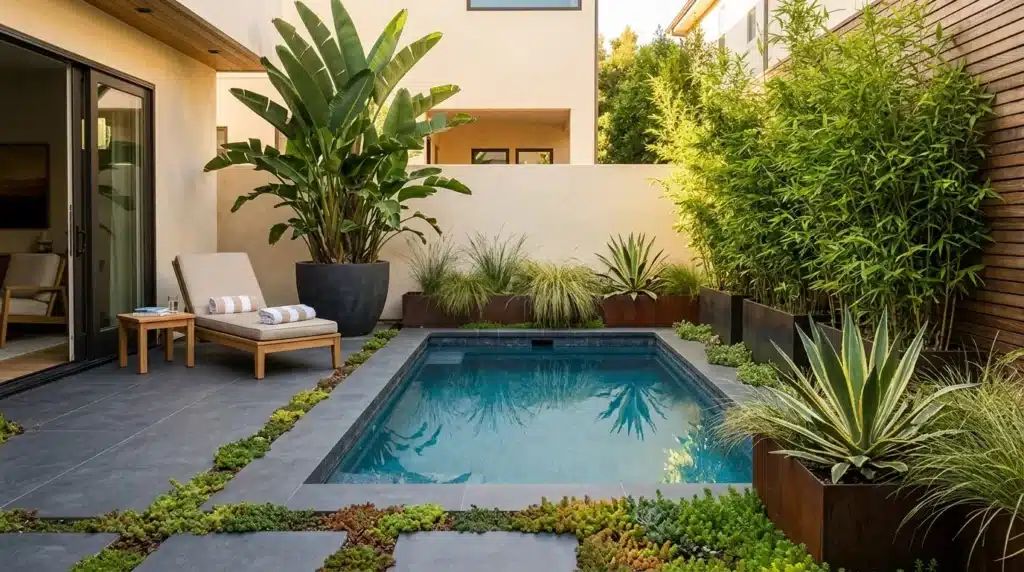
The planting strategy for a modern courtyard plunge pool follows three principles: architectural plants that complement the geometric pool form rather than soften it, low-maintenance species that do not drop excessive leaf debris into the water, and a planting arrangement that provides the sense of enclosure and privacy without competing with the pool as the primary focal point.
Best Plants for a Modern Courtyard Plunge Pool
Architectural statement plants:
Bird of paradise (Strelitzia) in large dark concrete containers at pool corners creates the tropical architectural canopy that makes a courtyard plunge pool feel genuinely resort-quality. Agave and large-scale succulents in raised steel planters create a more arid contemporary character. Phormium in black containers provides year-round architectural sword foliage.
Privacy screening plants:
Clumping bamboo (Fargesia) in large containers along the most overlooked wall provides privacy screening to 10 feet within two seasons without invasive spreading. Tall ornamental grasses in mass planting create a softer privacy screen that moves in breeze. Evergreen climbing plants on wall-mounted wire frames create a living wall privacy surface.
Low-maintenance ground level planting:
Sedum and low succulents planted in joints between pavers or in thin planting strips beside the pool edge create living detail at ground level without the leaf drop problems of larger plants. Avoid deciduous trees and shrubs beside a plunge pool — seasonal leaf fall creates significant pool maintenance work.
Lighting Design for a Courtyard Plunge Pool
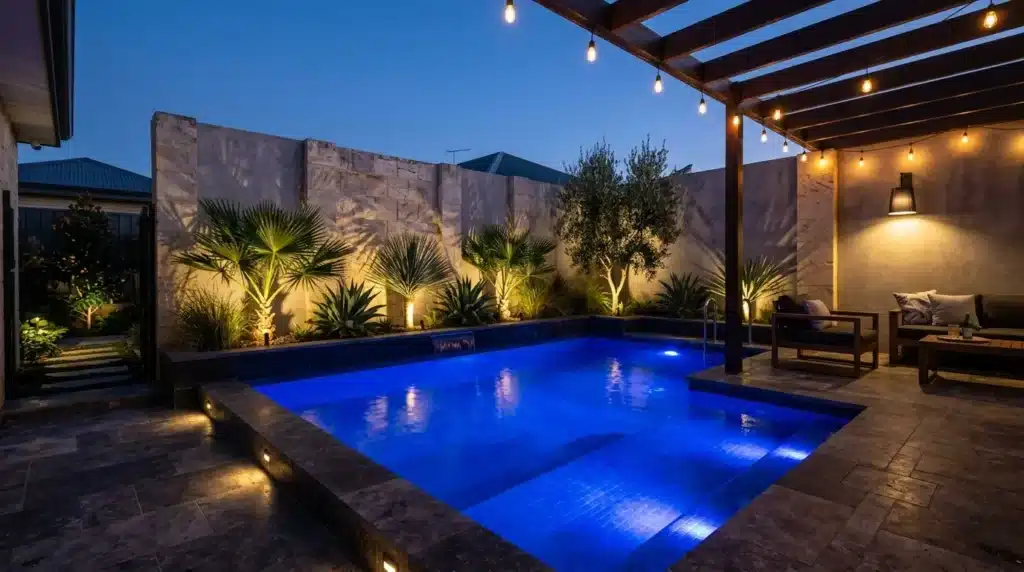
Underwater LED pool lights:
The primary pool lighting — recessed LED fittings in the pool wall below the waterline illuminate the water from within creating the glowing pool effect. Two fittings on opposite long walls provide even illumination throughout the pool. Color-changing RGBW LED fittings allow warm white for everyday use and color modes for occasions.
Ground-level uplighting:
Recessed ground-level uplights aimed at architectural plants and courtyard walls create dramatic shadow play that makes the courtyard genuinely beautiful after dark. The LANSOW solar spotlights provide the uplighting quality needed for courtyard plant and wall illumination with no wiring requirement — position facing the architectural plants at pool corners. Find them linked on Amazon.
Step and coping edge lighting:
Recessed step lights in any deck level changes and linear LED strip lighting under the coping overhang illuminate the pool edge for safe night use. Linear LED strip under a cantilevered coping creates a floating light line around the pool perimeter — one of the most visually distinctive modern pool lighting details.
Equipment and Technology for a Modern Plunge Pool
Heating
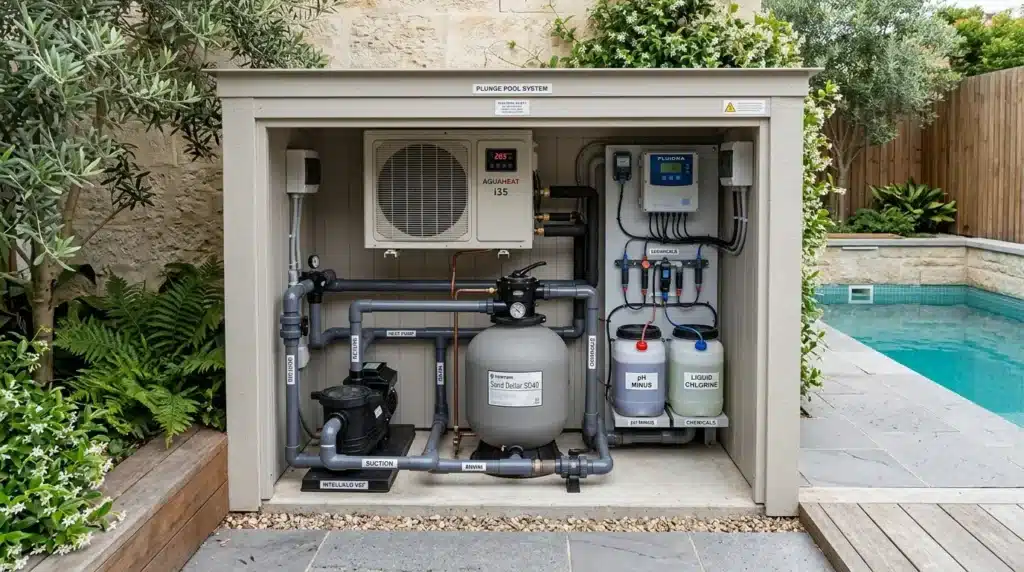
A heat pump is the most energy-efficient heating method for a courtyard plunge pool — it extracts heat from the ambient air and transfers it to the water at a coefficient of performance of 5 to 6, meaning 1 unit of electrical energy produces 5 to 6 units of heat energy. A 6kW heat pump heats a standard plunge pool of 12,000 liters from cold to a comfortable 28 degrees Celsius in 8 to 12 hours. Running cost is significantly lower than gas or electric element heating.
Filtration
A variable speed pump with a cartridge or sand filter sized for the plunge pool water volume provides the filtration required. Variable speed pumps use significantly less electricity than single-speed pumps by running at lower speeds for the majority of the filtration cycle. Program the pump to run during off-peak electricity tariff hours for further operating cost reduction.
Water treatment
Saltwater chlorination is the preferred water treatment system for a plunge pool — it produces chlorine from dissolved salt electrolytically providing consistent sanitisation without the manual chemical handling that traditional chlorine dosing requires. The water feels softer on skin than traditionally chlorinated pools. Automated pH dosing maintains water chemistry without daily testing.
Cover
An automatic slatted pool cover serves three functions simultaneously — safety, heat retention, and debris exclusion. The slats sit flush with the coping when closed and retract into a concealed housing at one end of the pool when open. Heat retained under a cover overnight reduces the heating cost to maintain temperature by 60 to 70%. The cover is the single most cost-effective pool equipment investment after the heat pump.
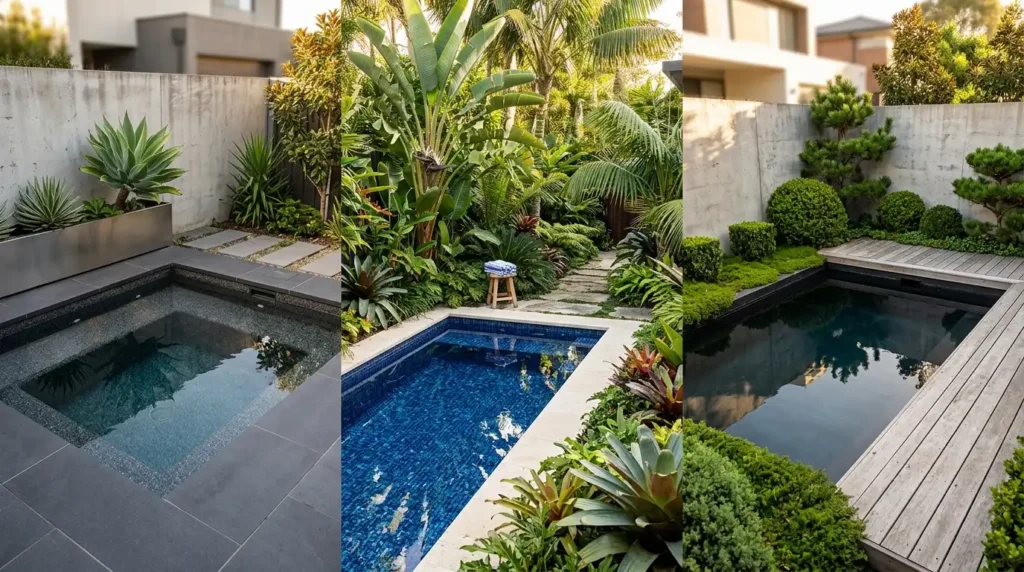
Three Modern Courtyard Plunge Pool Design Styles
Dark Minimalist
Charcoal or black pebblecrete interior. Large format dark grey or charcoal porcelain coping and surround. Steel or corten planters with architectural succulents and agave. No soft planting — the design language is purely hard and geometric. The most dramatic and most photographed modern plunge pool aesthetic.
Tropical Resort
Midnight blue or deep teal glass tile interior. Pale limestone or travertine coping and surround. Generous tropical planting — bird of paradise, banana, and large-leaved Colocasia in quality containers. The design language combines the precision of modern pool construction with the lush organic quality of tropical resort gardens.
Japandi Zen
Black concrete render or dark grey tile interior. Natural timber deck on one long side as the primary pool access. Gravel and moss ground treatment. Clipped evergreen planting in simple ceramic containers. The Japandi pool design language prioritizes stillness and quiet rather than drama — the water surface is the focal point and the surrounding elements exist to frame it without competing.
📌 More outdoor and garden ideas: How To Build a Small Pond With a Waterfall
Frequently Asked Questions
How big should a courtyard plunge pool be?
The ideal courtyard plunge pool size is 12 feet by 7 feet by 4.5 feet deep — large enough for comfortable use by two to three adults and small enough to fit in a courtyard of 20 by 20 feet or larger with comfortable surrounding deck space. The minimum workable plunge pool is 8 feet by 5 feet but this feels tight for more than one adult simultaneously. According to the Pool and Hot Tub Alliance the average residential plunge pool installed in the US is between 10 and 14 feet in length with the compact size being the primary design driver rather than a budget compromise.
How much does a courtyard plunge pool cost?
A concrete courtyard plunge pool of 12 by 7 feet with a quality interior finish, automated equipment, and basic surrounding paving costs $25,000 to $45,000 installed in most US markets. Fiberglass plunge pool shells installed in a courtyard cost $15,000 to $30,000 depending on access difficulty and surround specification. The courtyard access factor significantly affects cost — courtyard pools that require demolishing a wall section for excavation equipment access add $3,000 to $8,000 to the base installation cost.
What is the best material for a modern plunge pool interior?
Dark pebblecrete or exposed aggregate in charcoal or black is the best interior finish for a modern courtyard plunge pool because it creates the deep reflective water color that defines the modern pool aesthetic, is significantly more cost-effective than glass tile, and is more durable and lower maintenance than smooth render finishes. Glass tile in midnight blue or deep teal creates the most visually beautiful interior finish but at two to three times the cost of aggregate. Smooth black render creates the most architecturally pure finish but requires specialist sealing and careful maintenance.
Do I need planning permission for a courtyard plunge pool?
Planning permission requirements for courtyard plunge pools vary significantly by location. In most US states an in-ground pool requires a building permit regardless of size. Most jurisdictions also require a compliant pool barrier or fence meeting specific height and gate specifications. Some HOA-governed properties restrict pool installation or require HOA approval before any pool construction. Always consult your local building department and review any HOA covenants before beginning design or construction of a courtyard plunge pool.
More Outdoor and Garden Ideas
→ 10 Peaceful Garden Nook Ideas
→ 25 Chic Outdoor Living Patio Ideas You’ll Want To Copy
→ 12 Stunning Tropical Planter Ideas For Summer
Start with the size and the interior finish — every other courtyard plunge pool decision flows from those two choices. Get them right and the rest of the design resolves itself naturally around them.

Sheikh Hassaan is a digital architect for small businesses and the founder of The Glow Up System. He writes about home decor, garden design, and outdoor living for real American homes – practical ideas that work in actual spaces without oversized budgets.