
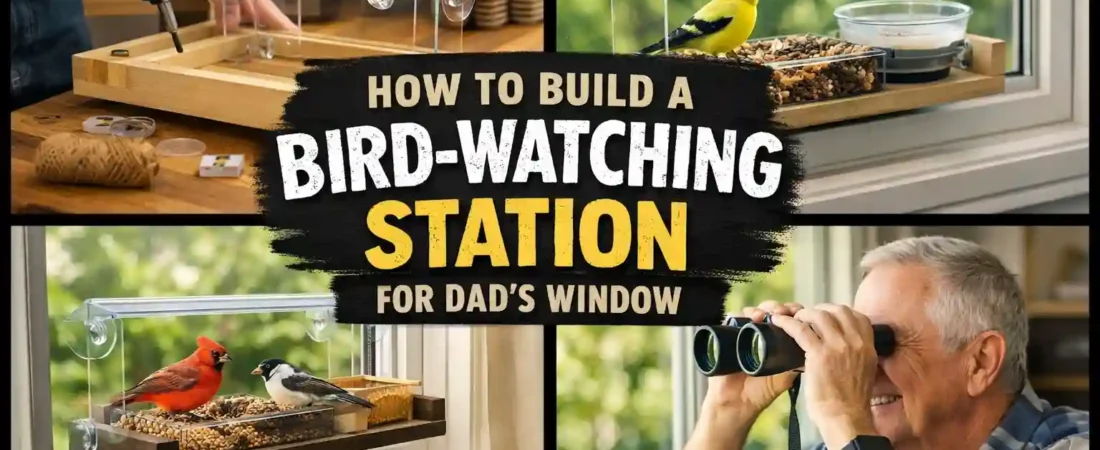
A bird watching station positioned correctly outside a favourite window transforms an ordinary view into something a dad will check first thing every morning for the rest of his life. The difference between a feeder that gets ignored by birds and a bird watching station that genuinely attracts a steady stream of visitors comes down to a handful of specific positioning and design decisions that most people never consider.
This guide covers how to build a bird watching station for dad’s window — from choosing the right distance and height through feeder selection, the safety considerations that protect both birds and windows, and the specific food choices that attract the species worth watching.
Table of Contents
Positioning the Bird Watching Station Correctly
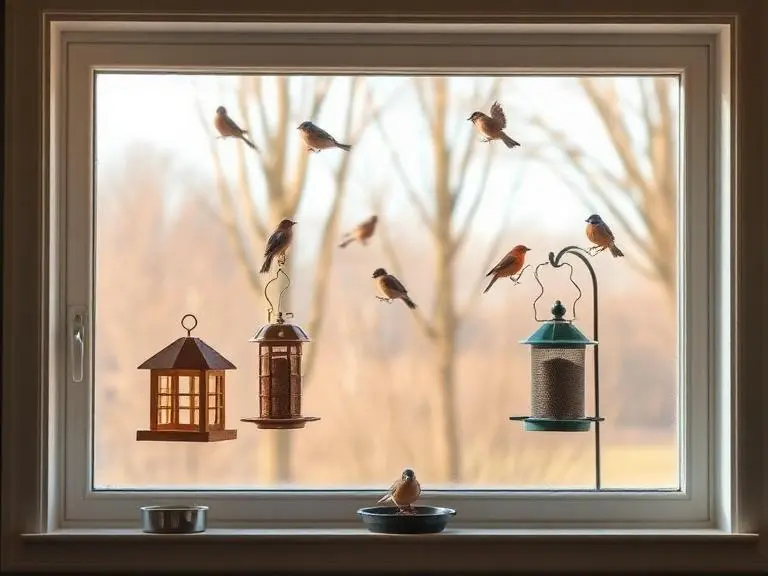
The single most important decision in building a bird watching station is the distance from the window — get this wrong and either birds avoid the feeder entirely or they fly directly into the glass. The two distances that work are either very close (within 1 meter) or far enough away (over 9 meters) that birds have time to change direction before reaching the window.
The close-distance approach (under 1 meter from the glass) is the better choice for most home setups because it provides the closest possible viewing experience while preventing birds building enough flight speed to injure themselves on collision. Birds approaching a feeder this close to the window naturally slow down and land carefully rather than flying at speed.
Avoid the middle distance of 1 to 9 meters entirely — this is the danger zone where birds build enough speed leaving the feeder to seriously injure themselves on window collision, which is the most common cause of bird feeder related window strikes according to ornithological research.
Setting Up Optimal Views and Safe Perches Close to the Glass
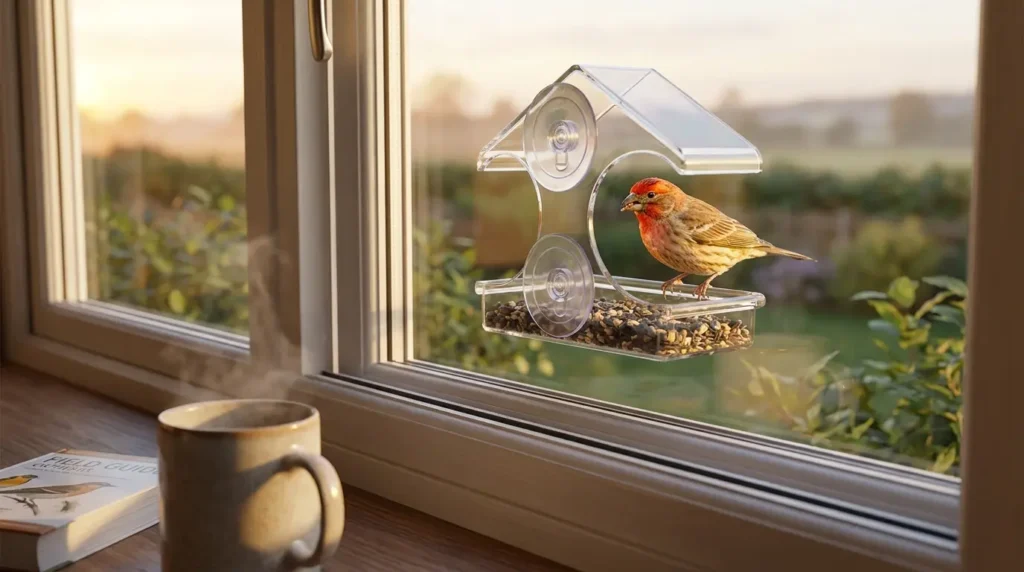
A window-mounted feeder attached directly to the glass with strong suction cups provides the closest possible viewing experience — birds feeding at this distance can be observed in remarkable detail, often closer than binoculars would normally allow even in a well-positioned outdoor hide. This is the single best addition for a dad who wants genuinely engaging close-up bird watching from his favourite chair.
Position the main feeding station 60cm to 1 meter from the window for the optimal combination of close viewing and safety. At this distance birds have a clear unobstructed view into the room which most species become comfortable with after an initial adjustment period of one to two weeks.
Provide a safe perching point — a small dead branch, a simple wooden dowel, or a decorative perch stand positioned slightly above and to the side of the feeder itself. Birds use this perch to survey the area before committing to land on the feeder, and it provides the most natural and most photogenic viewing position as they pause before and after feeding.
Choosing the Right Feeder Types
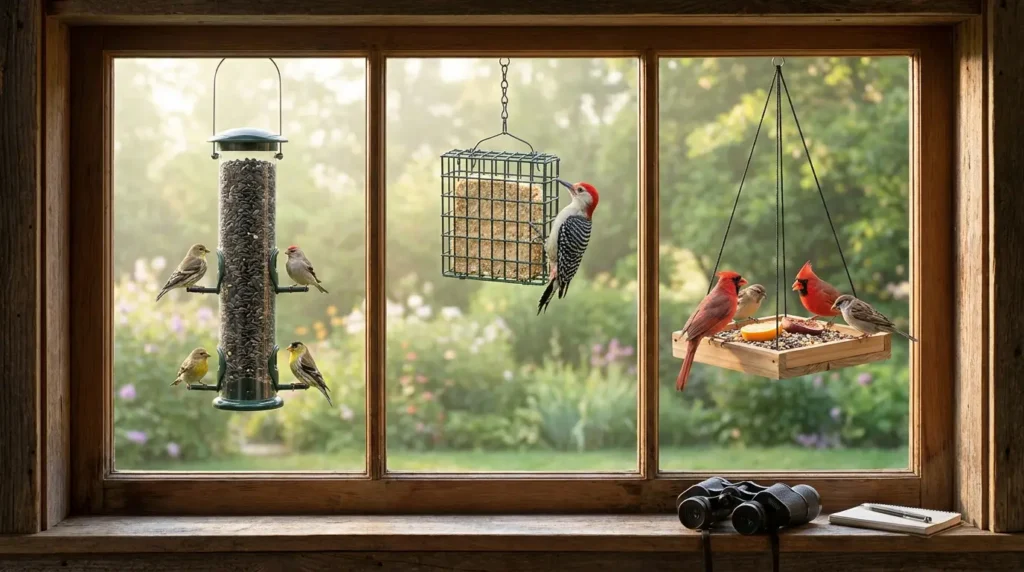
Tube feeder:
Filled with sunflower seed or a quality mixed seed blend, tube feeders attract finches, tits, and other small perching birds. The multiple feeding ports allow several birds to feed simultaneously, creating more activity and movement to watch than a single feeding point.
Suet cage feeder:
A wire cage holding a suet block attracts woodpeckers, nuthatches, and other species that cling to feed rather than perch. Suet provides high energy fat content particularly valuable in colder months and attracts a noticeably different range of species than seed feeders alone.
Platform tray feeder:
An open tray feeder attracts ground-feeding species such as doves, sparrows, and juncos that prefer feeding from a flat surface rather than a hanging or clinging position. This is the feeder type most likely to attract the widest variety of species in a single setup.
The most engaging bird watching station combines all three feeder types within view of the same window — the variety of feeding behaviour and species attracted creates significantly more activity to watch than any single feeder alone could provide.
Food Choices That Attract the Best Species
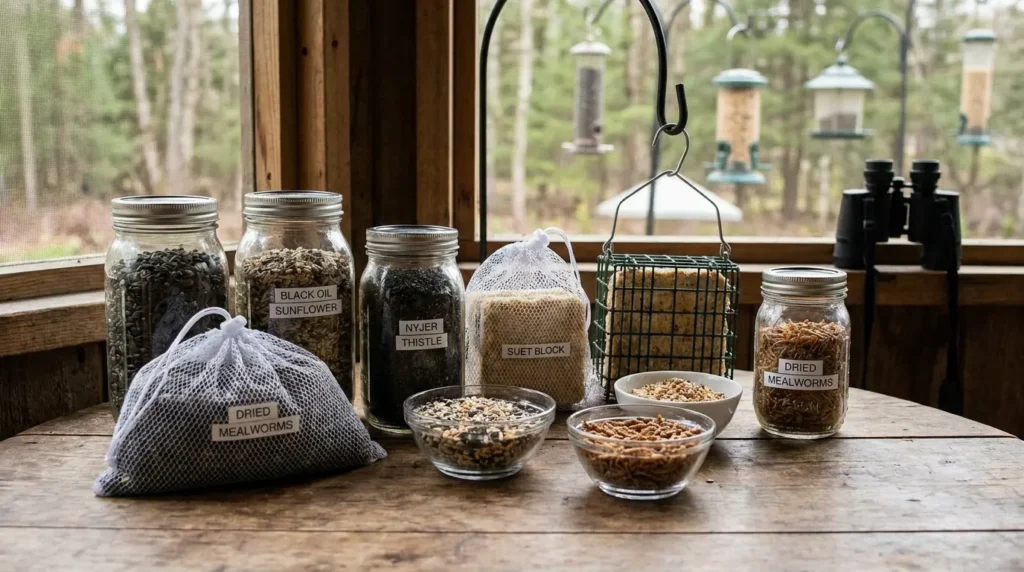
Black sunflower seed is the single most universally attractive food across the widest range of garden bird species — if only one food type is offered this is the correct choice. Nyjer seed attracts finches specifically, particularly goldfinches, and is worth offering in a dedicated fine-mesh feeder alongside the main sunflower seed feeder.
Dried mealworms offered on a platform feeder attract robins, wrens, and other insect-eating species that ignore seed feeders entirely. Adding mealworms to the bird watching station significantly expands the range of species likely to visit beyond the typical seed-eating birds.
📌 More garden ideas: 13 Brilliant Bird Bath Landscaping Ideas
Frequently Asked Questions
How close should a bird feeder be to a window?
A bird feeder should be positioned either within 1 meter of the window or further than 9 meters away — never in the middle distance, which is the most common cause of window strike injuries. Close positioning under 1 meter prevents birds building dangerous flight speed and allows the closest possible viewing experience. According to the American Bird Conservancy window-mounted feeders attached directly to the glass are among the safest options because birds approach them slowly and deliberately rather than in fast flight.
What is the best bird feeder for window viewing?
A window-mounted suction cup feeder attached directly to the glass provides the closest and most detailed bird watching experience available. For a complete bird watching station combine a window-mounted feeder for close viewing with a tube feeder, suet cage, and platform tray positioned 60cm to 1 meter from the window to attract a wider variety of species and feeding behaviours.
What food attracts the most birds to a feeding station?
Black sunflower seed attracts the widest range of garden bird species and should form the base of any bird watching station. Adding nyjer seed for finches, a suet block for woodpeckers and nuthatches, and dried mealworms for robins and wrens significantly expands the variety of species likely to visit beyond what a single food type achieves.
How long does it take for birds to find a new feeding station?
Birds typically find a new feeding station within a few days to two weeks, depending on local bird population density and how visible the feeder is from typical flight paths. Patience in the first two weeks is important — activity often starts slowly with one or two visiting birds before word spreads and activity increases significantly through the following month.
More Garden Ideas
→ 10 Peaceful Garden Nook Ideas
→ How To Build a Cozy Dad’s Retreat Patio Corner
→ 10 Father’s Day Gifts for Gardeners He Will Actually Love
Get the distance right first. Everything else — feeder type, food choice, perch placement — only matters once the birds are actually willing to visit.

Sheikh Hassaan is a digital architect for small businesses and the founder of The Glow Up System. He writes about home decor, garden design, and outdoor living for real American homes – practical ideas that work in actual spaces without oversized budgets.