
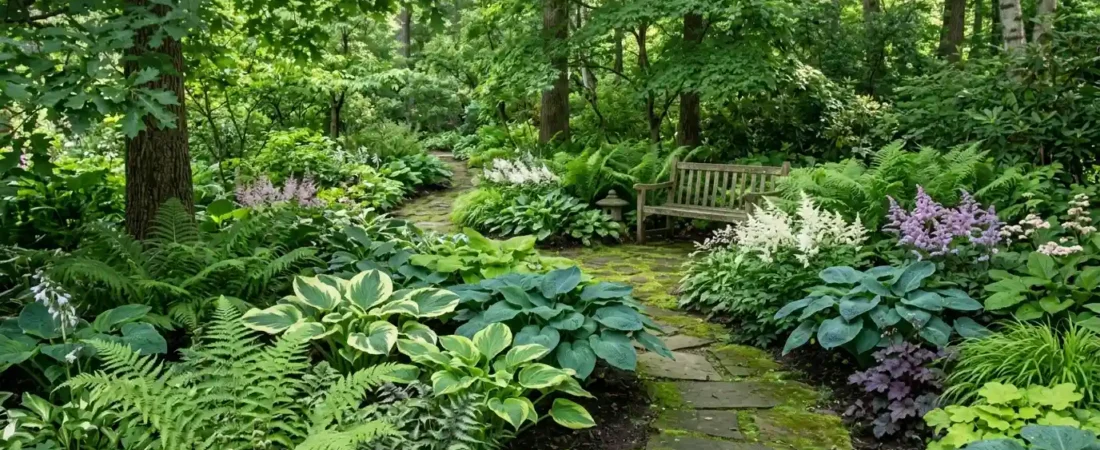
Every garden has them. Those dark corners under the oak tree. The narrow strip along the north side of the house. The spot where the fence casts a shadow all afternoon. Most people give up on these areas. They leave them bare, cover them with mulch, or just ignore them entirely. But those shady spots do not have to be dead zones. They can be some of the most interesting and lush parts of your garden if you know what to plant.
That is what makes choosing the right garden plants for shade so rewarding, turning those dim, forgotten corners into vibrant, textural spaces that add depth and interest to your entire yard.
This article covers seven categories of shade-loving plants that work for real American gardens, from small urban patios to sprawling suburban backyards. Every suggestion includes specific varieties, actual care requirements, and practical planting advice. No vague recommendations. No unrealistic expectations. Just beautiful plants that thrive where the sun barely reaches.
Table of Contents
Why Shade Gardening Is Different From Sun Gardening
Most gardening advice assumes you have full sun. It tells you to plant tomatoes and roses and sunflowers. But shade gardens are a completely different game. The rules change. The plants change. The entire approach changes.
In a shade garden, you are not fighting the sun. You are working with the available light. That means choosing plants that evolved to thrive in low-light conditions. These plants have adapted to make the most of every ray of filtered light that reaches them. They often have larger leaves to capture more light. They are often more drought-tolerant because the shade keeps the soil cooler and moister. They are often more forgiving because they grow more slowly and require less maintenance.
The biggest mistake people make with shade gardens is trying to force sun-loving plants into shady spots. They plant impatiens or begonias and wonder why they look leggy and sad. The key is working with the conditions you have, not against them.
Another thing that changes in a shade garden is the color palette. You cannot rely on bright, bold flowers to provide color. Instead, you rely on foliage. The incredible variety of greens, from lime to deep forest to silver-blue, creates a rich tapestry that is far more interesting than a few annual flowers. Add in variegated leaves with white, cream, or gold edges, and you have a garden that looks beautiful all season long without a single flower.
1. Hostas: The Backbone of Any Shade Garden
✦ Best for: Filling large areas with bold, textured foliage that stays beautiful all season
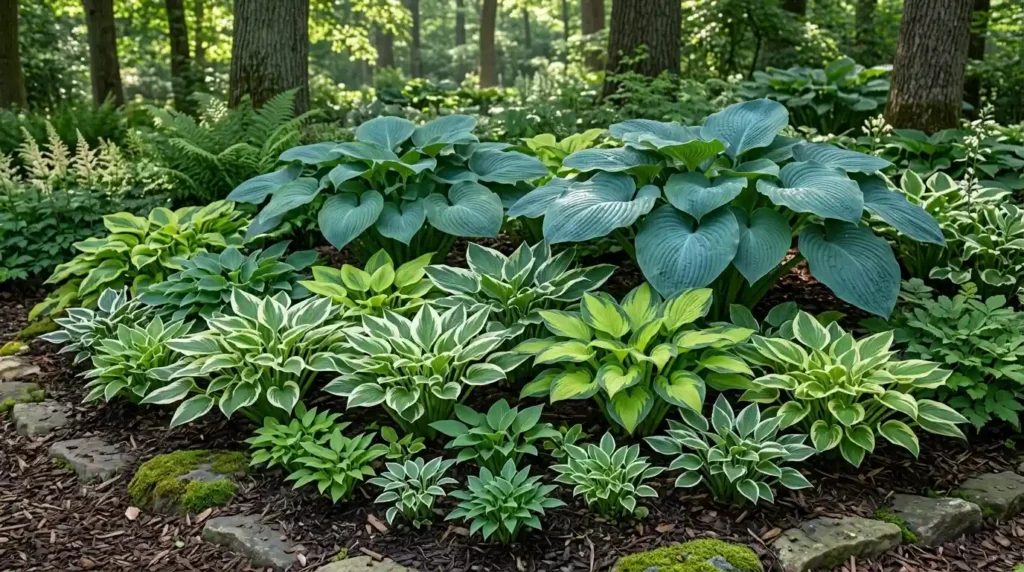
Hostas are the undisputed kings of the shade garden. They are reliable, beautiful, and incredibly diverse. With thousands of varieties available, there is a hosta for every spot in your shade garden.
For large shade gardens, start with giant hostas like ‘Sum and Substance’ or ‘Empress Wu’. These can reach 3 to 4 feet across and create a dramatic focal point. Their large, corrugated leaves add incredible texture and presence to the garden.
For medium-sized areas, try variegated varieties like ‘Patriot’ or ‘Francee’. These have dark green leaves with crisp white or cream edges. The variegation brightens up dark corners and adds visual interest even on cloudy days.
For small spaces or containers, miniature hostas like ‘Blue Mouse Ears’ are perfect. They stay under 6 inches tall and have adorable round leaves. They are perfect for container garden plants for shade on patios or balconies.
Hostas are incredibly forgiving plants for the shade garden. They tolerate a wide range of soil conditions and are relatively pest-resistant. The only thing they really need is consistent moisture. Water them deeply once a week during dry spells and they will reward you with beautiful foliage all season long.
2. Ferns: The Timeless Foliage Plant for Shade
✦ Best for: Adding soft, feathery texture and graceful movement to shaded borders
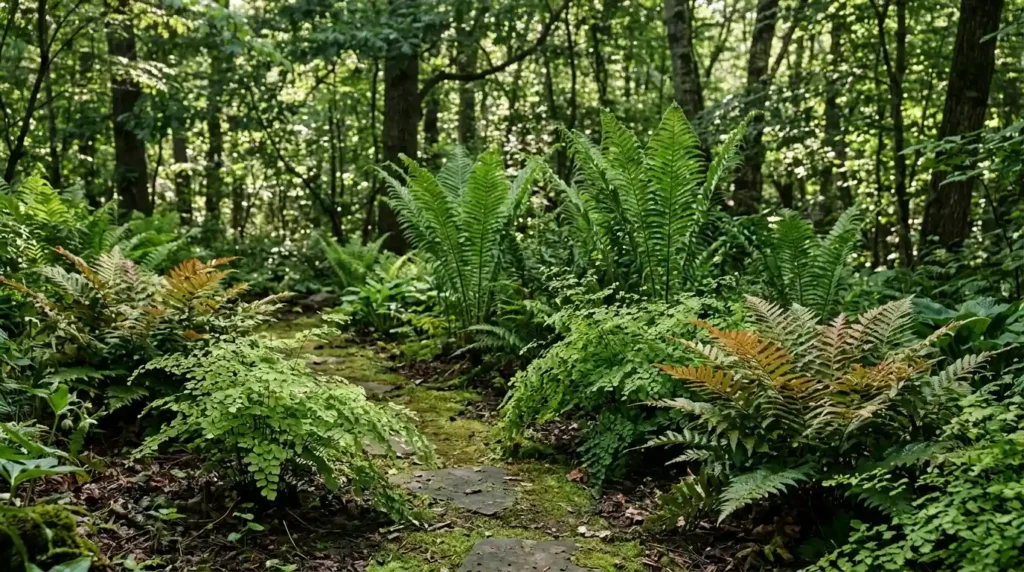
Ferns are one of the oldest plants on earth and they have been thriving in shade for millions of years. They add a soft, feathery texture that no other plant can match. They also provide year-round interest in mild climates.
For tall background planting, choose ostrich ferns. They can reach 3 to 4 feet tall and their upright fronds create a dramatic vertical element in the garden. They spread slowly and are easy to control.
For delicate texture, choose maidenhair ferns. Their black stems and small, fan-shaped leaves create an airy, elegant look. They are perfect for plants for shade garden areas where you want a softer, more refined feel.
For a pop of color, try autumn ferns. Their new growth emerges in a beautiful coppery bronze color before maturing to dark green. They provide season-long interest in containers and garden beds.
Ferns are some of the easiest plants for the shade garden to maintain. They prefer consistently moist, well-drained soil and will spread slowly to fill in gaps. They are deer-resistant and rarely have pest problems. Once established, they are virtually carefree.
3. Astilbes: The Colorful Perennial for Shady Spots
✦ Best for: Adding bright, colorful flowers to areas where most flowering plants struggle
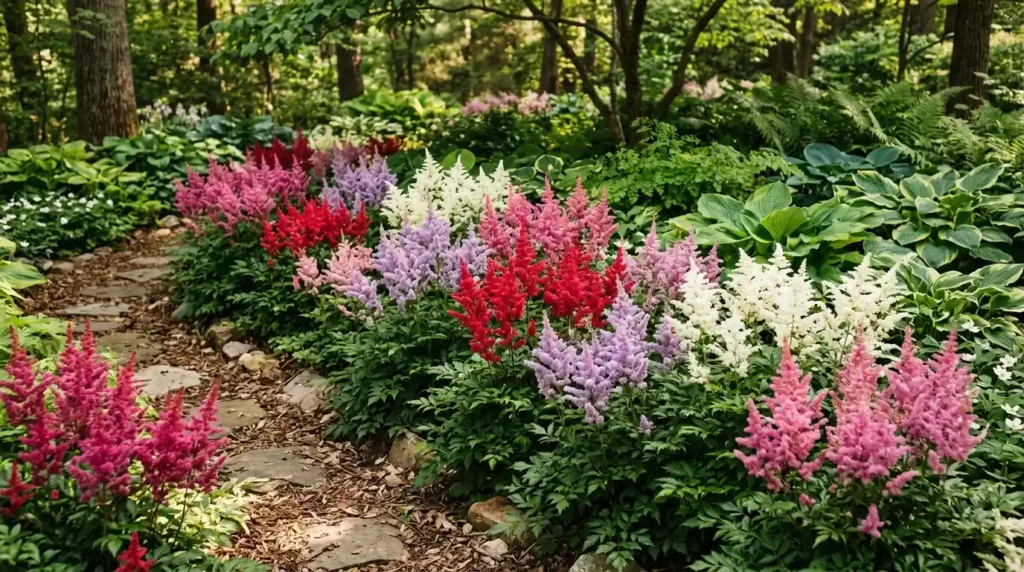
Astilbes are the answer to the question most shade gardeners ask: “How do I get color in my shade garden?” These perennials produce feathery plumes of flowers in shades of pink, red, lavender, and white that rise above fern-like foliage.
For maximum impact, plant astilbes in drifts. Group at least three to five plants of the same variety together. This creates a bold statement that stops the eye. The flowers bloom in early to midsummer and last for weeks.
Choose varieties that fit your space. ‘Fanal’ has deep red flowers and compact growth, making it perfect for smaller gardens. ‘Bridal Veil’ has pure white flowers and reaches 2 to 3 feet tall. ‘Peach Blossom’ has soft pink flowers and a more delicate appearance.
Astilbes are excellent shade plants for garden areas that stay consistently moist. They do not tolerate drought well, so plant them where they will receive regular water. They are also deer-resistant, which is a bonus in many American gardens.
4. Heucheras: The Foliage Plant With Endless Color Options
✦ Best for: Adding bold, vibrant foliage color to shade gardens and containers
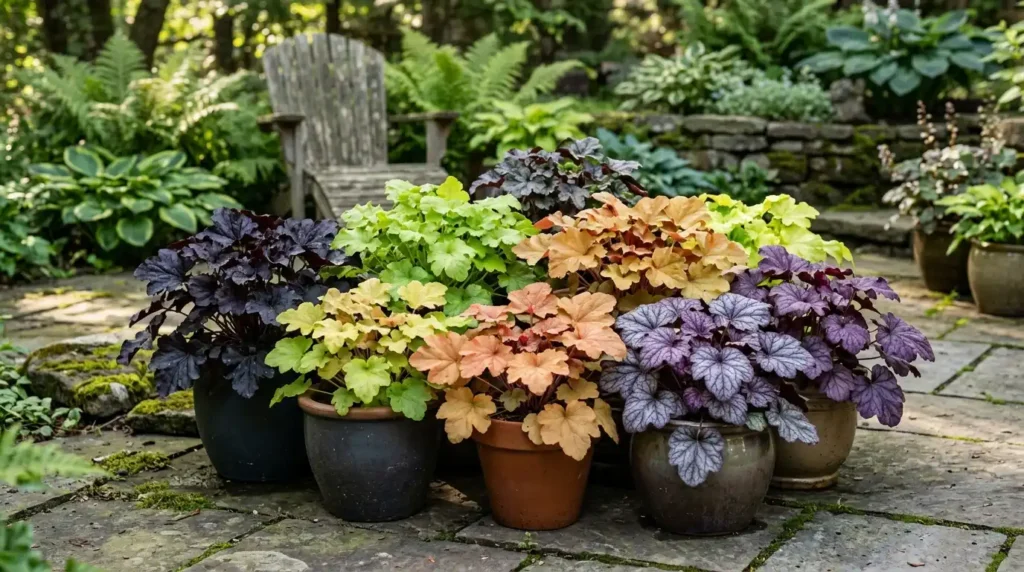
Heucheras, also known as coral bells, are the foliage rockstars of the shade garden. They come in an incredible range of colors that no other shade plant can match. From deep purple to bright lime to peach and silver, there is a heuchera for every palette.
For a dramatic focal point, choose ‘Black Pearl’ or ‘Obsidian’. These have leaves so dark they look almost black. They provide incredible contrast against lighter green plants and make a bold statement in any garden.
For brightening up dark corners, choose ‘Lime Rickey’ or ‘Citronelle’. Their bright lime-green leaves glow in the shade and add instant brightness to dim areas. They are perfect container garden plants for shade on porches and patios.
For unique texture, try ‘Southern Comfort’. Its large peach and amber-colored leaves have a metallic sheen that changes throughout the season. It is a conversation starter in any shade garden.
Heucheras are easy plants for the shade garden to maintain. They are drought-tolerant once established and rarely have pest problems. They look great in garden beds and are ideal plants for shade garden containers.
5. Bleeding Hearts: The Romantic Spring Bloomer
✦ Best for: Adding early spring interest and romantic charm to woodland gardens
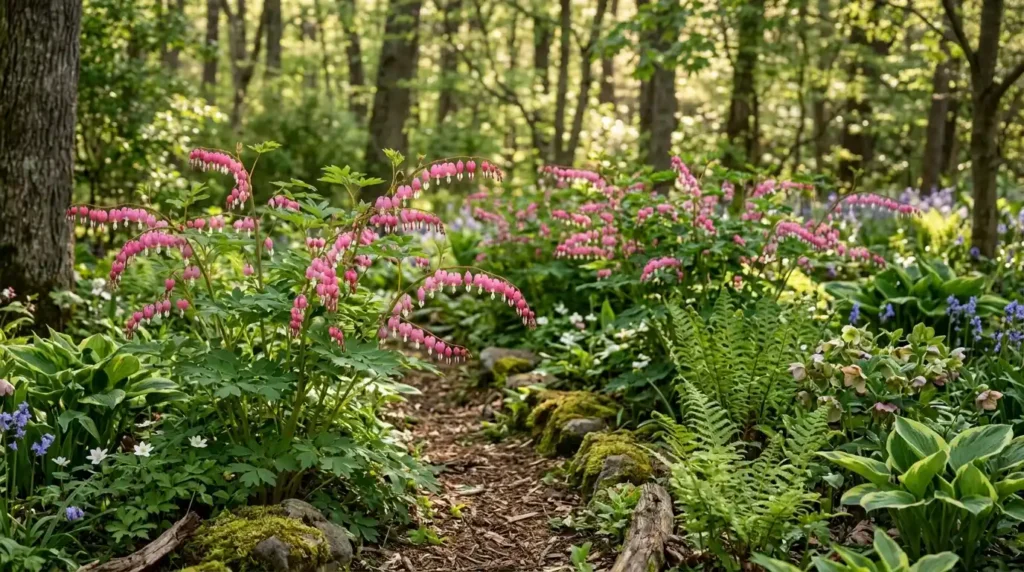
Bleeding hearts are one of the first plants to bloom in the shade garden. Their distinctive heart-shaped flowers hanging from arching stems are a welcome sight after a long winter. They are perfect for adding early spring color to your shade garden.
The classic variety is Dicentra spectabilis, now known as Lamprocapnos spectabilis. It reaches 2 to 3 feet tall and produces dozens of pink and white heart-shaped flowers. The flowers appear in mid-spring and last for several weeks.
For smaller spaces, try ‘King of Hearts’. It reaches only 12 inches tall and has deep pink flowers. It is perfect for plants for shade garden areas where you need a more compact plant.
Bleeding hearts are easy to grow in garden plants for shade areas. They prefer moist, well-drained soil and will go dormant in mid-summer if the soil dries out. Plant them among ferns and hostas so the other plants fill in the space when the bleeding hearts go dormant.
6. Impatiens: The Colorful Annual for Continuous Bloom
✦ Best for: Adding non-stop color to shade gardens from spring through fall
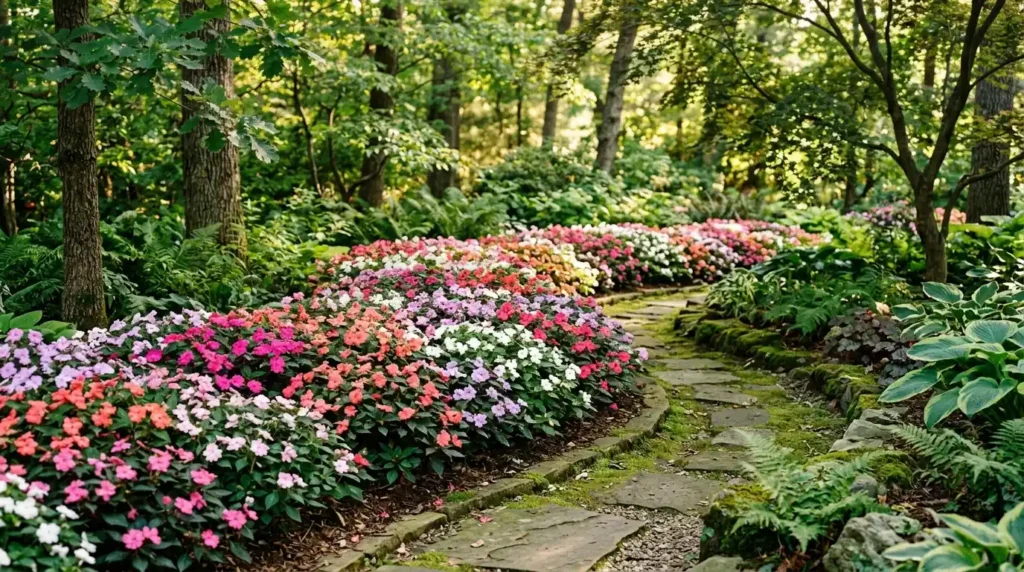
Impatiens are the go-to annual for shade gardens. They bloom non-stop from spring until frost and come in every color imaginable. They are the easiest way to add continuous color to shady spots.
New Guinea impatiens are a popular choice for container garden plants for shade. They have larger flowers and more colorful foliage than standard impatiens. They also tolerate more sun than traditional impatiens, making them versatile shade garden plants.
Standard impatiens are best for deep shade. They thrive where little else will grow and provide a stunning display of color all season long. They are perfect for creating a carpet of color under trees.
Impatiens are thirsty plants. They need consistent moisture to keep blooming. Water them regularly and they will reward you with flowers until the first frost.
7. Japanese Maples: The Dramatic Focal Point for Shade
✦ Best for: Creating a stunning focal point in the shade garden with year-round interest
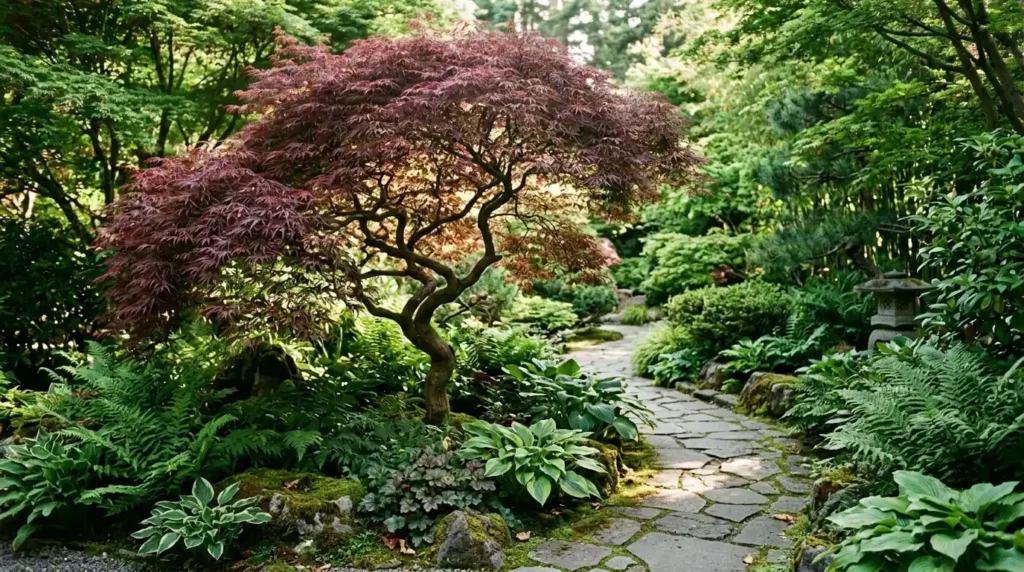
Japanese maples are the royalty of shade plants for garden spaces. They provide year-round interest with their stunning foliage, graceful form, and beautiful bark. A well-placed Japanese maple elevates any shade garden from ordinary to exceptional.
Choose varieties that fit your space. ‘Bloodgood’ is a classic that reaches 15 to 20 feet tall with deep burgundy leaves. It is perfect for larger shade gardens where you need a dramatic focal point.
For smaller gardens, choose dwarf varieties like ‘Red Dragon’ or ‘Crimson Queen’. These reach only 5 to 8 feet tall and have stunning finely dissected leaves. They are perfect for plants for shade garden areas where space is limited.
Japanese maples are slow-growing and require minimal maintenance. They prefer consistently moist, well-drained soil and afternoon shade in hot climates. In the fall, their foliage turns brilliant shades of orange, red, and gold, providing a stunning end-of-season display.
Frequently Asked Questions About Garden Plants for Shade
What are the best garden plants for shade?
The best garden plants for shade include hostas, ferns, astilbes, and heucheras for foliage. For flowers, choose bleeding hearts for spring color and impatiens for continuous summer bloom. Japanese maples provide dramatic structure. The best plants for shade garden areas combine foliage texture, seasonal color, and varying heights for visual interest.
What flowers grow best in shade?
For shady areas, astilbes produce beautiful feathery plumes in pink, red, and white. Bleeding hearts bloom in spring with distinctive heart-shaped flowers. Impatiens provide continuous color from spring through fall. These are the most reliable shade plants for garden color.
What plants are best for a container garden plants for shade?
For container garden plants for shade, choose heucheras for colorful foliage, ferns for texture, and impatiens for flowers. Miniature hostas and small astilbes also work well in containers. Mix different heights and textures for the most interesting displays.
What are the easiest plants for the shade garden?
According to Gardeners’ World, the easiest shade plants for garden success are hostas, ferns, and heucheras. These plants are forgiving, low-maintenance, and provide season-long interest. They tolerate a wide range of soil conditions and rarely have pest problems.
Related Articles
Garden Border Ideas That Make Every Bed Look Designed
Garden Edging Ideas That Make Your Yard Look Professionally Done
5 Nostalgic Garden Plants From Grandfather’s Garden
A shade garden is not a compromise. It is an opportunity to grow plants that thrive where others would fail. Embrace the shade and discover a world of lush, textural beauty.

Sheikh Hassaan is a digital architect for small businesses and the founder of The Glow Up System. He writes about home decor, garden design, and outdoor living for real American homes – practical ideas that work in actual spaces without oversized budgets.