
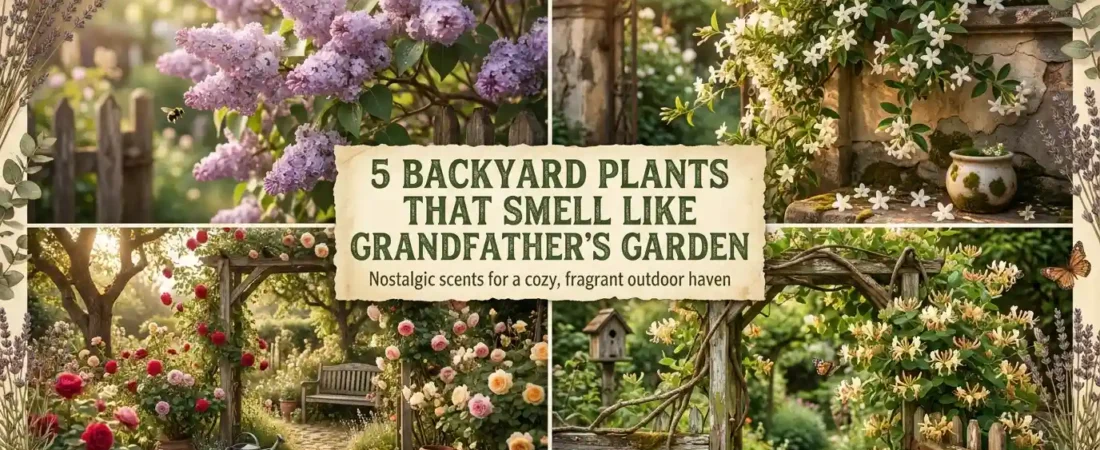
Few things transport memory as instantly and as powerfully as scent — a single breath of the right flower can place you back in a garden you have not stood in for thirty years. Nostalgic garden plants are largely heirloom varieties bred for fragrance rather than the show-stopping size or colour that modern cultivars are bred for, which is exactly why they smell the way older gardens always seemed to.
These 5 backyard plants are the ones most commonly remembered from a grandfather’s or grandmother’s garden, each chosen for a fragrance that modern breeding has often reduced or removed entirely from newer varieties of the same species.
Table of Contents
1. Old-Fashioned Sweet Pea for the Scent of a Summer Trellis
✦ Best for: a sunny fence line or trellis where the fragrance carries on the breeze
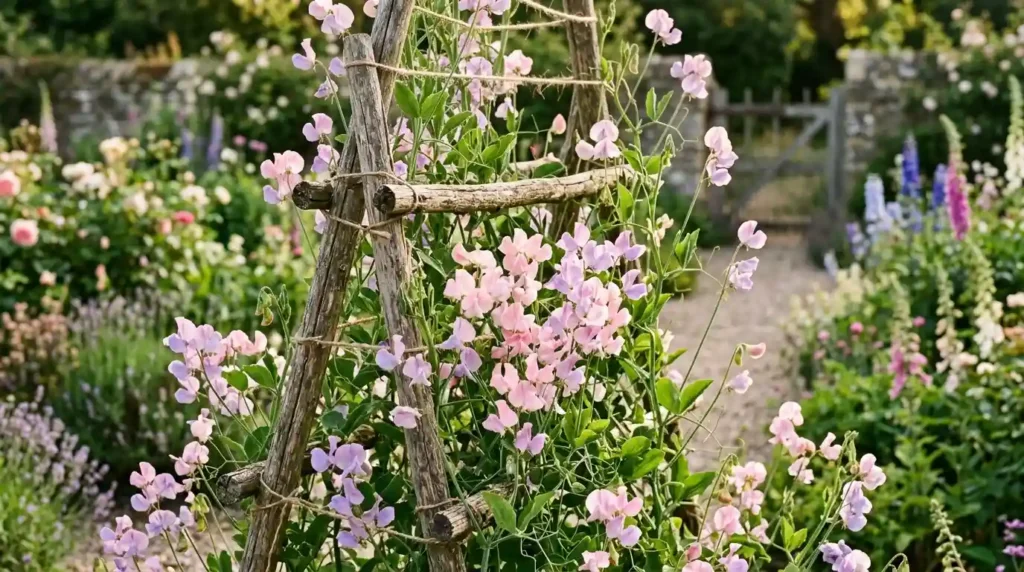
Modern sweet pea varieties have been bred primarily for larger flowers and a wider colour range, and in the process many newer cultivars have lost much of the powerful honeyed fragrance that made sweet peas a cottage garden staple for generations. Heirloom varieties such as ‘Cupani’ — the original sweet pea species first cultivated in the 17th century — retain the intensely sweet, almost orange-blossom scent that defined the flower long before modern breeding prioritised appearance over fragrance.
Sweet peas are climbing annuals that need a trellis, fence, or netting to scramble up, typically reaching 1.5 to 2 meters in a single growing season. Planted along a sunny boundary fence, the fragrance carries on any passing breeze and fills a much larger area than the planting itself would suggest.
For anyone trying to recreate a specific childhood memory of a fence line thick with flowers and scent, seeking out an heirloom variety by name rather than a generic modern seed mix is the detail that makes the difference between a pleasant flower and the exact remembered fragrance.
Timeless Scent Profiles: Bringing Back Classic English Cottage Fragrances: sow heirloom sweet pea seeds directly where they are to grow in early spring, and soak the seeds overnight before planting to soften the hard outer coat and significantly improve germination rates.
2. Heritage Damask Rose for the Deep Classic Rose Scent
✦ Best for: a dedicated rose bed or a single specimen near a path or doorway

The deep, rich rose fragrance most people associate with the word rose almost always comes from old garden rose classes — Damask, Gallica, and Bourbon roses — rather than from the modern hybrid tea roses sold in most garden centres today, which were bred primarily for flower shape, repeat blooming, and disease resistance, often at the cost of scent.
Damask roses such as ‘Quatre Saisons’ produce the deep, complex fragrance used as the historical basis for rose perfume and rose water production, a scent considerably more layered and persistent than the lighter fragrance of most modern roses. They bloom with a more relaxed, informal flower form than the tightly structured modern hybrid tea, contributing to the genuinely old-fashioned garden character.
Planting a Damask or Gallica rose near a path, gate, or window where it will be brushed against or smelled regularly recreates the specific experience that made these roses garden essentials for centuries before modern rose breeding shifted priorities toward appearance.
3. Mock Orange for the Scent That Fills an Entire Garden in Late Spring
✦ Best for: a larger shrub border where its size and powerful scent have room to perform
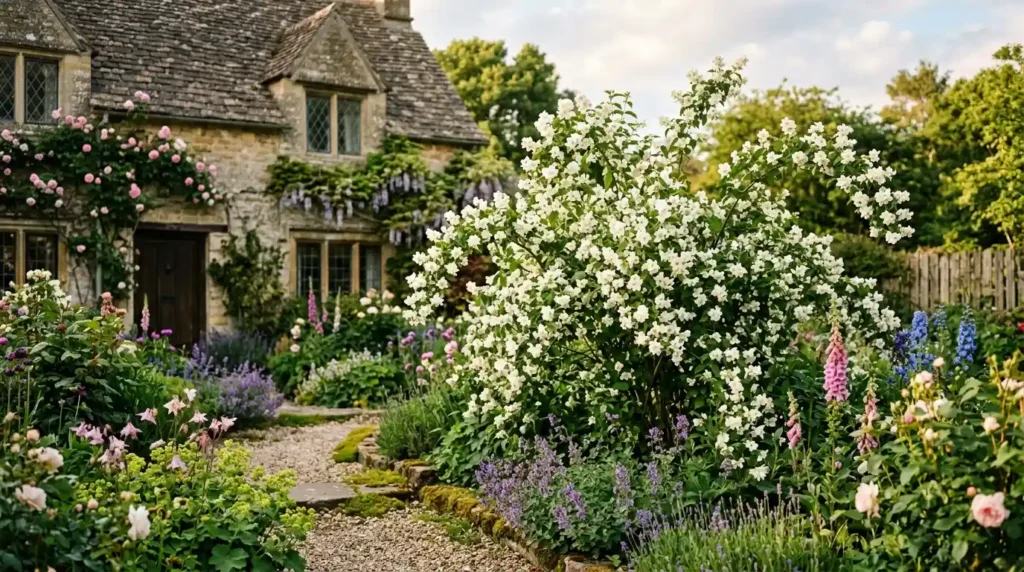
Mock orange produces a fragrance so powerful and so distinctively orange-blossom-like that a single mature shrub in bloom can perfume an entire garden for several weeks each late spring — a quality that made it a near-universal planting in older domestic gardens before more compact modern shrubs became popular for their tidier size.
The shrub typically reaches 2 to 3 meters at maturity with an informal, slightly arching habit, covered for several weeks in pure white four-petaled flowers. Its size and relatively loose growth habit are part of why it has fallen out of fashion in smaller modern gardens, but that same generous scale is precisely what allows the fragrance to carry as far as it does.
For anyone with the space, a single mock orange planted where the prevailing breeze carries its scent toward a patio, window, or path recreates one of the most powerfully nostalgic garden fragrances of all, simply by being the kind of unfussy, generously sized shrub that gardens used to have more room for.
4. Lily of the Valley for the Scent of Shaded Spring Borders
✦ Best for: a shaded woodland-edge border beneath trees or along a north-facing wall

Lily of the valley produces small, delicate white bell-shaped flowers with a fragrance so distinctive it has been used as the basis for perfume for well over a century, and the scent of a shaded spring border thick with this plant is one of the most immediately recognisable nostalgic garden memories for many people.
Unlike most strongly fragrant plants, lily of the valley thrives in shade and spreads readily by underground rhizomes to form a dense naturalistic carpet beneath trees or along a shaded wall, exactly the kind of overlooked garden corner that older gardens often filled with this plant rather than leaving bare.
Once established, lily of the valley requires almost no maintenance and reliably returns and spreads each spring, making it one of the lowest-effort ways to introduce a powerfully nostalgic fragrance into a part of the garden that struggles to support most flowering plants at all.
Timeless Scent Profiles: Bringing Back Classic English Cottage Fragrances: plant lily of the valley rhizomes in autumn in a shaded position with humus-rich soil, and allow it to spread freely rather than dividing it regularly — the most fragrant and most nostalgic-looking drifts are the ones left undisturbed for several years.
5. Old-Fashioned Garden Phlox for the Scent of a Warm August Evening
✦ Best for: a sunny mixed border where its scent peaks on warm summer evenings

Garden phlox produces a sweet, slightly spicy fragrance that becomes most noticeable on warm still evenings in mid to late summer, when many older gardens would have had phlox in full bloom along a path or border edge precisely where an evening stroll would pass close enough to catch the scent.
Heirloom varieties of garden phlox, grown from seed strains passed between gardeners for generations rather than purchased as a single named modern cultivar, tend to produce a wider and more unpredictable range of soft pastel colours than the more uniform modern bedding varieties, contributing to the slightly informal, collected-over-time look of an older garden border.
Planted in a sunny mixed border at the front or edge of a path, garden phlox recreates one of the most specifically seasonal nostalgic garden memories — not a fragrance encountered at any time of year, but one tied to the particular warmth and stillness of a summer evening.
Timeless Scent Profiles: Bringing Back Classic English Cottage Fragrances

Classic English cottage garden fragrance was never the result of a single standout plant, but of several differently scented plants overlapping through the seasons — sweet pea and phlox carrying the garden through summer, mock orange marking a specific few weeks in late spring, lily of the valley opening the fragrant season earlier still in shaded corners, and roses threading through almost the entire growing year.
Recreating that layered fragrance experience means choosing heirloom and old garden varieties specifically rather than simply choosing the same plant species in whatever form is most readily available, since modern breeding has measurably reduced fragrance in many popular garden plants in favour of bloom size, colour range, or repeat flowering.
Position the most powerfully scented plants — mock orange, Damask rose, sweet pea on a trellis — near paths, doorways, and windows where their fragrance will be encountered regularly during ordinary use of the garden, rather than only in a border viewed from a distance.
📌 More garden ideas: How To Create a Living Memorial Garden for a Father
Frequently Asked Questions
What are the most fragrant old fashioned garden plants?
The most fragrant old fashioned garden plants associated with traditional cottage gardens include heirloom sweet pea varieties such as ‘Cupani’, old garden rose classes including Damask and Gallica roses, mock orange shrubs, lily of the valley, and old fashioned garden phlox. These plants were widely grown specifically for their fragrance before modern breeding shifted priorities toward bloom size, colour range, and repeat flowering in many popular garden species. According to the Royal Horticultural Society heirloom and species varieties frequently retain stronger fragrance characteristics than many modern hybrid cultivars of the same plant.
Why do modern flowers smell less than old varieties?
Many modern flower varieties have reduced fragrance compared to heirloom predecessors because breeding programs have prioritised other traits — larger flower size, wider colour ranges, longer vase life, and repeat blooming — often at the genetic expense of the compounds responsible for scent production. This is particularly well documented in roses, where modern hybrid tea varieties bred primarily for flower form and disease resistance frequently produce noticeably less fragrance than older Damask, Gallica, and Bourbon rose classes.
What fragrant plants grow well in shade?
Lily of the valley is one of the few genuinely fragrant plants that thrives in shaded conditions, spreading readily beneath trees or along shaded walls to form a dense, low-maintenance flowering carpet each spring. Most other strongly fragrant garden plants, including roses, sweet pea, mock orange, and garden phlox, require full sun or at least several hours of direct light daily to bloom and produce scent at their full strength.
When is the best time to plant fragrant heirloom flowers?
Heirloom sweet pea and garden phlox seeds are best sown directly in early spring once the risk of frost has passed. Lily of the valley rhizomes establish best when planted in autumn ahead of their spring flowering. Roses and mock orange shrubs are typically planted as bare-root or container specimens in either autumn or early spring, avoiding the heat of summer or the hardest frosts of deep winter for the best establishment.
More Garden Ideas
→ 10 Peaceful Garden Nook Ideas
→ Best Fast-Growing Trees to Plant With Your Dad This Weekend
→ 10 Father’s Day Gifts for Gardeners He Will Actually Love
Plant one of these near a path you actually walk every day. The memory only comes back if the scent meets you in passing, the same way it always did.

Sheikh Hassaan is a digital architect for small businesses and the founder of The Glow Up System. He writes about home decor, garden design, and outdoor living for real American homes – practical ideas that work in actual spaces without oversized budgets.