
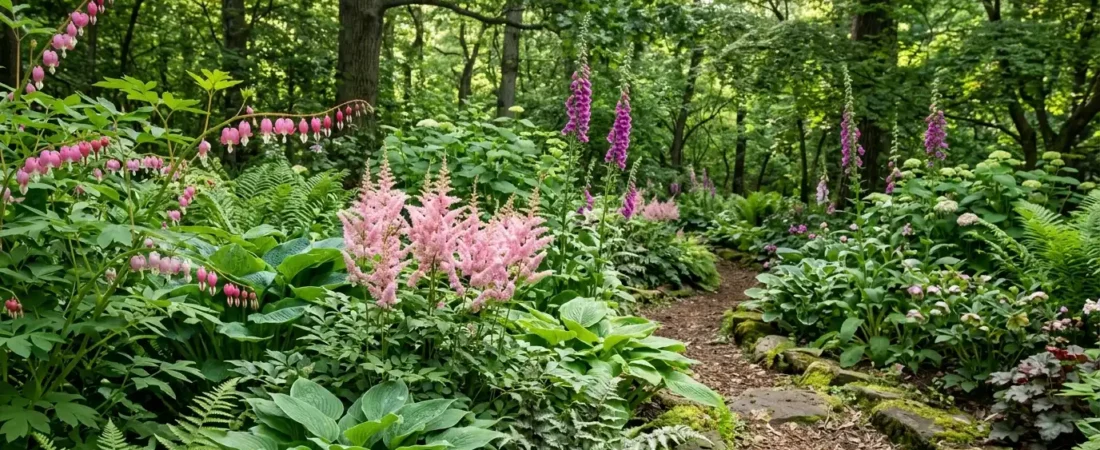
Every garden has them. Those dark corners under the oak tree. The narrow strip along the north side of the house. The spot where the fence casts a shadow all afternoon. Most people assume these areas are hopeless for flowers. But that is simply not true. There is a whole world of stunning plants that thrive in low light, bringing color and life to the shadiest spots.
That is what makes flowers that grow in shade so valuable for American gardens, turning dim, forgotten corners into vibrant displays of foliage and blooms that flourish without direct sunlight .
This article covers ten of the best shade-loving flowers for American gardens, from perennials to annuals. Every suggestion includes growing zones, light requirements, and practical care tips. No vague recommendations. No unrealistic expectations. Just beautiful, reliable plants that thrive where the sun barely reaches .
Table of Contents
Why Shade Gardens Are a Hidden Opportunity
Most gardeners view shade as a problem. They see dark corners and bare patches and assume nothing will grow there. But shade is not a limitation. It is an invitation to grow some of the most beautiful and interesting plants in the garden .
Shade plants have evolved to thrive in low light. They often have larger leaves to capture more light. They need less water because the shade keeps the soil cooler and moister. And they tend to be lower maintenance because they grow more slowly and require less deadheading .
Gardens shaded by trees and buildings are increasingly common as gardens get smaller. Although north- or east-facing gardens can be cool and shady for much of the year, they can present some creative opportunities with well-chosen shade-tolerant plants .
1. Astilbe: Feathery Plumes of Color
✦ Best for: Adding bright, feathery flowers to shaded borders and woodland gardens
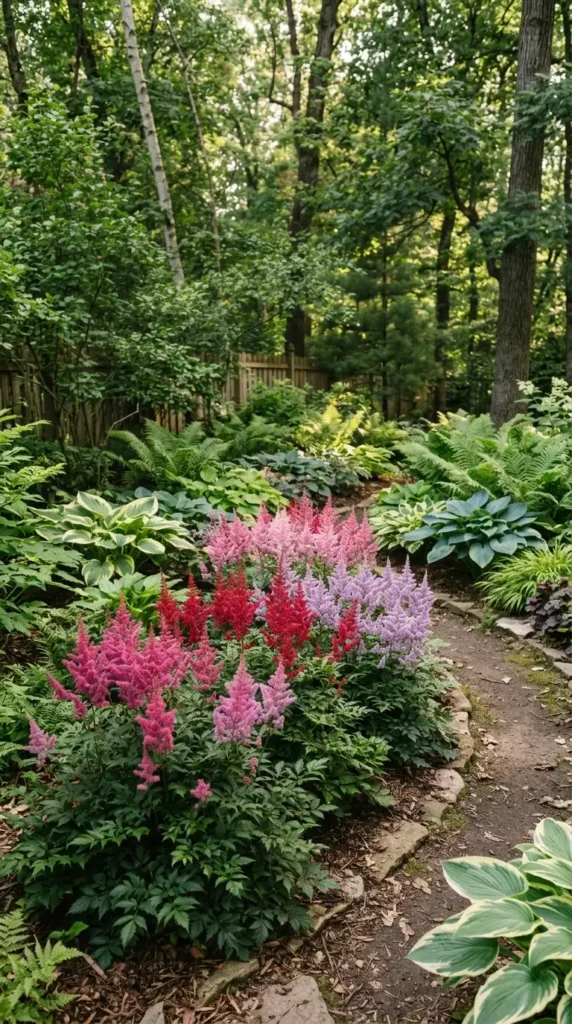
Astilbes are the answer to the question most shade gardeners ask: “How do I get color in my shade garden?” These perennials produce feathery plumes of flowers in shades of pink, red, lavender, and white that rise above fern-like foliage .
Astilbe ‘Fanal’ has dark stems bearing dark reddish-green leaves and short dense spikes of deep crimson flowers in early summer . Astilbes produce big, feathery plumes of pink, white, purple or red flowers and prefer partial shade with pockets of morning sun and afternoon shade .
Astilbes prefer consistently moist soil and perform beautifully in areas too wet for many other plants. They are perennials that return every year and are deer-resistant, making them a reliable choice for shade gardens .
2. Hosta: The Foliage Favorite
✦ Best for: Filling large areas with bold, textured foliage in a range of colors and patterns
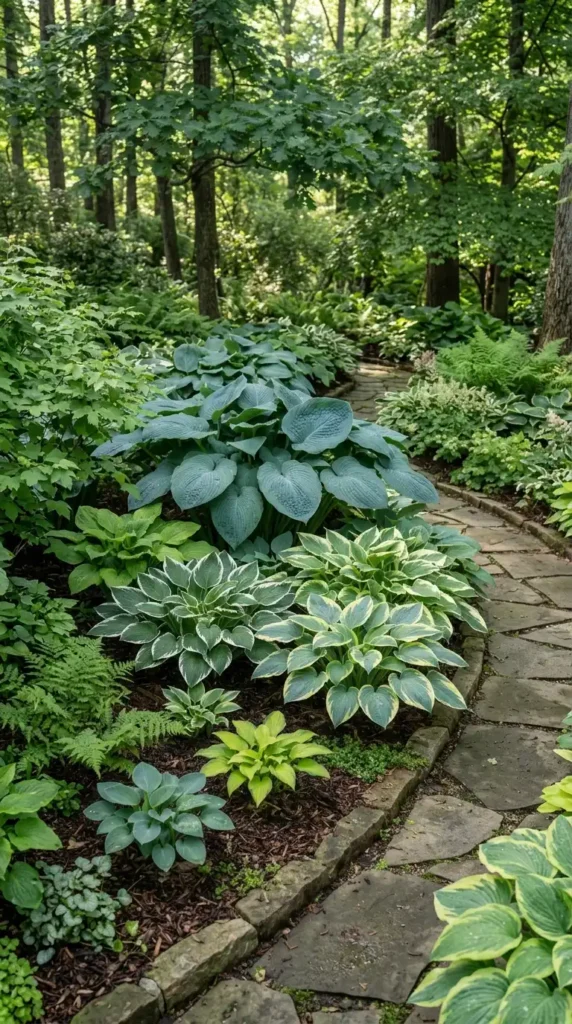
Hostas are the undisputed kings of the shade garden. They are reliable, beautiful, and incredibly diverse. With thousands of varieties available, there is a hosta for every spot in your shade garden .
Hostas are brilliant for structure. Their big leaves make a shady bed feel instantly full and intentional . Hosta ‘Frances Williams’ forms clumps of broadly heart-shaped, puckered and veined grey-green leaves with wide, irregular yellow-green margins, with pale lilac summer flowers .
Hostas prefer partial to full shade and moist, well-drained soil. They are hardy in USDA zones 3 through 9. Beware that slugs and snails are particularly attracted to hostas, but they are totally worth the effort .
3. Bleeding Heart: The Romantic Spring Bloomer
✦ Best for: Adding early spring interest and romantic charm to woodland gardens
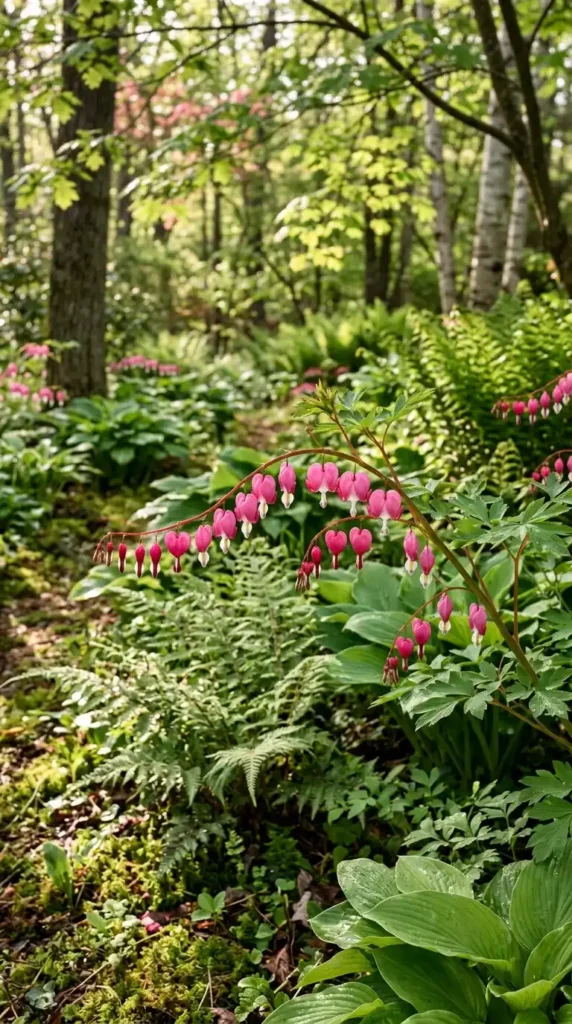
Bleeding hearts are one of the first plants to bloom in the shade garden. Their distinctive heart-shaped flowers hanging from arching stems are a welcome sight after a long winter .
Lamprocapnos spectabilis (formerly Dicentra) produces arching fleshy stems with racemes of heart-shaped flowers with rose pink and white petals in late spring . The plant may look delicate but it’s actually a hardy, pest-resistant plant that prefers dappled to full shade .
Bleeding hearts prefer moist, well-drained soil and partial to full shade. They are hardy in USDA zones 3 through 9. Give the plant a lot of shade with some morning sun for the best results .
4. Hellebore: The Winter Rose
✦ Best for: Adding late-winter to early-spring color when little else is blooming
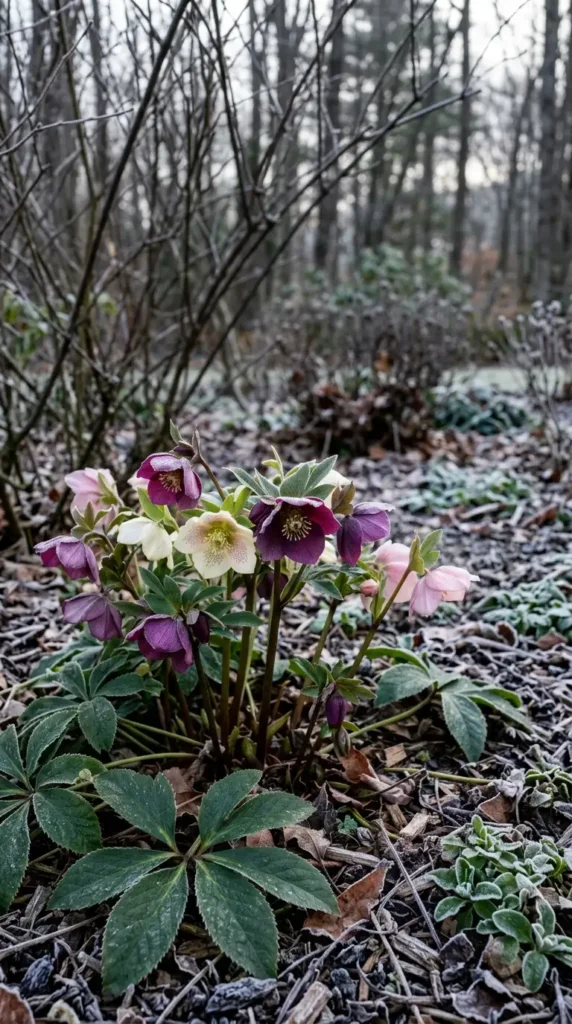
Hellebores are the royalty of winter flowers. Often called the Christmas rose or Lenten rose, these perennials produce stunning cup-shaped blooms in a rainbow of colors from late winter through early spring .
Hellebores are easy to grow and thrive in partial to full shade. They are hardy in USDA zones 4 through 9 and form clumps up to 2 feet tall and 3 feet wide. Plant your hellebores where they’ll get mostly shade with a bit of morning sun to help them bloom well .
Hellebores are deer-resistant and pest-resistant, making them a low-maintenance choice for woodland gardens and shady borders .
5. Foxglove: Tall Spikes of Color
✦ Best for: Adding vertical interest and dramatic height to partially shaded borders
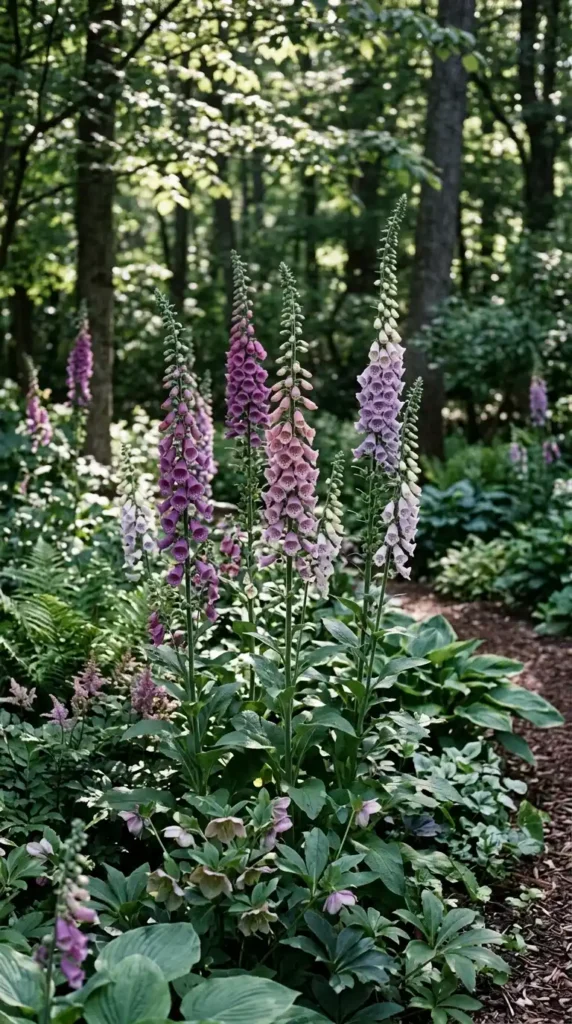
Foxgloves produce eye-catching flowers in shades of pink, purple, white, and yellow that bloom in late spring to mid-summer . They thrive in partial shade and are often found along borders of gardens and wooded areas .
While these perennials do well in the sun, they can also thrive in partial shade. Foxgloves produce tall, impressive spikes of tubular flowers that add height and drama to any shade garden .
Keep in mind that while foxgloves are beautiful and unique, they are also highly toxic if ingested .
6. Coral Bells (Heuchera): Foliage Color All Season
✦ Best for: Adding bold, colorful foliage in shades from lime green to deep burgundy
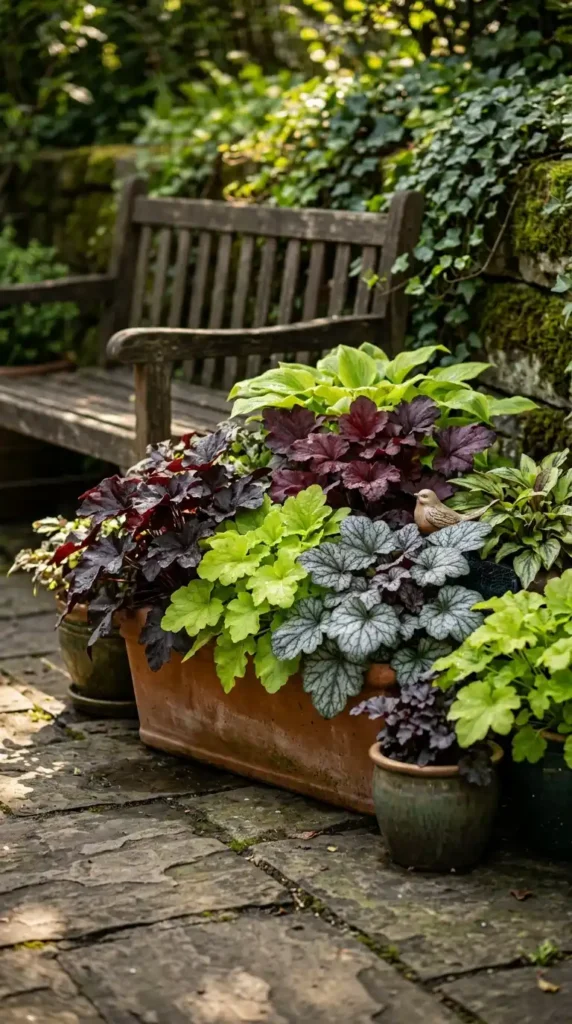
Heuchera, also known as coral bells, is arguably the most versatile foliage plant for shade. Varieties range from lime green to deep burgundy to near-black, with ruffled or smooth leaves .
Heucheras are much loved for their burgundy or lime green evergreen foliage, although they also produce delicate blossoms in summer . For care, you don’t need to overcomplicate things. Mulch around them in early spring to lock in moisture and feed the soil .
Heucheras need well-draining soil but are not fussy about fertility, making them perfect low-maintenance options for busy gardeners .
7. Lungwort (Pulmonaria): Silver-Speckled Beauty
✦ Best for: Adding unique foliage and early spring flowers to shady beds
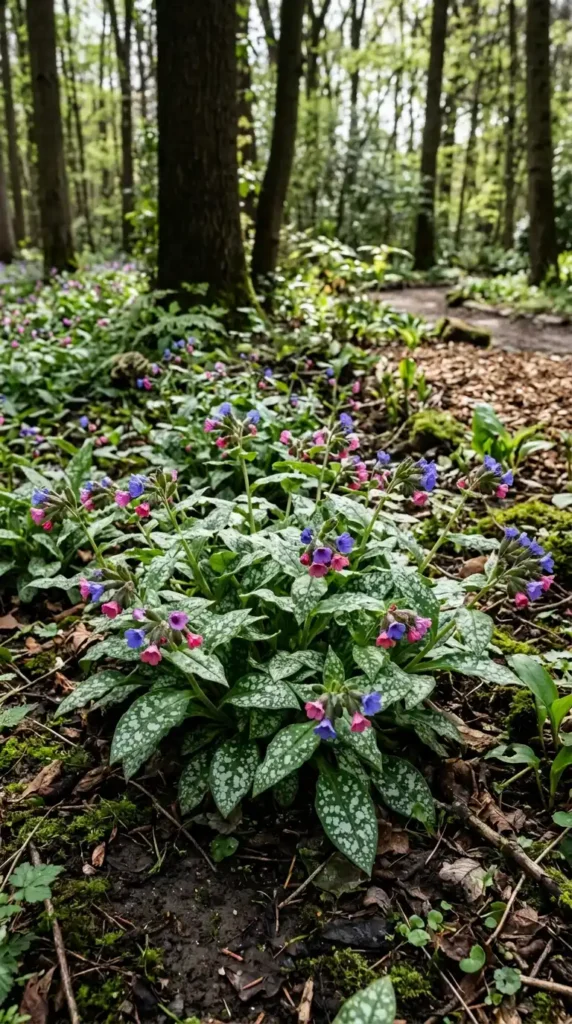
Lungwort is one of the best early-season plants for shade, with its speckled leaves and early spring flowers that pollinators adore . Also known as pulmonaria, this weed-suppressing plant flourishes in full or partial shade and grows low and dense, making it an ideal choice for ground cover .
Lungworts have pretty splashes of silver on their foliage. Salmon buds open into beautiful blue flowers in spring . They thrive in rich, moist, well-drained soil and are hardy in USDA zones 3 through 8.
8. Toad Lily: The Shade-Loving Orchid
✦ Best for: Adding unique, spotted late-season blooms to fully shaded areas
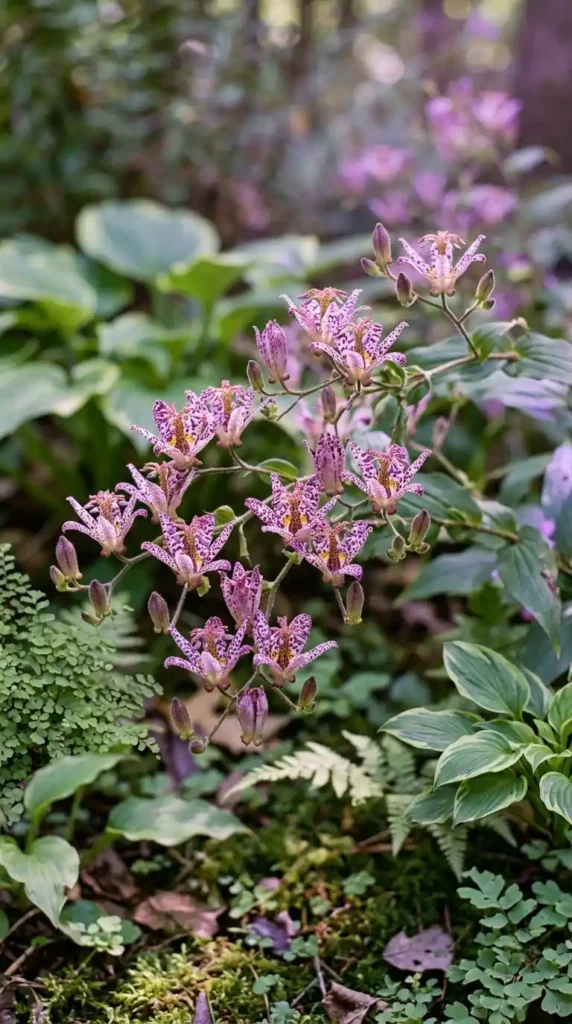
Think of the toad lily as a shade-loving orchid. Its unique, spotted flowers bloom in shades of white, purple, and pink . The toad lily will bloom in late summer to autumn, and it does best in fully shaded areas .
Tricyrtis formosana has dark-spotted lance-shaped leaves and clusters of star-shaped whitish flowers heavily spotted purple in autumn . Toad lilies thrive in USDA zones 4 through 9 with moist but well-drained soil.
9. Columbine: Early Spring Nectar
✦ Best for: Woodland gardens and shaded borders where early spring color is needed
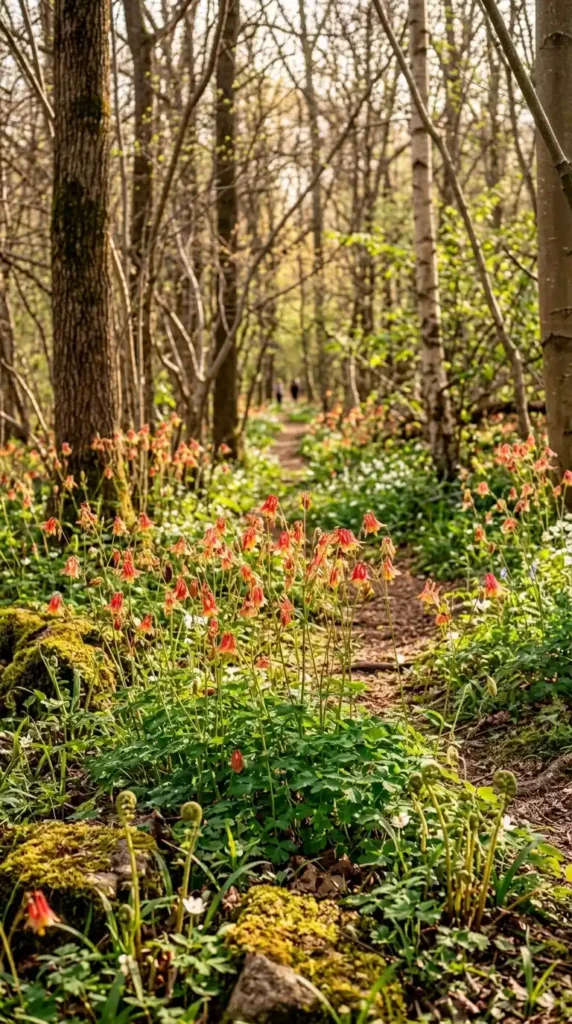
Columbines are early- to mid-spring bloomers, offering much-needed food early in the season for pollinators . The intricate flowers look delicate, but they are tough shade plants that will return for several years .
Columbines grow especially well in conditions that other plants would reject. Partial shade and some moisture in the soil is more than enough to get columbines blooming from late spring to early summer . Many types reseed themselves, creating a naturalized look over time .
10. Brunnera: The Forget-Me-Not Lookalike
✦ Best for: Adding blue spring flowers and striking silver-veined foliage to shaded beds
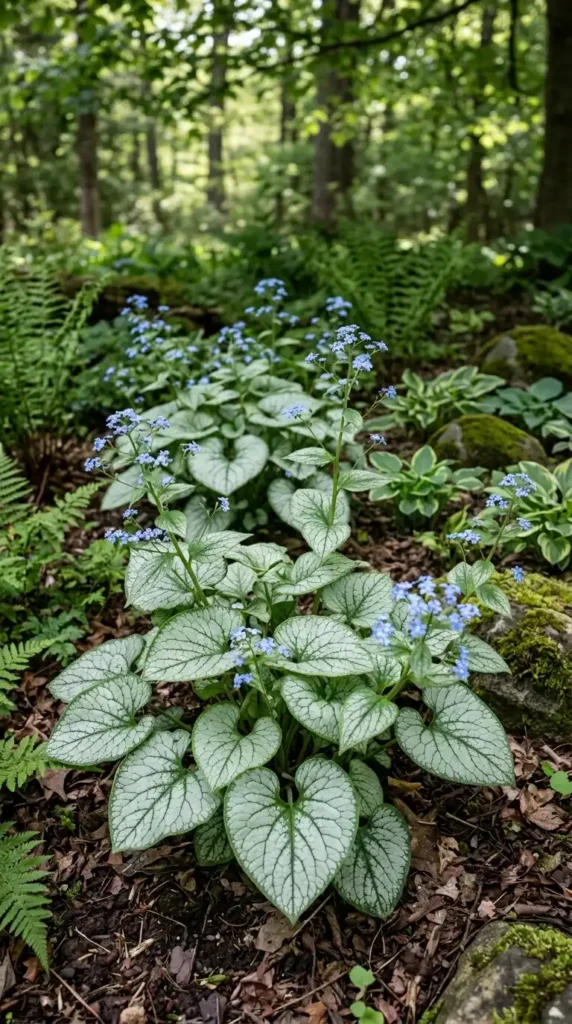
Brunnera is a pest-free plant that offers both attractive blooms and foliage and is often used for low-maintenance ground cover . Brunnera ‘Jack Frost’ has large, heart-shaped silver leaves edged and veined with green, and sprays of small blue flowers in spring .
Brunneras love dappled to full shade and, in mild areas, are evergreen. They are hardy in USDA zones 3 through 8 with moist but well-drained soil .
Frequently Asked Questions About Flowers That Grow in Shade
What flowers grow in shade?
Many beautiful flowers grow in shade, including astilbe, hosta, bleeding heart, hellebore, foxglove, coral bells, lungwort, toad lily, columbine, and brunnera. These perennials thrive in low-light conditions and provide a range of colors and textures from spring through fall.
What is the difference between part shade and full shade?
Part shade means the area receives 3 to 6 hours of direct sun per day, preferably in the morning. Full shade means less than 3 hours of direct sun or dappled light throughout the day . Even shade-loving plants still need some light, so match your plants to your specific light conditions.
What are the easiest shade plants for beginners?
Hostas, astilbes, coral bells, and lungworts are among the easiest shade plants for beginners. They are forgiving, low-maintenance, and provide season-long interest. These plants tolerate a wide range of soil conditions and rarely have pest problems .
Can you grow flowers in deep shade?
Yes, several flowers thrive in deep shade. Hostas, ferns, hellebores, and toad lilies are excellent choices for areas with minimal light . The key is choosing plants that are naturally adapted to low-light conditions .
What shade perennials bloom the longest?
Astilbes bloom for several weeks in summer, and lungworts provide early spring color followed by attractive foliage. Bleeding hearts bloom in late spring. To achieve continuous color, combine early, mid, and late-season bloomers .
Related Articles
Flowers That Are Safe for Cats and Beautiful for You
10 Flowers That Come Back Every Year and Keep Your Garden Blooming
Flowers That Bloom at Night and Transform Your Garden After Dark
Flowers That Attract Hummingbirds and Bring Your Garden to Life
A shade garden is not a compromise. It is an opportunity to grow the most beautiful, textural plants in your garden. Embrace the shadows and discover a world of lush color and life.

Sheikh Hassaan is a digital architect for small businesses and the founder of The Glow Up System. He writes about home decor, garden design, and outdoor living for real American homes – practical ideas that work in actual spaces without oversized budgets.