
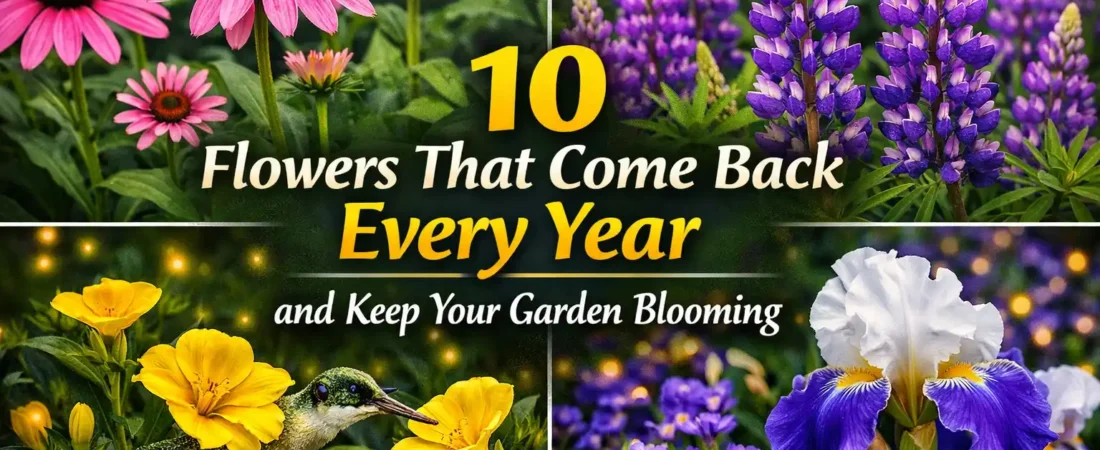
There is a special kind of satisfaction in watching a garden come back to life each spring. The same plants you planted years ago push through the soil again, stronger and more beautiful than the season before. No replanting. No starting from scratch. Just reliable, dependable color that returns season after season. That is the magic of flowers that come back every year.
That is what makes flowers that come back every year so valuable for American gardens, saving time, money, and effort while delivering beauty that grows more impressive with age.
This article covers ten of the best perennial flowers for American gardens, from tough native plants to classic favorites. Every suggestion includes growing zones, light requirements, and practical care tips. No vague recommendations. No unrealistic expectations. Just beautiful, reliable plants that return year after year.
Table of Contents
What Are Perennials and Why Do They Come Back?
Perennial plants are defined simply: they emerge every year for two years or more and do not have to be replanted . Unlike annual flowers that complete their life cycle in a single year, perennials establish deep root systems that are resilient to challenging weather conditions . Once established, perennial plants return every year, usually growing even stronger and more beautiful with age .
Perennials build deeper root systems than annuals, which reduces watering needs and improves soil structure over seasons . While some flowers like tulips may return for only a few years, others such as peonies and hydrangeas will pop up for decades, possibly even a century . The lifespan of a perennial depends on conditions, but once established, they can live and bloom anywhere from 3 to 10 years or more .
The main trade-off with perennials is bloom duration. Unlike annuals that can bloom for months, most perennials have a relatively short bloom season lasting from a few days to a few weeks . That is why it is important to stagger bloom times by selecting a mix of spring, summer, and fall-blooming perennials for non-stop color . It typically takes perennials about a year or two to establish a regular blooming schedule, but after the third year, you can expect them to bloom for a whole season or more .
1. Coneflower (Echinacea): The Native Powerhouse
✦ Best for: Sunny borders where you want long-blooming, drought-tolerant color that attracts pollinators
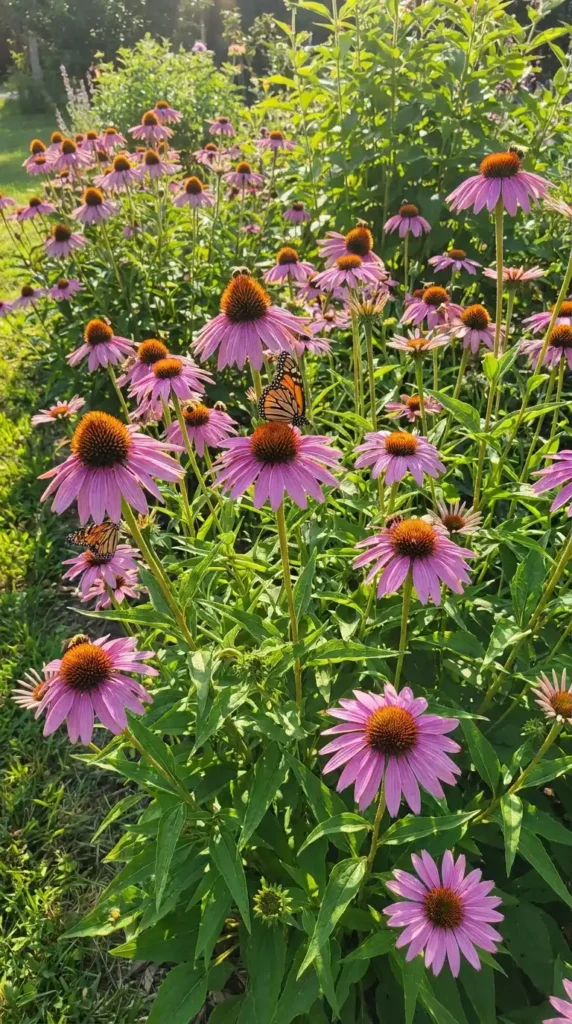
Coneflowers are among the most beloved perennials for American gardens, and for good reason. They are tough, drought-tolerant, and bloom from summer into fall with daisy-like flowers in shades of purple, pink, red, orange, yellow, and white . They are native to North America and adapt to many climates .
Echinacea “Magnus” is a popular variety with bright rosy blooms and petals that stay straight, giving the flowers a clean, bold look . It flowers from late spring through fall, providing a long season of color . Coneflowers are also super easy to grow and attract pollinators like bees and goldfinches .
Coneflowers thrive in full sun and are drought-tolerant once established . They prefer well-draining, slightly sandy soil and benefit from deadheading to encourage continuous blooms through the summer . They are hardy in USDA zones 3 through 10 .
2. Black-Eyed Susan (Rudbeckia): Cheerful Summer Color
✦ Best for: Full-sun spots where you want bright yellow flowers from summer through fall with minimal care
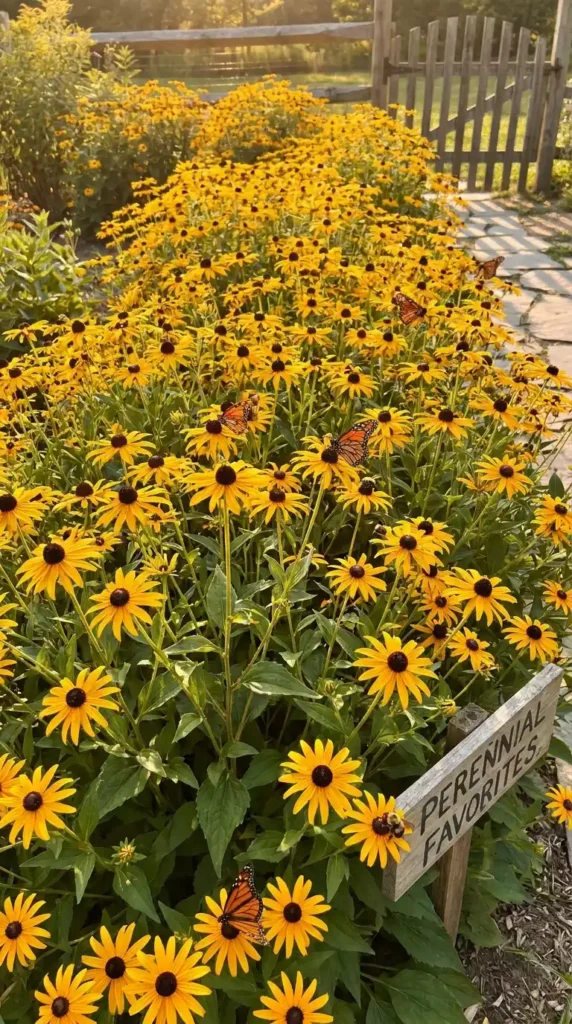
Black-eyed Susans are a staple of American gardens for their cheerful yellow petals and dark chocolate centers . They bring sunshine to any garden corner, blooming from summer through fall with daisy-like flowers . They are incredibly tough and drought-tolerant once established .
These perennials are low-maintenance and come back every year, especially in USDA zones 3 through 9 . They have a classic daisy-like look with a dark center, giving a cheerful vibe to any space . They pair well with plants like Shasta daisies for a fuller garden display .
Black-eyed Susans love full sun and well-drained soil . They can tolerate dry conditions once established but will bloom best with moderate watering . Remove spent flowers to promote more blooms and maintain a neat appearance .
3. Salvia: The Pollinator Magnet
✦ Best for: Sunny gardens where you want long-blooming, deer-resistant color that pollinators love
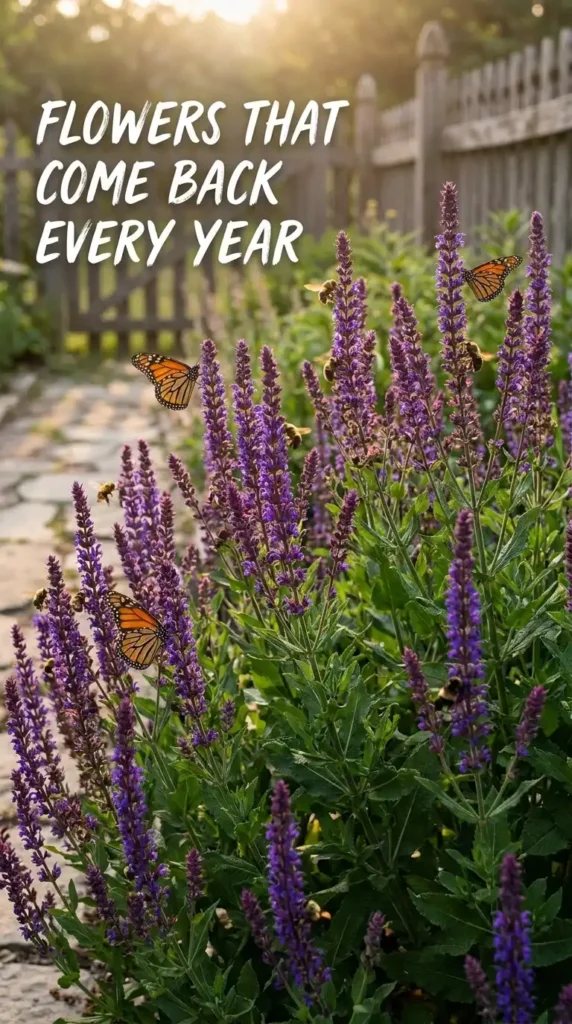
Salvia is a fantastic perennial for American gardens. It includes more than 1,000 species and is part of the sage family . Woodland sage (Salvia nemerosa) stands out as one of the best varieties, with stunning purple, pink, or white flowers that return year after year . It is a hardy perennial that offers a big “wow factor” for very little work .
Salvia is a great pollinator plant, especially for bees, and it is also deer resistant . It reaches about two feet tall, helping add height and variety to your garden . It is not an aggressive spreader, so it will not outcompete other plants . The ‘Caradonna’ variety is particularly recommended .
Salvia prefers full sun and well-draining soil . Once established, it is fairly drought-tolerant and does best when cut back after blooming to encourage a second flush of flowers . It is hardy in USDA zones 4 through 10 .
4. Peony: The Century-Long Bloomer
✦ Best for: Gardens where you want show-stopping spring blooms that can become family heirlooms
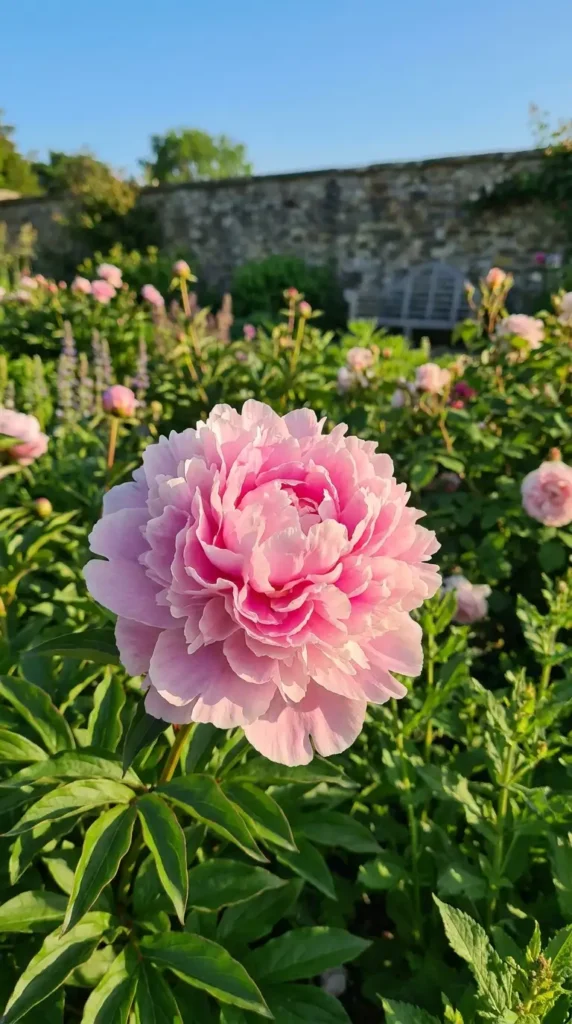
Peonies are one of the most beloved perennials for their massive, ruffled flowers that can reach the size of dinner plates . They come in shades of pink, white, red, orange, and yellow with a sweet scent . They make elegant cut flowers and have been known to live for up to 100 years, potentially outliving the gardener who plants them .
Peonies are tough and can thrive for decades, making them a solid addition to any garden . Plant them in early fall for the best chance at healthy growth . Choose varieties that fit your climate for reliable blooms .
Peonies prefer full sun and well-drained, slightly acidic soil . They bloom in late spring to early summer and are hardy in USDA zones 2 through 8 . They are low-maintenance and require minimal care once established .
5. Daylily: The Indestructible Perennial
✦ Best for: Any garden spot where you want reliable, colorful blooms with practically no maintenance
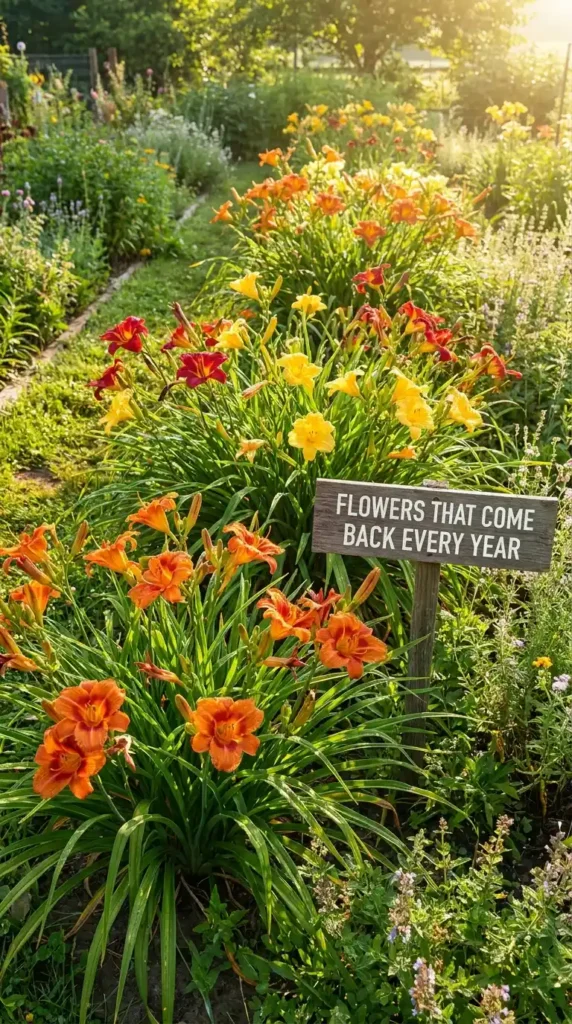
Daylilies are practically indestructible. While each bloom lasts just one day, each plant produces dozens of buds for weeks of continuous color . They come in nearly every color except true blue and pure white and thrive in almost any soil condition .
Daylilies are low-maintenance flowers that keep coming back, blooming in vibrant colors and handling a range of weather conditions . From tiny miniatures to giant dinner-plate sized blooms, there is a variety to fit every garden space .
Daylilies are hardy in USDA zones 3 through 9 and prefer full sun to partial shade. They are drought-tolerant once established and require minimal care. They are perfect for beginners and busy gardeners alike.
6. Lavender: Fragrant and Drought-Tolerant
✦ Best for: Sunny, dry spots where you want fragrance, color, and a plant that repels deer
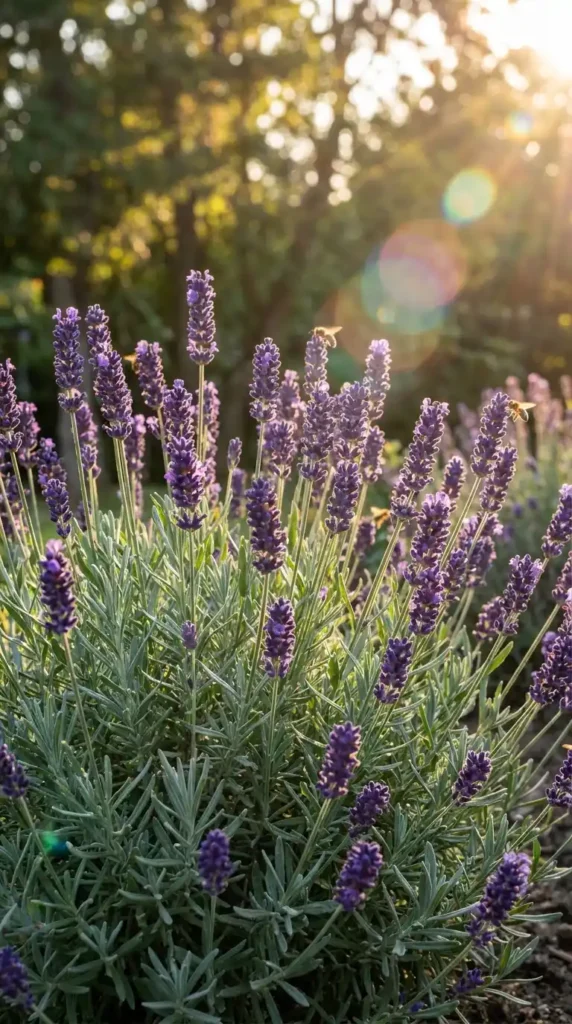
Lavender offers silvery-green foliage topped with spikes of purple, blue, or white flowers that smell like a spa day . Beyond its incredible fragrance, lavender attracts beneficial bees and repels mosquitoes naturally . Dry the flowers to make sachets, teas, or homemade soaps .
Lavandula Phenomenal is a low-maintenance choice that keeps its leaves through winter, so your garden looks good even in harsher seasons . The fragrant purple flowers bloom early and add a nice splash of color . It is a great companion for roses, peonies, and other perennials .
Lavender thrives in full sun and well-drained, dry, slightly alkaline soil . Water it sparingly since lavender does not like to be too moist . Prune regularly to encourage new growth and to keep its shape . It is hardy in USDA zones 5 through 9 .
7. Bee Balm (Monarda): The Hummingbird Favorite
✦ Best for: Sunny to partially shaded gardens where you want to attract hummingbirds, bees, and butterflies
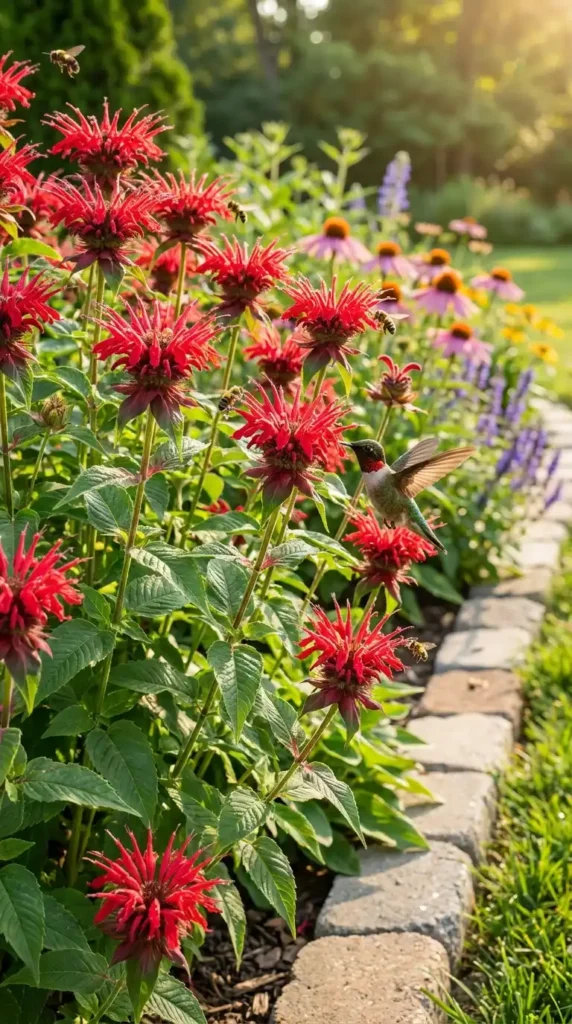
Bee balm is a perennial that returns year after year with some basic care . It produces bright, colorful blooms that attract pollinators like bees and hummingbirds . It is a strong nectar source for bees and hummingbirds, blooming in mid-summer .
Bee balm prefers good air circulation to reduce mildew risk . Plant it in well-drained soil, and it will reward you with splashes of red, pink, or purple . It is pretty low-maintenance and adds a nice pop to garden borders .
Bee balm prefers full sun to partial shade and moist, well-draining soil . It is hardy in USDA zones 3 through 9 . Divide clumps every 2 to 3 years to maintain vigor and improve air circulation .
8. Shasta Daisy: Classic White and Yellow
✦ Best for: Cutting gardens and sunny borders where cheerful white daisies are wanted all summer
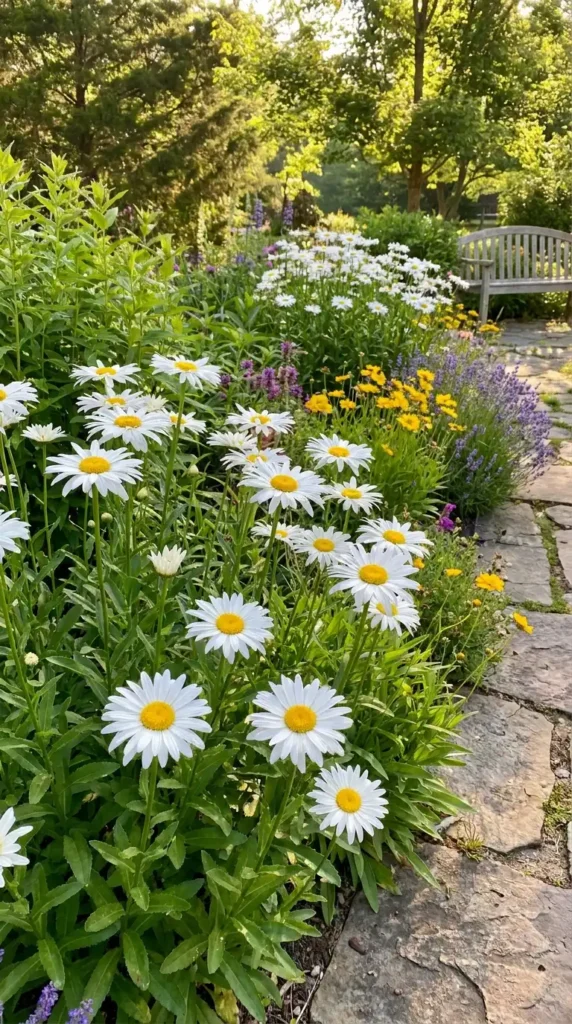
Shasta daisies offer the simple charm of the traditional daisy but with larger, more robust blooms and sturdy stems . They are excellent for cutting gardens, providing a steady supply of bright white flowers with sunny yellow centers all summer long .
Shasta daisies are incredibly easy to grow from seed and will often bloom in their first year if started early enough indoors . Once established, they will form tidy clumps that expand each year . Regular deadheading encourages a continuous display of flowers .
Shasta daisies prefer full sun and well-draining, loamy soil . They are hardy in USDA zones 5 through 9 . Water regularly until established; they are moderately drought-tolerant afterward . Divide clumps every 2 to 3 years .
9. Iris: The Early Spring Showstopper
✦ Best for: Sunny borders where early spring color and architectural foliage are wanted
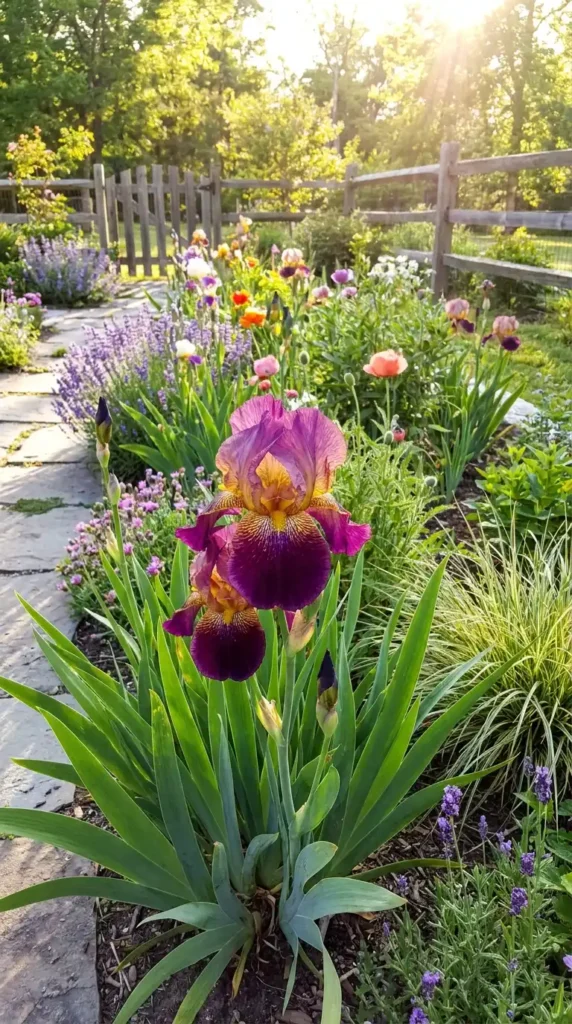
Iris flowers look like they were designed by a master artist, with intricate patterns and color combinations that seem almost too perfect . Their sword-like leaves provide structure even when not blooming . From tiny rock garden varieties to towering bearded iris that reach four feet tall, there is a size for every space .
Iris is a solid choice for a flower that pops up year after year . These perennials are pretty low-maintenance and can thrive with minimal care once established . Siberian iris, in particular, is known for lasting a long time in your garden without much fuss .
Iris prefers full sun and well-drained soil. It is hardy in USDA zones 3 through 11. The rhizomes multiply quickly, giving you free plants to share with friends or expand your own iris collection .
10. Yarrow: The Tough Native
✦ Best for: Sunny, dry spots where you want a tough, drought-tolerant plant that attracts pollinators
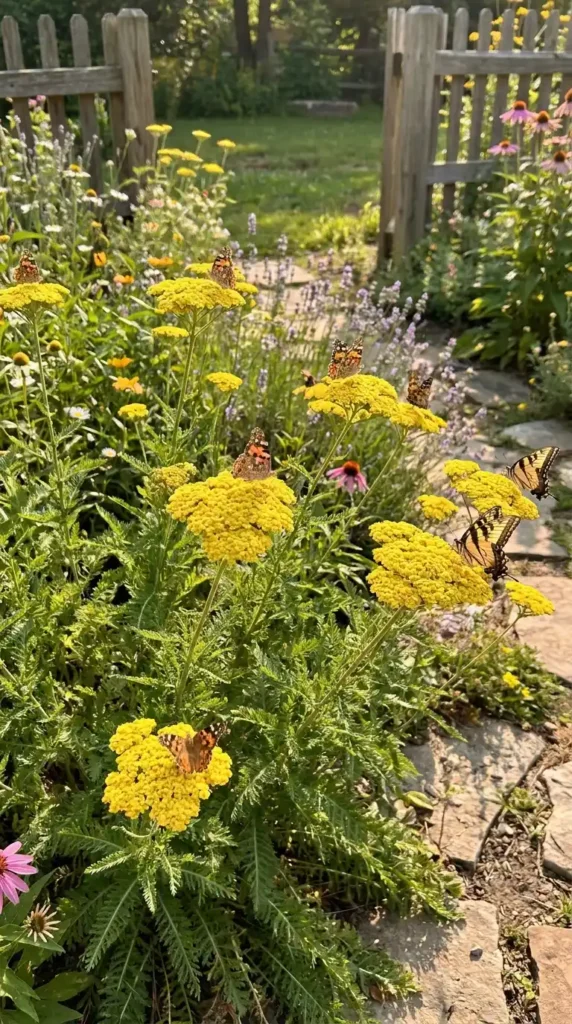
Yarrow is a tough, drought-tolerant perennial that does especially well in full sun and well-drained soil . Once established, it is very low-maintenance and even thrives in poor, sandy, or rocky soils . It produces clusters of tiny flowers that form broad, flat-topped heads which are perfect landing pads for butterflies, bees, moths, and other pollinators .
The native variety has delicate, frilly white flowers, but there are also cultivated varieties in pink, yellow, red, and orange . Their finely divided, feathery foliage gives the plant a soft, lacy appearance in the garden . Yarrow spreads slowly by rhizomes and can also self-seed . Divide the clumps every few years to manage growth and encourage more blooms .
Yarrow prefers full sun to partial shade and well-draining soil . It is drought-tolerant once established and hardy in USDA zones 3 through 9 . Deadhead to prolong blooming and divide every few years .
Frequently Asked Questions About Flowers That Come Back Every Year
What are flowers that come back every year called?
Flowers that come back every year are called perennials . Unlike annuals that complete their life cycle in one season, perennials live for two years or more and return each spring without needing to be replanted . According to the National Gardening Association, perennial plants emerge every year for two years or more .
How long do perennials live?
Once established, perennial plants return every year according to their “own” season . If conditions are proper, including soil, climate, and a pest-free environment, your perennial can live and may bloom anywhere from 3 to 10 years or more . Some perennials like peonies have been known to live for over 100 years, becoming family heirlooms .
How long does it take for perennials to establish?
Perennials take about a year or two to establish a regular blooming schedule . During its growing period before the two-year mark, blooming only occurs for less than four weeks. After the third year, you can expect perennials to bloom for a whole season or more .
What are the easiest perennials to grow?
Some of the easiest perennials for beginners include coneflowers, black-eyed Susans, salvia, and yarrow . These plants are hardy, disease-resistant, and forgiving of light mistakes . They are drought-tolerant once established and require minimal maintenance . Catmint (Nepeta) is also a low-maintenance perennial that provides long-lasting color and is deer resistant .
What perennials bloom the longest?
Long-blooming perennials include coreopsis, salvia, and catmint . Coneflowers bloom from late spring through fall, providing a long season of color . Black-eyed Susans bloom from summer through fall . To achieve continuous color in your garden, stagger the bloom times of your perennials by selecting a mix of spring, summer, and fall-blooming varieties .
Related Articles
Flowers That Bloom at Night and Transform Your Garden After Dark
Flowers That Attract Hummingbirds and Bring Your Garden to Life
Flowers That Bloom in Winter and Brighten the Coldest Months
Container Garden Plants for Shade That Thrive in Pots
A garden filled with perennials is a garden that grows more beautiful with age. Plant once, and enjoy years of color, fragrance, and life that returns stronger every season.

Sheikh Hassaan is a digital architect for small businesses and the founder of The Glow Up System. He writes about home decor, garden design, and outdoor living for real American homes – practical ideas that work in actual spaces without oversized budgets.