
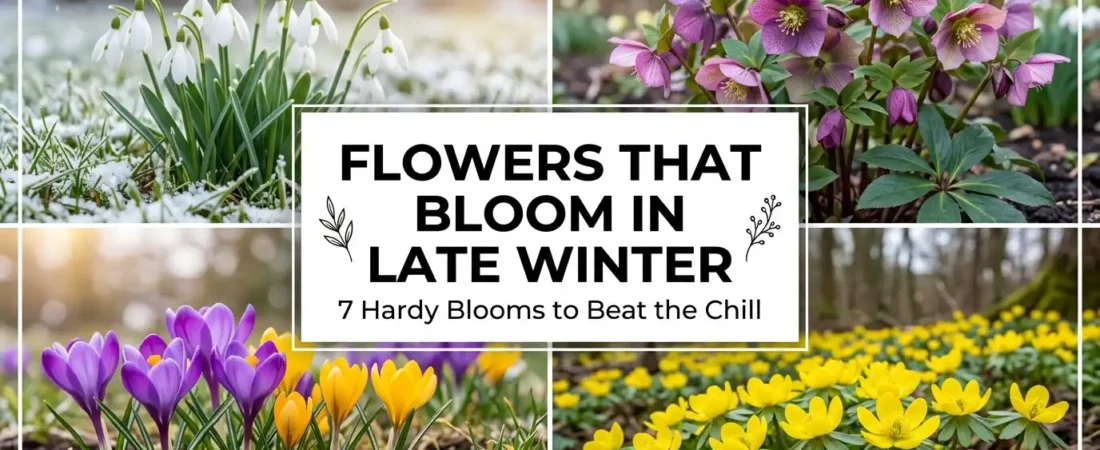
Late winter can feel like the longest stretch of the gardening year. The holidays are over, spring still feels far away, and the garden is a sea of brown and gray. But it does not have to be that way. There is a whole group of resilient plants that push through frozen soil and frost to bring color when you need it most . These flowers that bloom in late winter are proof that life goes on even in the coldest months.
That is what makes knowing which flowers that bloom in late winter so valuable for American gardeners, turning a dormant landscape into a space that feels alive, hopeful, and full of promise.
Table of Contents
Why Late Winter Flowers Are Special
Late winter flowers are among the toughest plants in the garden. They have evolved to bloom when few other plants dare, taking advantage of the brief window of light before trees leaf out and shade the forest floor . They store energy in their roots and bulbs over winter, ready to push through cold soil and even snow as soon as temperatures start to rise .
These early bloomers are also a lifeline for pollinators. Bees and other insects begin searching for food earlier than many people realize, and late-winter flowers provide crucial nectar when little else is available . They also create a smooth transition into spring, brightening the garden while new buds form around them .
Here are seven of the best flowers that bloom in late winter.
1. Snowdrops: The First Sign of Hope
✦ Best for: Naturalizing under trees, in lawns, or along pathways where their delicate blooms can be appreciated up close
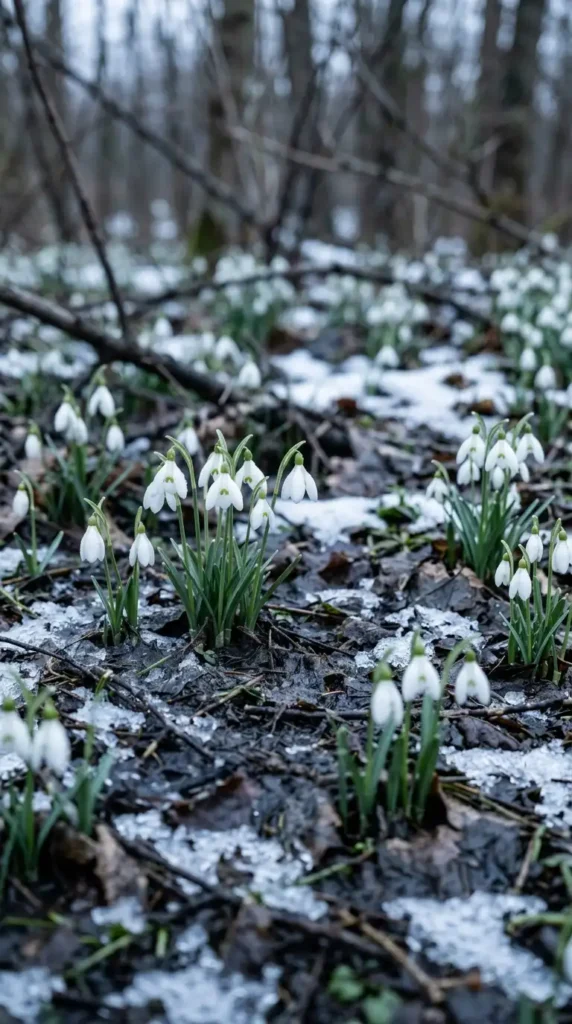
Snowdrops are usually the first flowers to appear in the growing year, sometimes pushing through snow as early as January . Their delicate white, bell-shaped flowers with green markings symbolize hope and renewal, making them one of the most beloved late-winter blooms .
Despite their fragile appearance, snowdrops are incredibly tough. They thrive in well-draining soil and partial shade, often forming beautiful carpets of white as they multiply naturally over time . They are hardy in USDA zones 3 through 7 and should be planted in the fall for late-winter blooms . Snowdrops provide a vital nectar source for early emerging bees and are often celebrated in the Celtic festival of Imbolc on February 1st .
2. Hellebores: The Winter Rose
✦ Best for: Shady spots where you want reliable, long-lasting blooms from late winter into spring
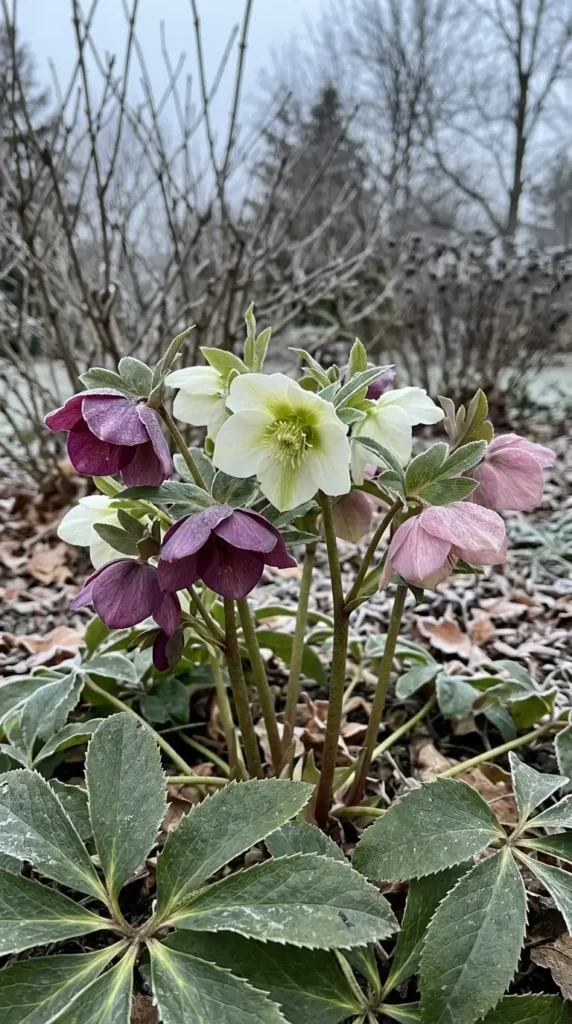
Hellebores are the royalty of late-winter flowers. Often called the Christmas rose or Lenten rose, these perennials produce stunning cup-shaped blooms from late winter through early spring . They come in a rainbow of colors, including white, pink, purple, green, and even near-black .
Hellebores are easy to grow and thrive in partial to full shade with little water . They are hardy in USDA zones 4 through 9 and form clumps up to 2 feet tall and 3 feet wide . One of their best features is that they are evergreen in many climates and deer-resistant . The blooms can last for months, and the plant requires very little maintenance once established .
3. Witch Hazel: The Fragrant Showstopper
✦ Best for: Adding height, structure, and fragrance to the winter garden with its unusual spider-like blooms

Witch hazel is a late-winter superstar. Its vibrant spidery flowers in shades of yellow, orange, or red clothe its bare branches from December to March, and they have a spicy, citrusy fragrance that is especially noticeable on sunny days . The flowers look almost alien, with their twisted, ribbon-like petals that curl up in cold weather and unfurl again when it warms .
The ‘Jelena’ variety (Hamamelis x intermedia ‘Jelena’), also known as ‘Copper Beauty’, produces fragrant orange flowers with a burgundy center and golden orange tips . Witch hazel is a large shrub, reaching 8 to 12 feet tall and wide, and is hardy in USDA zones 5 through 8 . It prefers full sun to partial shade and moist, well-draining soil . It is slow-growing but worth the wait .
4. Crocuses: The Colorful Carpet
✦ Best for: Lawns, woodland areas, and borders where you want early spring color and naturalization
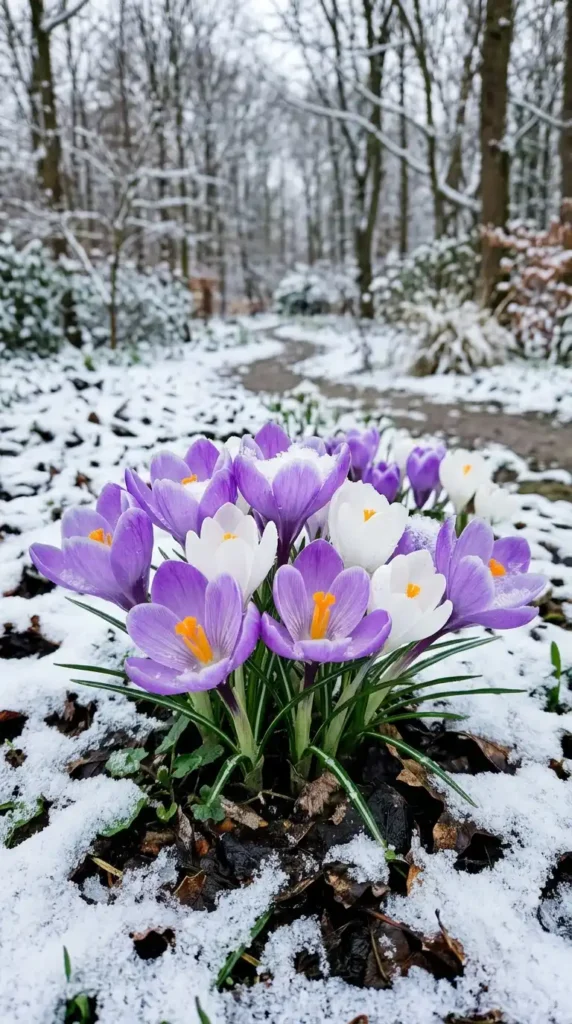
Crocuses are among the first flowers to appear in late winter, sometimes flowering through patches of snow . These small but mighty blooms come in vibrant purples, yellows, whites, and even stripes, creating a colorful carpet across the garden .
Crocuses are low-maintenance and tend to multiply on their own, so you will get more flowers every year without much fuss . Plant the corms in the fall in sunny areas, and allow the foliage to remain until it dies back naturally so the bulbs can store energy for the next season . They are hardy in USDA zones 3 through 8 and provide early nectar for bees .
5. Winter Jasmine: A Cascade of Sunshine
✦ Best for: Walls, slopes, and ground cover where its bright yellow flowers bring cheer to the darkest days
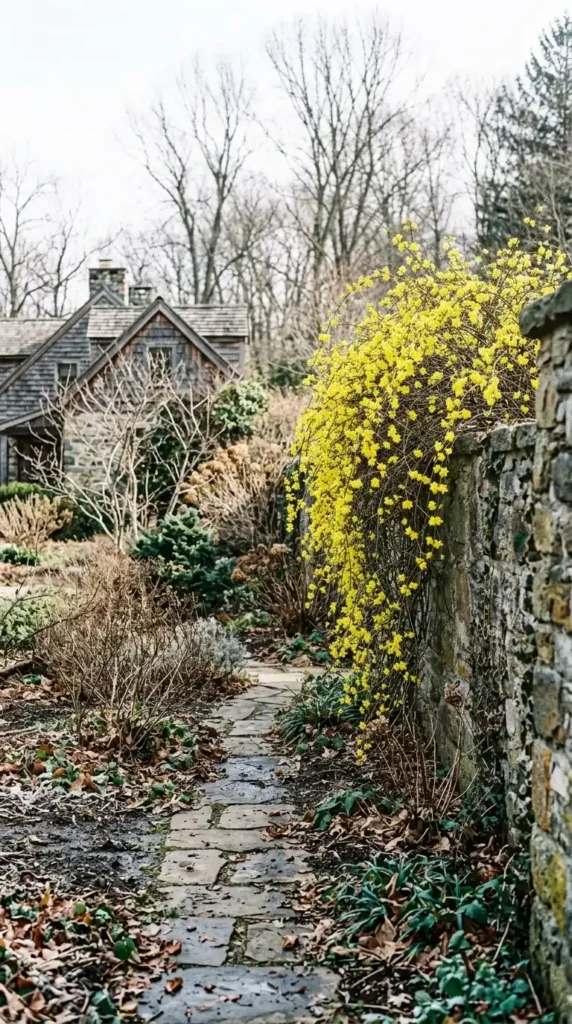
Winter jasmine is a cheerful climbing shrub known for its bright yellow flowers that bloom from late winter into early spring . Though unscented, it is valued for its hardiness and its ability to bloom before the frost melts completely . Its arching stems look lovely draped along fences or trellises .
Winter jasmine is a semi-deciduous shrub that produces flowers on bare, arching branches . It is hardy in USDA zones 6 through 10 and thrives in full sun to partial shade . It is tough and tolerates poor soil, heavy pruning, and deer damage .
6. Camellias: The Elegant Winter Bloomer
✦ Best for: Shaded gardens and woodland settings where you want elegant, rose-like blooms in late winter
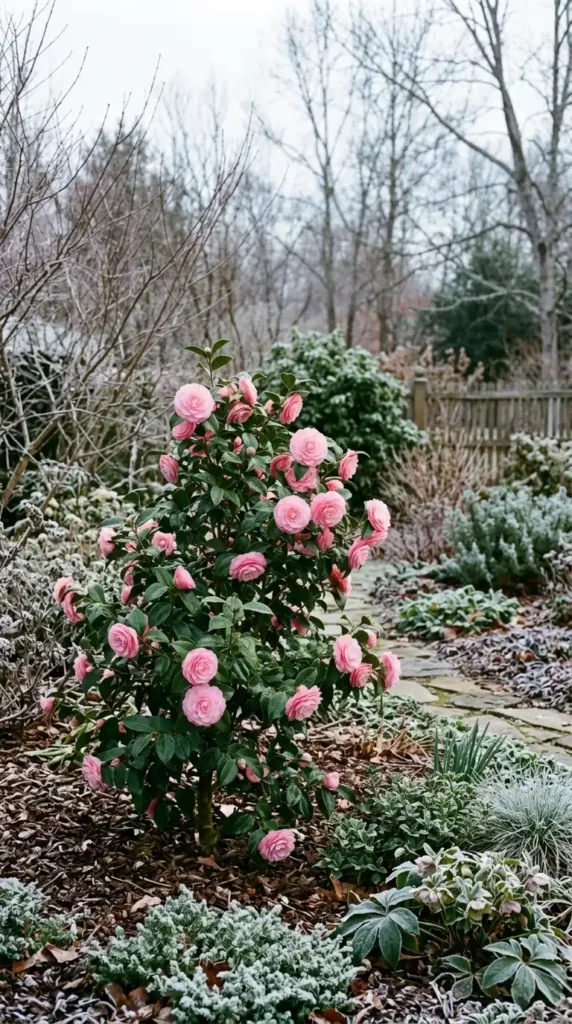
Camellias are winter showstoppers with their glossy, evergreen leaves and rose-like flowers that provide elegance during the cold season . Several varieties burst into flower from midwinter right through to late spring, with some producing exquisitely formed blush pink blooms against shiny evergreen foliage . They come in various shades of red, pink, and white .
Camellias are hardy in USDA zones 7 through 10 and prefer partial shade with acidic, well-drained soil . They should be planted in a shaded part of the garden, and they are perfect for filling garden beds with color during the darker months .
7. Winter Aconite: A Carpet of Gold
✦ Best for: Naturalizing under trees and in lawns where it creates a dramatic golden carpet from late winter to early spring
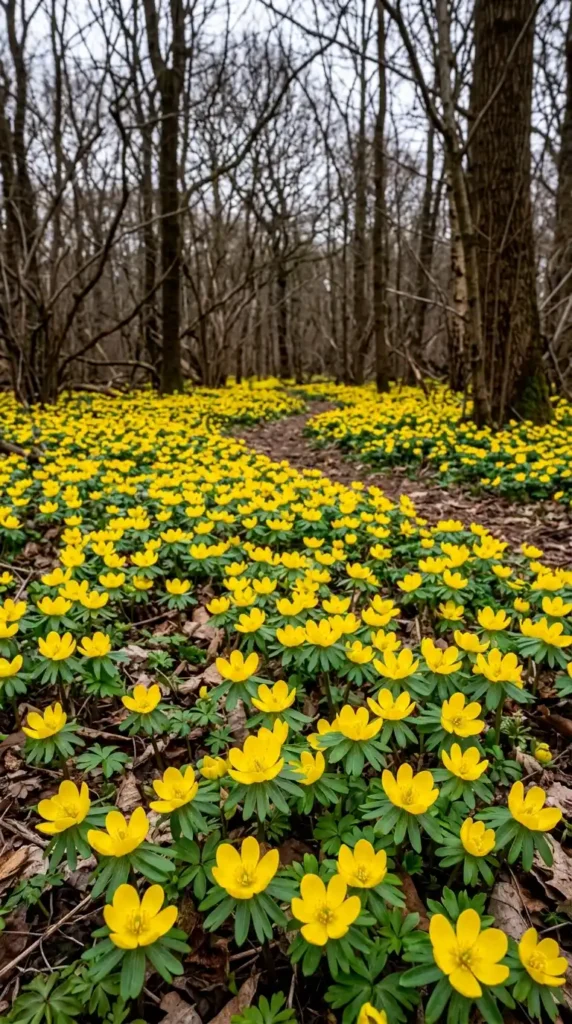
Winter aconite produces cheerful yellow blooms that brighten even the gloomiest days . They are small, but their impact is big when planted in clusters . These tiny perennials have bright yellow, cup-shaped flowers with a green “collar” of leaves and are often out before the crocuses .
Winter aconites grow best in partial shade, especially under deciduous trees, and their blooms often appear before the leaves of other plants emerge . They are hardy in USDA zones 3 through 7 and prefer moist, well-drained soil . They are also a source of nectar for butterflies .
Frequently Asked Questions About Flowers That Bloom in Late Winter
What flowers bloom in late winter?
Popular late-winter flowers include snowdrops, hellebores, witch hazel, crocuses, winter jasmine, camellias, and winter aconite. These resilient plants push through cold soil and even snow to bring color to the garden . Many store energy in their roots and bulbs over winter, ready to bloom as soon as temperatures begin to rise .
What is the first flower to bloom in late winter?
Snowdrops are usually the first flowers to appear in the growing year, sometimes pushing through snow as early as January . Their delicate white, bell-shaped flowers with green markings have long been a symbol of hope and renewal . Winter aconite is another very early bloomer, often appearing before the crocuses .
Do late-winter flowers support pollinators?
Yes, late-winter flowers are a crucial food source for bees and other pollinators. Pollinators begin searching for food early in the year, and these early blooms provide vital nectar when little else is available . Crocuses, hellebores, and witch hazel are especially valuable for early emerging bees .
What late-winter flowers are good for shade?
Hellebores and snowdrops are excellent choices for shady spots . Hellebores thrive in partial to full shade and are reliable, low-maintenance plants that return year after year . Snowdrops also do well in shade and often form beautiful carpets over time .
Related Articles
Fake Outdoor Plants That Look Real: 7 That Actually Fool Everyone
Flowers That Bloom in Winter and Brighten the Coldest Months
Flowers That Bush: 10 Stunning Shrubs for a Lush, Vibrant Garden
Flowers That Start With P: 15 Stunning Blooms for Every Garden
A late-winter garden is not a dormant garden. With the right flowers, it can be just as beautiful as any other season. Embrace the cold and discover the blooms that thrive when everything else sleeps.

Sheikh Hassaan is a digital architect for small businesses and the founder of The Glow Up System. He writes about home decor, garden design, and outdoor living for real American homes – practical ideas that work in actual spaces without oversized budgets.