
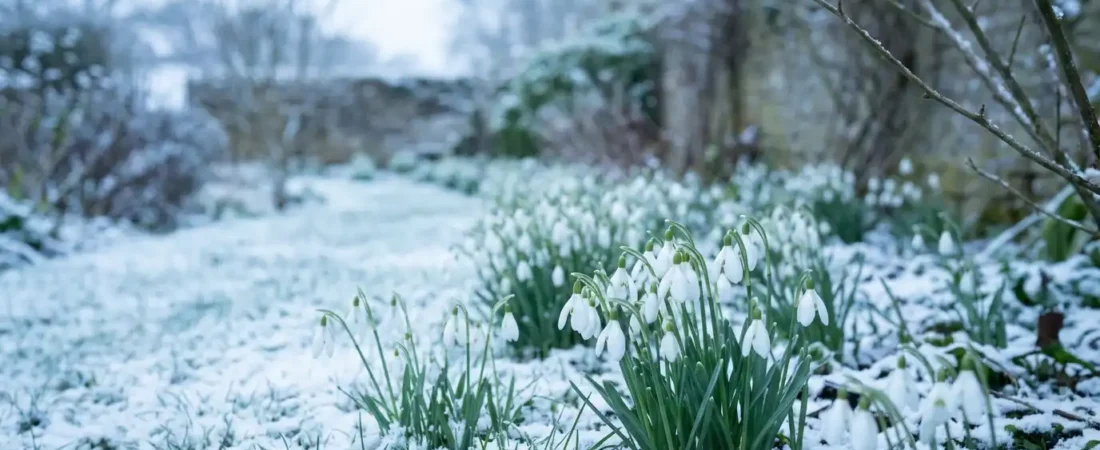
The garden in winter can feel like a forgotten place. Bare branches, brown earth, and nothing but gray skies. But it does not have to be that way. There is a whole world of flowers that bloom in winter, pushing through frost and even snow to bring color when you need it most. These are the plants that make you stop and smile on a freezing January morning, the ones that prove life goes on even in the darkest months .
That is what makes flowers that bloom in winter so special for American gardens, turning a dormant landscape into a space that feels alive, hopeful, and full of possibility.
This article covers ten of the best winter-blooming plants for American gardens, from tiny bulbs to dramatic shrubs. Every suggestion includes growing zones, light requirements, and practical care tips. No vague recommendations. No unrealistic expectations. Just beautiful, reliable plants that deliver color when everything else is sleeping.
Table of Contents
Why Some Plants Bloom in Winter
The question most gardeners ask is simple: why would any plant choose to bloom in winter? The answer comes down to survival and strategy. Winter-blooming plants have evolved to take advantage of a niche that few other plants occupy .
For woodland plants like hellebores and snowdrops, blooming in late winter means catching the sunlight before the trees leaf out and block the forest floor . For shrubs like witch hazel and winter jasmine, blooming when pollinators are desperate for food means less competition for attention . The flowers get noticed, the pollinators get fed, and the plants get to reproduce without fighting for space with spring and summer bloomers.
There is a practical benefit for gardeners too. Winter flowers provide a lifeline for bees and other pollinators during mild spells when they emerge looking for food . By planting winter bloomers, you are supporting local wildlife at a time when food sources are scarce.
1. Hellebores: The Winter Rose
✦ Best for: Shady spots where you want reliable, long-lasting blooms from late winter to early spring
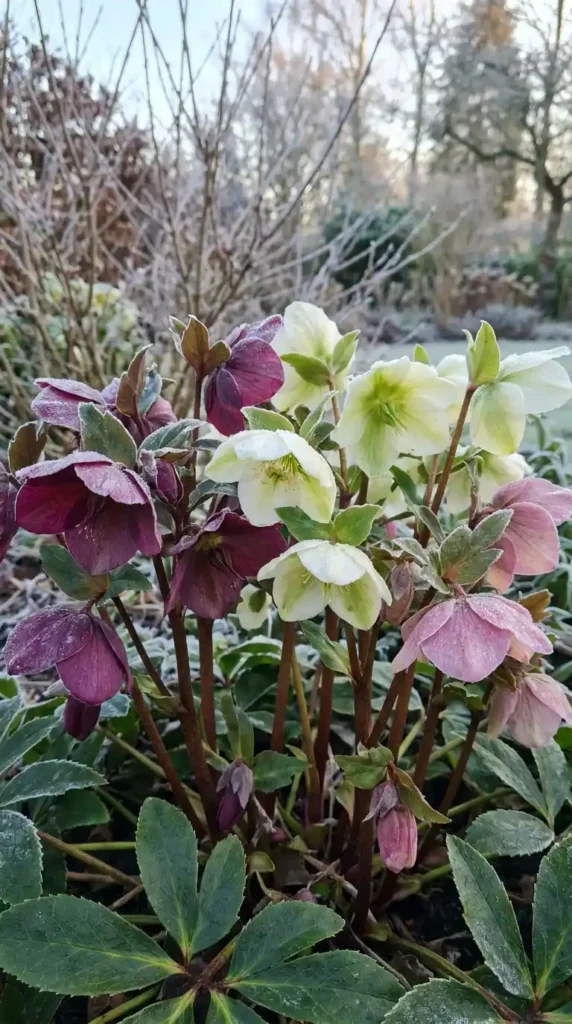
Hellebores are the royalty of winter flowers. Often called the Christmas rose or Lenten rose, these perennials produce stunning cup-shaped blooms in a rainbow of colors from December through early spring . They are known for their nodding heads, though newer varieties have flowers that face upward, showing off their intricate petals and contrasting centers.
Hellebores are easy to grow and thrive in partial to full shade with little water . They are hardy in USDA zones 4 through 9 and form clumps up to 2 feet tall and 3 feet wide . The Christmas rose (Helleborus niger) produces pure white flowers from December to January, while Lenten rose hybrids (Helleborus orientalis) bloom in shades of pink, purple, burgundy, cream, and even green .
One of the best things about hellebores is that they are deer-resistant and pest-resistant, making them a low-maintenance choice for woodland gardens and shady borders . All parts of the plant are toxic if ingested, so keep them away from pets and children .
2. Snowdrops: The First Sign of Spring
✦ Best for: Naturalizing under trees, in lawns, or along pathways where their delicate blooms can be appreciated up close
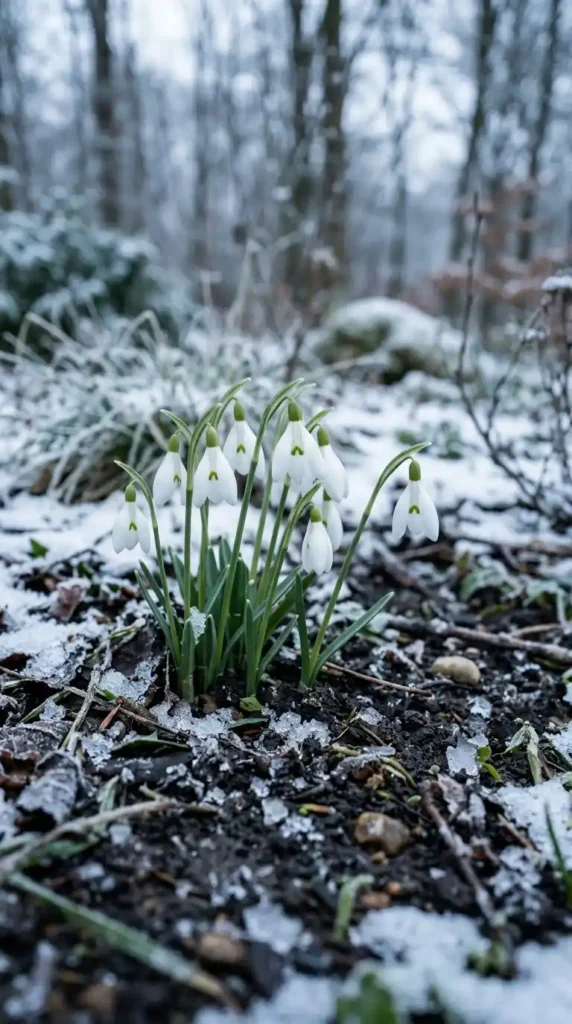
Snowdrops are usually the first bulbs to flower in the year, sometimes pushing through snow to announce that spring is on its way . Their delicate, drooping white bells with green markings are a welcome sight in January and February.
Snowdrops belong to the Galanthus genus and are hardy in USDA zones 3 through 8 . They prefer rich, well-drained soil and dappled shade, as they can wilt in extreme heat . Plant them in early fall for a stunning display in late winter .
Snowdrops are pest-resistant and unlikely to attract deer, rabbits, chipmunks, or mice . They are perennials that go dormant over summer, so you should plant them where other plants can fill the space when they disappear . For stronger, longer-lasting flowers, look for improved varieties like ‘Polar Bear’, ‘Snow Fox’, or ‘Beluga’ .
3. Pansies: Cheerful Color All Winter
✦ Best for: Containers, window boxes, and garden beds where you want non-stop, colorful blooms through the coldest months
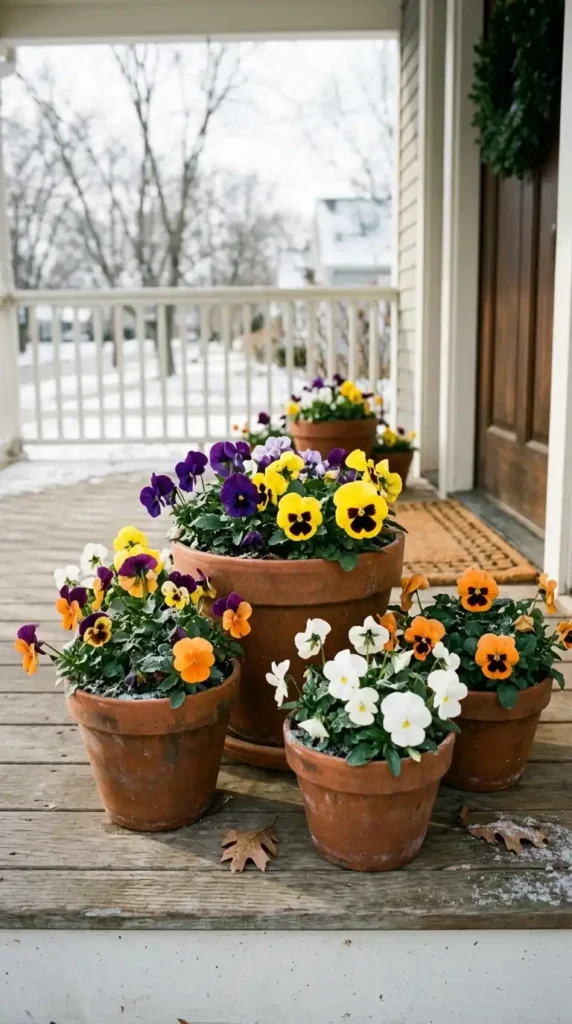
Pansies are the ultimate winter bedding plant. Their cheerful face-like blooms come in an incredible range of colors, from bold purples and yellows to soft pastels and bicolors . They are low-growing, bushy perennials usually grown as annuals, and they produce flowers from late autumn through early spring .
Pansies are cold-hardy and can tolerate light frosts . In cooler climates, they may go dormant during the harshest winter spells but will perk back up in early spring . They thrive in well-drained soil with full sun to partial shade . Plant them in fall for blooms that continue through winter and into spring .
For a modern twist, try trailing varieties like Pansy Cool Wave Raspberry, which clumps together quickly to create a long-lasting display . Pansies are also available in frilly varieties like Frizzle Sizzle, which offer extra texture .
4. Witch Hazel: The Spicy-Fragrant Shrub
✦ Best for: Adding height, structure, and fragrance to the winter garden with its unusual spider-like blooms
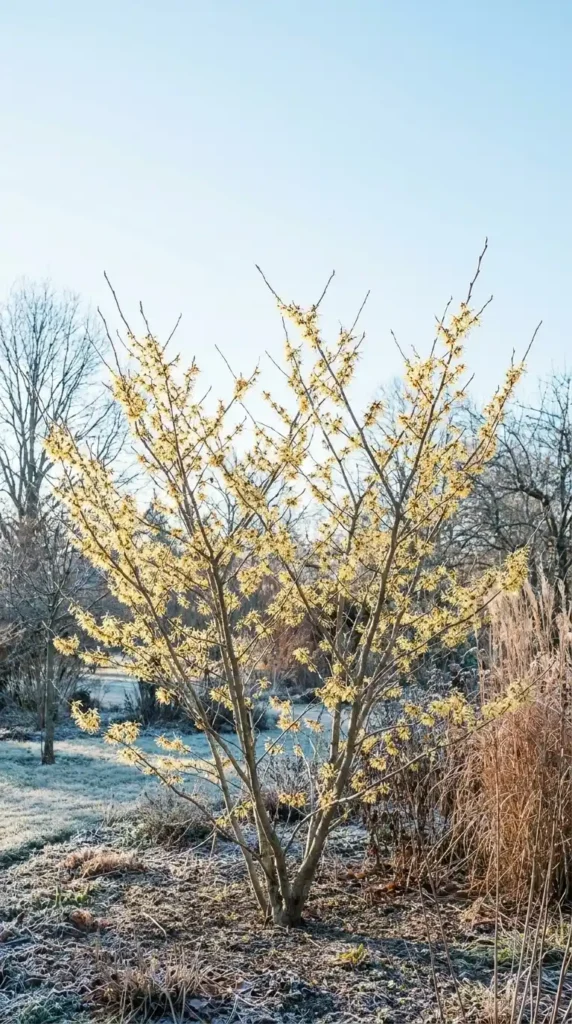
Witch hazel is a show-stopper in the winter garden. Its vibrant spidery flowers in shades of orange, red, or yellow clothe its bare branches from December to March, and they have a spicy, citrusy fragrance . The flowers look almost alien, with their twisted, ribbon-like petals that curl up in cold weather and unfurl again when it warms .
Witch hazel is a large shrub, reaching 10 to 25 feet tall at maturity . It is hardy in USDA zones 3 through 9 and thrives in full sun to light shade with moist, well-drained, slightly acidic soil . It is also worth noting that witch hazel has long been used in traditional medicine to treat inflammation and skin damage .
If you have a smaller garden, look for more compact varieties. Cut branches can be brought indoors to enjoy their fragrance in vases .
5. Camellias: The Queen of Winter Flowers
✦ Best for: Adding elegant, rose-like blooms to the winter garden in shades of pink, red, and white
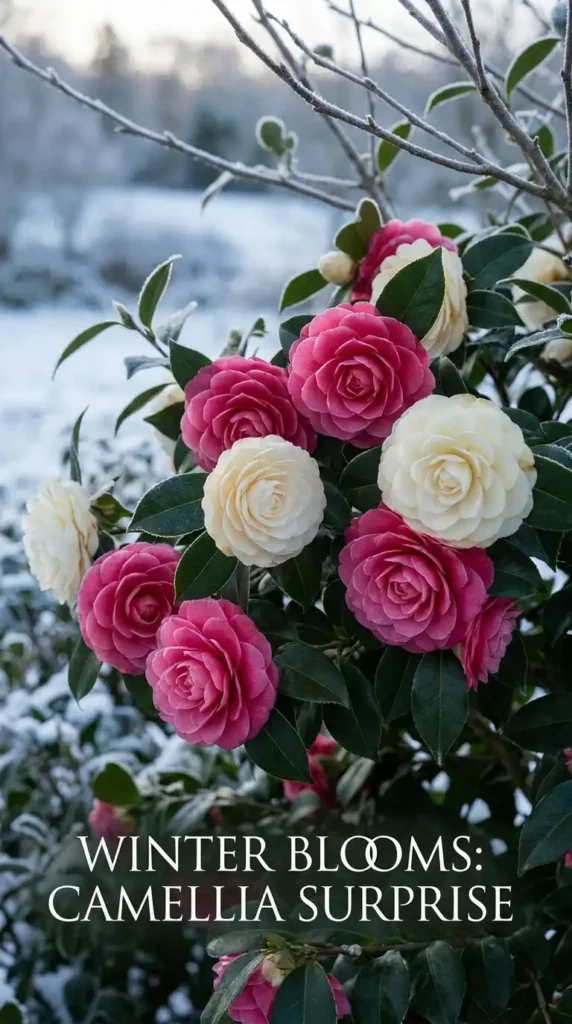
Camellias are known as the queen of winter flowers for good reason. Their sophisticated layering of petals and glossy evergreen foliage bring elegance to the garden from September through March .
The two main types for winter gardens are Camellia sasanqua, which blooms from late autumn to winter, and Camellia japonica, which blooms from winter to early spring . Flowers range from white to pink to red, with forms including single, rose, peony, and double . The flowers can be as showy as roses and are often fragrant.
Camellias need acidic soil and do well in full sun rather than dappled shade . They are hardy in USDA zones 7 through 10 and prefer a sheltered spot with morning sun and afternoon shade . For colder climates, try growing them in containers that can be moved to a sheltered spot .
6. Cyclamen: Hardy, Compact, and Colorful
✦ Best for: Containers, window boxes, and garden beds where compact, self-seeding blooms are wanted through winter
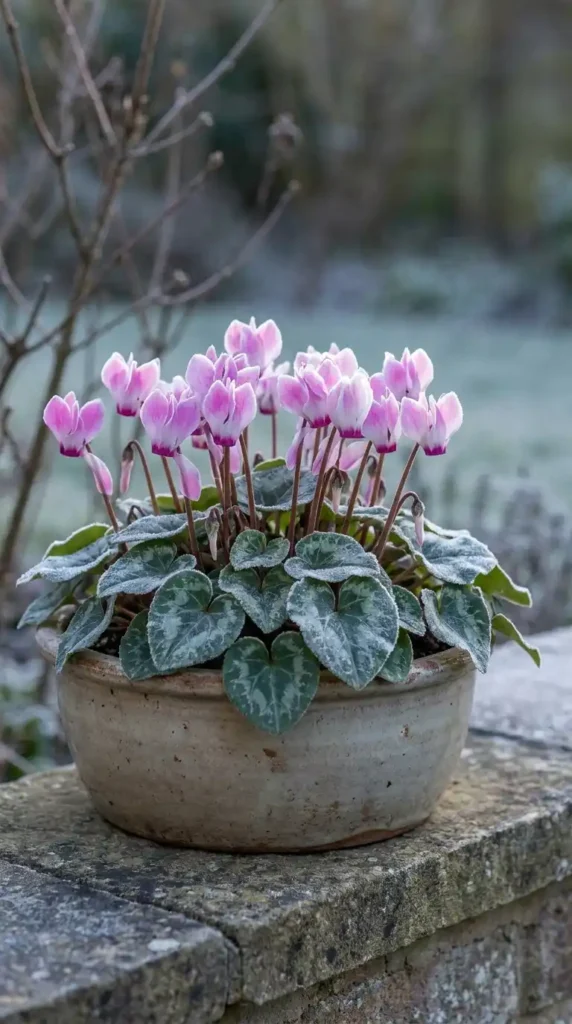
Hardy cyclamen are one of the most reliable winter-blooming perennials. They produce upswept blooms in shades of pink, purple, red, and white from late winter through early spring . Their heart-shaped leaves often have beautiful silver patterns, making them attractive even when they are not blooming .
Cyclamen coum is the most common species for winter gardens, blooming from December to March in USDA zones 5 through 9 . They are shade-tolerant and thrive in well-drained soil with moderate moisture. Cyclamen are also ideal for growing in containers, window boxes, and under trees where they can naturalize over time .
These are “indestructible flowers in the cold season,” needing minimal deadheading and self-seeding in the right conditions . Try single colors or mixes for the best effect. The ivy-shaped variegated leaves are beautiful even when the flowers fade .
7. Winter Jasmine: A Cascade of Sunshine
✦ Best for: Ground cover, slopes, or trained against walls where its bright yellow flowers bring cheer to the darkest days
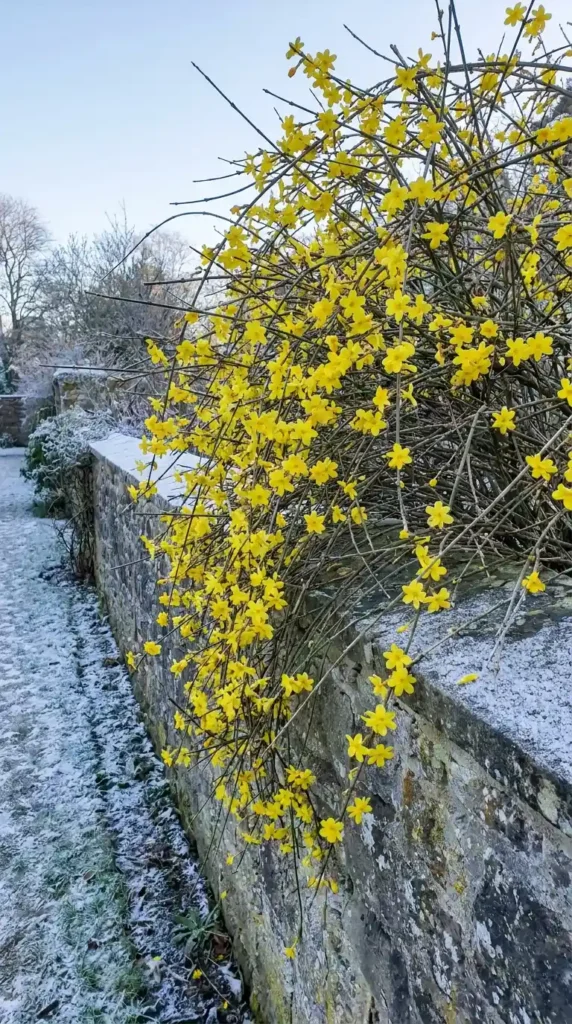
Winter jasmine is a semi-deciduous shrub that lights up the garden with its bright yellow, star-shaped flowers from late winter to early spring . The flowers appear on nearly leafless, arching branches, creating a cheerful burst of sunshine when everything else is gray .
Winter jasmine grows 3 to 5 feet tall and wide and can reach heights of 10 to 15 feet if grown as a vine over a trellis or up a fence . Unlike other jasmines, it does not have a scent, but its colorful display more than makes up for it . It is hardy in USDA zones 6 through 10 and thrives in full sun to partial shade .
Winter jasmine is tough and hardy. It tolerates partial shade, poor soil, heavy pruning, and resists deer damage . Branches may root where they touch the soil, so it can be used as ground cover on slopes . It works well in mass plantings, as ground cover, or trained against a wall .
8. Daphne: Fragrant Blooms for the Winter Garden
✦ Best for: Small gardens and containers where the intoxicating fragrance of winter blooms can be appreciated up close
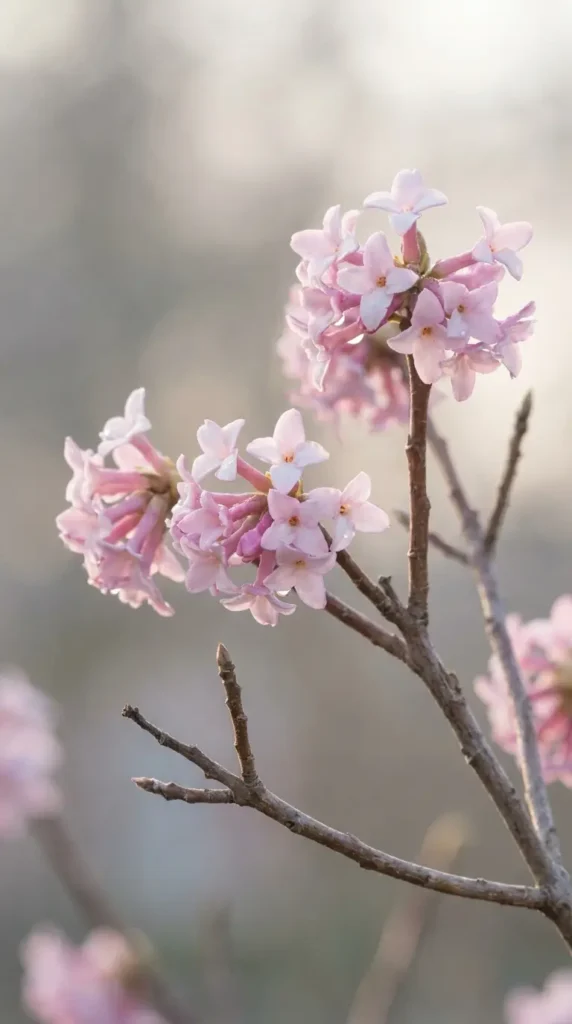
Daphne is a compact shrub that fills the winter garden with fragrance. Its small clusters of pink, red, or white flowers appear from late winter to early spring, and their sweet perfume can be detected from several feet away .
Daphne odora is a tried-and-trusted favorite, flowering reliably from January onwards with an intoxicating fragrance . Daphne bholua ‘Jacqueline Postill’ has large clusters of mauve-pink flowers and powerful, sweet fragrance that carries through the garden . Both are perfect for compact gardens and can be grown in large containers .
Daphne prefers well-drained soil with some organic matter, in sun or partial shade . It is slow-growing and requires minimal maintenance. The best position is where the morning sun will not reach the plant while it is still frozen after a cold night . All parts of the plant are toxic if ingested .
9. Winter Aconite: A Carpet of Gold
✦ Best for: Naturalizing under trees and in lawns where it creates a dramatic golden carpet from late winter to early spring
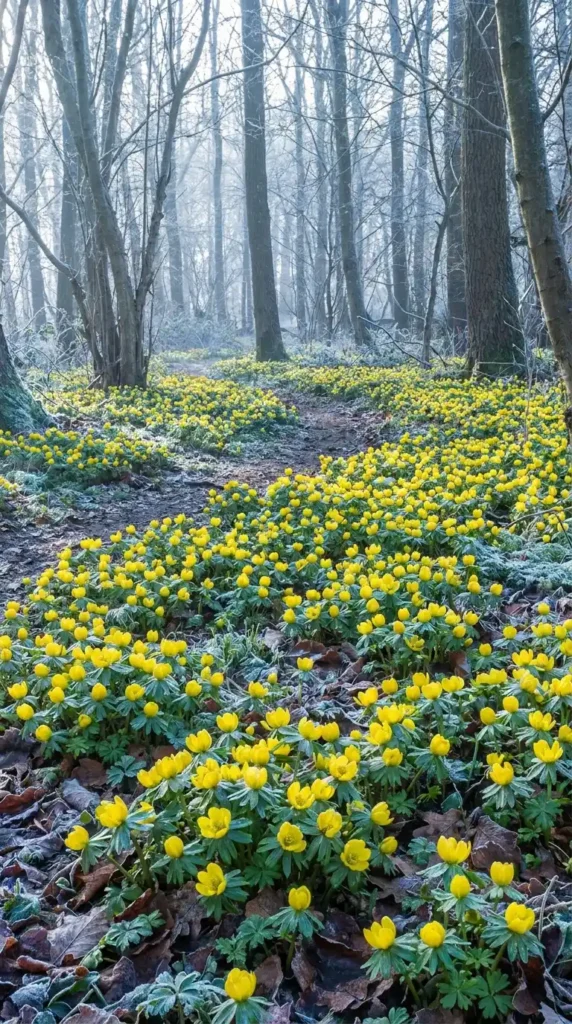
Winter aconite is a tuberous perennial that brings a pop of yellow to the garden in late winter, sometimes even before crocuses wake up . Their small, cup-shaped buttercup-like blooms are surrounded by a leafy collar, creating a charming display that naturalizes beautifully over time .
Winter aconites are hardy in USDA zones 3 through 7 and prefer full sun to partial shade with well-drained soil . Plant them in fall so they can settle in before showtime. They like 5 to 6 hours of sun daily and can handle both full sun and a bit of shade .
Winter aconites are perfect for planting beneath trees or naturalizing in grass . Both the plant and tuber are toxic if ingested, so be cautious with this plant if you have children or pets .
10. Mahonia: Spikes of Sunshine Yellow
✦ Best for: Shady corners where bold, architectural foliage and bright yellow flower spikes bring drama and structure
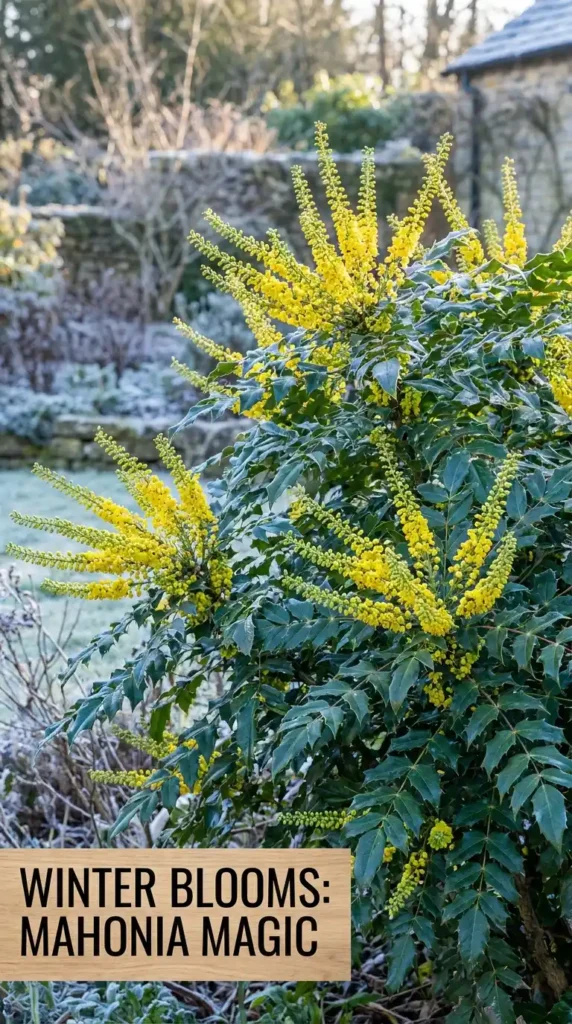
Mahonia is an evergreen shrub that provides bold structure and winter color. Its tall spikes of bright yellow flowers bloom from November through March, followed by blue-black berries that attract birds . The flowers have a scent reminiscent of lily-of-the-valley .
Mahonia is shade-tolerant and thrives in well-draining soils in light shade . It is hardy in USDA zones 5 through 9 and can grow up to 5 feet tall depending on the variety . Look for Mahonia ‘Charity’ or ‘Winter Sun’ for the most dramatic displays of yellow flowers .
The evergreen, holly-like leaves add structure year-round. The foliage sometimes turns bronze or purple in cold snaps . Mahonia is a great plant for shady corners and works well as a focal point in the winter garden . It is also popular with winter-active bumblebees .
Frequently Asked Questions About Flowers That Bloom in Winter
What flowers bloom in winter?
Many beautiful flowers bloom in winter, including hellebores (Christmas and Lenten roses), snowdrops, pansies, witch hazel, camellias, cyclamen, winter jasmine, daphne, winter aconite, and mahonia . These hardy plants are adapted to cold conditions and provide color from December through March.
What is the flower that blooms in winter and smells good?
Several winter flowers are fragrant. Daphne produces an intoxicating fragrance from January onwards . Witch hazel has a spicy, citrusy scent . Wintersweet (Chimonanthus) is renowned for its incredibly sweet, spicy scent . Sweet box (Sarcococca) produces creamy-white, strongly scented flowers in deepest winter .
What flowers bloom in the winter in the US?
US gardeners can enjoy hellebores (zones 4-9), snowdrops (zones 3-8), pansies (zones 4-10), witch hazel (zones 3-9), camellias (zones 7-10), winter jasmine (zones 6-10), and winter aconite (zones 3-7) . These hardy plants are adapted to cold weather and provide color across a wide range of growing zones.
What are the best winter flowers for pots and containers?
Pansies, cyclamen, and winter heather are excellent choices for containers . These plants thrive in pots and can be moved around to brighten different areas of your garden or entryway . According to horticulture experts, winter-flowering heathers are particularly useful for bringing color to winter containers, and they gradually spread to inhibit weeds as they go .
What is the easiest winter flower to grow?
Pansies and cyclamen are among the easiest winter flowers to grow . Pansies are low-growing, bushy perennials that bloom from November to March and thrive in well-drained soil with full sun to partial shade . Cyclamen are “indestructible flowers in the cold season,” needing minimal deadheading and self-seeding in the right conditions .
Related Articles
Container Garden Plants for Shade That Thrive in Pots
Garden Plants for Shade That Thrive Without Direct Sunlight
21 Koi Pond Design Ideas for Small Gardens That Look Stunning
8 Rooftop Garden Ideas Perfect For Summer
A winter garden is not a dormant garden. With the right plants, it can be just as beautiful as any other season. Embrace the cold and discover the flowers that thrive when everything else sleeps.

Sheikh Hassaan is a digital architect for small businesses and the founder of The Glow Up System. He writes about home decor, garden design, and outdoor living for real American homes – practical ideas that work in actual spaces without oversized budgets.