
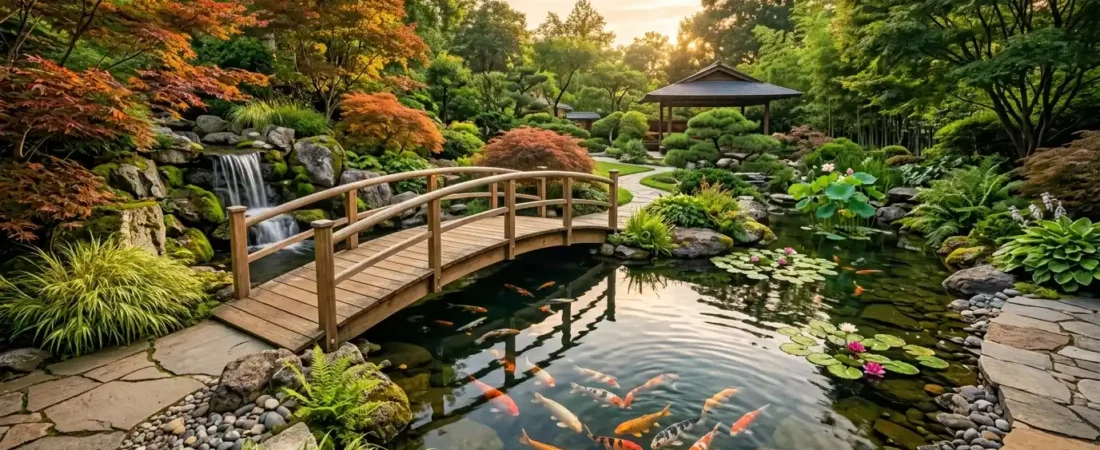
Introduction: Everything You Need to Know About a Koi Pond
A koi pond is much more than a decorative water feature—it’s a carefully designed ecosystem that provides a healthy environment for ornamental koi fish while enhancing the beauty and value of your outdoor space. Whether you’re planning a backyard oasis or an elegant indoor display, building a successful koi pond requires thoughtful planning, proper filtration, and ongoing maintenance.
Koi are known for their vibrant colors, graceful movement, and long lifespan. With proper care, many koi live for 25 to 50 years, and some can even exceed 100 years. Because of their longevity and size, they require a pond specifically designed for their health and growth.
Benefits of Having a Koi Pond
- Creates a relaxing and peaceful outdoor environment
- Increases curb appeal and property value
- Supports beneficial aquatic ecosystems
- Provides a rewarding hobby for fish enthusiasts
- Encourages biodiversity through plants and beneficial bacteria
Common Mistakes to Avoid
Many first-time pond owners encounter problems that could have been prevented during the planning stage. Common mistakes include:
- Building the pond too shallow
- Installing an undersized koi pond filter
- Overstocking with too many fish
- Ignoring water quality testing
- Skipping aeration
- Choosing decorative rather than functional designs
Understanding these fundamentals will help you create a healthy pond that requires less maintenance in the long run.
Table of Contents
Koi Pond Ideas & Design Inspiration
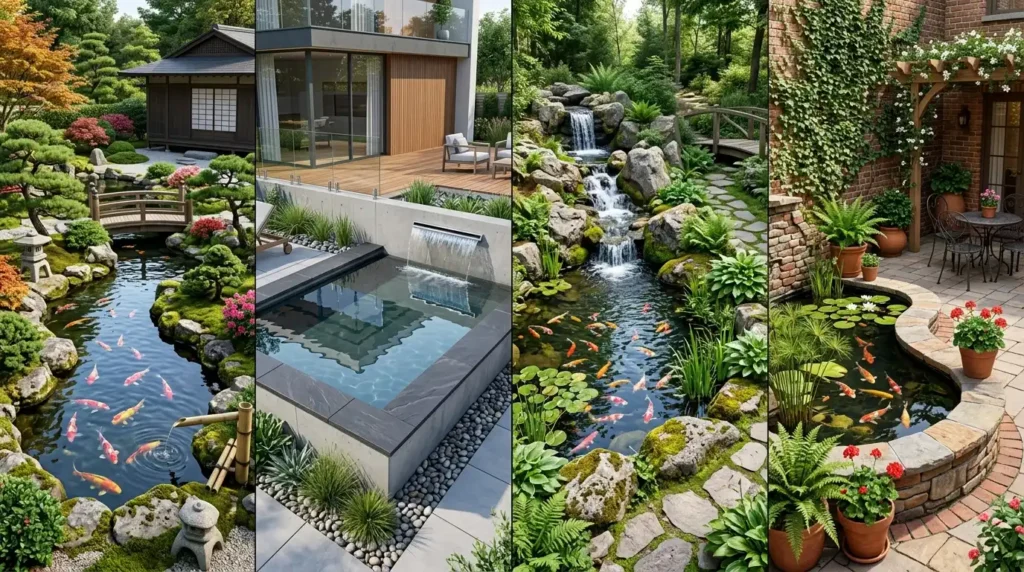
There are countless koi pond ideas that can transform an ordinary garden into an extraordinary landscape. The best design balances aesthetics with functionality.
Natural Style Ponds
Natural ponds use rocks, waterfalls, aquatic plants, and irregular shapes to mimic streams or lakes.
Perfect for:
- Large backyards
- Wildlife-friendly gardens
- Nature-inspired landscaping
Modern Minimalist Designs
These feature:
- Straight edges
- Concrete or stone finishes
- Clean architectural lines
- Hidden filtration systems
Ideal for contemporary homes.
Japanese-Inspired Koi Ponds
Traditional Japanese gardens emphasize:
- Stone lanterns
- Bamboo features
- Wooden bridges
- Carefully placed boulders
- Maple trees
These designs celebrate harmony and tranquility.
Koi Pond Design Ideas for Small Gardens
Limited space doesn’t mean sacrificing beauty. Popular koi pond design ideas for small gardens include:
- Raised ponds
- Corner ponds
- Courtyard water gardens
- Compact rectangular ponds
- Pondless waterfall combinations
Small ponds should still provide adequate swimming space and efficient filtration.
How to Build a Koi Pond (Step-by-Step)
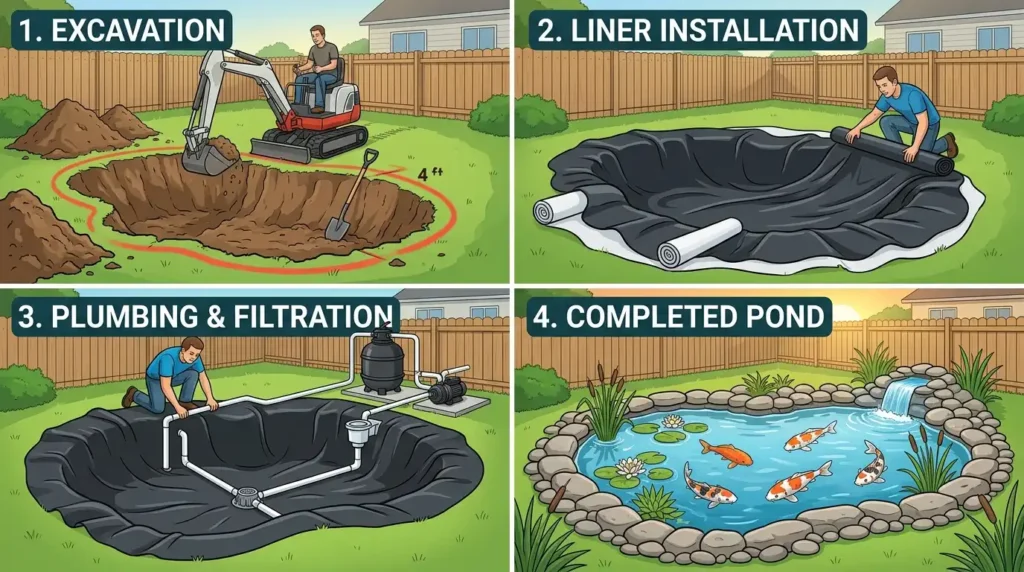
If you’re wondering how to build a koi pond, following a systematic approach will save time and prevent costly mistakes.
Step 1: Choose the Right Location
Select a location that:
- Receives partial sunlight
- Is away from large trees
- Has access to electricity
- Allows easy maintenance
Avoid placing ponds under trees where falling leaves create excessive debris.
Step 2: Plan the Size
Consider:
- Number of koi
- Future fish growth
- Filtration equipment
- Viewing angles
A larger pond is generally easier to maintain because water conditions remain more stable.
Step 3: Excavate
Mark the pond outline and dig to varying depths, creating shelves for aquatic plants while maintaining a deep swimming zone.
Step 4: Install Underlayment and Liner
Protect the liner from rocks and roots using a quality underlayment before installing EPDM pond liner.
Step 5: Install Plumbing
Before filling the pond:
- Install bottom drains
- Run return lines
- Connect skimmers
- Position filtration equipment
Proper plumbing ensures efficient circulation.
Step 6: Install Filtration
A properly sized koi pond filter system setup guide generally includes:
- Mechanical filtration
- Biological filtration
- UV sterilization
- Pump
- Aeration
Step 7: Fill and Cycle
Never add koi immediately.
Allow beneficial bacteria to establish through nitrogen cycling before introducing fish.
This process typically takes several weeks.
DIY Koi Pond Tips
A DIY koi pond can significantly reduce costs if you:
- Plan plumbing carefully
- Invest in quality liners
- Use oversized filtration
- Avoid cutting corners on pumps
The filtration system is where quality matters most.
Koi Pond Depth Requirements & Sizing
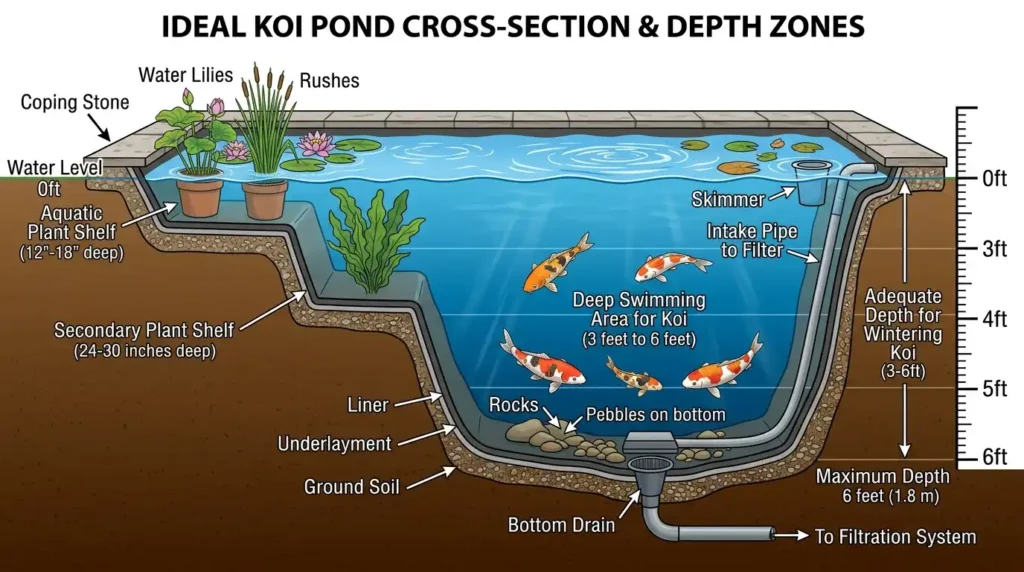
Understanding koi pond depth requirements is essential for fish health.
Minimum Depth
- 3 feet minimum
- 4–6 feet preferred
Deeper ponds provide:
- Stable temperatures
- Better predator protection
- Improved fish health
- More swimming space
Recommended Sizes
Small pond:
- 500–1,000 gallons
Medium pond:
- 1,500–3,000 gallons
Large pond:
- 5,000+ gallons
As a rule, larger ponds are easier to maintain than smaller ones.
Filtration System Guide
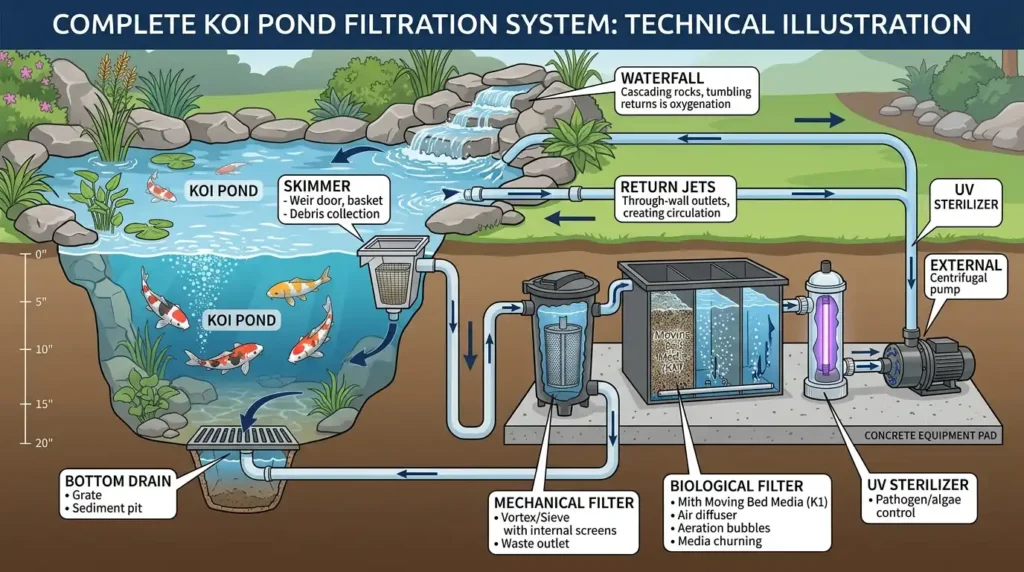
A quality koi pond filter is the heart of every successful pond.
A complete koi pond filter system setup guide should include:
Mechanical Filtration
Removes:
- Leaves
- Fish waste
- Uneaten food
- Debris
Common equipment:
- Sieve filters
- Drum filters
- Settlement chambers
Biological Filtration
Beneficial bacteria convert:
- Ammonia
- Nitrite
- Into relatively safe nitrate
Popular bio media include:
- Moving bed filters
- Japanese matting
- Ceramic media
Oversizing biological filtration always benefits koi health.
Bottom Drains Explained
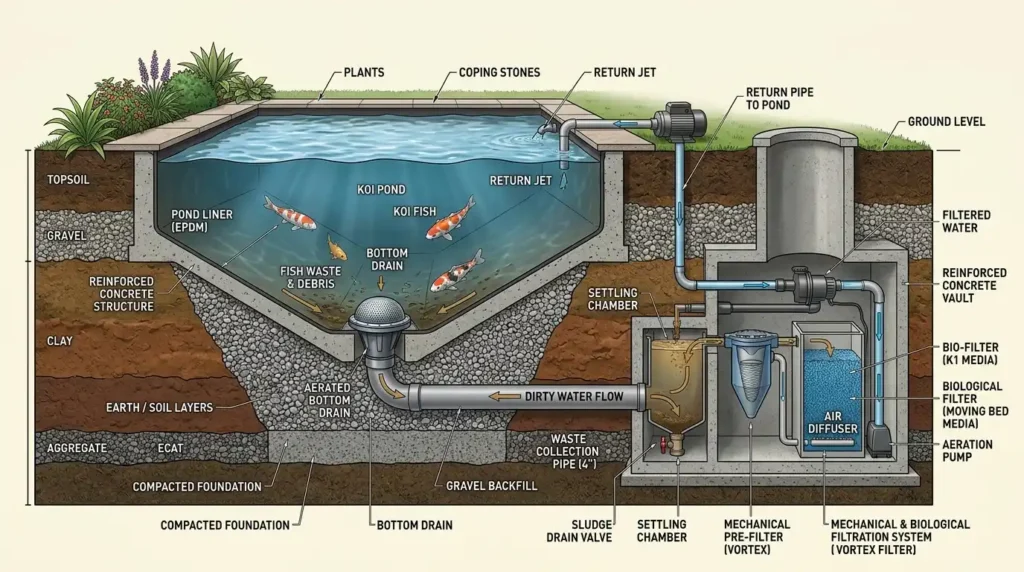
A bottom drain continuously removes waste before it decomposes.
Choosing the best bottom drain for koi pond depends on pond size.
Benefits
- Cleaner pond floor
- Reduced sludge
- Improved circulation
- Better oxygen levels
Bottom drains work best when paired with gravity-fed filtration systems.
Aeration Systems
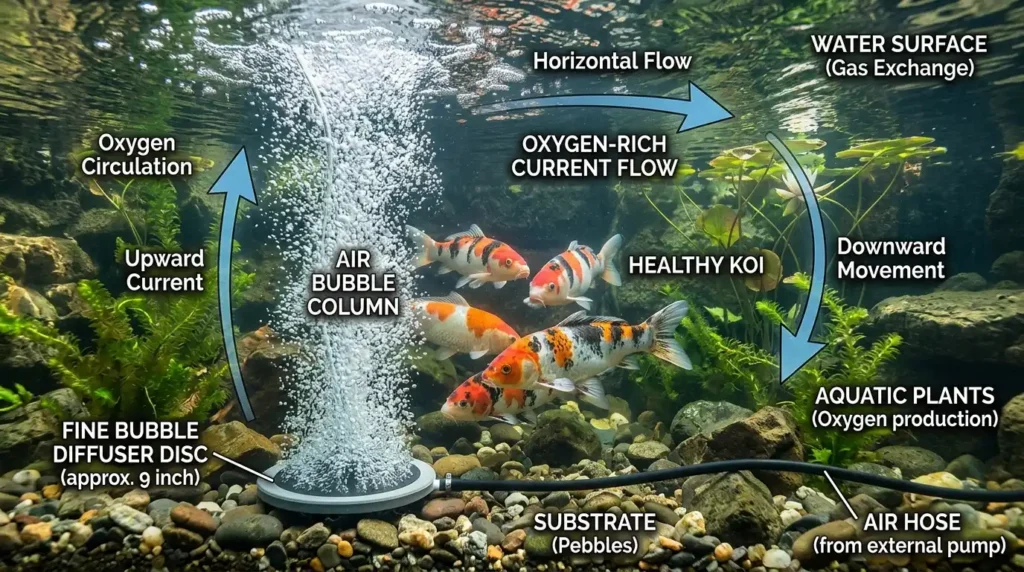
Koi require oxygen-rich water throughout the year.
The best aeration system for koi pond usually includes:
- Air pumps
- Air stones
- Diffuser discs
- Bottom drain diffusers
Benefits include:
- Healthier bacteria
- Better fish respiration
- Improved water circulation
- Reduced dead zones
Even heavily filtered ponds need dedicated aeration.
UV Sterilizers
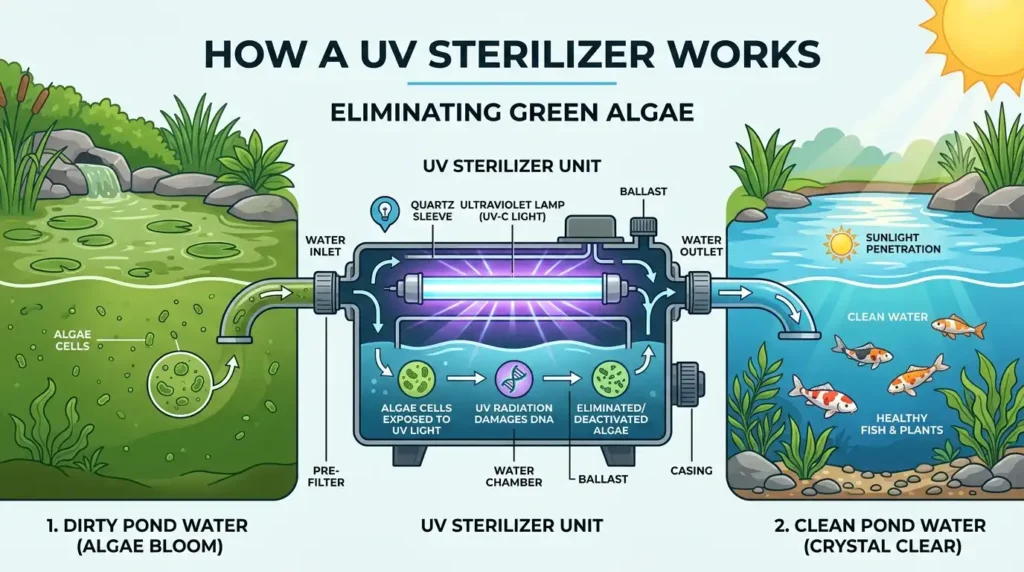
Many pond owners struggle with green water caused by suspended algae.
The best UV sterilizer for koi pond clarity helps eliminate free-floating algae before it clouds the pond.
Benefits include:
- Crystal-clear water
- Reduced algae blooms
- Lower maintenance
- Healthier ecosystem
UV sterilizers complement filtration but do not replace it.
Building a Waterfall Feature
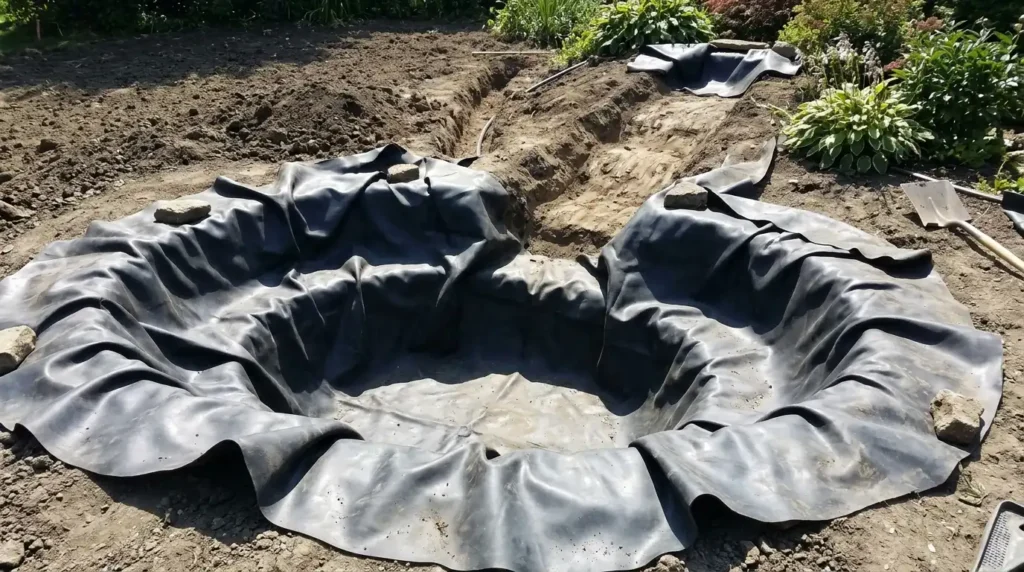
Learning how to build a koi pond waterfall feature adds both beauty and function.
Waterfalls provide:
- Natural aeration
- Water circulation
- Relaxing sound
- Enhanced visual appeal
Basic Steps
- Build an elevated spillway.
- Install a dedicated pump.
- Use flexible liner.
- Hide liner with natural rocks.
- Adjust flow for desired appearance.
Ensure splashing does not excessively lower water levels.
Best Pond Plants
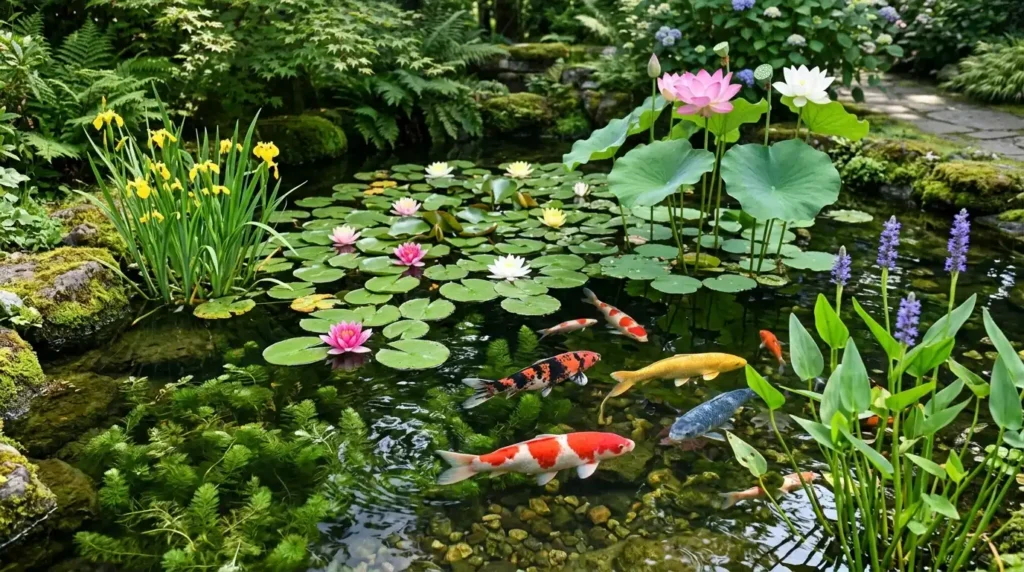
The best pond plants for koi pond ecosystem improve both appearance and water quality.
Excellent choices include:
- Water lilies
- Lotus
- Hornwort
- Anacharis
- Water lettuce
- Iris
- Pickerel weed
Benefits include:
- Nutrient absorption
- Shade
- Oxygen production
- Natural habitat
Protect delicate plants since koi often nibble on vegetation.
Water Quality Management
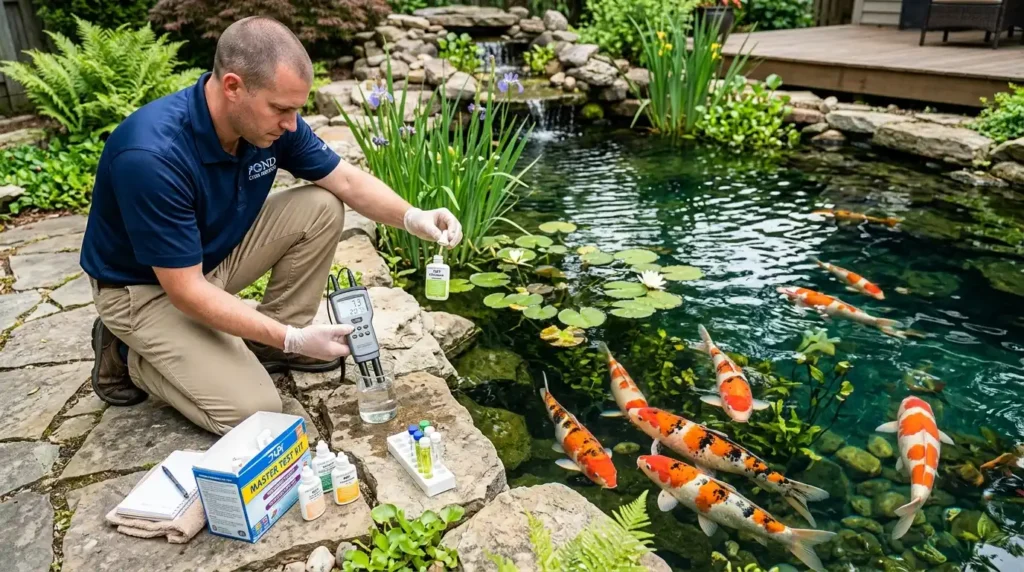
Knowing how to maintain water quality in koi pond is one of the most important responsibilities of every pond owner.
Monitor regularly:
- Ammonia
- Nitrite
- Nitrate
- pH
- KH
- Temperature
- Dissolved oxygen
Best Practices
- Test water weekly.
- Perform partial water changes.
- Remove debris promptly.
- Avoid overfeeding.
- Clean filters regularly.
- Maintain healthy bacteria colonies.
Stable water conditions are more important than chasing perfect numbers.
Seasonal Maintenance
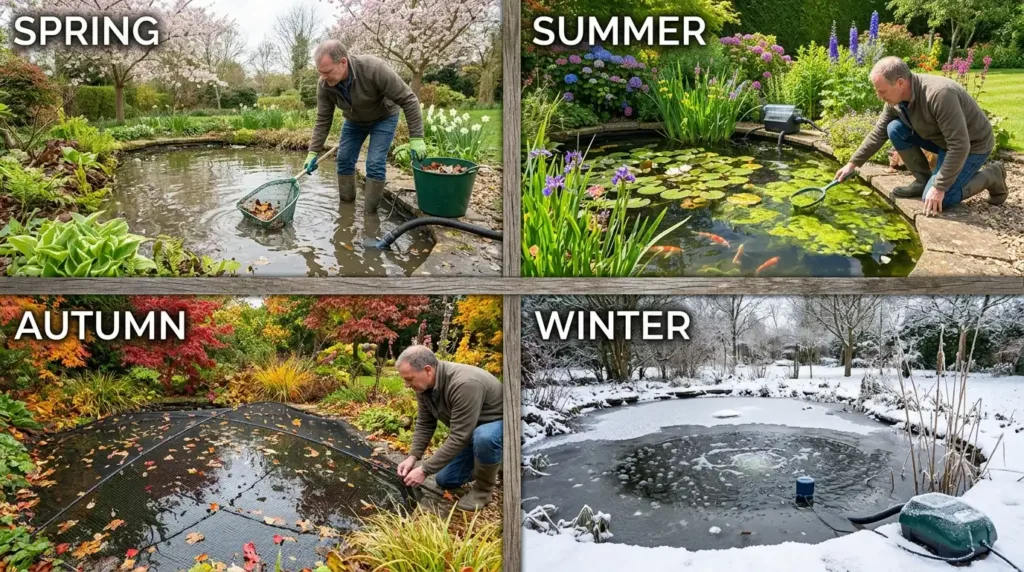
Proper koi pond maintenance changes throughout the year.
Spring
- Restart filtration
- Test water
- Remove winter debris
- Begin feeding gradually
Summer
- Monitor oxygen
- Watch water temperature
- Remove algae
- Clean filters frequently
Autumn
- Install leaf nets
- Reduce feeding
- Remove dead plants
- Prepare equipment for winter
Routine maintenance prevents expensive repairs and fish health issues.
Winter Care
Cold climates require special attention.
Winter maintenance includes:
- Maintaining an opening in surface ice
- Continuing aeration
- Reducing feeding
- Monitoring water quality
Never smash ice, as shockwaves can stress or injure koi.
Above-Ground vs. In-Ground Koi Ponds
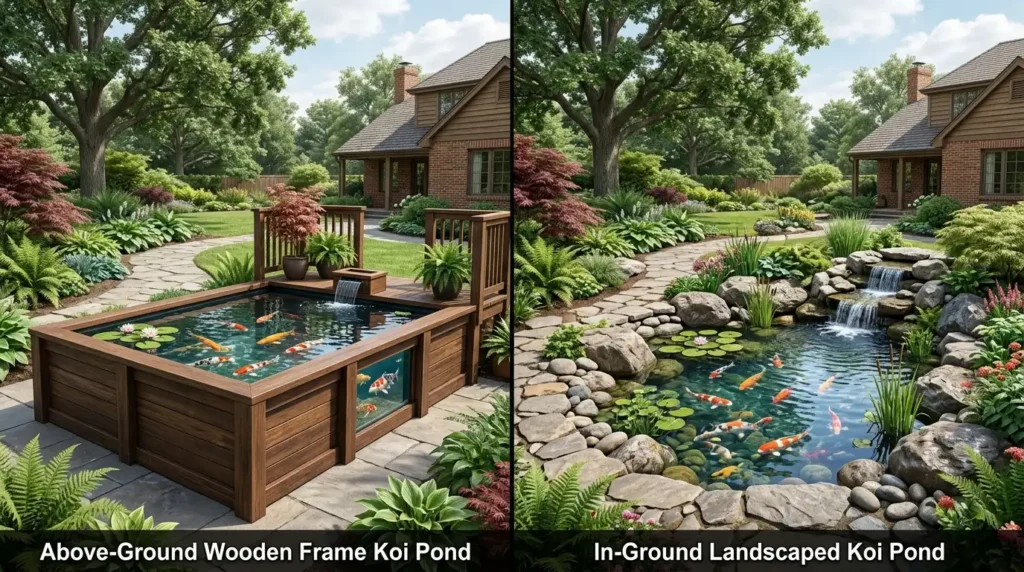
An above ground koi pond is an increasingly popular option for homeowners.
Above Ground Koi Pond
Pros
- Easier installation
- Lower excavation costs
- Better viewing angles
- Flexible placement
Cons
- Requires strong structural support
- May require insulation in cold climates
In-Ground Pond
Pros
- Natural appearance
- Better temperature stability
- Larger capacity
- Traditional landscaping
Cons
- Higher construction costs
- More excavation
The best choice depends on budget, available space, and aesthetic preferences.
Indoor Koi Ponds
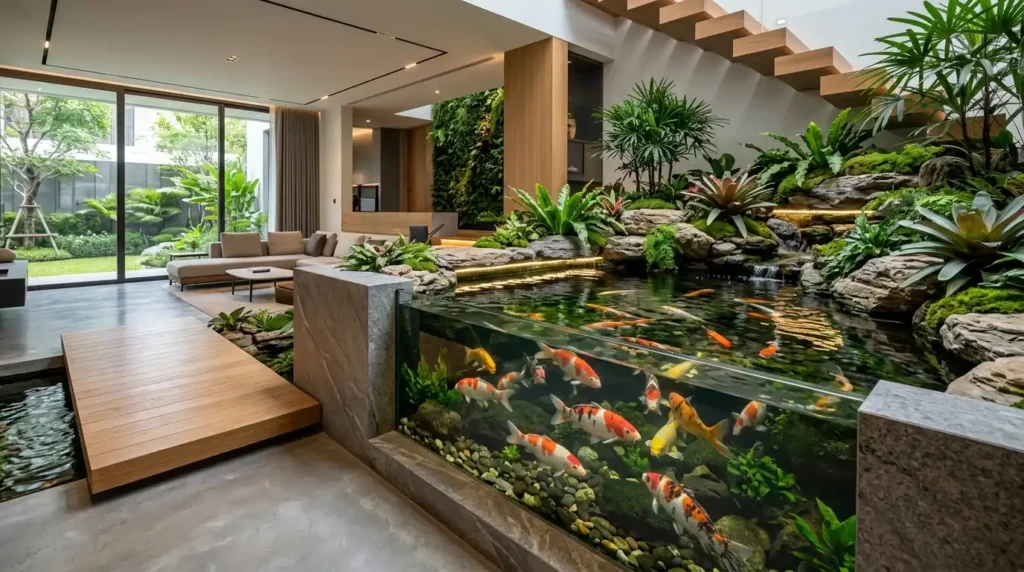
An indoor koi pond offers year-round enjoyment and complete environmental control.
Benefits include:
- Stable temperatures
- Protection from predators
- Easier observation
- Weather-independent maintenance
Considerations include:
- Humidity management
- Structural floor support
- Proper ventilation
- Strong biological filtration
- Adequate lighting
Indoor ponds require the same water quality standards as outdoor ponds.
Frequently Asked Questions
How deep should a koi pond be?
Most experts recommend at least 3 feet, while 4 to 6 feet is ideal for long-term koi health and temperature stability.
Can I build a DIY koi pond?
Yes. A well-planned DIY koi pond can be highly successful if you prioritize proper excavation, plumbing, filtration, and aeration.
What is the best koi pond filter?
The best koi pond filter combines mechanical filtration, biological filtration, UV sterilization, and sufficient water circulation.
How often should I perform koi pond maintenance?
Basic koi pond maintenance should be performed weekly, including water testing, debris removal, and equipment inspection. Partial water changes are typically recommended every one to two weeks, depending on stocking levels.
Are above-ground ponds suitable for koi?
Yes. An above ground koi pond can successfully house koi when built with adequate depth, structural strength, and proper filtration.
Can koi live indoors?
Absolutely. An indoor koi pond can provide excellent living conditions with proper filtration, aeration, lighting, and regular maintenance.
Conclusion
Creating a thriving koi pond involves much more than digging a hole and adding water. Success comes from thoughtful planning, proper sizing, efficient filtration, reliable aeration, and consistent maintenance. Whether you’re exploring creative koi pond ideas, planning a DIY koi pond, learning how to build a koi pond, or comparing an above ground koi pond with an indoor koi pond, investing in quality equipment and understanding koi pond depth requirements will pay dividends for decades.
By maintaining excellent water quality, installing the right filtration system, and following a regular maintenance schedule, you’ll create a beautiful, healthy environment where your koi can thrive for generations.
Related Articles
21 Koi Pond Design Ideas for Small Gardens (Modern + Japanese Styles)

Sheikh Hassaan is a digital architect for small businesses and the founder of The Glow Up System. He writes about home decor, garden design, and outdoor living for real American homes – practical ideas that work in actual spaces without oversized budgets.