
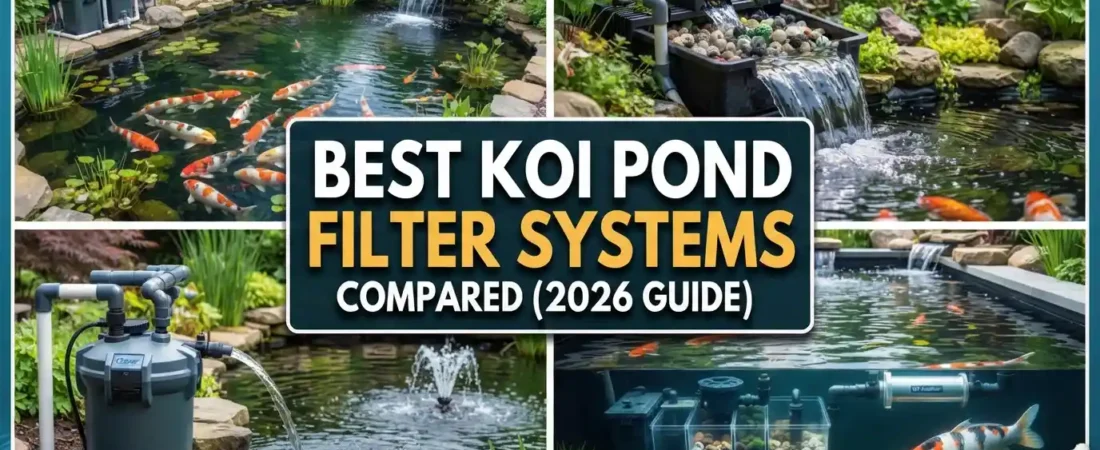
A crystal-clear koi pond is the centerpiece of any serene backyard oasis, but achieving that pristine water quality requires a reliable filtration system. The right filter works tirelessly to remove physical debris, break down harmful waste, and combat green water, ensuring a healthy environment for your prized koi. With so many options available, selecting the perfect filter for your pond’s specific needs is the most critical decision you will make for its ecosystem.
This guide simplifies your search by comparing the best koi pond filter systems on the market, from large-capacity workhorses to compact pressurized models. We evaluate key features like filtration stages, flow rates, and maintenance requirements to help you make an informed choice for a cleaner, healthier pond.
Table of Contents
Why Koi Ponds Need Specialized Filtration
Koi are not your average goldfish. These large, active fish produce a significant amount of waste, and without a proper filtration system, your pond will quickly become a toxic environment. A filter is not just about aesthetics; it is about the health and well-being of your fish.
Filtration addresses pond health through three primary mechanisms:
- Mechanical Filtration: This removes solid waste like fish feces, uneaten food, and plant debris. Without it, these solids decompose, further polluting the water.
- Biological Filtration: This is the most crucial aspect. Biological filters house beneficial bacteria that convert harmful ammonia and nitrites into less toxic nitrates through the nitrogen cycle.
- Chemical Filtration: While not always necessary, this can remove dissolved pollutants. UV sterilizers, which kill algae cells, are a common and highly effective type of chemical filter for ponds.
Types of Koi Pond Filters Explained
Understanding the different filter types is the first step in choosing the best system for your pond.
Pressurized Filters
Pressurized pond filters are a sealed canister that water is pumped through under pressure. This is the most popular filtration option for koi ponds under 30,000 gallons because they are compact, versatile, and can be buried out of sight.
- Advantages: Flexible placement (can be installed below ground or even uphill), compact footprint, and pressurized output that can feed waterfalls.
- Disadvantages: Require a pump to push water through, consuming more energy than gravity-fed systems. They also need regular backwashing.
Bead Filters
A bead filter is a specific type of pressurized filter that uses thousands of small polyethylene beads as its primary filtration media. The beads trap suspended solids while simultaneously hosting beneficial bacteria. The beauty of bead filtration is that the same media handles both mechanical and biological duty.
- Best For: Koi ponds with moderate to heavy fish loads.
- Maintenance: Requires regular backwashing to purge trapped waste. Premium models often include blower-assisted cleaning for more thorough maintenance.
Gravity-Fed Filters
In gravity-fed systems, water flows from the pond into the filter by gravity, and the pump is positioned at the end of the filtration to pull water through. This system is generally more effective at removing solid waste because the waste remains intact and is not blended by the pump.
- Best For: Serious koi keepers who want maximum mechanical filtration efficiency.
- Considerations: Requires more complex planning and installation, often needing the filter to be positioned at or below pond level.
Rotary Drum Filters (RDFs)
Rotary drum filters have become the gold standard in koi pond mechanical filtration. They use a fine mesh screen on a rotating drum to continuously filter water, automatically washing captured waste away. They offer a level of automation and water clarity that other filter types cannot match.
- Standout Feature: Self-cleaning mechanism. A spray bar cleans the mesh when it becomes clogged, and the waste is flushed out. This hands-off operation significantly reduces maintenance.
- Micron Ratings: Finer mesh (e.g., 60-70 microns) captures smaller particles for superior clarity. Oase ProfiClear Premium Compact uses a 60-micron mesh, the finest available.
UV Clarifiers (Sterilizers)
While technically not filters, UV clarifiers are an essential component for achieving crystal-clear water. They use high-intensity UV lights to destroy the DNA of nuisance microbes and algae, preventing them from thriving. A UV sterilizer is crucial for eliminating green water.
- Key Point: UV filters kill algae but have zero effect on parasites or bacteria on your fish.
- Maintenance: UV bulbs need replacing annually for continued effectiveness.
Top Koi Pond Filter Brands Compared
The table below compares popular pressurized filters, bead filters, and rotary drum filters based on real product data.
Pressurized & Bead Filters
Rotary Drum Filters (RDFs)
How to Choose the Best Filter for Your Koi Pond
1. Size Your Filter Correctly
The most common mistake is buying a filter that is too small, leading to cloudy water and stressed fish. If you have a 1,000-gallon pond, look for a filter rated for 1,500 gallons or more to handle the bioload. A good rule of thumb for pressurized and bead filters is to select a unit rated for at least twice the volume of your pond.
2. Match Filter to Fish Load
Koi are messy fish, so always oversize your filtration. A filter that works for a water garden with a few goldfish will be quickly overwhelmed by a pond with several large koi. For a heavily stocked koi pond, consider a filter rated for 0.5–0.75× your pond volume.
3. Consider Pump Compatibility
Your pump’s flow rate must be compatible with your filter. Too powerful a pump can blow debris right through the mechanical stage. With pressurized filters, a small pump cannot effectively backwash a larger filter.
4. Evaluate Maintenance Needs
No filter is maintenance-free. How much time are you willing to spend cleaning? Filters with easy-clean mechanisms or self-cleaning features (like RDFs) can save a lot of effort. Simpler foam pad filters require manual cleaning but are straightforward and affordable.
5. Understand Filtration Stages
For truly healthy water, you need both mechanical and biological filtration working together. A UV clarifier is a huge bonus for controlling green water algae. For professional-level water clarity, consider a rotary drum filter (RDF) with a fine mesh, often used as a pre-filter before a biological bead filter.
6. Gravity vs. Pressurized
Gravity-fed systems are more effective at removing solid waste but require complex planning. Pressurized systems offer installation flexibility and are easier to hide, making them a popular choice for most backyard ponds.
Frequently Asked Questions About Koi Pond Filters
1. What is the best type of filter for a koi pond?
There is no single “best” type, as the ideal choice depends on your pond size, budget, and fish load. However, a combination of mechanical and biological filtration is generally recommended. For most backyard koi ponds, a pressurized bead filter offers an excellent balance of performance, cost, and convenience. For maximum clarity and minimal maintenance, consider a rotary drum filter (RDF).
2. Do I really need a filter for a koi pond?
Yes, absolutely. Koi cannot thrive or survive long-term without a filter. Without proper filtration, your pond will quickly become toxic and deadly to your fish.
3. What size filter do I need for my koi pond?
The size of the filter depends on the volume of your pond and the number of koi. A general rule of thumb is to choose a filter rated for at least twice the volume of your pond. For example, a 2,000-gallon pond needs a filter rated for at least 4,000 gallons.
4. What is a UV sterilizer and do I need one?
A UV sterilizer is a device that uses ultraviolet light to kill free-floating algae, helping to eliminate green water. It is highly recommended for clear water. However, it has zero effect on parasites or bacteria on your fish.
5. What is the best bottom drain for a koi pond?
For most builds, a reliable gravity-fed bottom drain is key. The Aquadyne Rhino II is considered an industry standard and works well in both gravity-fed and pump-fed systems.
6. What are the easiest pond filters to maintain?
Rotary drum filters (RDFs) are the easiest to maintain because they are self-cleaning. For pressurized filters, those with a built-in backflush system are easier to clean than models that require disassembly.
Related Articles
DIY Koi Pond: Cost + Step-by-Step Guide
How to Build a Koi Pond: A Step-by-Step Guide for Beginners
10 Koi Pond Design Ideas for Small Gardens
The Ultimate Koi Pond Guide: Design, Building, Filtration & Maintenance
Investing in a quality koi pond filter is the most important decision you will make for the health of your fish and the clarity of your water. Choose wisely, size correctly, and enjoy the serenity of a thriving, crystal-clear pond.

Sheikh Hassaan is a digital architect for small businesses and the founder of The Glow Up System. He writes about home decor, garden design, and outdoor living for real American homes – practical ideas that work in actual spaces without oversized budgets.