
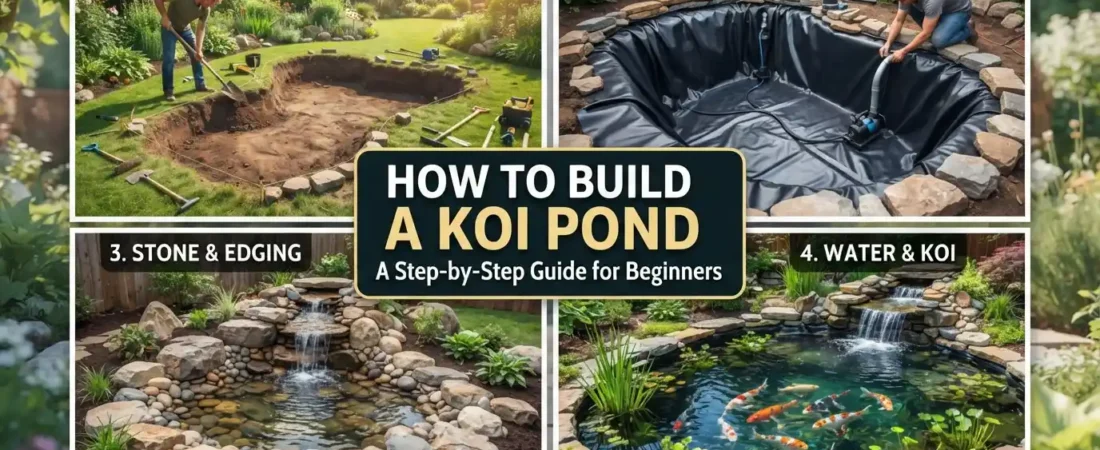
Building a koi pond is one of the most rewarding backyard projects you can undertake. The sight of colorful koi gliding through crystal-clear water, the gentle sound of a waterfall, and the peaceful atmosphere create a tranquil retreat right outside your door. But unlike a simple goldfish pond, a koi pond is a purpose-built habitat that requires careful planning, proper equipment, and a commitment to water quality.
This step-by-step guide covers everything you need to know about how to build a koi pond, from planning and design to excavation, liner installation, filtration, and introducing your fish. Whether you are a complete beginner or an experienced DIYer, this guide will help you create a thriving home for your koi.
Table of Contents
What to Know Before You Start Building
Koi Ponds Are Different
A koi pond is not a water garden with a few goldfish. Koi are large fish that can grow to 16 to 18 inches or more, and they produce significant waste. They need space to swim, stable water temperatures, and a robust filtration system to handle their biological load. Simply digging a hole, throwing in a liner, and adding fish is not enough.
Before you start building, you need to understand the commitment. Keeping koi can be time-consuming and expensive, but all your hard work will be well-spent when your pond is fully functioning.
Research and Planning
The first step in how to build a koi pond is thorough research. Start by visiting local ponds and speaking with experienced keepers. They can give you invaluable advice about costs, materials, and the implications of design decisions.
Also consider:
- Your limitations: Be realistic about the size, scale, and design of your pond. It is easy to be overly ambitious.
- Your goals: Decide if you want a simple water feature with a few fish or a serious koi collection. This determines your space, time, and budget.
- Budget: Research the costs of materials and equipment. It is cheaper to build a pond properly the first time.
Step 1: Choose the Perfect Location
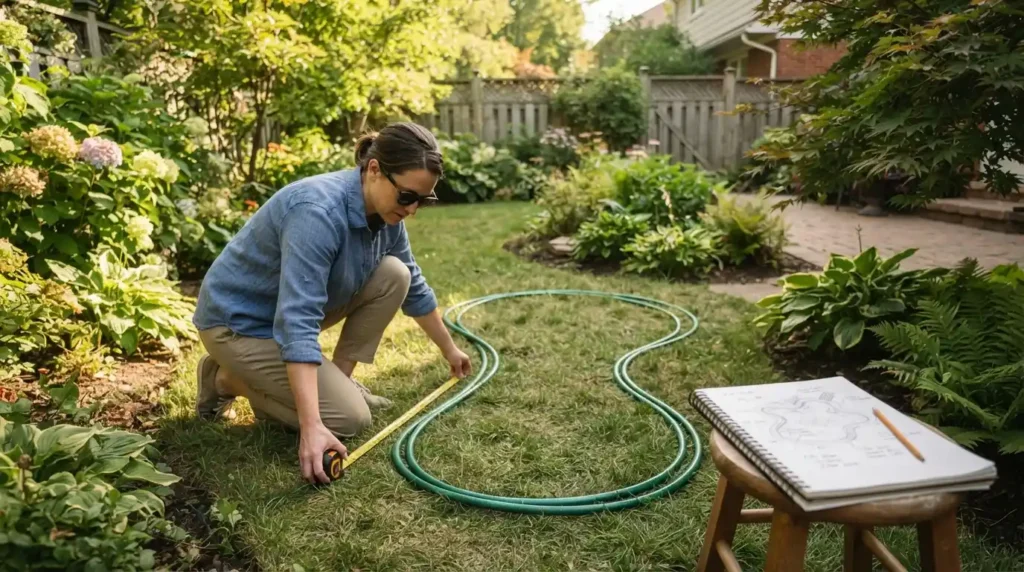
Pond placement affects the difficulty of construction, future maintenance, and how much you will enjoy your pond. Consider the following factors when choosing a location:
- Size and Depth Requirements: Your chosen spot must accommodate a pond of at least 1,000 gallons, about 8 feet long, 6 feet wide, and 3 feet deep.
- Sunlight: Choose a location that gets a mix of sun and shade. Koi need some sun, but too much can cause algae blooms. Aim for 4-6 hours of direct sunlight per day. Excess sun exposure may also lead to overheating and skin cancer in koi. Afternoon shade is ideal.
- Proximity to Utilities: Ensure you have access to an electrical outlet for pumps and filters. A water source for filling the pond is also essential.
- Visibility: Pick a spot that is easily accessible and visible from both inside and outside your house to maximize enjoyment.
- Avoid Trees: Avoid building your pond under too many deciduous trees, as falling leaves can increase maintenance and create excess organic waste.
- Drainage: Build the pond on a higher elevation that does not receive storm runoff, which can introduce pollutants.
- Check for Utilities: Call 811, the national call-before-you-dig number, to check for underground utility lines before digging. Also, check with your local municipality for any permitting requirements.
- Test the Ground: Test the ground in a few places to see how hard it will be to dig through.
Step 2: Design Your Koi Pond
Pond Shape
Keep your pond shape simple. Oval, kidney, round, pear shape, or rectangle are all good options. A simple shape allows water to flow freely, avoids “dead spots” where water cannot circulate, and makes pond liner installation tidier. Avoid tight corners or complex shapes that are difficult to line and maintain.
Pond Size and Depth
“Go as big as you can afford and your outdoor space will allow. It is easier to keep a balanced ecosystem in a larger environment.”
- Minimum Size: The minimum recommended pond size for mature koi is 1,000 gallons. A larger pond provides a more stable environment and is more forgiving of fluctuations in water parameters.
- Depth: The minimum recommended depth is at least 3 feet, ideally 4 feet. A deeper pond protects koi from predators like herons and raccoons, provides a stable water temperature, and prevents the pond from freezing solid in winter.
Design Considerations
- Tiered Depth: Create a shallow shelf around the perimeter for plants and a deeper central area for the koi.
- Aesthetic Style: Choose a style that suits your home and garden:
- Classical: Formal, symmetrical, and often raised with geometric paving.
- Informal: Natural, free-flowing shapes with rocks and plants.
- Oriental Minimalism: Asian-inspired ponds with bonsai, raked gravel, bridges, and large rocks.
- Water Features: Consider adding a waterfall or stream for aeration and visual appeal.
Step 3: Gather Your Materials and Equipment
Before you start digging, make sure you have all the necessary materials and equipment on hand.
Essential Equipment
- Pond Liner: A flexible rubber liner (EPDM) is the most popular choice for koi ponds. It is durable, flexible, and fish safe.
- Underlayment: Protects the liner from punctures. Use old carpet, geotextile fabric, or commercial underlayment.
- Pond Pump: Circulates water through the filter system. Choose a pump appropriately sized for your pond’s volume and the height of any water features.
- Pond Filter: A koi pond filter combines mechanical and biological filtration to remove waste and break down toxins.
- UV Clarifier: An ultraviolet clarifier eliminates green water by causing microscopic algae to clump together for removal.
- Pond Skimmer: Removes leaves and floating debris from the surface before they sink.
- Bottom Drain: Located at the deepest point, it removes waste from the bottom of the pond.
- Piping and Fittings: Rigid PVC pipe is recommended for connecting the bottom drain and skimmer to the filter.
- Water Conditioner: Removes chlorine and chloramine from tap water.
- Beneficial Bacteria Starter: Helps establish the nitrogen cycle.
- Gravel: Smooth gravel at least 1 inch in diameter for the bottom of the pond.
- Assorted Stones: For anchoring the liner and creating a natural edge.
- Pond Plants: Provide oxygen, shelter, and help maintain a balanced ecosystem.
Step 4: Excavate the Pond Area
Mark the Outline
Using a heavy rope, garden hose, or spray paint, plot out the desired size and shape of your pond. If you are using a preformed pond liner, set it upside down on the ground and use the edge as a guide.
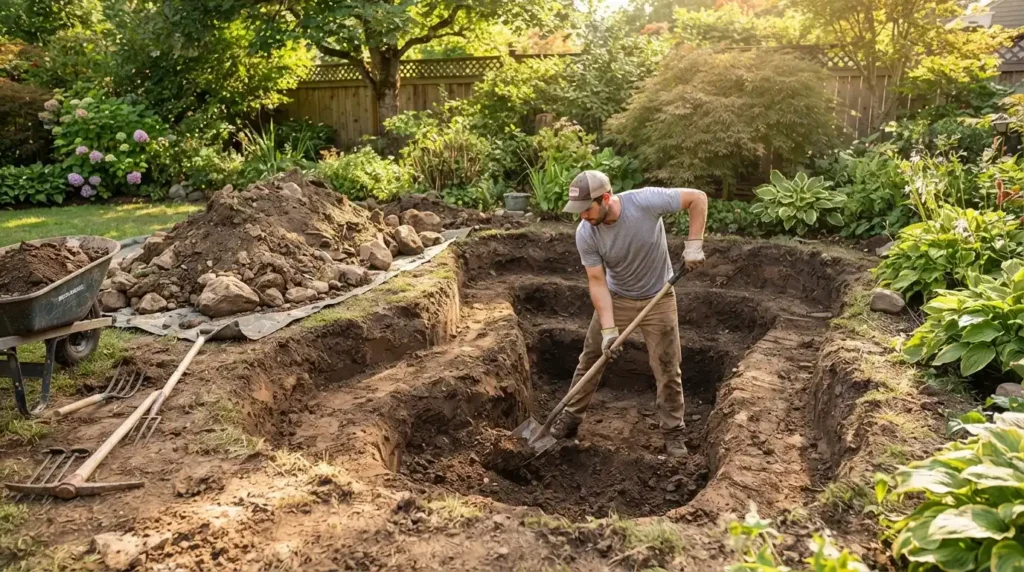
Dig the Pond
Start digging, following your design. Remove sharp stones or roots that might puncture the liner. A minimum depth of 3 feet is recommended for koi.
If space is limited, digging the pond deeper helps ensure adequate water volume. Deeper water also protects your koi from predators and can prevent the pond from freezing over in winter.
Create Planting Shelves
Dig a shallow shelf around the perimeter for pond plants and a deeper central area for the koi. This tiered design is ideal for both aesthetics and functionality.
Step 5: Install Plumbing and Bottom Drain
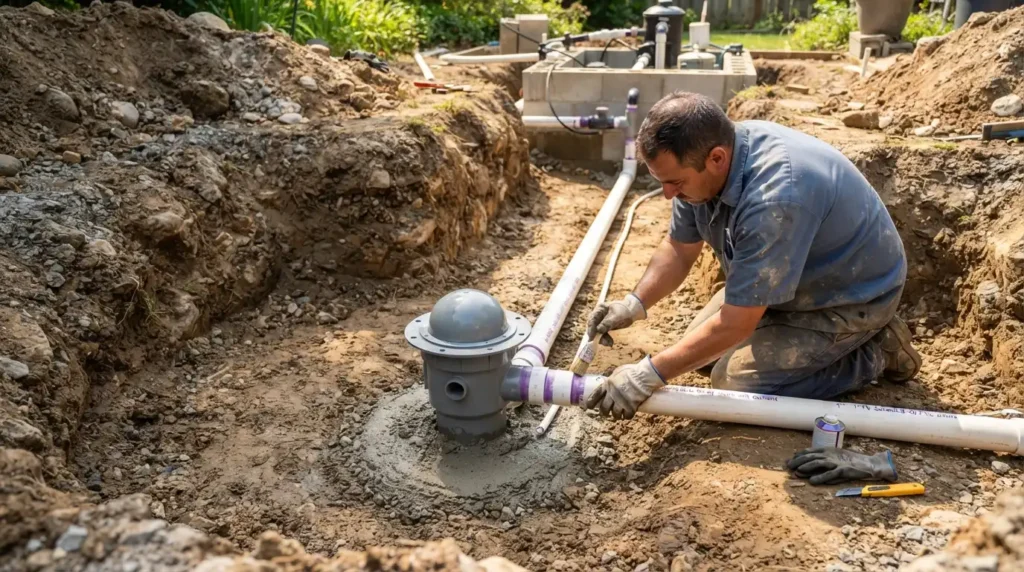
Plan the placement of essential equipment before you finish excavating. Some items, like pond skimmers and waterfall filters, may need to be installed before the liner is fully in place.
Install the Bottom Drain
- Mark the position of the bottom drain in the pond and cut out the necessary hole.
- Place the drain attachment ring around the drain hole and mark for drilling holes. Drill all the holes.
- Apply silicone to the underside of the ring, position the drain, and screw the ring into the pre-drilled holes.
- Lay out the piping from the bottom drain to the filter using PVC pipe and fittings.
- Spread and compact a layer of fine river sand in the trench as a bed for the piping.
Install the Skimmer
Follow the manufacturer’s instructions to install the pond skimmer and filter. You may need to trim a section of the pond liner later to affix it to the faceplate and create a watertight seal.
Step 6: Install the Underlayment and Pond Liner
Lay the Underlayment
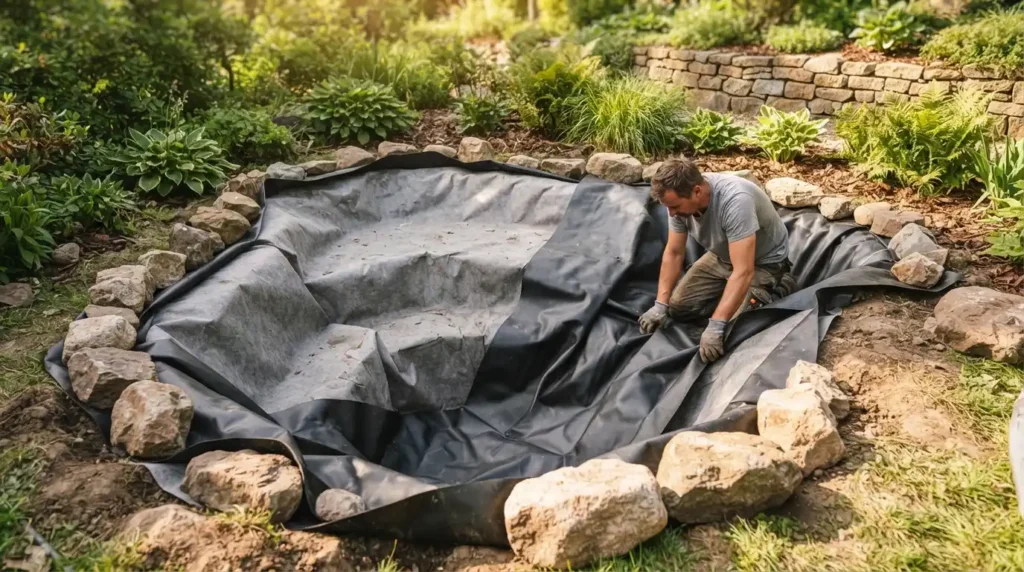
After removing all the dirt and leveling the excavated space, roll out the underlayment. Working from the inside of the pond out, press the underlayment into the bottom and sides.
Install the Liner
- Unfold the liner and center it over the pond. EPDM rubber liner is the most popular choice for its durability and flexibility.
- Carefully position the liner over the underlayment, pressing it into the contours of the pond.
- Allow the liner to settle and conform to the shape of the pond. It is normal to have excess liner over the edges; you will trim it later.
- If you are using a preformed pond liner, backfill the space beneath the underlayment with dirt to ensure a tight fit.
Anchor the Liner
Place large stones around the border of the pond to anchor the underlayment and liner in place. The liner should conform tightly to the shape of the pond.
Step 7: Add Gravel and Decorative Rock
Fill the Bottom With Gravel
Fill the bottom of the pond with at least 2 inches of smooth gravel. The gravel should be at least 1 inch in diameter with no sharp edges. This provides a surface for beneficial bacteria to colonize and helps filter the water.
Add Decorative Rock
Add smaller stones around the border of your pond and to the interior to give it a finished look. Use rocks of varying sizes to create a natural-looking edge around the pond, helping to hide the liner.
Step 8: Finalize Decor and Add Plants
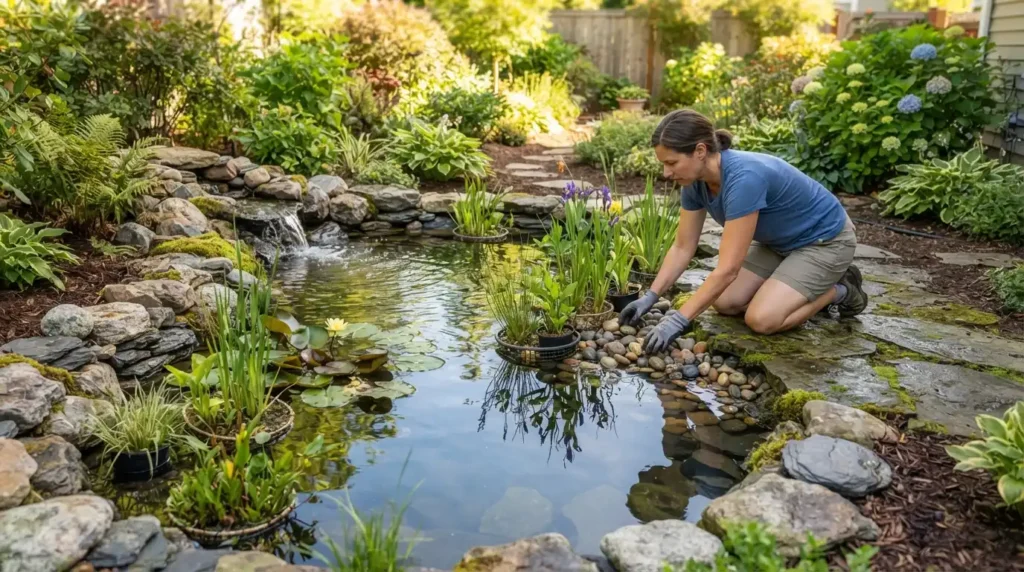
Install any other decorative items, including landscaping elements and terrestrial plants. Place aquatic plants last, adding enough water to keep them moist.
Balance Your Ecosystem: Sow a diverse selection of aquatic plants dense enough to cover 40 to 60 percent of the water’s surface. This helps maintain a balanced ecosystem and reduces the strain on your filtration system.
Step 9: Trim the Liner and Secure Edges
Trim the underlayment and liner, leaving 6 to 8 inches of excess around the stone border. Use smaller rocks or gravel to hold the edge down.
Step 10: Install Equipment and Lighting
Follow the manufacturer’s instructions to install any desired pond lighting and additional equipment. When installing pumps for aeration, position them so that they help direct water flow toward the pond skimmer or filter intake.
Step 11: Fill the Pond and Add Water Treatments
Fill the Pond
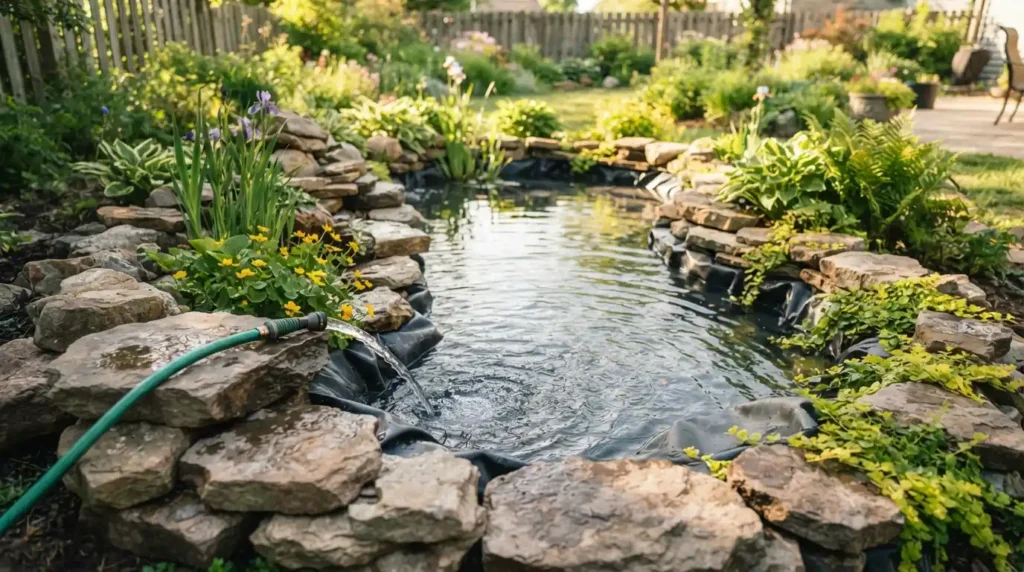
Fill the pond with fresh water using a garden hose. Do not use straight tap water without treatment, as it contains chlorine or chloramine that are harmful to fish.
Add Water Conditioner
Using the dimensions of your pond, calculate the total water volume and add the appropriate dose of pond water conditioner to neutralize chlorine and chloramine.
Add Beneficial Bacteria
You may also choose to add a beneficial bacteria starter to help establish the biological filter.
Step 12: Cycle the Pond Before Adding Koi
This is one of the most important steps in how to build a koi pond.
Plug in your pond equipment and make sure everything is working properly. Give the pond several weeks to complete the nitrogen cycle, monitoring the progress using a pond water test kit.
What is the Nitrogen Cycle?
During the cycling process, beneficial bacteria establish themselves in the filter and convert harmful ammonia (from fish waste) into less toxic nitrites and then into nitrates. This creates a healthy environment for fish.
How to Monitor Cycling
- Test water parameters: Regularly test for ammonia, nitrite, nitrate, and pH.
- Target levels:
- Wait for the cycle to complete: Once the pond has fully cycled (ammonia and nitrite are zero), you can begin acclimating your koi.
Step 13: Introduce Your Koi

Acclimation
Float the bag containing your koi in the pond for about 30 minutes to allow the water temperature to equalize. Then, gradually add pond water to the bag before releasing them into their new home.
Stocking Density
Avoid overcrowding. A good rule of thumb is 1 to 2 koi per 200 gallons of water. Understocking produces better water quality, healthier fish, and a more beautiful pond.
Frequently Asked Questions About How to Build a Koi Pond
1. How deep should a koi pond be?
A koi pond should be at least 3 feet deep, ideally 4 feet. This protects fish from predators, provides a stable water temperature, and prevents the pond from freezing solid in winter.
2. What is the best liner for a koi pond?
EPDM rubber liner is generally considered the best choice. It is durable, flexible, fish-safe, and can be custom-fit to any shape.
3. What size pond do I need for koi?
The minimum recommended pond size for mature koi is 1,000 gallons. A larger pond is always better as it provides a more stable environment and is easier to maintain.
4. Do I need a filter for a koi pond?
Yes, a filtration system is absolutely essential for a koi pond. Koi produces a lot of waste, and a filter is necessary to remove toxins and maintain water quality.
5. How long does it take for a new koi pond to cycle?
It takes several weeks for the pond to complete the nitrogen cycle and for beneficial bacteria to establish in the filter. Monitor water parameters until ammonia and nitrite levels reach zero before adding fish.
6. Can I keep plants in a koi pond?
Yes, plants are beneficial for a koi pond. They provide oxygen, shelter, and help maintain a balanced ecosystem. Cover 40 to 60 percent of the water’s surface with aquatic plants.
Related Articles
10 Koi Pond Design Ideas for Small Gardens
15 Jaw-Dropping Koi Pond Ideas You’ll Love
The Ultimate Koi Pond Guide: Design, Building, Filtration & Maintenance
21 Koi Pond Design Ideas for Small Gardens (Modern + Japanese Styles)
A well-built koi pond is an investment in tranquility, beauty, and the joy of watching nature thrive. Follow these steps, be patient with the process, and you will be rewarded with years of peaceful enjoyment.

Sheikh Hassaan is a digital architect for small businesses and the founder of The Glow Up System. He writes about home decor, garden design, and outdoor living for real American homes – practical ideas that work in actual spaces without oversized budgets.