
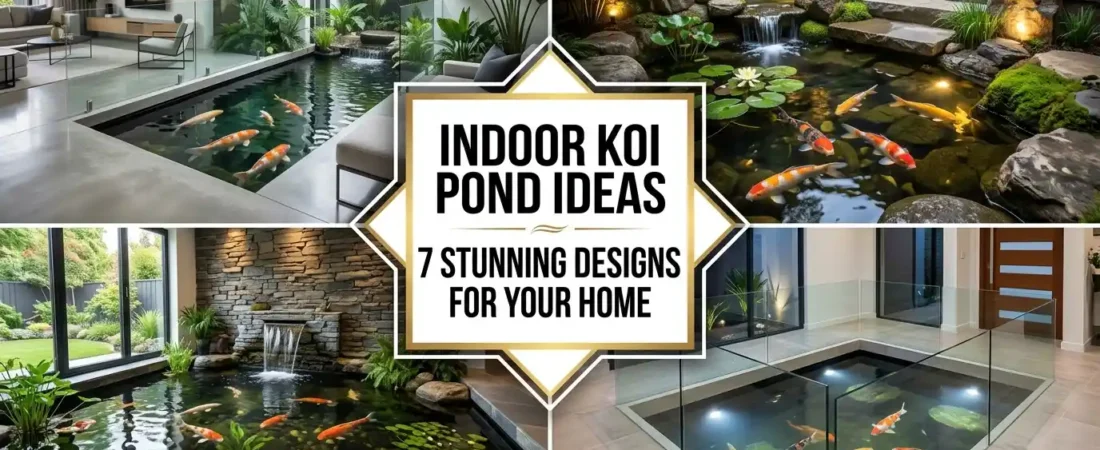
I used to think indoor koi ponds were something you only saw in hotel lobbies and architect magazines. Then I visited a friend who had built one in the corner of his living room using a wooden crate frame and a rubber liner for under $600. I have been thinking about it ever since.
These indoor koi pond ideas range from budget stock tank setups to dramatic glass room dividers. I have included honest notes on cost, filtration requirements, and what I would actually choose at each budget level.
Table of Contents
Why Consider an Indoor Koi Pond?
The obvious benefit is year-round access to your fish regardless of the weather. But I think the more compelling reason is the design statement it makes. A well-built indoor koi pond stops people in their tracks.
The sound of moving water indoors is genuinely calming in a way that is hard to describe until you have experienced it daily. There is a reason high-end spas and hotel lobbies install water features.
The honest caveat: an indoor koi pond is a serious commitment. Filtration, humidity management, and structural weight all need addressing before you spend a dollar on fish.
7 Indoor Koi Pond Ideas
1. The Japanese Zen Garden Pond: A Minimalist Retreat
✦ Best for: Creating a peaceful, meditative space with a minimalist design.
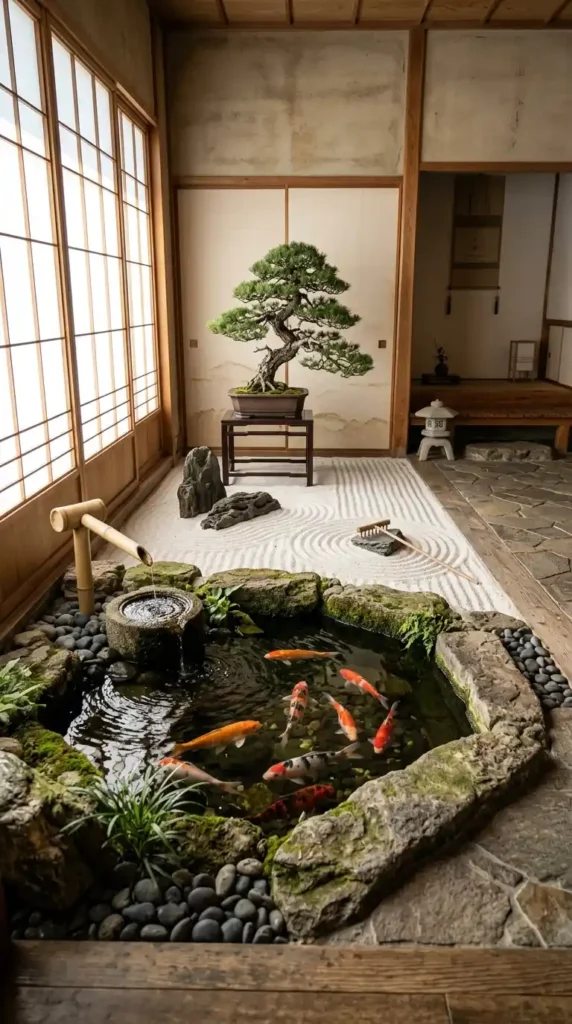
I think this is the most beautiful indoor koi pond style available when it is done well. The restraint of the Japanese aesthetic means the koi themselves become the focal point rather than competing with elaborate decoration.
A Japanese Zen garden pond brings a sense of simplicity and balance to any room. This style relies on clean lines, natural materials like stone, and a minimal color palette to create a peaceful retreat. A small, shallow pond with dark pebbles and a few carefully placed rocks can form the heart of the design.
- Why it works: It is a timeless design that promotes tranquility and pairs well with a minimalist or modern aesthetic.
- Key requirements: A minimum depth of three feet is best for the health of your koi.
- Design tip: Combine it with a simple wooden bench, a stone lantern, and a bamboo spout to enhance the zen atmosphere.
2. Custom Built-In Wooden Crate Pond: Cozy and Rustic
✦ Best for: Integrating a cozy, rustic pond into a living space or sunroom.
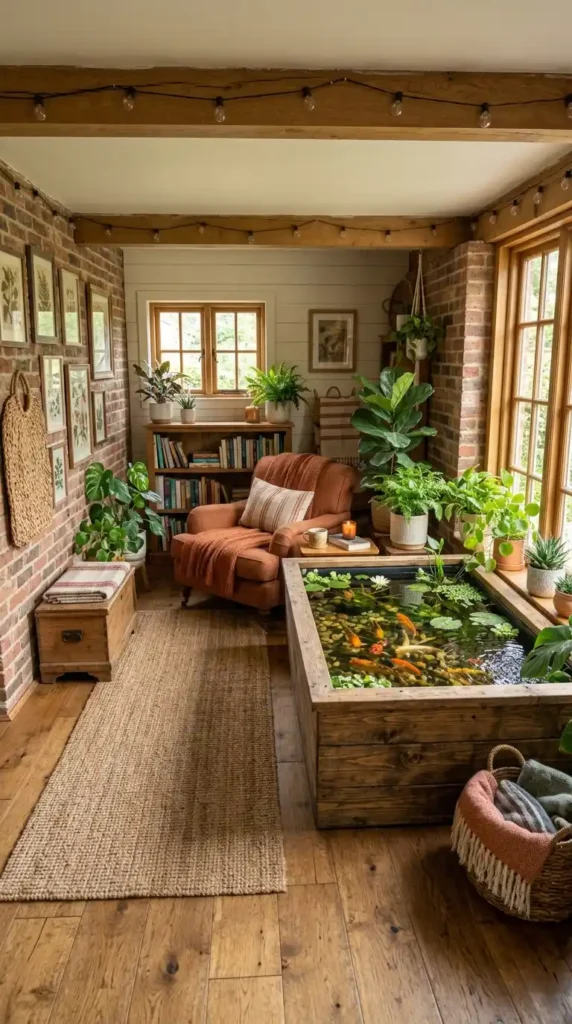
A pond doesn’t have to be sunken into the floor. A beautiful crate-style pond is a classic and customizable option. This design uses lumber to create a large rectangular box frame, which is then lined with a rubber pond liner. You can build it to almost any size to fit a specific corner of your home.
- Why it works: It is relatively affordable and can be finished with wood stains and paint to match your interior decor.
- Key requirements: Use pressure-treated wood or a durable hardwood like cedar for the frame. Ensure the frame is perfectly level to evenly distribute the massive weight of the water. A 500-gallon setup is a good size for a few koi.
- Design tip: You can build it with a glass viewing panel on one side for an aquarium-like experience.
3. Stock Tank Pond: The Budget-Friendly Option
✦ Best for: Overwintering koi indoors or creating a simple, cost-effective indoor pond.
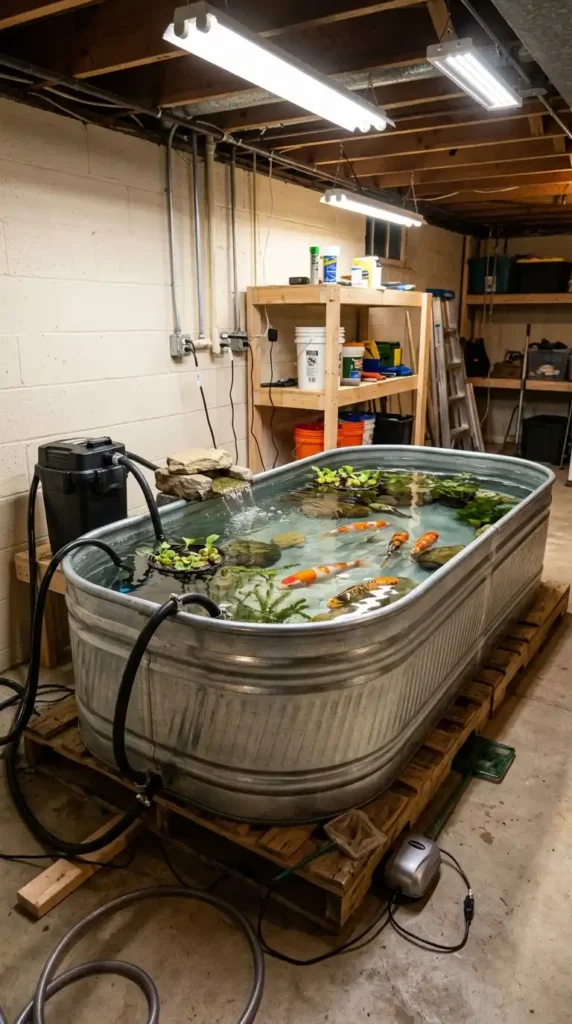
If I were starting my first indoor koi setup this is where I would begin. The cost is low enough that mistakes are not catastrophic and you learn everything you need to know about indoor water management before committing to a permanent build.
Stock tanks are a surprisingly popular choice for indoor koi keeping, especially as a winter holding solution. They are affordable, durable, and available in a wide range of sizes, from 150 to 750 gallons.
- Why it works: The cost is significantly lower than glass aquariums, with a 300-gallon tank costing much less than an aquarium of the same size.
- Key requirements: Always use a plastic or fiberglass stock tank. Galvanized metal tanks can leach harmful zinc into the water, which is toxic to fish. You will need a robust filtration system and a net cover, as koi are known jumpers.
- Design tip: Dress up the tank with potted plants around the base or a nice piece of wood to make it feel more like a designed feature than a utilitarian tub.
4. IBC Tote Pond: The Most Cost-Effective Choice
✦ Best for: The most budget-conscious keeper looking for a high-volume indoor tank.
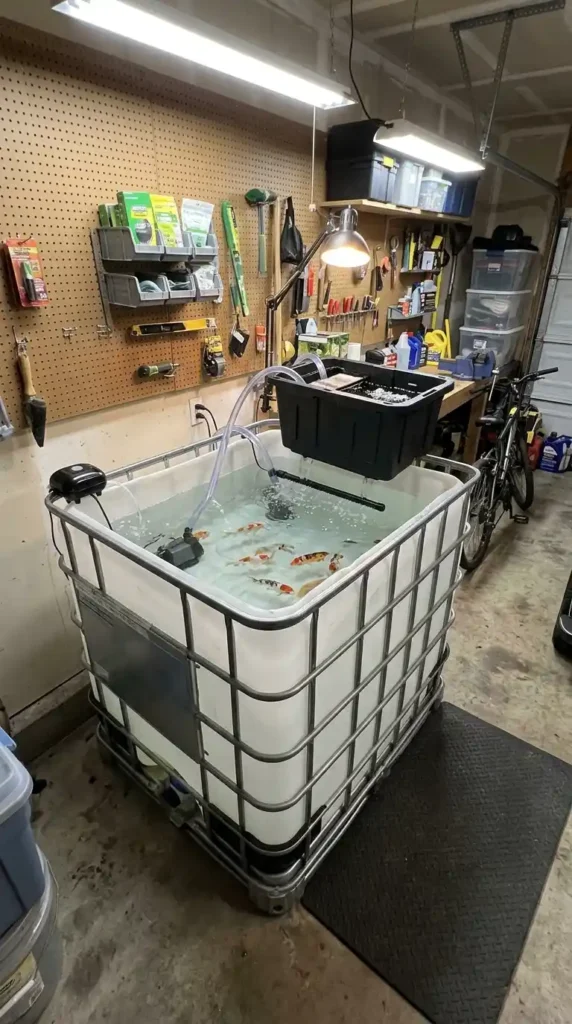
For an extremely budget-friendly option, IBC (Intermediate Bulk Containers) totes are a brilliant choice. These large, food-grade plastic containers can often be found used for a very low cost and typically hold 275 gallons.
- Why it works: It is one of the cheapest and easiest ways to create a large volume of water indoors.
- Key requirements: When buying used, confirm it was previously used for food-grade storage to ensure it is fish-safe. Clean it thoroughly before use.
- Design tip: The built-in bottom drain on many models makes water changes a breeze. A net is essential for preventing escapes.
5. The Glass-Walled Room Divider: An Aquatic Statement
✦ Best for: Creating a dramatic visual separation in open-concept layouts.
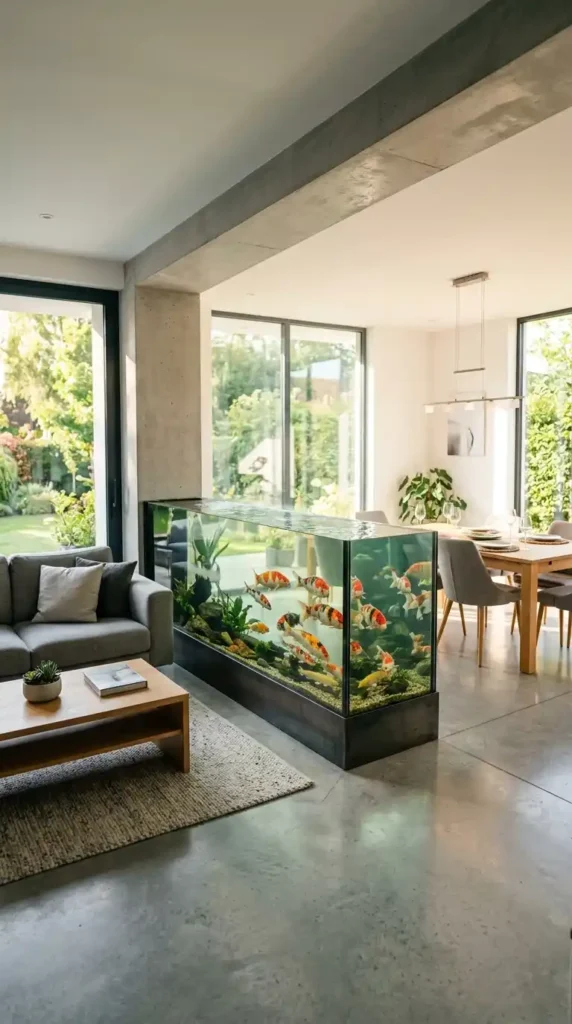
This is the indoor koi pond idea I find most architecturally exciting. A glass-walled pond as a room divider in an open plan living space is one of the most striking things you can do to a home interior.
A glass-walled koi pond is one of the most striking indoor pond ideas. Using a large glass or acrylic tank as a room divider creates a breathtaking focal point while keeping the space feeling open. It provides a panoramic, aquarium-like view of your fish.
- Why it works: It is a dramatic and elegant design feature that allows you to see the koi from every angle, including underwater.
- Key requirements: A custom acrylic or glass tank of this size is a significant investment. It also requires powerful, quiet filtration and a deep structural frame to support the water’s weight.
- Design tip: Position the tank so that it creates a view from multiple rooms. This works best in open-plan layouts where you can enjoy the pond from different vantage points.
6. The Indoor Atrium Pond: Bringing the Outdoors In
✦ Best for: Homes with a central courtyard, sunroom, or a large room with a glass ceiling.
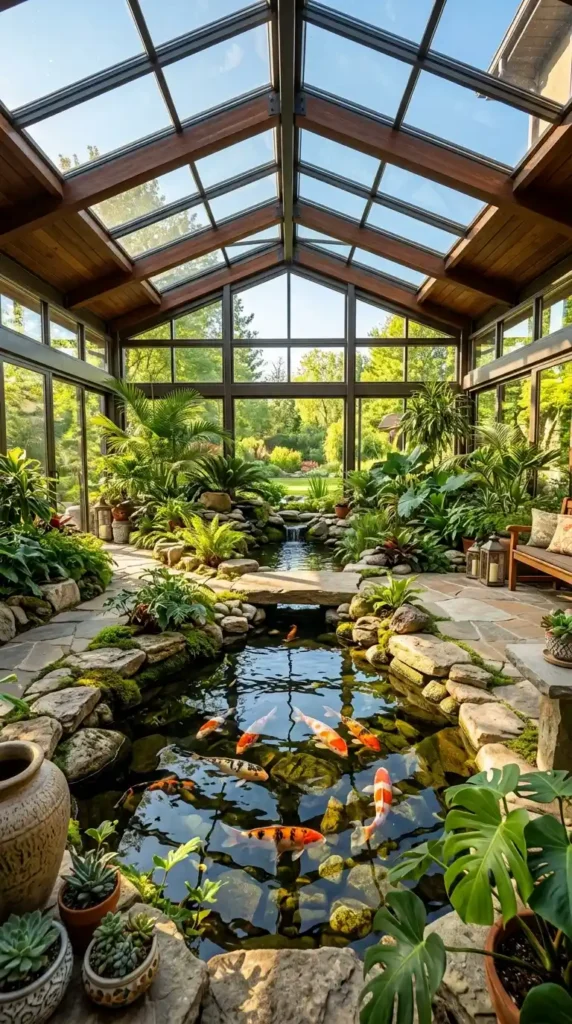
A sunken or raised pond in an atrium or sunroom brings a truly immersive natural element into your home. This design connects the interior space with the outdoors, creating a microclimate that feels like a garden living room.
- Why it works: It’s the most biophilic design approach, deeply connecting your living space with nature and providing an ever-changing focus for the room.
- Key requirements: This requires a well-thought-out structural plan. The floor must be able to support the weight of the water, and you’ll need to manage humidity levels with fans or a dehumidifier.
- Design tip: Surround the pond with large boulders and tropical or aquatic plants to create a seamless transition between the indoors and outdoors.
7. Foldable PVC Pond: The Temporary Powerhouse
✦ Best for: Temporary winter housing or for keepers who need a non-permanent indoor pond.
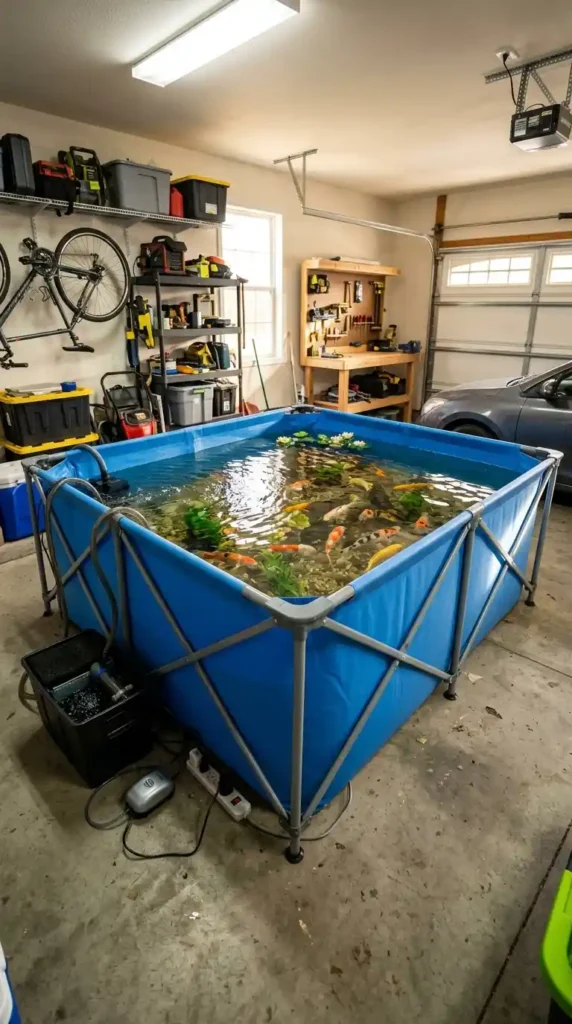
For an incredibly convenient and temporary solution, foldable PVC ponds are a modern game-changer. They are like a large, heavy-duty kiddie pool designed for fish. You can find them in sizes up to 450 gallons, and they are made from durable, fish-safe PVC and PVC piping. They are also surprisingly affordable.
- Why it works: It can be set up in minutes, folded flat for storage, and is large enough to house several koi comfortably.
- Key requirements: A robust filtration and aeration system is a must. The PVC frame, while stable, should be placed in a low-traffic area to prevent accidental knocks or damage.
- Design tip: These are perfect for temporary setups, like overwintering fish in a garage or basement, or as a quarantine tank.
Essential Considerations for Any Indoor Koi Pond
Regardless of which design you choose, the following factors are critical for a healthy and sustainable indoor koi pond.
Space and Structural Integrity
Koi grow large, often reaching lengths of two to three feet. They need a significant volume of water to thrive, with a minimum depth of three feet being recommended. The sheer weight of water is immense (62.4 pounds per square foot for every foot of water), so you must place your pond on a ground-floor slab or a reinforced floor on the ground floor. If you’re planning a pond on an upper level, you will likely need to consult a structural engineer.
Filtration, Aeration, and Water Quality
Filtration is the absolute most important factor in your pond’s success. Koi produces a substantial amount of waste, which will quickly become toxic if not removed. Your system must include mechanical, biological, and possibly chemical (UV) filtration. Aeration is equally important to replenish oxygen and support your filter’s beneficial bacteria. Poor water quality can also lead to unpleasant odors in your home.
Temperature and Moisture Control
An indoor pond will increase the humidity in your home. Good ventilation, a dehumidifier, or a ceiling fan is essential to manage this extra moisture. For temperature, koi thrive in water between 65°F and 75°F, so you may need a heater in the winter and a chiller in summer if your home’s temperature fluctuates.
Lighting
Insufficient natural light can cause the koi’s vibrant colors to fade. If you are not able to place your pond near a large window, you will need a quality grow light or halide light to provide the necessary UV spectrum.
Frequently Asked Questions About Indoor Koi Ponds
1. Can you have an indoor koi pond?
Yes, with proper planning. The key requirements are adequate floor space, a reinforced floor for the water weight, a strong filtration system, and humidity management. It is more achievable than most people assume.
2. What is the minimum size for an indoor koi pond?
The minimum depth should be at least 24 inches, but three feet (36 inches) is strongly recommended for the health of your koi. A 1,200-gallon pond is considered a good size for two adult koi.
3. What are the best indoor containers for koi?
The best options include custom-built wooden frames with a pond liner, food-grade IBC totes, plastic or fiberglass stock tanks, portable PVC ponds, and large glass aquariums. Each has its own pros and cons in terms of cost, viewability, and durability.
4. Can koi live indoors year-round?
Yes, koi can live indoors year-round if their environment is properly managed. This includes maintaining stable water temperatures (between 65°F–75°F), providing excellent filtration, a good aeration system, and adequate lighting. Many hobbyists bring them indoors specifically to overwinter.
5. Is an indoor koi pond high-maintenance?
While modern filtration systems help, an indoor koi pond is a serious commitment requiring regular water testing, cleaning, and maintenance. It is not a “set it and forget it” feature. However, the serenity and beauty it brings to a home can make the effort worthwhile.
Related Articles
The Ultimate Koi Pond Guide: Design, Building, Filtration & Maintenance
How to Build a Koi Pond: A Step-by-Step Guide for Beginners
Best Koi Pond Filter Systems Compared (2026 Guide)
7 Stunning Above Ground Koi Pond Ideas
The biggest mistake I see with indoor koi ponds is people who nail the design and then underestimate the filtration. A beautiful wooden crate pond with inadequate water turnover becomes a murky, smelly disappointment within weeks. The fish do not care how good it looks.
Get the filtration rated for double your actual water volume. Understock by at least one fish from whatever the maximum is. Sort the humidity before the fish arrive, not after. Do those three things and the design almost does not matter — the pond will be healthy, clear, and genuinely stunning to live with.

Sheikh Hassaan is a digital architect for small businesses and the founder of The Glow Up System. He writes about home decor, garden design, and outdoor living for real American homes – practical ideas that work in actual spaces without oversized budgets.