
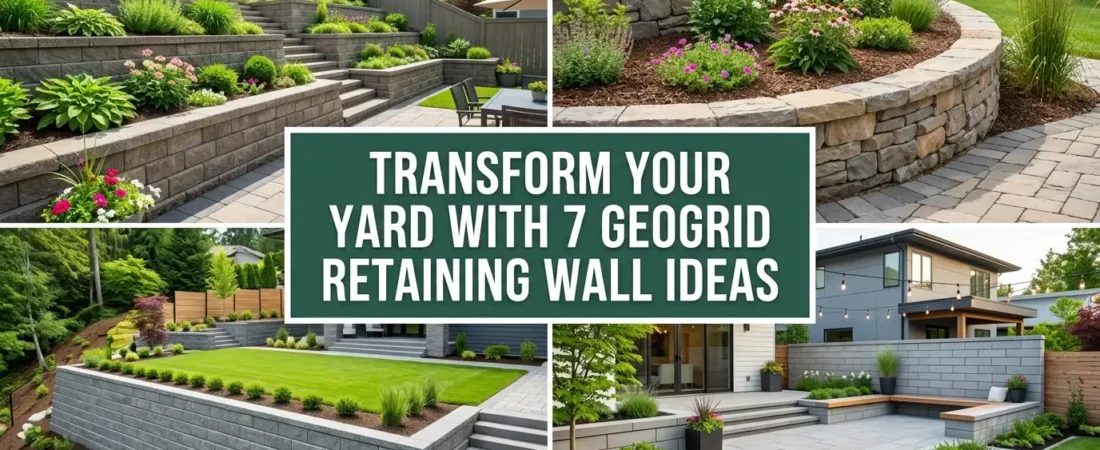
A geogrid retaining wall uses a grid-like material placed between layers of soil to add strength and stability to your wall. Unlike gravity walls that rely only on weight, geogrid-reinforced walls can be taller and stronger, even on sloped yards or areas with poor soil. This makes them a smart choice for small American yards where space is tight.
Here are 7 geogrid retaining wall ideas that fit modest backyards.
Table of Contents
1. Simple Segmental Block Wall with Geogrid
✦ Best for: Small yards where you need to level a sloped garden bed
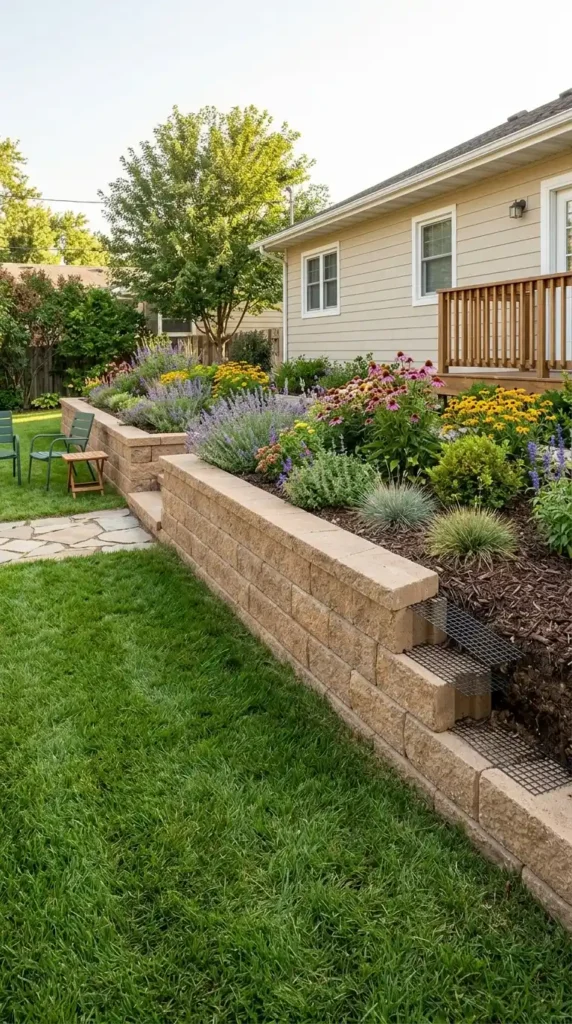
A segmental block wall is the most common type of geogrid retaining wall for small yards. It uses interlocking concrete blocks and geogrid placed every second or third course. For walls over 3 feet, geogrid is recommended to prevent the wall from leaning or falling over.
How to do it: Start with a compacted gravel base. Lay the first course of blocks level. Place geogrid layers every 2-3 block courses, extending into the backfill about 80% of the wall height. Backfill and compact soil in thin layers behind the wall.
2. Terraced Garden Beds with Geogrid Reinforcement
✦ Best for: Sloped yards where you want multiple planting levels
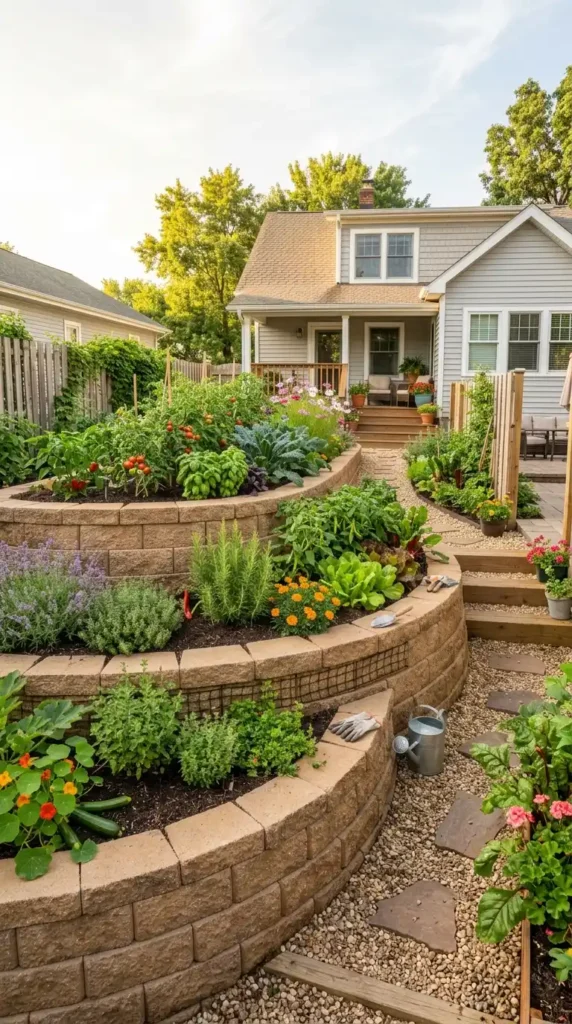
Terraced garden beds are a great way to turn a sloped yard into usable growing space. Each level is supported by a low retaining wall, and geogrid is used to reinforce taller sections. This creates a stepped garden that is both beautiful and functional.
How to do it: Build lower walls on each level, using geogrid on walls over 2-3 feet. Make sure each wall has proper drainage behind it. Plant vegetables, herbs, or flowers on each level to maximize your growing space.
3. Driveway Retaining Wall with Geogrid
✦ Best for: Leveling a driveway or parking area on a slope
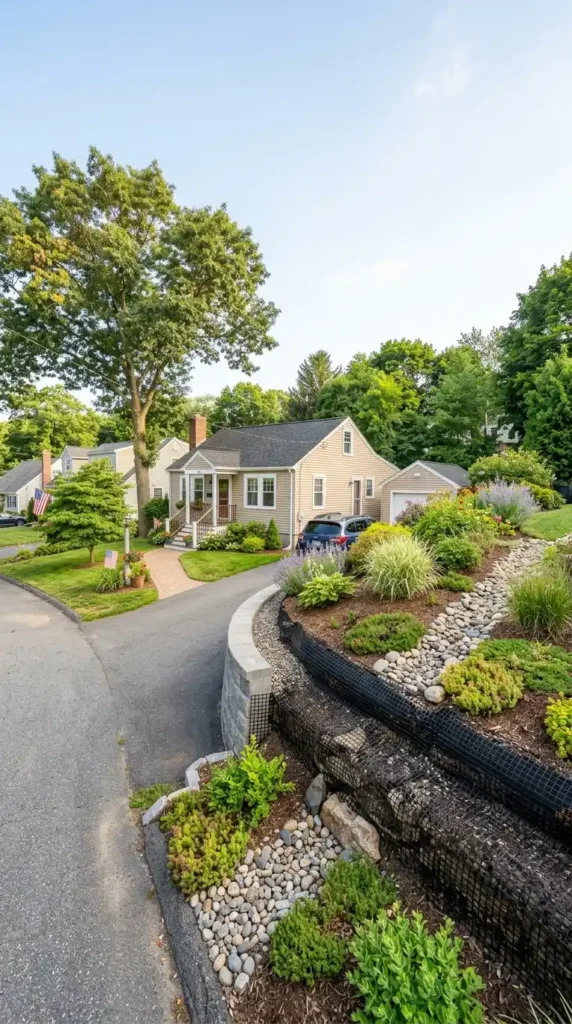
A retaining wall along a sloped driveway prevents soil erosion and creates a level parking area. Geogrid reinforcement allows the wall to handle the weight of vehicles without failing. This is a smart solution for homes with driveways on a slope.
How to do it: Use geogrid designed for load-bearing applications. Place geogrid layers at closer intervals (every course) to handle the extra weight. Ensure proper drainage behind the wall to prevent water pressure buildup.
4. Geogrid-Reinforced Vegetated Slope
✦ Best for: Steep slopes where you want a natural, green look
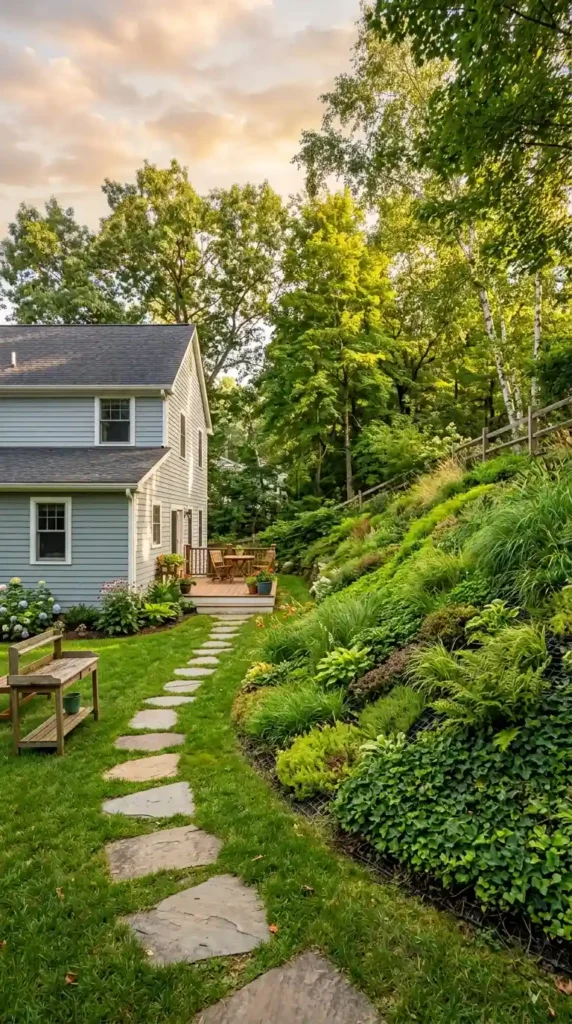
A vegetated slope uses geogrid to stabilize a steep hill while allowing plants to grow on the surface. This creates a natural, green look that blends with the landscape. It is an eco-friendly alternative to a solid wall.
How to do it: Install geogrid layers into the slope, then cover with soil and seed or plant groundcover. Use erosion control blankets to prevent soil washout. This works best for slopes up to 45 degrees.
5. Small Patio Retaining Wall with Seating
✦ Best for: Creating a level patio area on a sloped yard
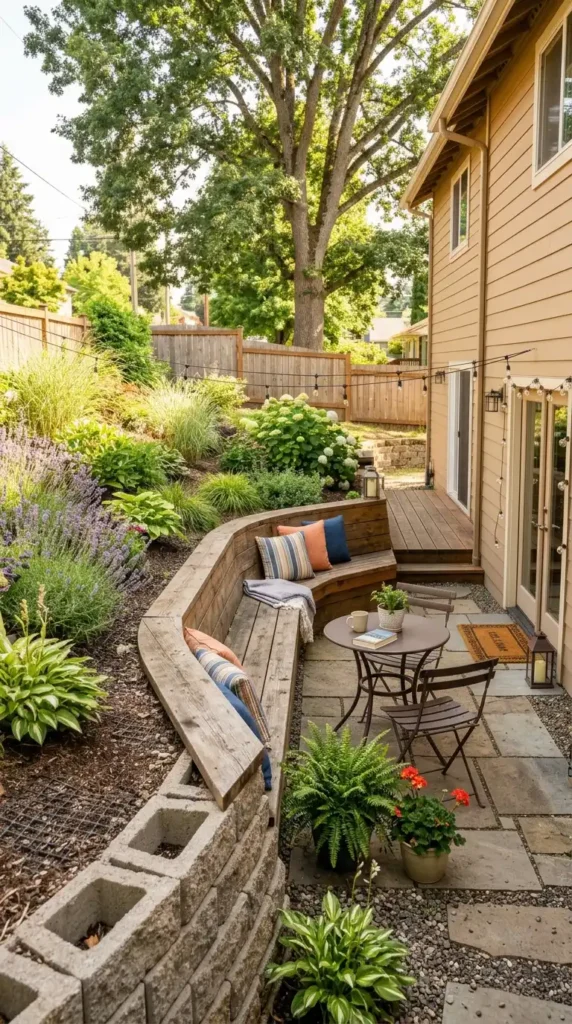
A retaining wall can do more than just hold back soil. With a wide, flat top, it can double as bench seating for a patio. Geogrid reinforcement ensures the wall stays strong and stable. This is a great way to add seating without taking up extra space.
How to do it: Build a wall with a wide capstone or timber top for seating. Use geogrid to reinforce the wall, especially if it is over 2-3 feet. Add cushions or pillows to make it comfortable.
6. Budget-Friendly Geogrid Wall with Used Materials
✦ Best for: Homeowners who want to save money on materials
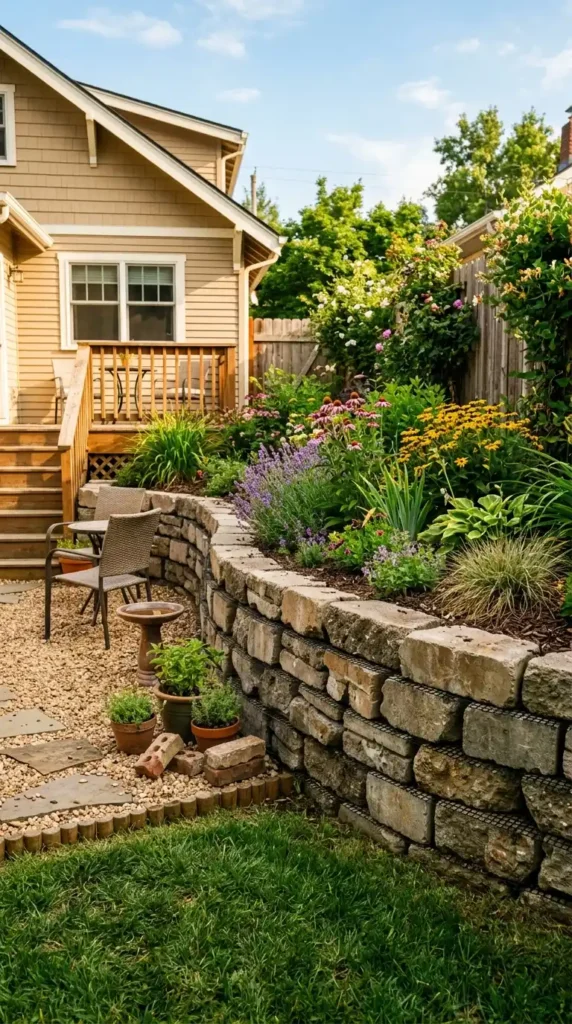
You can save money by using recycled or salvaged materials for your retaining wall. Old concrete blocks, bricks, or even used railroad ties can work as facing materials. Geogrid ensures the wall stays strong and stable, even with salvaged materials.
How to do it: Source salvaged blocks or stones from demolition sites or online marketplaces. Use geogrid to reinforce the wall following standard guidelines. The geogrid will add strength that the salvaged facing might lack.
7. Multi-Tiered Wall with Geogrid for Maximum Garden Space
✦ Best for: Steep yards where you need to create multiple usable levels
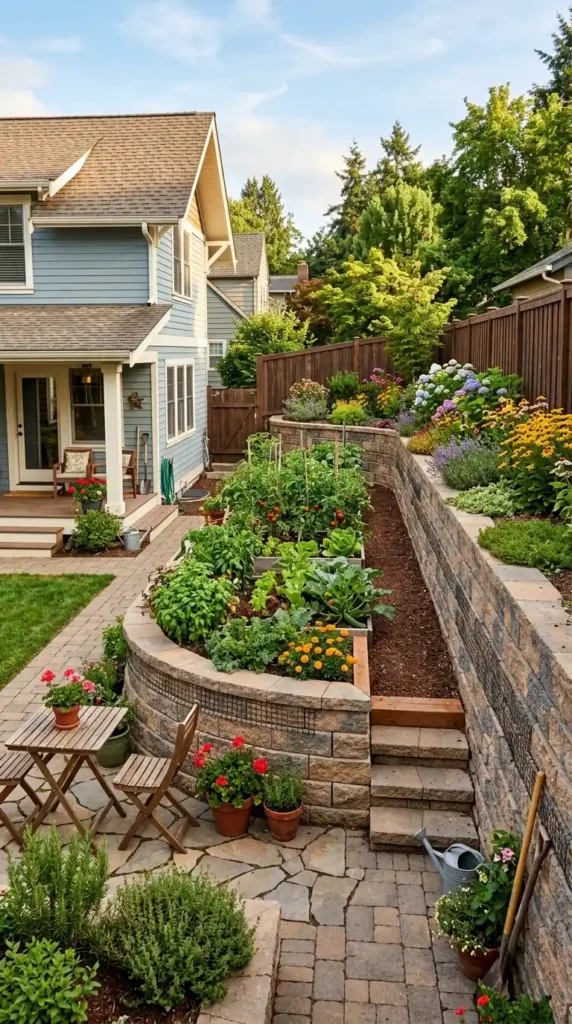
A multi-tiered wall system uses several lower walls to create multiple levels on a steep slope. Each level becomes a usable garden or seating area. Geogrid reinforces each wall, ensuring stability and safety.
How to do it: Build walls in steps, each one lower than the next. Use geogrid on each wall over 2-3 feet. Backfill and compact soil behind each wall before building the next level.
Key Geogrid Installation Tips
Height: Geogrid is recommended for any wall taller than 2 feet.
Length: Geogrid should extend into the soil behind the wall at least 80% of the wall height.
Spacing: For small walls, place geogrid every 2-3 block courses.
Drainage: Proper drainage prevents water pressure buildup behind the wall. Use gravel backfill and a perforated drain pipe.
Compaction: Backfill in 6-8 inch layers and compact each layer firmly.
Frequently Asked Questions About Geogrid Retaining Walls
1. What is a geogrid retaining wall?
A geogrid retaining wall is a reinforced wall that uses a polymer grid placed between soil layers to add strength and stability, allowing for taller or stronger structures.
2. When should I use geogrid in a retaining wall?
Geogrid is recommended for walls taller than 2-3 feet, walls on poor soil, or walls supporting heavy loads. It adds stability and prevents wall failure.
3. How long should geogrid be for a retaining wall?
The geogrid should extend into the backfill about 80% of the wall height. For example, a 4-foot wall needs about 3.2 feet of geogrid length.
4. Can I build a geogrid retaining wall myself?
Yes, many geogrid retaining walls are DIY-friendly, especially under 4 feet. Check local permits and follow manufacturer instructions.
5. How much does a geogrid retaining wall cost?
Costs range from $15-$60 per square foot for installation. Smaller walls are cheaper, while taller walls cost more.
6. Does a geogrid wall need drainage?
Yes, drainage is essential to prevent water buildup behind the wall, which can cause wall failure. Use gravel backfill and a drain pipe.
Related Articles
7 Beautiful Wood Retaining Wall Designs
Retaining Wall Cost: Complete Pricing Guide for 2026
12 Simple & Stunning Outdoor Wall Planter Ideas
10 Stylish Gravel Garden Ideas Designs
A geogrid retaining wall is a smart investment for sloped yards. It adds stability, prevents erosion, and creates usable outdoor space. With the right materials and installation, your wall will last for years.

Sheikh Hassaan is a digital architect for small businesses and the founder of The Glow Up System. He writes about home decor, garden design, and outdoor living for real American homes – practical ideas that work in actual spaces without oversized budgets.