
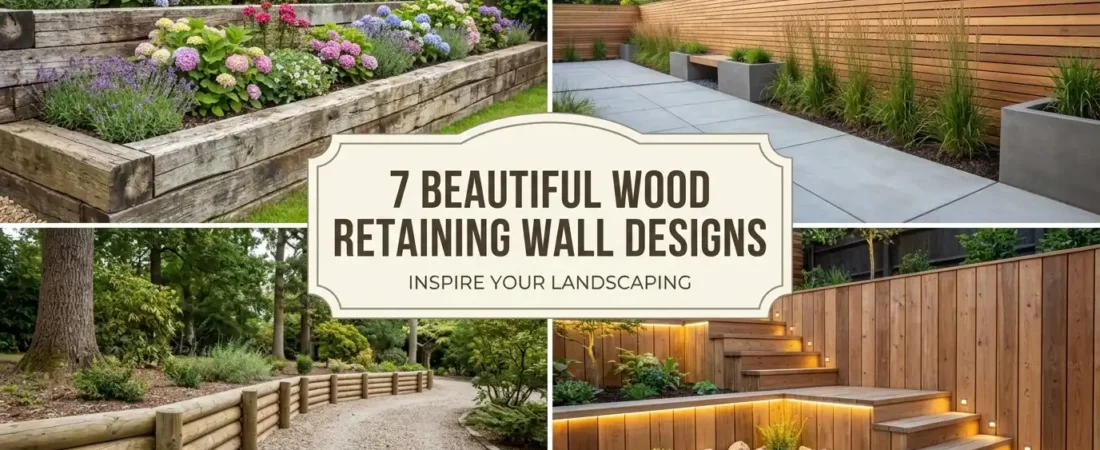
A wood retaining wall is a practical and attractive way to manage sloped landscapes, prevent soil erosion, and create usable outdoor spaces. Whether you are looking to add a single tier to level a garden bed or construct a multi-level terrace, wood offers an affordable, natural, and DIY-friendly solution. This article explores seven distinctive wood retaining wall ideas to inspire your next backyard project.
Table of Contents
1. Simple Single-Tier Timber Wall
✦ Best for: Gently sloping yards where you need a subtle elevation change
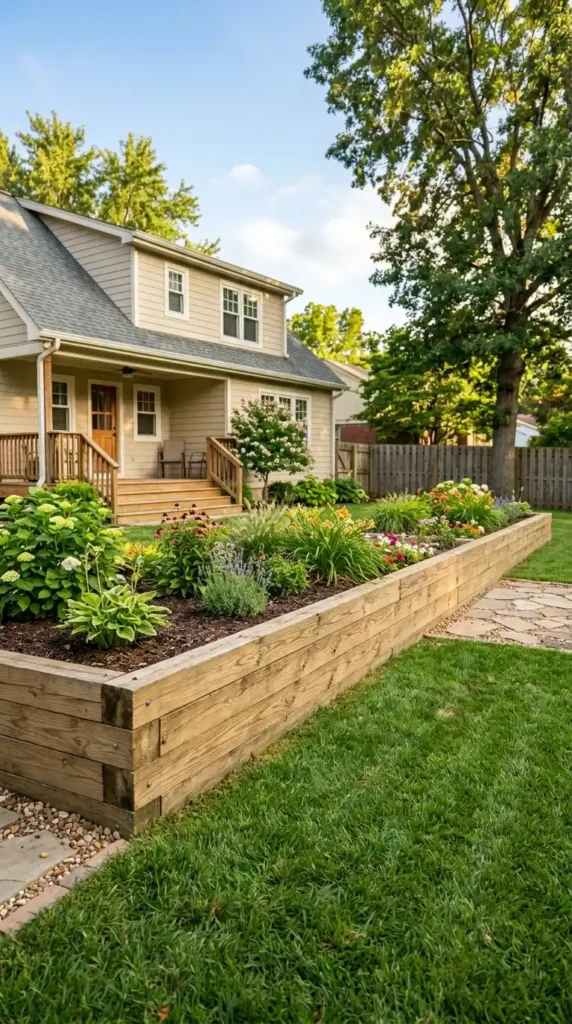
A single-tier wood retaining wall is the most straightforward approach for gently sloping yards. It effectively holds back soil and creates a subtle elevation change, making it ideal for small gardens or defining lawn edges. This simplicity allows the natural beauty of the wood to shine, offering a clean and uncluttered look.
How to use it: Use landscape timbers or treated pine sleepers to build a wall 2 to 3 feet high. Bury the first course of timbers in a trench of crushed stone for stability. Use landscaping screws to secure each course. For a professional finish, cap the wall with timber boards.
2. Terraced Multi-Level Retaining Walls
✦ Best for: Steep slopes where you need to create multiple level planting areas
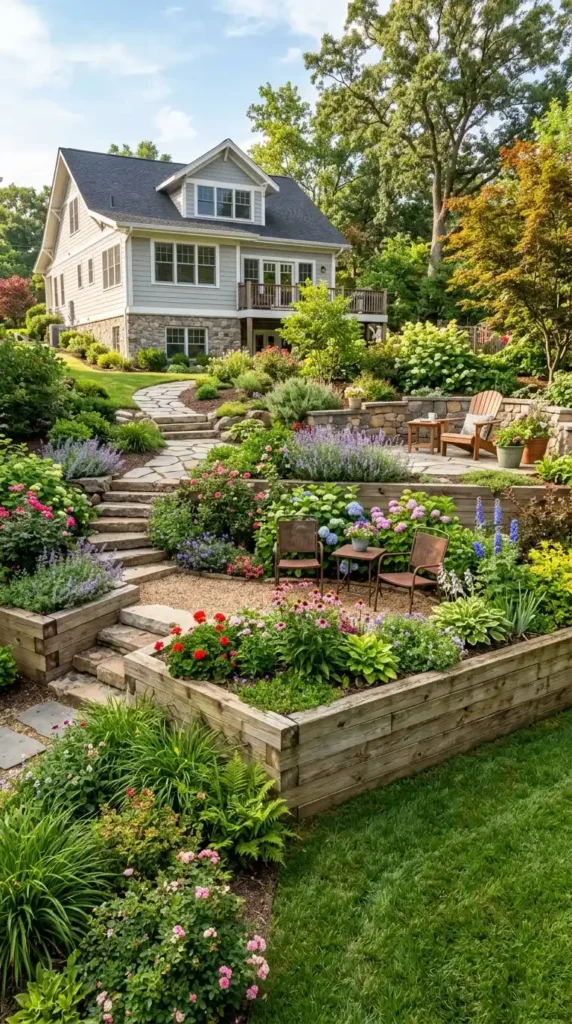
For more significant slopes, terraced retaining walls offer both functionality and visual appeal. By creating multiple levels, you can prevent substantial soil erosion and establish distinct planting areas. This method allows for a diverse range of plants and creates a dynamic, multi-dimensional landscape. It is an effective way to turn a challenging slope into a beautiful, terraced garden.
How to use it: Build a series of lower walls, each one stepping up the slope. Use pressure-treated pine or cedar, and ensure proper drainage behind each wall. Add built-in planters and steps to integrate the structure with the garden. This approach transforms a steep hill into a lush, multi-level paradise.
3. Rustic Railway Tie Retaining Wall
✦ Best for: Achieving a vintage, rugged look in cottage or rural gardens
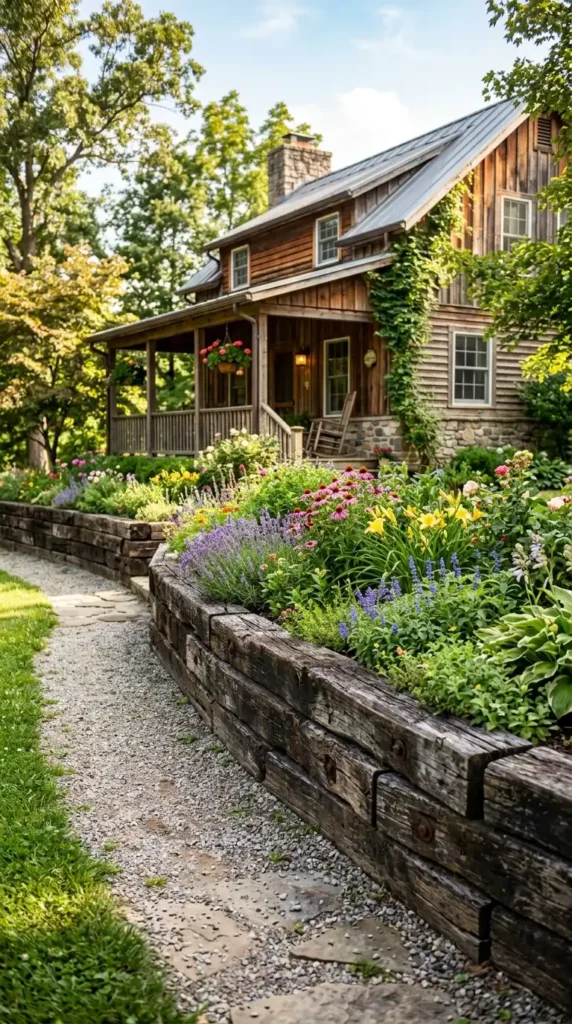
Railway ties bring a sense of history and ruggedness to a retaining wall. Their durability and unique character make them a popular choice for creating sturdy and visually interesting landscape features. While heavy, they provide long-lasting support and add a distinctive vintage charm.
What to look for: Source reclaimed railway ties for a naturally aged appearance. Ensure they are rated for ground contact and apply a wood preservative to cut ends. Railway ties work best for walls up to 3 to 4 feet high. Their rustic aesthetic is ideal for cottage gardens, woodland settings, or rural landscapes.
4. Curved Wooden Retaining Wall
✦ Best for: Softening the landscape and following natural contours
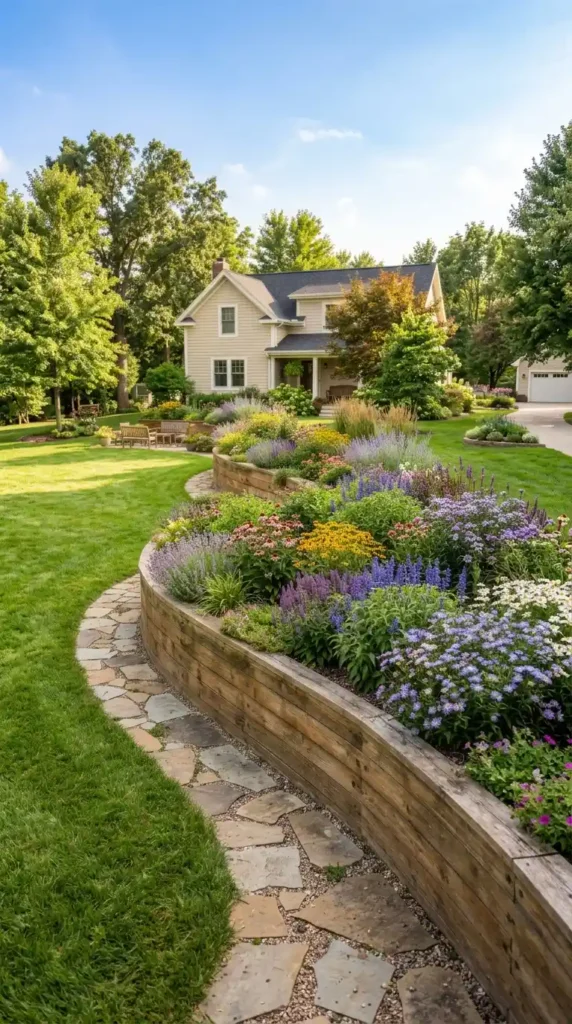
Adding a curve to your retaining wall can soften the landscape’s lines and introduce an element of organic design. A curved wall can follow the natural contours of your yard or create a focal point, adding visual interest and a touch of sophistication. It helps create a natural flow that aligns beautifully with your yard’s contours.
How to use it: Flexible timber and careful planning are key for creating curves. This design is effective for gardens with irregular shapes, adding flow and movement. The natural wood grain complements the flowing design, making it a beautiful and functional way to retain soil. It also creates unique pockets for plants.
5. Retaining Wall with Built-in Planters
✦ Best for: Maximizing space and displaying colorful plants
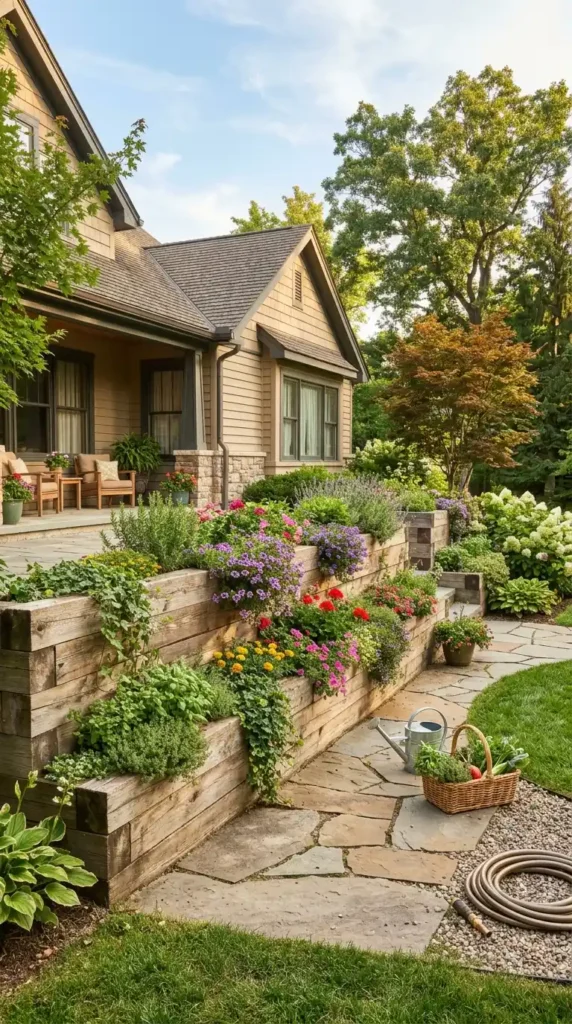
Bringing functionality and aesthetics together, a retaining wall with built-in planters is an excellent way to maximize space and display your favorite plants. These integrated planters can add pops of color and life to the wall, creating a vibrant and inviting atmosphere. This design also provides a practical way to grow herbs or flowers on a slope.
How to use it: Build the planter directly into the wall structure. Use sleeper timber to create boxes and line them with landscape fabric to hold soil and promote drainage. Plant with colorful flowers, herbs, or trailing plants. This design works well for both small and large retaining walls.
6. Horizontal Wood Slat Wall
✦ Best for: A modern and structured look with clean lines
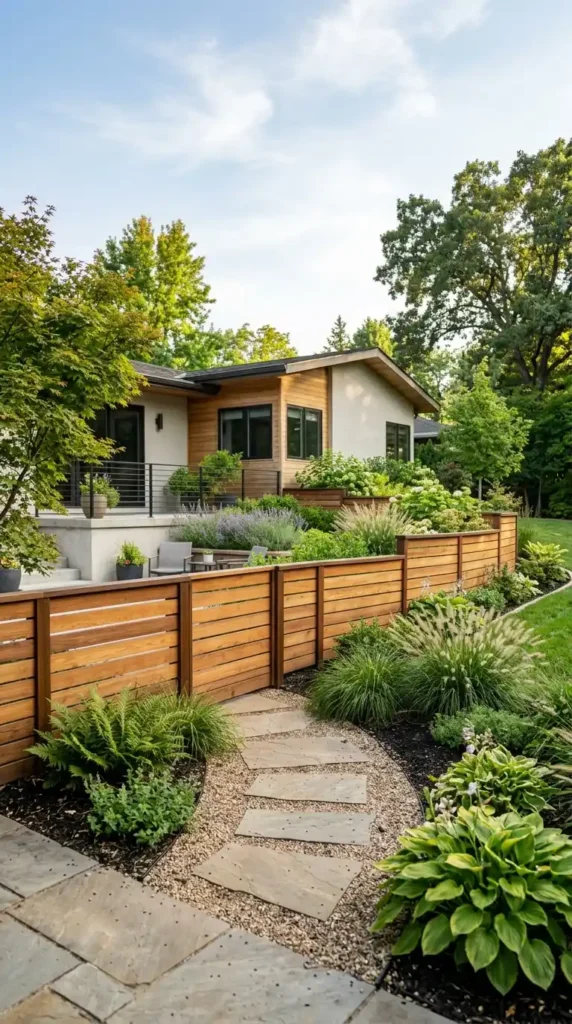
In contrast to vertical planks, a horizontal wood slat retaining wall provides a more traditional and often rustic feel. The horizontal lines can visually widen the space and offer a sturdy and dependable solution for soil retention. It brings clean lines and a structured feel to your garden, fitting well in modern landscapes where simplicity and sophistication are key.
What to look for: Stained or painted planks can be customized to match your home’s color palette, creating a cohesive look. The design also works well with minimalist plantings or lush green backdrops. This versatile option adds both structure and style.
7. Wood Retaining Wall with Integrated Seating
✦ Best for: Combining practical landscaping with comfortable outdoor seating
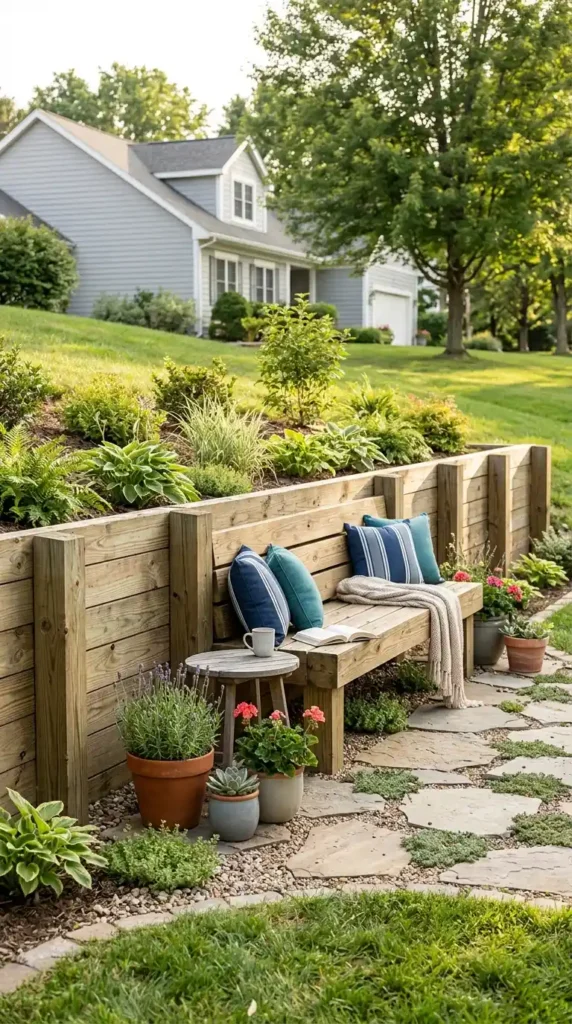
Maximize the functionality of your retaining wall by incorporating built-in bench seating. This provides a convenient and natural place to relax and enjoy your garden. It is a perfect way to add value and create a focal point in your outdoor space.
How to do it: Design the wall with a wide, flat top that can double as a seat, or build a separate bench structure that integrates with the wall. Use a sturdy, flat top piece of timber for the bench, and add cushions for comfort. This creates an inviting spot for relaxation while managing soil levels.
Frequently Asked Questions About Wood Retaining Walls
1. What is the cheapest wood for a retaining wall?
Pressure-treated pine is usually the cheapest and most budget-friendly option for a DIY retaining wall. It offers good durability at a lower cost than cedar or hardwoods. A wood wall can cost roughly half the price of professionally installed stone or concrete.
2. How long will a wood retaining wall last?
The lifespan depends on the wood type. Pressure-treated pine lasts 10-15 years. Cedar lasts 15-20 years, and tropical hardwoods can last over 25 years. Proper installation, drainage, and maintenance can extend the life.
3. Do I need a permit for a wood retaining wall?
Check with your local building department. Many areas require permits for walls over 3 to 4 feet in height. A structural engineer may also be needed for taller walls to ensure safety.
4. What type of wood is best for a retaining wall?
For ground contact, use pressure-treated lumber or naturally rot-resistant woods like cedar or redwood. H4-rated treated pine is designed for in-ground use and offers good longevity. Cedar is a premium option with natural resistance.
5. How do I prevent my wood retaining wall from rotting?
Use pressure-treated wood and apply a preservative to all cut ends. Install a proper drainage system with a perforated pipe and gravel backfill to prevent water buildup behind the wall.
Related Articles
Retaining Wall Cost: Complete Pricing Guide for 2026
12 Simple & Stunning Outdoor Wall Planter Ideas
10 Stylish Gravel Garden Ideas Designs
Front Yard Rock Garden Ideas: 10 Low-Maintenance Designs for Curb Appeal
A wood retaining wall adds warmth, function, and character to any landscape. Whether you choose a simple single-tier design, a terraced structure with built-in planters, or a rustic railway tie wall, the natural beauty of wood will enhance your outdoor space for years.

Sheikh Hassaan is a digital architect for small businesses and the founder of The Glow Up System. He writes about home decor, garden design, and outdoor living for real American homes – practical ideas that work in actual spaces without oversized budgets.