
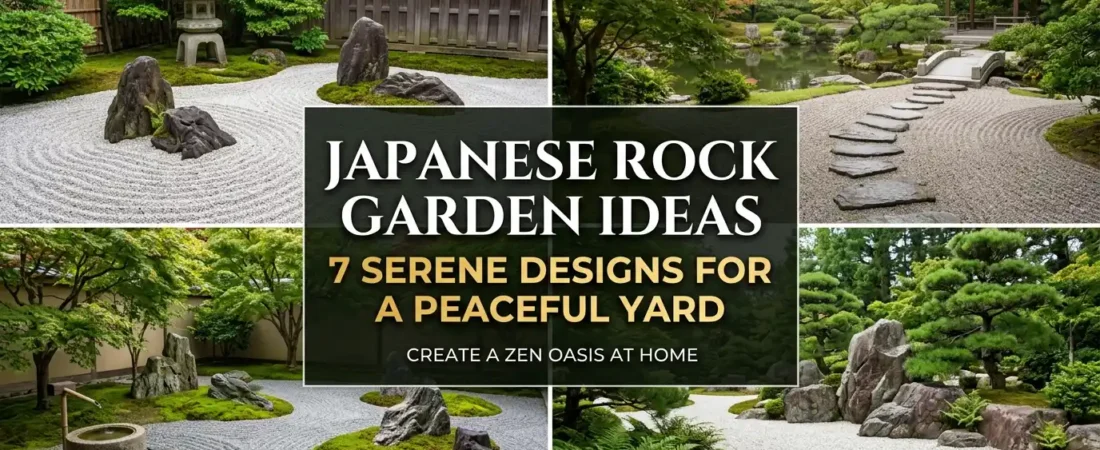
A Japanese rock garden, or karesansui, is a dry landscape garden that uses stones, gravel, and sand to represent mountains, rivers, and oceans in a miniature form. These gardens are designed to promote mindfulness and inner peace through simplicity and balance. The best part is they work beautifully in small spaces and require minimal maintenance.
Here are 7 Japanese rock garden ideas for real American homes.
Table of Contents
1. Classic Zen Rock Garden with Raked Gravel
✦ Best for: Small spaces and anyone who finds peace in raking patterns
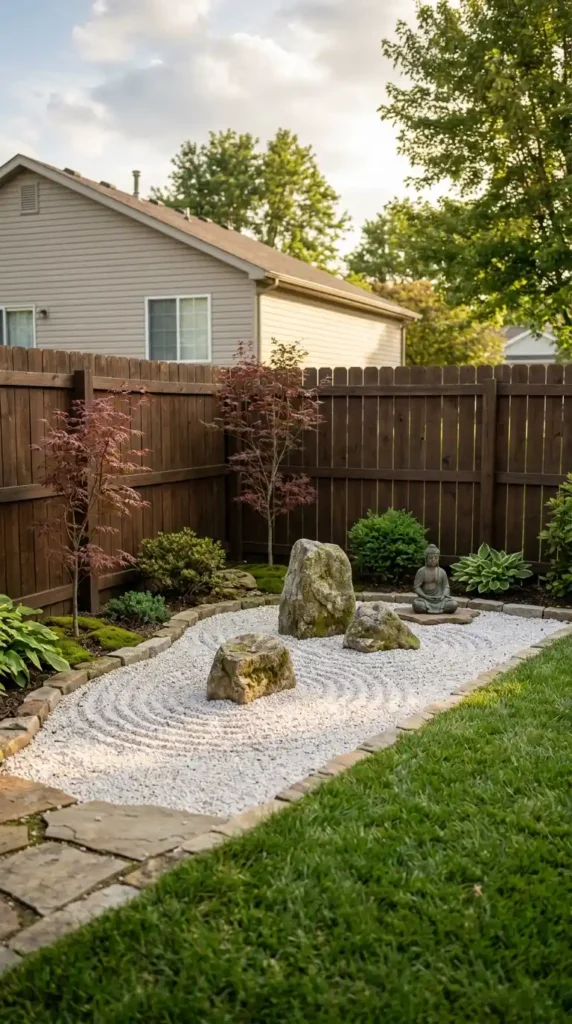
A classic Zen rock garden uses gravel or sand as the base, raked into patterns that represent flowing water. Place a few stones off-center to create visual balance. The asymmetry is what makes it feel natural. Many people find the act of raking the gravel meditative.
How to do it: Choose a quiet spot in your yard. Lay landscape fabric to prevent weeds. Add 3-5 cm of light-colored gravel. Place 3 to 5 stones in an asymmetrical group. Rake straight lines or concentric circles around the stones. Keep it simple. A small bamboo fence or moss border adds an authentic touch.
2. Rock and Pine Gravel Island
✦ Best for: Creating a bold, symbolic focal point
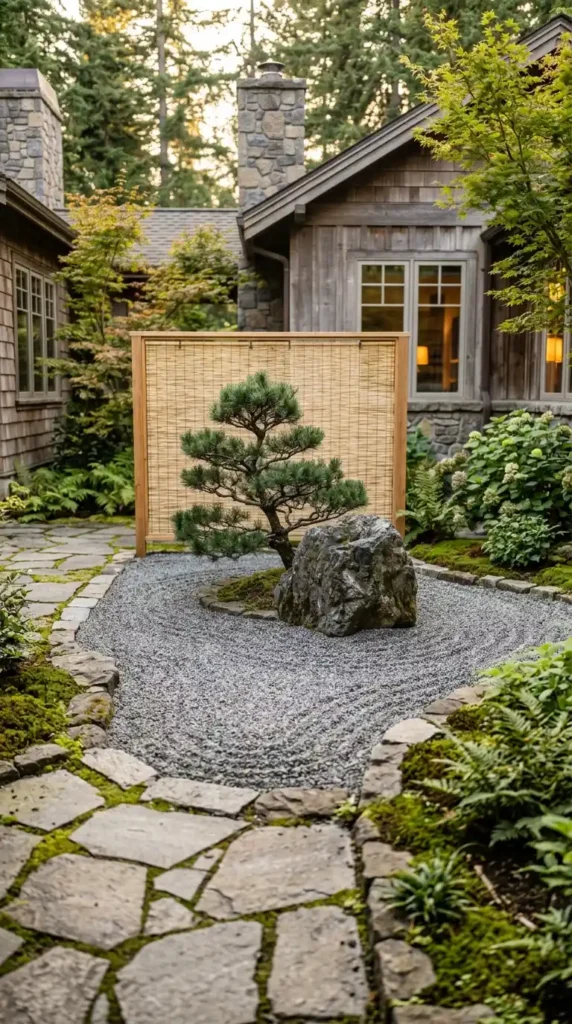
This is one of the oldest Japanese garden setups. The rock represents an island, and the pine symbolizes longevity. The gravel acts as the ocean. It is simple, bold, and elegant.
How to do it: Use coarse gray gravel as your base. Place one large stone slightly off-center. Plant a dwarf black pine or bonsai behind it. Add a low bamboo screen as a backdrop. That is it. Three to four core elements create a powerful focal point.
3. Dry Creek Bed with Stepping Stones
✦ Best for: Adding movement and guiding visitors through the garden
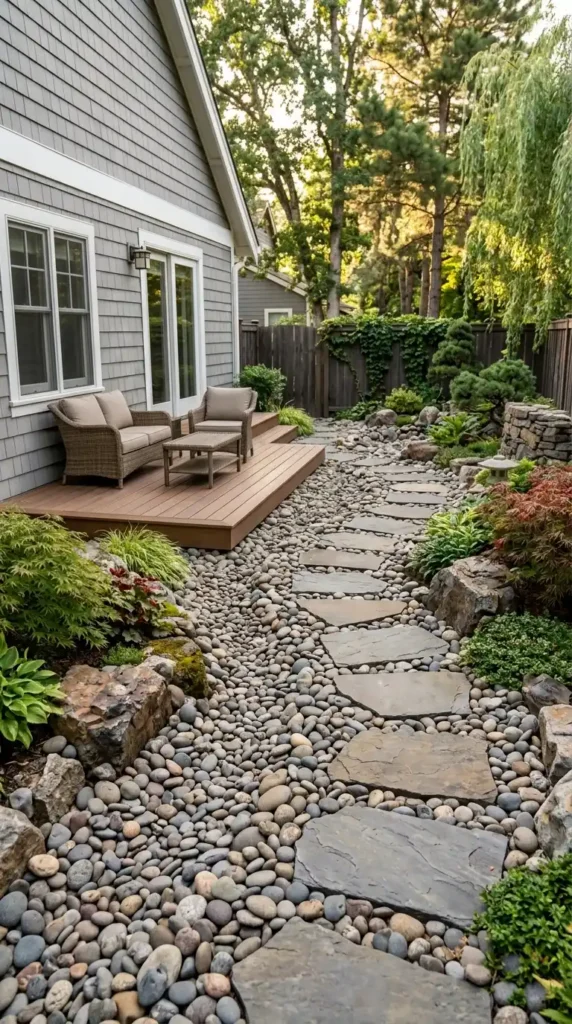
A dry creek bed gives the illusion of a natural stream, bringing a sense of movement to your garden. It also helps with drainage and prevents water from pooling. Adding stepping stones creates a path for quiet contemplation.
How to do it: Mark a winding path. Dig a shallow trench about 6-8 inches deep. Line it with landscape fabric. Arrange large rocks along the sides. Fill the trench with medium stones, then smaller pebbles. Place flat stepping stones through the center for a walkway.
4. Minimalist Corner Rock Garden
✦ Best for: Small urban yards, side yards, and tight spaces
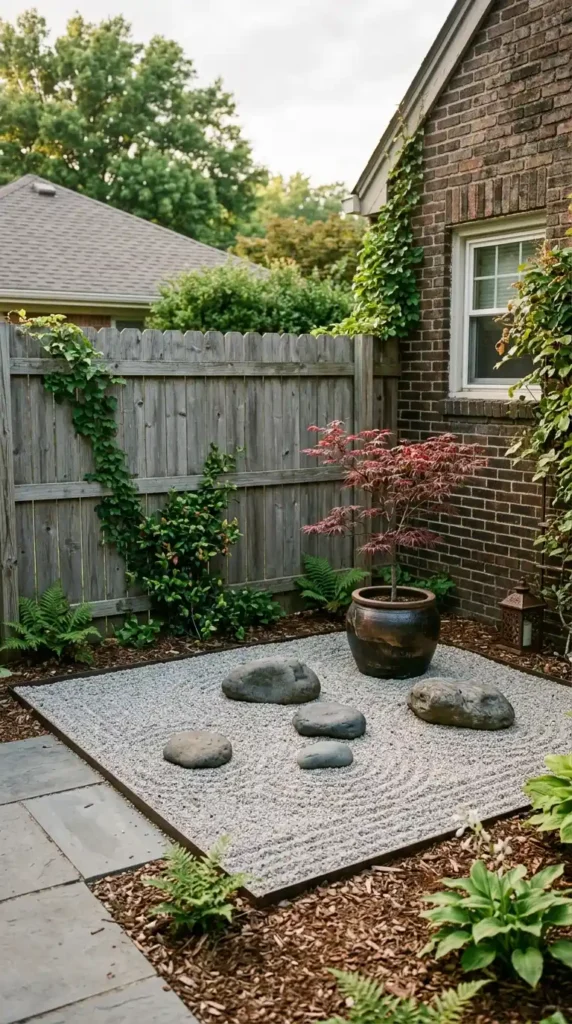
A minimalist rock garden can fit in a tight corner, a patio strip, or even a balcony box. You want a quiet, tidy scene you can see each day, not a pile of ornaments. Smaller gardens work best when you can see the whole area from one spot.
How to do it: Pick your viewing side first. Choose a spot that is 0.9-2.5 meters wide. Use 1-3 groups of stones for a cleaner look. Keep the main stone about 15-45 cm tall. Bury at least one-third of each stone below grade so they look settled. Use 3-5 cm of gravel, deep enough to rake lines. Use only 0-20% of the area for plants.
5. Zen Garden with Stepping Stone Path
✦ Best for: Guiding mindful walks through your garden
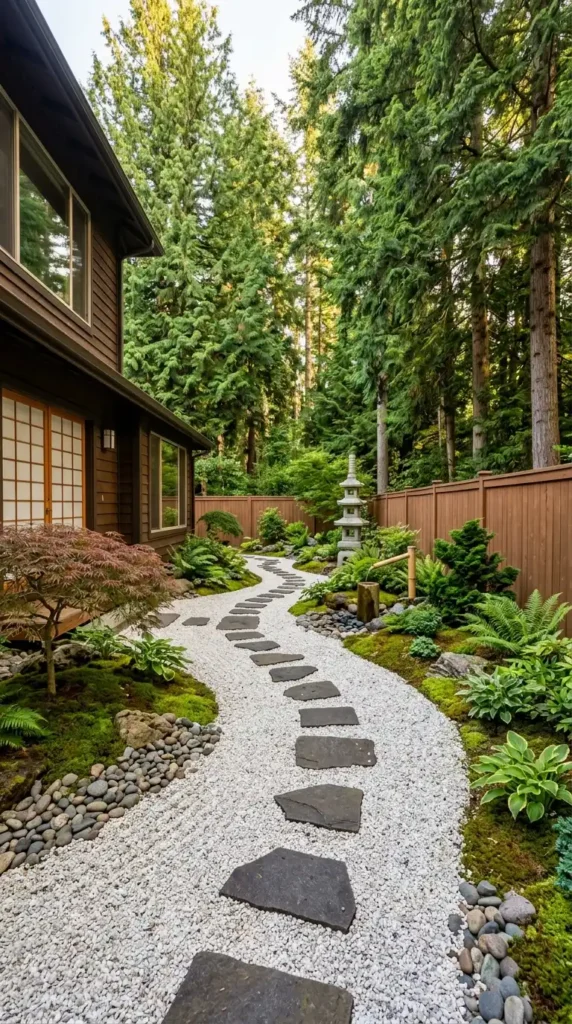
A stepping stone path adds practicality and charm to a Zen garden. It provides a clear route through the garden, allowing you to appreciate the beauty up close. Winding paths invite contemplation with every step.
How to do it: Plan a winding route. Dig shallow holes for each stepping stone so they are level with the ground. Lay landscape fabric to prevent weeds. Place flat stones or pavers. Fill gaps between stones with small pebbles or gravel. Let each path lead to a clear destination, like a sitting area or a stone lantern.
6. Rock Spiral Garden Design
✦ Best for: Adding a unique focal point that draws the eye
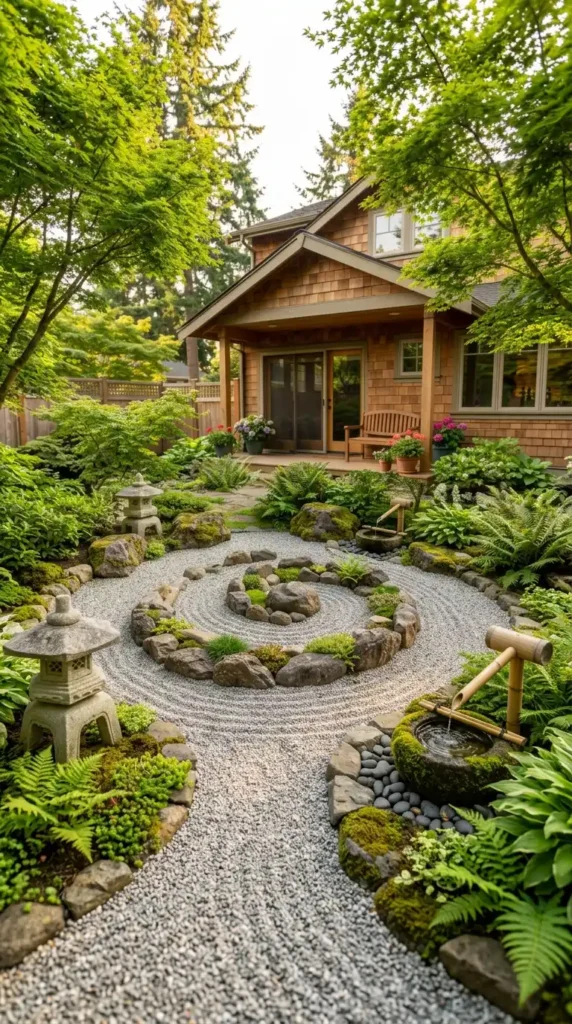
A rock spiral is a different and interesting design that can be the center of attention in your garden. It draws the viewer’s eye and adds a sense of movement and depth. It also offers a beautiful way to display small plants.
How to do it: Choose a sunny spot with good drainage. Mark the center of your spiral. Dig a shallow trench in a spiral shape. Place large and medium rocks along the trench, starting from the center and moving outward. Add garden soil between the rocks. Plant small succulents or alpine plants in the soil.
7. Indoor Zen Rock Garden in a Container
✦ Best for: Bringing tranquility inside your home
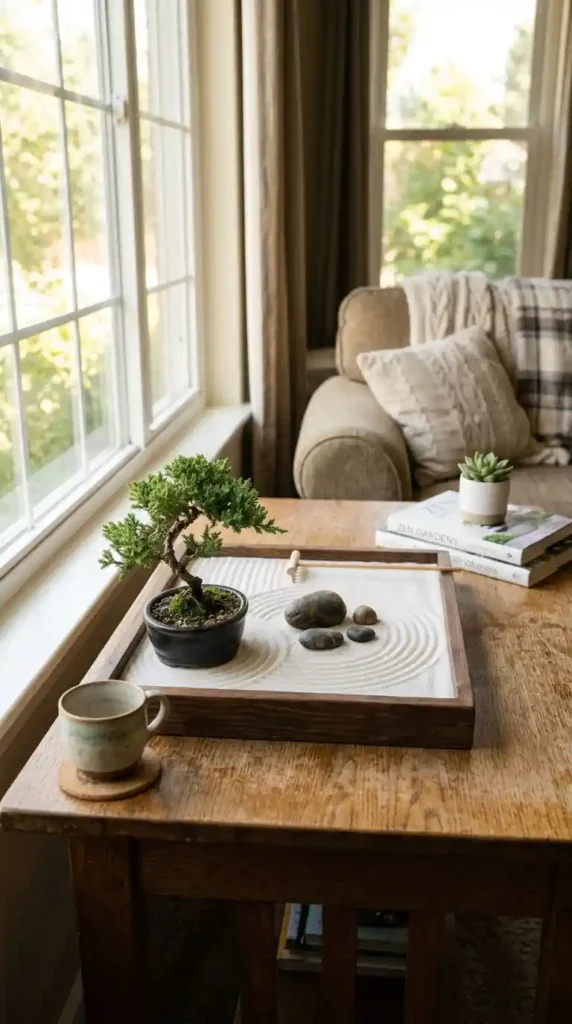
You do not need a backyard to enjoy a Japanese rock garden. You can create one indoors in a wooden tray or container. This is perfect for apartments, offices, or any small space. It also makes a great mindfulness tool for meditation.
How to do it: Build or buy a shallow wooden tray. Add a weed retainer membrane underneath. Fill it with crushed granite or coarse sand (avoid fine beach sand, which will not hold rake patterns). Place a few small stones. Rake patterns into the sand. Add a small bonsai or potted plant for greenery.
Key Design Principles for Japanese Rock Gardens
Use asymmetry: Do not arrange stones in straight lines or symmetrical patterns. Nature is asymmetric. This is one of the most important principles. Use odd numbers of stones, like 3, 5, or 7.
Bury stones deep: At least one-third of each stone should sit below ground. This makes them look settled and permanent.
Keep it simple: Less is more in Japanese rock gardens. Do not overcrowd the space. Open gravel is part of the look.
Choose the right stones: Use stones of various shapes and sizes, but keep them consistent in material. Avoid glaringly colorful rocks.
Stick to a simple color palette: Use greens, grays, and earth tones for a calming atmosphere.
Create a focal point: Use a larger stone or a unique plant to draw the eye.
Frequently Asked Questions
1. What is a Japanese rock garden?
A Japanese rock garden, also known as karesansui or a Zen garden, is a dry landscape garden that uses stones, gravel, and sand to represent natural landscapes like mountains, rivers, and oceans in miniature. It is designed for contemplation and meditation.
2. How do I make a small Japanese rock garden?
Start with a quiet spot. Lay landscape fabric, add 3-5 cm of gravel, place 3-5 stones in an asymmetrical group, and rake patterns into the gravel. Keep it simple and use a small space that you can see from one spot.
3. What is the best gravel for a Zen garden?
Use light-colored gravel like white or cream for clear raking lines. Avoid fine beach sand as it will not hold rake patterns and can blow away indoors.
4. Do I need plants in a Japanese rock garden?
Plants are optional. Traditional Zen gardens use very few plants, often just moss or a single clipped shrub. If you use plants, keep them understated.
5. How do I maintain a Japanese rock garden?
Rake the gravel to refresh the patterns after rain or wind. Pull weeds as they appear. Check stones twice a year and reseat them if they shift. Top up gravel yearly.
Related Articles
Upgrade Your Yard with These 7 Wrought Iron Garden Decor Ideas
Transform Your Yard with 7 Geogrid Retaining Wall Ideas
7 Beautiful Wood Retaining Wall Designs
A Japanese rock garden is not just landscaping. It is a place for quiet reflection, a reminder to slow down, and a simple way to bring a little peace into everyday life.

Sheikh Hassaan is a digital architect for small businesses and the founder of The Glow Up System. He writes about home decor, garden design, and outdoor living for real American homes – practical ideas that work in actual spaces without oversized budgets.