
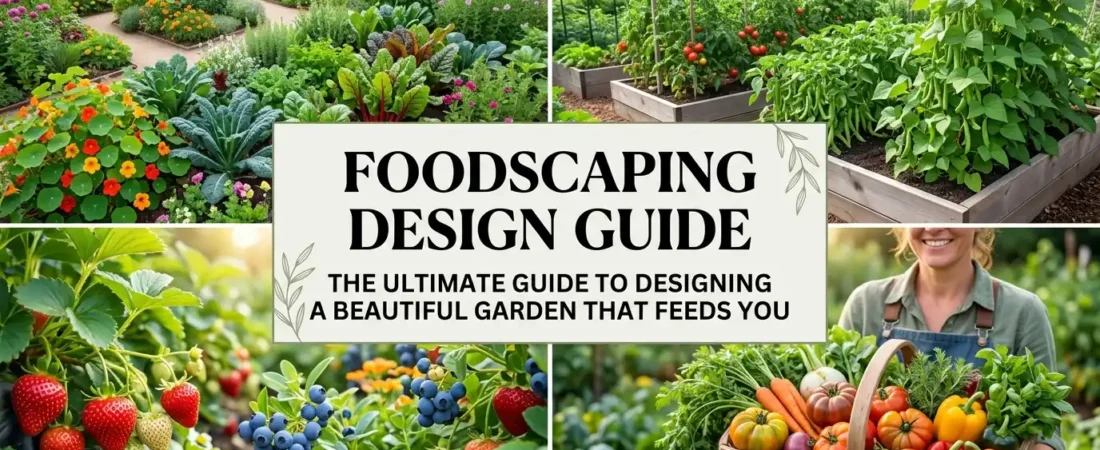
Imagine a garden that is as gorgeous as a botanical illustration but also fills your kitchen with fresh herbs, vegetables, and fruit. That is foodscaping, the intentional integration of edible plants into ornamental landscapes. It is the perfect marriage of form and function, a garden that feeds your eyes and your family.
Foodscaping defies the old idea that vegetables belong in a hidden corner of the yard. Instead, it weaves them into the fabric of your landscape, letting colorful chard, fragrant herbs, and even fruit trees share space with traditional ornamentals. The result is a garden that is both visually stunning and incredibly productive.
Table of Contents
What Is Foodscaping?
Foodscaping is a design concept where edibles are intentionally added to your existing framework of ornamentals. It is not about replacing every flower with a vegetable. It is about blending the two so seamlessly that you might not even notice the kale until you are ready to harvest it.
Foodscaping uses plants and flowers that are both attractive and edible, sometimes called “edimentals.” Available in a wide range of colors and forms, edimentals include perennials, shrubs, and trees that look great and taste even better.
The concept is not entirely new. It draws inspiration from traditional French kitchen gardens, or potagers, which have long combined beauty and function. But foodscaping takes this idea further, applying it to modern American landscapes, including front yards.
Why Foodscaping Is Taking Off
Several trends are driving the growing popularity of foodscaping. Homeowners are moving away from purely ornamental gardens and embracing edible, sustainable spaces.
Sustainability: Eco-friendly living is a top priority. Foodscaping supports this by reducing food miles and promoting self-sufficiency.
Cost Savings: Growing your own food cuts grocery bills. With food prices rising, the appeal of a productive garden is obvious.
Biophilic Design: The desire to connect with nature is stronger than ever. Foodscaping is the ultimate expression of this, integrating food production with natural beauty.
Curb Appeal: Edible front yards are redefining curb appeal in 2025. Homeowners are incorporating fruits, vegetables, and herbs into elegant landscapes that cut expenses, support pollinators, and provide fresh harvests just steps away.
Food Security: The pandemic and supply chain disruptions made many people realize the value of growing their own food. Foodscaping offers a practical way to become more self-sufficient.
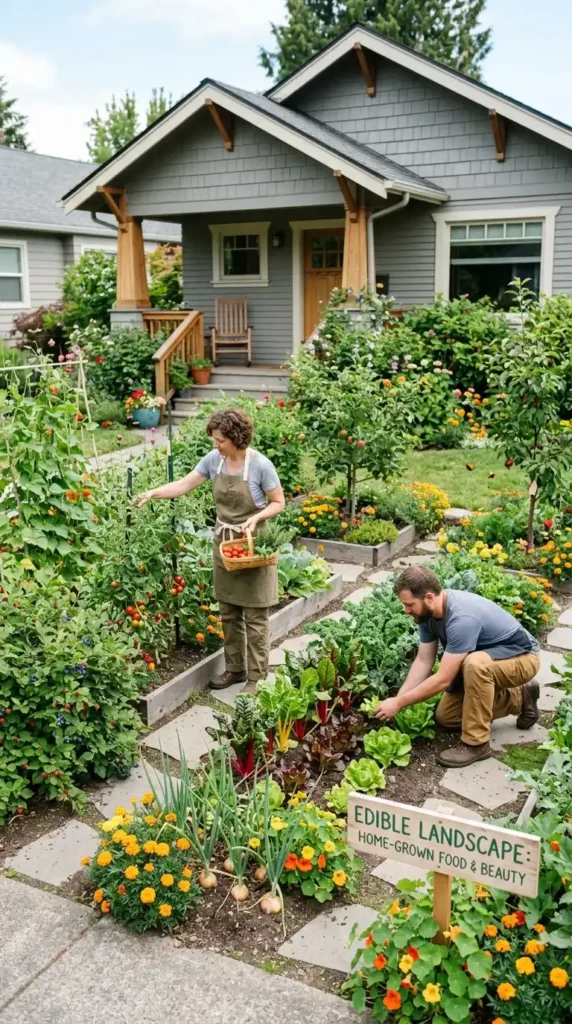
The Principles of Foodscape Design
A successful foodscape does not happen by accident. It requires planning, just like any other garden design. Here are the key principles to guide you.
Right Plant, Right Place
The right plant must be in the right place. Choose edibles that will thrive in the same conditions as your existing landscape plants. If you have a sunny spot, plant sun-loving vegetables and herbs. If you have a shady area, choose leafy greens and shade-tolerant herbs.
Focus on perennials, low-maintenance plants, and self-sowing herbs to save time and money. Drought-tolerant edibles are also a plus, since many edibles require more water than typical landscape plants.
Hydrozoning
Group plants together that have similar water needs. This is called hydrozoning. You will save money this way because you will only need to irrigate the clumps of plants that require it. Avoid planting thirsty vegetables next to drought-tolerant ornamentals.
Design with the Seasons in Mind
A foodscape changes throughout the year. Spring brings blossoms and tender greens. Summer offers a bounty of vegetables and herbs. Fall delivers colorful foliage and late harvests. Winter may leave some areas bare.
To keep your foodscape looking good year-round, combine reliable ornamentals with edible plants. Since the edibles may not look nice year-round or during extreme weather, having a solid mix of colorful and interesting ornamentals will keep the foodscape looking healthy.
Use Repetition, Restrained Color Palettes, and Massed Plantings
To create a tidy, intentional look that neighbors will appreciate, use repetition, restrained color palettes, and massed plantings. Instead of planting one tomato plant here and one pepper plant there, group them together in drifts. Choose a limited color palette and stick to it. Repeat the same plants throughout the garden to create a sense of unity.
Vary Textures and Sizes
Create interest by varying textures and sizes, while using patterns to cultivate a sense of unity. Pair the fine, feathery foliage of carrots with the broad, bold leaves of kale. Place tall sunflowers behind low-growing thyme. The contrast will make your garden more dynamic and visually appealing.
Follow a Color Scheme
Following a color scheme can also promote harmony in the foodscape. Purple kale, ruby chard, and golden oregano can provide stunning color without a single flower. Use the same colors you would in a traditional flower border, but achieve them with edible plants.
Step 1: The Foodscape Design Principles
The same principles used in ornamental landscaping apply to foodscaping. The difference is that you are using edible plants to achieve the desired effect.
The Three-Tier System
A classic approach to foodscape design is the three-tier system. This organizes plants by height, creating a layered effect that is both beautiful and productive.
Front (Low-Growing): Use low-growing herbs like thyme, oregano, and creeping rosemary as edging plants. They can also serve as groundcovers between pavers. Alpine strawberries are another excellent low-growing edible that can be used as a groundcover.
Middle (Mid-Height): Place mid-height vegetables and herbs in the middle tier. Kale, Swiss chard, peppers, and compact tomato varieties work well here. Herbs like lavender, basil, and sage also fit this tier.
Back (Tall): Plant tall vegetables and fruit trees at the back. Sunflowers, corn, trellised beans, and dwarf fruit trees provide height and structure. They can also serve as a natural privacy screen.
Use Strong Lines and Vertical Elements
Strong lines and vertical elements add structure to a foodscape. Arbors, trellises, and tomato cages are not just practical; they also add architectural interest.
Arbors and Trellises: Use arbors and trellises to support climbing beans, cucumbers, and squash. These structures add height and visual interest, and they can also define different areas of the garden.
Pathways: Use stepping stones, gravel, or pavers to create pathways through the garden. Pathways provide access for harvesting and maintenance, and they also add structure and define different zones.
Add Structure with Hardscaping
Hardscaping elements like raised beds, garden walls, and edging help keep a foodscape looking neat and intentional.
Raised Beds: Raised beds make gardening easier and help organize your outdoor space. They can be made from untreated wood, stone, concrete blocks, or metal. They are an excellent option for almost any home because they can be made or purchased in a size to fit any space.
Edging: Create neat edges by installing garden walls, edging, wattle, borders, curbing, or raised planters. Recycled material options include logs, bamboo, wine bottles, and used timber.
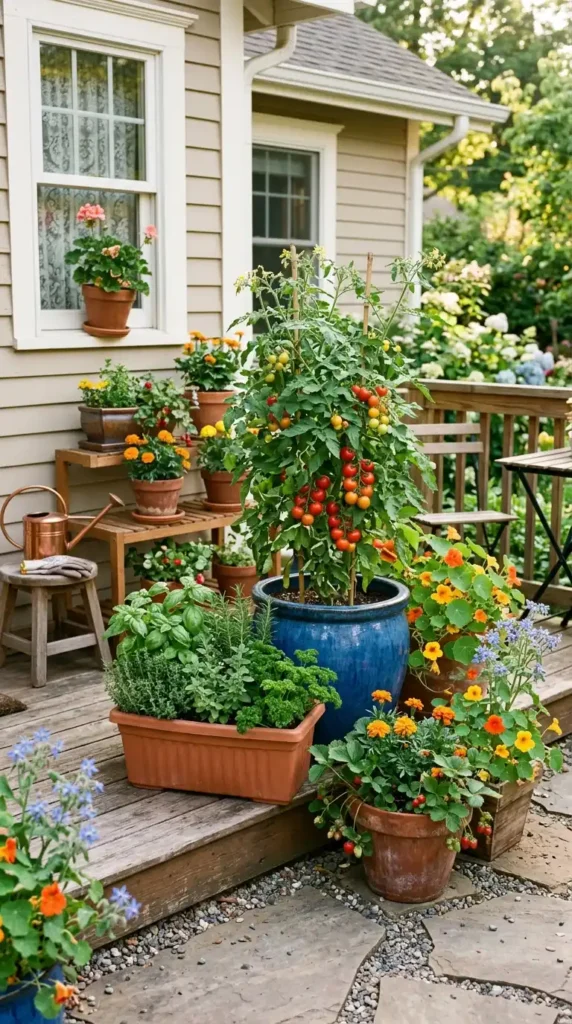
Containers: Incorporate planters into the design to keep it neat, provide interest, and make maintenance easier. Containers are also a great way to grow edibles on patios, balconies, and other small spaces.
Step 2: Plant Selection and Placement
Choosing the right plants is at the heart of foodscaping. You want plants that are both beautiful and productive. Here are some of the best options.
Herbs
Herbs are the easiest way to start foodscaping. They are attractive, fragrant, and useful in the kitchen. Many herbs are also perennials, meaning they come back year after year.
- Lavender: A beautiful edging plant with fragrant flowers that can be used in cooking and crafts.
- Rosemary: An aromatic ground cover or hedge that provides fresh needles for cooking.
- Thyme: A low-growing groundcover that is perfect for between pavers.
- Sage: A compact, aromatic herb with attractive gray-green foliage.
- Oregano: A spreading herb that makes a great groundcover.
- Basil: A colorful and fragrant annual with varieties like African Blue Basil that are also ornamental.
- Mint: A vigorous grower that is best kept in containers to prevent it from spreading.
Vegetables
Many vegetables are surprisingly ornamental. Their foliage, flowers, and fruits can provide color and texture throughout the growing season.
- Kale: Available in shades of green, purple, and blue, kale adds sculptural form and rich color.
- Swiss Chard: Rainbow chard has fabulously colored leaves and stems and can be scattered through a bed, providing both interesting foliage and food.
- Peppers: Pepper plants have attractive foliage and colorful fruits that look great in the garden.
- Tomatoes: Tomato plants can be trained on trellises and cages, adding vertical interest.
- Eggplant: Purple-flowered eggplants have dramatic foliage and fruits.
- Lettuce: Leafy lettuce comes in a variety of colors and textures, making it a great edging plant.
- Cabbage: Purple cabbages add both a sculptural shape and rich color.
- Corn: Corn stalks make a bold backdrop and a natural privacy screen.
Fruits
Fruit trees, shrubs, and vines can provide beauty and bounty for years to come.
- Dwarf Fruit Trees: Apple, pear, peach, plum, and cherry trees add vertical interest. Many dwarf varieties can be grown in containers, making them perfect for smaller spaces.
- Blueberry Bushes: Blueberry bushes have attractive fall foliage and provide a season of juicy berries. They can be used as foundation plants or to line a pathway.
- Strawberries: Alpine strawberries make an excellent groundcover.
- Citrus Trees: Citrus trees can be grown in containers and moved indoors for the winter.
Edible Flowers
Edible flowers add bursts of color while being useful in the kitchen.
- Nasturtiums: Bright flowers with a peppery flavor.
- Pansies: Colorful flowers that can be used in salads.
- Calendula: Bright yellow and orange flowers with edible petals.
- Borage: Blue, star-shaped flowers with a cucumber-like flavor.
- Roses: Rose petals are edible and can be used in salads and desserts.
- Daylilies: Daylily petals are edible and can be used in salads.
Step 3: Design Layout and Hardscaping
The layout of your foodscape should be both functional and beautiful. Here are some key elements to consider.
Pathways
Pathways provide access to your plants and add structure to the garden.
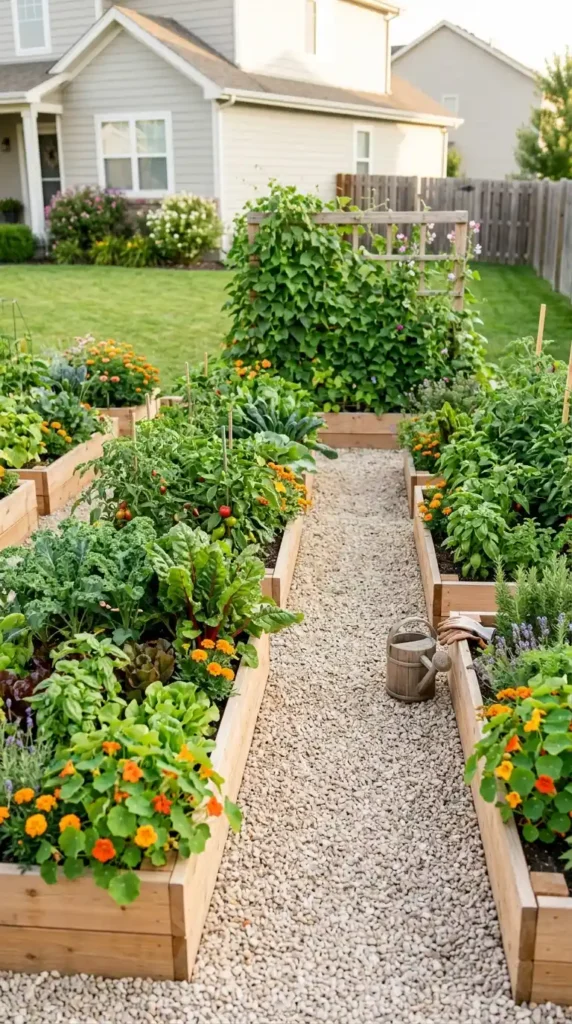
Gravel Paths: Gravel paths are affordable and easy to install. They provide good drainage and a clean, informal look.
Stepping Stones: Stepping stones draw the eye into the space and prevent paths from getting worn or muddy.
Brick Pathways: Brick pathways add a more formal, structured look.
Raised Beds
Raised beds are a great way to organize a foodscape. They make planting, weeding, and harvesting easier. They also provide good drainage and can be placed anywhere.
Wood: Untreated wood is a popular and affordable option.
Stone: Stone raised beds are durable and attractive.
Metal: Corten steel or galvanized metal raised beds add a modern look.
Container Gardens
Containers are perfect for small spaces, patios, and balconies. They can also be used to add interest and structure to a larger foodscape.
Pots and Planters: Use decorative pots and planters to grow herbs, vegetables, and even dwarf fruit trees.
Window Boxes: Window boxes are a great way to grow herbs and edible flowers right outside your kitchen window.
Vertical Elements
Vertical elements add height and interest to a foodscape.
Arbors: Arbors can support climbing beans, cucumbers, and squash. They also add architectural interest and can define different areas of the garden.
Trellises: Trellises can support vining vegetables and add vertical interest.
Tomato Cages: Tomato cages are practical and can also be decorative.
Edging and Borders
Edging helps keep a foodscape looking neat and intentional.
Stone Edging: Stone edging adds a formal, structured look.
Wood Edging: Wood edging is affordable and easy to install.
Living Edging: Use low-growing herbs like lavender or rosemary as edging plants.
Step 4: Seasonal Maintenance and Harvesting
A foodscape requires regular maintenance, just like any other garden. Here are some tips for keeping it looking beautiful and productive.
Watering
Water deeply and regularly, especially during dry spells. Use a soaker hose or drip irrigation to deliver water directly to the roots and reduce evaporation. Group plants with similar water needs together to make watering more efficient.
Fertilizing
Feed your plants with organic fertilizer or compost. Healthy soil produces healthy plants. Add a layer of compost to your beds each spring.
Weeding
Keep on top of weeds. They compete with your plants for water and nutrients. Mulch around your plants to suppress weeds and retain moisture.
Pruning and Deadheading
Prune fruit trees and shrubs to keep them healthy and productive. Deadhead flowers to encourage more blooms.
Harvesting
Harvest regularly to encourage more production. Pick vegetables and herbs when they are at their peak. Share your bounty with friends and neighbors.
Real-World Inspiration
A foodscape can be as simple or as elaborate as you want. Here are a few examples to inspire you.
Front Yard Foodscape
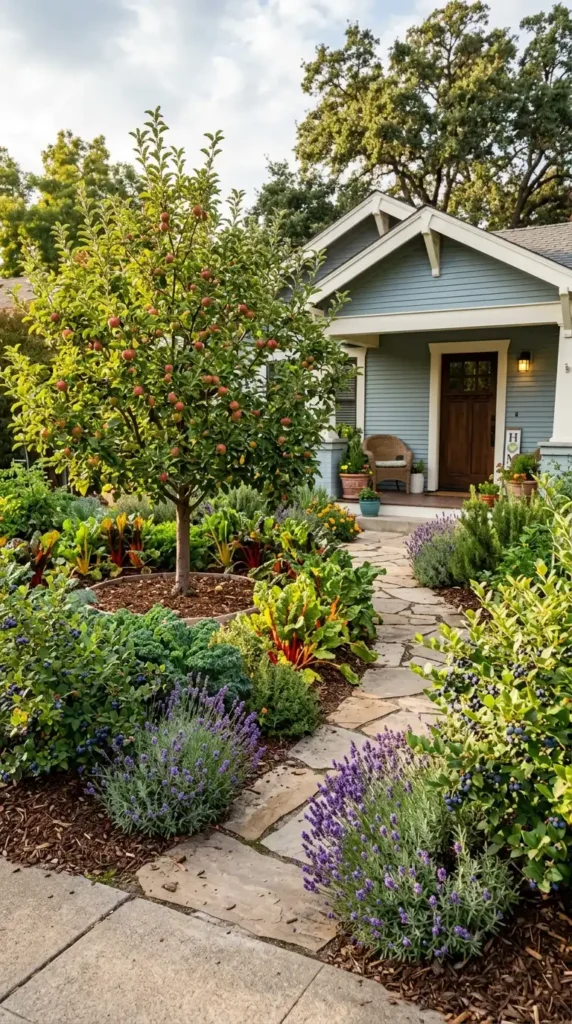
A front yard foodscape can be as beautiful as any traditional flower garden. Use colorful vegetables, herbs, and fruit trees to create a stunning display that also feeds your family. A pathway can lead visitors through the garden, and a bench can provide a place to sit and enjoy the view.
Backyard Kitchen Garden
A backyard kitchen garden is a classic foodscape. Use raised beds, pathways, and arbors to create a beautiful and productive space. Plant your favorite vegetables, herbs, and fruits within easy reach of your kitchen.
Small Space Foodscape
Even a small space can be a foodscape. Use containers, window boxes, and vertical planters to grow edibles on a patio, balcony, or rooftop. A few pots of herbs and tomatoes can make a big difference.
Frequently Asked Questions
1. What is foodscaping?
Foodscaping is a design concept where edibles are intentionally added to your existing framework of ornamentals. It is the integration of edible plants into a decorative landscape.
2. What are the benefits of foodscaping?
Foodscaping provides fresh, homegrown food, reduces grocery costs, supports pollinators, and creates a beautiful, sustainable landscape.
3. What plants are best for foodscaping?
Herbs like lavender, rosemary, and thyme are excellent choices. Vegetables like kale, Swiss chard, and peppers are both beautiful and productive. Fruit trees, blueberry bushes, and edible flowers also work well.
4. Can I foodscape in a small space?
Yes, foodscaping can be done in any space. Use containers, window boxes, and vertical planters to grow edibles on a patio, balcony, or rooftop.
5. How do I design a foodscape?
Start by choosing the right plants for your conditions. Use the principles of good garden design, including repetition, color, texture, and structure. Add hardscaping like pathways, raised beds, and arbors to create a neat, intentional look.
6. Is foodscaping expensive?
Foodscaping can be done on any budget. Start small with a few containers or a small raised bed. Use recycled materials for paths and edging. Over time, you can expand your foodscape as your budget allows.
Related Articles
Japanese Rock Garden Ideas — 7 Serene Designs for a Peaceful Yard
Can You Grow a Tomato Plant Indoors? Yes, Here’s How
The Complete Beginner Tomato Growing Guide (Everything in One Place)
Foodscaping is not just a trend. It is a movement toward more sustainable, beautiful, and productive gardens. By blending ornamentals with edibles, you can create a landscape that is both a feast for the eyes and the table.

Sheikh Hassaan is a digital architect for small businesses and the founder of The Glow Up System. He writes about home decor, garden design, and outdoor living for real American homes – practical ideas that work in actual spaces without oversized budgets.