
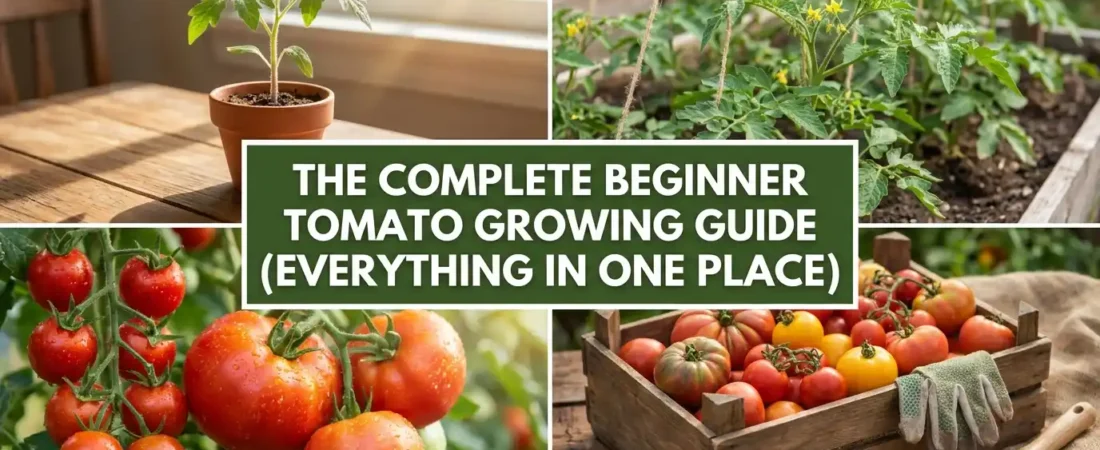
This Beginner Tomato Growing Guide covers everything you need to know to grow healthy, productive tomato plants, even if you’ve never gardened before. From choosing the right variety to watering, feeding, and harvesting, you’ll learn the essential steps for success.
There is nothing quite like the taste of a sun-ripened tomato you grew with your own hands. The flavor is incomparable to anything from the grocery store. But for beginners, growing tomatoes can feel overwhelming. There are so many choices, so many opinions, and so many ways to get it wrong.
This guide simplifies everything. It covers container choice, sunlight, soil, watering, fertilizing, and troubleshooting in one place. Whether you have a sprawling backyard or a small balcony, you can grow delicious tomatoes. Let’s get started.
Table of Contents
Container Choice: The Foundation of Success
The container you choose for your tomato plant is one of the most important decisions you will make. The right container ensures healthy roots, proper drainage, and a bountiful harvest.
Choose Large Pots
Tomatoes need room to grow. Their root systems are extensive, and they need space to spread out. A pot that is too small will restrict root growth, leading to stunted plants and reduced yields. The minimum recommended size for a tomato container is 5 gallons. For larger indeterminate varieties, go with 10 gallons or more.
Ensure Good Drainage
Drainage holes are non-negotiable. Without them, water will pool at the bottom of the pot, suffocating the roots and causing root rot. Make sure your container has several drainage holes at the bottom. You can also add a layer of gravel or small rocks at the base to improve drainage, though this is not strictly necessary if the soil is well-draining.
Different Container Options
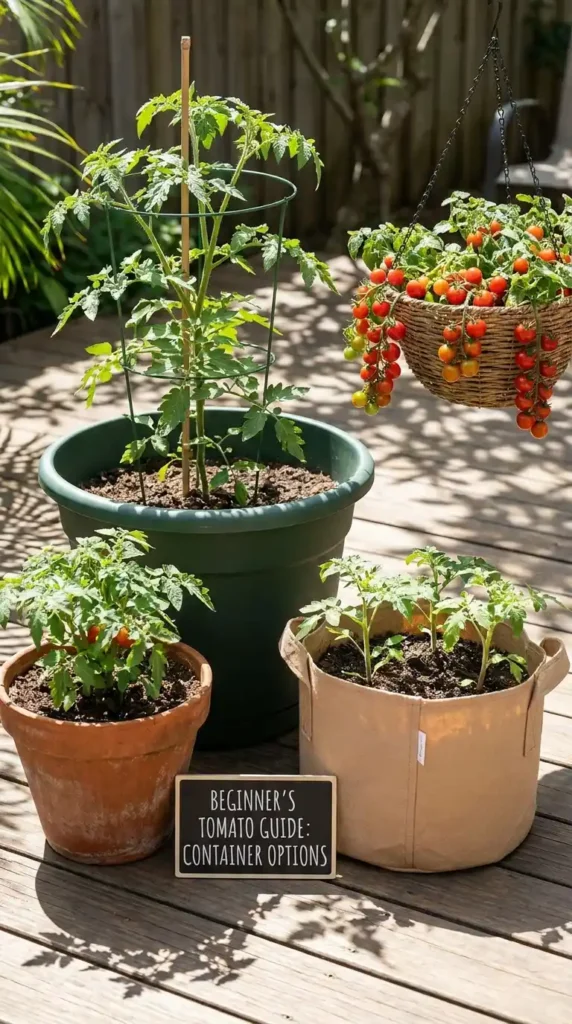
You have several container options, each with its own pros and cons:
- Plastic Pots: Lightweight, affordable, and retain moisture well. They are a great choice for beginners.
- Terracotta Pots: Porous and breathable, which helps prevent overwatering. However, they dry out faster and are heavier.
- Grow Bags: Excellent for tomatoes because they encourage air pruning of roots, preventing root circling. They are portable and affordable.
- Hanging Baskets: A good option for trailing or cherry tomato varieties. Ensure the basket is large enough to hold sufficient soil.
Sunlight: The Energy Source
Tomatoes are sun lovers. They need at least 6 to 8 hours of direct sunlight daily to produce fruit. Choose a spot in your garden, balcony, or patio that receives plenty of sun. If you are growing indoors, consider using a grow light to supplement natural light.
Hanging Baskets for Small Spaces
If you have limited space, hanging baskets are a great option for cherry or trailing tomato varieties. They save ground space and can be hung on a balcony railing or under a pergola. Just make sure the basket is large enough and has good drainage.
Starting Seeds Indoors: Get a Head Start
Starting your tomato seeds indoors gives you a head start on the growing season. It also allows you to choose from a wider variety of tomatoes than what is available at local nurseries.
Provide Light
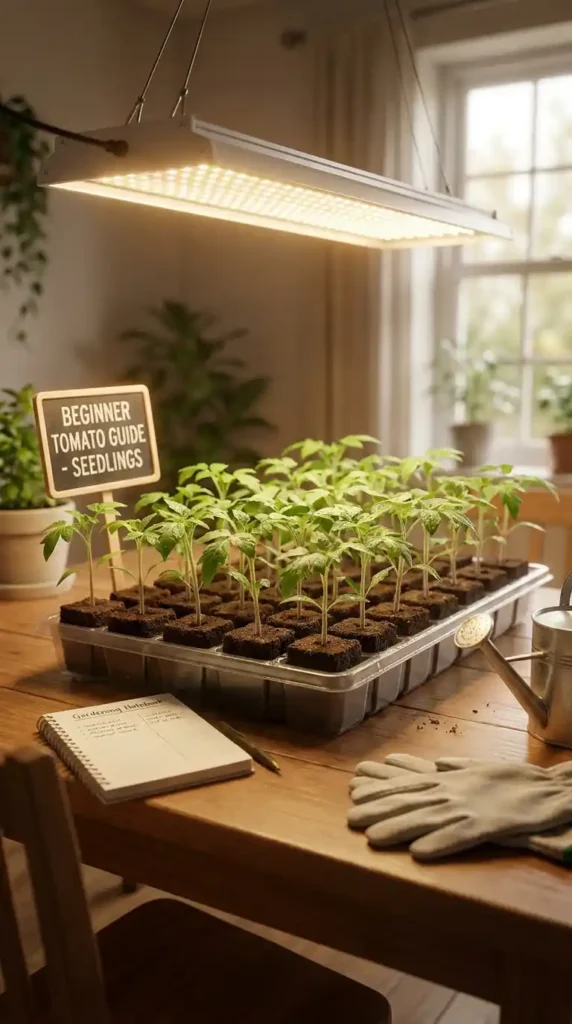
Tomato seedlings need plenty of light to grow strong and healthy. Without enough light, they will become leggy and weak. Place your seedlings in a sunny window or under a grow light. Keep the light source close to the seedlings to prevent them from stretching.
Start Seeds Indoors
Start your tomato seeds indoors 6 to 8 weeks before the last expected frost date in your area. Plant the seeds about a quarter-inch deep in seed-starting mix. Keep the soil moist and warm, around 70 to 75 degrees Fahrenheit. The seeds should germinate in 5 to 10 days.
Transplant Carefully
Once the seedlings have developed their first set of true leaves, they are ready for transplanting into larger pots. Handle the seedlings by their leaves, not the fragile stem. Gently tease the roots apart if they are root-bound.
Harden Off Before Transplanting Outdoors
Before moving your seedlings outside permanently, they need to be hardened off. This process gradually acclimates them to outdoor conditions. Start by placing them outside for a few hours a day in a sheltered spot. Increase the time and sun exposure over the course of a week.
Transplant Sprouts
When the weather has warmed up and the soil is at least 60 degrees Fahrenheit, your tomato plants are ready to go into their permanent containers. Plant them deep. Remove the lower leaves and bury the stem up to the first set of true leaves. Roots will grow along the buried stem, creating a stronger, healthier plant.
Watering: Get It Right Every Time
Watering is one of the most common areas where beginners struggle. Too much or too little water can cause serious problems.
Consistent Moisture
Tomatoes need consistent moisture. Fluctuating soil moisture is the number one cause of blossom end rot. Water deeply and regularly, keeping the soil evenly moist but not waterlogged.
The Finger Test
The best way to know when to water is the finger test. Push your finger into the soil about two inches deep. If the soil feels dry, it is time to water. If it feels moist, wait and check again the next day.
Water the Base
Always water at the base of the plant, not from above. Wetting the leaves can lead to fungal diseases like blight and powdery mildew. Use a watering can with a long spout or a hose directed at the soil. Water deeply until water runs out of the drainage holes.
Watering in Hot Weather
In hot, dry weather, your tomatoes may need daily watering. Container plants dry out faster than garden beds, so check them daily. Mulch helps retain moisture and reduces watering frequency.
Soil and Fertilizing: Feed Your Plants
Tomatoes are heavy feeders. They need nutrient-rich soil and regular fertilizing to produce a bountiful harvest.
Use Quality Potting Mix
Use a high-quality potting mix designed for vegetables or containers. Garden soil is too heavy for pots and does not drain well. A good potting mix contains organic matter, perlite, and vermiculite for aeration and drainage.
Add Fertilizer Regularly
Tomatoes need regular feeding to support their rapid growth and fruit production. Use a balanced, slow-release fertilizer at planting time. Supplement with a liquid fertilizer high in phosphorus and potassium every two weeks once flowering and fruiting begin.
Watch for Nutrient Deficiencies
Yellowing leaves or purple stems can indicate a nutrient deficiency. Yellowing leaves often indicate a nitrogen deficiency. Purple stems can indicate a phosphorus deficiency. Adjust your fertilizing schedule accordingly.
Support and Staking: Keep Plants Upright
Tomato vines need support. Without it, they sprawl on the ground, increasing the risk of disease and making harvesting difficult.
Use a Tomato Cage or Stake
A tomato cage is the easiest option. Place it over the plant when it is still small. Staking involves driving a sturdy stake into the pot and tying the main stem to it as the plant grows.
Train the Plant
As the plant grows, gently tie the main stem to the stake or cage. Remove suckers (side shoots) for indeterminate varieties to encourage upward growth and larger fruit.
Troubleshooting Common Problems
Even with the best care, tomatoes can face problems. Here are the most common issues and how to fix them.
Blossom End Rot
A black, sunken patch on the bottom of the fruit. This is caused by inconsistent watering leading to a calcium deficiency. Keep soil moisture consistent and mulch to retain moisture.
Blossom Drop
Flowers fall off without setting fruit. This is caused by extreme temperatures (above 85°F or below 55°F), stress, or lack of pollination. Provide shade during heat waves and ensure proper watering.
Tomato Hornworms
Large green caterpillars that eat foliage and fruit. Handpick them off the plants or use Bacillus thuringiensis (Bt) for control.
Splitting Fruit
Cracked tomatoes caused by irregular watering followed by heavy rain. Maintain consistent moisture to prevent splitting.
Yellowing Leaves
Often a sign of nitrogen deficiency or overwatering. Adjust watering and fertilizing accordingly.
Frequently Asked Questions About Growing Tomatoes
1. How often should I water tomatoes?
Use the finger test. Water when the top two inches of soil feel dry. In hot weather, this may be daily. In cooler weather, less often.
2. How much sun do tomatoes need?
Tomatoes need at least 6 to 8 hours of direct sunlight daily. They are sun-loving plants.
3. What is the best container size for tomatoes?
The minimum recommended size is 5 gallons. For larger varieties, use 10 gallons or more.
4. When should I start tomato seeds indoors?
Start seeds 6 to 8 weeks before the last expected frost date in your area.
5. How do I prevent blossom end rot?
Maintain consistent soil moisture through regular watering and mulching.
6. Should I remove tomato suckers?
For indeterminate varieties, remove suckers to encourage upward growth and larger fruit. For determinate varieties, leave them alone.
Related Articles
How to Water Tomatoes Finger Test: A Simple Guide for Healthier Plants
What Causes Blossom End Rot on Tomatoes? (It’s a Watering Problem)
Companion Plants for Tomatoes That Boost Your Harvest
Growing tomatoes is a journey. Start with the basics, learn from your mistakes, and enjoy the delicious rewards of your labor. Your first homegrown tomato will be the sweetest you have ever tasted.

Sheikh Hassaan is a digital architect for small businesses and the founder of The Glow Up System. He writes about home decor, garden design, and outdoor living for real American homes – practical ideas that work in actual spaces without oversized budgets.