
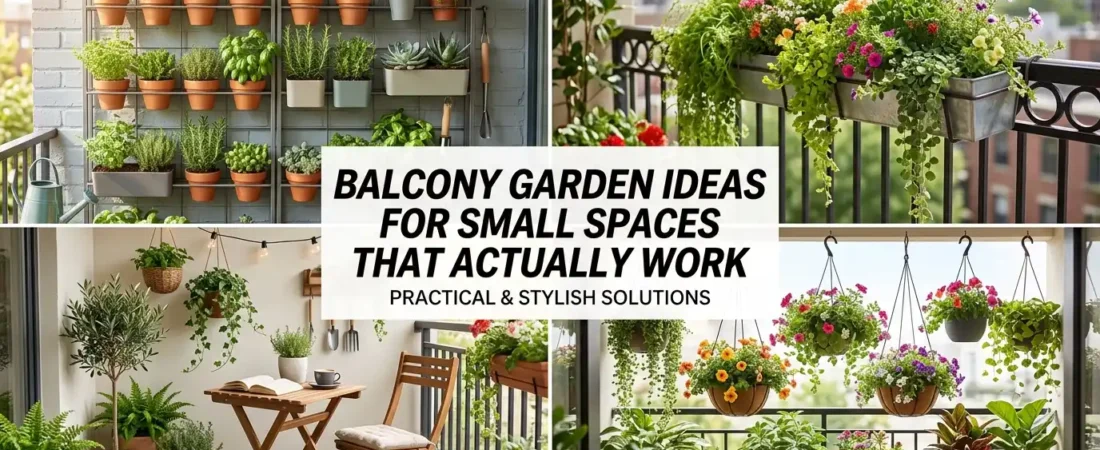
Most apartment balconies in the US are small — somewhere between 30 and 60 square feet of concrete or wood decking that gets ignored because it feels too small to do anything meaningful with. Balcony garden ideas for small spaces prove otherwise. A 4 by 8 foot balcony has enough room for a vertical herb garden, two container tomato plants, a small bistro table with one chair, and a string of lights overhead — everything you need to turn an overlooked strip of outdoor space into the best spot in the apartment.
These balcony garden ideas for small spaces cover every balcony size and every level of gardening experience — from a single railing planter box for a beginner through vertical growing systems, container vegetable gardens, and the specific furniture and lighting choices that make a small balcony feel like a genuine outdoor room.
Table of Contents
What Works on a Small Balcony and What Does Not
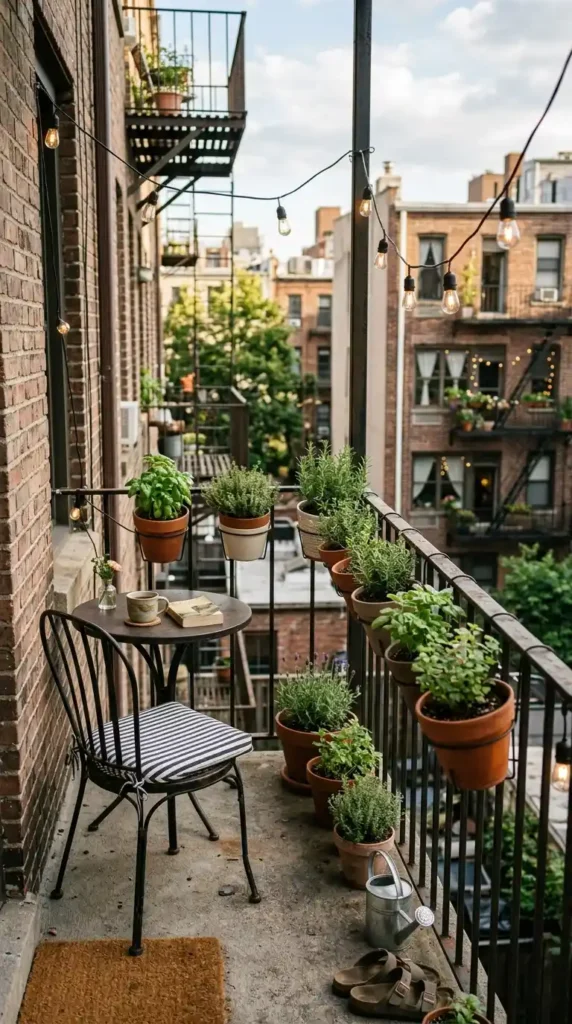
The mistake most people make on a small balcony is buying furniture first and plants second. A two-person bistro set on a 4 by 6 foot balcony leaves no room for any plants, any movement, or any sense that the space is anything other than a place to sit uncomfortably close to the railing. The balconies that look and feel the best in small apartments treat plants as the primary element and furniture as the secondary one — one chair, not two, leaves room for a vertical planter, a railing box, and enough floor space that the balcony feels like a garden you happen to sit in rather than a chair you happen to have outside.
The weight limit on your balcony is the practical constraint that most apartment gardeners discover after they have already made their purchasing decisions. Most apartment balconies in the US are rated for 40 to 60 pounds per square foot. Wet soil is heavy — a 12-inch ceramic pot with moist potting mix can weigh 25 to 35 pounds. Before filling a balcony with large containers check your lease and your building’s structural specifications. If weight is a concern use lightweight plastic or resin containers with a peat-free potting mix that weighs less when dry.
Sunlight is the other constraint that determines everything else. A south-facing balcony that gets six or more hours of direct sun can grow tomatoes, peppers, and herbs without difficulty. A north-facing balcony with two to three hours of indirect light needs shade-tolerant plants — ferns, hostas, impatiens, and mint. Before buying any plants spend one day tracking how many hours of direct sun the balcony receives and in which direction. That single observation prevents the most common small balcony gardening failure: buying sun-loving plants for a shaded space.
1. Railing Planters That Use Space You Already Have
✦ Best for: adding plants to a small balcony without using any floor space
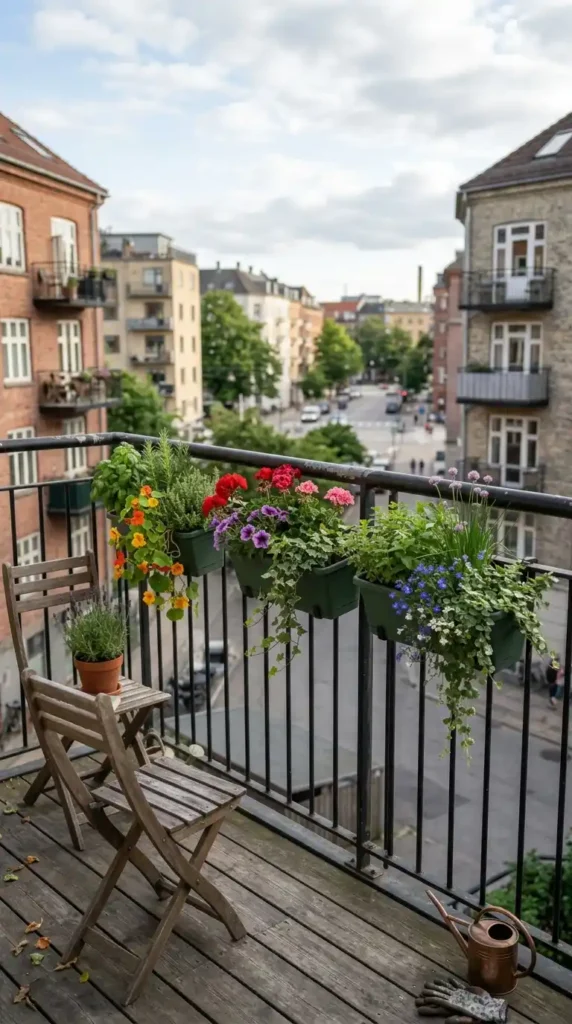
Railing planters are the highest-value addition available on a small balcony because they use the one surface that would otherwise sit unused — the top of the balcony railing — and turn it into growing space without taking a single inch of floor area. A standard 8-foot balcony railing holds three or four 24-inch window box planters, which gives you 6 to 8 linear feet of growing space at eye level where the plants are visible from inside the apartment as well as from the balcony itself.
Railing planters clip, hook, or bracket onto most standard balcony railings. Check that your railing style is compatible before buying — most railing planters work on flat-top railings and round-tube railings but some bracket styles do not fit square or decorative railings. The planter should sit inside the railing rather than hanging over the outside edge — a planter hanging over the outside of the railing is a safety concern and is prohibited in most apartment leases.
The plants that work best in railing planters on a small balcony: herbs perform exceptionally well in the shallow depth of most railing boxes — basil, thyme, oregano, and parsley all thrive in 6 to 8 inches of growing depth and are immediately useful in the kitchen. Trailing plants like calibrachoa, bacopa, and trailing nasturtiums spill attractively over the front of the planter and add color at railing height. Avoid tall plants — anything over 18 inches in a railing planter becomes top-heavy and unstable in wind.
Water retention in railing planters is the most common maintenance challenge — shallow containers dry out faster than deep ones and require more frequent watering in hot weather. A potting mix with added coconut coir or water retention crystals reduces watering frequency significantly. A self-watering railing planter with a built-in reservoir is worth the additional cost on a high-floor exposed balcony where wind accelerates soil drying.
2. Vertical Planter Pocket System for a Full Wall of Greenery
✦ Best for: growing a large number of plants in a very small floor footprint by going vertical
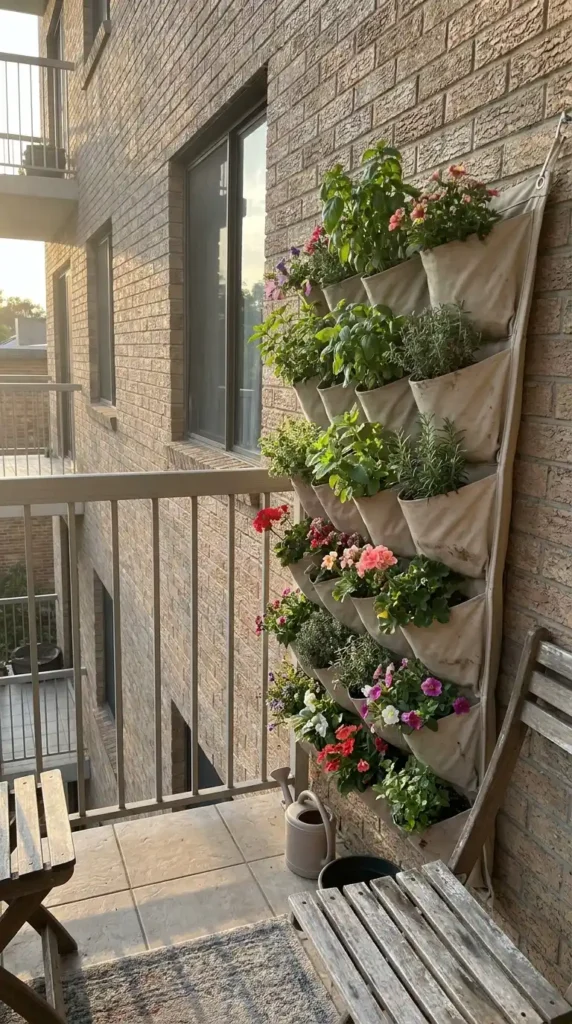
A vertical pocket planter hung on the balcony wall turns 2 square feet of wall space into growing room for 12 to 20 individual plants depending on the system’s size. Felt or fabric pocket planters hook or nail to the wall and hold individual plants in separate pockets that each have their own growing medium — the roots of adjacent plants do not compete with each other which means each plant performs as well as it would in its own individual container.
Before attaching anything to the balcony wall check your lease. Most apartment leases prohibit drilling or permanently attaching fixtures to walls. Command hooks rated for outdoor use hold lighter fabric pocket planters without any permanent damage. Freestanding vertical planter towers — stackable planters on a single pole that stands on the floor — avoid the wall attachment issue entirely and can be moved inside during winter or when moving out.
The plants that suit vertical pocket planters on a small balcony best: strawberries perform exceptionally well in vertical pockets because the runners and fruit hang attractively from the pockets at the front. Lettuce, spinach, and shallow-rooted salad greens grow quickly in the small pocket volumes and can be cut repeatedly through the season. Herbs at the top of the planter where light is strongest and moisture-loving plants like mint toward the bottom where drainage from upper pockets keeps the lower pockets consistently moist.
3. Container Herb Garden That Earns Its Place on Every Balcony
✦ Best for: growing something genuinely useful on a small balcony that justifies the space it takes and gets used regularly
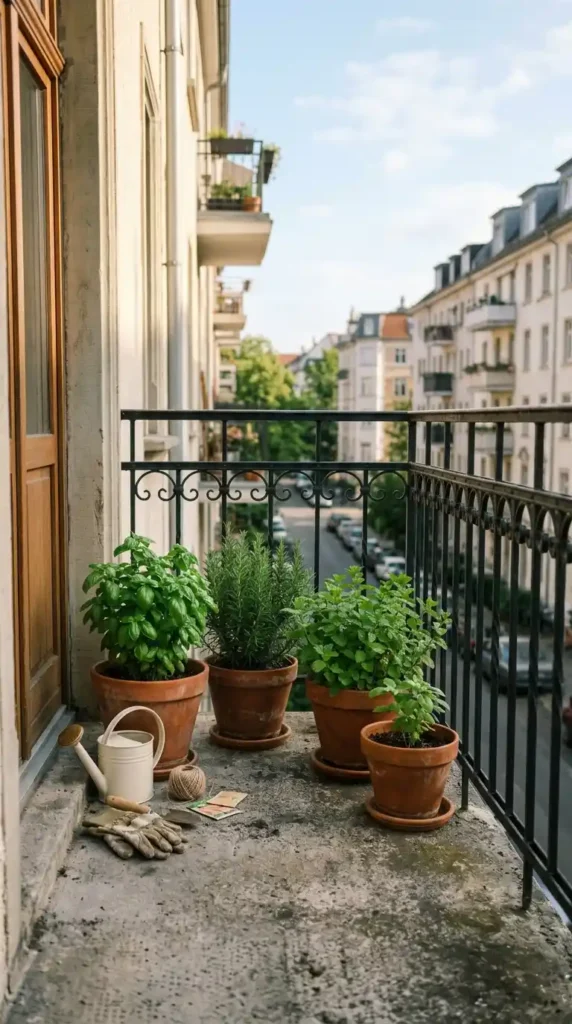
A container herb garden is the small balcony garden that actually changes how you cook — fresh basil, rosemary, mint, and chives a step outside the kitchen door get used in meals in a way that herbs bought from the grocery store rarely do. Three or four terracotta pots in different sizes grouped together in a sunny corner of the balcony hold enough herbs for a household that cooks regularly and take up a floor footprint of approximately 2 square feet.
The herb combinations that grow best together in the same container or close grouping: Mediterranean herbs — basil, rosemary, thyme, and oregano — share the same preference for full sun and well-drained soil and can be grown together in a single 12-inch pot or in separate pots grouped closely together. Mint should always be in its own pot — it spreads aggressively through its roots and will crowd out anything sharing its container within one growing season.
The single most important thing for a balcony herb garden: drainage holes in every container. Herbs die from overwatering far more often than from underwatering in a container environment. A pot without drainage holes holds water at the root zone which causes root rot regardless of how carefully the watering is managed. Terracotta pots are the best herb container material because the porous clay wicks excess moisture from the soil and creates the dry conditions that Mediterranean herbs prefer.
4. One Tomato Plant in a Container Done Properly
✦ Best for: growing food on a small balcony that gets at least six hours of direct sun per day
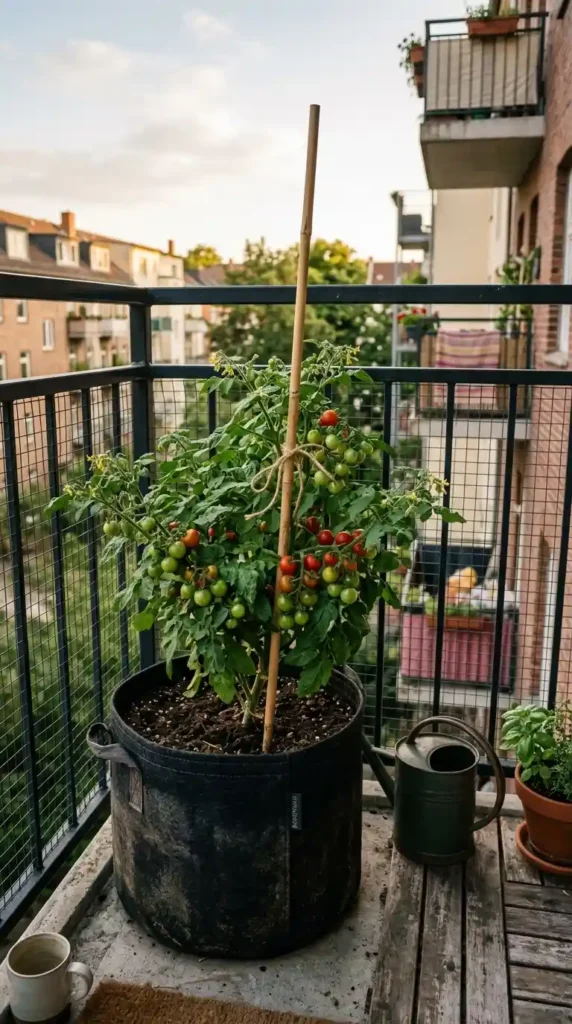
One tomato plant done properly produces more fruit and causes less frustration than three tomato plants done incorrectly. The most common small balcony tomato mistake is choosing the wrong variety — full-size indeterminate tomatoes need a minimum 5-gallon container, a sturdy 6-foot stake or cage, and 8 or more hours of sun to produce well. On most apartment balconies the container is too small, the support is too flimsy, and the sun is insufficient.
The tomato varieties that work best on a small balcony: Tumbling Tom, Tiny Tim, Patio, and Tumbler are all bred specifically for container growing and stay under 24 inches tall without staking. They produce cherry or grape-sized tomatoes continuously from June through first frost and perform well in 3 to 5 gallon containers. A single Tumbling Tom in a 5-gallon container in a south-facing spot produces enough cherry tomatoes for a small household to eat fresh throughout summer.
Watering is the most labor-intensive part of balcony tomato growing — a 5-gallon container in summer heat needs watering every day and sometimes twice a day at peak season. A self-watering container with a bottom reservoir solves this problem — the plant draws water upward from the reservoir as needed and the reservoir typically needs refilling every two to three days rather than daily. This single equipment choice makes the difference between a thriving balcony tomato plant and a stressed one.
5. Trailing and Climbing Plants That Fill Vertical Space
✦ Best for: adding lush greenery and color to a small balcony by using the vertical dimension rather than the limited floor space
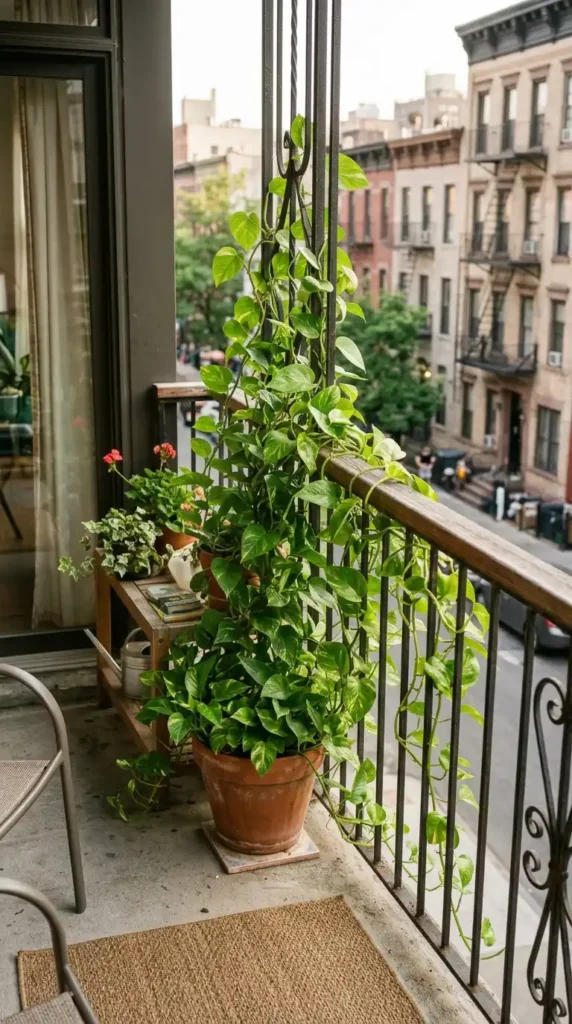
Trailing and climbing plants do more visual work per dollar and per square foot of floor space than any other plant category on a small balcony — they fill vertical space naturally without requiring shelving or structures, create lush visual abundance from a single pot, and make a small balcony feel significantly more garden-like than the same space filled with individual upright plants in separate containers.
The trailing plants that perform best on a small apartment balcony: sweet potato vine in chartreuse or purple produces enormous tropical-looking foliage from a single 3-gallon container and trails 4 to 6 feet in a single season. Nasturtiums trail 2 to 3 feet, produce edible flowers from June through frost, and grow easily from seed scattered directly in any container. Bacopa and calibrachoa trail over the edges of railing planters and produce tiny flowers continuously all season with minimal deadheading.
For climbing plants on a balcony the railing itself is the support structure — no additional trellis needed. A morning glory, black-eyed Susan vine, or climbing nasturtium planted in a floor container beside the railing will weave through the railing bars naturally as it grows and cover 4 to 6 linear feet of railing with foliage and flowers by midsummer. A single packet of morning glory seeds started indoors in April and transplanted to the balcony in May costs under $3 and covers an entire railing section by July.
6. Low Maintenance Balcony Garden for Anyone Who Travels or Forgets to Water
✦ Best for: a balcony garden that stays alive and looks decent even with inconsistent attention
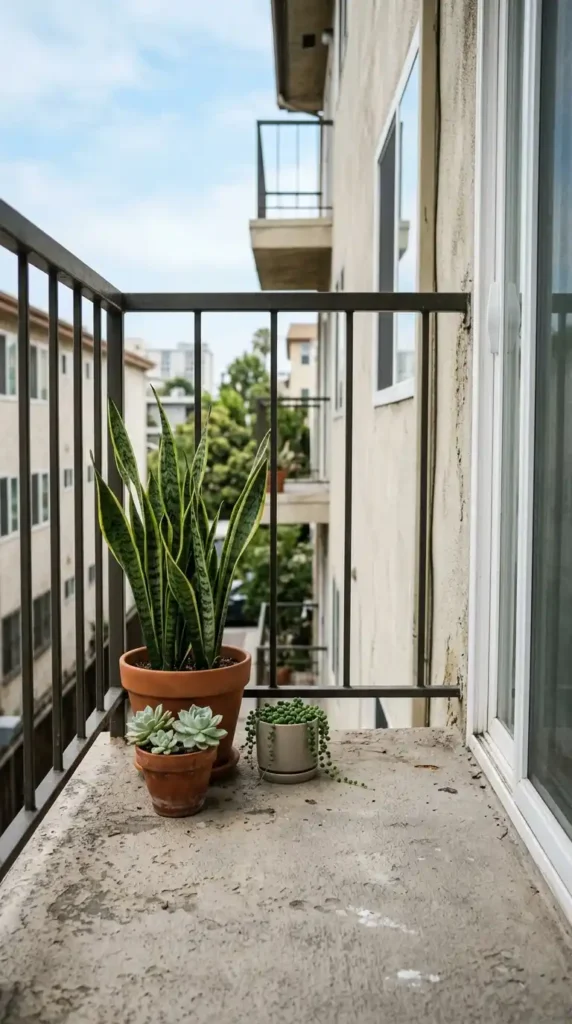
A balcony garden that requires daily watering and constant attention is a balcony garden that looks neglected by August for most working adults. The most reliable small balcony gardens are built around plants that genuinely tolerate intermittent care — not plants that technically survive neglect but look terrible doing it, but plants that continue looking healthy and attractive even when watering is inconsistent.
The genuinely low maintenance balcony plants that still look good: sedums and succulents in a sunny spot — these store water in their leaves and tolerate two to three weeks without watering once established in a well-draining container. Snake plant in a shaded balcony spot — one of the most drought-tolerant houseplants available that also does well outdoors in summer temperatures above 50 degrees. Agapanthus in a sunny balcony produces beautiful blue or white flowers in summer and requires watering only every five to seven days once established.
A drip irrigation timer attached to an outdoor tap or to a large reservoir container is the most practical low-maintenance system for a small balcony garden — it waters automatically on a set schedule regardless of whether the gardener is home or has remembered. A basic battery-powered timer with drip lines costs $30 to $60 and eliminates the most common cause of balcony garden failure in small apartments.
7. Making the Small Balcony Feel Like a Real Outdoor Room
✦ Best for: finishing the balcony garden so it feels like a genuine outdoor retreat rather than just a place where plants happen to be
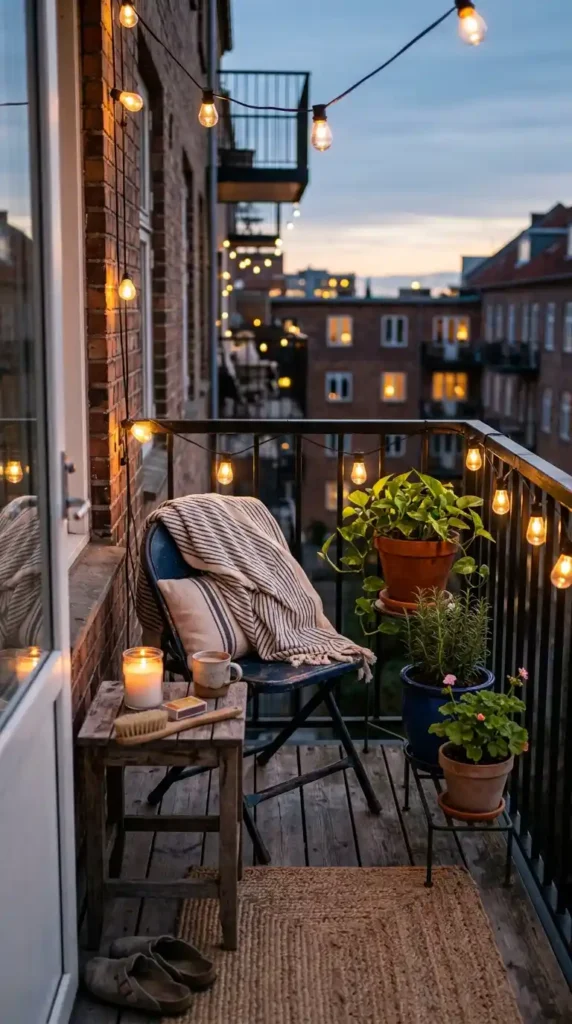
Plants alone make a balcony a garden. Plants with the right finishing elements make it a room. The finishing touches that most directly create an outdoor room feeling on a small balcony cost almost nothing and take an afternoon to set up — but they change how much time you actually spend on the balcony, which is ultimately the measure of whether the garden is working.
String lights:
A single strand of warm white string lights hung across the top of the balcony from one wall to the railing creates the most impactful evening atmosphere available on a small balcony at minimal cost. Battery-operated string lights require no outdoor outlet and cost $10 to $20. The warm light makes plants look lush and the balcony feel genuinely inviting after dark.
One chair that fits:
One well-chosen chair fits on almost any balcony and is more comfortable and more used than two chairs that leave no room to sit comfortably. A folding sling chair, a small rocking chair, or a simple wooden garden chair takes up 18 by 24 inches of floor space — enough to leave room for plants and movement on a 4-foot-deep balcony.
An outdoor rug:
A simple outdoor rug in a natural fiber or weather-resistant material covers the concrete balcony floor and immediately makes the space feel like a room rather than a utility area. A 3 by 5 foot rug costs $20 to $50, fits most small balconies without overpowering the space, and makes bare feet on the balcony genuinely comfortable.
Frequently Asked Questions
What can I grow on a small apartment balcony?
A small apartment balcony that receives at least four to six hours of direct sun can grow herbs including basil, thyme, rosemary, and mint, cherry tomatoes in a 5-gallon container, salad greens and lettuce in a window box, peppers in a 3-gallon container, strawberries in a vertical pocket planter, and flowering annuals for color and pollinators. A shaded balcony with two to four hours of indirect light suits ferns, impatiens, coleus, mint, and shade-tolerant houseplants moved outside for summer. According to the American Community Gardening Association, container vegetable gardening on balconies and patios has grown significantly among urban renters over the past decade with herbs and tomatoes consistently ranking as the most popular and most productive crops for small container growing.
How do I start a balcony garden as a beginner?
The simplest starting point for a beginner balcony garden: buy one railing planter and one bag of potting mix and plant three herb seedlings from the garden center — basil, mint in its own pot, and either rosemary or thyme. Water when the top inch of soil feels dry. Harvest regularly by pinching stems rather than pulling leaves. This three-herb beginning costs under $20, takes 20 minutes to set up, and teaches the fundamentals of container growing — watering frequency, sunlight requirements, and harvest technique — before investing in more plants or more complex setups.
Can I have a garden on a north-facing balcony?
Yes — a north-facing balcony that receives limited direct sunlight can still support a genuinely beautiful garden with the right plant selection. Shade-tolerant options that perform well: mint, chives, and cilantro among herbs. Lettuce, spinach, and kale among vegetables — they actually prefer cooler conditions and partial shade in hot summer climates. Ferns, hostas, and impatiens for foliage and flower color. Begonias for continuous flowering in shade. The north-facing balcony garden looks different from a sunny balcony garden but it can be equally lush and equally rewarding with plants chosen specifically for its light conditions.
How do I water a balcony garden when I am away?
The most reliable options for watering a balcony garden during absences: self-watering containers with built-in reservoirs that the plant draws from as needed — most hold three to seven days of water depending on pot size and temperature. A battery-powered drip timer connected to a reservoir container or outdoor tap that automatically waters on a set schedule. Water-retaining gel crystals mixed into the potting mix that absorb water and release it slowly over days. Globe-style water spikes inserted into each pot that hold a reservoir of water and release it slowly. For absences longer than a week a neighbor or friend with a simple watering schedule is still the most reliable option for a balcony garden with multiple containers.
More Garden and Outdoor Ideas
→ Container Garden Plants for Shade That Thrive in Pots
→ Garden Border Ideas That Make Every Bed Look Designed
→ Small Apartment Ideas That Make Every Square Foot Count
→ Garden Path Ideas for a More Beautiful Backyard
Start with one railing planter and three herbs. Once those are alive and you are using them in the kitchen the rest of the balcony garden follows naturally.

Sheikh Hassaan is a digital architect for small businesses and the founder of The Glow Up System. He writes about home decor, garden design, and outdoor living for real American homes – practical ideas that work in actual spaces without oversized budgets.