
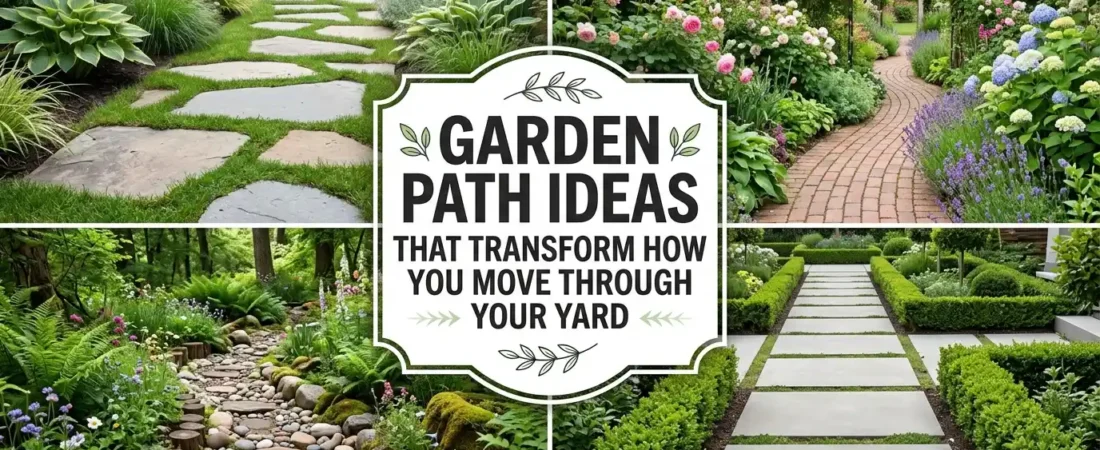
A path does more than give you somewhere to walk — it determines the entire experience of moving through a garden, the pace at which you move, the plants you notice along the way, and the sense of arrival when you reach a seating area, a gate, or a feature at the end of it. Garden path ideas that genuinely improve a garden treat the path as a design element as important as any planting or structure, choosing materials and layouts that suit the garden’s character rather than simply filling the practical need for a dry surface to walk on.
This guide covers garden path ideas organized by material and style — from the free and naturalistic grass path through the most permanent and most beautiful stone and brick options — with specific guidance on width, installation, and which garden styles each one suits best.
Table of Contents
Why the Path Material and Layout Matter as Much as the Plants
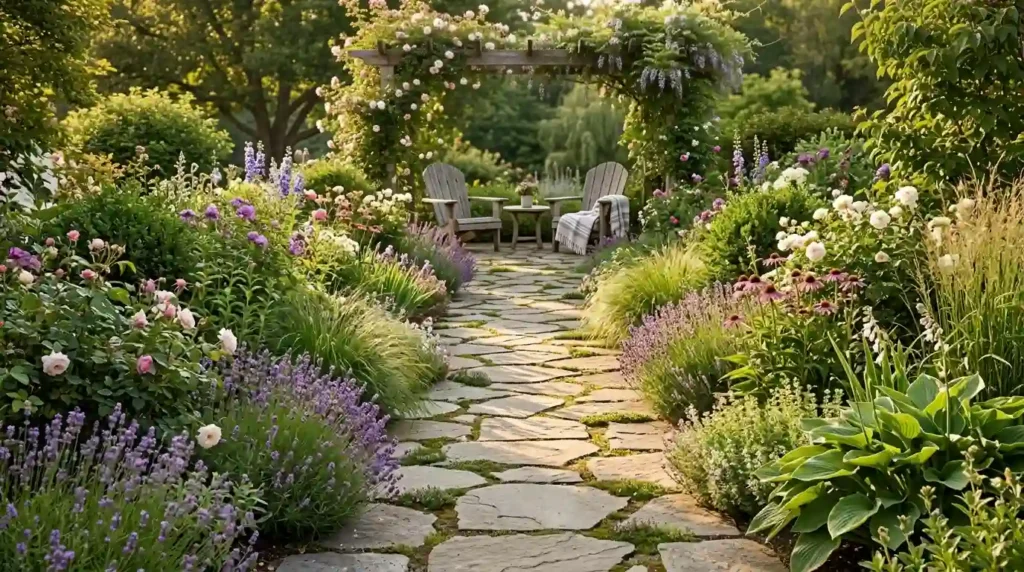
Path layout determines the pace of the garden. A straight path between two points creates the fastest and most purposeful route — appropriate between a gate and a front door or between a kitchen door and a vegetable garden where the journey is functional. A curving or winding path slows movement, creates anticipation, and allows the garden to be experienced as a sequence of views rather than as a space to be crossed. The path layout choice makes a garden feel either like a designed environment or like an outdoor room with a practical access route.
Path width determines how the path feels to use and how it reads from the rest of the garden. A path narrower than 24 inches feels cramped and functional — sufficient for a secondary garden path used occasionally but not comfortable for regular use. A path of 36 inches accommodates a single person comfortably with planted borders brushing the edges — the ideal width for a cottage garden path where slight contact with the planting is part of the experience. A path of 48 to 60 inches accommodates two people side by side and suits a formal garden or a main approach path.
Path material should suit the garden’s overall material palette — the same principle that applies to any other design decision in the garden. A contemporary garden with clean-edged raised beds and steel edging reads best with large-format cut stone or concrete pavers in a regular pattern. A cottage garden reads best with irregular flagstone, brick, or a grass path. A woodland garden reads best with bark mulch or stepping stones set into the ground surface.
1. Irregular Flagstone for the Most Timeless Garden Path
✦ Best for: cottage, traditional, and naturalistic gardens where an organic irregular path suits the planting style
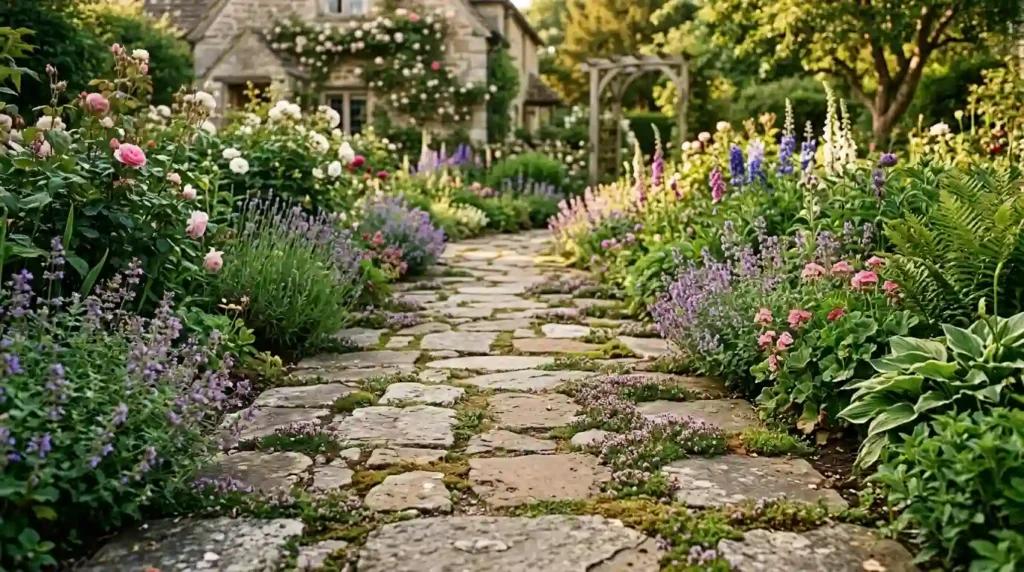
Irregular flagstone — natural stone slabs in random sizes and shapes set into a prepared base — creates the most timelessly beautiful garden path available and the one most associated with well-designed cottage and traditional gardens. The irregular joint pattern between stones creates an opportunity for low ground-cover plants — thyme, creeping chamomile, corsican mint, or moss — to establish between the stones, softening the path surface and creating the specific quality of a garden path that looks as though it has been there for generations.
The stone types that work best for garden paths: Pennsylvania bluestone for its flat face and blue-gray color that suits almost any garden palette. Tennessee crab orchard stone for its warm red-orange tones that suit rustic and farmhouse garden styles. Local limestone or sandstone for the most sustainable sourcing and the most natural integration with the regional landscape. Any of these in random sizes from 12 to 24 inches across create the most naturalistic result.
Installation on a properly prepared base is the difference between a flagstone path that stays level for decades and one that shifts and wobbles within a year. Excavate to 4 to 6 inches below the finished path surface, compact the subbase, add 2 to 3 inches of compacted gravel, and set the stones in a 1-inch sand or stone dust setting bed. Each stone should be stable without rocking when weight is applied before any jointing material is added.
Cost: $3 to $8 per square foot for the stone material plus installation cost of $8 to $15 per square foot for professional installation, or significantly less for DIY. Flagstone is one of the most DIY-accessible path materials for confident weekend project builders because individual stones can be moved and adjusted until the pattern is right before the base is finalized.
2. Brick Paths That Age More Beautifully Than Any Manufactured Alternative
✦ Best for: formal, traditional, and cottage garden styles where brick suits the home’s architectural material
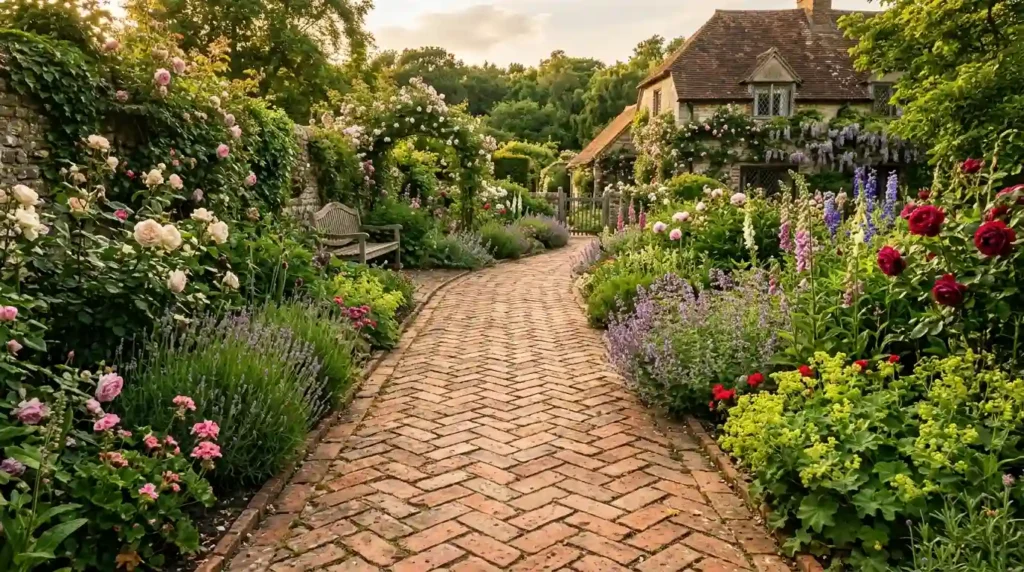
Brick garden paths have been used continuously in American and European gardens for centuries because brick suits a wider range of garden and architectural styles than almost any other path material and because reclaimed brick genuinely improves in appearance with each passing year rather than degrading. A brick path that has been in place for thirty years looks more beautiful than it did on installation day — the weathering, moss colonization in shaded joints, and color variation that develops over time creates the specific aged quality that manufactured materials cannot replicate.
Brick laying patterns create different visual effects and different path characters. Running bond — bricks laid end-to-end in parallel rows — is the simplest and most economical pattern and creates a path that reads as traditional without being formal. Herringbone — bricks laid at 45 degrees to the path direction in a zigzag pattern — is the most decorative and most formal pattern and creates more visual interest than running bond at the cost of more complex cutting at the path edges. Basket weave — groups of two or three parallel bricks alternating direction — creates a more contemporary geometric effect.
Reclaimed brick from salvage yards produces the most beautiful brick paths — the color variation, weathered faces, and aged surface of reclaimed brick cannot be matched by new brick regardless of how carefully the new brick is selected. Budget $0.50 to $2.00 per brick for reclaimed material depending on source and region, with local salvage yards typically offering better prices than landscape supply centers.
3. Stepping Stones Set in Lawn for the Most Natural Path Feeling
✦ Best for: lawn gardens where a path through the grass is needed without dividing the lawn visually
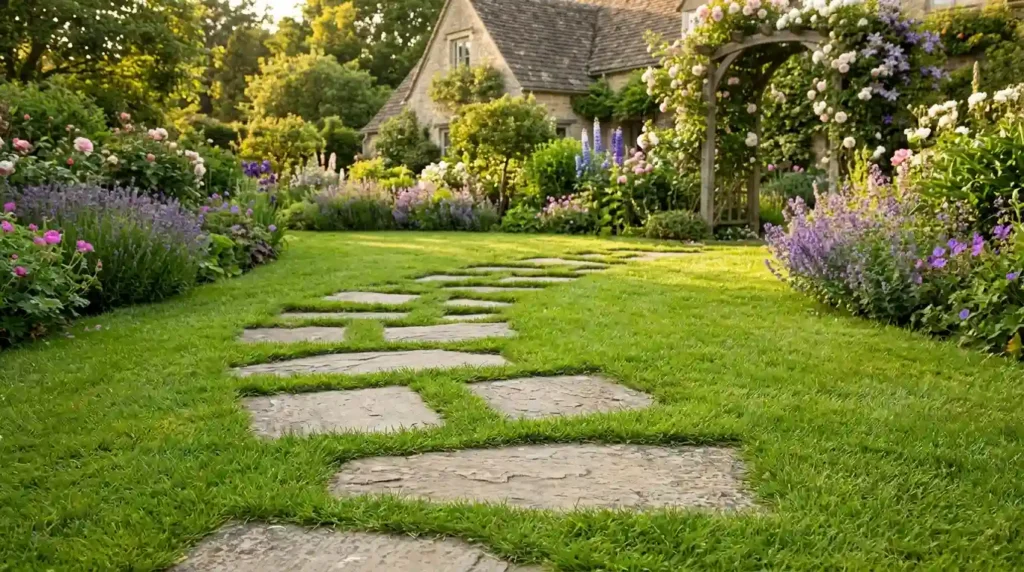
Stepping stones set into a lawn surface flush with the grass level create a path that preserves the lawn’s visual continuity while providing a dry walking surface on a route used regularly enough to wear the grass if stones were not present. The stones read as part of the lawn rather than as a separate hard surface element — the grass grows between and around them and within a season the installation looks as though the stones have always been there.
Spacing is the critical design decision for stepping stones — the stones must be positioned at the natural stride length of the person who will use the path most frequently. Walk the intended path naturally and mark where each foot lands — this is the correct spacing between stone centers. Stones spaced at the wrong stride length feel awkward to walk on and cause the user to skip stones or take extra steps, which reads immediately as a path that was designed without accounting for how people actually walk.
Installation: mark the position of each stone on the lawn surface, cut around the stone with a half-moon edger, remove the turf and 2 to 3 inches of soil from the marked outline, set the stone in the excavation on a sand base so its top surface sits flush with or 5mm below the lawn surface — slightly below grade allows the mower to pass over without hitting the stone edge. Check level and adjust the sand base until each stone is perfectly stable.
4. Gravel Paths for Low-Cost Drainage and a Mediterranean Garden Feel
✦ Best for: dry gardens, Mediterranean and gravel garden styles, and paths that need excellent drainage
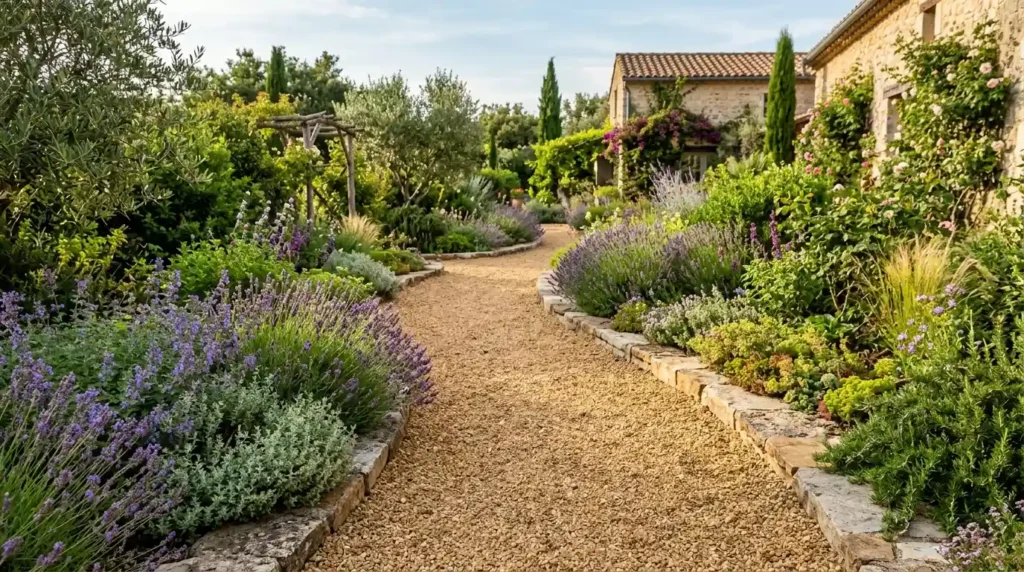
Gravel is the lowest-cost path material that still looks genuinely designed when installed correctly — significantly more affordable than stone or brick per square foot while providing the same drainage benefit and a similar aesthetic weight in a garden composition. The specific gravel tone creates the garden’s entire character: warm pea gravel in gold and honey tones creates the Mediterranean aesthetic. Grey angular crushed stone creates a more contemporary and more industrial character. White marble chip creates the most formal and most reflective result.
A gravel path without a solid edging material to contain it spreads into planted borders, gets kicked across the lawn, and gradually thins in the center from foot traffic redistributing the gravel to the edges. Steel, aluminum, or brick edging on both sides of a gravel path is not optional — it is what makes the difference between a gravel path that looks designed and one that looks unfinished and creates perpetual maintenance problems.
Landscape fabric beneath gravel paths is a contested recommendation — it prevents weed growth in the first two to three years but once organic material accumulates on top of the fabric the weeds begin to root in the top layer of organic matter rather than in the soil below, making the fabric pointless while making it impossible to rake the gravel without disrupting the fabric below. A 4-inch depth of gravel on a well-prepared compacted base without fabric is more durable and easier to maintain long-term.
5. Cheap DIY Garden Path Ideas That Look Better Than They Cost
✦ Best for: budget gardens and weekend projects where cost is the primary constraint
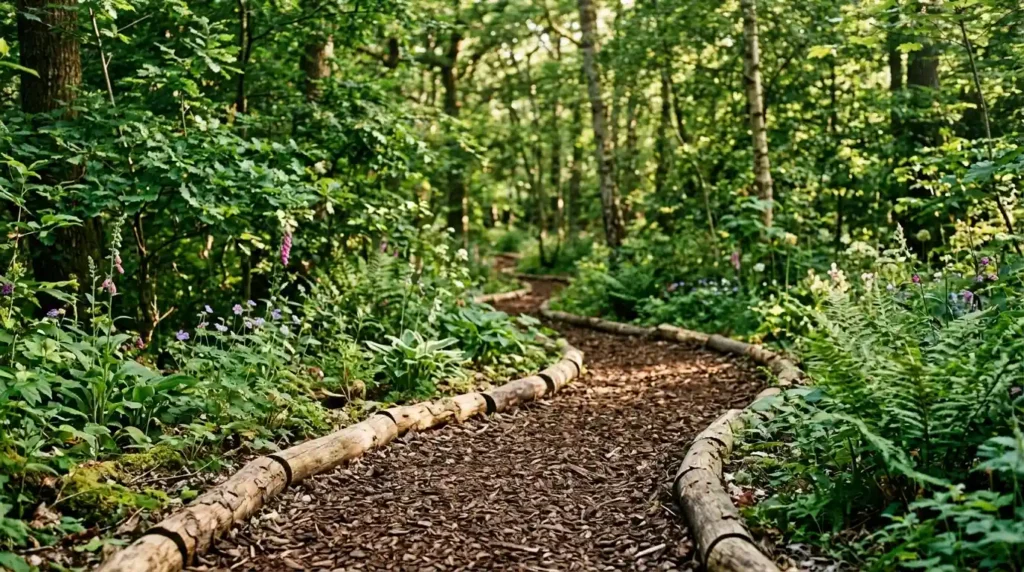
Several genuinely attractive garden path solutions cost a fraction of stone or brick while looking considerably better than their price point would suggest. The key in every case is correct installation rather than expensive materials.
Bark mulch path ($0.30 to $0.80 per square foot):
A 3 to 4 inch depth of hardwood bark mulch contained between log edging or timber boards creates a genuinely attractive woodland or naturalistic garden path at the lowest possible cost. The mulch needs replenishing every 2 to 3 years as it decomposes, which is both the limitation and the advantage — the mulch adds organic matter to the surrounding soil as it breaks down and the renewal gives the opportunity to reshape the path if needed.
Concrete stepping stones ($1.50 to $4.00 per stone):
Pre-cast concrete stepping stones in 18 to 24 inch diameter rounds or squares set into the lawn or a gravel bed at natural stride spacing create a clean, durable path that looks more designed than its cost warrants when installed at the correct spacing and slightly below grade. Round concrete stepping stones in a gravel garden bed with planted borders create a surprisingly sophisticated result for under $50 in materials for a 20-foot path.
Grass path between planted borders ($0 — existing lawn):
A mown grass path between two planted borders costs nothing if the lawn is already established — simply mow a path width of 36 to 48 inches through the area and allow plants to fill in on either side. A grass path with crisp-cut edges and lush spilling planting on both sides is one of the most beautiful garden path types available regardless of budget.
6. Large Format Concrete Pavers for a Clean Contemporary Path
✦ Best for: contemporary and modern gardens where a precise geometric path suits the design language
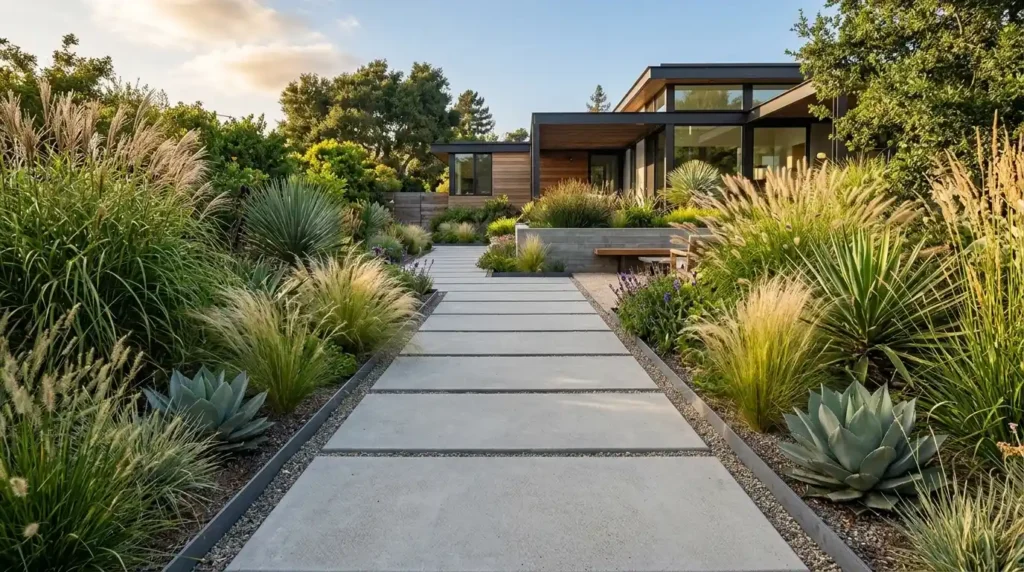
Large format concrete pavers — 24 by 24 inches or 24 by 48 inches — create the most contemporary and most architectural garden path available at a cost considerably lower than natural stone in equivalent sizes. The large format removes the busy joint pattern of smaller pavers and creates a bold, confident geometric quality that suits contemporary planting schemes and modern home styles directly.
The joint between large format pavers in a contemporary garden path can be treated in two ways: tight-set with a narrow sand-filled joint for the most formal and most precise result. Or wide-set with a 2 to 3 inch gap filled with a low ground cover — creeping thyme, moss, or Corsican mint — that softens the geometric precision while adding planting interest between the pavers. The wide-set approach bridges contemporary and naturalistic garden styles effectively.
Large format pavers require more careful leveling during installation than small format pavers because any deviation from level is more visible across a larger stone surface. A 4-foot level should be used across each stone in multiple directions during installation. Large format pavers also require two people to install safely — a 24 by 48 inch concrete paver weighs 80 to 120 pounds depending on thickness.
7. Mixed Material Paths That Combine Stone With Gravel or Planting
✦ Best for: gardens where a single material path would look monotonous and where the path itself is meant to be a garden feature
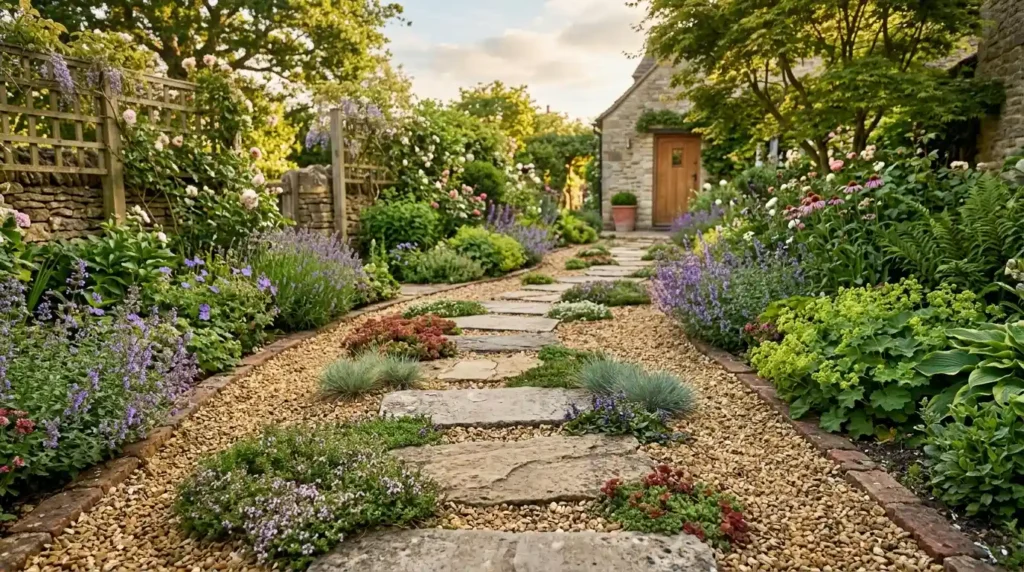
A path that combines two materials — typically a hard material for the stepping surface and a softer or finer material in the gaps between — creates more visual interest than a single-material path while remaining practical as a walking surface. The most successful combinations: large flagstones set into a gravel bed, with the gravel filling the irregular gaps between stones. Brick stepping stones set into a moss or low ground cover surface. Concrete pavers with wide joints planted with creeping thyme.
The design principle that makes mixed material paths look intentional rather than unresolved: the two materials should contrast clearly enough that each reads as a deliberate choice rather than the other material simply filling in where the primary material could not reach. Large dark stone against light gravel. Warm brick against green moss. Grey concrete against the silver-green of thyme. Contrast rather than similarity is what makes each material legible within the combination.
The practical maintenance consideration for planted gaps in a mixed material path: low ground cover plants in path gaps require occasional weeding in the first season until they establish densely enough to exclude weeds themselves. Once established most low ground covers in path gaps are genuinely low maintenance and require only occasional trimming to prevent them from spreading too far beyond the gap and onto the primary path surface.
How To Design a Garden Path That Actually Works
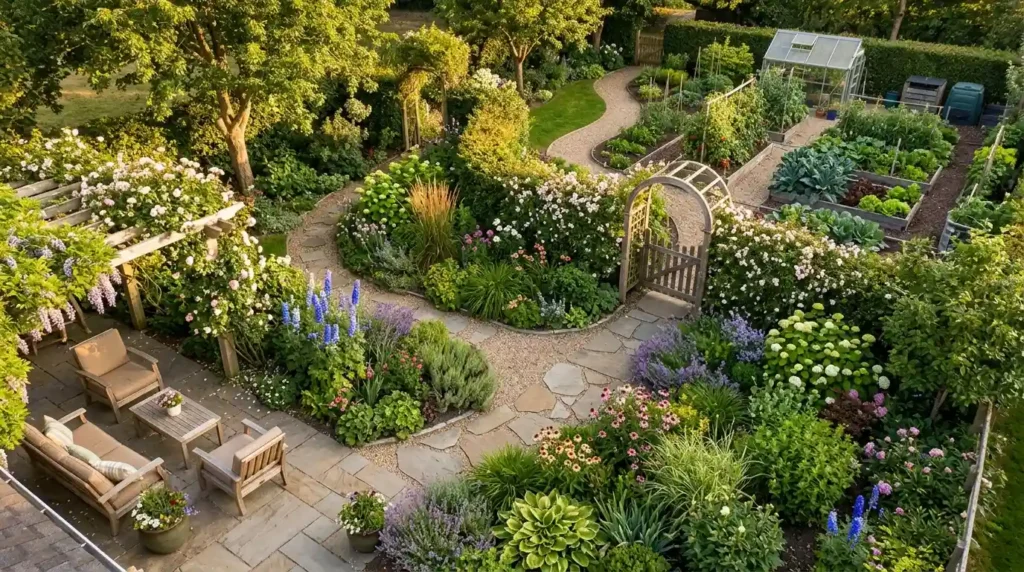
Before choosing a material, resolve the path layout on paper or with a garden hose on the lawn. The layout decision — straight or curved, width, destination — determines the garden’s entire movement experience and cannot be fixed by a change of material after installation. A straight path in the wrong position looks worse in good stone than a curved path in the right position looks in cheap gravel.
Straight paths suit:
Formal gardens, vegetable gardens, and any route where efficiency is the primary purpose — front door approaches, paths between a kitchen door and a compost area, paths through a formal parterre. Straight paths communicate purpose and create formality.
Curved paths suit:
Informal, cottage, and naturalistic gardens where the journey through the garden is as important as the destination. A gentle curve that follows the natural contour of the garden rather than an artificially imposed S-curve reads as genuine rather than decorative.
The most common path design mistake: curves that are too tight for the width of the path material. A 36-inch-wide flagstone path with a curve radius of less than 6 feet requires complex and expensive stone cutting at the inside of the curve. Design curves with a radius of at least 8 to 10 feet for a path of 36-inch width to keep the stone layout manageable and the finished path looking smooth rather than angular.
📌 More garden ideas: Garden Edging Ideas That Make Your Yard Look Professionally Done
Frequently Asked Questions
What is the cheapest garden path material?
The cheapest garden path materials in order of cost: a mown grass path between planted borders costs nothing if lawn is already established. Bark mulch costs $0.30 to $0.80 per square foot. Gravel costs $0.50 to $1.50 per square foot for materials. Pre-cast concrete stepping stones cost $1.50 to $4.00 per stone. All four options produce genuinely attractive results in the right garden context when installed correctly. According to the National Gardening Association, gravel paths with solid edging produce the best cost-to-appearance ratio of any budget garden path material for formal and semi-formal garden styles.
How wide should a garden path be?
Garden path width depends on its function and position. Secondary garden paths used occasionally by one person at a time: 24 inches minimum. Primary garden paths used regularly for general movement: 36 inches, which accommodates a single person comfortably with planted borders brushing the edges. Paths where two people walk side by side or where a wheelbarrow is used regularly: 48 to 60 inches. Main approach paths to a front door: 48 inches minimum, 60 inches preferred for a generous welcoming quality.
How do I keep a garden path weed free?
The most effective long-term approach to weed-free garden paths depends on the material. For gravel paths a 4-inch depth of gravel on a compacted base without landscape fabric is more durable and easier to manage than fabric-covered gravel. For stone and brick paths polymeric sand in the joints — a sand-polymer mixture that hardens when wetted — prevents weed germination in the joints far more effectively than standard sand. For bark mulch paths regular replenishment at 3 to 4 inch depth prevents most weed germination by excluding light. No approach eliminates weeds permanently — all require occasional maintenance.
Should garden paths curve or go straight?
Whether a garden path should curve or go straight depends on the garden style and the purpose of the path. Straight paths suit formal gardens and functional routes where efficiency is the primary purpose — a straight path communicates directness and purpose. Curved paths suit informal, cottage, and naturalistic gardens where the journey through the garden is as important as arriving at the destination — a curved path creates anticipation and slows movement in a way that straight paths do not. A path that curves without a reason — forcing a curve in a garden where a straight line is more natural — reads as arbitrary rather than designed.
More Garden Ideas
→ How To Build a Small Pond With a Waterfall
→ How To Build a DIY Garden Bench Dad Will Actually Use
→ How To Create a Living Memorial Garden for a Father
Resolve the layout before you choose the material. The path’s route through the garden is the design decision — the material is just how you build it.

Sheikh Hassaan is a digital architect for small businesses and the founder of The Glow Up System. He writes about home decor, garden design, and outdoor living for real American homes – practical ideas that work in actual spaces without oversized budgets.