
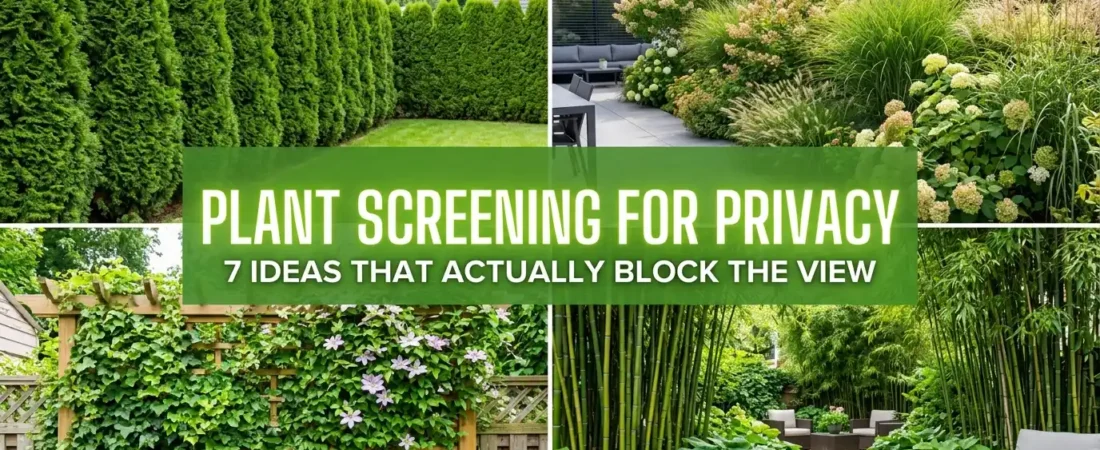
A fence gives you a boundary. A plant screen gives you something that actually improves with time, looks beautiful in every season, and makes your yard feel like a private retreat rather than a boxed-off lot.
I have been asked about plant screening for privacy more than almost any other garden topic. The questions are almost always the same: how fast will it grow, how tall will it get, and will it work in my climate? I will answer all three for every option below.
Table of Contents
What to Figure Out Before You Plant Anything
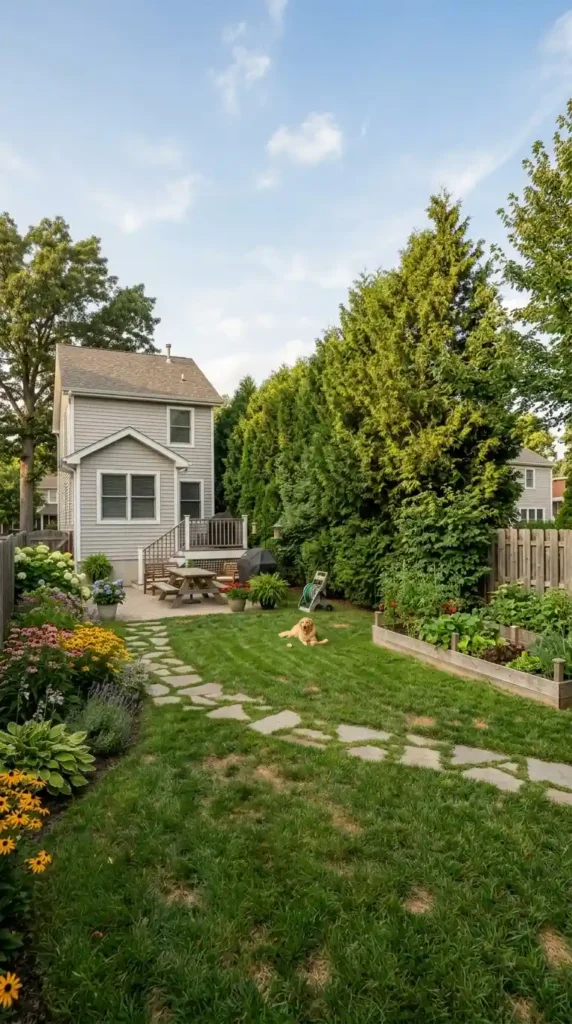
Before buying a single plant, figure out how high the screen needs to be. A neighbor’s ground floor window needs 6 feet. A second-floor deck needs 12 to 15 feet. Getting this wrong is an expensive mistake.
Then check your local zoning rules. Most US municipalities require plantings to be set back at least 2 to 4 feet from the property line. Some HOAs have height restrictions on hedges. A quick call to your local building department takes five minutes and can save you from having to remove an established hedge.
Finally, decide whether you need year-round screening or just seasonal. If the view you are blocking is only a problem in summer when you use the yard, ornamental grasses are a great lower-cost option. If you need privacy twelve months a year, you need evergreens.
1. Green Giant Arborvitae for Fast Evergreen Screening
✦ Best for: homeowners who need a tall dense evergreen screen in 3 to 4 years without much maintenance
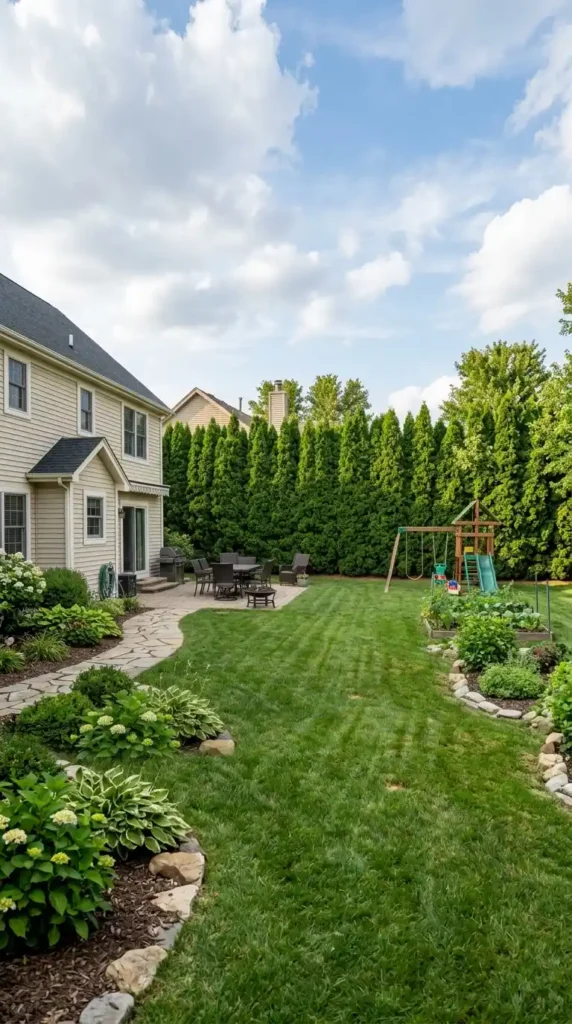
Green giant arborvitae is the plant I recommend most for privacy screening in the US. It grows 3 to 5 feet per year, handles most climate zones from 5 through 8, and requires zero pruning to stay in shape.
Plant them 5 to 6 feet apart for a solid wall effect. At that spacing they close into a continuous hedge within 3 to 4 years. I know people want to plant them closer to get faster results, but resist it. Overcrowded arborvitae get thin at the base and look ratty within a decade.
One thing I always mention: at maturity these trees reach 40 to 60 feet tall and 12 to 18 feet wide. In a small backyard that becomes a lot of tree. If you need a screen under 15 feet, Emerald Green arborvitae is a much better choice.
2. Emerald Green Arborvitae for Smaller Yards
✦ Best for: suburban yards where a compact neat evergreen screen is needed without the eventual size of green giant
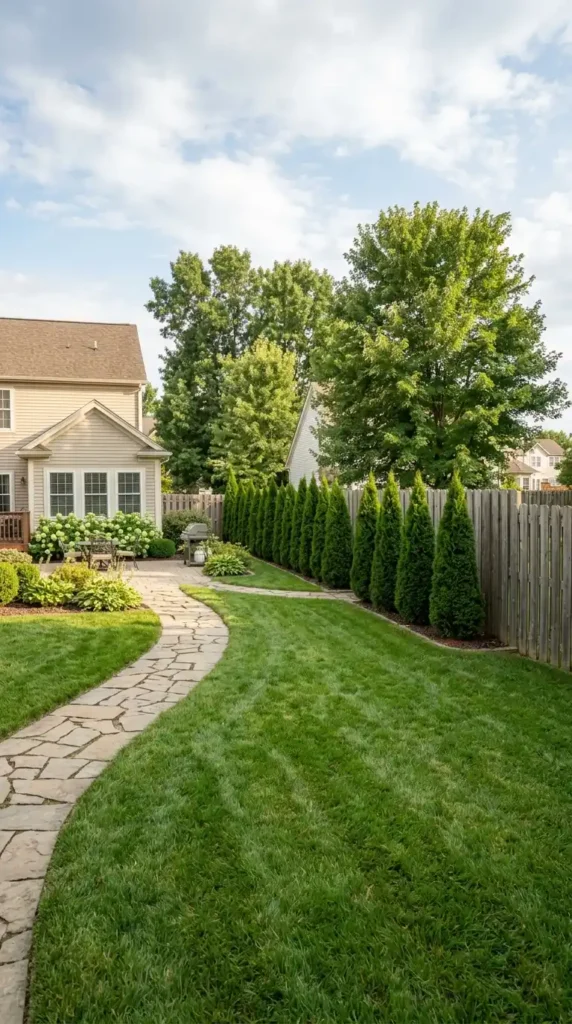
Emerald Green arborvitae maxes out at 12 to 14 feet tall and only 3 to 4 feet wide. That narrow profile is exactly what most suburban yards need. You can plant it 3 feet from the fence line and it will never become a problem.
It grows more slowly than green giant, adding 6 to 9 inches per year rather than 3 to 5 feet. I consider that a feature, not a bug. It means you never have to prune it and it stays the same neat columnar shape indefinitely.
Space them 2 to 3 feet apart for a solid screen. In zones 4 and 5, wrap newly planted trees in burlap for the first two winters to prevent wind burn. It looks fussy but it prevents the brown patches that ruin new plantings.
3. Skip Laurel for Shaded and Difficult Spots
✦ Best for: north-facing yards and shaded spots where most evergreens struggle to fill in properly
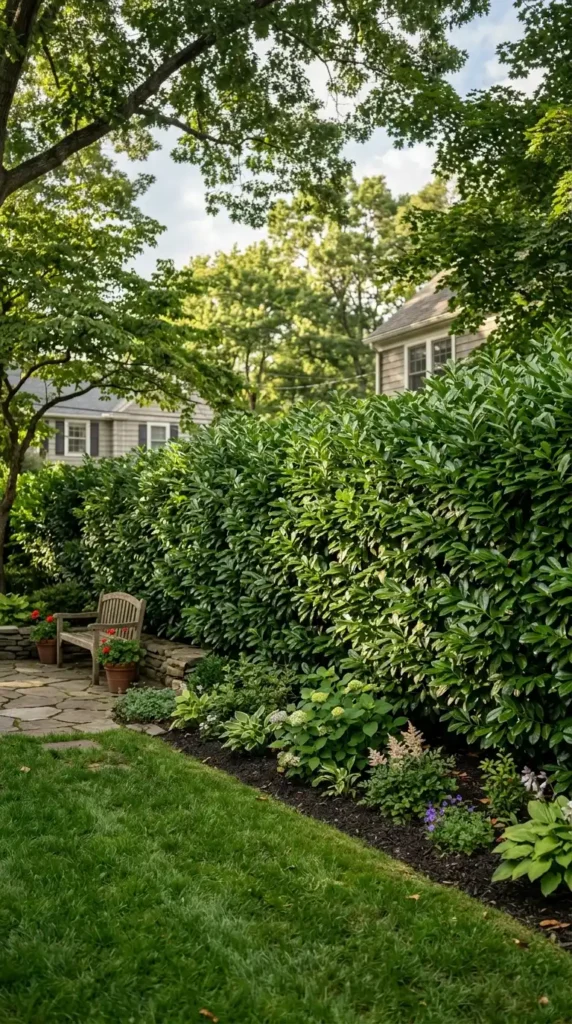
Skip laurel is my go-to recommendation for shaded yards. Where arborvitae needs 6 hours of direct sun to stay dense, skip laurel genuinely thrives in partial to full shade. I have seen it grow beautifully on north-facing property lines where nothing else would establish.
The large glossy leaves create a visual richness that conifers cannot match. It grows 1 to 2 feet per year and produces fragrant white flower spikes in spring, so it earns its place aesthetically as well as practically.
It is also one of the most deer-resistant screening options available. If deer pressure is a problem in your neighborhood, skip laurel is one of the few hedging plants they reliably leave alone.
4. Clumping Bamboo for a Dramatic and Fast Screen
✦ Best for: homeowners who want a tall striking screen quickly without the invasive spreading of running bamboo
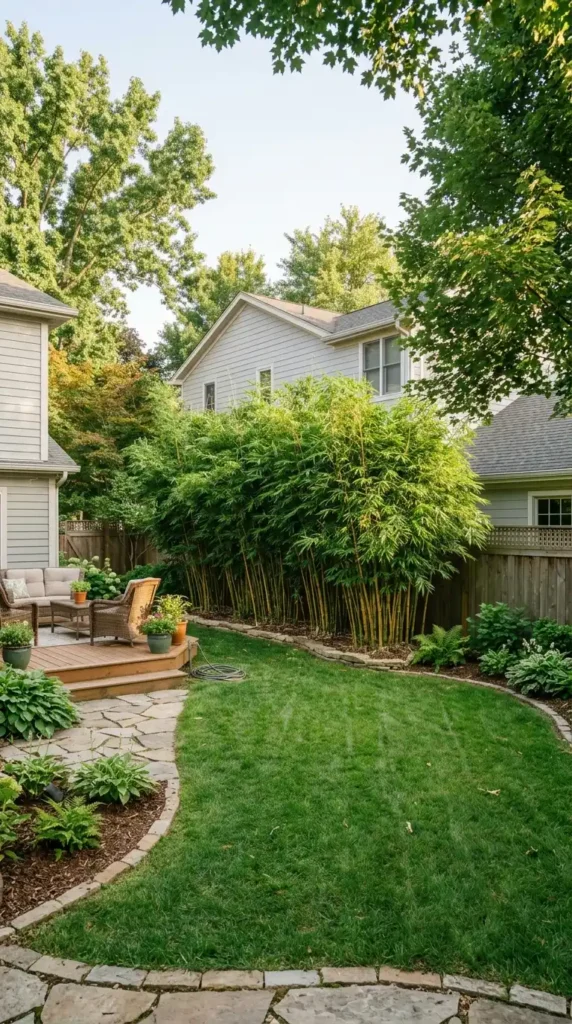
I want to address the elephant in the room immediately: there are running bamboo varieties that spread invasively through underground rhizomes and become a serious neighborhood problem. I am not recommending those. I am talking about clumping bamboo species like Fargesia robusta, which stays exactly where you plant it.
Fargesia robusta grows 12 to 15 feet tall in a tight clump 4 to 6 feet wide. It handles zones 5 through 9 and tolerates both full sun and partial shade. Within 2 to 3 years from a 5-gallon plant you have a genuinely impressive screen.
Water consistently in the first two summers. Bamboo is drought tolerant once established but needs regular moisture to build the root system that supports rapid growth. Skip the watering and you add two years to the timeline.
5. Ornamental Grasses for Seasonal Screening on a Budget
✦ Best for: yards that need seasonal screening from June through October without the cost of a permanent evergreen installation
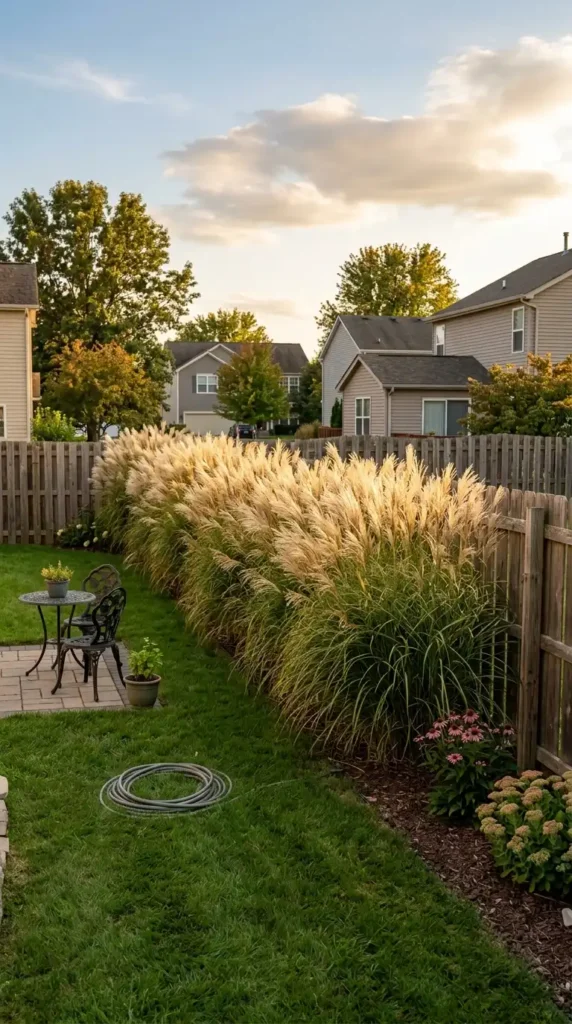
Ornamental grasses are the most underrated plant screening option I know. Karl Foerster feather reed grass reaches 5 to 6 feet by June. Miscanthus sinensis varieties hit 6 to 8 feet by midsummer. And they do it in their very first season from a 1-gallon nursery plant.
I love combining them with evergreens. Plant Emerald Green arborvitae at 5-foot spacing and fill the gaps with Karl Foerster grass. The grasses give you immediate screening while the arborvitae establishes. In three years the arborvitae takes over and you cut the grasses back to let more light in.
Maintenance could not be simpler. Cut them to 6 inches in late winter. That is literally it. No pruning, no shaping, no fertilizing required.
6. Nellie Stevens Holly for a Beautiful Barrier That Also Deters Intruders
✦ Best for: homeowners who want a privacy screen that is also genuinely ornamental with seasonal berries and flowers
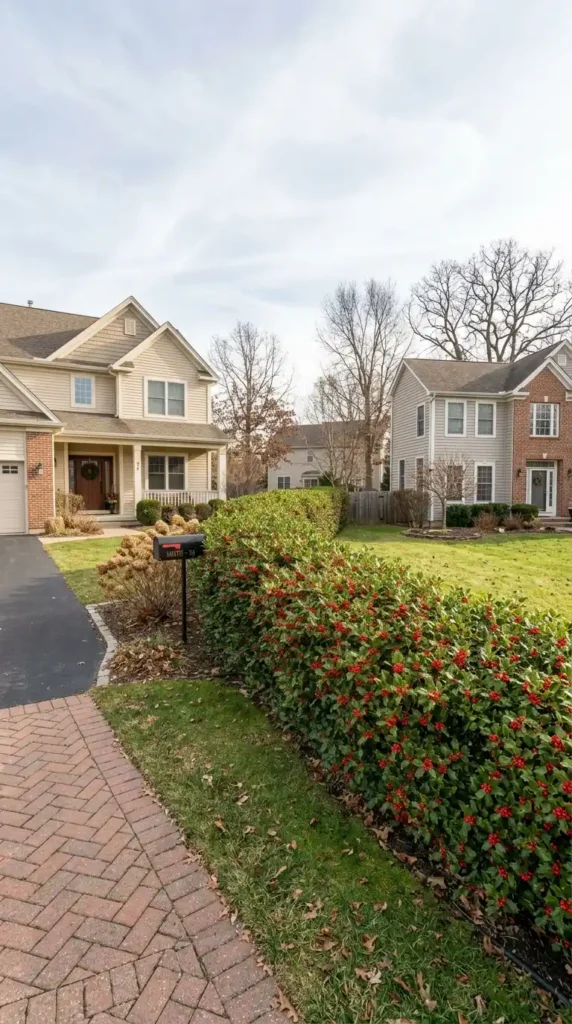
Nellie Stevens holly is the plant screening option I recommend when people want privacy and beauty in equal measure. It grows 2 to 3 feet per year, produces bright red berries in fall and winter, and the spiny leaves mean nothing is getting through it.
A mature Nellie Stevens hedge is genuinely impenetrable. I think of it as the security system that also looks beautiful, which is a combination most fences cannot claim.
Plant one male holly within 50 feet to ensure berry production. Most nurseries sell small male plants specifically for this purpose alongside Nellie Stevens rows. Without a male pollinator you get the screening but miss out on the berries.
7. Container Plants for Renters and Patio Screening Without Planting in the Ground
✦ Best for: renters, condo owners, and anyone who cannot plant in the ground but needs patio privacy
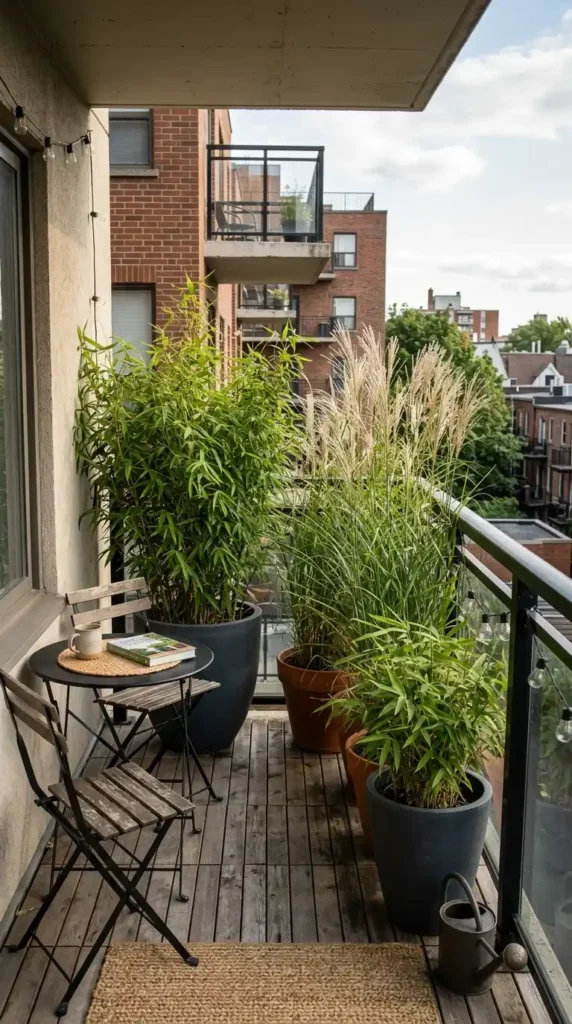
Container plant screening is something I recommend far more often than people expect. A row of 25-gallon containers with clumping bamboo or sky pencil holly along a patio edge creates a genuinely effective privacy screen without a single hole dug in the ground.
Sky pencil holly is my favorite container screening plant. It grows 8 to 10 feet tall in a narrow 2-foot-wide column. In a 20-gallon container it stays healthy for years and can be moved if you relocate. Three or four of them lined up along a patio edge block a sightline completely.
Container plants dry out faster than in-ground plants. In summer you may need to water daily. A self-watering container or a drip system on a timer solves this without any daily effort on your part.
Frequently Asked Questions
What is the fastest growing plant for screening privacy?
Green giant arborvitae at 3 to 5 feet per year is the fastest evergreen screening plant widely available in the US. Clumping bamboo is comparable in speed and works in tighter spaces. According to the Arbor Day Foundation, green giant arborvitae is the most recommended fast-growing privacy tree for American residential landscapes.
What plants screen privacy in the shade?
Skip laurel is the best option for shaded screening. It grows well in partial to full shade where most evergreens fail to fill in properly. Inkberry holly and mountain laurel are good native alternatives for shaded spots.
How far from the property line should I plant a privacy screen?
Most US municipalities require a minimum 2 to 4 foot setback from the property line. Always check your local zoning code before planting. Planting on the line can create legal disputes that are expensive to resolve after the plant is established.
Can I screen my patio for privacy without planting in the ground?
Yes. Large containers with sky pencil holly, clumping bamboo, or tall ornamental grasses create effective patio screening without any ground planting. Use 20 to 25 gallon containers for enough stability and soil volume to support taller plants.
Which Plant Screen Is Right for You?
If I had to pick one plant for most American yards it would be Emerald Green arborvitae. It stays manageable, requires no pruning, works in most climates, and creates a genuinely solid screen within a few seasons.
For shaded yards I switch to skip laurel every time. For renters or condo patios sky pencil holly in large containers is the move.
Whatever you choose, plant at the correct spacing and resist the urge to crowd them for faster results. Plants at the right spacing look great for decades. Overcrowded plants look good for three years and then become a problem.
More Garden Ideas
→ 7 Privacy Plants That Block Neighbors and Look Beautiful Doing It
→ Garden Border Ideas That Make Every Bed Look Designed
→ 7 Jacuzzi Outdoor Ideas That Feel Like a Luxury Spa
→ Japanese Rock Garden Ideas — 7 Serene Designs for a Peaceful Yard
Plant at the right spacing. The screen that takes one extra season to close in will look great for thirty years. The overcrowded one will be a maintenance headache in five.

Sheikh Hassaan is a digital architect for small businesses and the founder of The Glow Up System. He writes about home decor, garden design, and outdoor living for real American homes – practical ideas that work in actual spaces without oversized budgets.