
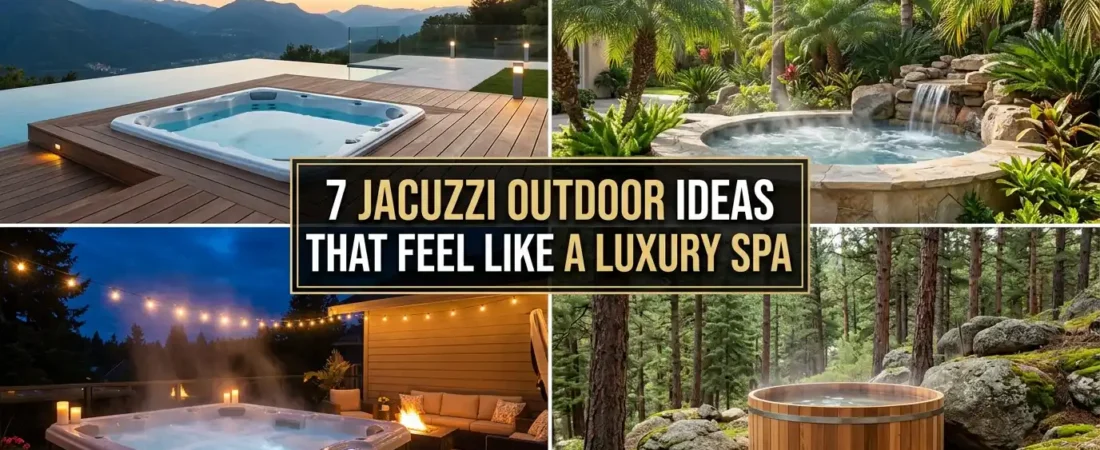
A Jacuzzi outdoor hot tub transforms any backyard, patio, or deck into a year-round wellness retreat. In 2026, outdoor hot tub ideas reflect a deeper understanding of wellness, homeowners aren’t just adding features; they’re designing experiences. Whether you have a compact urban patio or a spacious yard, these seven ideas will help you create a relaxing escape that feels intentional and inviting.
Table of Contents
1. Pergola-Covered Jacuzzi with String Lights and Climbing Vines
✦ Best for: Creating a defined outdoor room with shade, privacy, and romantic evening ambiance
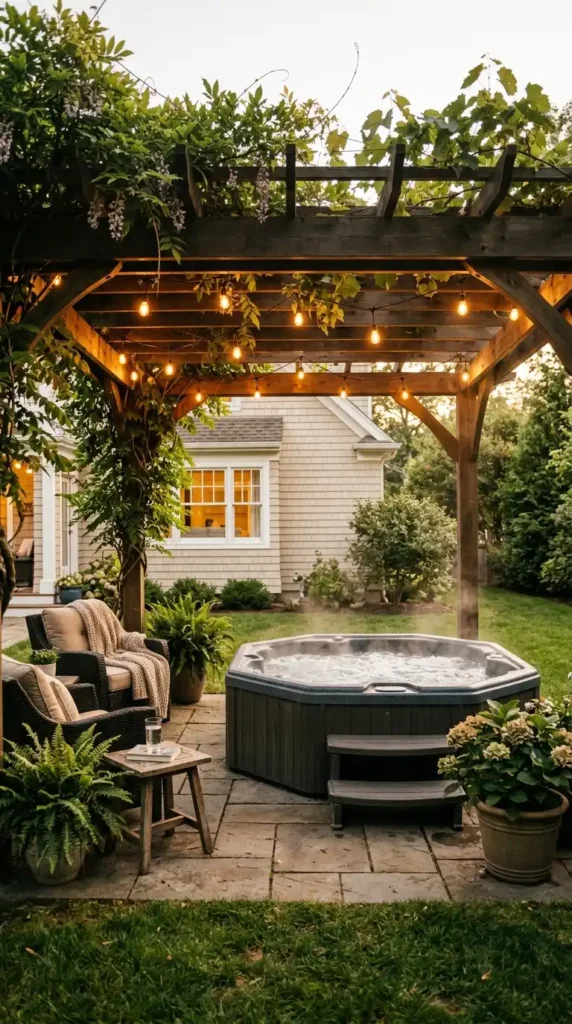
A pergola instantly elevates a hot tub from a standalone feature to the centerpiece of an outdoor living area. The open-slatted roof filters sunlight during the day and provides a structure for hanging string lights for evening ambiance.
How to do it: Build a pergola directly over your hot tub using cedar or weather-resistant aluminum. Train climbing vines like jasmine or wisteria up the posts for a fragrant, natural screen. Drape string lights or Edison bulbs across the beams for cozy nighttime soaking. For extra privacy, add outdoor curtains or fabric shades that can be drawn when needed. This setup creates a room outdoors without the suffocating feeling of solid walls.
2. Privacy Screen Enclosure with Natural Elements
✦ Best for: Homeowners who value seclusion and want to block neighbors’ views
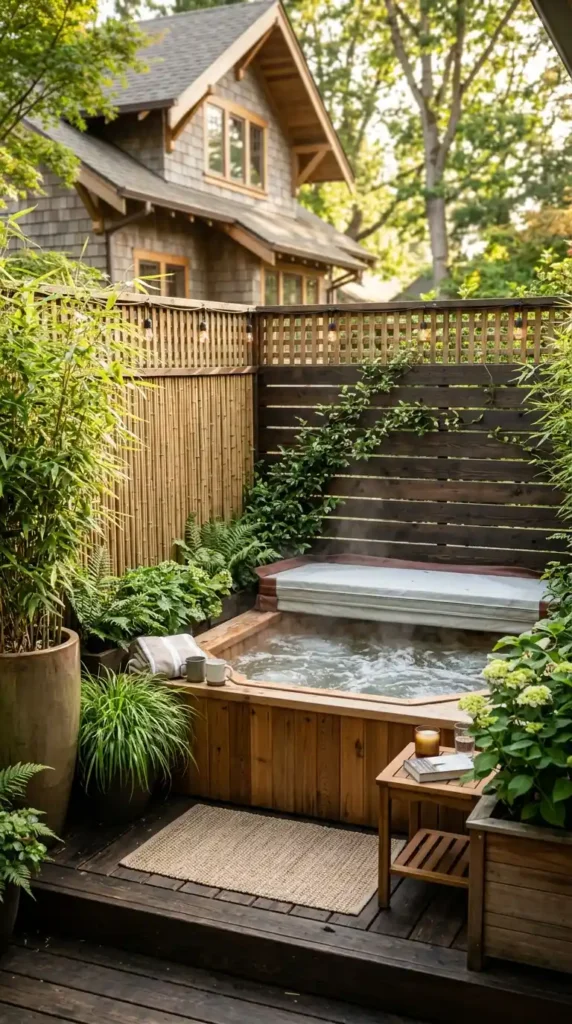
Privacy is key to enjoying a hot tub to its fullest. You don’t need tall fencing, strategic screening can transform the area into a serene retreat.
How to do it: Install wooden lattice panels, bamboo fencing, or tall planters around your hot tub. Tall grasses, dense hedges like arborvitae, and evergreen shrubs provide natural privacy that matures within 3-5 years. Climbing vines on trellises create living walls that evolve with the seasons. For a softer look, hang outdoor curtains from a pergola or freestanding frame. A combination of screening and strategic landscaping usually works better than a single solid barrier.
3. Multi-Level Deck Integration
✦ Best for: Making the hot tub feel like a built-in feature rather than an afterthought
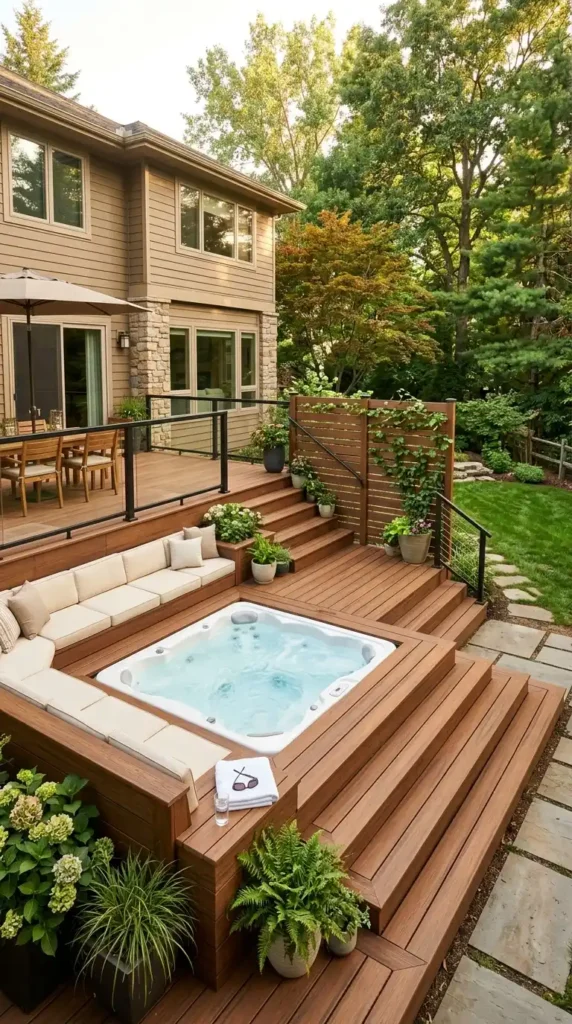
A multi-level deck can transform a small backyard, making it appear larger and more dynamic. Integrating a hot tub into this design creates distinct zones for lounging, entertaining, and soaking.
How to do it: Build a raised platform for the hot tub, with steps leading up to it. Surround the tub with built-in benches for seating. Using composite decking resists rot and feels smooth under bare feet. The structure should support 100 pounds per square foot to handle the weight of a filled tub with bathers (3,000 to 8,000 pounds total). A flush or partially sunken design makes entry easy and gives the tub a sleek, built-in appearance.
4. Natural Stone Surround with Landscaping
✦ Best for: Blending the hot tub into a garden setting with organic materials and lush greenery
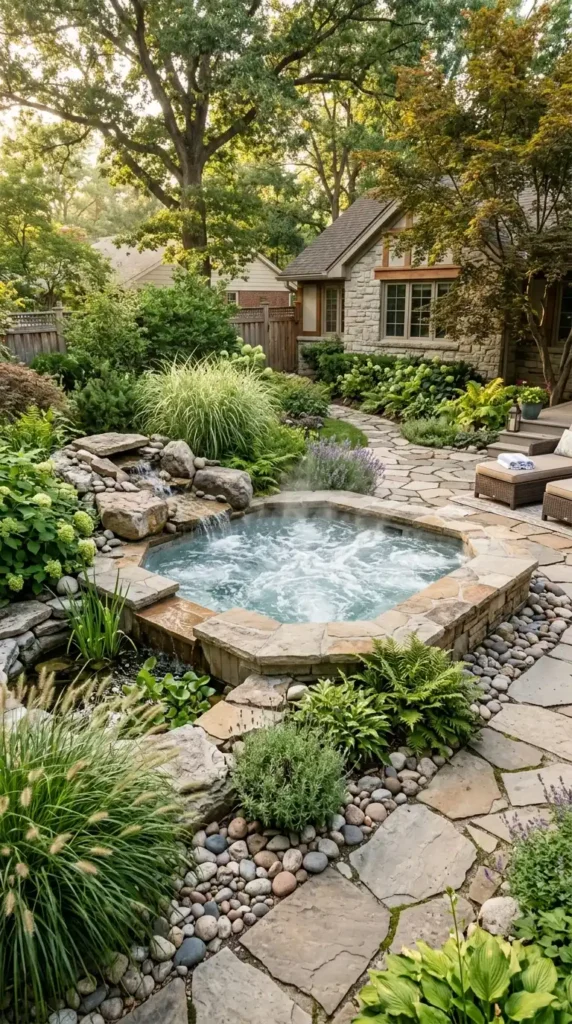
Natural stone and lush planting can turn a hot tub into a tranquil garden retreat. The organic materials soften the hard edges and make the space feel like part of the landscape.
How to do it: Use flagstone, travertine, or river rocks around the hot tub base. Plant ornamental grasses, evergreens, and tropical plants in layered groupings. A small recirculating fountain or sheer descent waterfall nearby adds soothing sound layers and masks neighborhood noise. Potted plants with herbs like lavender or rosemary offer natural aromatherapy. Stone pathways leading to the tub create a sense of ceremony and arrival.
5. Fire Pit and Hot Tub Combo
✦ Best for: Extending outdoor enjoyment into cooler evenings with dramatic contrast
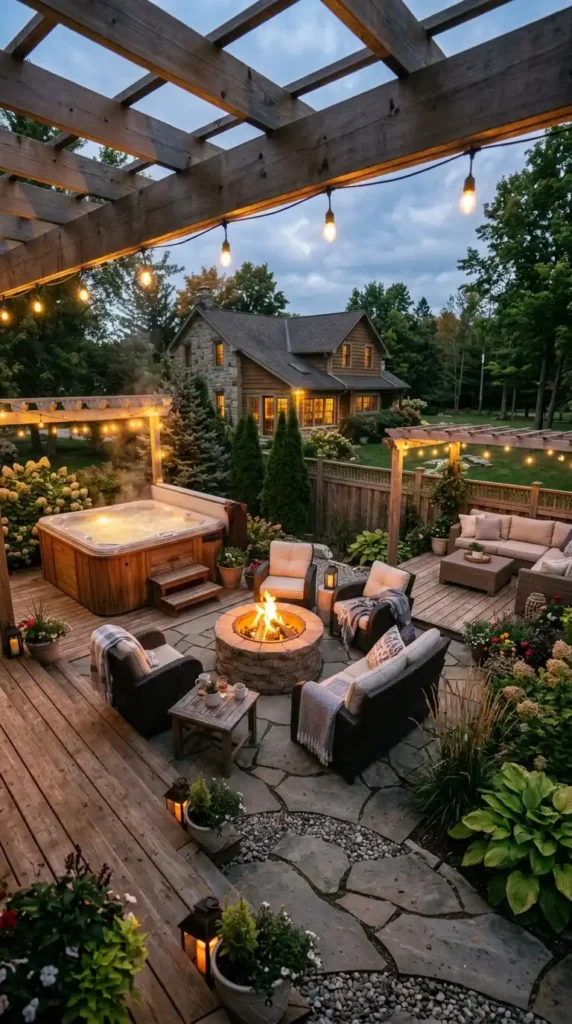
Combining fire and water creates a stunning visual contrast and extends your outdoor season. The flickering flames complement the bubbling water, offering a dramatic yet cozy ambiance perfect for chilly evenings.
How to do it: Place a gas fire pit at least 10 feet from the hot tub equipment to protect sensitive components. Surround both features with comfortable seating. The warm firelight enhances the relaxing soak, and the setup becomes a natural gathering spot for socializing. Gas fire pits offer instant ambiance without the hassle of wood smoke. This dual-feature setup effectively doubles your outdoor entertaining space.
6. Compact Corner Oasis
✦ Best for: Small backyards where every square foot needs to earn its keep
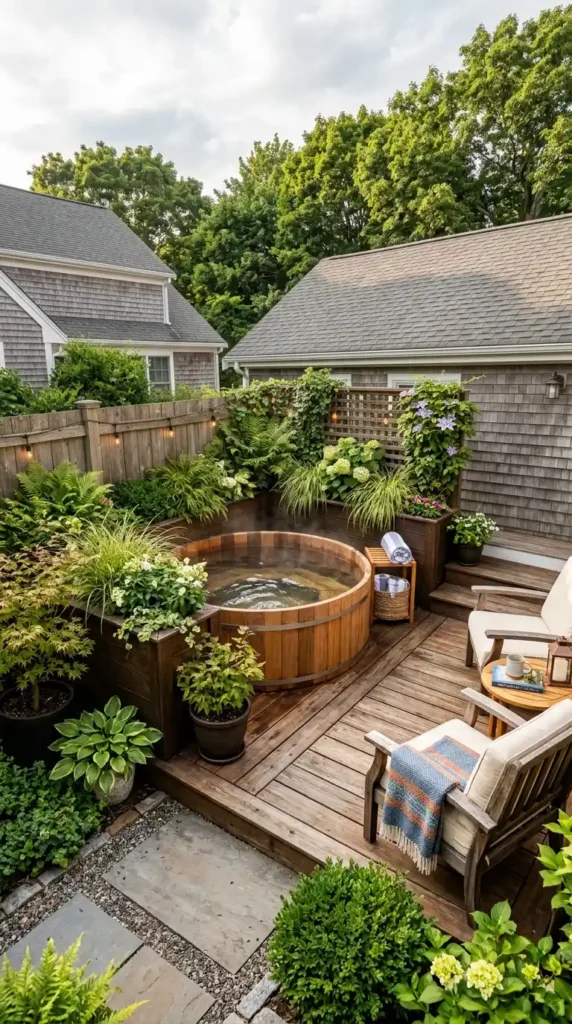
Even a small yard can host a hot tub with the right layout. A compact 2-3 person spa tucked into a corner can serve as a stylish statement piece.
How to do it: Position the hot tub in a corner and use vertical elements like tall planters or a living wall for greenery. A narrow entry built into the layout gives you step-free access without eating up the entire footprint. Add built-in benches or a fold-down shelf for towels and drinks. Use light-colored materials to make the area feel more open. Some compact models offer 120V plug-and-play convenience, simplifying installation for smaller spaces.
7. Rooftop or Terrace Retreat
✦ Best for: Urban homes with limited ground space but access to a roof or balcony
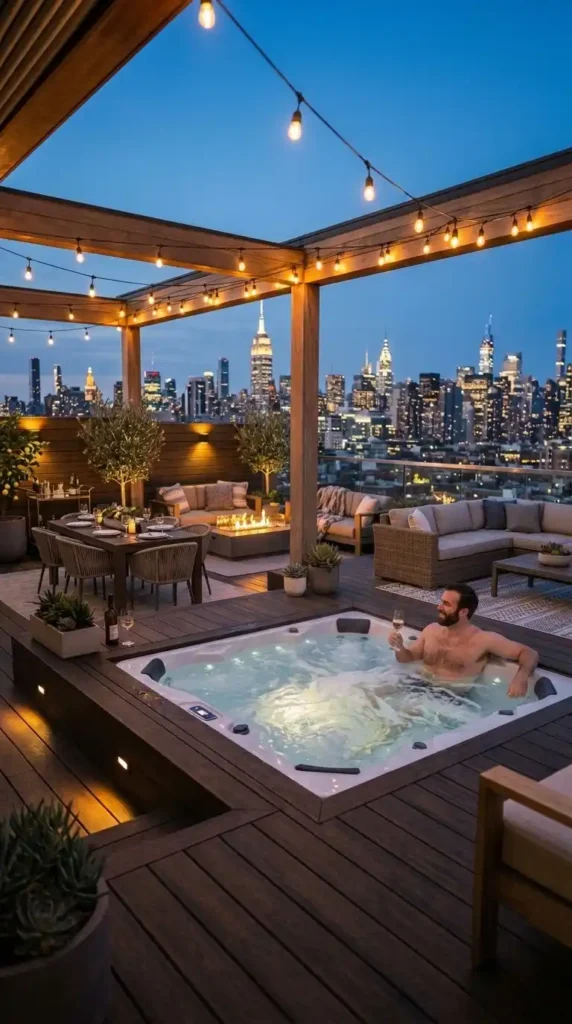
A rooftop hot tub transforms unused space into a private oasis with stunning views. This is ideal for urban homeowners who want a luxurious escape above the city.
How to do it: Consult a structural engineer to confirm your roof can support the weight of a filled tub (3,000 to 8,000 pounds). Use lightweight decking materials to stay within weight limits. Install glass railings for safety without blocking the view. Add privacy screens and wind-resistant panels to block gusts. String lights create a magical glow for evening relaxation. A retractable shade offers year-round comfort.
Practical Planning Essentials
Before you start building, address these practical considerations:
Structural Support: A filled hot tub can weigh 3,000 to 8,000 pounds. Your base must support at least 100 pounds per square foot. Recommended options include a 4-inch reinforced concrete pad or an engineered deck.
Electrical Requirements: Most hot tubs require a dedicated 240V, 50-amp GFCI-protected circuit. Electrical work must be completed by a licensed electrician and typically costs $1,000 to $3,000.
Permits: Check local zoning for setbacks, fencing requirements, and safety cover specifications. Some areas require permits for electrical work and permanent structures like pergolas.
Access and Serviceability: Maintain at least 2 to 3 feet of clearance on sides with equipment panels for maintenance access. Plan a clear pathway from your house to the tub.
Drainage: Slope the ground away from the tub and use permeable pavers or gravel to avoid water pooling.
Frequently Asked Questions
1. What is the minimum yard size for an outdoor hot tub?
A compact hot tub for 2-3 people can fit in a yard as small as 8×8 feet, depending on clearances and local codes. Plunge pool-style hot tubs can fit in even tighter spaces.
2. Can a hot tub be placed on a deck?
Yes, but the deck must be engineered to support the weight. A filled tub can weigh 3,000 to 8,000 pounds. Have a structural professional verify your deck can handle the load before installation.
3. What is the best material for a hot tub surround?
Natural wood offers a warm classic look but needs more upkeep. Composite decking is a low-maintenance alternative. Natural stone, gravel, and pavers also work well, stay cool underfoot, and provide slip resistance.
4. How do I keep my hot tub area private?
Use wooden lattice panels, bamboo fencing, tall planters, or dense hedges like arborvitae. Outdoor curtains hung from a pergola offer flexible privacy. A combination of screening and strategic landscaping usually works best.
Related Articles
7 Freeform Pool Designs That Feel Like a Luxury Resort
Rectangle Pool with Spa — 7 Smart Ideas for Small American Backyards
Infinity Pool Design — 7 Ideas for a Seamless Horizon Effect
Beach Pools Backyard — 7 Ideas for a Private Coastal Escape
A well-designed outdoor Jacuzzi area is more than a luxury. It is a lifestyle upgrade that transforms your backyard into a personal sanctuary for daily relaxation, connection, and rejuvenation.

Sheikh Hassaan is a digital architect for small businesses and the founder of The Glow Up System. He writes about home decor, garden design, and outdoor living for real American homes – practical ideas that work in actual spaces without oversized budgets.