

A sofa in a bedroom sounds like an obvious luxury. Until you try it.
Then you realize the bedroom is a 12 by 12 foot room with a queen bed, two nightstands, a dresser, and approximately three feet of walkable floor space. The sofa you imagined sitting in does not fit. Or it fits but blocks the closet. Or it fits and does not block anything but looks completely wrong against the wall.
I have helped style bedroom sofas in rooms that had no business fitting one and rooms that had plenty of space but got the placement completely wrong anyway. The difference between a bedroom sofa that looks intentional and one that looks like furniture that ran out of room elsewhere is almost always the same two things: size and position. This guide covers both.
Table of Contents
Does Your Bedroom Actually Need a Sofa?
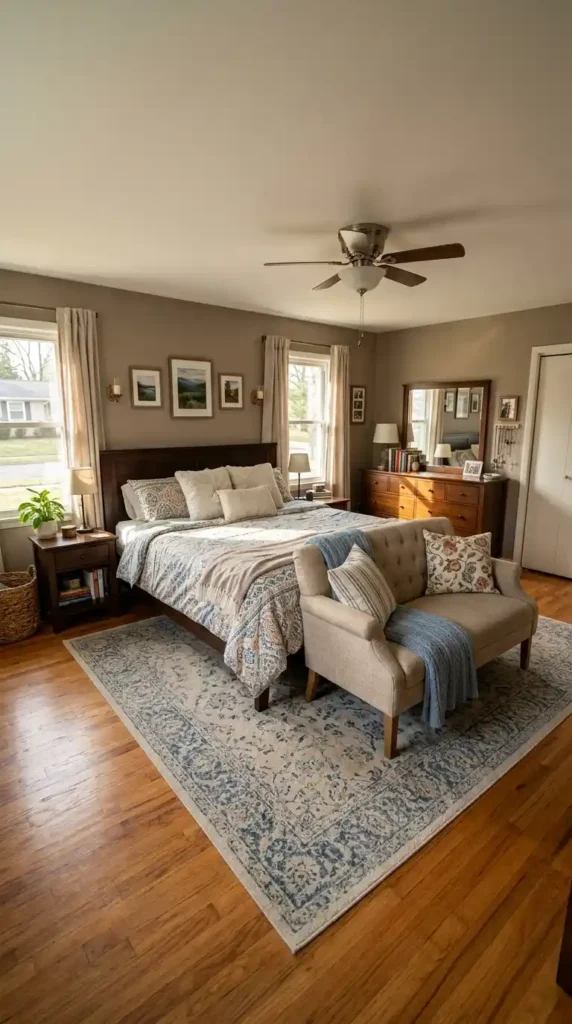
Ask this first. Before you measure anything.
A bedroom sofa works when it has a purpose. Somewhere to sit while putting on shoes. A reading spot that is not the bed. A place for a partner to sit while the other gets ready. A surface that makes the bedroom feel like a room you inhabit rather than just a room you sleep in.
It does not work when it is there because you wanted a bedroom sofa. That sounds harsh. But I find that is the most common reason bedroom sofas end up looking wrong — the sofa was the goal rather than solving an actual problem the room had.
If you can answer the question “what will I actually use this for” with something specific — not “it will look nice” but an actual behavior — then a bedroom sofa makes sense. If you cannot answer that question the sofa will sit unused and start feeling like an obstacle within three months.
Step 1: Get the Size Right Before Anything Else
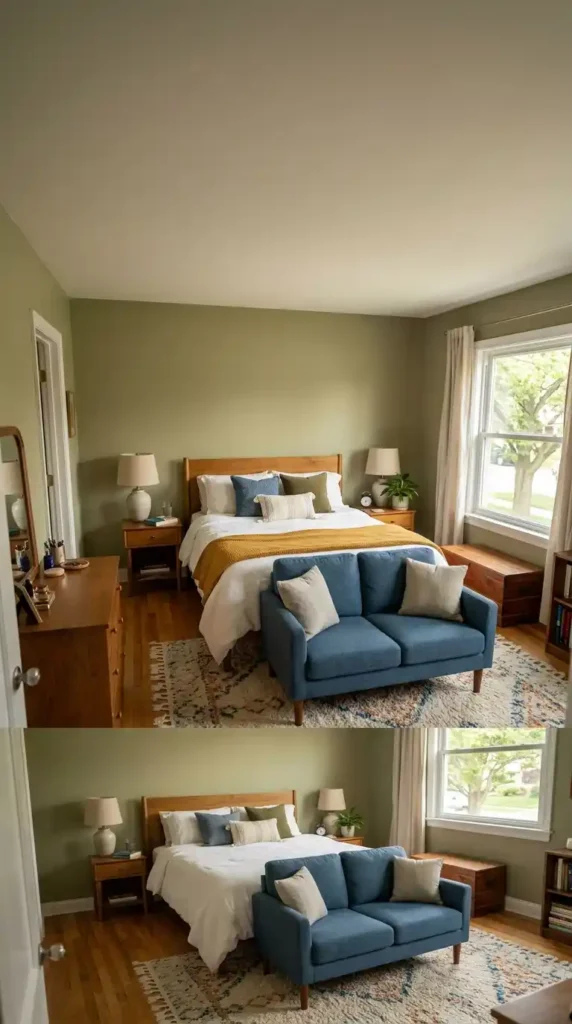
This is where most bedroom sofa projects go wrong. Immediately.
People see a sofa they like, buy it, bring it home, and discover it is 84 inches wide in a room that has 76 inches between the bed and the wall. Or it fits width-wise but pushes the walking path to 18 inches which means turning sideways every time you walk past it.
The bedroom sofa size rules I use every time:
Minimum walking clearance: 24 inches on any side of the sofa that requires passage. This is the non-negotiable number. 24 inches feels tight but walkable. Anything less and the sofa becomes an obstacle.
Maximum sofa width for the foot-of-bed position: no wider than the bed itself. A sofa wider than the bed creates a visual imbalance that makes both pieces look wrong.
Depth matters as much as width: a standard sofa is 32 to 36 inches deep. In a small bedroom this depth eats significant floor space. A settee or loveseat at 28 to 30 inches deep is often the practical choice.
Tape the dimensions on the floor before buying anything. Seriously. Live with the taped outline for two days. Walk around it. Open drawers. Close the door. The tape test has saved more furniture returns than any other step I recommend.
Step 2: Choose the Right Position for Your Room
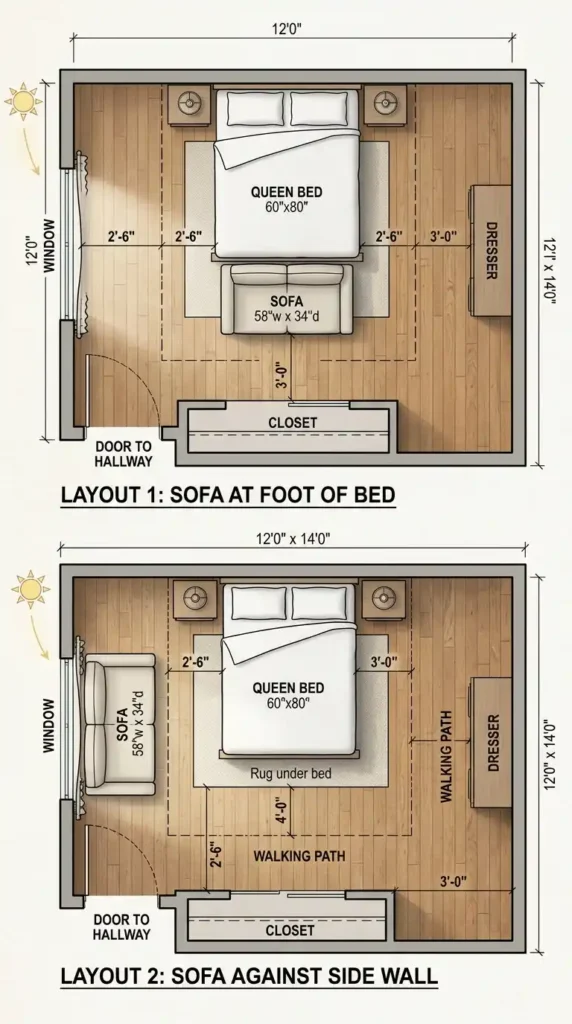
Three positions work in most bedrooms. One of them is almost always the right answer for your specific room.
Position 1: Foot of the Bed
The classic. Most common. Most photographed.
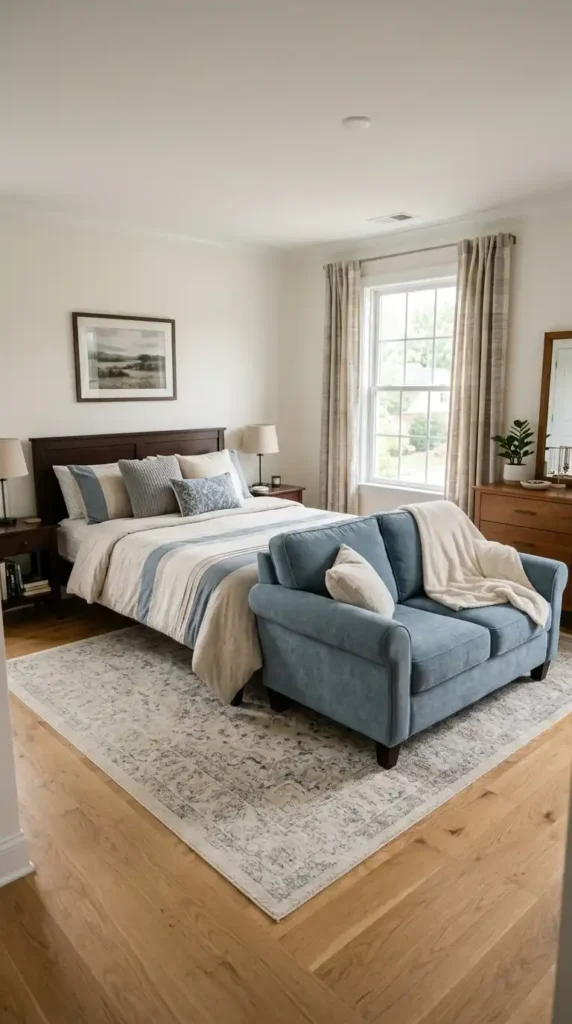
A loveseat or settee at the foot of the bed works when there is at least 36 inches between the bed footboard and the sofa back. Less than that and the space feels cramped. The sofa width should match or be slightly narrower than the bed. The result is a bedroom that looks like it was designed rather than furnished.
Position 2: Against a Side Wall
This works better in smaller bedrooms where the foot of bed position eats too much floor.
A small two-seat sofa against the wall perpendicular to the bed creates a sitting area that feels distinct from the sleeping area. I find this position works best in L-shaped master bedrooms where one arm of the L naturally becomes a sitting area. Add a small side table and a floor lamp and the corner becomes a genuinely functional secondary zone.
Position 3: Facing the Bed or Window
Less common. Occasionally the best option.
In a large master bedroom with a bay window or a window seat area a small sofa facing the window creates a morning coffee spot that I have seen work beautifully. The key is that the sofa faces something worth looking at. A sofa facing a blank wall is an uncomfortable seat in an awkward position. A sofa facing a window with morning light coming through it is a destination.
Step 3: Choose a Sofa Style That Belongs in a Bedroom
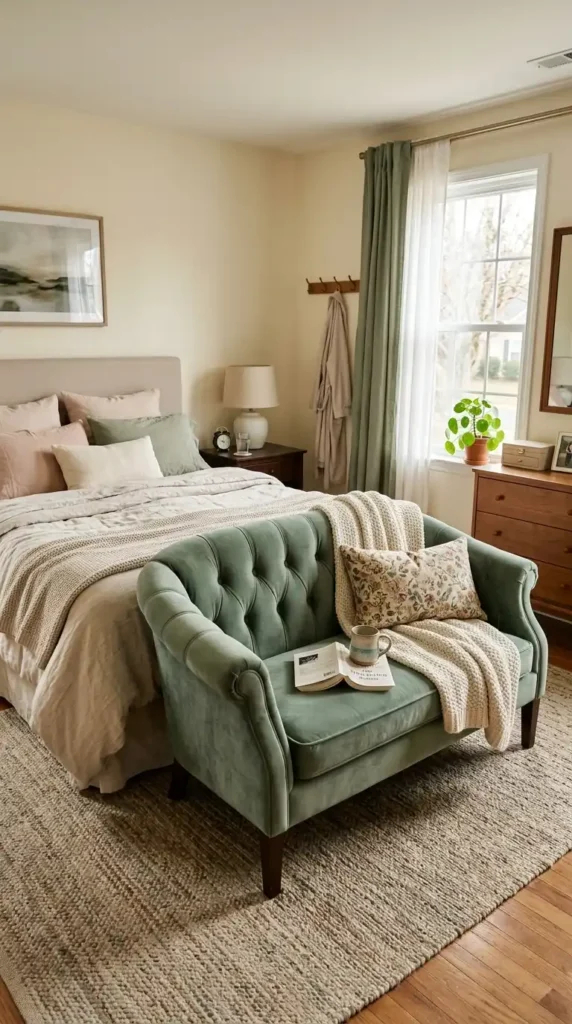
Not every sofa belongs in a bedroom. This matters more than people expect.
A large sectional that looks perfect in a living room looks like a mistake in a bedroom. The scale is wrong. The formality is wrong. The material is often wrong.
The sofa styles that work in bedrooms:
Settee. The most classic bedroom sofa choice. Low back, narrow depth, upholstered legs. It reads as intentionally placed in a bedroom rather than relocated from somewhere else. Available in every style from traditional to contemporary.
Loveseat. Two seats. 52 to 64 inches wide. Deep enough to sit comfortably. Not so deep it dominates the room. The velvet loveseat is the bedroom sofa choice I recommend most consistently — the material reads as deliberately bedroom-appropriate in a way that performance fabric or leather does not.
Chaise longue. Works at the foot of the bed in a larger master bedroom. Provides the laid-back reading position that a standard sofa does not. The silhouette is elegant and the footprint is narrower than a standard sofa.
What to avoid: three-seat sofas (almost always too wide), sectionals (too casual and too large), leather sofas (cold material that reads as living room, not bedroom), and any sofa with arms higher than the bed headboard (creates a competing focal point).
Step 4: Match the Sofa Color to the Bedroom Not the Living Room
The bedroom sofa color mistake I see constantly:
Someone buys a grey sofa for the bedroom because they have a grey sofa in the living room and it worked there. They bring it into the bedroom which is decorated in warm cream and blush tones. The grey sofa looks like it is from a different house.
The bedroom sofa color should be pulled from the bedroom palette — not chosen independently.
Look at your bedding. Your curtains. Your rug. What are the two or three dominant tones in the room? The sofa should sit within that palette. Not match it exactly — that looks staged. But sit within it so the sofa reads as part of the room rather than a visitor.
The colors that work most consistently as bedroom sofa colors: dusty blush for warm neutral bedrooms. Sage green for organic modern bedrooms. Warm cream or oatmeal for almost any bedroom palette. Deep navy for bedrooms with a sophisticated dark palette. Warm caramel or cognac velvet for maximalist and jewel-toned bedrooms.
Step 5: Style the Sofa So It Looks Placed Not Abandoned
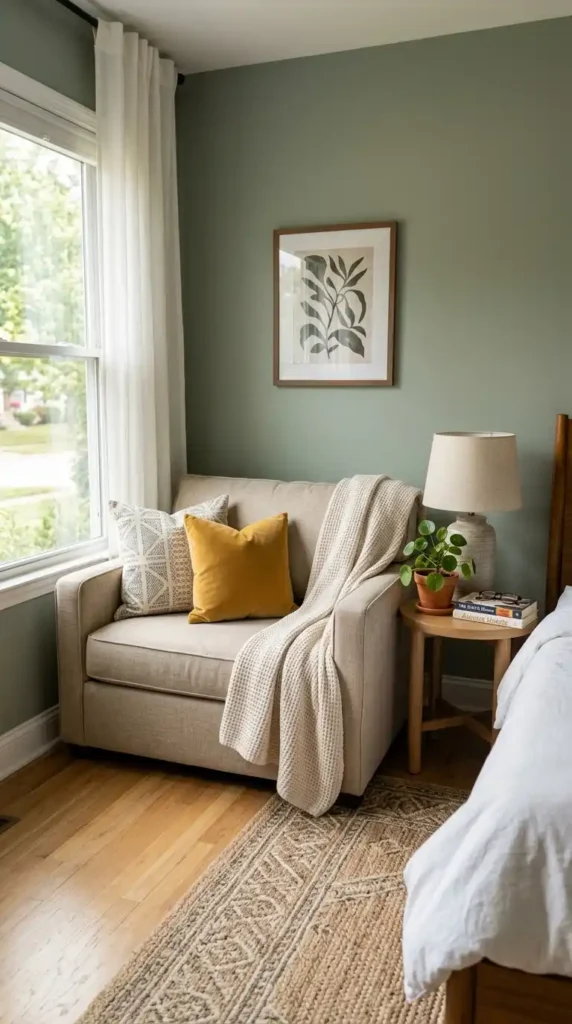
A bedroom sofa with nothing on it and nothing beside it looks like it got moved there temporarily and nobody moved it back.
Three elements make a bedroom sofa look intentionally placed:
Cushions. Two is enough. Not five — this is a bedroom sofa not a living room sofa. Two cushions in tones pulled from the bedroom palette. One slightly lighter, one slightly deeper. That is the entire cushion arrangement.
A throw. Draped over one arm casually. The same throw you would use on the sofa if you actually sat there — which means it should be real and comfortable, not purely decorative. A chunky knit or a light linen throw depending on the bedroom aesthetic.
Something beside it. A small side table or a floor lamp positioned beside the sofa creates a secondary zone that makes the sofa look like a destination rather than a placeholder. Without a side table or lamp beside it a sofa reads as unused. With both it reads as a deliberate sitting area.
One small plant on the side table completes the arrangement. It adds the organic warmth that every bedroom benefits from and costs almost nothing. For the best low-maintenance plants for a bedroom setting see our best plants for beginners guide which covers the options that thrive in lower indoor light.
Bedroom Sofa Ideas for Small Bedrooms Specifically
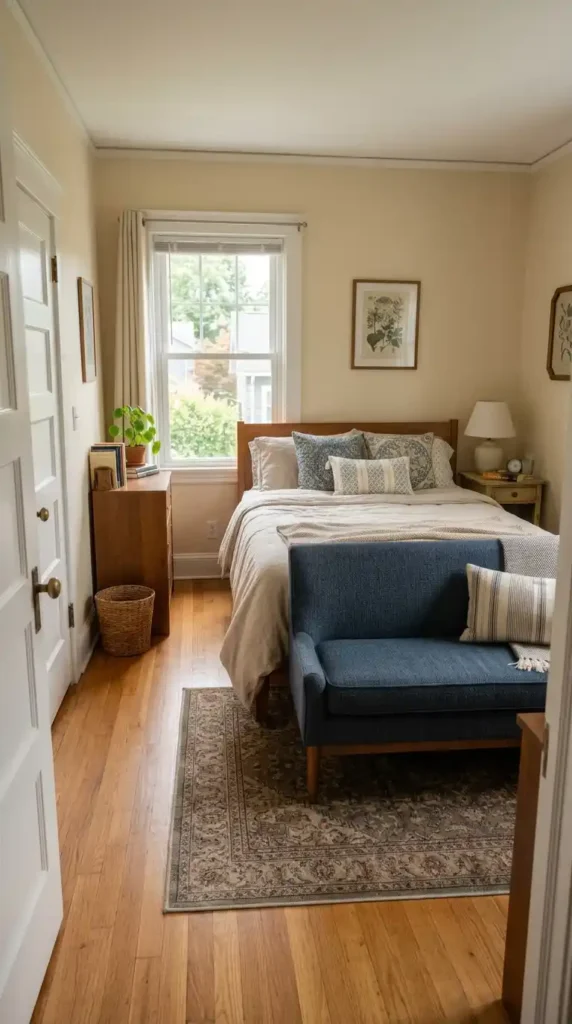
Small bedroom. Still want a sofa. Is it possible?
Sometimes. But it requires being honest about what you are actually adding.
In a bedroom under 150 square feet a standard loveseat or settee is usually too deep to work without compromising movement. The alternatives that do work:
An upholstered bench at the foot of the bed. Not technically a sofa. But it serves the same visual and functional purpose — a place to sit, a layering element at the foot of the bed, a surface for a throw. 18 to 20 inches deep versus 30 to 36 inches for a settee. The depth difference in a small bedroom is the difference between comfortable movement and daily frustration.
I recommend the upholstered bench to most people with bedrooms under 150 square feet. The visual result is nearly identical to a settee. The practical difference in daily life is significant.For more ideas on making a small bedroom feel larger see our how to make a small room look bigger guide.
The Four Bedroom Sofa Mistakes That Are Completely Avoidable
These are the ones I see most often. All of them are fixable before buying.
Mistake 1 — Buying before measuring.
Do the tape test first. Always. Non-negotiable.
Mistake 2 — Choosing the sofa independently of the bedroom palette.
The sofa color should come from the room. Not from what you liked in the store.
Mistake 3 — No side table or lamp beside it.
A sofa without anything beside it looks unused. Add a table and a light source and it looks like a destination.
Mistake 4 — Going too large.
The bedroom sofa should feel like a considered addition. Not like a piece of furniture that took over the room. When in doubt go smaller. A loveseat that fits well looks better than a three-seater that technically fits but dominates every inch of available floor.
Frequently Asked Questions
What size sofa works in a bedroom?
A loveseat at 52 to 64 inches wide or a settee at 48 to 54 inches wide works in most master bedrooms. The sofa should be no wider than the bed and leave at least 24 inches of walking clearance on any side that requires passage.
Where should a sofa go in a bedroom?
The foot of the bed is the most common and most visually balanced position. A side wall works well in smaller bedrooms or L-shaped master suites. A window-facing position works in larger bedrooms with good natural light and a view worth sitting toward.
What style sofa works best in a bedroom?
Settees, loveseats, and chaise longues suit bedroom placement best. Velvet upholstery reads as deliberately bedroom-appropriate. Avoid full three-seat sofas, sectionals, and leather which all read as living room furniture regardless of where they are placed.
Can a small bedroom have a sofa?
A bedroom under 150 square feet is better served by an upholstered bench at the foot of the bed than a settee or loveseat. The bench achieves the same visual layering with 18 inches of depth versus 30 to 36 inches for a standard settee — a difference that determines whether the room feels functional or cramped.
More Bedroom and Home Decor Ideas
→ Master Bedroom Ideas That Make You Never Want to Leave
→ How to Make a Small Room Look Bigger Without Major Renovations
→ 9 Living Room Ideas With a Grey Sofa That Actually Work
Measure First. Everything Else Is Easy.
Bedroom sofa ideas look complicated from the outside.
They are not. The whole process comes down to one honest question — does this room have space for a sofa that leaves 24 inches of clearance on the sides that matter — and then a series of decisions that follow naturally from the answer.
Tape the floor. Live with the outline for a day. If the taped outline does not bother you — does not make you turn sideways or feel cramped — the sofa will work.
If the tape bothers you, get the bench. It looks nearly identical and you will never regret it.

Sheikh Hassaan is a digital architect for small businesses and the founder of The Glow Up System. He writes about home decor, garden design, and outdoor living for real American homes – practical ideas that work in actual spaces without oversized budgets.