

The master bedroom is the one room in the house that exists entirely for the people who sleep in it — no guests, no performance, no compromises for other people’s comfort or taste. Master bedroom ideas that genuinely transform the space treat it as the most personal room in the home rather than the most decorated one, creating an environment that supports genuine rest, reflects the people who use it daily, and feels noticeably better than the rest of the house to be in.
This guide covers master bedroom ideas organized by the specific design decisions that produce the biggest transformations — from the foundational choices of bed scale and wall color through the layering of textiles, lighting, and storage that separates a master bedroom that looks like a hotel suite from one that looks like a furnished room.
Table of Contents
Start With the Bed — Everything Else Responds to It
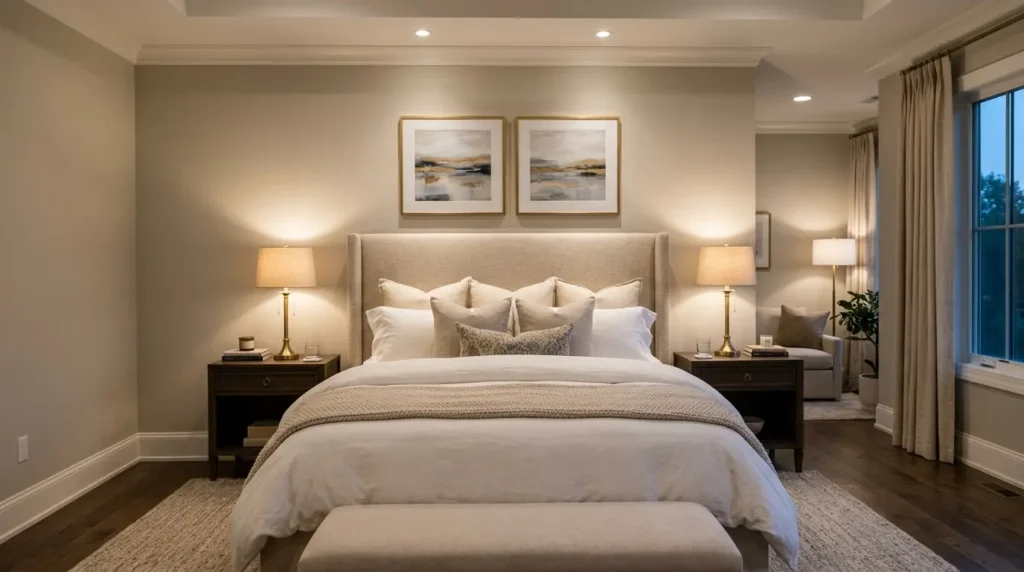
The bed is the master bedroom’s primary design element by a significant margin — it occupies more visual space than any other single piece of furniture and its scale, silhouette, and position determine how every other element in the room is arranged and perceived. A master bedroom designed around a correctly scaled bed that genuinely fills the primary wall looks designed. The same room with a bed that is too small for the wall looks like it was furnished rather than designed.
The correct bed size for a master bedroom is the largest size the room can accommodate while still allowing 24 to 30 inches of clearance on each side and at the foot. In a room of adequate size this means a king bed — not because bigger is always better but because a king bed centered on the primary wall fills the visual space proportionally in a way that a queen in the same position rarely achieves. The empty wall on either side of a queen in a large master bedroom creates dead space that the room’s design has to compensate for with additional furniture or art.
Bed frame style determines the room’s design language more than any other single piece. An upholstered headboard in a neutral linen, boucle, or velvet creates softness and warmth that a hard timber or metal headboard cannot match in a bedroom context. A low platform frame keeps the visual center of gravity close to the floor and creates calm. A four-poster frame adds architectural presence and suits rooms with high ceilings. The frame choice should be made before anything else in the room is selected because every subsequent decision responds to it.
1. The Hotel-Inspired Master Bedroom for Effortless Luxury
✦ Best for: a master bedroom where the primary goal is a clean, calm, genuinely luxurious sleeping environment
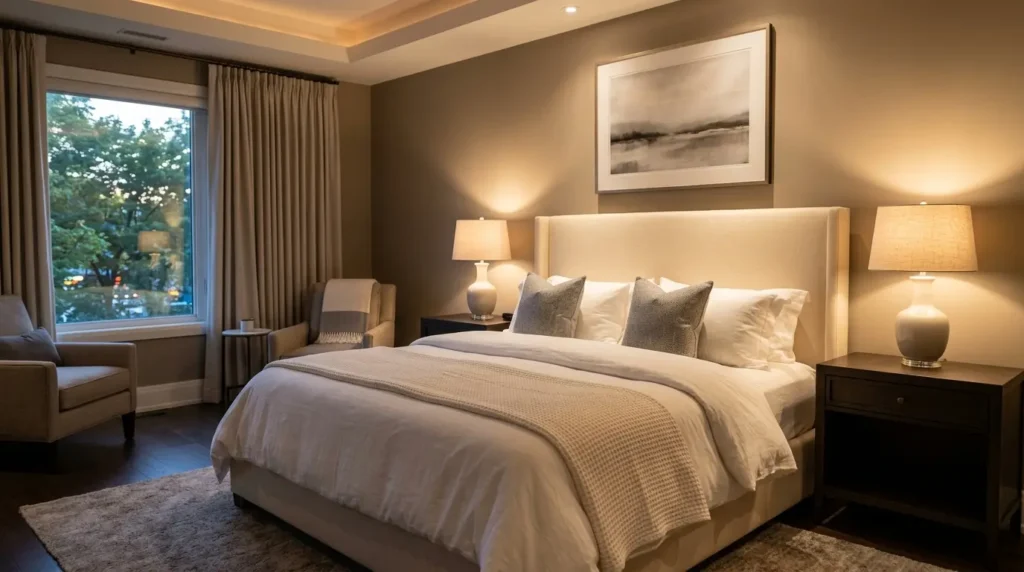
The hotel bedroom aesthetic translates directly to a master bedroom because it is built around exactly the qualities a good bedroom needs — visual calm, sensory comfort, and the specific organization that makes a room feel effortlessly maintained rather than perpetually tidied. The hotel approach prioritizes white or near-white bedding, completely clear surfaces, matching bedside elements on both sides, and lighting that is warm, layered, and controllable rather than flat and overhead.
The bedding approach that most directly creates hotel quality at home: a high thread count white cotton duvet cover, two sleeping pillows in matching white cases, and two Euro square pillows against the headboard as the only decorative layer. This arrangement looks immediately luxurious, takes under two minutes to make in the morning, and never requires the repositioning of decorative cushions or accent throws that more layered approaches demand. The Blissy Silk Pillowcase in ivory or champagne adds a genuine tactile luxury element that photographs as a premium detail against the white cotton bedding.
Every surface in a hotel-inspired master bedroom defaults to empty — the nightstands hold only a lamp, a glass of water, and whatever is being read currently. The dresser top holds nothing except possibly one object. The floor is completely clear. This default-empty state is achieved not through daily tidying but through having enough concealed storage that nothing has to live on a visible surface permanently.
2. The Moody Dark Master Bedroom for a Genuinely Dramatic Feel
✦ Best for: a master bedroom where atmosphere and drama are the goal over lightness and simplicity
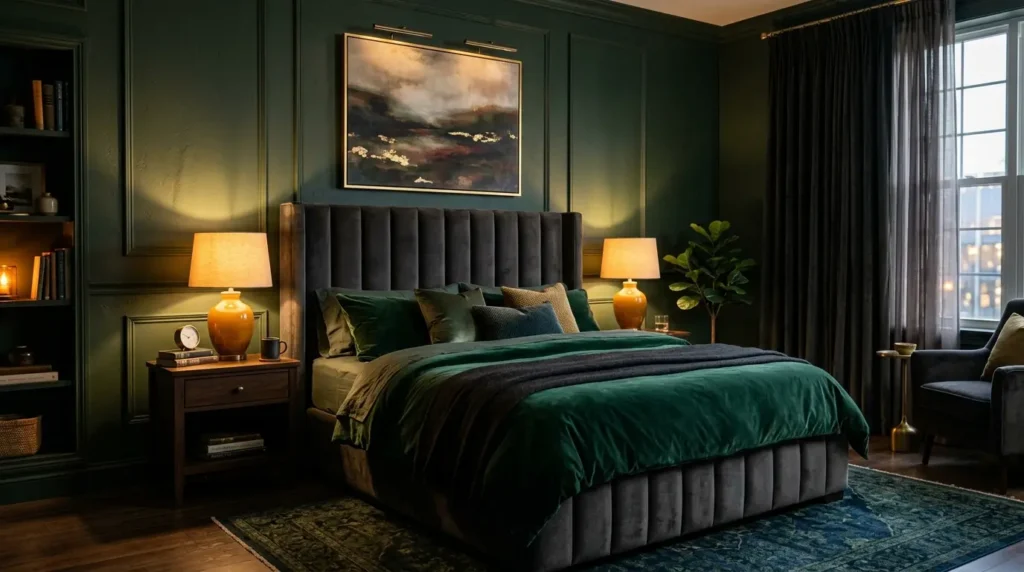
A dark master bedroom — walls in deep charcoal, forest green, midnight navy, or plum — creates an enveloping quality that light-walled bedrooms cannot achieve and that genuinely supports the psychological shift from day to night that good sleep requires. Dark walls absorb light rather than reflecting it, which creates the specific cave-like quality that the human sleep environment evolved to require. A dark bedroom is not oppressive when it has multiple warm light sources — it is genuinely restful in a way that a bright white bedroom at the same light level is not.
The wall colors that work best for a moody master bedroom: Farrow and Ball Off-Black for the most sophisticated near-black that reads as deep charcoal rather than flat black. Benjamin Moore Newburyport Blue for a midnight navy that creates depth and suits bedrooms with warm timber furniture. Sherwin-Williams Cascades for a deep forest green that photographs as richly as any paint color available. Any of these three in a master bedroom immediately shifts the room from decorated to designed.
The specific lighting approach that makes dark master bedrooms feel atmospheric rather than dim: multiple warm light sources at different heights — two bedside lamps at nightstand level, possibly a floor lamp in one corner, and the overhead light on a dimmer set to 20 percent maximum for the evening. All bulbs at 2700K warm white. The combination of warm amber light pools against dark walls creates the specific quality that makes a moody bedroom look genuinely beautiful rather than merely dark.
3. The Cozy Layered Master Bedroom for Maximum Comfort
✦ Best for: a master bedroom where tactile warmth and sensory richness are the primary goals over visual simplicity
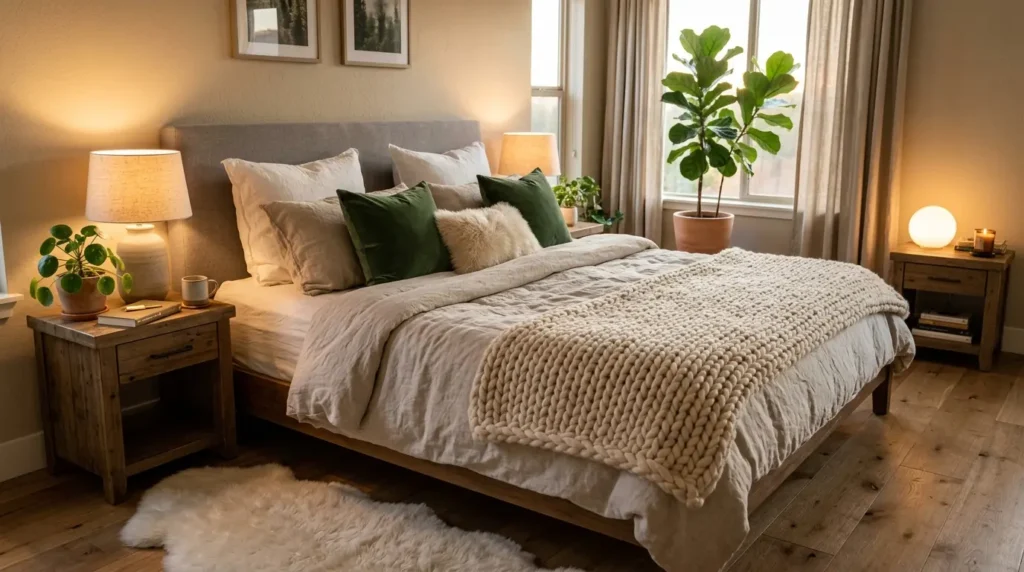
A cozy master bedroom is not simply a bedroom with more cushions — it is a bedroom designed around the specific sensory qualities that create the feeling of genuine warmth and comfort rather than the visual impression of it. The difference is tactile: a cozy bedroom has materials you want to touch, surfaces that feel warm underfoot, textiles that create genuine physical comfort, and a temperature and light environment that signals the body to relax.
The textile layering approach for a cozy master bedroom: start with a high-quality linen or cotton duvet in a warm neutral — stone, oatmeal, or warm white. Add a chunky knit or wool throw at the foot of the bed in a complementary warm tone. Two or three cushions in a mix of velvet and linen textures against the sleeping pillows. A sheepskin or textured wool rug on the floor beside the bed so the first thing felt in the morning is warm soft material rather than cold floor. Each layer contributes genuinely to the tactile richness of the room rather than simply adding visual texture.
Plants in a cozy master bedroom add the living organic element that most cozy bedroom design misses — a trailing pothos on a shelf, a small monstera in a corner, or even a single succulent on the nightstand introduces natural life into the room that softens it in a way that no textile or furniture can replicate. The cozy bedroom should feel inhabited rather than staged, and plants are one of the most reliable signals of genuine habitation.
4. The Modern Farmhouse Master Bedroom for Warm Contemporary Style
✦ Best for: a master bedroom in a home with farmhouse or transitional architecture where warm natural materials suit the overall style
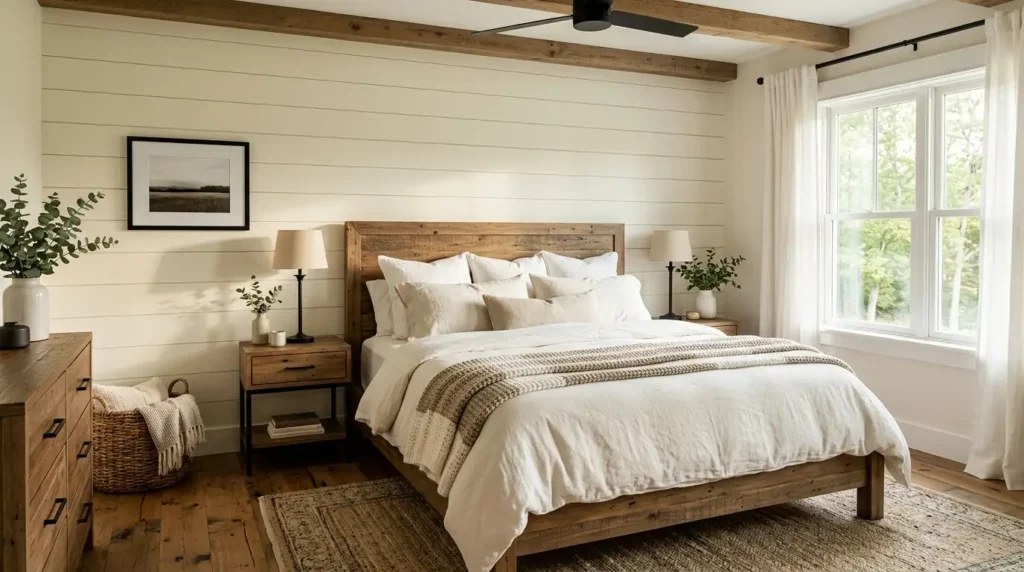
The modern farmhouse master bedroom draws on natural materials — shiplap, reclaimed timber, linen, black iron — in a contemporary arrangement that avoids the overtly rustic or themed quality that older farmhouse interpretations produced. The modern version is distinguished by its restraint: one shiplap feature wall rather than all four walls, one reclaimed timber element rather than reclaimed timber everywhere, black iron hardware rather than antique brass, and white linen rather than heavy quilts.
The shiplap feature wall behind the bed is the single most transformative element in a modern farmhouse master bedroom — it adds architectural texture to the primary wall that no paint color or art arrangement achieves, and it creates the specific backdrop that makes every other farmhouse element in the room read as intentional rather than accumulated. Painted warm white and positioned behind an upholstered or timber bed frame it creates a complete feature wall that requires no additional art or decoration to feel finished.
The color palette that works consistently in a modern farmhouse master bedroom: warm white on the walls and ceiling, warm timber tones in the floor and bed frame, black iron in the light fixtures and hardware, and warm white or soft linen tones in the bedding. This four-element palette creates the complete modern farmhouse color story without any additional accent colors that risk tipping the room from contemporary farmhouse into traditional or themed farmhouse.
5. The Boho Master Bedroom for Relaxed Eclectic Warmth
✦ Best for: a master bedroom where personal expression, collected objects, and warm organic materials are the design language
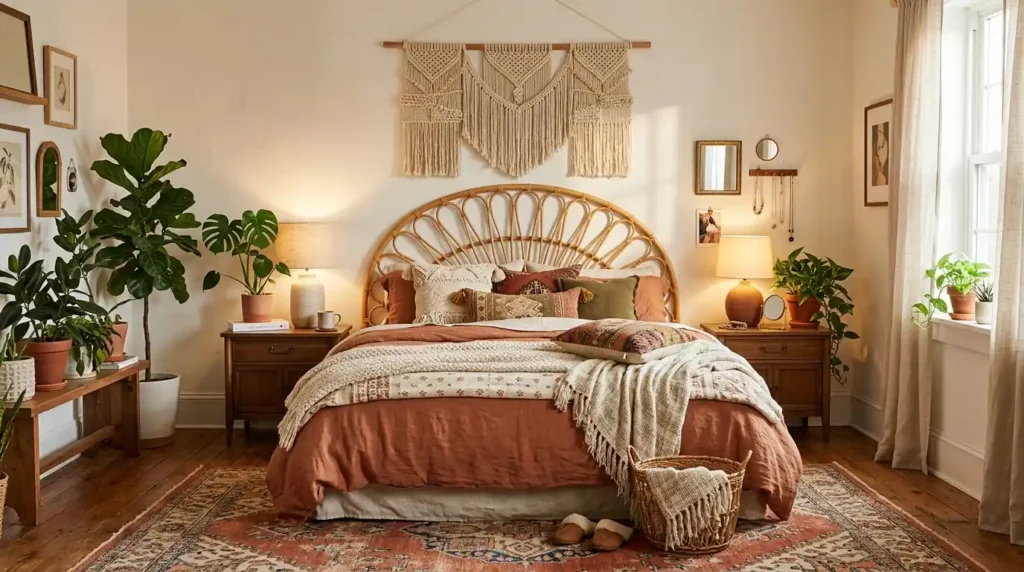
A boho master bedroom works when it feels genuinely collected over time rather than purchased as a set — the specific quality of appearing assembled from different sources, travels, and periods rather than from a single shopping session. The rattan headboard was found at an estate sale. The woven wall hanging came from a craft market. The vintage rug was inherited. Whether these stories are true or not, the design should communicate them — this is what separates a genuinely boho bedroom from one that simply uses boho-adjacent products.
Plants are non-negotiable in a boho master bedroom — not one or two plants but a genuine indoor garden at multiple heights. A tall fiddle leaf fig or monstera in one corner. Trailing pothos on a shelf or floating above the dresser. A small succulent collection on the windowsill. The abundance of plant life is what gives a boho bedroom its specific quality of feeling alive rather than simply decorated.
The color palette that keeps a boho master bedroom feeling warm and cohesive rather than chaotic: warm earth tones throughout — terracotta, burnt orange, warm cream, dusty rose, and natural timber — with muted rather than saturated versions of each color. Bright saturated colors in a boho bedroom read as festival rather than home. Muted warm earth tones read as genuinely beautiful and photographed richly in the warm light that a boho bedroom’s multiple lamp sources create.
6. The Minimalist Master Bedroom for Maximum Calm
✦ Best for: a master bedroom where visual quiet and deliberate simplicity are the primary goals
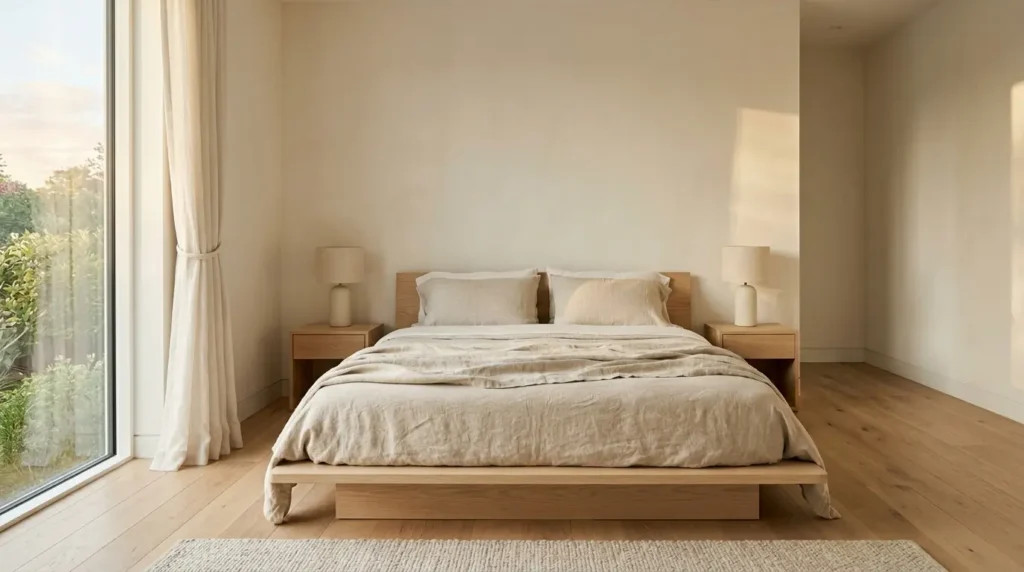
A minimalist master bedroom achieves its quality not through the absence of objects but through the presence of a small number of very well-chosen ones in a space that has been deliberately designed to support their visibility. Every element that remains in a minimalist bedroom was chosen to be there — nothing is present by default or accumulation. This intentionality is what makes minimalist bedrooms feel expensive rather than empty.
The furniture decisions that create genuine minimalist quality in a master bedroom: a low platform bed with a simple upholstered headboard — the platform format keeps the visual center of gravity low and creates calm. Two matching nightstands at exactly the same height on each side — symmetry is the organizing principle that holds a minimalist bedroom together visually. A single dresser or floating shelf unit with push-to-open drawers that eliminate visible hardware. Nothing else on the floor except possibly one rug.
The hardest part of a minimalist master bedroom is not the design — it is the storage discipline required to maintain it. A minimalist bedroom that has adequate concealed storage for everything that needs to live in the room maintains its appearance effortlessly. One that has insufficient storage becomes a daily maintenance project. The concealed storage investment is what makes minimalism sustainable rather than aspirational.
7. The Romantic Master Bedroom for Couples
✦ Best for: a master bedroom shared by two people where the design should feel genuinely intimate and indulgent for both
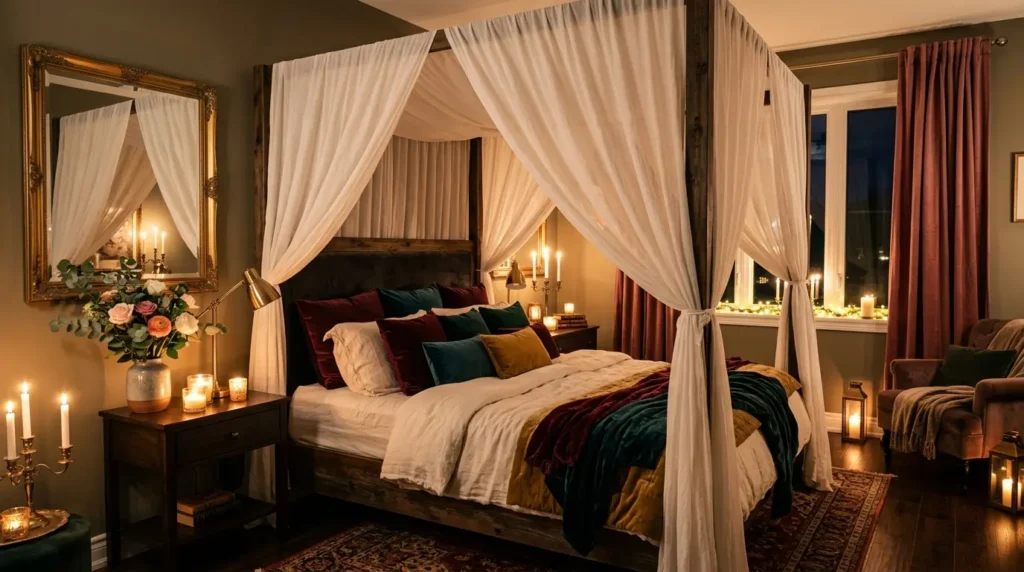
A romantic master bedroom for couples is designed around the specific sensory qualities that create intimacy rather than the visual qualities that create an attractive room. The distinction matters: a bedroom can photograph beautifully and feel cold and impersonal to be in, while a less visually striking bedroom with the right lighting, textiles, and scent creates genuine warmth and intimacy. The romantic bedroom prioritizes how it feels to be in it over how it looks in photographs.
The specific elements that create genuine romantic atmosphere rather than a decorated version of it: multiple warm light sources all at 2700K with no overhead light used after sunset. Candles — real flame where safe, high-quality LED flame alternatives where not — that create the specific quality of moving warm light that no electric fixture replicates. Heavy curtains that block external light completely and create the enclosed quality that makes a bedroom feel like a private world. Fresh flowers on at least one nightstand.
The bedding that contributes most to a genuinely romantic master bedroom: a weighted or particularly heavy duvet that creates the sensation of genuine enclosure when lying beneath it. A Blissy Silk Pillowcase on the sleeping pillows — the specific quality of silk against skin is the most immediate tactile luxury available in a bedroom and costs significantly less than any other bedroom luxury upgrade of equivalent sensory impact. Find it linked on Amazon.
Master Bedroom Lighting That Makes Every Design Look Better
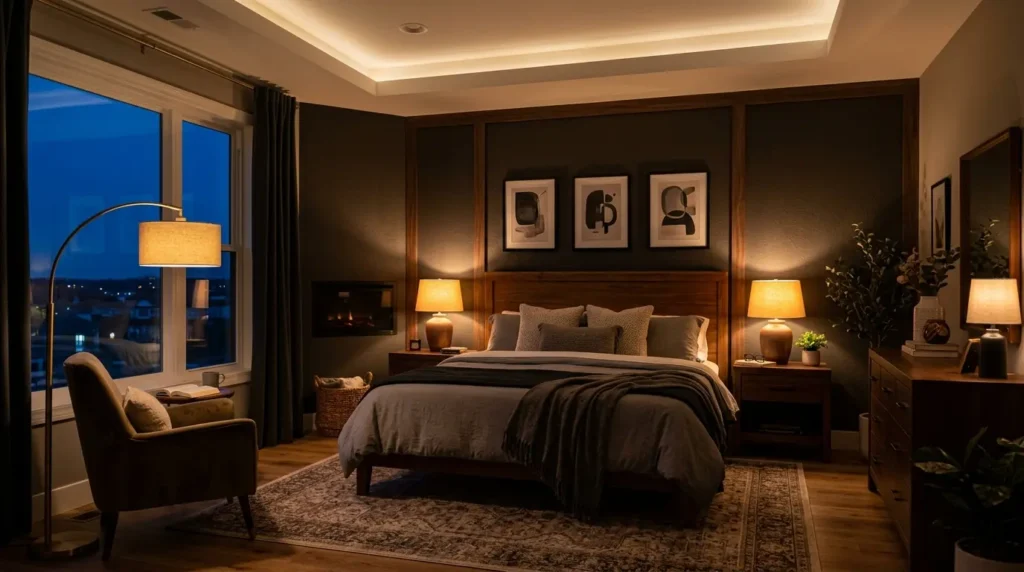
Lighting is the master bedroom decision that most directly determines how the room feels at every hour of the day — and it is the decision most frequently made last rather than first. Getting the lighting right transforms a master bedroom more dramatically than any new furniture or repaint, because lighting controls how every other element in the room looks and feels.
The non-negotiable lighting rules for any master bedroom style:
All bulbs at 2700K warm white — no exceptions. Cool or daylight bulbs in a bedroom create a clinical quality that actively works against relaxation and sleep regardless of how well everything else in the room is designed.
Overhead light on a dimmer — never used at full brightness in the evening. Set the dimmer to 20 to 30 percent after 8pm and the room’s entire atmosphere shifts from functional to genuinely restful.
Two matching bedside lamps at identical heights — the most important lighting fixture investment in any master bedroom. They create the symmetrical warm light pools that define the bed’s presence in the room and provide the specific reading light that overhead sources cannot.
Blackout window treatment — curtains or blinds that block external light completely. A master bedroom that is otherwise perfectly designed but allows early morning light to wake its occupants an hour before they need to be awake is not performing its primary function. Blackout lining behind decorative curtains creates complete light control without sacrificing the room’s daytime appearance.
📌 More bedroom decor ideas: Minimalist Men’s Bedroom Ideas for a No-Fuss Dad
Frequently Asked Questions
How do I make my master bedroom look luxurious?
The changes that produce the most immediate luxury quality in a master bedroom: upgrade the bedding to high thread count white cotton or linen and limit it to two sleeping pillows and two Euro squares — the hotel approach. Put all overhead lights on dimmers and switch all bulbs to 2700K warm white. Clear every surface to its default empty state. Add matching bedside lamps at identical heights. Install blackout curtains. According to the American Society of Interior Designers, the bedroom improvements that most consistently score highest for perceived quality are lighting upgrades and bedding quality improvements — both of which cost significantly less than furniture replacement and have more immediate impact.
What color should a master bedroom be?
The master bedroom colors that most consistently produce a beautiful and sleep-supportive result: warm white or off-white for the most versatile and most hotel-like result. Warm greige or stone for a sophisticated neutral that photographs well in any light. Deep charcoal or forest green for the most dramatic and most genuinely sleep-supportive atmosphere. Soft sage green for a calming mid-tone that suits most furniture colors. The colors to avoid in a master bedroom: cool blues and grays that create a clinical quality, bright whites that read as stark under artificial light, and saturated accent colors that are stimulating rather than calming.
How do I decorate above my bed?
The above-bed wall is the most prominent display surface in a master bedroom and the one that most affects how the entire room reads. The approaches that work most consistently: one large piece of art sized at 70 to 80 percent of the bed width centered above the headboard. Two matching framed pieces in the same size and finish flanking the center of the wall at matching heights. A large round or arch mirror that reflects the room and creates the impression of additional space and light. A set of three to five small framed pieces grouped tightly together as a single visual unit. Avoid placing art too high above the headboard — the bottom of the art should sit 6 to 8 inches above the top of the headboard.
What furniture is needed in a master bedroom?
The essential furniture for a master bedroom: a correctly sized bed frame with headboard as the primary piece. Two matching nightstands at bed height on each side. A dresser or chest of drawers with adequate storage for clothing that does not fit in the closet. These three pieces are the minimum. Optional additions that genuinely improve the room: a bench at the foot of the bed for seating and decorative layering. A comfortable chair in one corner for reading. A full-length mirror positioned to reflect natural light. Every additional piece beyond these should be tested against the question of whether it improves the room or simply fills available space.
More Bedroom Decor Ideas
→ Witchy Bedroom Decor Ideas That Create Instant Moonlit Vibes
→ Bedroom Wall Decor Stickers That Make Small Rooms Feel Bigger
→ Family Photo Wall Ideas That Never Look Tacky
Fix the lighting first. Every other master bedroom improvement looks better under warm layered light — and worse under a flat overhead bulb that was never designed to flatter anything.

Sheikh Hassaan is a digital architect for small businesses and the founder of The Glow Up System. He writes about home decor, garden design, and outdoor living for real American homes – practical ideas that work in actual spaces without oversized budgets.