
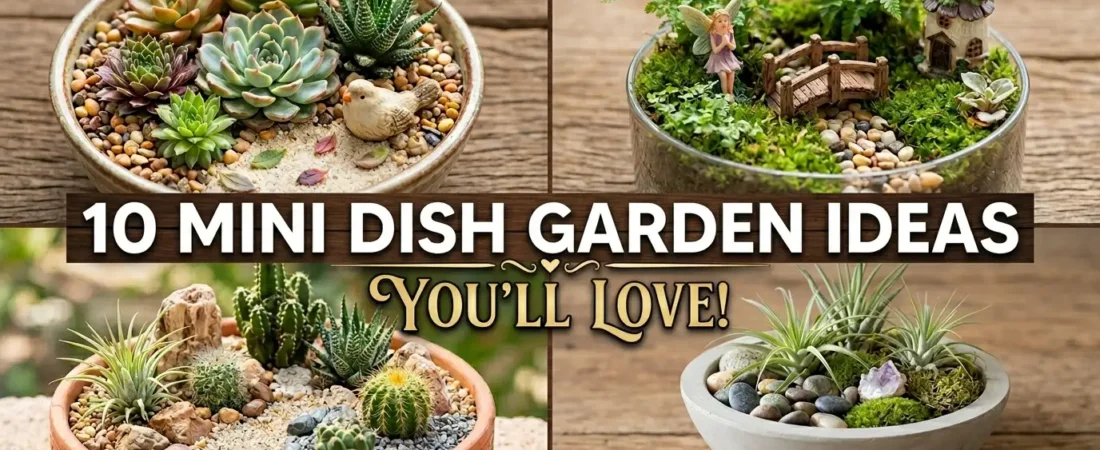
I made my first mini dish garden on a Sunday afternoon with a bowl from a charity shop, five succulents from the garden center, and some sand left over from a kids’ project. Cost about $12. It sat on my kitchen windowsill for three years.
That is the thing about mini dish gardens that no amount of plant advice prepares you for. They are more satisfying to make than they have any right to be. The finished result looks like it took skill and planning. The actual process takes thirty minutes.
These 10 ideas cover everything from a clean succulent bowl to a full fairy garden scene. I have included the one thing most guides skip — which specific plants actually work together in the same dish and why.
Table of Contents
1. Create a Succulent Bowl for a Low-Maintenance Living Centerpiece
✦ Succulent Bowl Arrangement
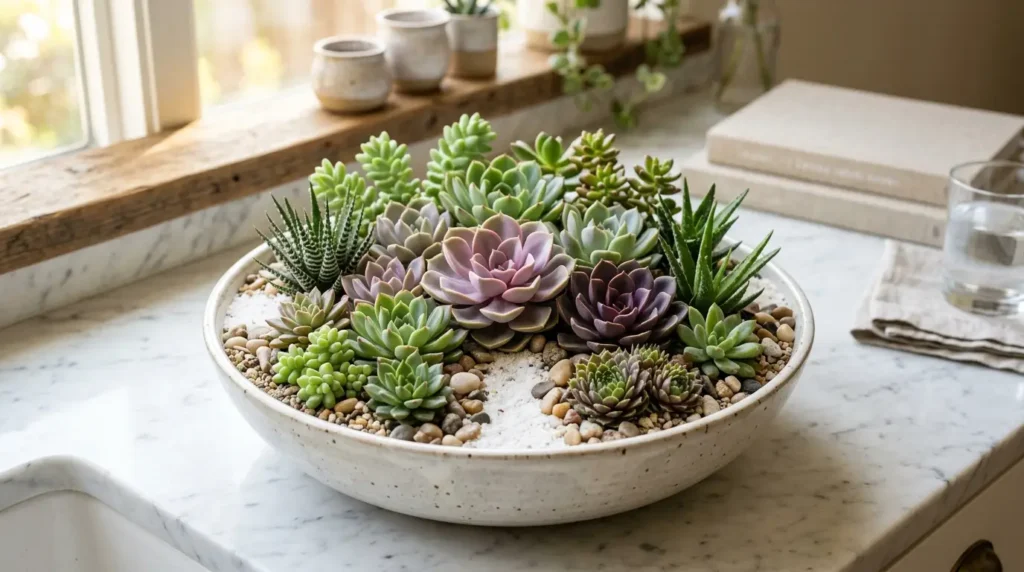
A succulent bowl is the most popular mini dish garden style because it combines maximum visual impact with minimum maintenance. A well-designed succulent arrangement in a beautiful shallow bowl becomes a living sculpture that looks beautiful year-round and requires watering only once every two to three weeks.
Choose a shallow wide ceramic bowl with at least one drainage hole. Fill with a cactus and succulent specific potting mix that drains freely. Arrange 5 to 8 different succulent varieties of varying sizes, colors, and textures — start with one tall or upright variety as a focal point and fill around it with rosette and trailing types. Add white sand or fine gravel between the plants to complete the natural desert aesthetic. The XXXFLOWER glass terrarium works beautifully for a glass-enclosed succulent display. Find it linked on Amazon.
For the specific succulent varieties that perform best in container growing conditions see our drought tolerant plants succulents guide which covers the nine options that thrive on minimal attention.
PRO TIP: When arranging succulents in a bowl group the same varieties together in clusters of two or three rather than alternating single plants. Clusters look more like a natural landscape and less like a collection of individual specimens.
2. Build a Mini Zen Garden for a Calm Desk or Table Display
✦ Minimal Zen Garden Style
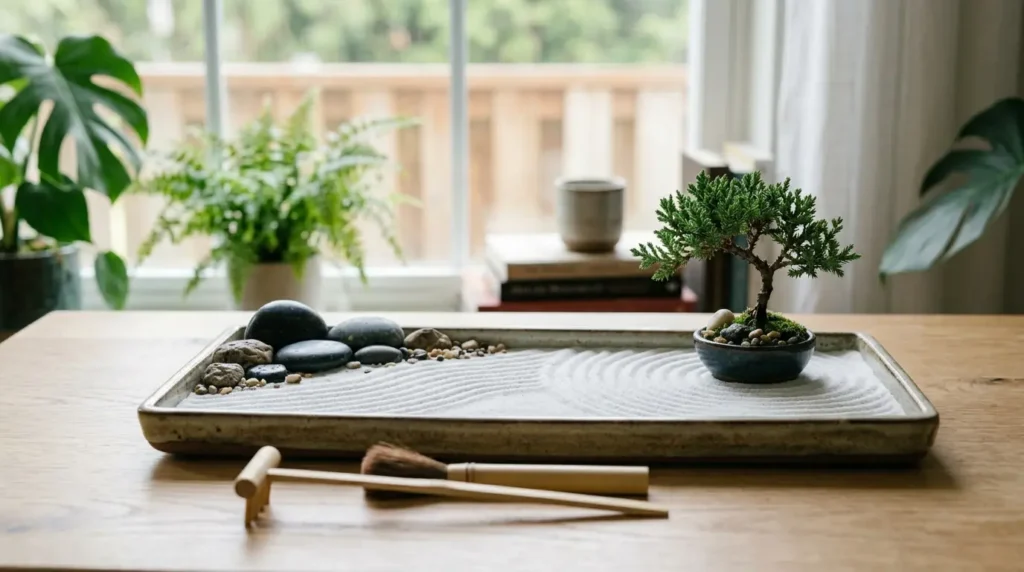
My desk zen garden has been raked into seven different patterns since Monday. That is the thing nobody tells you about mini zen gardens — the making and remaking of them is more of the point than the finished arrangement.
Clean sand. Three stones. One small plant. It looks like almost nothing and consistently attracts more comment than anything else on the desk.
Use a shallow rectangular tray or dish at least 2 inches deep. Fill with fine white or natural sand. Add 3 to 5 smooth river stones of varying sizes at one or two focal points. Include one tiny slow-growing plant — a mini bonsai, a small haworthia, or a compact moss clump — at one end. A small wooden rake specifically made for zen gardens is widely available online and allows you to change the sand patterns whenever the mood strikes.
3. Create a Tropical Mini Garden With Small Foliage Plants
✦ Tropical Mini Garden Setup
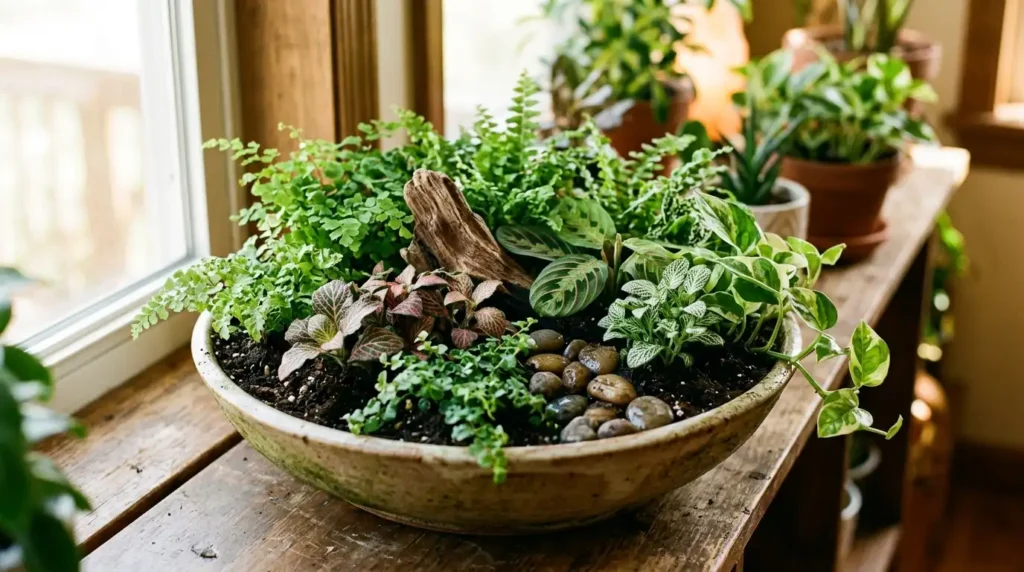
The tropical mini garden is the most demanding of the ten in terms of ongoing attention — it needs regular misting and consistent moisture — but it is also the one that photographs best and creates the most convincing miniature environment. I find it suits a bathroom windowsill better than anywhere else in the home.
Choose plants that thrive in similar conditions — high humidity, indirect light, consistently moist soil. Baby ferns, miniature prayer plants, Fittonia with its patterned leaves, and small Pothos cuttings all work beautifully together. Add a small piece of driftwood and a few smooth stones for natural texture contrast. Mist regularly to maintain the humidity that tropical foliage plants prefer. Keep this dish garden near a bathroom window where steam provides natural humidity.
For more on creating a tropical atmosphere indoors with the right plant combinations see our best plants for beginners guide which covers the low-maintenance tropical varieties that suit indoor conditions.
PRO TIP: Use a dish without drainage holes for a tropical mini garden and add a layer of horticultural charcoal at the base before the potting mix. The charcoal prevents bacterial growth and keeps the enclosed planting healthy without drainage.
4. Make a Glass Bowl Dish Garden for Under $15
✦ Budget-Friendly Glass Dish Design
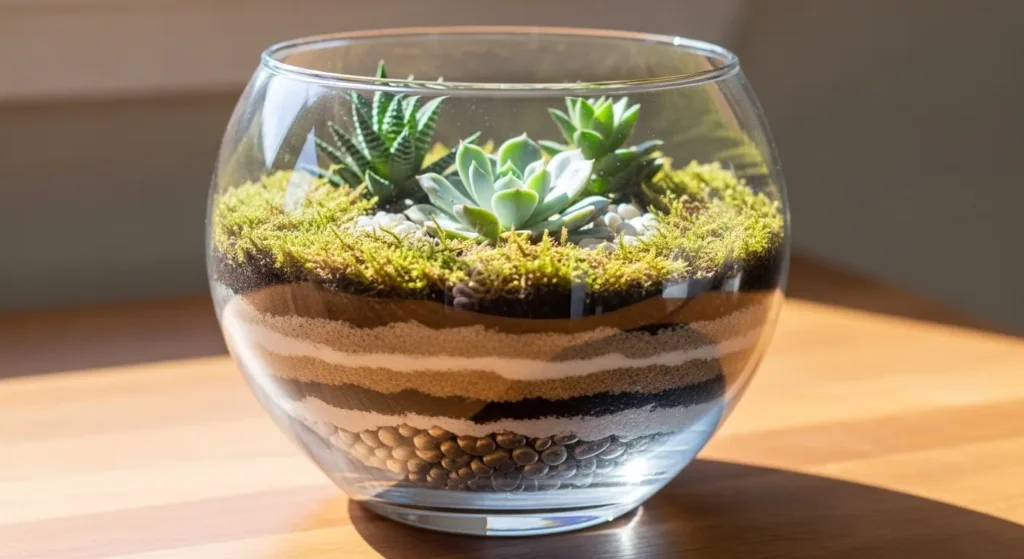
The glass bowl is my favorite container for showing the dish garden to guests because the visible layers through the sides — white sand, colored pebbles, potting mix — make the whole construction legible. People understand what they are looking at and that understanding makes them look longer.
Use a wide clear glass salad bowl, a large glass vase, or any clear glass vessel with a wide opening. Layer the interior with visible contrasting materials — white sand at the base, a layer of small colored pebbles, then potting mix on top. Plant small succulents or a moss arrangement in the top layer. The visible stratigraphy of the layers through the glass sides is part of the aesthetic. Total cost for the entire project is typically under $15.
5. Use a Mini Dish Garden to Style an Indoor Shelf or Corner
✦ Cozy Indoor Green Corner
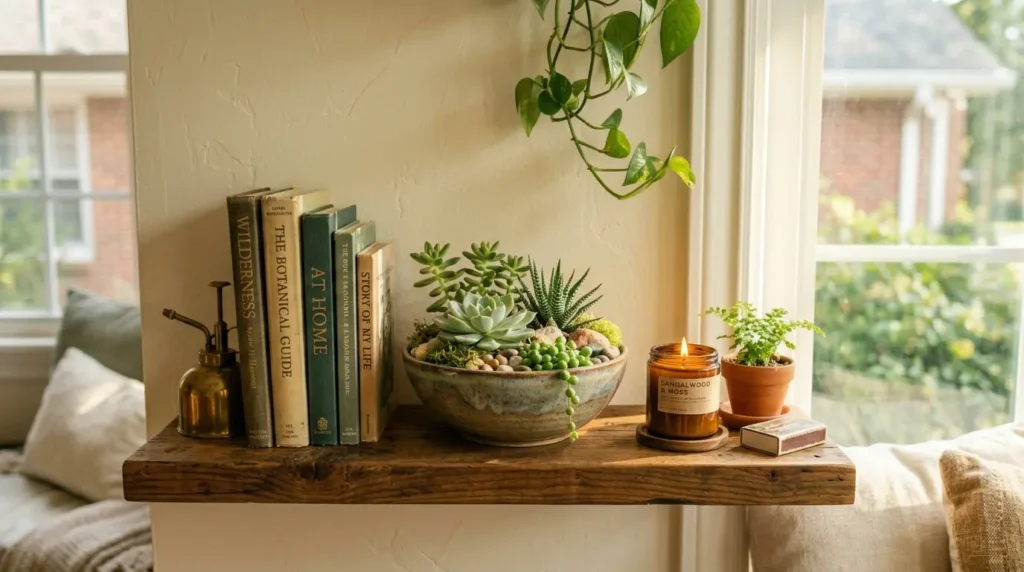
I think the dish garden is the most underused shelf styling element available. Most people put a single potted plant among their books and objects. A well-designed dish garden in a beautiful bowl becomes the anchor the whole shelf is arranged around.
Position your dish garden at the front-center of a shelf display. Arrange books, small objects, and decorative accessories behind and beside it. The dish garden should be the first thing the eye goes to and the element everything else complements. Choose a dish and plant combination that suits the color palette of your room — a neutral cream ceramic with grey-green succulents works in almost any interior style.
PRO TIP: Elevate your dish garden on a small wooden riser or a stack of books so it sits slightly higher than the surrounding objects on your shelf. The elevation makes it visually more prominent and prevents it from getting lost among taller books and decorative pieces.
6. Create a Moss and Stone Mini Garden for a Natural Woodland Feel
✦ Moss and Stone Aesthetic
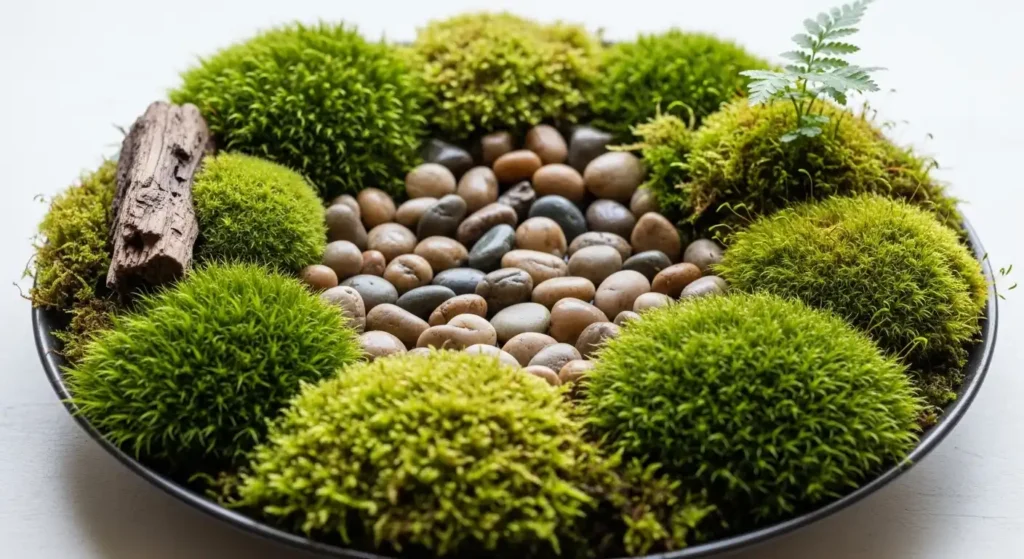
A moss and stone dish garden is the arrangement that most surprises people when they look at it closely. From across the room it reads as a decorative object. Up close it reads as a section of forest floor.
That shift in perception is the whole point. Living moss, smooth river stones, weathered driftwood. The scale is compressed. The atmosphere is not.
Source preserved or living moss from garden centers or online suppliers. Living moss requires consistent moisture and indirect light. Preserved moss requires no watering at all and maintains its color and texture indefinitely — ideal for a low-maintenance decorative piece. Combine two or three different moss varieties for visual texture variation. Tuck smooth river stones into the moss at natural-looking irregular intervals and add a small piece of driftwood for structural interest.
7. Plant a Mini Garden in a Vintage or Thrifted Ceramic Bowl
✦ Vintage Ceramic Dish Garden
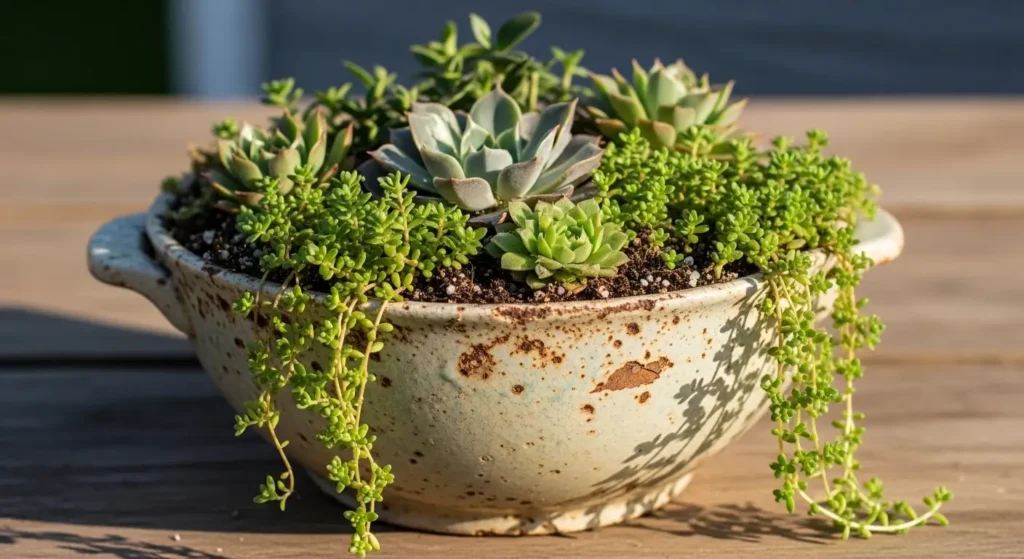
A vintage or thrifted ceramic bowl transforms a mini dish garden from a plant arrangement into something with genuine character and history. The aged patina, imperfect glaze, and unique shape of a found ceramic vessel gives the entire arrangement a quality that no new purchased planter can replicate.
Search thrift stores, estate sales, and antique markets for wide shallow ceramic dishes, soup tureens, antique planters, and decorative bowls. Any ceramic vessel wide enough for a small plant arrangement and with or without drainage holes can work as a dish garden container. The imperfection and history of a found ceramic is the whole point — it elevates the plants planted in it and tells a story that a generic planter cannot.
PRO TIP: If your vintage ceramic bowl has no drainage holes drill one or two with a ceramic drill bit rather than relying on the charcoal method. Drainage holes are always preferable for plant health and the drill work takes less than five minutes with the right bit.
8. Build a Mini Dish Garden as the Perfect Small Apartment Plant Display
✦ Small Apartment Plant Idea
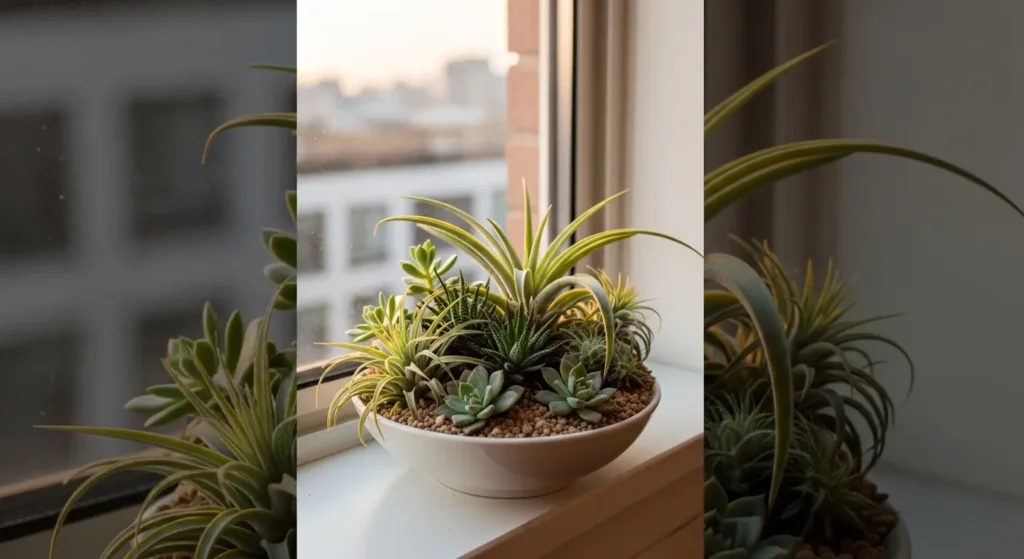
The succulent bowl is the mini dish garden I recommend first to anyone who has killed every plant they have ever owned. Succulents genuinely prefer to be slightly neglected. Two weeks without water in summer is fine. Three is usually fine. They are the ideal plant for a person who wants plants but does not want plant anxiety.
Choose compact drought-tolerant plants that thrive in the conditions your apartment provides — succulents and air plants for bright windowsills, moss and ferns for shadier spaces. A single beautiful dish garden on a windowsill or coffee table is more impactful than a dozen mismatched small pots scattered around the apartment. It also requires less overall maintenance and creates a more intentional and designed aesthetic.
One well-designed dish garden on a windowsill does more for a small apartment than a dozen scattered pots. I find this counterintuitive until I see it in person — the single considered arrangement reads as a design decision while the scattered pots read as an accumulation.
For more ideas on using plants to transform a small apartment space see our small apartment ideas guide which covers the plant and styling approaches that make the most impact in limited indoor space.
9. Create a Miniature Fairy Garden in a Wide Shallow Bowl
✦ Fairy Garden Inspiration
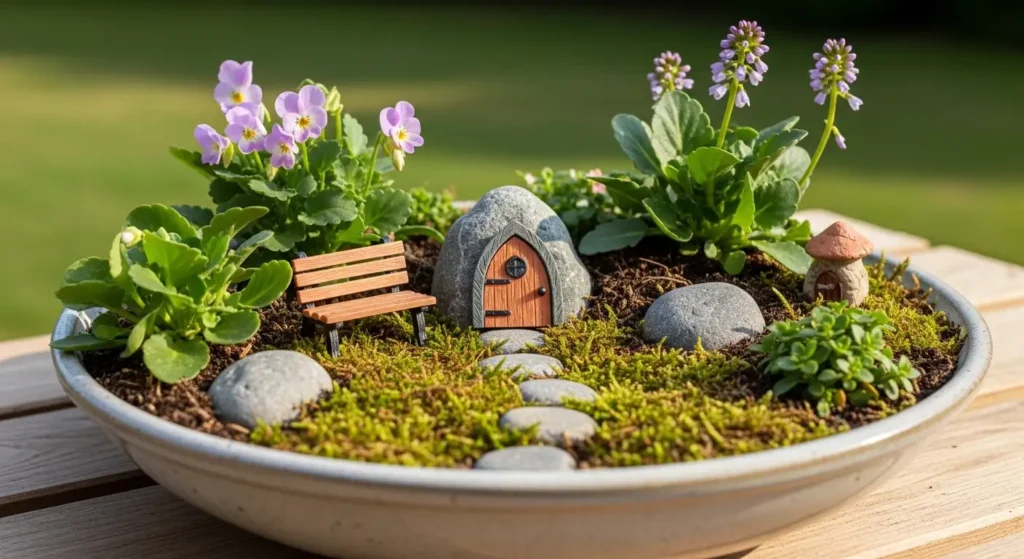
I made a fairy garden dish with my daughter and she has rearranged the furniture in it approximately forty times since. That is the correct use of a fairy garden.
The arrangement is not fixed. The miniature bench moves. The tiny door gets repositioned. The moss gets adjusted. A fairy garden dish is less a plant arrangement and more a small world that lives on the coffee table.
Start with a wide shallow bowl at least 8 inches across. Create a landscape with potting mix mounded to create hills and flat areas. Plant small flowering plants like miniature violets, baby tears, or tiny daisies. Add fairy garden accessories — a tiny bench, a miniature door, small stepping stones, a little lantern. Tuck pieces of moss around the base of everything to create the ground cover that makes the scene feel real. These are the arrangements that children and adults both stop and look at twice.
PRO TIP: Shop the miniature accessories section of craft stores and dollar stores for fairy garden elements rather than specialist fairy garden retailers. The same small figurines and decorative objects are available at a fraction of the price in general craft sections.
10. Design a Woodland-Themed Mini Garden With Ferns and Bark
✦ Natural Woodland Theme
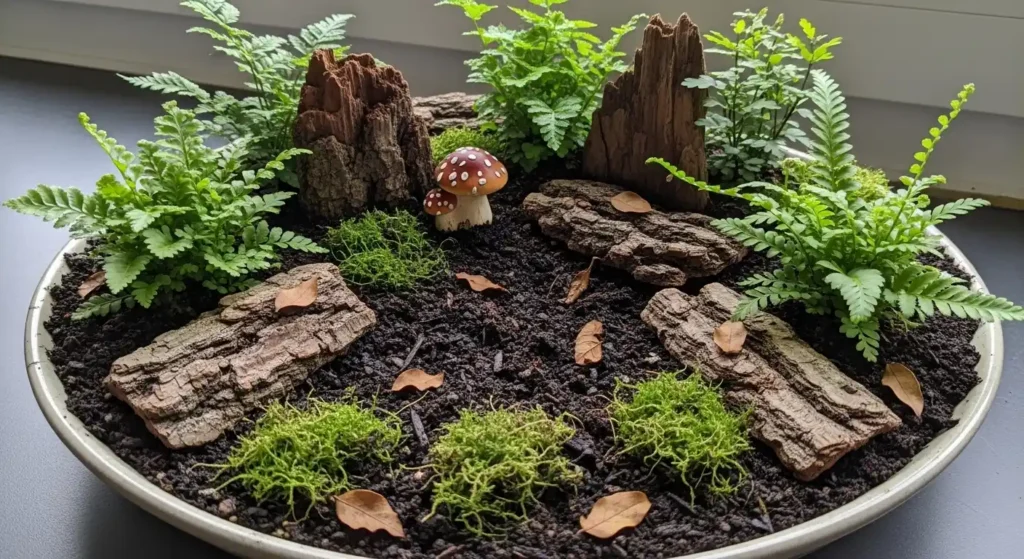
The woodland dish garden is the one I find most evocative. Something about miniature ferns and pieces of bark in a dark bowl creates a forest atmosphere that the other styles do not. I find it particularly effective in autumn when the outdoor light changes and the indoor garden feels like a small piece of the season brought inside.
Choose a dark or earth-toned ceramic bowl to echo the forest floor aesthetic. Plant two or three small fern varieties of different heights and textures as the main planting. Add pieces of natural bark at angles to suggest fallen branches. Scatter a few smooth stones and tuck small pieces of preserved moss between the ferns. A tiny woodland mushroom figurine placed carefully among the planting adds the final whimsical touch that makes a woodland dish garden genuinely charming. The XXXFLOWER glass terrarium creates a beautiful enclosed woodland atmosphere with any of these elements inside. Find it linked on Amazon.
PRO TIP: Woodland mini gardens prefer indirect light and consistent moisture. Avoid placing them in direct sun which scorches fern fronds quickly. A north or east-facing windowsill provides the cool indirect light that woodland plants prefer and keeps the display looking its best.
How to Make Any Mini Dish Garden Thrive
These five principles apply to every mini dish garden regardless of style:
1. Match your plants to your light conditions
Succulents need bright direct light. Ferns and moss prefer indirect light. Tropical foliage plants need bright indirect light. Matching your plant choice to the actual light available in your space is the single most important decision for long-term success.
2. Always use the right potting mix
Succulents and cacti need fast-draining cactus mix. Ferns and tropical plants need moisture-retaining general potting mix. Moss needs no traditional potting mix at all. Using the wrong growing medium kills plants slowly and frustratingly.
3. Drainage is non-negotiable for most plants
The most common cause of mini dish garden failure is overwatering in a container with no drainage. Always use a dish with drainage holes for succulents. For closed glass terrariums use the charcoal layer method. Water less than you think you need to and check soil moisture before adding more water.
4. Group plants with similar needs
Every plant in a dish garden shares the same watering schedule. Never mix succulents with moisture-loving ferns in the same dish — one group will always be over or under watered. Group plants that need the same conditions together.
5. Scale matters
Choose plants appropriate to the scale of your dish. A tiny dish with one large plant looks unbalanced. A large wide bowl with tiny plants looks sparse. Aim for plants that fill approximately two-thirds of the dish area at planting time — they will fill the rest as they grow.
5 Mini Dish Garden Mistakes Worth Avoiding
These mistakes are the most common across all mini dish garden styles:
Mistake 1 — Overwatering succulents
Succulent dish gardens fail almost exclusively from overwatering. Succulents store water in their leaves and need soil to dry completely between waterings. Water once every 2 to 3 weeks in summer and once a month or less in winter. When in doubt wait another week.
Mistake 2 — Choosing plants purely for looks
A beautiful plant that needs conditions different from what you can provide will decline and die regardless of how attractive it was at purchase. Always check light and water requirements before buying any plant for a dish garden.
Mistake 3 — Using regular garden soil
Garden soil compacts in containers, drains poorly, and often contains pathogens unsuitable for indoor plants. Always use purpose-made potting mix appropriate to your plant type. The right potting mix costs very little and makes an enormous difference to plant health.
Mistake 4 — Placing in direct harsh sunlight
Even succulents can burn in harsh direct afternoon sunlight through a south-facing window. Morning sun is gentler and preferred by most dish garden plants. Avoid placing any dish garden in harsh direct afternoon sun during summer months.
Mistake 5 — Planting too densely
Over-planted dish gardens look lush initially but become overcrowded quickly as plants compete for space, light, and nutrients. Leave breathing room between plants at planting. A slightly sparse arrangement at planting becomes perfectly full within one growing season.
📌 More home and garden ideas → 8 Rooftop Garden Ideas Perfect For Summer
Frequently Asked Questions
What plants are best for a mini dish garden?
The best plants for mini dish gardens depend on your style and light conditions. For sunny windowsills succulent varieties including echeveria, haworthia, sedum, and aloe are ideal — they are slow growing, low maintenance, and beautiful. For indirect light locations small ferns, Fittonia, miniature prayer plants, and moss all work well. For very low light preserved moss and air plants that need no soil are the most reliable choices. According to Better Homes and Gardens succulents are the top choice for indoor dish gardens because of their sculptural beauty and minimal care requirements.
How do I water a mini dish garden?
Succulent dish gardens need watering only when the soil is completely dry — typically every 2 to 3 weeks in summer. Tropical foliage dish gardens need consistently moist but never waterlogged soil — check moisture with a finger before adding water rather than following a fixed schedule.
What container is best for a mini dish garden?
Wide and shallow rather than tall and narrow — a width-to-depth ratio of approximately 3 to 1 creates the most natural landscape-like proportion. Ceramic bowls with drainage holes are ideal for most plant types and vintage thrifted vessels add character that no new planter replicates.
How long does a mini dish garden last?
A well-maintained succulent dish garden can last years with the same plants requiring only occasional repotting as they outgrow the dish. Tropical foliage arrangements typically need refreshing after 1 to 2 years. Preserved moss gardens last indefinitely with no maintenance at all.
More Garden and Home Ideas You Will Love
→ 12 Boho Garden Ideas You’ll Love
→ 7 Dream Backyard Ideas For Small Spaces
→ 25 Simple But Stunning Garden Lighting Ideas
→ 12 Townhome Backyard Ideas For Summer
Find a bowl first. Not the plants. The bowl.
Something from a charity shop that has a shape you like. A wide ceramic dish. A glass salad bowl. Whatever it is, the bowl is where the arrangement starts and what determines everything else about it.
Then five plants that suit your windowsill. Then thirty minutes on a Sunday. That is the whole project.

Sheikh Hassaan is a digital architect for small businesses and the founder of The Glow Up System. He writes about home decor, garden design, and outdoor living for real American homes – practical ideas that work in actual spaces without oversized budgets.