
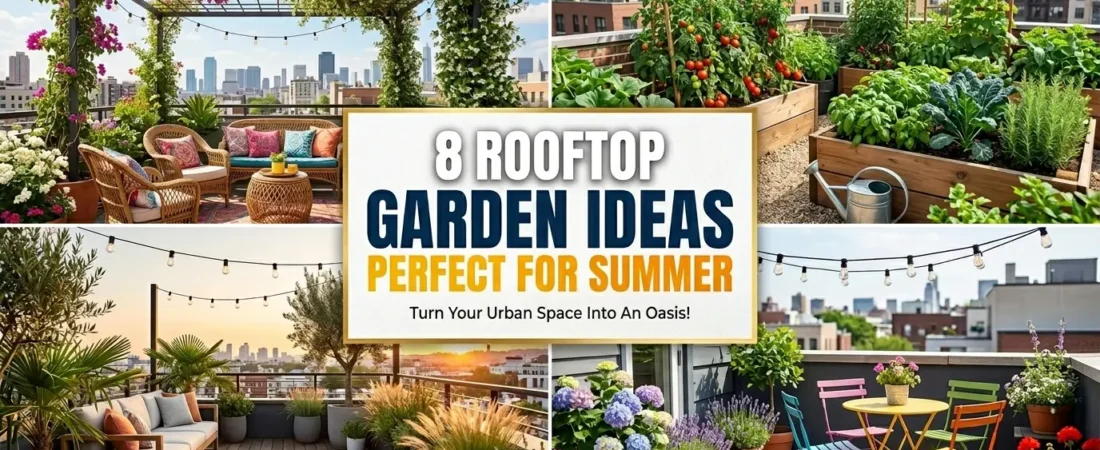
Most rooftops sit empty for years. They collect debris, get walked past without a second thought, and represent one of the most valuable untapped outdoor spaces in any urban home or apartment. A rooftop with the right setup becomes the best room in the building — open sky above, city views all around, and complete privacy from the street below.
Table of Contents
Rooftop garden ideas work differently from ground-level garden ideas because the conditions are different. More wind. More direct sun. No ground soil. But these constraints are also opportunities — rooftop spaces have views that ground gardens never will, privacy that is impossible at street level, and a sense of elevation that makes every evening up there feel genuinely special.
I have ordered these 8 ideas from the most achievable to the most involved. The first three require no building experience. The lighting sections work for any setup. Start wherever makes sense for your space.
1. Create a Dedicated Sunset Lounge Area With Low Seating
✦ Cozy Sunset Lounge
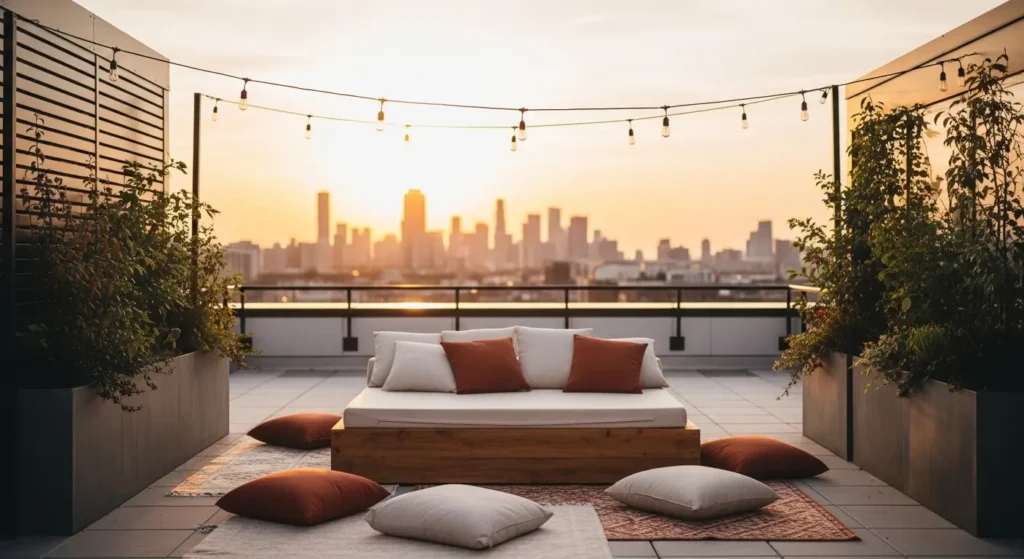
The rooftop sunset lounge is the outdoor setup I find most consistently underbuilt. People put furniture on a rooftop without thinking about the direction it faces. Turn it west and the same chairs become somewhere genuinely worth sitting every evening.
Choose low wooden daybed frames or large floor cushion arrangements for your rooftop seating — lower seating is more stable in the wind and creates a more relaxed intimate atmosphere. Position your seating to face west for the best sunset angle. Large planters with tall grasses or bamboo on the windward side provide privacy and wind protection without blocking your sky view. The addlon solar string lights strung in a loose canopy overhead complete the lounge atmosphere beautifully. Find them linked on Amazon.
PRO TIP: On a rooftop always secure your lightweight furniture with furniture leg weights or by filling large planters with heavy growing medium. Rooftop wind can move unsecured lightweight furniture unexpectedly and create safety hazards.
2. Transform a Small Rooftop With a Compact Smart Layout
✦ Small Space Rooftop Setup
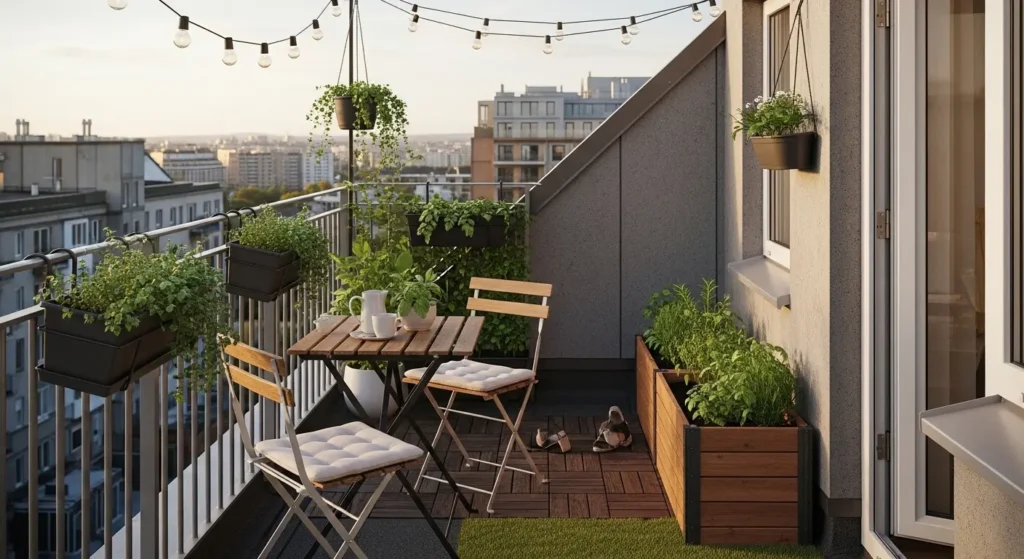
Small rooftops reward the same discipline as small apartments — every element earns its floor space or it does not get one. I think the fold-flat bistro table is the most useful piece of furniture available for a small rooftop setup.
A folding bistro table and two chairs provide a dining and working surface that folds completely flat against the wall when not in use. Hanging planters on the railing bring greenery without using any floor space. A single raised planter box along the parapet wall grows herbs, flowers, and salad greens while acting as a decorative border. The self-watering hanging planters with macrame rope hangers are ideal for rooftop railings — the built-in reservoir handles the faster drying conditions of a rooftop exposure. Find them linked on Amazon.
For more on vertical growing approaches that free up floor space see our balcony garden ideas for small spaces guide which covers the railing planter and hanging planter approaches in detail.
3. Create a Tropical Urban Escape With Container Plants
✦ Tropical Rooftop Vibes
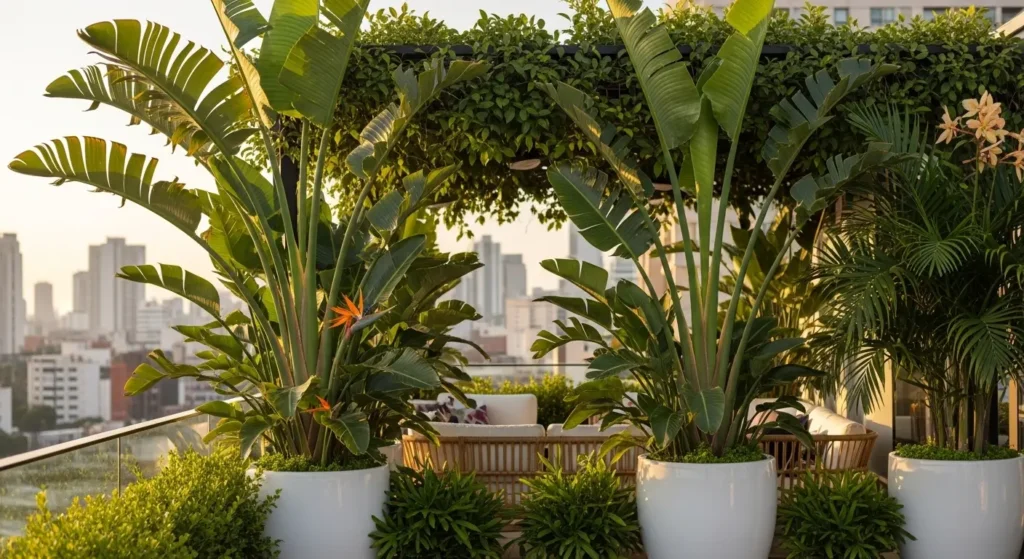
A palm tree against a city skyline. That is the image.
Large tropical plants on a rooftop create a contrast — lush nature against urban geometry — that looks unlike anything at ground level. The height of the rooftop is what makes it work. You are not looking at the plants across a garden. You are looking at them against the sky.
Use large Bird of Paradise, Areca palms, and Monstera in substantial white or cream ceramic containers as the structural backbone of your tropical rooftop. Their height and drama immediately establishes the tropical atmosphere. Fill the lower level with smaller tropical plants — Caladium, Hibiscus, and trailing Tradescantia. The height variation between tall palms and low trailing plants creates the layered lush quality of a proper tropical planting scheme. Use heavy containers with built-in drainage to handle rooftop rain and wind conditions.
For the specific tropical plants that handle rooftop heat and wind best see our drought tolerant plants succulents guide which covers the varieties that thrive in exposed hot container conditions.
PRO TIP: On a rooftop always check the weight loading capacity before installing large heavy planters. A standard rooftop can typically handle 15 to 20 pounds per square foot but this varies significantly by building. Check with your building management or a structural engineer before installing multiple large heavy containers.
4. Build a Budget Rooftop Garden With Pallets and Solar Lights
✦ Budget-Friendly Garden Design
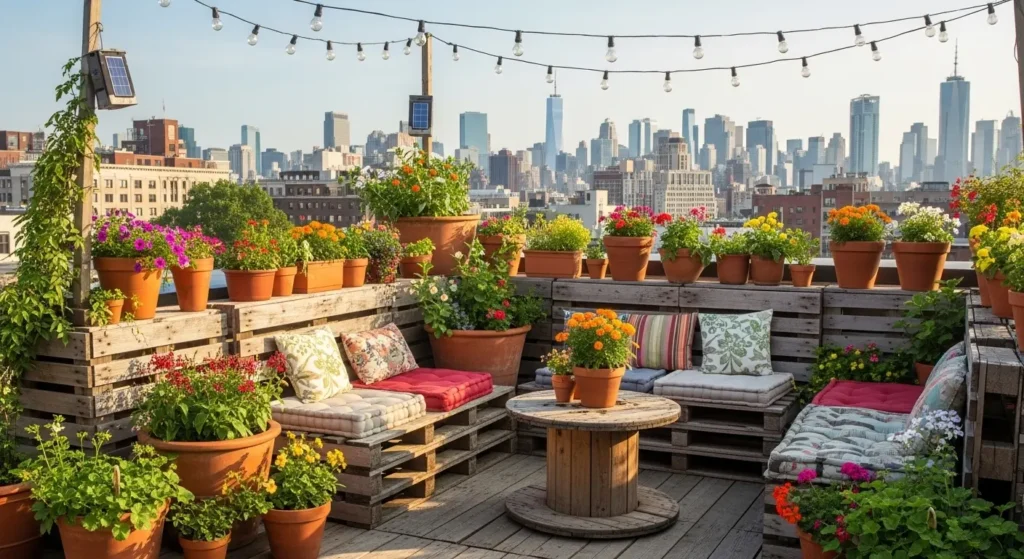
The pallet rooftop garden is the version I recommend to anyone who wants to start immediately and spend almost nothing. The pallets do two things at once — they cover the industrial rooftop surface and they provide the building blocks for seating, planting stands, and low tables.
Use wooden pallets as a base decking layer to cover bare concrete or roofing felt — this immediately makes the rooftop feel more like a garden and less like a building maintenance area. Stack pallets to create low seating with cushions on top. Use smaller pallets as elevated planter stands for terracotta pots at different heights. Solar string lights overhead and the whole rooftop is transformed after dark for zero electricity cost.
5. Design a Clean Minimal Rooftop With Architectural Plants
✦ Modern Minimal Look
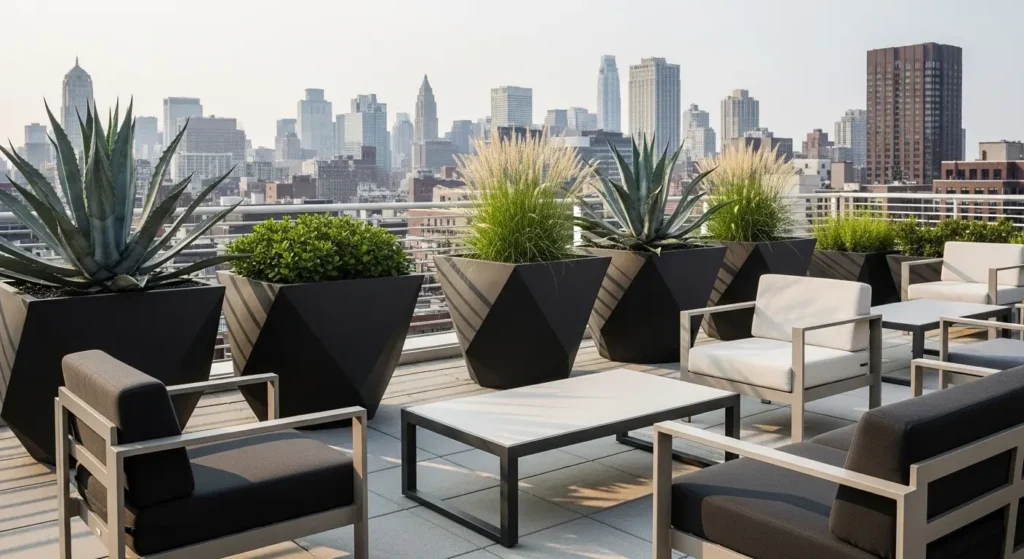
A minimal rooftop garden uses the city skyline as its backdrop and the open sky as its ceiling. The design philosophy is restraint — fewer elements chosen with precision, clean lines, and architectural plants that look as good against a city backdrop as they do in a curated garden.
Choose two or three large geometric planters in concrete, black, or natural stone finish. Plant each with a single architectural specimen — one large agave, one ornamental grass, one structural succulent. Clean-line outdoor furniture in charcoal or natural teak. No decorative accessories. The city view does the decorating. This is the rooftop style that photographs best from above — the kind of image that gets pinned thousands of times.
6. Set Up a Rooftop Dining Area for Summer Evening Meals
✦ Outdoor Dining Corner
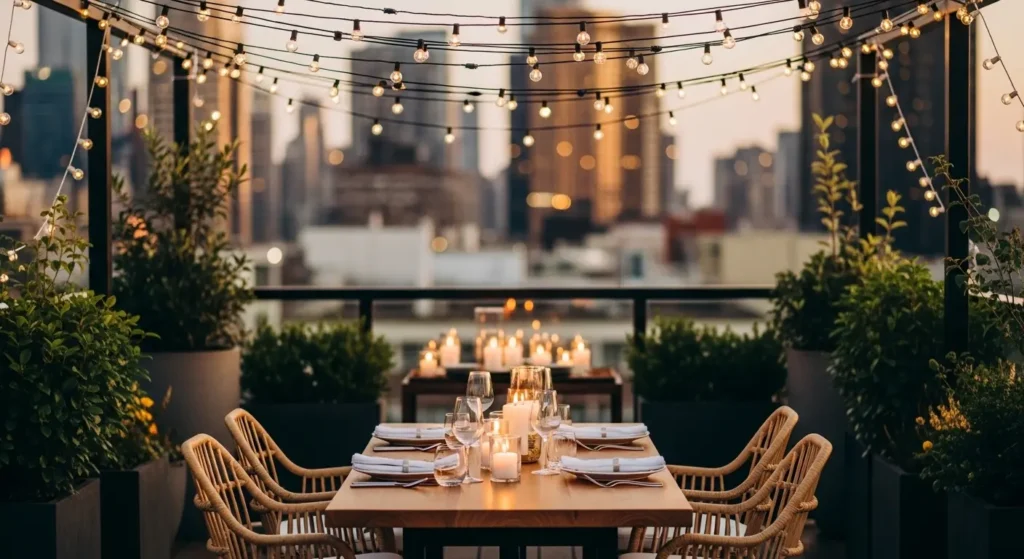
Rooftop dining is the outdoor experience I find most people do not realize they have access to. A table, two chairs, and a city view at golden hour is genuinely better than most restaurant experiences. It just requires setting it up.
Position your dining table to maximize your best view. Use a parasol or shade sail above the table for afternoon meals when direct sun is strong — this also acts as a wind break which is valuable on exposed rooftops. String lights overhead create the transition from afternoon dining to evening dining seamlessly. The GIGALUMI hanging mason jar solar lanterns grouped above the table create a chandelier effect that makes rooftop dining genuinely magical after dark. Find them linked on Amazon.
For how to create the full layered lighting approach above a rooftop dining table see our garden lighting ideas guide which covers the complete three-level system that works best in open sky conditions.
PRO TIP: On a rooftop dining area always have a weighted tablecloth or tablecloth clips. Rooftop wind can clear an unweighted table setting very quickly and the disruption to a carefully set dining table is both frustrating and potentially dangerous with glassware.
7. Add a Solar Focal Light for a Magical Rooftop Evening
✦ Pinterest Favorite Style
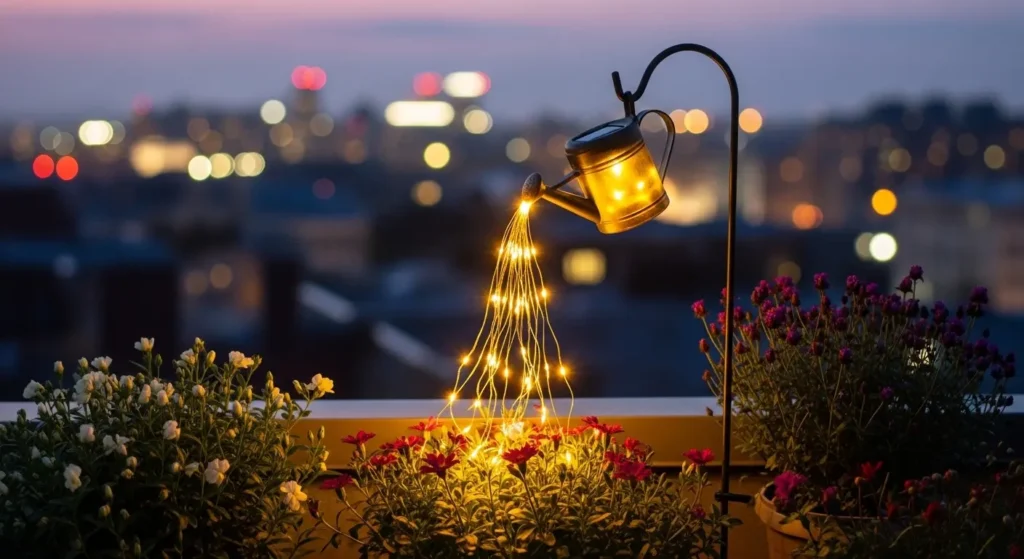
A focal point light on a rooftop works differently than at ground level because the context is so dramatic. I find that a single beautiful light source against a city skyline at dusk creates an image that photographs share constantly — the contrast between the intimate garden light and the urban scale behind it.
The VOOKRY Solar Watering Can Light creates an exceptional rooftop focal point. The bronze filigree body looks sculptural against the sky during the day and the warm amber fairy light cascade at dusk creates a magical intimate glow that contrasts beautifully with the harder urban light sources visible beyond your rooftop edge. Fully solar powered — no wiring needed regardless of your rooftop power access. Find it linked on Amazon.
8. Transform Your Rooftop After Dark With Layered Solar Lighting
✦ String Light Evening Mood
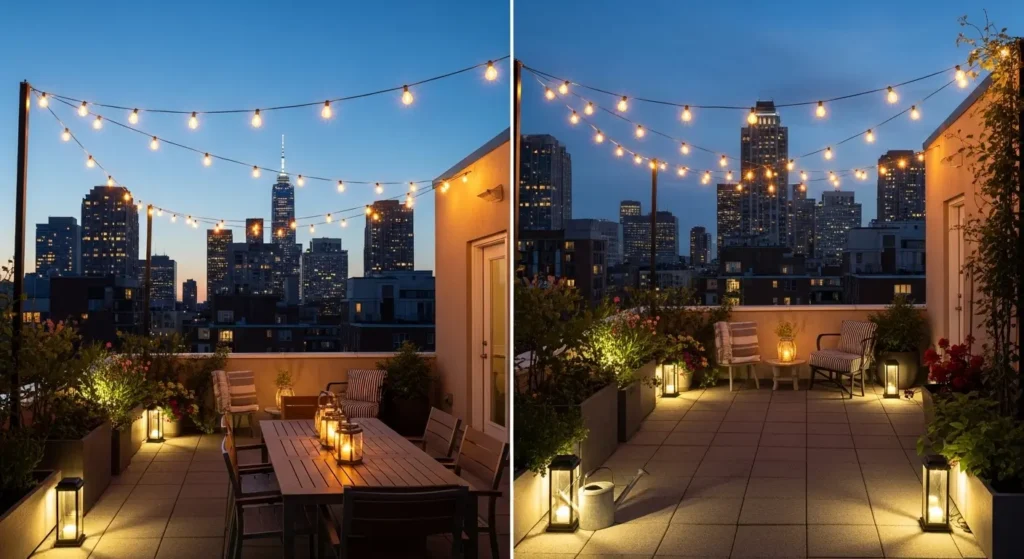
A rooftop after dark with layered lighting is one of the most magical outdoor spaces imaginable. The combination of warm overhead string lights against a dark city sky, solar spotlights illuminating plants at the rooftop edge, and a focal point garden light creates a private elevated world that feels completely separate from the city below.
Build your rooftop lighting in layers. String lights overhead as the main ambient source — at rooftop level they appear to blend with the city lights beyond creating a seamless transition between your garden and the skyline. Solar spotlights on your container plants illuminate them dramatically against the dark. The LANSOW solar spotlights 8-pack gives you enough coverage for both path lighting and plant uplighting across a full rooftop terrace. Complete the scheme with lanterns at table level and your rooftop becomes somewhere nobody wants to leave. Find them linked on Amazon.
PRO TIP: On a rooftop choose string lights with a slightly longer cable between bulbs than standard. The extra spacing between bulbs creates a more open canopy effect that suits the scale of a rooftop better than tightly spaced lights which can feel claustrophobic against an open sky.
5 Things to Know Before Setting Up a Rooftop Garden
Rooftop gardens have specific considerations that ground gardens do not. Know these before you start:
1. Check your building rules first
Many buildings have rooftop access rules, weight restrictions, and rules about permanent structures. Always check with your building management or HOA before installing anything on a rooftop. This is non-negotiable for safety and legal reasons.
2. Weight loading is a genuine constraint
Rooftop structures are engineered to specific weight loads. Large planters filled with wet soil are extremely heavy. Distribute weight evenly across the rooftop surface and stay well within your building’s rated capacity. When in doubt use lightweight growing mediums like perlite mixes rather than standard potting soil.
3. Wind is stronger than you expect
Rooftop wind exposure is significantly higher than at ground level. Secure all furniture and lightweight items. Choose wind-tolerant plants — ornamental grasses, agave, lavender, and most succulents handle rooftop wind well. Avoid large-leafed plants in very exposed positions as the leaves can shred in strong wind.
4. Sun and heat are more intense
Rooftop surfaces absorb and radiate heat making the growing conditions significantly hotter than ground level. Water container plants more frequently in summer — sometimes daily in peak heat. Choose heat-tolerant plants and use light-colored pots to reflect rather than absorb heat.
5. Solar is the only practical power option
Running electrical cables to a rooftop is expensive, complicated, and often not permitted. Solar-powered lights are the practical solution for rooftop lighting — and a rooftop gets more direct sun than any other part of the building making solar panels highly effective. Every rooftop lighting recommendation in this article is solar powered for exactly this reason.
5 Rooftop Garden Mistakes Worth Avoiding
These mistakes come up consistently in rooftop garden setups:
Mistake 1 — Ignoring wind protection
Setting up a beautiful rooftop garden and then watching it get destroyed by the first summer storm is a painful and avoidable experience. Always plan wind protection — whether through strategic planter placement, trellis screens, or purpose-built windbreak panels — before investing in plants and furniture.
Mistake 2 — Choosing the wrong plants
Plants that thrive at ground level often struggle on exposed rooftops. Delicate flowering annuals, large-leafed shade plants, and moisture-loving varieties all perform poorly in the hot dry windy conditions of a rooftop. Research wind and heat tolerance before buying any plants for rooftop use.
Mistake 3 — Underestimating water needs
Rooftop containers dry out two to three times faster than ground-level containers in summer. Without a consistent watering schedule plants die quickly. Self-watering planters with built-in reservoirs are especially valuable on rooftops for this reason.
Mistake 4 — Blocking the view
The rooftop view is the most valuable asset of any rooftop garden. Planting or structures that block it waste the single biggest advantage a rooftop has over any ground-level garden. Always keep your best view lines clear and use planting as frame rather than foreground.
Mistake 5 — No drainage consideration
Poor drainage on a rooftop can cause water pooling that damages the roof membrane and creates serious structural issues over time. Ensure all planters have drainage holes and saucers. Never let water pool on rooftop surfaces. Check after rain that water is draining freely from all containers and off the rooftop surface.
📌 More outdoor ideas: 25 Simple But Stunning Garden Lighting Ideas
Frequently Asked Questions
Can I have a garden on my rooftop?
Yes — a rooftop garden is achievable on most accessible flat rooftops using container planting. The key requirements are a rooftop that can be safely accessed, sufficient weight loading capacity for your chosen containers, adequate sun exposure for the plants you want to grow, and permission from your building management or HOA. According to the American Society of Landscape Architects, rooftop gardens are one of the fastest growing trends in urban landscape design as city dwellers seek outdoor green spaces.
What plants grow well on a rooftop?
Ornamental grasses, agave, lavender, sedums, rosemary, thyme, rudbeckia, and echinacea all handle rooftop wind and heat well. Tropical plants like Bird of Paradise and Areca palms work in sheltered rooftop positions during summer but may need winter protection in cooler US climates.
How do I protect my rooftop garden from wind?
Position large heavy planters on the windward side as a natural windbreak and choose plants with flexible stems that bend rather than break. Semi-permeable trellis screens filter wind more effectively than solid walls which create damaging turbulence on the sheltered side.
How much weight can a rooftop hold?
A typical modern residential rooftop handles 15 to 30 pounds per square foot of live load, but this must always be verified with your building’s structural engineer or management before installing heavy planters. Wet soil in large planters can weigh 60 to 100 pounds — distribute this weight evenly across the surface.
More Outdoor Space Ideas
→ 14 Relaxing Tropical Patio Ideas For Summer
→ 14 Coastal Patio Decor Ideas With Summer Vibes ☀️
→ 12 Townhome Backyard Ideas For Summer
→ How To Build A Backyard Garden Bar At Home
The best thing about a rooftop is that the view is already there. You do not build the view. You just put a chair in front of it.
One plant. One set of string lights. One chair facing west. That is the rooftop garden that actually gets used. Everything else from this list comes after you have spent a few evenings up there and know what you actually want.

Sheikh Hassaan is a digital architect for small businesses and the founder of The Glow Up System. He writes about home decor, garden design, and outdoor living for real American homes – practical ideas that work in actual spaces without oversized budgets.