
The most common outdoor surface in the US is also the most overlooked. A plain grey cement patio sits in millions of backyards doing exactly what it was poured to do — provide a flat surface — and nothing more.
I have seen the same slab transformed twice. First with a coat of warm terracotta exterior concrete paint and a string of solar lights. Then by the next owner with a gravel border and some large container plants at the corners. Neither project cost more than $120. Both made the backyard unrecognizable.
These 7 cement patio ideas cover every approach from a new smooth pour to transforming what is already there. Most do not require removing the existing slab — just giving it something to work with.
Table of Contents
1. Pour a Smooth Minimal Cement Patio for a Clean Modern Base
✦ Smooth Minimal Layout
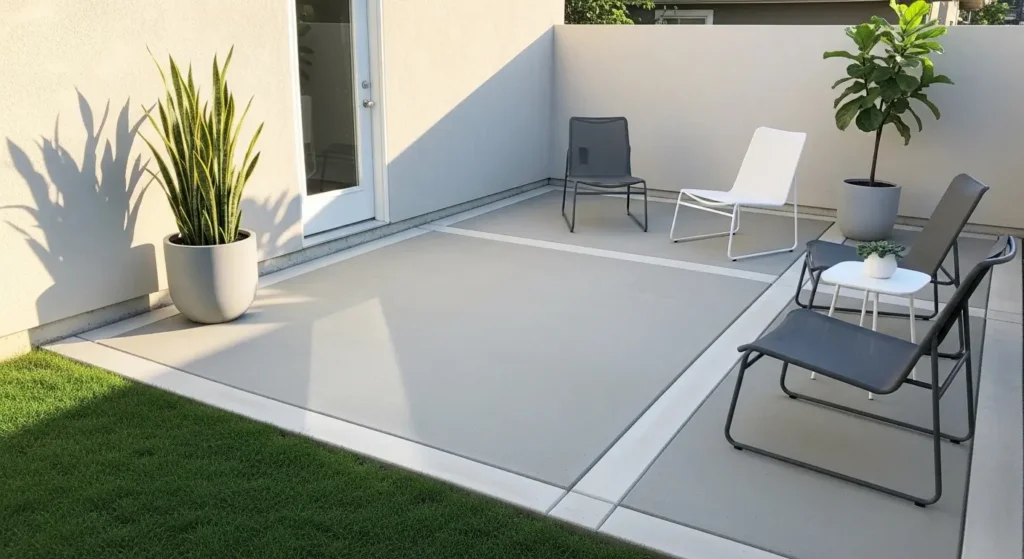
A smooth cement patio is the design choice that looks the most intentional and requires the least decoration afterward. The unbroken grey surface creates visual calm that tiled and patterned surfaces cannot achieve in a small space — the eye reads it as open rather than divided.
Pour to 4 inches minimum. Anything thinner handles furniture and frost poorly and cracks within two to three winters. Cut a control joint down the center in both directions for pours over 100 square feet — without them the concrete decides where to crack and it is never where you want.
PRO TIP: Pour your cement patio 4 inches thick minimum for a surface that handles furniture and foot traffic without cracking over time. Thinner pours look the same initially but are significantly more prone to cracking within the first two to three winters. The extra concrete costs very little relative to the longevity improvement.
2. Paint Your Cement Patio to Add Color and Personality
✦ Painted Cement Finish
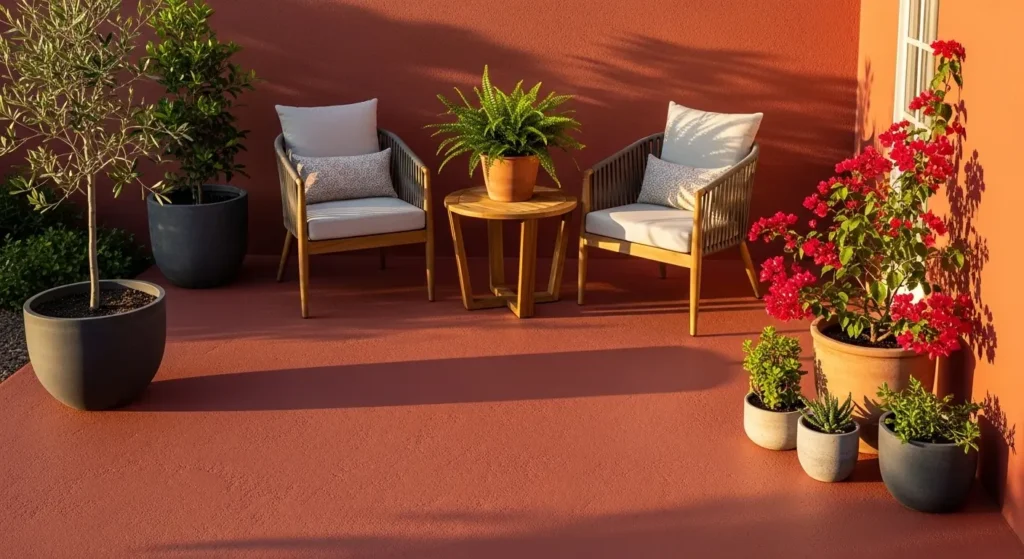
Painting an existing cement patio is the fastest and most affordable small patio transformation available. A single coat of exterior concrete paint completely changes the character of a plain grey slab — adding warmth, personality, and design intent that the raw concrete surface entirely lacks.
Use purpose-formulated exterior concrete or masonry paint — standard wall paint will peel within one season outdoors. Clean the surface thoroughly and fill any cracks before painting. Apply two coats for complete coverage. Popular colors for small painted patios include warm terracotta, sage green, charcoal, and pale stone — all of which make outdoor furniture and plants look significantly more attractive than they do on plain grey concrete. Total cost for painting a standard small patio is typically $30 to $60 in paint.
3. Combine Cement With a Gravel Border for a Designer Finish
✦ Gravel Border Mix
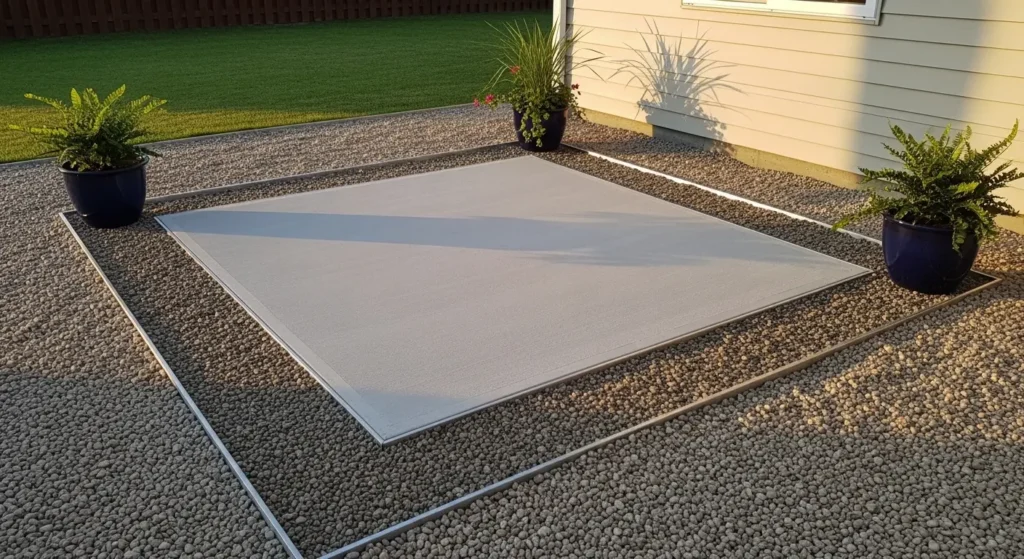
Combining a smooth cement central patio area with a gravel border is one of the most popular and most visually successful small patio design approaches. The contrast between the smooth hard cement surface and the loose textured gravel creates a designed finish that looks significantly more considered than either material alone.
Pour or lay your cement patio to leave a 12 to 18 inch border around the perimeter. Install metal landscape edging to create a clean separation line between the cement and the border area. Fill the border with pea gravel to the same level as the cement surface. The gravel border also serves a practical purpose — it creates a drainage channel around the patio perimeter that prevents water pooling against the cement edges. Position potted plants in the gravel border to complete the designed look.
For a complete guide to pea gravel patio design including edging and drainage see our pea gravel patio ideas guide which covers the full border and standalone gravel approach.
PRO TIP: Use the same gravel color in your border as any existing garden path or gravel area in your garden. Repeating the same material across different areas of the garden creates visual continuity that makes the whole outdoor space feel more designed and cohesive.
4. Design a Compact Cement Patio Specifically for Outdoor Dining
✦ Cozy Dining Setup
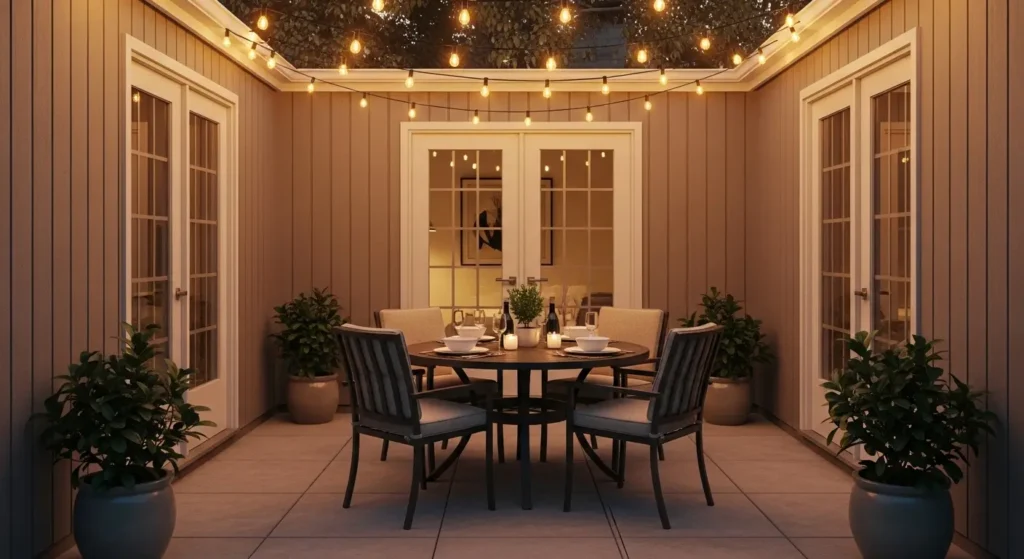
The dining-specific cement patio is the cement patio idea I find most overlooked. Most people pour a general patio and then try to fit dining into it. Sizing the patio around the dining set first means everything fits with intention rather than compromise.
Measure your dining table and chairs in their dining configuration — pulled out and occupied — before setting your patio dimensions. Add 36 inches on all sides of the dining set for comfortable chair movement. A round table in a small cement patio typically creates better flow than a rectangular one. The addlon solar string lights strung above the dining patio transform an afternoon dining space into an evening dining destination. Find them linked on Amazon.
5. Pour a Small Cement Pad as a Safe Fire Pit Base
✦ Fire Pit Mini Area
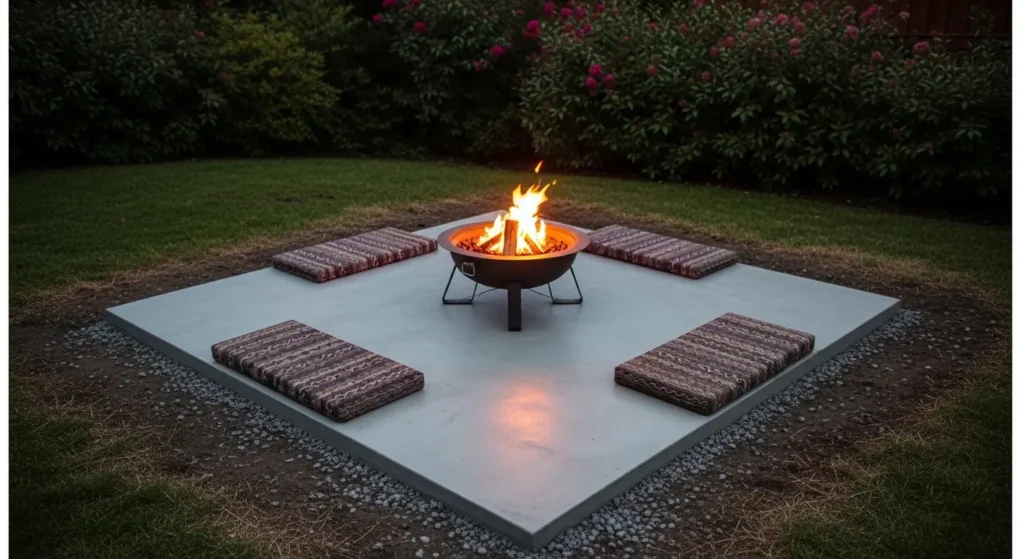
A small dedicated cement pad poured specifically for a fire pit creates both a safe non-combustible surface and a visually defined fire pit area. The cement pad signals that this is the fire pit zone and creates a clean base that looks significantly more designed than a fire pit sitting directly on lawn or bare earth.
Pour a cement pad of approximately 8 to 10 feet in diameter — large enough to accommodate the fire pit centrally with comfortable clearance to the edge. The pad does not need to be thick — 3 inches is sufficient for a purely decorative and fire-protective function. Finish with a broom drag texture to prevent the surface becoming slippery when wet. Low seating arranged on and around the pad completes the fire pit area.
PRO TIP: Pour your fire pit cement pad slightly raised from the surrounding ground level — approximately 1 to 2 inches above grade. The raised edge creates a natural visual definition for the fire pit area without requiring any additional edging material and allows water to drain away from the pad surface freely.
6. Soften a Cement Patio With Strategic Vertical Planting
✦ Vertical Green Touch
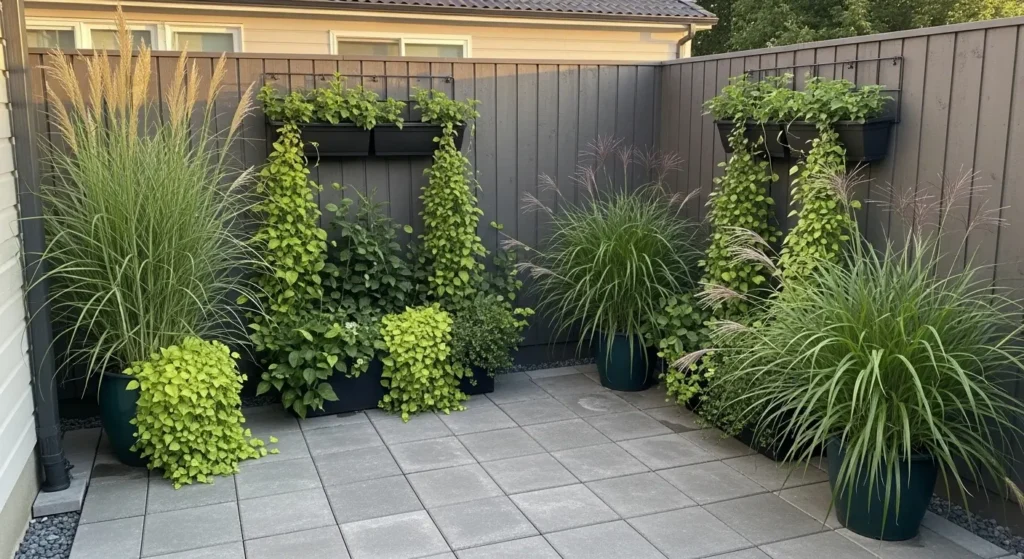
The gravel border around a cement patio is the upgrade I find most consistently underestimated. The cement does not change. The plants do not change. But the defined border between smooth hard surface and loose textured gravel makes the whole patio read as designed rather than poured and left.
It also solves a drainage problem. Water that would pool at the cement edge runs into the gravel instead.
For the specific plants that perform best in large corner containers on a cement patio see our full sun planter ideas guide which covers the varieties that handle reflected heat from paving and direct sun exposure.
7. Enhance a Cement Patio With Solar Lighting for Evening Use
✦ Modern Grey Design
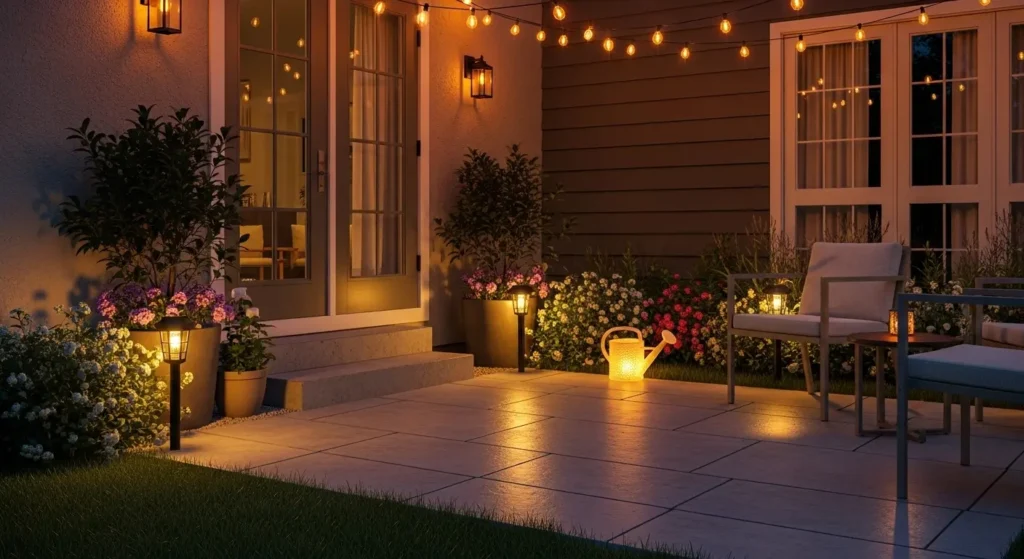
A cement patio without lighting is usable only in daylight — which in summer means losing the best outdoor hours of the entire day. Solar lighting transforms any cement patio into an evening outdoor room that is usable from the moment the sun sets until you choose to go inside.
Layer your cement patio lighting for maximum effect.
PRO TIP: Warm amber solar lights make grey cement look significantly more attractive in the evening than cool white lights do. Cool white light makes cement look clinical and industrial. Warm amber light makes the same surface look warm, textured, and inviting. Always choose warm white or amber solar lights for any cement patio application.
5 Cement Patio Mistakes Worth Avoiding
These mistakes are the most common in small DIY cement patio projects:
Mistake 1 — Pouring too thin
A concrete slab under 3.5 inches thick for a standard patio application is prone to cracking under furniture weight and frost pressure. Pour to a minimum of 4 inches for a patio that handles normal residential use without cracking.
Mistake 2 — No control joints
Concrete expands and contracts with temperature changes. Without control joints cut into the surface it cracks randomly. Cut or tool control joints at approximately 8 to 10 foot intervals in large pours. For small patios under 100 square feet a single central joint in both directions is sufficient.
Mistake 3 — Pouring in extreme temperatures
Concrete poured in temperatures below 40°F or above 90°F cures incorrectly. Cold temperatures slow or stop curing. Hot temperatures cause the surface to cure too quickly creating surface cracks. Pour concrete in mild weather — ideally between 50°F and 75°F for best results.
Mistake 4 — Using standard wall paint
Standard latex wall paint applied to a concrete patio peels within one season. Always use paint specifically formulated for concrete or masonry outdoor surfaces. The surface preparation — cleaning, etching if necessary, and priming — is as important as the paint choice for a long-lasting painted finish.
Mistake 5 — Ignoring drainage slope
A perfectly level cement patio pools water after rain. Always pour with a slight slope of 1/8 inch per foot away from any structures — the house, shed, or fence. This imperceptible slope is enough to direct water off the patio surface and prevents the pooling that stains concrete and creates slip hazards.
📌 More patio and backyard ideas → 25 Stunning Back Porch Patio Ideas
Frequently Asked Questions
How much does a small cement patio cost?
A DIY small cement patio of approximately 100 square feet costs between $80 and $150 in materials — bagged concrete mix, form lumber, and sealer. A professionally poured small patio typically costs $6 to $10 per square foot including labor and materials, making a 100 square foot patio $600 to $1,000 professionally installed. Adding a painted finish adds $30 to $60 in paint. According to the National Association of Home Builders concrete patios provide some of the highest return on investment of any outdoor improvement project.
Can I pour a cement patio myself?
Yes — a small patio of up to 100 square feet is manageable for anyone with basic construction skills using bagged concrete mix, timber formwork, and a float or broom for finishing. For patios over 150 square feet or requiring reinforcement professional help is worth considering.
How do I make a cement patio look better?
Painting with exterior concrete paint in a warm color and adding a gravel border around the perimeter are the two changes that create the most immediate visible improvement. Adding solar string lights overhead and an outdoor rug transforms the same space for evening use in a single afternoon.
How long does a cement patio last?
A properly poured and sealed cement patio lasts 25 to 50 years. Annual sealing extends the surface life significantly and surface cracks should be filled promptly with flexible concrete filler before water penetration causes larger structural damage.
More Patio and Outdoor Space Ideas
→ 14 Coastal Patio Decor Ideas With Summer Vibes ☀️
→ 12 Must-See Backyard Hardscape Ideas
→ 7 Dream Backyard Ideas For Small Spaces
→ 14 Relaxing Tropical Patio Ideas For Summer
The grey slab in the backyard that has been ignored for two summers is not the problem. The absence of anything on top of it is.
Paint it. Border it with gravel. Put large container plants at the corners. Add string lights. Four changes and none of them touch the concrete itself.
Pick the one cement patio idea from this list that fits this weekend. The slab is already there.
.

Sheikh Hassaan is a digital architect for small businesses and the founder of The Glow Up System. He writes about home decor, garden design, and outdoor living for real American homes – practical ideas that work in actual spaces without oversized budgets.